
建材

Search documents
三圣股份:2025年营收9.1-10.7亿元,净利润预亏3.8-5.3亿元
Ge Long Hui· 2026-01-27 14:00
Core Viewpoint - San Sheng Co., Ltd. expects a revenue of 910 to 1,070 million yuan for 2025, down from 1,196 million yuan in the same period last year, indicating a decline due to financial constraints and changes in market conditions affecting the construction materials and pharmaceutical sectors [1] Financial Performance - The company anticipates a net loss of 530 to 380 million yuan for 2025, compared to a net loss of 650 million yuan in the previous year, representing a year-on-year decrease of 18.48% to 41.55% [1] - The decline in performance is attributed to tight funding and adverse market conditions leading to decreased performance in both the construction materials and pharmaceutical segments, along with provisions for expected liabilities and asset impairment [1] Stock Market Implications - The company's stock has been subjected to delisting risk warnings, and additional risk warnings have been applied. If the 2025 annual report reveals certain conditions, the stock may face the risk of termination of listing [1]

老牌百亿私募最新发声,信息量大
Zhong Guo Ji Jin Bao· 2026-01-27 12:51
【导读】源乐晟举办2026年度策略会,曾晓洁、杨建海最新发声 近日,老牌私募源乐晟举办2026年度策略会,源乐晟资产创始人曾晓洁与源乐晟合伙人杨建海分享了对 2026年市场的展望及行业观察。 曾晓洁与杨建海均认为,目前无需担忧"AI泡沫",2026年或成为AI行业标志性的一年。当前消费板块较 难出现大贝塔行情,但新消费领域结构性机会持续存在。化工行业当前估值处于低位,产品价格具备反 弹基础,化工板块具备较强的性价比。 整体而言,2026年有望走出"慢牛"行情,但"慢牛"不代表没有波动。在风险方面,地缘政治风险、美联 储降息滞后等因素仍需警惕。 消费行业仍有结构性机会 化工板块具有较强的性价比 "在新消费领域,每年都会有结构性的机会。"杨建海表示,如餐饮中的一些细分赛道,在新兴业态下的 翻台率大幅突破过往。新消费领域不乏这类结构性机会,但这类机会的天花板相较以往更低,相关标的 市值达到一定程度后,其发展的持续性会引发担忧。 他认为,白酒行业那种长期持有"躺平"的逻辑已不再适用于新消费投资,而是需要每年在不同SKU中筛 选出当期锐度最强的方向,同时紧密跟踪标的变化、动态评估。 在杨建海看来,当前消费板块较难出现大 ...
12月工业企业利润数据点评:有待稳固的V型反弹
GUOTAI HAITONG SECURITIES· 2026-01-27 09:40
Profit Growth Overview - In 2025, the cumulative year-on-year profit growth rate for industrial enterprises was 0.6%, with December showing a significant increase of 5.3% compared to November's -13.1%[1] - The profit recovery is characterized as a "V-shaped" rebound, driven by improved production activity, narrowing PPI declines, and a substantial recovery in profit margins[1][4] Contributing Factors - The increase in profits is attributed to a combination of rising production volumes, improved pricing environments, and enhanced profit margins, with December's profit margin rising from 5.29% to 5.31%[5] - The industrial added value in December rose to 5.2%, up from 4.8% in November, indicating improved industrial production activity[5] Sector Performance - The profit share of upstream and midstream industries increased to 29.6% and 53.7%, respectively, while the downstream sector saw a slight decrease to 16.7%[6] - Upstream sectors like coal mining and non-ferrous metals showed strong profit recovery, while downstream sectors like automotive and food experienced profit contractions[6][14] Revenue Trends - Cumulative revenue growth for industrial enterprises in 2025 was 1.1%, with December showing a decline of 3.2%, indicating ongoing challenges in end-demand recovery[10] - The inventory growth rate for industrial finished products was 3.9%, signaling a shift from replenishment to destocking as companies respond to weak demand[10] Future Outlook - The sustainability of profit recovery is contingent on the strengthening of domestic demand and the continued effectiveness of policy measures[15] - Risks include external uncertainties and the potential for domestic demand recovery to fall short of expectations[16]
量化观市:量化视角下如何把握春节前躁动?
SINOLINK SECURITIES· 2026-01-27 03:12
- The report highlights the performance of eight major stock selection factors across different stock pools (All A-shares, CSI 300, CSI 500, and CSI 1000). Among these, the value factor (17.88%) and size factor (11.88%) showed strong IC mean performance, while reversal and quality factors performed relatively weaker[54][55][66] - Small-cap value style dominated the market, with the small-cap size factor performing strongly across the entire market. Value factors also showed positive performance, indicating a market preference for low valuation stocks. Additionally, technical and low-volatility factors performed well, while consensus expectation factors weakened due to reduced focus on high-performance expectation sectors[54][55][66] - The report provides detailed definitions for various factors, such as size (logarithm of market capitalization), value (e.g., book-to-price ratio, earnings-to-price ratio), growth (e.g., net income growth), quality (e.g., ROE, gross margin), consensus expectation (e.g., changes in expected EPS), technical (e.g., volume skewness), volatility (e.g., 60-day return standard deviation), and reversal (e.g., 20-day return)[66][67] - The report also tracks the performance of convertible bond selection factors, which are constructed based on the relationship between convertible bonds and their underlying stocks. Factors include stock consensus expectation, stock value, and convertible bond valuation (e.g., parity premium rate). Among these, stock consensus expectation and stock value factors achieved higher IC mean values in the past week[59][60][62]
山东将在建材细分领域培育一批差异化发展典型
Da Zhong Ri Bao· 2026-01-27 01:02
Group 1 - The core viewpoint of the news is the introduction of the "Shandong Province Building Materials Industry Stabilization Growth Work Plan" aimed at enhancing the market development capabilities of new building materials and promoting intelligent, green, and integrated development in the industry [1][2] Group 2 - Shandong will address issues such as oversupply of low-end products and insufficient high-end supply by guiding enterprises to diversify product varieties, improve product quality, and enhance brand influence [1] - The province will support the transition from ordinary cement to special cement, increasing the production of differentiated products such as marine, oil well, and nuclear power cement, while encouraging stone enterprises to develop high-value-added decorative panels [1] - There will be a focus on developing advanced ceramics, high-performance fibers, and composite materials to create new competitive advantages, as well as support for low-carbon cement and calcium-based new materials [1] - The province plans to strategically attract projects related to new low-carbon cement, calcium-based new materials, and photovoltaic glass, with a focus on 36 projects expected to be included in the "Thousand Projects, Thousand Billion" initiative by 2025 [2] - There will be tracking and promotion of 38 building material projects with investments exceeding 100 million yuan for 2026, and efforts to attract state-owned enterprises like China National Building Material and China Aluminum to establish new projects in Shandong [2]
云浮“十四五”GDP连跨三个百亿台阶,数字化转型是必由之路
2 1 Shi Ji Jing Ji Bao Dao· 2026-01-26 17:36
Core Viewpoint - The Guangdong province is focusing on enhancing traditional industries and building strong industrial clusters, with Yunfu city showing significant economic growth and development in various sectors, particularly in modern agriculture, green building materials, and metal manufacturing. Economic Growth - Yunfu's GDP has crossed three hundred billion thresholds during the 14th Five-Year Plan period, with local fiscal revenue increasing by 40%, loan balances by 50%, industrial output by 60%, electricity consumption by 70%, and market entities by 80% [1] - By 2025, Yunfu is expected to rank in the top ten for growth in 12 out of 21 major economic indicators in Guangdong province [1] Traditional Industries - Yunfu is recognized for its strong foundation in traditional industries, particularly in modern agriculture, green building materials, and metal manufacturing, aiming to create three trillion-yuan industrial clusters [1][2] - The modern agriculture cluster has surpassed one hundred billion yuan in output, with significant contributions from leading companies like Wens Foodstuff Group [2] Green Building Materials - Yunfu is transitioning from a building materials city to a strong building materials city, with a projected output value exceeding 720 billion yuan by 2025 [3] - The city has formed a green building materials industry alliance to adapt to market changes and enhance growth [3] Metal Manufacturing - Yunfu is a major player in the metal manufacturing sector, particularly known for its stainless steel kitchenware, holding over 45% of the market share in Europe and the U.S. [4] - The city is developing a 44,000-acre metal manufacturing technology park, with significant investments from major projects totaling 150 billion yuan [4] - The metal manufacturing industry has seen a cumulative growth of 154% over four years, with a projected output value of over 640 billion yuan by 2025 [4] Digital Transformation - Digital transformation is identified as a key strategy for cost reduction and efficiency improvement, with companies like Lingfeng Group implementing comprehensive upgrades across their operations [5] - The digital initiatives have resulted in a 60% increase in production capacity, a 50% improvement in efficiency, and a 35% reduction in inventory and unit costs [5] - Recommendations for promoting digital transformation include targeted policy support, talent acquisition, infrastructure improvement, and collaboration between manufacturing enterprises and research institutions [6]
专家交流-双碳政策有哪些新变化-对建材化工行业有什么影响
2026-01-26 15:54
专家交流:双碳政策有哪些新变化,对建材化工行业有什 么影响?20260126 摘要 中国正从能耗双控转向碳排放双控,要求高碳项目进行环评和探评,并 建立地方碳排放考核机制,将国家达峰目标分解至各省市,重点管控电 力、钢铁、有色、建材、石化化工等八大行业。 全国碳市场已纳入 3,770 家企业,预计 2027 年将达 8,000 家,覆盖电 力、水泥、钢铁、铝等行业,未来还将纳入化工、石化、有色金属等, 这些企业需严格遵守国家规定的碳排放配额。 2027 年全国碳市场预计纳入约 8,000 家企业,其排放量占全国总排放 量的 80%左右,其余企业可通过自愿减排市场(CCR)参与,通过减排 行动获取收益。 钢铁行业在 2024-2026 年为适应过渡期,2027 年开始正常发放配额, 初期配额宽松,惩戒幅度不超过 3%,后期将收紧配额,化工行业预计 2027 年进入碳市场,初期免费发放配额,未来或过渡到有偿分配。 国内碳市场价格波动,目前约 81 元/吨,高峰时超 100 元,未来 2-3 年 预计波动范围为 80-150 元/吨,各行业可据此测算成本压力,如合成氨 等化工产品每吨成本增加几十至一两百元。 Q&A ...
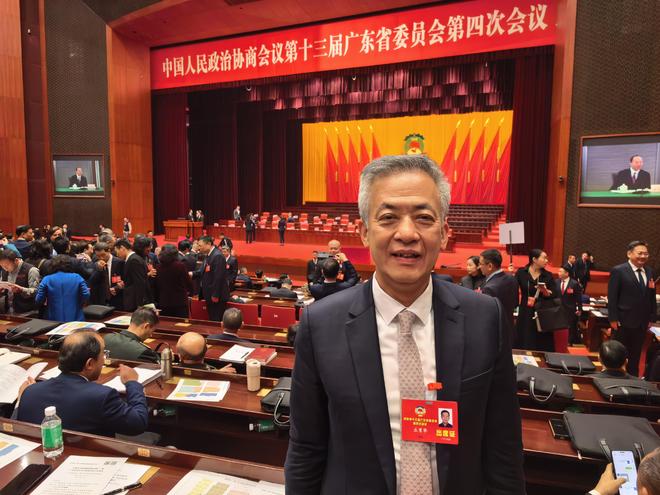
地方两会|广东政协委员丘育华建言AI多维发力 赋能经济高质量发展
Xin Lang Cai Jing· 2026-01-26 15:53
Core Viewpoint - The "14th Five-Year Plan" emphasizes technological self-reliance, modern industrial system construction, and high-level opening-up, aligning closely with Guangdong's economic development needs [1][3]. Group 1: Proposals for Economic Development - During the Guangdong Two Sessions in 2026, proposals were made to leverage the "14th Five-Year Plan" to address development bottlenecks and cultivate new productive forces [1][3]. - Key proposals include enhancing open cooperation, promoting industrial upgrades, and utilizing low-carbon computing and AI systems to empower economic development [1][4]. Group 2: Directions for Industrial Upgrade - Three main directions for activating new industrial upgrade momentum were proposed: deepening open cooperation, transforming traditional industries, and cultivating emerging future industries [3][4]. - In open cooperation, suggestions include leveraging the "Belt and Road" initiative to enhance international collaboration and optimize export-import channels for high-value products [4][5]. - For traditional industry upgrades, the focus is on integrating AI and green technologies to improve efficiency and sustainability in sectors like home appliances and textiles [4][5]. - Emerging industries such as low-altitude economy and biomanufacturing are highlighted, with specific targets for growth and development by 2027 [5][6]. Group 3: Empowering Development through AI and Computing - The proposal emphasizes the importance of low-carbon computing as a core production factor, suggesting three practical paths for its integration into industrial upgrades [5][6]. - The first path involves establishing a collaborative ecosystem for low-carbon distributed intelligent computing nodes, leveraging local resources and technologies [5][6]. - The second path focuses on creating a trusted data space to drive AI applications in healthcare, enhancing data management and operational efficiency [6]. - The third path explores integrating AI into urban renewal processes, improving planning, construction, and operational efficiency through intelligent systems [6]. Group 4: Policy Environment and Future Outlook - Guangdong's strong manufacturing base, innovative ecosystem, and large market size position it well to capitalize on the "14th Five-Year Plan" policies [6]. - Ongoing initiatives like the construction of a national computing hub in the Guangdong-Hong Kong-Macao Greater Bay Area are expected to provide a favorable policy environment for these proposals [6].

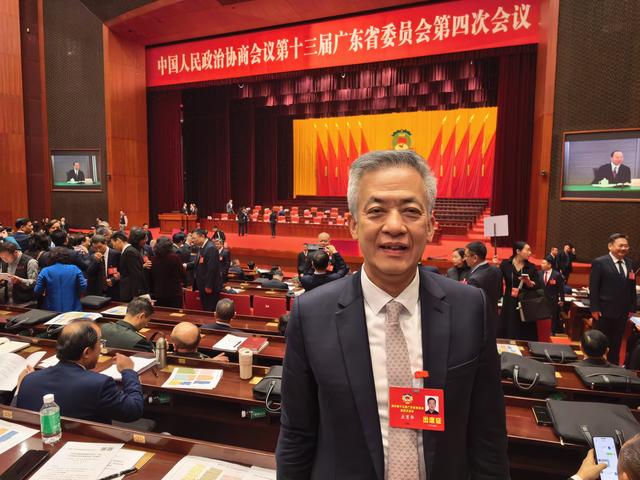
地方两会 广东政协委员丘育华建言AI多维发力 赋能经济高质量发展
Zhong Guo Jing Ying Bao· 2026-01-26 15:09
Core Viewpoint - The "14th Five-Year Plan" focuses on technological self-reliance, modern industrial system construction, and high-level opening-up, aligning closely with Guangdong's economic development needs [1][3]. Group 1: Proposals for Economic Development - During the Guangdong Two Sessions in 2026, proposals were made to leverage the "14th Five-Year Plan" to address development bottlenecks and cultivate new productive forces [1][3]. - Key proposals include deepening open cooperation, promoting industrial upgrades, and utilizing low-carbon computing power and AI systems to empower economic development [1][4]. Group 2: Industrial Upgrade Strategies - Three main directions for activating new momentum in industrial upgrades were proposed: open cooperation, traditional industry transformation, and nurturing emerging future industries [3][4]. - In open cooperation, suggestions include enhancing international collaboration through the "Belt and Road" initiative and optimizing logistics routes for high-value product exports [4][5]. - For traditional industry upgrades, the focus is on integrating AI into production processes to improve efficiency and quality, alongside promoting sustainable practices in sectors like textiles and construction [4][5]. Group 3: Future Industry Focus - The emphasis on emerging industries includes low-altitude economy and biomanufacturing, with a target of achieving a total output value of 500 billion yuan by 2027 in biomanufacturing [5][6]. - The low-altitude economy is expected to leverage the Greater Bay Area's advantages to create a multi-scenario application ecosystem [5][6]. Group 4: AI and Computing Power Integration - The proposal highlights three practical paths for integrating low-carbon computing power and AI into industrial upgrades [5][6]. - The first path involves establishing a distributed intelligent computing node ecosystem, leveraging local energy resources and AI for efficient energy consumption [5][6]. - The second path focuses on creating a trusted data space for AI applications in healthcare, enhancing data resource management and operational systems [6]. - The third path suggests incorporating AI throughout the urban renewal lifecycle to improve planning, construction, and operational efficiency [6]. Group 5: Policy Environment and Implementation - Guangdong is accelerating the construction of a national computing power hub and low-altitude economy innovation pilot projects, providing a favorable policy environment for the proposals [6].
显微镜下的中国经济(2026年第3期):金属价格为何如此繁荣
CMS· 2026-01-26 13:32
证券研究报告 | 宏观定期报告 2026 年 01 月 26 日 金属价格为何如此繁荣 显微镜下的中国经济(2026 年第 3 期) 频率:每周 目前金属价格繁荣是供给逻辑的结果,新一轮技术革命的迹象越来越明显,那 么未来商品价格上涨可能会转换为需求逻辑,这意味着当前较弱的能源产品价 格也会重新进入上升通道。 风险提示:地缘政治风险、国内政策落地不及预期、全球衰退及主要经济体货 币政策超预期。 定期报告 相关报告 1、《央国企动态系列报告之 56 ——地方国资会议定调改革深 化,多元布局培育新质生产 力》2026-01-25 2、《地缘紧张此起彼伏——— 国际时政周评》2026-01-25 3、《开年投资呈现积极迹象— 显微镜下的中国经济(2026 年 第 2 期)》2026-01-19 张一平 S1090513080007 zhangyiping@cmschina.com.cn 张静静 S1090522050003 zhangjingjing@cmschina.com.cn 敬请阅读末页的重要说明 1 月 26 日,以有色金属为代表的资源品价格继续创新高。其中,伦敦现货黄 金价格一度突破 5100 美元/盎 ...