速冻食品

Search documents
安井食品20260203
2026-02-04 02:27
Summary of the Conference Call on Anjuke Foods Company Overview - Anjuke Foods has evolved from a small dumpling factory in Xiamen to a leading player in the frozen food industry in China, particularly in the hot pot ingredient segment [1][2] - The company's growth can be divided into four stages: 1. **1998-2006**: Initial establishment and focus on hot pot ingredients instead of competing in the dumpling market dominated by competitors like Sanquan and Sinian [1] 2. **2007-2016**: Focused on building distribution channels primarily in the restaurant sector, establishing a national production capacity [2] 3. **2017-2020**: Post-IPO expansion of production capacity and revenue growth, solidifying its position as a market leader [2] 4. **2021-Present**: Entering the prepared dishes market with a three-pronged strategy [2][3] Core Business Strategy - Anjuke has diversified its product offerings to include frozen hot pot ingredients, frozen rice and noodles, and frozen prepared dishes, establishing a comprehensive product portfolio [3] - The management team, led by Chairman Liu Mingming and General Manager Zhang Qingmiao, has remained stable and effective, contributing to the company's success [3][4] - The company has implemented stock incentive plans since 2019 to align management interests with company performance [4] Financial Performance - Since its IPO in 2017, Anjuke has experienced significant revenue growth, maintaining high growth rates from 2018 to 2022 [4][5] - The revenue structure has become more balanced, with a notable increase in the contribution from prepared dishes [5] Industry Dynamics - The frozen food market in China is growing alongside Anjuke, driven by both B2B (restaurant) and B2C (consumer) demands [5][6] - B2B demand is fueled by the need for cost efficiency in restaurants, where labor and rent costs are high, leading to a shift towards frozen and prepared foods [5][6] - C2C demand is driven by changing consumer lifestyles, including smaller household sizes and a preference for convenience [6] Market Trends - The market for frozen prepared dishes is expected to grow significantly, despite recent challenges, as it aligns with the trend of industrialization and standardization in the food supply chain [7][8] - Anjuke's strategy includes leveraging its supply chain and cold chain logistics to enhance efficiency and reduce costs [10][12] Competitive Advantages - Anjuke has established a strong product positioning strategy, focusing on high-quality, high-margin products [8][9] - The company has differentiated itself in the competitive frozen rice and noodle market by avoiding direct competition with established players and instead focusing on unique products [9] - Anjuke's channel strategy emphasizes strong relationships with distributors and direct support, enhancing loyalty and market penetration [10] Future Outlook - Anjuke plans to continue expanding its frozen food segment and is exploring overseas production and sales opportunities [17] - The company anticipates steady growth in its core business, with new product launches and packaging innovations aimed at capturing the evolving consumer market [18] - Despite external challenges, Anjuke's strategic execution and management capabilities position it well for future growth [16][17]
整个社会都在喊没钱了,为什么这些公司反而年赚百亿?
创业家· 2026-02-03 10:39
Core Insights - The article emphasizes that despite the prevailing narrative of economic hardship, certain industries are thriving and generating substantial profits, particularly in Japan and China [3][4]. - It identifies eight key sectors that are capitalizing on changing consumer behaviors and preferences, presenting significant business opportunities [5]. Group 1: Key Industries - **Second-Hand Economy**: The second-hand luxury market in Japan, exemplified by companies like Daikokuya, has seen explosive revenue growth. In China, platforms like Hongbulin and Panghu are experiencing similar success, indicating a shift in consumer spending from new luxury goods to second-hand items [6][7][8]. - **Pet Economy**: With declining birth rates, young consumers are increasingly spending on pet products. Companies like Inaba in Japan and Guobao in China are witnessing strong stock performance due to rising demand for pet food and healthcare products [12][13][15]. - **Adult Care**: The adult diaper market in Japan has surpassed $10 billion, highlighting the economic potential of the aging population. This sector is viewed as a significant opportunity rather than a burden [17][18][19]. Group 2: Health and Wellness - **Health Food and Beverages**: The rise in health consciousness and demographic changes have led to increased demand for sugar-free beverages and functional foods. Brands like Suntory and various Chinese counterparts are experiencing significant growth in this area [21][22]. - **Beauty and Aesthetics**: The demand for beauty products, including collagen supplements and at-home beauty devices, remains strong. Companies like Jinbo Biological and U like are achieving substantial sales, indicating that consumers prioritize beauty even in economic downturns [23][24][26]. Group 3: Outdoor and Leisure - **Outdoor Recreation**: Companies in the outdoor equipment sector, such as Snow Peak in Japan and various Chinese brands, are benefiting from a growing interest in outdoor activities and camping, with significant sales increases reported [29][31]. - **Convenience Economy**: The trend towards convenience is driving growth in frozen food and smart home appliances. Brands like Anjijia and various AI-driven home devices are gaining traction as consumers seek to save time [39][40][42]. Group 4: Market Dynamics - The article posits that the current low-desire economic environment presents unique opportunities for businesses that can identify and invest in counter-cyclical trends. Companies that adapt to changing consumer needs and preferences are likely to emerge as winners in this landscape [44].


深圳老字号合口味:120万物资,为一线工作者“加餐”
Zhong Guo Shi Pin Wang· 2026-02-03 08:14
2月2日,由深圳市总工会、南山区总工会联合主办的"暖工行动"专场公益答谢会在南山区光峰科技总部大厦成功 举行。市、区总工会相关领导、各街道总工会负责人、爱心企业及人士代表共同参会。会上,总工会负责同志向 积极参与本次公益活动的爱心企业颁发了荣誉证书与纪念牌匾。其中,深圳知名食品品牌合口味集团因捐赠总价 值约120万元的慰问物资,在现场受到表彰并获授证书。 据了解,合口味集团此次捐赠物资将用于由深圳市总工会发起的"暖工行动"公益项目,慰问一线工作者。这批物 资包含了"合口味"旗下大健康品牌"麦养友"液态麦养主食产品以及部分包点,预计在答谢会后一周内,通过各街 道办陆续分发至一线工作者手中。 此次新春慰问,延续了合口味通过产品传递关怀的思路。2024年末,适逢公司创立三十周年,合口味就曾特别发 起"请深圳奋斗者吃包子"公益行动,向城市工作者们集中送出了9万份其明星产品——"合口味关汤鲜汁靓肉包", 以一份特别的心意致敬城市奋斗者。 无论是周年庆的特别心意,还是此次覆盖更广的新春慰问,合口味正尝试将其对"便捷美食"与"家庭陪伴"的思 考,通过公益行动送达更多人群。 从产品到理念:细微之处见诚意 公益践行背后是合口味 ...

中国必选消费品1月需求报告:基础需求回暖,享乐型消费承压
Haitong Securities International· 2026-02-02 00:41
Investment Rating - The report rates multiple companies in the consumer staples sector as "Outperform," including Guizhou Moutai, Wuliangye, and Yili [1]. Core Insights - The consumer staples industry in January 2026 shows a recovery in basic demand while hedonic consumption remains under pressure, indicating a divergence in performance across different segments [3][29]. - Among the eight key consumer industries tracked, four are experiencing positive growth (condiments, frozen food, soft drinks, and catering), while four are facing declines (high-end and above Baijiu, mass-market Baijiu, dairy products, and beer) [29]. Summary by Segment Baijiu (High-end and Above) - In January, the revenue for high-end Baijiu reached 47 billion yuan, a year-on-year decline of 14.0%. The price pressure is significant, with expectations of over a 10% price drop throughout the year due to high inventory levels [11]. Baijiu (Mass-market and Below) - The mass-market Baijiu segment generated 22.9 billion yuan in January, down 3.0% year-on-year. Despite the decline, the segment shows resilience due to rigid demand and adaptability to consumption scenarios [13]. Beer - The beer industry reported revenues of 17 billion yuan in January, a decrease of 7.1% year-on-year. The demand was affected by adverse weather and the delayed Spring Festival, leading to a cautious inventory approach by distributors [15]. Condiments - The condiment sector achieved revenues of 46.9 billion yuan in January, reflecting a year-on-year growth of 3.5%. The recovery in the catering channel and increased demand from small and medium-sized businesses are key drivers [17]. Dairy Products - The dairy sector's revenue was 43.5 billion yuan in January, down 3.3% year-on-year. The demand remains under pressure, but a potential recovery is anticipated in the coming months due to low base effects [19]. Frozen Food - The frozen food segment saw revenues of 14.99 billion yuan in January, with a year-on-year increase of 8%. The demand is supported by pre-Spring Festival stocking and favorable weather conditions [21]. Soft Drinks - The soft drink industry generated 96.2 billion yuan in January, with a modest growth of 1.1% year-on-year. Increased promotional activities indicate heightened market competition [24]. Catering - The catering sector reported revenues of 16.2 billion yuan in January, up 2.5% year-on-year. The demand is gradually improving, particularly in small and medium-sized restaurants [26].





“冻品一哥”转行做面包?
Sou Hu Cai Jing· 2026-01-30 16:18
Core Viewpoint - The pre-prepared food industry, once seen as a "trillion-dollar blue ocean," is now facing significant public skepticism and declining consumer interest, leading companies like Anjijia to shift their strategic focus amid increasing competition and market challenges [3][12][16]. Group 1: Industry Trends - The trend of "refusing pre-prepared food" has gained traction on social media, with consumers preferring freshly cooked meals over convenience, impacting the demand for pre-prepared food [4][13]. - Anjijia's pre-prepared food segment reported revenue of 3.643 billion yuan in the first three quarters of 2025, a 9.19% year-on-year increase, but this growth is significantly slower compared to the 112.41% increase in 2021 [4][16]. - The overall market for pre-prepared food is experiencing a decline, with traditional frozen food categories like frozen prepared foods and frozen noodles showing minimal growth or decline [4][24]. Group 2: Competitive Landscape - The competitive environment for pre-prepared food is intensifying, with over 13,000 new companies entering the market within the past year, leading to price wars and reduced profit margins [16][25]. - Anjijia's average selling price for frozen food products decreased from 20.7 yuan/kg in the first three quarters of 2023 to 17.9 yuan/kg in 2024, indicating a downward pricing trend [27]. - Major restaurant chains are increasingly adopting "freshly cooked" and "non-prepared" strategies to enhance their competitive edge, further challenging the pre-prepared food market [14][23]. Group 3: Company Strategy - Anjijia is diversifying its strategy by entering the frozen baking market, with plans to invest in a new baking project, reflecting a shift in focus from traditional frozen food to new product categories [34][36]. - The frozen baking market is projected to grow at a compound annual growth rate of over 25%, with an expected market size of 23 billion yuan by 2025, presenting new opportunities for Anjijia [36]. - Despite the potential for growth in the frozen baking sector, Anjijia faces challenges related to consumer preferences for taste and freshness, which differ from traditional frozen food expectations [38].


中国必选消费品1月成本报告:涨价现实弱于预期,成本仍处低位
Haitong Securities International· 2026-01-30 13:53
Investment Rating - The report provides various investment ratings for companies in the consumer staples sector, with several companies rated as "Outperform" and one as "Neutral" [1]. Core Insights - The report indicates that price hikes in the consumer staples sector are weaker than expected, while costs remain low [1]. - The monitored spot cost indices for six consumer goods categories have declined, while futures cost indices have primarily increased [34]. Summary by Category Beer - The spot cost index decreased by 1.87% month-on-month, while the futures index increased by 3.15%. Year-to-date, the spot index has changed by -0.6% and the futures index by +1.81% [35]. - Glass prices have shown a month-on-month decrease of 1.2% for spot prices and an increase of 3.4% for futures prices [35]. Condiments - The spot cost index decreased by 1.37% month-on-month, while the futures index increased by 3.03%. Year-to-date changes are -0.42% for spot and +2.23% for futures [36]. - Soybean prices have decreased by 2.4% month-on-month for spot prices, while futures prices increased by 6.7% [36]. Dairy Products - The spot cost index decreased by 1.93% month-on-month, while the futures index increased by 1.58%. Year-to-date changes are -0.43% for spot and +1.68% for futures [37]. - Fresh milk prices rose to 3.04 yuan/kg, with corn prices increasing by 0.4% month-on-month [37]. Instant Noodles - The spot cost index decreased by 0.51% month-on-month, while the futures index increased by 3.31%. Year-to-date changes are +0.79% for spot and +3.46% for futures [38]. - Palm oil prices increased by 9.6% month-on-month for spot prices [38]. Frozen Food - The spot cost index decreased by 1.74% month-on-month, while the futures index decreased by 0.61%. Year-to-date changes are -1.44% for spot and -0.14% for futures [39]. - Vegetable prices fell by 1.8% month-on-month [39]. Soft Drinks - The spot cost index decreased by 3.71% month-on-month, while the futures index remained unchanged. Year-to-date changes are -1.12% for spot and -0.19% for futures [40]. - PET chip prices increased by 5.4% month-on-month [40].




整个社会都在喊没钱了,为什么这些公司反而年赚百亿?
创业家· 2026-01-29 10:34
Core Viewpoint - The article emphasizes that despite the prevailing narrative of economic hardship, certain industries are thriving and generating significant profits, particularly in the context of Japan's "lost 30 years" and the evolving consumer behavior in China [3][4]. Group 1: Economic Shifts and Opportunities - The concept of a "low-desire society" does not equate to a lack of opportunities, as consumer demand is shifting towards different sectors [4]. - The article identifies eight key industries that are capitalizing on changing consumer preferences, highlighting that demand migration presents substantial business opportunities [5]. Group 2: Key Industries and Trends - **Second-Hand Economy**: The second-hand luxury market in Japan, exemplified by companies like Daikokuya, has seen a significant revenue increase. In China, platforms like Hongbulin and Panghu are experiencing similar growth [6][7]. - **Pet Economy**: With declining birth rates, spending on pets is rising, as seen with brands like Inaba in Japan and Guobao in China, indicating a robust market for pet products and services [12][13][14]. - **Adult Care**: The adult diaper market in Japan has surpassed $10 billion, showcasing the potential of the aging population as a lucrative economic segment [17][18]. - **Health Food and Beverages**: The rise in health consciousness has led to increased demand for products like sugar-free tea and functional beverages in both Japan and China [21]. - **Beauty and Aesthetics**: The beauty industry continues to thrive, with products like collagen supplements and home beauty devices gaining popularity, indicating a strong consumer focus on personal care [23][24][26]. - **Outdoor Recreation**: Companies in the outdoor equipment sector, such as Snow Peak in Japan, are profiting from the growing interest in outdoor activities, reflecting a shift in consumer spending priorities [29][31]. - **Convenience Economy**: The demand for convenience products, such as frozen foods and smart home appliances, is increasing as younger generations seek to save time in their daily routines [39][40]. - **Leisure and Experience Economy**: Consumers are willing to spend on experiences and small pleasures, indicating a dual trend of frugality and indulgence in spending [36][44].

经济越来越差,这八大行业越赚爆!
创业家· 2026-01-28 10:09
Core Insights - The article discusses how certain industries are thriving despite a general perception of economic downturn, highlighting eight key sectors that present significant business opportunities in a low-desire society [3][4]. Group 1: Key Industries - **Second-Hand Economy**: The second-hand luxury market in Japan, represented by companies like Daikokuya, has seen a surge in revenue. In China, platforms like Hongbulin and Panghu are experiencing similar growth, indicating a shift in consumer spending towards second-hand goods [6][7][8][9]. - **Pet Economy**: With declining birth rates, young people are spending more on pets, leading to a boom in pet food and healthcare products. Companies like Inaba in Japan and Guobao in China are capitalizing on this trend [11][12][14][15]. - **Adult Care Products**: The adult diaper market in Japan has surpassed $10 billion, indicating a growing demand for adult care products in China, with companies like Kexin poised for growth [16][17][18]. - **Health Food and Beverages**: The rise in health consciousness has led to increased sales of sugar-free beverages and functional drinks in both Japan and China, with brands like Suntory and Dongpeng gaining traction [21][22]. - **Beauty Economy**: The demand for beauty products, including collagen supplements and at-home beauty devices, is on the rise, with companies like Jinbo Bio and U like seeing significant sales growth [23][25]. - **Outdoor Recreation**: The outdoor equipment market is thriving, with brands like Snow Peak in Japan and various Chinese brands experiencing rapid sales growth, as consumers seek leisure activities despite economic constraints [25][26][27]. - **Emotional Economy**: Brands like Labubu and Rio are tapping into the emotional needs of consumers, offering products that provide comfort and joy, even in a frugal spending environment [28][29][30]. - **Lazy Economy**: The trend towards convenience has led to increased sales of frozen foods and smart home appliances, with companies like Anjijia and Kewos leveraging technology to save consumers time [33][35][36]. Group 2: Market Trends - The article emphasizes that the current economic climate, often described as a "cold winter," presents unique opportunities for those willing to invest in counter-cyclical sectors [39]. - It suggests that the key to success in this low-desire era is recognizing and seizing opportunities in these emerging markets, rather than succumbing to pessimism [39].

安井食品1月27日获融资买入3054.28万元,融资余额3.96亿元
Xin Lang Zheng Quan· 2026-01-28 01:25
Group 1: Company Overview - Anjiu Food Group Co., Ltd. is located in Xiamen, Fujian Province, and was established on December 24, 2001, with its listing date on February 22, 2017 [2] - The company primarily engages in the research, production, and sales of frozen food, including products such as fish tofu, fish balls, and various frozen dishes [2] - The revenue composition of Anjiu Food includes 49.43% from frozen prepared foods, 31.77% from frozen dishes, 16.32% from frozen noodle and rice products, and 2.38% from agricultural products and others [2] Group 2: Financial Performance - For the period from January to September 2025, Anjiu Food achieved an operating income of 11.371 billion yuan, representing a year-on-year growth of 2.66%, while the net profit attributable to shareholders decreased by 9.35% to 949 million yuan [2] - The company has distributed a total of 3.219 billion yuan in dividends since its A-share listing, with 2.521 billion yuan distributed over the past three years [3] Group 3: Shareholder and Market Activity - As of September 30, 2025, the number of shareholders of Anjiu Food increased to 63,200, up by 78.56%, while the average circulating shares per person decreased by 43.98% to 4,641 shares [2] - On January 27, 2023, Anjiu Food's stock price fell by 1.98%, with a trading volume of 324 million yuan, and the net financing buy was -446,400 yuan [1] - The financing balance for Anjiu Food was 396 million yuan, accounting for 1.54% of the circulating market value, which is below the 30% percentile level over the past year [1]
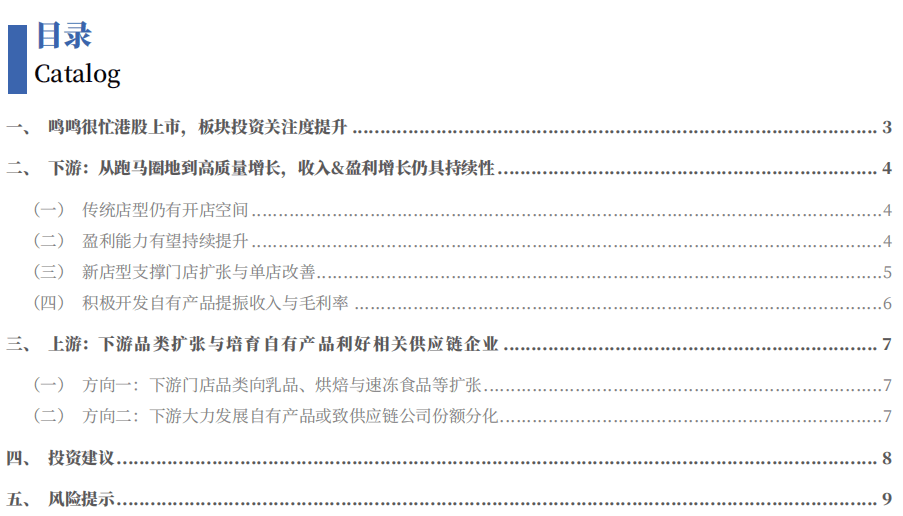
【银河食饮刘光意】专题研究丨鸣鸣很忙港股上市,关注产业链投资新趋势
Sou Hu Cai Jing· 2026-01-28 00:30
Group 1 - The core viewpoint is that Ming Ming Hen Mang plans to list on the Hong Kong Stock Exchange on January 28, becoming the first stock in the "bulk snack" sector, with a global offering of 14.1 million shares, expected to raise over HKD 3 billion, and a market capitalization of approximately HKD 50 billion [1][7] - The market response has been positive, with eight cornerstone investors subscribing a total of HKD 1.5 billion, including Tencent, Temasek, and BlackRock, and the latest subscription multiple exceeding 1500 times [1][8] Group 2 - Downstream growth is shifting from rapid expansion to high-quality growth, with traditional store types still having significant opening space, projected to reach nearly 50,000 stores by 2025, with a total potential of about 74,000 stores [2][9] - Profitability is expected to continue improving, with adjusted net margins for Ming Ming Hen Mang increasing from 2.3% to 3.9% from 2023 to the first three quarters of 2025, driven by reduced opening subsidies and category structure adjustments [2][13] - New store formats are supporting store expansion and single-store improvement, with both Ming Ming Hen Mang and Wan Chen planning to open discount supermarket formats by 2025, currently accounting for less than 20% of new store types [2][17] - The development of private label products is boosting revenue and gross margins, with both companies planning to increase their private label revenue share, currently in the single digits, compared to 20-30% for similar brands [2][19] Group 3 - Upstream opportunities are emerging as downstream stores expand into categories like dairy, baking, and frozen foods, benefiting related upstream supply chain companies, particularly mid-tier brands with significant revenue elasticity [3][24] - The focus on developing private label products is leading to market share differentiation among supply chain companies, with manufacturers that have strong product development and customization capabilities likely to gain market share [3][26] Group 4 - Investment recommendations highlight the positive outlook for the bulk snack industry, emphasizing the transition to high-quality growth and the potential for upstream supply chain companies to benefit from downstream category expansions and increased private label product shares [4][28]