
酒店餐饮

Search documents
果然财经|星级酒店摆外卖,精致与烟火碰撞出怎样的消费新场景?
Sou Hu Cai Jing· 2025-07-14 13:28
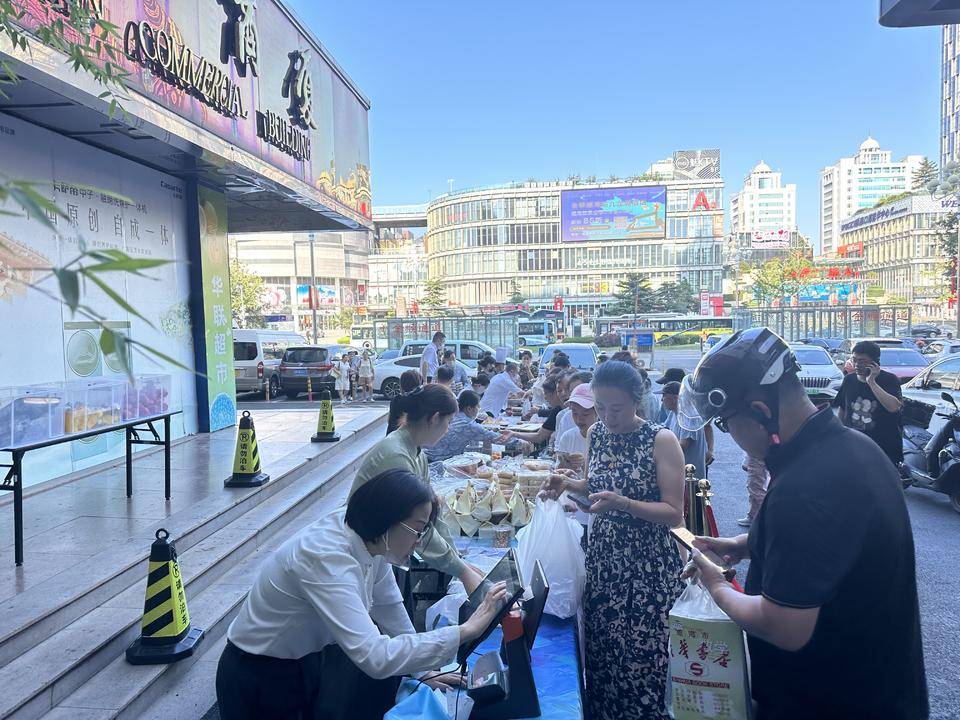
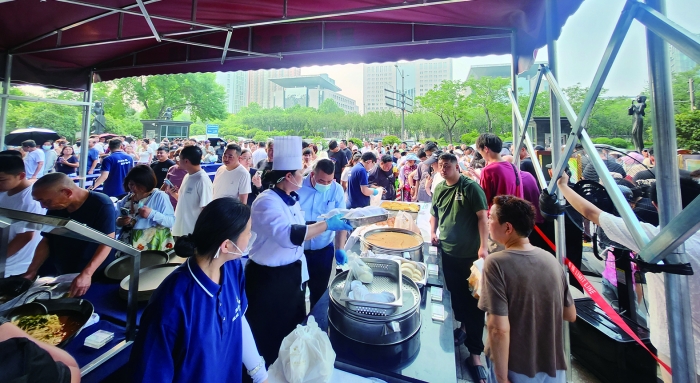
Core Insights - The article discusses the innovative approach of the Weihai Baina Ruijin Hotel, which has introduced a street-side food stall to offer its signature dishes and local delicacies, making high-end dining more accessible to the public [1][3]. Group 1: Business Strategy - The "street-side takeaway" initiative is a strategic response to changing consumer demands and market conditions, aiming to bring quality dining services closer to everyday consumers [3]. - The hotel offers a diverse menu with over 60 items, including both traditional signature dishes and specially designed affordable options, ensuring a wide appeal [3][7]. - The hotel has implemented a dynamic menu adjustment system based on sales performance, allowing for the removal of underperforming items and the introduction of popular new dishes [3]. Group 2: Customer Engagement - The hotel has established a WeChat pre-order service to streamline the purchasing process, reducing wait times for customers [5]. - The initiative has successfully attracted customers to the hotel, with many who tried the street food opting to experience the hotel's full dining services [7]. - The hotel plans to enhance brand recognition by customizing staff uniforms and improving the stall's branding, while maintaining a balance between casual street food and quality service [7]. Group 3: Market Trends - The trend of hotels engaging in street-side food sales is gaining traction in Weihai, with other star-rated hotels also adopting similar strategies to connect with local consumers [7]. - This approach not only provides affordable dining options for the public but also creates new revenue streams for the hotel industry [7].

【十大券商一周策略】3500点后,A股咋走?7月,不错!8—9月,风险较大!
券商中国· 2025-07-13 15:03
Group 1 - The current market is transitioning from a stock market to an incremental market, with A-shares experiencing high volatility in certain sectors while manufacturing sectors remain undervalued [1] - The "anti-involution" narrative is compared to the "Belt and Road" initiative, suggesting that it will help stimulate low-performing sectors in the context of increased capital inflow [1] - The valuation gap in Hong Kong stocks is becoming apparent, with insurance funds likely to expand their investment scope, indicating a favorable time to increase allocations to Hong Kong stocks [1] Group 2 - The "anti-involution" policy is expected to anchor the basic expectations of the midstream manufacturing sector, with short-term investment opportunities becoming more apparent [2] - The passing of the "Big and Beautiful" bill in the U.S. is expected to enhance fiscal stimulus, reducing the risk of a deep recession and improving visibility for China's supply-demand dynamics by 2026 [2] - The market has already begun to reflect a "bull market atmosphere," with the Shanghai Composite Index breaking through key levels, enhancing risk appetite and spreading profit-making effects [2] Group 3 - A-share market performance has been strong, driven by the upward trend in U.S. stocks and the positive impact of technology leaders reaching new highs [3] - The "anti-involution" policy is expected to alleviate domestic price pressures, with the upcoming earnings season providing a favorable environment for stocks with positive earnings forecasts [3] - The overall earnings improvement rate for A-shares is higher than the same period last year, indicating structural opportunities in high-growth TMT sectors and competitive midstream manufacturing [3] Group 4 - The "transformation bull market" is gaining momentum, driven by a systematic reduction in market discount rates and a favorable shift in economic structure [4] - The willingness of investors to accept risk is increasing, suggesting that the market may consolidate before making new highs [4] - Short-term focus should be on the "anti-involution" theme, with a rotation towards growth sectors continuing [4] Group 5 - Investment strategies should focus on three main areas: AI technology breakthroughs, consumer stock valuation recovery, and the rise of undervalued assets [5] - The recovery cycle in consumer stocks is supported by low valuations, declining interest rates, and policy catalysts, indicating potential opportunities in the sector [5] Group 6 - The capital return in A-shares is expected to stabilize and recover due to the "anti-involution" policy and the cessation of debt contraction [6] - The combination of domestic manufacturing recovery and overseas capital return will enhance the attractiveness of A-shares compared to other markets [6] - Recommended investment strategies include focusing on upstream resource products and capital goods that benefit from both domestic and international trends [6] Group 7 - The current market conditions resemble those of 2014, with a significant disconnect between market performance and earnings [7] - The "anti-involution" policy is seen as a positive signal, although its impact may be weaker than previous real estate policy shifts [7] - The market is expected to experience a similar trend to the second half of 2014, but tactical breakthroughs may not be smooth [7] Group 8 - The A-share index has recently surpassed 3500 points, with financial sectors and technology themes driving market momentum [8] - The market's valuation has recovered from the bottom, indicating that further gains will require increased trading volume [8] - Structural opportunities are abundant, with a focus on stable dividend assets, resource products, and new technology sectors [8] Group 9 - The core drivers of the current market breakthrough include rising policy expectations, the "anti-involution" investment theme, and improved trading activity [9] - July is viewed as a favorable window for investment, with a focus on TMT, non-bank financials, and military sectors [9] - The AI computing sector's performance is closely tied to the strong results of benchmark U.S. stocks, influencing A-share valuations [9] Group 10 - The market is in a new bullish phase, with investor sentiment improving and incremental capital entering the market [10] - The "anti-involution" policy is expected to alleviate income stagnation, potentially leading to a new phase of market growth [10] - Investment strategies should focus on sectors related to the "anti-involution" theme, stable currencies, and sectors with positive earnings forecasts [10]

国金证券:中美镜像下,资本回报的齿轮开始转动
智通财经网· 2025-07-13 11:15
Group 1 - The core viewpoint is that the current strong resonance between Chinese and American stock markets reflects optimistic expectations for future corporate capital returns, with A-shares stabilizing from historical lows and U.S. stocks maintaining high ROE levels [1][2] - The three main catalysts for stabilizing and recovering capital returns in A-shares are: (1) anti-involution leading to stabilization in industries previously constrained by excessive capital expansion, (2) overseas manufacturing demand exceeding service sector demand, and (3) the end of debt contraction cycles [2][3] - The current market pricing indicates that short-term stock prices are ahead of ROE, which aligns with historical bottoming characteristics, and while the absolute level of PB is not extreme, the low absolute level of ROE affects the elasticity and pace of PB recovery [3][4] Group 2 - The future state of capital returns is expected to shift, with domestic capital returns stabilizing and overseas capital returns potentially declining due to the combination of anti-involution, cessation of debt contraction, and the development of overseas manufacturing [4][5] - The relative advantage of the "barbell strategy" may diminish as ROE gradually recovers, with traditional industries such as coal, oil, steel, and utilities showing a higher proportion of low PB stocks compared to TMT and high-end manufacturing sectors [3][4] - Recommendations for asset allocation include focusing on upstream resource products and capital goods benefiting from increased overseas demand and domestic anti-involution policies, as well as exploring opportunities in new consumption sectors like hospitality and retail [5]

消费者服务行业双周报(2025、6、27-2025、7、10):暑期各地将举办约3.9万场次文旅消费活动-20250711
Dongguan Securities· 2025-07-11 07:51
Investment Rating - The report maintains an "Overweight" investment rating for the consumer services industry, anticipating that the industry index will outperform the market index by over 10% in the next six months [30]. Core Insights - The summer peak season is commencing, with the Ministry of Culture and Tourism organizing the 2025 National Summer Cultural and Tourism Consumption Season, which will feature over 43,000 cultural and tourism consumption activities and distribute over 570 million yuan in consumption subsidies [30][18]. - The consumer services sector index has risen by 2.24% from June 27 to July 10, 2025, outperforming the Shanghai and Shenzhen 300 index by approximately 0.62 percentage points [7][30]. - The report highlights a divergence in performance among sub-sectors, with the tourism sector recovering while the hotel and catering sector continues to decline [8][30]. Summary by Sections Market Review - The consumer services industry index increased by 2.24%, ranking sixteenth among all CITIC first-level industry indices, and outperformed the Shanghai and Shenzhen 300 index by about 0.62 percentage points [7]. - Sub-sector performance varied, with the comprehensive service, tourism, hotel catering, and education sectors showing respective changes of 5.66%, 0.51%, -0.65%, and 5.91% [8]. - A total of 35 listed companies in the industry reported positive returns, with the top five performers being Dou Shen Education, Fang Zhi Technology, Caesar Travel, Miao Exhibition, and Bo Rui Communication, with increases of 15.75%, 12.43%, 12.31%, 10.35%, and 8.11% respectively [10]. - The overall PE (TTM) for the consumer services industry is approximately 31.12 times, slightly up from the previous period but still below the average valuation of 49.30 times since 2016 [14]. Industry News - The Ministry of Culture and Tourism will host over 43,000 cultural and tourism consumption activities during the summer season, with various promotional measures including consumption vouchers and discounts [18]. - The Sichuan government is supporting qualified cultural and tourism enterprises to go public, aiming to strengthen key tourism businesses [19]. - The Ministry will intensify monitoring of package tourism products related to family travel, study tours, and summer vacation, focusing on illegal practices [20][22]. Company Announcements - Notable companies to watch include Jin Jiang Hotel, Changbai Mountain, Emei Mountain A, Xiangyuan Cultural Tourism, Tianmu Lake, Jiuhua Tourism, Zhongxin Tourism, and Songcheng Performing Arts, with recommendations based on their potential benefits from the summer peak season [30][31].
星级酒店“摆摊” 以“接地气”释放消费活力
Shang Hai Zheng Quan Bao· 2025-07-10 18:30
Core Viewpoint - The emergence of five-star hotels setting up street stalls reflects a shift in the hospitality industry, aiming to adapt to market changes and consumer preferences while providing high-quality food at accessible prices [4][6][8]. Group 1: Market Trends - In May, China's national catering revenue reached 457.8 billion yuan, a year-on-year increase of 5.9%, indicating a growing market for food services [2]. - The trend of "night economy" and "outdoor stalls" is expected to inject new momentum into service consumption as summer approaches [2][7]. - From January to May, national catering revenue totaled 2.28 trillion yuan, up 5.0% year-on-year, aligning with the growth of retail sales [7]. Group 2: Consumer Engagement - Consumers appreciate the opportunity to enjoy five-star hotel cuisine at affordable prices, with one customer noting the value of tasting high-quality food for a modest cost [4][5]. - The outdoor stalls have attracted significant foot traffic, with one hotel reporting a single-day revenue exceeding 80,000 yuan [4]. Group 3: Business Strategy - The initiative to set up outdoor stalls is a response to underperformance in traditional lodging and high-end dining, prompting hotels to explore new revenue streams [4][6]. - Hotels are maintaining high standards while adapting to a more casual dining format, ensuring that food is freshly prepared and meets quality expectations [6][8]. - The strategy aims to create a "five-star street stall" experience, reflecting a shift from prestige to profitability in the hospitality sector [8]. Group 4: Industry Adaptation - The trend of five-star hotels operating street stalls is not isolated to one location, as similar initiatives are observed across various cities in China [6]. - The flexibility in business models is seen as essential for survival in a competitive market, with hotels exploring new channels to meet consumer demand [8].
“反内卷”点燃市场行情 哪些行业有望受益?(附个股基金名单)
天天基金网· 2025-07-10 11:45
Group 1 - The "anti-involution" policy has become a hot topic in the stock and commodity markets, with various industries responding and institutions releasing related research reports [1] - Tianfeng Securities suggests that the "anti-involution" trend may develop in three phases: initial expectations catalyzed by policy, followed by rising prices of resource products, and finally, a prolonged period of high prices for these resources [1] - CITIC Securities identifies three key differences between the current "anti-involution" and the supply-side reform of 2015-2016, including broader industry coverage, better operating conditions for upstream enterprises, and a higher proportion of private enterprises in emerging industries [1] Group 2 - Zhejiang Merchants Fund focuses on two major industrial issues: structural contradictions in capacity and disruptions to fair competition, particularly in the new energy vehicle and photovoltaic sectors, where prices have dropped significantly [2] - Dongwu Securities highlights that the "anti-involution" policy will have a more pronounced effect on correcting vicious competition and benefiting emerging industries, particularly in sectors with high state-owned enterprise representation [2] - Specific sectors to watch include the photovoltaic industry chain, traditional industries facing overcapacity like steel and cement, and emerging non-manufacturing sectors such as e-commerce [2] Group 3 - Huachuang Securities identifies potential beneficiary industries of the "anti-involution" policy based on factors like state-owned enterprise representation, industry concentration, price elasticity, taxation, and employment [3] - Industries likely to benefit include coal mining, coke, ordinary steel, energy metals, glass fiber, steel raw materials, precious metals, and the hospitality sector [3]

“禁酒令”后,小城酒店餐厅为谁亮灯?
Hu Xiu· 2025-07-09 00:24
Core Viewpoint - The article discusses the challenges faced by a foreign five-star hotel brand in a small city due to recent regulatory changes affecting dining and entertainment, particularly the "ban on alcohol" and its impact on business operations [5][7][10]. Group 1: Impact of Regulatory Changes - The hotel industry in small cities is heavily reliant on government-related events and gatherings, which have significantly decreased due to new regulations on public dining [10][14]. - The ban on alcohol consumption has led to a drastic reduction in business, as traditional clients from government and state-owned enterprises have stopped hosting events [10][11][24]. - The shift in client demographics has forced hotels to adapt, with weddings and family gatherings becoming crucial for revenue, although these events are less lucrative than previous corporate functions [15][20][21]. Group 2: Market Adaptation Strategies - Hotels are implementing various strategies to attract customers, such as offering discounted wedding packages and family dining options to maintain some level of business [24][25]. - The focus has shifted to attracting casual diners and local events, with hotels trying to create appealing dining experiences despite lower margins [22][23]. - The marketing and communications departments are under pressure to drive sales, indicating a shift from a previously stable environment to one requiring active customer engagement [25]. Group 3: Signs of Recovery - Recent news of local officials dining out has sparked discussions about a potential easing of restrictions, leading to cautious optimism within the industry [27][28][34]. - Media commentary suggests a distinction between "illegal dining" and "normal gatherings," which may help revive the restaurant sector [31][32]. - There are indications that some former clients are beginning to return, albeit in smaller numbers, suggesting a gradual recovery in consumer confidence [34][35].
古茗(01364):区域深耕成就万店规模,打造中端茶饮高成长新范式
Guoxin Securities· 2025-07-08 14:47
Investment Rating - The report assigns an "Outperform" rating to the company [4][6]. Core Insights - The company is the leading brand in the mid-range ready-to-drink tea segment, achieving a store count of 9,914 by the end of 2024, making it the largest in its category [1][16]. - The mid-range ready-to-drink tea market is projected to reach approximately RMB 161.5 billion in 2025, with a CAGR of 20.8% from 2024 to 2028, indicating strong growth potential [2]. - The company has a robust growth strategy focusing on store expansion and improving same-store sales, with expectations of net store additions of 2,100, 2,350, and 2,450 in 2025, 2026, and 2027 respectively [3][4]. Summary by Sections Company Overview - Founded in 2010, the company has expanded rapidly across China, with a significant presence in 17 provinces and a focus on franchise operations [1][16]. - The company went public on February 12, 2025, marking a significant milestone as the first Zhejiang tea company to list [1][16]. Market Analysis - The mid-range tea segment is characterized by intense competition, with the company holding the largest market share as of 2023, followed closely by other brands [2][14]. - The report emphasizes the importance of supply chain management and product innovation to maintain competitive advantage in a crowded market [2][15]. Growth Drivers - The company’s growth is driven by a dual strategy of expanding its store network and enhancing the average sales per store, with a projected average GMV of RMB 2.34 million per mature franchise store [3][4]. - The company aims to reach a store count of 27,000 by 2030 under a neutral scenario, with revenue and profit projections of RMB 29.3 billion and RMB 5.3 billion respectively [3][4]. Financial Projections - Revenue is expected to grow from RMB 87.9 billion in 2024 to RMB 113.3 billion in 2025, reflecting a growth rate of 28.9% [5][36]. - Adjusted net profit is projected to increase from RMB 15.4 billion in 2024 to RMB 20.1 billion in 2025, representing a growth of 30.1% [5][36]. Investment Recommendation - The report suggests a target PE ratio of 32-35x for 2025, with a market capitalization range of RMB 64.2 billion to RMB 70.2 billion, indicating a potential upside from the current share price [4][6].
反内卷行业比较:谁卷?谁赢?
Huachuang Securities· 2025-07-08 08:30
Investment Rating - The report does not explicitly provide an investment rating for the industry analyzed [2]. Core Insights - The report emphasizes the focus on "supply-side optimization" and "anti-involution" competition, with potential policy implementations expected in the second half of the year [3][8]. - Key industries identified for "anti-involution" include those with high inventory, high CAPEX, low capacity utilization, and low price levels, particularly in sectors such as chemicals, non-ferrous metals, coal, steel, and various manufacturing and consumer goods [3][11][13]. - The report outlines five perspectives for identifying potential beneficiaries of the "anti-involution" policies, including state-owned enterprise (SOE) share, industry concentration, tax revenue impact, labor intensity, and price elasticity post-capacity reduction [5][6]. Summary by Relevant Sections Policy Focus - The report highlights that the Central Financial Committee meeting on July 1 emphasized supply-side optimization and "anti-involution" competition, referencing past supply-side reforms from 2015-2016 as a model for future policy actions [3][8]. Key Industry Characteristics - Industries with high inventory, high CAPEX, low capacity utilization, and low price levels are targeted for policy intervention. These include: - Cyclical industries: Chemicals (chemical products, rubber, non-metallic materials), non-ferrous metals (energy metals), coal, and steel (common steel, steel raw materials) [3][11]. - Manufacturing: Electric new (motors, grid equipment, batteries, photovoltaics), machinery (automation equipment), automotive (passenger vehicles), military electronics, and construction [3][11]. - Consumer goods: Home appliances (appliance components), food and beverage (food processing, liquor, snacks) [3][11]. Five Perspectives for Industry Selection - **State-Owned Enterprise (SOE) Share**: Industries with higher SOE shares are expected to have stronger policy execution efficiency, including coal, common steel, cement, glass, and consumer sectors like liquor [3][5]. - **Industry Concentration**: Higher concentration industries are more likely to achieve supply clearing through stronger pricing power and quicker policy response, particularly in energy metals, non-metallic materials, and consumer goods like liquor [3][5]. - **Tax Revenue Impact**: Industries with lower tax revenue contributions will have a smaller impact on local finances during capacity reduction, focusing on sectors like glass, energy metals, and common steel [3][5]. - **Labor Intensity**: Industries with lower labor intensity will have a reduced impact on employment during capacity reduction, including non-metallic materials, chemical products, and energy metals [3][5]. - **Price Elasticity Post-Capacity Reduction**: Industries with a strong correlation between asset turnover and gross margin are expected to see greater price and margin expansion post-capacity reduction, including glass, chemical products, and energy metals [3][5]. Potential Beneficiary Industries - The report identifies several industries as potential beneficiaries of the "anti-involution" policies based on the five perspectives, including: - Coal mining, common steel, precious metals, glass fiber, coke, energy metals, steel raw materials, cement, chemical products, non-metallic materials, and various manufacturing sectors [6][7].
社会服务行业双周报:暑期机票价格同降,赛事经济热度持续-20250708
Bank of China Securities· 2025-07-08 02:18
Investment Rating - The industry investment rating is "Outperform the Market," indicating that the industry index is expected to perform better than the benchmark index in the next 6-12 months [52]. Core Insights - The social services sector has seen a 5.39% increase in the past two weeks, outperforming the CSI 300 index by 1.86 percentage points, ranking 12th among 31 sectors [1][12]. - The summer travel season has begun, with a slight decrease in air travel costs year-on-year, suggesting positive operational performance for travel-related companies during the peak season [1][4]. Summary by Sections 1. Industry Performance - The social services sector's performance in the last two weeks (June 23 - July 4, 2025) shows a 5.39% increase, ranking 12th among 31 sectors [12]. - The sub-sectors within social services, including education (+11.42%) and professional services (+4.51%), all experienced growth [16]. 2. Industry Dynamics and Company News - The civil aviation sector is expected to handle 150 million passengers during the summer travel period, with a daily average of over 2.4 million passengers, reflecting a year-on-year growth of 5.4% [1][4]. - The "Su Super" sports events have significantly boosted local consumption, with hotel occupancy rates increasing by 20%-30% and related retail spending rising by 15%-25% [1][4]. 3. Investment Recommendations - Companies with strong growth potential in the travel chain and related industries include Huangshan Tourism, Lijiang Co., Songcheng Performance, and others [4]. - The recovery of business travel and increased market share for hotel brands such as Junting Hotel and Jinjiang Hotel are highlighted as key investment opportunities [4]. 4. Travel Data Tracking - Domestic travel has largely recovered post-pandemic, with international travel policies gradually easing, indicating a positive trend for the travel industry [39][40].