证券业

Search documents
周末重磅要闻出炉!央行、财政部、金管总局先后发声,摩尔线程回应不超75亿买理财
Jin Rong Jie· 2025-12-14 10:15
周末重磅要闻出炉! 全国金融系统工作会议12月12日在京召开。中共中央政治局委员、中央金融委员会办公室主任何立峰出 席会议并讲话。他强调,金融系统要深入学习贯彻中央经济工作会议精神,准确把握经济工作面临的形 势和主要目标任务,坚定做好金融工作的信心和决心,坚持防风险、强监管、促高质量发展工作主线, 有力有序有效做好2026年金融重点工作。要继续着力做好防范化解地方中小金融机构风险、房地产企业 涉金融风险、地方政府融资平台金融债务风险工作,严控增量、妥处存量、严防"爆雷",严厉打击非法 金融活动。要进一步巩固和强化金融监管,完善重点领域监管制度体系并严格落实,持续强化金融机构 合规意识和风险意识,不断提升监管能力,严肃开展金融风险追责问责。要全力以赴推动高质量发展, 继续实施好适度宽松的货币政策,加强对扩大内需、科技创新、中小微企业等重点领域的金融支持,稳 步有序推进金融改革开放,做好预期管理。要加强党对金融工作的全面领导,认真学习、深刻领会、不 折不扣贯彻落实习近平总书记重要指示批示精神和党中央决策部署,树立和践行正确政绩观、业绩观, 持之以恒推进全面从严治党。要编制好"十五五"金融相关规划,加强工作统筹,确 ...
每周海内外重要政策跟踪(25/12/14)-20251214
GUOTAI HAITONG SECURITIES· 2025-12-14 08:41
Domestic Macro - The People's Bank of China and the Monetary Authority of Macao upgraded the currency swap arrangement to 50 billion RMB to support financial stability and economic development [6][16] - The Central Political Bureau emphasized the need for steady progress and quality improvement in the economic work for 2026, proposing "eight persistences" [6][16] - The Central Economic Work Conference highlighted the flexible use of various policy tools, including interest rate cuts, to stabilize investment and address excessive competition [6][16] Industry Policy - The State Council held a meeting focusing on energy conservation and carbon reduction, and the Financial Regulatory Authority announced a reduction in risk factors for insurance companies' stock investments [7][17] - The National Medical Insurance Administration released a new drug list, adding 114 new drugs, including 50 innovative drugs, expanding medication coverage [7][18] - The Shanghai Futures Exchange raised the price fluctuation limit for silver futures contracts to 15% to mitigate potential market risks [7][17] Local Policy - Shenzhen introduced new housing fund policies to ease withdrawal conditions and support simultaneous loans and withdrawals [8][19] - Sichuan Province launched a three-year plan to promote more companies to go public and facilitate mergers and acquisitions [8][19] - Ningxia issued twelve new policies to promote stable and healthy development in the real estate market, focusing on housing consumption and financial support [8][19] Overseas Dynamics - The Reserve Bank of India cut interest rates by 25 basis points to 5.25%, marking the fourth rate cut of the year [9][20] - The United States released a new National Security Strategy, adjusting military deployments in the Western Hemisphere to address immigration and drug trafficking issues [9][20] - The European Union reached a preliminary agreement to strengthen scrutiny of foreign direct investments, granting more review and intervention powers [9][22]
运河财富|美联储年内“三连降” 2026年利率走向何方?
Sou Hu Cai Jing· 2025-12-14 04:53
11日凌晨,美联储公布年内最后一次利率决议。 "三连降" 继9月、10月分别降息25基点后,美联储再宣布降息25个基点,将联邦基金利率目标区间下调至3.50%-3.75%。 对此次降息,美联储内部存在分歧,12名投票委员中,有3人投票反对,这是自2019年9月以来首次出现该情况。美国消费者新闻与商业频道(CNBC)分析 称,9比3的投票结果再次体现了美联储内部鹰派和鸽派的分歧,芝加哥联储主席奥斯坦·古尔斯比和堪萨斯城联储主席杰弗里·施密德均投票反对降息,而美 联储理事斯蒂芬·米兰则呼吁降息0.5个百分点。在美联储内部,鹰派通常更关注通胀,倾向于维持高利率,而鸽派则更关注劳动力市场,希望降低利率。 美联储主席鲍威尔在新闻发布会上表示,希望通货膨胀得到控制,回落到2%以下,也希望劳动力市场强劲;由于关税的影响,通胀仍然"处于较高水平"; 美联储将逐次会议做出决定,货币政策并不存在预定的路径;政策在朝着中性利率方向调整,目前已处于中性利率区间的高位。 资本市场对美联储降息反应明显,美股三大指数集体攀升,截至发稿,道指涨超1%,纳指翻红涨0.48%,标普500指数涨0.77%。美联储还宣布恢复美国国债 的购买,美债收 ...


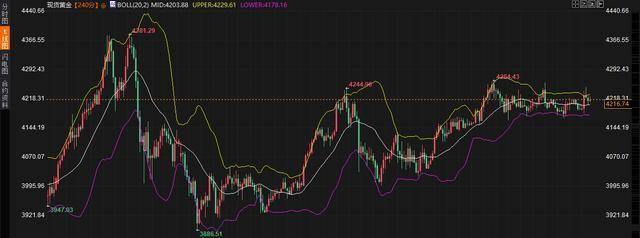
美联储降息后,美元美债齐跌,黄金也不涨,市场为什么全乱了?
Sou Hu Cai Jing· 2025-12-14 04:41
Group 1 - The Federal Reserve has initiated a significant operation by starting the purchase of Treasury bills, injecting nearly $40 billion into the banking system, which has altered short-term liquidity and caused short-term interest rates to decline sharply [1] - The bond market has experienced a "bull steepening" of the yield curve, with two-year rates dropping more significantly than ten-year rates, indicating a shift from "expected trading" to "liquidity trading" [1] - The dollar's weakness is attributed to the erosion of interest rate differentials, as short-term rates decline, reducing the dollar's attractiveness against the euro and yen, with a critical technical level at 98.50 [5] Group 2 - Gold prices have declined due to two short-term factors: profit-taking after the anticipated rate cuts and a mismatch in market reactions, as liquidity injections are not driven by fears of economic collapse [7][9] - The long-term support for gold remains intact, with nominal and real interest rates declining, which lowers the opportunity cost of holding non-yielding assets, while geopolitical tensions continue to support gold's underlying logic [9] - The recent market dislocation serves as a reminder for both policymakers and the market, highlighting the risks associated with unconventional operations and the need for time to adapt to changes in liquidity [15][16]
11月金融数据解读:年末信贷冲刺的诉求或不强
Huachuang Securities· 2025-12-13 14:37
1. Report Industry Investment Rating No information provided in the report. 2. Core Viewpoints - In November 2025, new RMB loans were 390 billion yuan, a year - on - year decrease of 190 billion yuan, and the credit balance growth rate dropped to 6.4%. New social financing scale was 2.4885 trillion yuan, a year - on - year increase of 159.7 billion yuan, and the stock growth rate of social financing remained at 8.5%. The year - on - year growth rate of M2 decreased from 8.2% to 8.0% due to the base effect, and the growth rate of M1 under the new caliber dropped from 6.2% to 4.9%. Overall, credit performance in November was weak, off - balance - sheet bills slightly supplemented, with the household sector being the main drag. The "shopping festival" effect had limited impact, and the marginal effect of the real estate sprint weakened. Social financing growth was maintained due to corporate bond issuance, and the M2 growth rate declined slightly, with non - bank deposits and household deposits all decreasing year - on - year [1][8]. 3. Summary by Directory 3.1 Credit: The household sector performed averagely, and the corporate sector was relatively better - **Household sector**: In November, household short - term loans decreased by 215.8 billion yuan, a year - on - year decrease of 178.8 billion yuan, remaining significantly below the seasonal level. The "shopping festival" effect on household consumption was limited. Household medium - and long - term loans increased by 10 billion yuan, slightly recovering from the previous month but still 290 billion yuan less than the same period last year. The real estate sales sprint had limited results, and the second - hand housing market continued to decline [2][10]. - **Corporate sector**: In November, corporate medium - and long - term loans increased by 170 billion yuan, a year - on - year decrease of 40 billion yuan. The pull of policy - based financial instruments was limited, and it was the economic "off - season" at the end of the year, so it was difficult for corporate medium - and long - term loans to have significant increments. Corporate short - term loans were close to the seasonal level, and on - balance - sheet bills slightly supplemented. Bill financing increased by 334.2 billion yuan, a year - on - year increase of 211.9 billion yuan. The demand for low - price "ticket grabbing" was limited [2][11][18]. 3.2 Social Financing: Government bonds had a high base at the end of the year, and corporate bonds increased - **Government bonds**: In November, the issuance scale of government bonds increased, with new government bonds reaching 1.2 trillion yuan, a year - on - year decrease of 104.8 billion yuan. In December, affected by the base effect, the net financing of government bonds was expected to be 0.4 trillion yuan, a year - on - year decrease of 0.8 trillion yuan, and the social financing growth rate might fall to around 8.2% by the end of the year [3][22]. - **Corporate bonds and entrusted loans**: After the policy - based financial instruments were fully disbursed, entrusted loans turned negative, with a decrease of 18.8 billion yuan in November. November was the "peak season" for corporate bond issuance, with new corporate bonds reaching 416.9 billion yuan, a year - on - year increase of 178.8 billion yuan. Some enterprises replaced loans with bonds after the bond yields dropped significantly in October [3][25][28]. 3.3 Deposits: M1 growth rate declined, and non - bank deposits weakened - **M1**: The new - caliber M1 increased less month - on - month compared with the same period last year, and the M2 - M1 gap widened slightly. In November, the new - caliber M1 increased by 893.7 billion yuan, a year - on - year decrease of 1.3 trillion yuan, and the year - on - year growth rate dropped from 6.2% to 4.9% [4][27]. - **M2 components**: Non - bank deposits grew more slowly, and household deposits were slightly lower than the historical average. In November, non - bank deposits increased by 80 billion yuan, a year - on - year decrease of 100 billion yuan; household deposits increased by 670 billion yuan, a year - on - year decrease of 120 billion yuan. The process of household deposits moving to non - bank deposits slowed down during the volatile adjustment of the equity market since November [4][34].
金融数据点评:表外融资支撑社融增速走平
SINOLINK SECURITIES· 2025-12-13 12:53
Report Summary 1. Industry Investment Rating No industry investment rating is provided in the report. 2. Core Viewpoints - In November, the new social financing scale was not low, mainly driven by corporate credit and off - balance - sheet financing. However, the credit structure remained poor, with bill financing reaching a record high for the same period, corporate medium - and long - term loans at the lowest level since 2016 for the same period, and both short - term and medium - and long - term household loans at record lows for the same period. The credit demand of the real sector was significantly weak. Looking ahead, the net financing scale of government bonds in December may decline slightly month - on - month, still dragging down social financing. The intensive implementation of 500 billion yuan of policy - based financial instrument support projects from October to December may boost social financing to some extent, but the weak credit demand and the banks' desire to reserve projects for January next year may cause significant disturbances to social financing [6][33]. 3. Summary by Content Social Financing Aggregate - In November, the stock growth rate of social financing remained flat at 8.5%. The new social financing in November was 2.49 trillion yuan, an increase of 159.7 billion yuan year - on - year. Compared with the average of 2.3 trillion yuan in the same period of the past five years, the new social financing scale in November this year was not much different from the historical average, falling at the upper edge of the new scale in the same period of the past five years [2][8]. Factors Contributing to the Increase in Social Financing - Off - balance - sheet financing was one of the main contributors to the year - on - year increase in social financing this month. In November, trust loans and undiscounted bank acceptance bills in the off - balance - sheet financing items both increased year - on - year, supporting social financing. The new trust loan scale in November has generally declined compared with October since 2020, but this month's trend was anti - seasonal, possibly related to the recently launched new policy - based financial instrument support projects. In addition, corporate bonds were another supporting item for the increase in social financing this month. In November, new corporate bonds increased by 178.8 billion yuan to 416.9 billion yuan, the highest level in the same period since 2020, and were the only item with an increase in direct financing projects [3][15][18]. Credit Structure - There was a divergence between the total social financing and the credit structure. Although the overall performance of social financing in November was not bad, credit was still weak. Corporate sector credit increased by 360 billion yuan year - on - year to 610 billion yuan, mainly driven by short - term corporate loans and bill financing, while medium - and long - term corporate loans decreased year - on - year. Household sector credit had a negative growth for the first time in the same period in history [4][20]. - New medium - and long - term corporate loans were at the lowest level in the same period since 2016. The reasons for the year - on - year increase in corporate sector credit this year were the low base of corporate sector credit in November 2024 and the simultaneous efforts of short - term corporate loans and bill financing in November this year, which pushed up the corporate credit scale this month. In November, short - term corporate loans increased by 110 billion yuan year - on - year to 100 billion yuan, higher than the average of 50.2 billion yuan in the same period of the past five years. The new short - term corporate loan scale this year has always been at the upper edge of the historical same period, possibly because although the economy was sluggish, enterprises still needed a certain amount of funds for business turnover, and banks may also have vigorously issued short - term corporate loans at the end of the quarter to boost the scale. The new bill financing scale in November was at a record high for the same period, indicating that corporate credit issuance was still weak, and bill financing was used to increase the total credit scale. Medium - and long - term corporate loans decreased by 40 billion yuan year - on - year to 170 billion yuan, the lowest level in the same period since 2016, and the growth rate of the balance of medium - and long - term corporate loans further declined by 0.05 percentage points to 7.8%, having declined for 28 consecutive months [4][20][21]. - Household sector credit had a negative growth for the first time in the same period in history. In November, household sector credit decreased by 476.3 billion yuan year - on - year to - 206.3 billion yuan. Among them, short - term household loans decreased by 178.8 billion yuan year - on - year to - 215.8 billion yuan, also setting a record low for the same period. Contrary to short - term corporate loans, short - term household loans have basically been at the lower edge of the historical same period this year, and have even set record lows for the same period many times, possibly indicating weak household consumption willingness against the background of unstable income expectations. Medium - and long - term household loans decreased by 290 billion yuan year - on - year to 1 billion yuan, also the lowest value for the same period. The year - on - year growth rate of the sales area of commercial housing in 30 large and medium - sized cities in November declined to - 30.91%, the lowest level since May 2024, while the growth rate of the commercial housing sales area in the same period last year was 11.6%, indicating that current household home - buying willingness was also weak [5][24]. M1 and M2 - The growth rate of M1 continued to decline by 1.3 percentage points. In November this year, the monthly incremental scale of M1 was 0.89 trillion yuan, while the incremental scale of M1 in November last year was 2.15 trillion yuan. As the impact of the ban on manual interest compensation had gradually dissipated and the low - base effect faded, the growth rate of M1 continued to decline by 1.3 percentage points to 4.9% in November [6][25]. - Fiscal expenditure had limited support for M2. In terms of deposits, both household and corporate deposits decreased year - on - year in November, indicating that deposit creation was also not ideal against the background of sluggish loans. At the same time, non - bank deposits decreased by 100 billion yuan year - on - year to 80 billion yuan, and the new scale was significantly lower than that in the same period since 2022. Historically, the growth rate of the non - bank deposit balance had a certain similarity with the trend of the Shanghai Composite Index. The stock market had a slight correction in November, which may have led to a low new non - bank deposit scale in November. In summary, the growth rate of M2 further declined by 0.2 percentage points to 8% in November. In addition, fiscal deposits decreased by 190 billion yuan year - on - year to - 50 billion yuan. The fiscal expenditure intensity was generally weaker than that from 2021 to 2023 and stronger than that in 2024, but its support for the M2 growth rate was limited [6][30].
表外融资支撑社融增速走平
Sou Hu Cai Jing· 2025-12-13 12:22
Group 1 - The core point of the article is that the total social financing (社融) in November remained stable at a growth rate of 8.5%, with new social financing amounting to 2.49 trillion yuan, an increase of 159.7 billion yuan year-on-year, which is close to the historical average for the past five years [2][31] Group 2 - Off-balance-sheet financing was a major contributor to the year-on-year increase in social financing, with trust loans and discounted bills showing significant growth [3][11] - In November, corporate bonds increased by 178.8 billion yuan to 416.9 billion yuan, marking the highest level for this period since 2020, and was the only direct financing item to see an increase [4][12] Group 3 - Although the overall performance of social financing in November was decent, the credit situation remained weak, particularly in the corporate sector, where short-term loans and bill financing were the main contributors to a year-on-year increase of 360 billion yuan to 610 billion yuan [4][15] - The residential sector experienced its first negative growth in history, with a year-on-year decrease of 476.3 billion yuan to -206.3 billion yuan, indicating weak consumer sentiment [5][19] Group 4 - The M1 growth rate continued to decline, dropping by 1.3 percentage points to 4.9%, with the current month's increment of 0.89 trillion yuan being significantly lower than the previous year's 2.15 trillion yuan [6][21] - M2 growth also fell by 0.2 percentage points to 8%, with limited support from fiscal spending, which decreased by 190 billion yuan to -50 billion yuan compared to the previous year [28][31]

2025 年 11 月金融数据点评:如何解读 11 月金融数据?
Hua Yuan Zheng Quan· 2025-12-13 08:00
1. Report Industry Investment Rating - No industry investment rating is provided in the report. 2. Core Viewpoints - Credit demand remains weak, with new loans in November significantly lower than the same period last year, and future new loans may continue to be lower year - on - year, with loan growth rates continuing to decline [2] - M1 growth continues to decline, and it may further drop in the future. M2 growth decreased slightly month - on - month in November [2] - Social financing growth may continue to decline in the next few months, with an expected year - end social financing growth rate of around 8.2% [2] - The bond market in 2026 may perform better than expected, with a recommended focus on the allocation value of 5Y bank capital bonds and ultra - long - term interest - rate bonds [2] 3. Summary by Related Content 3.1 November Financial Data - On the evening of December 12, the central bank disclosed November financial data: new loans were 39 billion yuan, and social financing increased by 2.49 trillion yuan. At the end of November, M2 reached 337 trillion yuan, a year - on - year increase of 8.0%; M1 increased by 4.9% year - on - year; and the social financing growth rate was 8.5% [1] 3.2 Credit Situation - Due to weak credit demand, new loans in the first month of a quarter are usually low, while banks prefer to boost credit scales at the end of a quarter. In November, new loans were only 39 billion yuan, significantly lower than the same period last year. Personal loans were - 20.63 billion yuan, corporate loans were + 61 billion yuan, and non - bank inter - bank loans were - 1.47 billion yuan [2] - In November, short - term personal loans were - 21.58 billion yuan, and long - term personal loans were + 1 billion yuan, both significantly lower than the same period last year, indicating that residents are actively de - leveraging, and consumption and mortgage credit demands are weak. Corporate short - term loans were + 10 billion yuan, corporate long - term loans were + 17 billion yuan, and bill financing was + 33.42 billion yuan, showing weak corporate credit demand [2] 3.3 M1 and M2 Situation - Since January 2025, the central bank has used a new M1 caliber, which further includes personal current deposits and non - bank payment institution customer reserves. The new M1 growth rate is more stable. In November, the new M1 growth rate was 4.9%, 1.3 percentage points lower than the end of last month, and has been declining since the end of September. The M2 growth rate was 8.0% at the end of November, a slight month - on - month decrease [2] 3.4 Social Financing Situation - In November, the social financing increment was 2.49 trillion yuan (2.33 trillion yuan in November 2024), a slight year - on - year increase, mainly from off - balance - sheet financing and net corporate bond financing. The increment of RMB loans to the real economy in November was 40.53 billion yuan, 11.63 billion yuan less than the same period last year [2] - Entrusted loans were - 1.88 billion yuan, trust loans were + 8.44 billion yuan, undiscounted bank acceptance bills were + 14.9 billion yuan; corporate bond net financing was 41.69 billion yuan, 17.88 billion yuan more than the same period last year; government bond net financing was 1.2 trillion yuan. Due to the slight year - on - year increase in social financing, the social financing growth rate remained flat at 8.5% at the end of November [2] - It is expected that the new loans (social financing caliber) for the whole year will be lower year - on - year, government bond net financing will expand significantly year - on - year, social financing will increase year - on - year, the social financing growth rate may first rise and then fall, and the year - end social financing growth rate will be around 8.2%. Due to the misaligned issuance rhythm of government bonds, the social financing growth rate peaked in July, and it may continue to decline significantly in the next few months [2] 3.5 Bond Market Outlook - Since the second half of the year, the bond market has often deviated from the fundamentals and is dominated by institutional behavior. Currently, the long - term bond yield has reached a new high this year, and with the increasing economic downward pressure, the probability of a successful long - position is high. It is expected that the policy interest rate will be lowered by about 20BP in 2026, with a possible 10BP cut in the first quarter [2] - Currently, many non - bank institutions are bearish on the bond market, but the bond market in 2026 may perform better than expected. The rapid decline in bank liability costs, the high allocation value of government bonds, and weak credit demand are expected to support banks to significantly increase bond investments. In addition, the rapid growth of wealth management scale and the low proportion of bond holdings in wealth management are expected to support credit bonds within 3 years. It is recommended to focus on the allocation value of 5Y bank capital bonds and ultra - long - term interest - rate bonds [2]
2025年11月金融数据点评:M1增速:能否企稳
GUOTAI HAITONG SECURITIES· 2025-12-13 07:20
Group 1: Monetary Data - M1 growth rate fell to 4.9% in November, down from 6.2% in the previous month[17] - M2 growth rate decreased to 8.0%, compared to 8.2% previously[17] - The decline in M1 growth is attributed to high base effects, reduced fiscal spending, and a surge in demand for time deposits[20] Group 2: Social Financing and Credit - Social financing stock growth rate dropped to 7.7%, down from 8.0%, with new social financing of 2.49 trillion yuan, an increase of 159.7 billion yuan year-on-year[7] - New loans (social financing perspective) amounted to 405.3 billion yuan, a decrease of 116.3 billion yuan year-on-year, with the loan balance falling to 6.4%[7] - Corporate bonds saw an increase of 416.9 billion yuan, up 178.8 billion yuan year-on-year, likely due to low base effects and policy support for the tech bond market[7] Group 3: Credit Trends - New credit in November was 390 billion yuan, a year-on-year decrease of 190 billion yuan, with both corporate and household loans continuing to decline[11] - The decline in private loans is offset by strong bill financing, which increased by 334.2 billion yuan, up 211.9 billion yuan year-on-year[11] - Household short-term loans decreased significantly, influenced by a slowdown in consumer subsidies and real estate price dynamics[11] Group 4: Future Outlook and Risks - There is potential for M1 to stabilize marginally due to continued fiscal support and the trend of RMB appreciation driving corporate foreign exchange settlements[24] - The central economic work conference emphasized maintaining necessary fiscal deficits and total expenditure, which may help stabilize liquidity[24] - Risks include the possibility that the private sector's balance sheet repair process may not meet expectations[25]
活力与韧性、拓新与赋能,回答时代命题——第十九届华夏机构投资者年会暨华夏金融(保险)科技论坛召开
Hua Xia Shi Bao· 2025-12-13 06:17
Group 1 - The forum held in Beijing focused on the theme of "Vitality and Resilience, Innovation and Empowerment," aiming to address contemporary challenges and explore future pathways for development [2][5] - The Chinese economy demonstrated resilience with a GDP growth of 5.2% year-on-year in the first three quarters, amounting to an economic increment of 39,679 billion [3][5] - The asset management industry in China is entering a golden development period, with a combined entrusted management scale of approximately 70 trillion, serving as a stabilizing force for the capital market [8][29] Group 2 - The banking sector is urged to balance development and safety, enhancing risk prevention capabilities while integrating deeply into the high-quality economic development framework [7][29] - The financial industry is increasingly focusing on technology to support innovation and the development of technology enterprises, marking a significant leap in financial technology [29][32] - The insurance industry is facing challenges due to outdated operational models, yet it remains a sunrise industry with significant potential for growth, particularly in serving low-income households [24][29] Group 3 - The transition of China's economy from high-speed to medium-speed growth necessitates a shift in growth drivers from investment and exports to innovation and consumption [10][12] - The capital market is encouraged to support new productive forces through a more inclusive venture capital market and a well-established legal environment [14][29] - The importance of long-term value creation in the face of uncertainty is emphasized, with a focus on managing market volatility and balancing returns [34][37]