
农产品

Search documents
长江期货养殖产业月报-20260202
Chang Jiang Qi Huo· 2026-02-02 06:08
1. Report Industry Investment Ratings No relevant information provided. 2. Core Views of the Report - The pig market shows both increasing supply and demand, with futures prices oscillating at a low level. In the short - term, prices are not optimistic due to expected supply growth and cautious demand. In the long - term, the first half of the year may face price pressure, and the second half depends on capacity reduction [6]. - The egg market has supply pressure, and the market is running weakly. In the short - term, egg prices are expected to decline after the Spring Festival. In the long - term, supply pressure will still exist, and the market will experience a bottom - grinding process [56]. - The corn market has a relatively balanced supply and demand, with the market oscillating. In the short - term, the market is balanced, and prices are expected to remain high. In the long - term, the supply - demand pattern in the 25/26 season is relatively loose, which limits price increases [93]. 3. Summary by Directory 3.1 Pig 3.1.1 Market Review - As of January 30, the national pig price was 12.21 yuan/kg, down 0.46 yuan/kg from the end of last month. The futures price of contract 03 was 11,220 yuan/ton, down 575 yuan/ton from the end of last month, a decline of 4.87%. The basis of contract 03 was 1,240 yuan/ton, down 145 yuan/ton from the end of last month. Pig prices rose first and then fell in January, and futures prices followed the spot trend [6][8]. 3.1.2 Supply - The reduction of breeding sows' capacity is slow, and the inventory is still above the normal level. The production performance of sows is high, and the supply pressure in the first half of the year is large. The inventory of live pigs increased year - on - year, and the proportion of large pigs increased. The average slaughter weight decreased slightly and was at a high level in the same period [10][14][20]. 3.1.3 Demand - The slaughtering start - up rate first decreased and then increased. The fresh - frozen spread was low, and the consumption was less than expected. The inventory digestion was slow, and the frozen product inventory was still at a high level, which would suppress the supply before and after the Spring Festival [28][34]. 3.1.4 Cost and Profit - The breeding profit turned positive, and the long - term cost increased at a low level. As of January 30, the self - breeding and self - raising profit was 96.27 yuan/head, and the profit of purchasing piglets for breeding was 47.8 yuan/head [38]. 3.1.5 Policy - The policy guides the orderly exit of capacity and stabilizes prices. The state mainly conducts reserve rotation, and attention should be paid to capacity adjustment, reserve purchase, and reserve rotation policies [44]. 3.1.6 Driving Summary - In the short - term, the market oscillates at a low level, with both supply and demand increasing, and prices are not optimistic. In the long - term, the price is expected to bottom out and rise, but the capacity reduction is expected to be slow [47][48]. 3.1.7 Valuation - The near - month contracts are at a discount, and the far - month contracts are at a premium. The basis of multiple contracts decreased compared with the previous month [50]. 3.2 Egg 3.2.1 Market Review - As of January 30, the average price of eggs in the main producing areas was 4 yuan/jin, up 1 yuan/jin from the end of December. The main contract closed at 3,002 yuan/500 kg, up 51 yuan/500 kg from the end of December. The basis of the main contract was 618 yuan/500 kg, strengthening by 789 yuan/500 kg from the end of December [62]. 3.2.2 Breeding Profit - The expected profit of egg - laying hens on January 21 was 3.19 yuan/hen, up 29.79 yuan/hen from the end of December. The weekly average profit per jin of eggs on January 29 was 0.66 yuan/jin, up 0.9 yuan/jin from the end of December [64]. 3.2.3 Chick Rearing - In January 2026, the monthly chick output of sample enterprises was 43.22 million, an increase of 3.63 million month - on - month and a decrease of 1.61 million year - on - year. The average price of egg - laying chicks in the main producing areas on January 30 was 3.2 yuan/chick, up 0.4 yuan/chick from the end of December [67]. 3.2.4 Culling - In January 2026, the monthly culling volume of Chinese egg - laying hens was 78.552 million, a decrease of 9.6031 million month - on - month and an increase of 3.121 million year - on - year. The average culling age on January 29 was 493 days, an increase of 9 days from the end of December [71]. 3.2.5 Inventory of Laying Hens - In January, the inventory of laying hens in the country was 1.342 billion, a decrease of 0.02 billion month - on - month and an increase of 0.053 billion year - on - year. The empty - pen rate was 8.09%, a decrease of 0.08% month - on - month and a decrease of 0.12% year - on - year [76]. 3.2.6 Egg Demand - The egg sales volume in representative sales areas in January was 31,060 tons, a decrease of 2.54% month - on - month. The average wholesale price of pork was 18.55 yuan/kg, up 5.5% from the end of December [80]. 3.2.7 Egg Inventory - As of January 30, the production - link inventory was 1.01 days, a decrease of 0.03 days from the end of December. The circulation - link inventory was 1.09 days, a decrease of 0.04 days from the end of December [87]. 3.2.8 Valuation Analysis - The main contract JD2603 is at the second - lowest level since 2020, the basis is at a relatively high level, and the valuation is low. The spot price is expected to drop rapidly, driving the basis to repair [89]. 3.3 Corn 3.3.1 Market Review - As of January 30, the closing price of corn at Jinzhou Port, Liaoning was 2,340 yuan/ton, up 45 yuan/ton from the end of December. The main contract 2603 closed at 2,271 yuan/ton, up 10 yuan/ton from the end of December. The basis of the main contract was 69 yuan/ton, weakening by 35 yuan/ton from the end of December [95]. 3.3.2 Supply - The national grass - roots grain sales progress was 60%, slower than the same period last year. The import volume in December was 800,000 tons, a month - on - month increase of 43% and a year - on - year increase of 135.3%. The inventories of the north and south ports were 1.8 million tons and 505,000 tons respectively [95]. 3.3.3 Demand - The current high inventory supports the rigid demand for feed. If the corn price continues to rise, the wheat feed substitution may increase. The deep - processing profit turns negative, and the start - up rate is at a low level in the same period [95]. 3.3.4 Inventory - The total inventory of processing enterprises was 4.405 million tons, a month - on - month increase of 26.1%. The inventory days of feed enterprises were 31.93 days, an increase of 2.01 days from the end of December [132]. 3.3.5 Valuation - As of January 30, the C2603 futures price was at the second - lowest level in the same period in the past six years, and the basis was at a relatively high position in the historical period [134].
广货行天下, “湛品”进长沙奏响粤湘协作乐章
Nan Fang Nong Cun Bao· 2026-02-02 05:04
Core Viewpoint - The event "Guang Goods Go Global: Zhanpin Enters Changsha" marks a significant step in deepening collaboration between Guangdong and Hunan, showcasing Zhanjiang's seafood and agricultural products in the central China market [4][18][72]. Group 1: Event Overview - The event features a blend of intangible cultural heritage performances, food tasting, production and sales connections, and sports exchanges, highlighting Zhanjiang's entry into the Hunan market [6][7][18]. - The event aims to build a bridge for cooperation between Guangdong and Hunan, promoting mutual development [18][72]. Group 2: Cultural and Culinary Exchange - The event includes a cultural performance combining the "Danjia Fisherman's Song" and "Hunan Drum Dance," symbolizing the harmony of different cultures [12][14]. - Renowned chefs from Guangdong and Hunan collaborated to create fusion dishes, showcasing the unique flavors of Zhanjiang seafood and Hunan cuisine [30][39][42]. Group 3: Economic Impact - The event facilitated partnerships between Zhanjiang enterprises and 12 Hunan companies, resulting in a total contract value of 1.1 billion yuan [54][58]. - Zhanjiang's seafood products, including golden pomfret and shrimp, are expected to reach consumers in Changsha through a stable supply chain [59][60]. Group 4: Sports and Community Engagement - The event included a sports exchange segment, where football associations from Zhanjiang and Changsha exchanged signed footballs and jerseys, enhancing cultural ties through sports [62][65]. - This interaction reflects the integration of cultural, tourism, and sports industries between the two regions [65][73]. Group 5: Strategic Importance - The event is part of the provincial strategy "Guang Goods Go Global," positioning Zhanjiang as a key player in the central China market [23][24]. - It represents a critical step for Zhanjiang in expanding its development footprint and showcases Guangdong's role in promoting regional cooperation and complementary advantages [73][74].


跨越山海,粤吉农业合作情深意长|广货行天下 粤味暖长春①
Nan Fang Nong Cun Bao· 2026-02-02 03:27
Core Viewpoint - The collaboration between Guangdong and Jilin provinces in agricultural sectors is deepening, showcasing a successful model of inter-provincial cooperation that enhances product exchange and market integration, particularly through events like the Jilin Winter Agricultural Expo [1][4][50]. Group 1: Event Highlights - The 16th Jilin (Changchun) Winter Agricultural Expo will take place from February 6-9, featuring numerous Guangdong enterprises presenting high-quality agricultural products to the Northeast [3][4]. - In 2023, Jilin selected 45 agricultural enterprises to showcase over 400 "Jilin brand" agricultural products, achieving a sales revenue of 207,400 yuan and a procurement intention of 31.462 million yuan during a promotional event in Shenzhen [17][19]. - The 21st China International Agricultural Products Trade Fair saw Jilin's 38 enterprises present nearly 500 agricultural products, generating a sales revenue of 1.37 million yuan and a signing amount of 36.87 million yuan [21][22]. Group 2: Cooperation Development - The cooperation between Guangdong and Jilin began with top-level design and has evolved into practical actions, with a focus on deepening strategic alignment and resource sharing [8][10]. - The "Four Shares" model proposed by Jilin includes sharing market systems, production workshops, storage cloud warehouses, and research platforms, aiming for deeper resource integration and cost control [34][35]. - The collaboration has transitioned from mere policy promotion to joint construction of bases, mutual recognition of standards, and brand co-development, marking a significant shift in partnership dynamics [12][13]. Group 3: Future Prospects - Looking ahead, the collaboration is expected to reach higher levels and broader fields, with events like the "Jilin Quality Livestock Products Spring Festival" in Shenzhen and Guangdong's participation in the 16th Jilin Winter Agricultural Expo [46][48]. - The ongoing efforts aim to create a sustainable and vibrant agricultural cooperation model that benefits both provinces, enhancing the quality of agricultural modernization [50].
格林大华期货早盘提示:白糖,红枣-20260202
Ge Lin Qi Huo· 2026-02-02 02:35
Group 1: Report Industry Investment Ratings - The investment ratings for different commodities are as follows: for white sugar, it is "oscillating"; for red dates, it is "oscillating and weakly bearish"; for the rubber series, it is "oscillating" [1][4][5] Group 2: Core Views of the Report - For white sugar, the global sugar market in the 2026/27 season is expected to have a reduced surplus. The external market is pressured by strong sugar production data from India, Thailand, and China, but some institutions are lowering production forecasts, which may support long - term prices. The domestic market lacks fundamental and external guidance, and short - term trading should be based on a high - selling and low - buying strategy [1] - For red dates, the current inventory reduction speed has accelerated, but the overall supply pressure remains the main factor suppressing prices. Technically, there are signs of bottoming out, but there is still a lack of significant positive factors after the festival. It is recommended to take a bearish view in the medium - to - long term [4] - For the rubber series, natural rubber is entering a seasonal reduction period, with strong raw material prices supported by stocking demand, but weak downstream procurement. It may fluctuate with the overall commodity market in the short term and has a long - term bullish expectation. Synthetic rubber may show a consolidation trend due to the end of festival stocking and stable upstream raw material supply [5] Group 3: Summaries by Commodity White Sugar - **Market Performance**: On Friday, the SR605 contract closed at 5248 yuan/ton, down 0.17% during the day and 5226 yuan/ton at night; the SR609 contract closed at 5264 yuan/ton, down 0.09% during the day and 5240 yuan/ton at night [1] - **Important Information**: The spot price of white sugar in Guangxi on Friday was 5293 yuan/ton, up 8 yuan/ton. The supply surplus in the 2026/27 season is expected to be 156,000 tons. Brazil exported 1.7376 million tons of sugar and honey in the first four weeks of January, with a daily average of 108,600 tons [1] - **Market Logic**: The external market is pressured by strong production data, but production forecast cuts may support long - term prices. The domestic market lacks guidance and has significant upward pressure [1] - **Trading Strategy**: Focus on the 5100 - 5300 range for SR605, and use a short - term high - selling and low - buying strategy [1] Red Dates - **Market Performance**: On Friday, the CJ605 contract closed at 8950 yuan/ton, up 0.62%; the CJ609 contract closed at 9165 yuan/ton, up 0.71% [4] - **Important Information**: The inventory of 36 sample physical warehouses last week was 13,143 tons, a decrease of 925 tons from the previous week. The wholesale price of top - grade red dates in Hebei on Friday was 9.31 yuan/kg, up 0.01 yuan/kg [4] - **Market Logic**: The price center has slightly increased, but the supply pressure remains the main factor. Technically, there are signs of bottoming out, but there is a lack of positive factors after the festival [4] - **Trading Strategy**: Hold short positions in the CJ605 contract, and those not yet in the market should short on rallies [4] Rubber Series - **Market Performance**: As of January 30, the RU2605 contract closed at 16,360 yuan/ton, down 1.98%; the NR2603 contract closed at 13,235 yuan/ton, down 1.64%; the BR2603 contract closed at 13,390 yuan/ton, unchanged [5] - **Important Information**: On Friday, the price of Thai raw material glue was 58.8 baht/kg, and the cup rubber price was 53.5 baht/kg. As of January 25, the total inventory of natural rubber in Qingdao was 5.845 million tons, a decrease of 0.04 million tons [5] - **Market Logic**: Natural rubber is in a seasonal reduction period, with strong raw material prices but weak downstream procurement. Synthetic rubber may consolidate due to the end of festival stocking [5] - **Trading Strategy**: Pay attention to the lower support, and those not yet in the market can wait for the adjustment to end and then go long with a light position [5]
2026年农产品价格展望
2026-02-02 02:22
Summary of Conference Call on Agricultural Products Outlook Industry Overview - The conference call discusses the agricultural products industry, focusing on corn, wheat, soybeans, and feed production in China for the years 2025 and 2026 [1][2][3]. Key Points and Arguments Corn Market Outlook - In 2025, domestic feed production and sales exceeded expectations, with corn prices supported by higher-than-expected minimum prices for wheat [1]. - A significant decline in corn imports by over 80% in 2025 is attributed to increased domestic production, with wheat output reaching 140 million tons and corn exceeding 300 million tons [1][4]. - The corn supply is expected to be relatively loose in 2026, leading to stable prices [4]. Wheat and Feed Demand - The demand for corn is expected to be suppressed due to the increasing use of wheat in feed, driven by national policies promoting reduction and substitution [1][5]. - When the price difference between wheat and other agricultural products is below 200 RMB/ton, the substitution ratio of wheat for corn and soybean meal increases [6]. - The feed industry is nearing a growth ceiling, with limited growth in soybean meal demand due to declining profitability in the livestock sector [8]. Soybean Market Dynamics - Global soybean planting area continues to grow, particularly in Brazil, which has improved its transportation and storage capabilities, reducing costs and enhancing supply efficiency [3][7]. - The expected price range for domestic soybean meal futures in 2026 is between 2,650 and 3,400 RMB/ton, with spot prices potentially reaching around 3,300 RMB/ton by March-April [3][10]. Feed Industry Trends - The feed composition is expected to shift, with wheat maintaining a higher proportion, which may negatively impact the demand for corn and soybean meal [6][8]. - The domestic soybean crushing capacity is saturated, leading to no tight supply issues, although local price discrepancies exist [9]. External Factors Influencing Prices - The agricultural market has shifted to a buyer's market due to global grain abundance, with rising transportation costs being manageable through upstream profit compression [3][10]. - The impact of rising oil prices on agricultural commodities is significant, as it influences financial markets and commodity prices, although the effect may be delayed [11]. Competitive Landscape for Domestic Feed Enterprises - Domestic feed companies are increasingly expanding overseas due to market saturation at home and the competitive advantage in Southeast Asia, where local farming practices lag behind [12]. - The complexity of feed formulations and strong cost optimization capabilities provide a competitive edge for Chinese companies in international markets [12]. Additional Important Insights - The livestock sector is facing profitability challenges, particularly in the pig and poultry industries, which may limit future demand for soybean meal [8][12]. - The reliance on soybean meal in pig feed is low, with potential for further reduction as feed formulations evolve [12]. This summary encapsulates the critical insights from the conference call, highlighting the dynamics of the agricultural products market, particularly focusing on corn, wheat, and soybeans, along with the implications for feed production and pricing trends.

《农产品》日报-20260202
Guang Fa Qi Huo· 2026-02-02 02:15
Report Industry Investment Ratings - There is no information provided regarding the industry investment ratings in the reports. Core Views Oils and Fats - The prices of domestic vegetable oils followed the trend of stagnation and correction due to the stagnation and correction of US crude oil and US soybean oil, as well as the weakening of macro - sentiment. The main contract of rapeseed oil oscillated and adjusted below 9400 yuan. Short - term attention should be paid to the support at the 4200 - 4250 ringgit range for Malaysian BMD crude palm oil futures. [1] Cotton - Cotton prices are supported under inventory pressure, with strong buying power in the market and decent consumption. However, as the Spring Festival approaches, new textile orders decline, and demand is mainly for essential needs. Short - term cotton prices may fluctuate widely, and attention should be paid to the support around 14500 yuan. [2] Sugar - Internationally, Brazil is approaching the end of the crushing season, India's sugar production has increased significantly, and Thailand's sugar production may decline slightly. It is expected that raw sugar will oscillate at a low level of 14 - 15 cents. Domestically, the Spring Festival stocking is nearing the end, prices are weakening, and the support from the spot market is gradually weakening. The price is in the bottom - grinding stage, and the market is expected to follow the overall macro - sentiment, with attention paid to the pressure around the previous high of 5300 yuan. [3] Red Dates - The Spring Festival is the traditional consumption peak season for red dates. Due to the late Spring Festival this year, the downstream has sufficient time for stocking. The futures are still in the low - valuation range, and the registration volume of new - season red date futures warehouse receipts is relatively small. Attention should be paid to the spot trading and inventory situation of red dates. [4] Apples - During the Spring Festival stocking peak, the trading activity in major apple - producing areas has increased, and the cold - storage inventory has decreased. However, the transaction of farmer - owned apples is still average, and the arrival volume at the Guangdong wholesale market has slightly decreased. Attention should be paid to the post - festival inventory reduction rhythm. [7][12] Corn and Corn Starch - Before the festival, the selling window in the grass - roots level has shortened, and the enthusiasm for selling has slightly increased. The price is running weakly, but the price decline is limited due to the low - level inventory of the mid - downstream and the strong price - support sentiment. The demand side shows that the deep - processing inventory has increased but is still at a low level, and feed enterprises mainly purchase on demand. The short - term corn price may decline slightly, and attention should be paid to the selling rhythm and policy release. [14] Meal - The US soybeans have strong support below. Although the short - term impact of Argentina's drought speculation and Brazil's logistics supports the market, the market has declined due to the influence of macro - sentiment. The domestic spot market remains loose, with a high operating rate. The inventory of soybeans and soybean meal is still relatively high, and the downstream inventory is sufficient with limited stocking willingness. The arrival rhythm is uncertain, and there is speculation about customs clearance. The downside space for soybean and rapeseed meal is also limited. The market's pre - festival stocking sentiment is expected to gradually weaken, and the market may continue to decline with attention paid to the driving force of macro - sentiment. [18] Pigs - The spot price is oscillating weakly, the supply is increasing, and the secondary fattening inventory is rapidly declining. The large - sized pigs that were previously reluctant to sell are now accelerating their sales. The supply pressure is increasing, and there is an expectation of early sales in February. The current futures and spot prices are both weakening, with limited fundamental positives. The market is mainly trading the off - season demand after the Spring Festival, and it is expected that the market will maintain a bottom - oscillating pattern. [20] Eggs - Egg - raising enterprises are actively selling, and the inventory is normal. The supply of large - sized eggs is sufficient, while that of small - sized eggs is tight. The egg price has reached a phased high, and the downstream demand is not keeping up. As the Spring Festival approaches, the egg sales shift from external to internal. It is expected that the egg price will maintain an oscillating and weakening trend in the short term. [24] Summary by Related Catalogs Oils and Fats - **Price Changes**: On January 30, compared with January 29, the prices of soybean oil, palm oil, and rapeseed oil all decreased to varying degrees. For example, the Jiangsu average price of soybean oil decreased by 120 yuan to 8670 yuan, a decrease of 1.37%. [1] - **Basis Changes**: The basis of various oils also changed. For example, the basis of soybean oil Y2605 decreased by 20 yuan to 388 yuan, a decrease of 4.90%. [1] - **Inventory and Other Information**: The inventory of palm oil, soybean oil, and rapeseed oil in coastal areas is provided, and the impact of factors such as rainfall in Argentina on CBOT soybeans and the impact of Trump's speech on US soybean oil are also analyzed. [1] Cotton - **Futures Market**: The prices of cotton 2605 and 2609 decreased, with the cotton 2605 price dropping by 240 yuan to 14670 yuan, a decrease of 1.61%. The ICE US cotton main contract also decreased slightly. [2] - **Spot Market**: The Xinjiang arrival price and CC Index of 3128B increased, while the FC Index:M: 1% decreased. The basis between 3128B and the 05 and 09 contracts increased significantly. [2] - **Industry Situation**: The inventory of some regions decreased, the industrial inventory increased, the import volume increased significantly, and the inventory in the bonded area also increased. The inventory days of yarn and grey cloth, as well as the processing profit of spinning enterprises, showed different changes. The retail sales of clothing and textile products and the export volume of related products also had corresponding changes. [2] Sugar - **Futures Market**: The prices of sugar 2605 and 2609 decreased slightly, and the ICE raw sugar main contract decreased by 0.45 cents to 14.26 cents, a decrease of 3.06%. [3] - **Spot Market**: The Nanning spot price increased slightly, and the basis also changed. The import prices of Brazilian sugar (both within and outside the quota) decreased. [3] - **Industry Situation**: The cumulative sugar production and sales in the country and Guangxi decreased year - on - year, the sales rate decreased, the industrial inventory in the country increased, and the sugar import volume increased. [3] Red Dates - **Futures Market**: The prices of red date 2605, 2607, and 2609 all increased slightly. The basis and spreads between different contracts also changed. [4] - **Spot Market**: The Cangzhou spot prices of different grades of red dates changed slightly. [4] - **Inventory and Other Information**: The inventory of 36 sample points decreased week - on - week but increased year - on - year. The arrival volume at the Guangdong Ruyifang market increased. [4] Apples - **Futures Market**: The prices of apple 2605 and 2610 decreased, with the apple 2605 price dropping by 124 yuan to 9518 yuan, a decrease of 1.29%. [7] - **Spot Market**: The arrival volume at major fruit wholesale markets decreased slightly. [7] - **Inventory and Other Information**: The national cold - storage inventory decreased by 28.73 tons to 654.05 tons, a decrease of 4.21%. [7][12] Corn and Corn Starch - **Corn**: The price of corn 2603 decreased slightly, the basis increased, the 3 - 7 spread decreased, the north - south trade profit increased, the Brazilian arrival duty - paid price increased slightly, and the import profit decreased. The number of remaining vehicles at Shandong deep - processing enterprises in the morning increased, the trading volume decreased, and the warehouse receipts increased. [14] - **Corn Starch**: The price of corn starch 2603 decreased, the basis increased, the 3 - 7 spread increased slightly, the starch - corn 03 spread decreased, the Shandong starch profit decreased, the trading volume decreased, and the warehouse receipts remained unchanged. [14] Meal - **Soybean Meal**: The spot price of Jiangsu soybean meal increased slightly, the futures price of M2605 decreased, the basis increased, the spot basis quote increased, the Brazilian 3 - month shipping schedule's import crushing profit increased, and the warehouse receipts remained unchanged. [18] - **Rapeseed Meal**: The spot price of Jiangsu rapeseed meal decreased, the futures price of RM2605 decreased, the basis increased, the Canadian 3 - month shipping schedule's import crushing profit decreased, and the warehouse receipts were zero. [18] - **Soybeans**: The spot prices of Harbin soybeans and Jiangsu imported soybeans remained unchanged, the futures prices of soybean one and soybean two main contracts decreased, the basis increased, and the warehouse receipts remained unchanged. [18] - **Spreads**: The spreads between different contracts of soybean meal and rapeseed meal, as well as the oil - meal ratio and the soybean - rapeseed meal spread, all changed. [18] Pigs - **Futures Market**: The price of the main contract decreased, the price of pig 2605 increased slightly, the price of pig 2603 increased slightly, the 3 - 5 spread increased, the main contract's trading volume decreased, and the warehouse receipts decreased to zero. [20] - **Spot Market**: The spot prices in various regions decreased to varying degrees, and the local premiums and discounts are provided. [20] - **Spot Indicators**: The daily slaughter volume of sample slaughterhouses decreased slightly, the weekly white - strip price remained unchanged, the weekly prices of piglets and sows remained unchanged, the weekly slaughter weight decreased, the weekly self - breeding profit decreased, the weekly purchased - pig breeding profit increased, and the monthly fertile sow inventory decreased. [20] Eggs - **Futures Market**: The prices of egg 03 and 04 contracts decreased, the basis increased, and the 3 - 4 spread increased. [24] - **Spot Market**: The egg - producing area price increased, the egg - chick price increased, the culled - hen price increased, the egg - feed ratio increased, and the breeding profit increased significantly. [24]
豆粕周报:多空因素交织,连粕整体震荡-20260202
Tong Guan Jin Yuan Qi Huo· 2026-02-02 01:59
Report Title - Bean Meal Weekly Report [1] Report Date - February 2, 2026 [3] 1. Report Industry Investment Rating - Not provided in the report 2. Core Viewpoints - Last week, the CBOT March soybean contract fell 3.25 to close at 1064.25 cents per bushel, a decline of 0.30%; the May bean meal contract rose 16 to close at 2767 yuan per ton, an increase of 0.58%; the South China bean meal spot price rose 20 to close at 3120 yuan per ton, an increase of 0.65%; the May rapeseed meal contract rose 52 to close at 2287 yuan per ton, an increase of 2.33%; the Guangxi rapeseed meal spot price rose 30 to close at 2460 yuan per ton, an increase of 1.23% [4][7] - The domestic Dalian Commodity Exchange (DCE) bean meal main contract fluctuated within the week, with its upside limited under the pattern of ample supply. Bullish sentiment on the potential drought in the Argentine production area increased, combined with strong bullish sentiment in the domestic commodity market in the first half of the week and pre - Chinese New Year stocking demand, leading to active downstream pick - ups and an increase in feed enterprises' bean meal inventories, which pushed up the futures price. However, as market sentiment cooled, with the progress of the Brazilian harvest, increased supply, slower US soybean export sales, and news of a possible restart of imported soybean auctions, the DCE bean meal contract fell sharply and ended slightly higher. The rapeseed meal rebounded more strongly than bean meal due to the unclear China - Canada trade relationship [4][7] - The Brazilian soybean harvest is progressing steadily, and the increase in precipitation in the Argentine production area has alleviated drought concerns. The expectation of a bumper harvest in South America has not been disproven. US soybean export sales have slowed down, and China's soybean procurement plans for February - March shipments are basically completed, with subsequent purchases shifting to the South American market, putting pressure on the external market. With the Chinese New Year approaching in two weeks, the oil mill's crushing and operation rate will gradually decline, and the pre - holiday stocking demand is coming to an end. Feed enterprises' bean meal inventories continue to increase. Overall, the DCE bean meal is expected to fluctuate in the short term [4][11] 3. Summary by Directory 3.1 Market Data | Contract | January 30 | January 23 | Change | Change Rate | Unit | | --- | --- | --- | --- | --- | --- | | CBOT Soybean | 1064.25 | 1067.50 | -3.25 | -0.30% | Cents per bushel | | CNF Import Price: Brazil | 451.00 | 448.00 | 3.00 | 0.67% | US dollars per ton | | CNF Import Price: US Gulf | 483.00 | 477.00 | 6.00 | 1.26% | US dollars per ton | | Brazilian Soybean Crushing Margin on the Futures Market | 81.26 | 71.46 | 9.81 | | Yuan per ton | | DCE Bean Meal | 2767.00 | 2751.00 | 16.00 | 0.58% | Yuan per ton | | CZCE Rapeseed Meal | 2287.00 | 2235.00 | 52.00 | 2.33% | Yuan per ton | | Bean Meal - Rapeseed Meal Spread | 480.00 | 516.00 | -36.00 | | Yuan per ton | | Spot Price: East China | 3120.00 | 3100.00 | 20.00 | 0.65% | Yuan per ton | | Spot Price: South China | 3120.00 | 3100.00 | 20.00 | 0.65% | Yuan per ton | | Spot - Futures Spread: South China | 353.00 | 349.00 | 4.00 | | Yuan per ton | [5] 3.2 Market Analysis and Outlook - US soybean export sales: As of the week ending January 22, 2026, the net increase in US soybean export sales for the 2025/2026 season was 81.9 tons, compared with 244.6 tons the previous week. The cumulative sales volume of current - year US soybeans was 3385.4 tons, with a sales progress of 79%, compared with 83.6% in the same period last year. China's net purchase of US soybeans that week was 23.3 tons, with a cumulative purchase volume of 965.4 tons and an unshipped volume of 614 tons [8] - US soybean crushing profit: As of the week ending January 23, 2026, the US soybean crushing profit was 2.54 US dollars per bushel, compared with 2.40 US dollars per bushel the previous week [8] - Brazilian soybean situation: As of January 24, the Brazilian soybean sowing rate was 99.1%, compared with 98.6% the previous week and 99.2% in the same period last year, with a five - year average of 99%. The Brazilian soybean harvest rate was 6.6%, compared with 2.3% the previous week and 3.2% in the same period last year, with a five - year average of 7%. Brazil's soybean exports in January are expected to be 323 tons, lower than the previous estimate of 379 tons [9] - Argentine soybean situation: As of the week ending January 28, 2026, the Argentine soybean sowing was basically completed. The proportion of normal and excellent crops was 84%, compared with 87% the previous week and 75% in the same period last year. Forecasts show that the cumulative precipitation in the Argentine production area will be lower than normal in the next 15 days, but subsequent precipitation is expected to increase [9] - Inventory and consumption data in China: As of the week ending January 23, 2026, the main oil mills' soybean inventory was 658.99 tons, a decrease of 28.34 tons from the previous week and an increase of 207.01 tons compared with the same period last year; the bean meal inventory was 89.86 tons, a decrease of 4.86 tons from the previous week and an increase of 45.93 tons compared with the same period last year; the unexecuted contracts were 406.16 tons, a decrease of 92.32 tons from the previous week and an increase of 146.63 tons compared with the same period last year. The national port soybean inventory was 721.5 tons, a decrease of 50.6 tons from the previous week and an increase of 112.26 tons compared with the same period last year. As of the week ending January 30, the daily average trading volume of national bean meal was 30.986 tons, including 5.77 tons of spot trading and 25.216 tons of forward trading, compared with a daily average total trading volume of 18.672 tons the previous week; the daily average pick - up volume of bean meal was 19.42 tons, compared with 18.816 tons the previous week. The main oil mills' crushing volume was 229.61 tons, compared with 210.21 tons the previous week; the feed enterprises' bean meal inventory days were 11.33 days, compared with 10.21 days the previous week [10] 3.3 Industry News - Canada's agricultural outlook: The Canadian Ministry of Agriculture expects the soybean planting area in the 2026/2027 season to increase by 2.6% to 2.401 million hectares, and the output to increase from 6.793 million tons in the 2025/2026 season to 7.6 million tons. The rapeseed planting area in the 2026/2027 season is expected to increase by 1.9% to 8.915 million hectares, but due to the return of yield to the average level, the output will decrease from a record 21.804 million tons in the 2025/2026 season to 19.2 million tons [12] - Brazilian soybean production and sales: The AgRural institution expects the Brazilian soybean output in the 2025/2026 season to reach 181 million tons, higher than the previous estimate of 180.4 million tons. As of Thursday, Brazilian farmers had completed 4.9% of the 2025/2026 soybean harvest, higher than 2% the previous week and 3.9% in the same period last year. Brazilian farmers are still hesitant to sell soybeans, and the current sales speed is slow. So far, farmers have only pre - sold 30.3% of the new soybeans, compared with 39% in the same period last year and a five - year average of 41.1% [13][16] - Other data: Brazil's soybean exports in the first four weeks of January were 1,521,682.57 tons, with a daily average export volume of 95,105.16 tons, a 96% increase compared with the daily average export volume in January last year. According to the Brazilian port export plan, the soybean exports in January will reach 348 tons, much higher than 110.3 tons in the same period last year, and it is expected to be 627.7 tons in February 2026. The total soybean exports from January to February 2026 will reach 989 tons, higher than 749.7 tons in the same period in 2025 [13] 3.4 Relevant Charts - The report provides multiple charts, including the trend of the US soybean continuous contract, the CNF arrival price of Brazilian soybeans, the RMB spot exchange rate trend, the regional crushing profit, the managed fund's net position in the CBOT, the spot price of bean meal in different regions, the spread between the May and September bean meal contracts, the precipitation and temperature in the Brazilian and Argentine soybean production areas, the Brazilian soybean harvest progress, the Argentine soybean sowing progress, the cumulative sales volume and weekly net sales volume of US soybeans, the US oil mill's crushing profit, the weekly average trading volume and pick - up volume of bean meal, the port and oil mill's soybean inventory, the oil mill's weekly crushing volume, unexecuted contracts, bean meal inventory, and the feed enterprises' bean meal inventory days [17][18][21]
宏观金融类:文字早评2026/02/02星期一-20260202
Wu Kuang Qi Huo· 2026-02-02 01:42
Report Industry Investment Rating No relevant information provided. Core Viewpoints of the Report - In the medium - long term, policies support the capital market, and the strategy for the stock index is to buy on dips [4]. - For treasury bonds, the economic recovery momentum's sustainability needs observation, and the market is expected to continue to fluctuate [8]. - For precious metals, temporarily hold a wait - and - see attitude due to multiple factors [13]. - For non - ferrous metals, although there are short - term pressures, some metals may stabilize in the future [16][19]. - For black building materials, the market is in a bottom - game stage with short - term range - bound fluctuations [34]. - For energy chemicals, different strategies such as taking profit on rallies, short - selling, etc. are proposed for different products [61][65]. - For agricultural products, different strategies are given according to the supply - demand situation of different products, such as short - selling on rebounds, waiting for callbacks to buy, etc. [84][92] Summary by Related Catalogs Macro - finance Stock Index - **Market Information**: Trump nominated Kevin Warsh as the next Fed chair, China's January 2026 manufacturing PMI was 49.3%, down 0.8 ppts from the previous month, and precious metals tumbled [2]. - **Strategy**: Adopt a strategy of buying on dips in the long - run as policies support the capital market, but pay attention to short - term market rhythms [4]. Treasury Bond - **Market Information**: TL, T, TF, and TS contracts had different price changes on Friday. The government emphasized the economic work in 2026, and the 2025 national general public budget revenue decreased by 1.7% compared to 2024 [5]. - **Strategy**: The economic recovery momentum's sustainability is uncertain, and the bond market is expected to continue to fluctuate. Pay attention to the impact of the stock market, government bond supply, and inflation expectations [8]. Precious Metals - **Market Information**: Gold and silver prices plunged due to Warsh's nomination and other factors. The short - term dollar is expected to remain strong, and emerging markets may face capital outflows and currency depreciation [9]. - **Strategy**: Temporarily hold a wait - and - see attitude. The reference range for the Shanghai gold main contract is 950 - 1160 yuan/gram, and for the Shanghai silver main contract is 18000 - 22450 yuan/kilogram [13]. Non - ferrous Metals Copper - **Market Information**: Affected by geopolitical and Fed news, the copper price fell on Friday. LME copper inventory decreased, and domestic inventory increased [15]. - **Strategy**: Although there are short - term pressure factors, the copper price is expected to stabilize gradually. The reference range for the Shanghai copper main contract is 102000 - 106000 yuan/ton, and for LME copper 3M is 12600 - 13500 dollars/ton [16]. Aluminum - **Market Information**: The aluminum price fell on Friday. Domestic inventory increased slightly, and LME inventory decreased [17]. - **Strategy**: If the precious - metal volatility decreases and domestic inventory performs better than the seasonality, the aluminum price is expected to stabilize. The reference range for the Shanghai aluminum main contract is 24300 - 25000 yuan/ton, and for LME aluminum 3M is 3080 - 3180 dollars/ton [19]. Other Non - ferrous Metals - **Zinc**: The zinc price followed the sector. Pay attention to the impact of the ISM manufacturing PMI data on February 2nd [20]. - **Lead**: The lead industry situation is weak. Pay attention to the impact of the ISM manufacturing PMI data on February 2nd [21]. - **Nickel**: The nickel price has a large short - term decline risk. It is recommended to sell on rallies. The reference range for the Shanghai nickel price is 12.0 - 15.0 million yuan/ton, and for LME nickel 3M is 1.6 - 1.8 million dollars/ton [22]. - **Tin**: The tin price may have a large short - term correction risk. It is recommended to wait and see. The reference range for the domestic main contract is 370000 - 430000 yuan/ton, and for overseas LME tin is 47000 - 51000 dollars/ton [24]. - **Carbonate Lithium**: The lithium price has accelerated its decline. It is recommended to wait and see or take a light - position approach. The reference range for the Guangzhou Futures Exchange carbonate lithium main contract is 136000 - 158000 yuan/ton [26]. - **Alumina**: The alumina price is expected to decline in the short - term. It is recommended to wait and see. The reference range for the domestic main contract AO2605 is 2700 - 2950 yuan/ton [28]. - **Stainless Steel**: Maintain a bullish view. It is recommended to lightly build long positions around 14000 yuan/ton. The reference range for the main contract is 13800 - 14700 yuan/ton [30]. - **Casting Aluminum Alloy**: The short - term price is supported by supply - side disturbances [32]. Black Building Materials Steel - **Market Information**: The prices of rebar and hot - rolled coil decreased on Friday. The inventory of rebar is accumulating, while that of hot - rolled coil is slightly decreasing [34]. - **Strategy**: The black - building materials market is in a bottom - game stage with short - term range - bound fluctuations. Pay attention to inventory changes, plate - demand recovery, and "dual - carbon" policies [34]. Iron Ore - **Market Information**: The iron - ore main contract price fell on Friday. The port inventory is at a high level, and the steel - mill inventory is increasing [35]. - **Strategy**: The iron - ore price is expected to fluctuate in the short - term. Pay attention to steel - mill restocking and iron - water production rhythms [36]. Coking Coal and Coke - **Market Information**: The prices of coking coal and coke fluctuated on January 30th. The coking - coal price is in a rebound cycle, and the coke price is approaching a long - term downward trend line [37]. - **Strategy**: The prices of coking coal and coke are expected to continue to fluctuate in the short - term. Pay attention to market - sentiment fluctuations [41]. Glass and Soda Ash - **Glass**: The glass price increased on Friday, and the inventory decreased. The market is expected to fluctuate in the short - term. The reference range for the main contract is 1025 - 1125 yuan/ton [42][43]. - **Soda Ash**: The soda - ash price increased on Friday, and the inventory increased. The market is expected to have a weak and stable fluctuation in the short - term. The reference range for the main contract is 1160 - 1250 yuan/ton [44][46]. Manganese Silicon and Ferrosilicon - **Market Information**: The prices of manganese silicon and ferrosilicon decreased on January 30th. The prices of both are in an oscillatory state [47]. - **Strategy**: The future market is affected by the overall market sentiment and cost - supply factors. Pay attention to manganese - ore supply and "dual - carbon" policies [49][50]. Industrial Silicon and Polysilicon - **Industrial Silicon**: The industrial - silicon price fell on Friday. The supply is expected to decrease, and the demand is weak. The price is expected to oscillate. Pay attention to the implementation of the large - factory production - reduction plan [51][52]. - **Polysilicon**: The polysilicon price fell on Friday. The supply is expected to contract in the first quarter, and the futures market is expected to be under pressure. Pay attention to terminal - demand feedback and policy adjustments [53][54]. Energy Chemicals Rubber - **Market Information**: The rubber market has large price fluctuations. The long and short sides have different views. The tire - enterprise开工率 has different changes, and the inventory is increasing [56][57]. - **Strategy**: Trade according to the short - term disk, set stop - losses, and consider building positions by buying the NR main contract and short - selling the RU2609 contract [58]. Crude Oil - **Market Information**: The crude - oil main contract price increased, and the inventories of some refined oils changed. The gasoline inventory increased, while the diesel and fuel - oil inventories decreased [59]. - **Strategy**: Take profit on rallies and focus on mid - term layout [61]. Other Energy Chemicals - **Methanol**: The current price has priced in most of the geopolitical premium, and the upside space is under pressure [63]. - **Urea**: The import window is opened, and the fundamentals are bearish. It is recommended to short - sell on rallies [65]. - **Pure Benzene and Styrene**: The pure - benzene price increased, and the styrene price decreased. The non - integrated profit of styrene has been repaired, and it is recommended to gradually take profit [66][68]. - **PVC**: The PVC market has a situation of strong supply and weak demand. Pay attention to changes in production capacity and开工率 [69][70]. - **Ethylene Glycol**: The ethylene - glycol market has a high load and high inventory. The supply - demand situation needs to be improved through production reduction [71][72]. - **PTA**: The PTA market is in the Spring - Festival inventory - accumulation stage. Pay attention to the risk of processing - fee correction and mid - term long - position opportunities [73][74]. - **Para - Xylene**: The PX market is expected to accumulate inventory before the maintenance season. The mid - term pattern is good, and pay attention to long - position opportunities following the crude - oil price [75][76]. - **Polyethylene PE**: The PE futures price fell. The supply pressure is relieved, and the demand is in the off - season [77][79]. - **Polypropylene PP**: The PP futures price fell. The supply pressure is relieved, and the demand is seasonally fluctuating. It is recommended to go long on the PP5 - 9 spread on dips [80][81]. Agricultural Products Live Pigs - **Market Information**: The pig price mainly increased over the weekend. The supply is large in the short - term, and the demand is relatively stable [83]. - **Strategy**: Short - sell on rebounds in the short - term and pay attention to the long - term support level [84]. Eggs - **Market Information**: The egg price generally decreased over the weekend. The supply is normal, and the demand is weak [85]. - **Strategy**: The near - month contract may oscillate weakly, and the far - month contract may continue to correct its valuation. It is recommended to short - sell [86]. Soybean and Rapeseed Meal - **Market Information**: The protein - meal futures price fell on Friday. The domestic soybean and soybean - meal inventories decreased. The overall balance sheet is better than that of the 2024/25 season [87][89]. - **Strategy**: The protein - meal price may be bottoming out [89]. Oils and Fats - **Market Information**: The oil - and - fat futures price fell on Friday. The Malaysian palm - oil production decreased in January, and the domestic three - major oil inventories decreased [91][92]. - **Strategy**: Wait for a callback and then try to go long [92]. Sugar - **Market Information**: The sugar futures price fluctuated on Friday. The Brazilian and Indian sugar productions had different changes, and China's sugar imports increased [93]. - **Strategy**: Wait for the international sugar price to rebound after the northern - hemisphere harvest in February. Temporarily wait and see in the domestic market [94]. Cotton - **Market Information**: The cotton futures price fell on Friday. The spinning - mill开机率 decreased, and the global cotton production and consumption have different changes [96][97]. - **Strategy**: The cotton price has room to rise in the long - term. Pay attention to low - buying opportunities before the Spring Festival [98].
白糖2605系列期权:从波动率中捕捉趋势与机遇
Qi Huo Ri Bao Wang· 2026-02-02 01:25
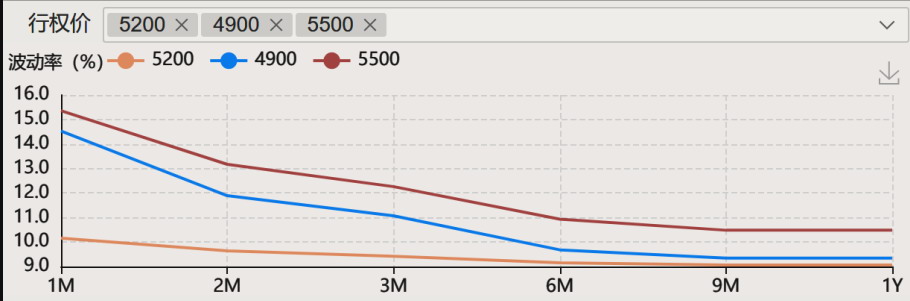
Core Insights - Implied volatility (IV) serves as a key variable in options pricing, acting as a "thermometer" for market sentiment regarding future price uncertainty and a "risk gauge" [1] - Sugar, being a cyclical and policy-sensitive agricultural product, experiences price fluctuations influenced by various factors such as domestic production and sales rhythm, import conditions, weather in major production areas, and external market linkages [1] - The introduction of sugar options in 2025 has improved liquidity, enhancing the responsiveness of IV to short-term information [1] Comparison of IV and HV - The comparison between implied volatility (IV) and historical volatility (HV) is crucial for assessing market sentiment and the relative "richness" of options pricing [2] - HV is a retrospective measure based on the standard deviation of past returns, while IV is a forward-looking indicator derived from real-time market prices of options [3][4] Current IV and HV Analysis - As of January 31, 2026, the HV for the Zheng Sugar 2605 contract is approximately 8.62%, indicating low actual price volatility, while the IV for the at-the-money call option is 9.72%, resulting in a positive premium of 1.10% [5] - This positive premium suggests that despite low recent volatility, traders anticipate potential increases in volatility post-Chinese New Year due to supply constraints from India and Thailand [5][6] Strategy Logic Under IV and HV Premium - The positive premium structure of IV over HV indicates that option sellers can sell "insurance" at higher prices, benefiting from time decay, but must manage significant gamma risk due to market concerns [8] - Buyers of options face higher costs due to elevated IV, necessitating substantial price movements to achieve profitability, suggesting a strategy of waiting for IV to decrease before entering positions [8] Volatility Surface Analysis - The volatility surface shows a "smile" or "skew" pattern, with IV for at-the-money options ranging from 9.06% to 10.16%, indicating a risk premium for future uncertainty despite low current volatility [9] - The structure reveals that short-term IV is higher than long-term IV, reflecting greater perceived uncertainty in the near term [10] Hedging Strategy Exploration - The current volatility surface indicates a "left low, right high" characteristic, suggesting that the market perceives greater upside risk driven by supply constraints [12] - Investors holding long positions may consider buying out-of-the-money put options for cost-effective downside protection, while those looking to enhance returns might sell out-of-the-money call options, albeit with caution regarding potential upside risks [12]
农产品早报-20260202
Yong An Qi Huo· 2026-02-02 01:23
Group 1: Report Industry Investment Rating - No relevant content Group 2: Core Views of the Report - Corn prices are expected to remain strong in the short - term due to tight supply and downstream stocking expectations, and long - term focus should be on import and domestic auction policies [2] - Starch prices are supported in the short - term by festival stocking and inventory reduction, and long - term price trends depend on downstream consumption rhythm [3] - For sugar, the international market anticipates increased production in the 25/26 season, while the domestic market's short - term pricing can refer to domestic sugar prices, and long - term prices may decline if the global sugar surplus intensifies [4] - Cotton is suitable for long - term investment as low initial inventory offsets production increases, and demand is expected to improve [6] - Egg prices rebounded due to Spring Festival stocking but weakened recently. Post - festival price drops need attention as they may affect chicken culling and future supply [13] - Apple trading is light, with good - quality apples stable and lower - quality ones showing price fluctuations. Inventory removal is accelerating [17] - For pigs, short - term supply and demand will increase before the Spring Festival, with medium - term pressure and long - term potential for a turnaround. Attention should be paid to factors like slaughter rhythm, diseases, and policies [17] Group 3: Summary by Commodity Corn/Starch - **Price Data**: From 2026/01/26 to 2026/01/30, corn prices in some regions changed slightly, with a 10 - point increase in the base price in some areas. Starch prices remained stable, and the processing profit was around - 90 to - 98 [2] - **Market Analysis**: In the short - term, corn prices are supported by tight supply and downstream stocking. Starch prices are supported by festival stocking and inventory reduction [2][3] Sugar - **Price Data**: From 2026/01/26 to 2026/01/30, sugar prices in some regions increased by 10, and the import profit increased by 128 [4] - **Market Analysis**: The international market expects increased production in the 25/26 season, and the domestic market's short - term pricing can refer to domestic sugar prices [4] Cotton/Cotton Yarn - **Price Data**: From 2026/01/26 to 2026/01/30, the price of 3128 cotton decreased by 185, and the import profit and other data changed [6] - **Market Analysis**: Low initial inventory offsets production increases, and demand is expected to improve due to domestic consumption policies and export performance [6] Eggs - **Price Data**: From 2026/01/26 to 2026/01/30, egg prices in some regions increased, and the base price increased by 66 [13] - **Market Analysis**: Spring Festival stocking drove price increases, but prices weakened recently. Post - festival price drops may affect chicken culling and future supply [13] Apples - **Price Data**: From 2026/01/26 to 2026/01/30, apple prices remained stable, and the base price for different months changed [16][17] - **Market Analysis**: Trading is light, with good - quality apples stable and lower - quality ones showing price fluctuations. Inventory removal is accelerating [17] Pigs - **Price Data**: From 2026/01/26 to 2026/01/30, pig prices in some regions decreased, and the base price decreased by 55 [17] - **Market Analysis**: Short - term supply and demand will increase before the Spring Festival, with medium - term pressure and long - term potential for a turnaround. Attention should be paid to factors like slaughter rhythm, diseases, and policies [17]