新消费

Search documents
申万宏源,最新研判!
券商中国· 2025-06-11 01:26
Core Viewpoint - The article discusses the macroeconomic outlook and potential investment opportunities in the A-share market, highlighting a shift towards service industries and the implications of "anti-involution" policies for economic recovery and market performance [2][4][6]. Macroeconomic Insights - In the second half of 2025, key focus areas include "anti-involution" and "service industry," with expectations of a structural shift in major macroeconomic indicators [2][6]. - Manufacturing, which has shown strong performance, may face downward pressure due to the end of the equipment renewal cycle and intensified "anti-involution" policies, while the service sector is expected to improve and offset some of the manufacturing pressures [2][6]. - The transformation of the Chinese economy has entered a new phase, with traditional sectors like real estate contributing less to economic growth, leading to a divergence in economic indicators [4][5]. A-Share Market Outlook - The A-share market has the potential to enter a bull market phase, driven by increasing household asset allocation and improvements in corporate governance and shareholder returns [2][8]. - The anticipated bull market is expected to unfold as a "Chinese-style slow bull," with significant market improvements projected for 2026-2027 [3][9]. - The current market is likely to remain in a consolidation phase until conditions are ripe for a larger market rally, with 2025 seen as a year of preparation for a more favorable market environment in 2026 [9]. Industry Transformation - The shift towards new consumption patterns, such as experiential and self-indulgent consumption, is gaining momentum, with high-tech industries now accounting for 16.3% of industrial output [5]. - The "anti-involution" movement is characterized by higher government and industry focus, broader coverage of inefficiencies, and stronger policy-market coordination [7][6]. - The service sector is identified as a critical area for absorbing structural employment pressures, with a significant need for supply-side improvements to meet demand [7][6]. Investment Themes - Key investment themes include domestic AI, embodied intelligence, and defense industries, which are expected to become core trends in structural bull markets [10]. - The article highlights the importance of high-quality sectors such as software, information technology, and new consumer goods, which are likely to maintain strong performance [11]. - Hong Kong stocks are expected to lead the market, with a trend of mainland assets listing in Hong Kong, particularly in the internet and high-dividend sectors [11].



中金:“新消费热潮”背后的宏观线索
中金点睛· 2025-06-10 23:48
Core Viewpoint - The article emphasizes that despite overall consumption being insufficient, new consumption trends are emerging, characterized by "consumption upgrading" rather than simple "consumption downgrading" [1][4]. Group 1: Current Consumption Landscape - The Chinese consumption market is transitioning from mass consumption to personalized and rational consumption, driven by the Z generation's willingness to pay for quality and emotional value [1][11]. - Overall consumption remains subdued, with per capita consumer spending and CPI below pre-2020 trends, yet new consumption hotspots are emerging, with certain sectors like tea drinks and light luxury goods experiencing significant growth [1][4]. - New consumption enterprises achieved an average revenue growth of 65% in 2024, significantly outpacing the overall resident consumption growth of 5.3% and the revenue growth of the consumer sector at 2.4% [1][4]. Group 2: Characteristics of New Consumption - The Chinese consumption market reflects a trend of "consumption upgrading," where consumers prioritize quality-price ratio and emotional value over merely seeking low prices [4][11]. - New consumption representatives have an average gross margin of 50.9%, which is substantially higher than the 23.9% of the consumer sector and 7.8% of the overall manufacturing sector [4][8]. - Key factors influencing consumer purchasing decisions include product quality, emotional value, and cost-effectiveness, with Z generation consumers particularly valuing emotional and quality aspects [7][23]. Group 3: Demographic Insights - The Z generation (ages 16-30) is becoming a driving force in the new consumption wave, showing the highest optimism about consumption prospects among all age groups [23]. - Z generation consumers exhibit a strong preference for emotional value and quality, with 40.1% prioritizing emotional value in their purchasing decisions [23][24]. - In lower-tier cities, the negative impact of real estate on consumption is diminishing, leading to a release of consumption potential, with retail growth rates in these cities surpassing those in higher-tier cities [24][25].

超六成主动权益基金收复“失地” 把握科技热点决胜后市
Zhong Guo Zheng Quan Bao· 2025-06-10 20:51
Group 1 - Over 60% of actively managed equity funds have recovered their net asset values to pre-April 7 levels as of June 9, driven by sectors such as innovative pharmaceuticals, new consumption, gold, and AI [1][2] - Funds heavily invested in innovative pharmaceuticals, such as Changcheng Pharmaceutical Industry Select A and Zhonghang Preferred Navigation A, have rebounded over 30% in the last two months, with some funds achieving returns exceeding 70% year-to-date [2][3] - AI-themed funds have also seen significant recovery, with several funds gaining over 10% from June 3 to June 9, indicating a strong performance in the AI sector [4][6] Group 2 - The market is experiencing a style shift, with recent adjustments in innovative pharmaceuticals and new consumption sectors, prompting discussions about potential short-term corrections [1][6] - The upcoming dividend distribution period for dividend assets may create selling pressure, potentially benefiting aggressive technology sectors if funds flow out of defensive assets [6][7] - There is a focus on technology stocks, particularly in AI and innovative pharmaceuticals, as they are expected to perform well due to favorable market conditions and industry catalysts [6][7]
野村东方国际证券:内需消费和科技或仍有较大空间
Guo Ji Jin Rong Bao· 2025-06-10 13:38
Group 1 - The core theme of the Nomura Orient International Securities 2025 Mid-term Strategy Conference is to explore certainty in the context of geopolitical risks and increasing uncertainty, focusing on how to grasp the certainty of industries and assets, as well as market trends and investment strategies [1] - The external environment in the first half of the year shows that the euro, which accounts for over 60% of the dollar index, has appreciated against the dollar since March, indicating a trend of capital withdrawal from dollar assets [1] - Non-dollar assets received strong liquidity support in the first half of the year, with international capital favoring European bonds, European stocks, and the Hang Seng Technology Index [1] Group 2 - Nomura Orient International Securities believes that the market has fully priced in most potential changes, including consistent expectations for the US economy (strong reality, weak expectations) and the Chinese economy (weak reality, strong expectations) [2] - The firm anticipates that the second half of 2025 will be a critical juncture for market direction, with the potential for increased volatility as expectations and realities align over time [1][2] - The firm projects that the revenue growth rate for the CSI 300 will be 4.5% and 5.3% for 2025 and 2026, respectively, with corresponding net profit growth rates of 2.8% and 6.7% [2] Group 3 - The stable dividend yield of dividend stocks and segmented technology growth sectors (military, new energy, and new consumption) are expected to be more suitable for the market environment in the second half of the year [2] - The firm notes that the static valuation of the CSI 300 is still undervalued from an ERP perspective, being 25.6% lower than the ten-year average, making it attractive for long-term domestic allocation funds [2] - The comparison of market performance post-trade friction easing in 2018 with the current market performance since May 10, 2025, suggests that domestic consumption and technology sectors may still have significant upside potential [2]
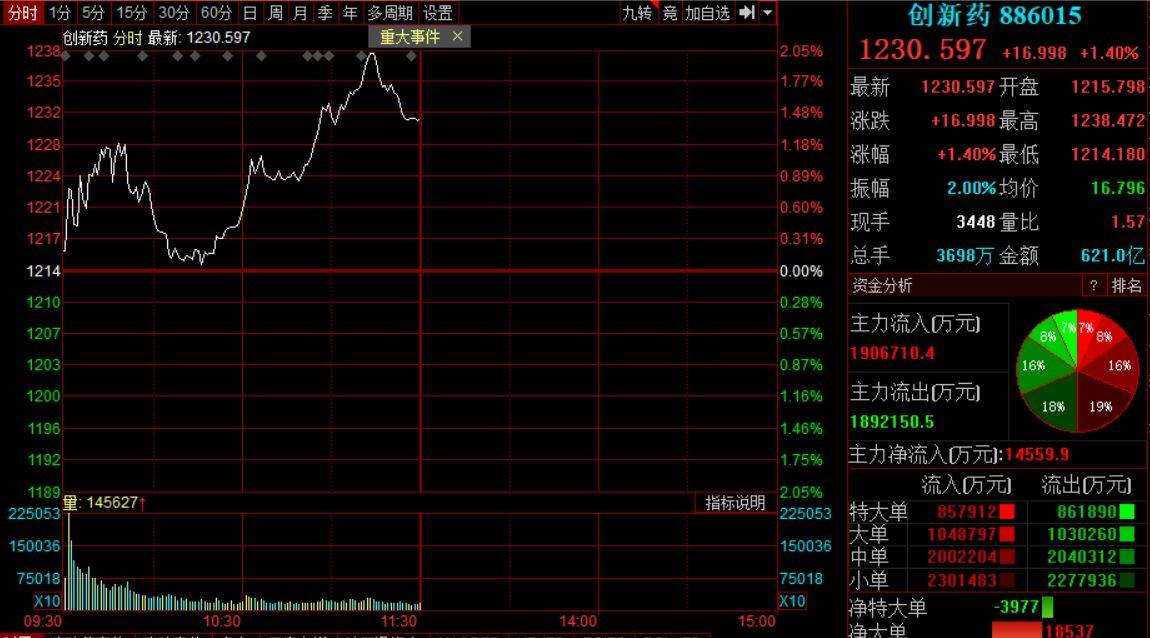
盘中突变只是警告,更大的剧变后面等着!
Sou Hu Cai Jing· 2025-06-10 09:09
Core Viewpoint - The article discusses the current market dynamics surrounding innovative pharmaceuticals and consumer sectors, highlighting the contrasting performance of leading companies and the underlying risks associated with investor sentiment and institutional behavior [1]. Group 1: Market Dynamics - The innovative pharmaceutical sector is experiencing volatility, with recent price fluctuations prompting discussions about potential upward trends [1]. - Leading companies in the innovative drug sector, such as Innovent Biologics, are compared to consumer sector leaders like Pop Mart, indicating a shift in investment focus [1]. - The article raises questions about the sustainability of high price-to-earnings (PE) ratios in the innovative drug sector, drawing parallels with past performance in technology and consumer stocks [1]. Group 2: Behavioral Finance Insights - The concept of "inertia thinking" is discussed, where investors rely on past experiences, such as the historical PE ratios of Moutai, to make decisions about innovative pharmaceuticals [3]. - Institutional investors are portrayed as adept at manipulating market sentiment, often leading retail investors to follow trends without understanding the underlying dynamics [3][4]. - The article emphasizes the importance of recognizing institutional trading behaviors, as they significantly influence stock prices and market movements [10]. Group 3: Quantitative Analysis - The use of quantitative models is suggested as a means to identify institutional trading characteristics, which can provide insights into market trends [6]. - Specific examples, such as the performance of Tianyoude liquor, illustrate how institutional involvement can lead to price increases, despite overall sector weakness [6][8]. - The article notes that when "instant inventory" data exceeds 3,600 stocks, it indicates significant institutional participation, often leading to positive market performance [11][13].
读研报 | 理解近期的行情特征,有何线索?
中泰证券资管· 2025-06-10 09:06
Core Viewpoints - The article discusses the recent market trends and investment opportunities, emphasizing the importance of understanding past market characteristics to strategize for future operations [2] Group 1: Market Characteristics - The recent market investment style is summarized as "new, small, fast," with notable performance in AI and new consumption sectors, indicating a shift towards new industrial logic [3] - Smaller market capitalization stocks have outperformed larger ones, driven by improved risk appetite among individual investors, with new account openings on the Shanghai Stock Exchange reaching a record high since 2021 [5] - The dual influx of retail and insurance funds has shaped the market characteristics this year, favoring small-cap and high-dividend banking stocks [5] Group 2: Investment Factors - The concept of scarcity is highlighted, particularly in the context of Hong Kong stocks outperforming A-shares, with sectors like pharmaceuticals, technology, and consumption showing significant strength due to their scarcity [6] - The ongoing transformation of economic drivers is noted, with new consumption and AI applications in Hong Kong stocks becoming more attractive to investors [6] - The reports suggest that both funding attributes and scarcity are crucial in understanding past market trends and will continue to be significant factors in future market dynamics [6]

港股收评:恒指收跌0.08% 医药股持续走强
news flash· 2025-06-10 08:22
Market Overview - The Hang Seng Index closed down 0.08% after fluctuating throughout the day, with a peak of 24,296 points, the highest level since March 20 [1] - The market experienced a significant drop in the afternoon, falling by as much as 178 points to a low of 24,003 points [1] - The total trading volume for the day was 250.34 billion HKD [1] Sector Performance - Strong performance was noted in the aviation, rare earth, and lithium battery sectors, along with a rebound in precious metals [1] - The biopharmaceutical and pharmaceutical outsourcing sectors continued to show strength [1] - Conversely, domestic retail, non-alcoholic beverages, and semiconductor stocks declined, with new consumption concepts and military industry stocks experiencing a pullback [1] Notable Stocks - China Rare Earth (00769.HK) surged over 13%, while China Hongqiao (01378.HK) rose nearly 5% [1] - BYD Company (01211.HK) and Hansoh Pharmaceutical (03692.HK) both increased by over 3.5%, and CSPC Pharmaceutical Group (01093.HK) rose nearly 3% [1] - On the downside, Bruker (00325.HK) and Mixue Group (02097.HK) fell over 6%, while Kingdee International (00268.HK) and Huahong Semiconductor (01347.HK) dropped over 3% [1]
白酒为何持续走低,消费时代变天了?
Sou Hu Cai Jing· 2025-06-10 08:08
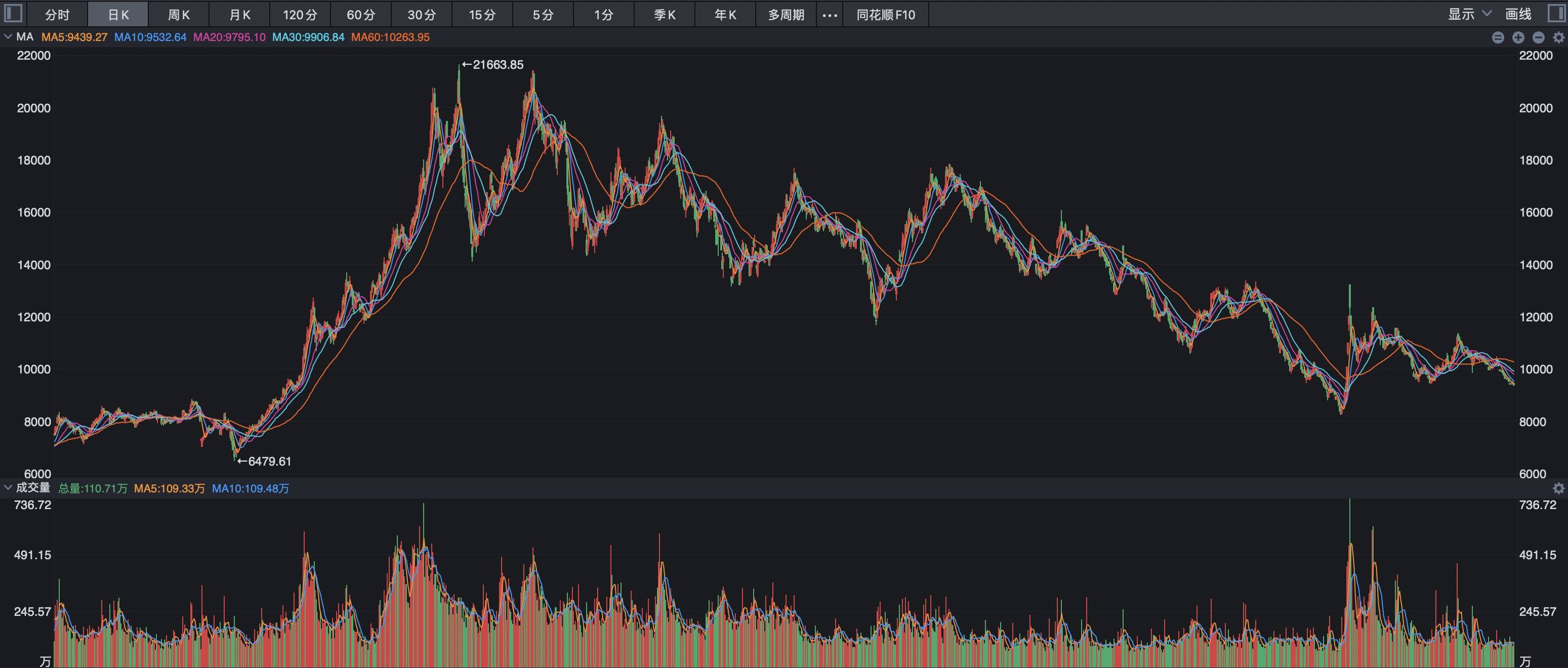
Group 1 - The A-share market is approaching a breakthrough of 3400 points, with increased individual stock activity, yet the liquor index is declining contrary to the overall market trend [1] - The decline in the liquor index is attributed to a decrease in consumer market activity, as indicated by the stable CPI fluctuations around 0.1%, suggesting a lack of consumer confidence [2] - The current liquor index is near 9394 points, only 1000 points away from the starting point of the 924 market, reflecting a significant change in market expectations [2] Group 2 - The long-term outlook for the liquor index should not be overly pessimistic, as Chinese liquor culture will not disappear despite current market downturns [4] - The emergence of a new consumption era is noted, with new consumption concepts like Pop Mart and others performing well even in a sluggish market, indicating a shift away from traditional liquor consumption [4] - Investment strategies should adapt to avoid being tied to outdated consumption models, as the new consumption paradigm represents a new starting point for investment opportunities [4]
港股南向资金持续流入,机构称南向资金全年累计流入可能超万亿港元
Mei Ri Jing Ji Xin Wen· 2025-06-10 05:23
Group 1 - The Hong Kong stock market indices experienced a decline, with the Hang Seng Technology Index showing significant volatility, dropping nearly 1% at one point [1] - The Southbound capital has seen a substantial net inflow into Hong Kong stocks, amounting to HKD 666.59 billion year-to-date, which is 82.5% of the projected total net inflow for 2024 [1] - The current macroeconomic environment in China, while needing repair, presents structural highlights that favor the Hong Kong stock market, particularly in sectors like new consumption, AI technology, and innovative pharmaceuticals [1] Group 2 - The Hong Kong Consumption ETF (513230) focuses on e-commerce and new consumption sectors, which are relatively scarce compared to A-shares [2] - The Hang Seng Technology Index ETF (513180) includes core AI assets and encompasses technology leaders that are less represented in A-shares [3]
摩根士丹利重磅发声!
天天基金网· 2025-06-10 05:02
上天天基金APP搜索【777】注册即可 领98元券包 , 优选基金10元起投!限量发放!先到先 得! 摩根士丹利中国首席股票策略师王滢(Laura Wang)在6月8日发布的研究报告中指出,全 球投资者对中国的情绪改善,相较于过去,他们增配中国的意愿增强,对科技和新消费行业 的信心增强。在中国股票内部,她重申相对更看好港股和ADR(美国存托凭证)的观点。 全球投资者配置意愿增强 上述条件依然成立,其表示,继续偏好港股和ADR。 谈及人民币兑美元汇率,王滢在报告中指出,到2026年底,人民币兑美元较目前或呈现升值 趋势。这背后的主要原因是美元走弱。据摩根士丹利预测,2026年底,美元指数(DXY)点 位将走弱至89(截至记者发稿,美元指数点位为99.03)。期间,主要发达市场货币如欧元 和日元兑美元的升值幅度将超过10%。同期,人民币兑美元也呈现一定幅度的升值。王滢表 示,尽管面临关税压力,但是人民币大幅度贬值或不是中国政策制定者的目标。 首先,受全球多元化需求推动,客户较以往更愿意增加中国股票头寸。"我们接触的大多数全 球投资者都明确表达了重新增加对中国的敞口的兴趣。"她在报告中表示。 王滢表示,截至目前,整 ...