
金融

Search documents
国家发改委:把促进物价回升作为货币政策的重要考量,将研究制定出台2026年—2030年扩大内需战略实施方案
Jin Rong Jie· 2026-01-20 02:44
国务院新闻办公室今日上午10时举行新闻发布会,请国家发展改革委副主任王昌林等介绍落实中央经济 工作会议精神,推动"十五五"实现良好开局有关情况,并答记者问。 国家发改委:要实施更加积极的财政政策和适度宽松的货币政策 把促进物价回升作为货币政策的重要 考量 国家发改委副主任王昌林在国新办新闻发布会上表示,CPI、PPI实现双回升,下一步,总量方面,要实 施更加积极的财政政策和适度宽松的货币政策,把促进物价回升作为货币政策的重要考量,发挥存量政 策和增量政策的集成效率,推动形成经济增长和物价回升的良性互动。 国家发改委:将研究制定出台2026年—2030年扩大内需战略实施方案 国家发改委:将进一步规范地方经济促进行为 王昌林表示,推动供给在更高水平上实现动态平衡和良性循环,还需要坚持把市场运行的调控点放在纵 深推进全国统一大市场建设上,充分激发市场活力。重点是要综合整治"内卷式"竞争,实现从"卷价 格"向"优价值"转变。要完善市场准入、公平竞争、产能退出等机制,加强产能调控,积极化解供大于 求的阶段性矛盾,进一步细化地方招商引资,规范地方经济促进行为。 国家发改委:2025年经济社会发展主要目标顺利完成 发展韧性 ...
未知机构:1月第二周高频数据回顾出行和消费1月上旬以旧换新相关商品-20260120
未知机构· 2026-01-20 02:05
Summary of Key Points from Conference Call Records Industry Overview Automotive and Consumer Sector - Sales of trade-in related products remained weak in early January - From January 1 to January 11, national retail sales of passenger cars decreased by 32% year-on-year [1] - As of January 9, sales of eight categories of home appliances fell by 41.9% year-on-year [1] Production and Construction - Production remained stable in the second week of January, with attention on the impact of the upcoming Spring Festival on production growth - The utilization rate of coking capacity was 77.5%, slightly down from 77.7% previously - The apparent consumption of major steel products was 9.377 million tons this week, up from 9.071 million tons previously [2] Real Estate - New and second-hand housing transaction volumes were weak in the second week of January - From January 10 to January 16, the average daily transaction area of commercial housing in 30 major cities was 195,000 square meters, roughly unchanged from the previous week but down 43.3% year-on-year - In third-tier cities, the year-on-year decline was 50% [3] Trade and Exports - In the second week of January, shipping rates from Shanghai to the East Coast of the U.S. increased by 1.2%, while rates to the West Coast decreased by 1.1% - The export freight index (CCFI) rose by 1.3% week-on-week, while the SCFI fell by 4.4% - In the first ten days of January, South Korea's export value decreased by 2.3% year-on-year, and import value fell by 4.5% [4] Economic Forecast - GDP growth for December 2025 is estimated at 4.6% based on statistical bureau data, while January 2026 is estimated at 4.3% based on high-frequency data - The impact of the Spring Festival is expected to lead to a significant increase in year-on-year data in the future [4] Liquidity - In the second week of January, funding rates showed a marginal increase, with the average weekly DR007 rate at 1.51%, up from 1.45% - The net financing of government bonds was -233.64 billion yuan, while net financing of credit bonds was 49.04 billion yuan [5] Prices - In the second week of January, commodity prices showed divergence, with coking coal and coke prices decreasing by 2.1% and 1.8% respectively - Food prices for pork, eggs, vegetables, and fruits increased by 0.6%, 3.3%, 0.2%, and 1.9% respectively [6] U.S. High-Frequency Data - In the second week of January, U.S. consumer spending continued to grow - The Redbook commercial retail sales increased by 5.7% year-on-year, down from 7.1% previously - TSA checkpoint numbers increased by 3.8% year-on-year, up from 2.1% [7]
中国—加拿大经贸合作路线图
Shang Wu Bu Wang Zhan· 2026-01-20 01:51
Core Viewpoint - China and Canada have reached a consensus on key economic and trade issues during Prime Minister Carney's visit to China in January 2026, aiming to establish a healthy, stable, and sustainable economic relationship under a new strategic partnership framework. Group 1: Strengthening Economic and Trade Cooperation - Both parties commit to enhancing the Economic and Trade Joint Committee, led by the Ministry of Commerce of China and the Department of Foreign Affairs, Trade and Development of Canada, as the main channel for promoting economic cooperation and resolving trade disputes [2] - The Economic and Trade Joint Committee will be elevated to a ministerial-level mechanism, meeting at least once a year and holding additional meetings as needed [2] - Both sides will effectively utilize working groups that report directly to the Economic and Trade Joint Committee [3] Group 2: Promoting Bilateral Economic Relations - Both parties reaffirm the importance of working within the framework of WTO rules and addressing challenges through cooperation and constructive dialogue, while striving to avoid unilateral measures in the future [5] - There is a commitment to encourage contact between relevant departments, business associations, and enterprises to promote bilateral trade and investment activities [5] - Both sides will support enhanced communication and cooperation in the field of small and medium-sized enterprises [6] Group 3: Agricultural and Food Cooperation - Both parties will maintain open communication channels to resolve outstanding agricultural trade issues [11] - They welcome the renewal of the memorandum of understanding on food safety and animal and plant health cooperation, committing to in-depth exchanges on food safety and technical cooperation [11] - Coordination to restart the China-Canada Agricultural Joint Committee is also promised [11] Group 4: Green and Sustainable Trade - Both parties commit to promoting sustainable trade and investment, including trade in green products [12] - They welcome the signing of a memorandum of understanding on cooperation in modern wood structure construction [12] Group 5: E-commerce Cooperation - Both sides will explore opportunities to strengthen dialogue in the e-commerce sector, including potential memorandums of understanding [13] - China welcomes Canada as the guest country at the sixth China International Consumer Products Expo [13] Group 6: Facilitating Personnel Exchanges - Both parties will promote the facilitation of personnel exchanges, business activities, and tourism cooperation under acceptable conditions [14] - They welcome the recent increase in direct flights and commit to discussions on gradually increasing direct flights within the framework of the aviation transport agreement [14] Group 7: Economic and Financial Cooperation - A China-Canada Financial Working Group will be established to enhance bilateral cooperation on financial policies, market stability, and global financial governance [15] Group 8: Multilateral and Regional Economic Cooperation - Both parties reaffirm their support for a rules-based multilateral trading system centered on the WTO and commit to collaboration in areas of mutual interest [16] - They will work together through the Asia-Pacific Economic Cooperation to promote trade investment and sustainable growth [16] - Canada appreciates China's efforts to join the Comprehensive and Progressive Agreement for Trans-Pacific Partnership [16]
全球股市立体投资策略周报1月第3期:地缘事件与财报季交织,科技结构冲高-20260120
GUOTAI HAITONG SECURITIES· 2026-01-20 01:08
Market Performance - Emerging markets continued to rise, with MSCI Global up by 1.9%, MSCI Developed up by 1.3%, and MSCI Emerging up by 6.8% during the week [9][12] - In the developed markets, the South Korean Composite Index showed the strongest performance with a gain of 17.2%, while the Nasdaq Index was the weakest, declining by 0.3% [9] - Among emerging markets, the Hang Seng Index performed best with a 4.0% increase, while the Indian Sensex30 was the worst performer, down by 1.7% [9] Trading Sentiment - Trading sentiment in the Chinese stock market increased significantly, with A-shares and Hong Kong stocks showing substantial volume growth, while US stocks saw a slight increase in volume [24] - The short-selling ratio in Hong Kong stocks fell to 12.9%, below the three-year average of 12%, indicating a high level of investor sentiment [24][27] - North American investment sentiment remains at historical highs, with the NAAIM Manager Exposure Index decreasing to 96% [24][27] Fund Flows - The new Federal Reserve chairperson's selection remains uncertain, impacting market expectations for interest rate cuts [56] - As of January 16, market expectations for the Fed to cut rates in 2026 decreased slightly to 1.8 times [56] - Global liquidity showed signs of tightening, with significant inflows into mainland China, the US, South Korea, India, and Europe [64] Earnings Expectations - US earnings expectations were revised upward, particularly in the financial sector, with the S&P 500's 2025 EPS forecast increased from +10.3% to +10.4% [68] - In contrast, the Hang Seng Index's 2025 EPS forecast was downgraded from -1.8% to -1.9%, with the utilities sector seeing the largest upward revision [68][69] - European earnings expectations remained stable, while Japanese earnings expectations were revised downward from +31.0% to +29.4% [69]
21社论丨5%增速凸显中国经济向新向优
21世纪经济报道· 2026-01-20 00:24
Economic Growth - In 2025, China's GDP surpassed 140 trillion yuan, growing by 5% compared to the previous year, maintaining a leading growth rate among major global economies [1] - The contribution of final consumption expenditure to economic growth reached 52%, with retail sales of consumer goods exceeding 50 trillion yuan [1] Demand Side - Domestic demand is increasingly being released, with significant contributions from consumption driven by targeted policies [1] - The "trade-in" policy has effectively boosted retail sales of communication equipment and home appliances, achieving double-digit growth [1] - New consumption models catering to quality and personalized needs are gaining momentum, with rapid growth in sales from emerging formats like warehouse membership stores and collective stores [1] Investment Trends - Although overall investment has slowed, the structure of investment is optimizing, focusing on key areas such as infrastructure and modern industrial systems [2] - Investment in key infrastructure sectors like pipeline transportation, power generation, and water conservancy has seen double-digit growth [2] - The proportion of equipment and tool purchases in total investment has risen to 18%, enhancing supply structure and investment efficiency [2] Supply Side - The service sector has become a crucial pillar for economic growth, contributing 61.4% to economic growth and accounting for 57.7% of GDP [2] - Modern service industries, including information technology and finance, are thriving, while emerging service formats like live e-commerce are rapidly developing [2] Industrial Development - The construction of a modern industrial system is progressing, with high-tech manufacturing showing strong growth and leading industrial quality development [3] - The share of equipment manufacturing is increasing, with rapid growth in high-value industries such as aerospace and medical devices [3] - Traditional industries are also upgrading, with a steady increase in the supply of green low-carbon products [3] Challenges and Future Outlook - Despite existing challenges such as external environmental changes and structural issues, the long-term positive trend of the economy remains unchanged [4] - The government plans to implement proactive macro policies to expand domestic demand and optimize supply structure [4] - By 2026, a steady economic growth is expected, with moderate price level recovery and improved economic sentiment among businesses and residents [5]


药明康德遭摩根大通减持约251.78万股 每股作价约119.32港元
Xin Lang Cai Jing· 2026-01-19 23:58
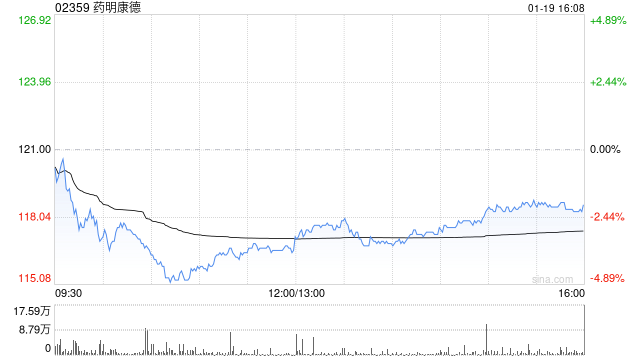
Group 1 - Morgan Stanley reduced its stake in WuXi AppTec (02359) by 2,517,805 shares at a price of HKD 119.3249 per share, totaling approximately HKD 300 million [1][4] - After the reduction, Morgan Stanley's remaining shareholding is approximately 33,644,000 shares, representing a stake of 6.59% [1][4]

新全球秩序催生金银牛市!美银:黄金有望突破6000美元
Hua Er Jie Jian Wen· 2026-01-19 23:20
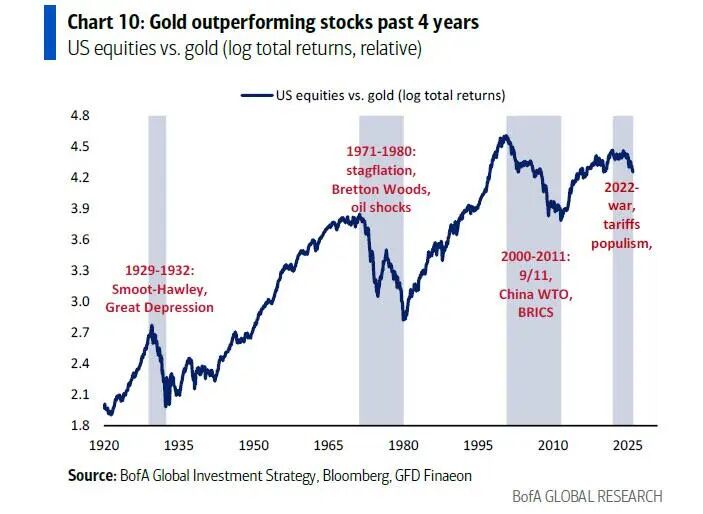
Group 1: New World Order and Global Bull Market - The chief investment strategist at Bank of America, Hartnett, believes that Trump is driving global fiscal expansion, leading to a "New World Order = New World Bull Market" scenario [1][2] - Hartnett suggests going long on international stocks as the market is shifting from U.S. exceptionalism to global rebalancing, with $1.6 trillion flowing into U.S. stock funds in the 2020s compared to only $0.4 trillion into global funds [2] - China is identified as the most promising market, with the end of deflation expected to catalyze bull markets in Japan and Europe [2] Group 2: Gold Bull Market - Hartnett emphasizes that the New World Order is not only fostering a stock bull market but also a gold bull market, despite short-term overbought conditions [3] - Gold was the best-performing asset in 2020, driven by factors such as war, populism, the end of globalization, excessive fiscal expansion, and debt devaluation [4] - The Federal Reserve and Trump’s administration are expected to increase quantitative easing liquidity by $600 billion through the purchase of government bonds and mortgage-backed securities by 2026 [5] - Gold has outperformed bonds and U.S. stocks over the past four years, and a higher allocation to gold remains reasonable, with historical bull markets averaging a 300% increase [6][7] Group 3: Economic Recovery Assets - In addition to gold, other assets are expected to benefit from the New World Bull Market, including mid-cap and small-cap stocks, homebuilders, retail, and transportation sectors [10] - Hartnett advises going long on "economic recovery" related assets while shorting large tech stocks until certain conditions are met, such as the U.S. unemployment rate rising to 5% [11] - Historical precedent shows that Nixon's price and wage freeze improved living costs and boosted his approval ratings, suggesting that if Trump fails to improve his ratings, risks for midterm elections will increase [15] Group 4: Risks from East Asian Currency Appreciation - The biggest risk identified is the rapid appreciation of the yen, won, and new Taiwan dollar, which could trigger global liquidity tightening [1][16] - The yen is currently trading near 160, at its weakest level against the yuan since 1992, and a rapid appreciation could reverse capital flows from Asia [16] - Hartnett warns that investors should closely monitor indicators like the "yen up, MOVE index up" risk aversion combination to determine when to exit the market [16]
21社论丨5%增速凸显中国经济向新向优
2 1 Shi Ji Jing Ji Bao Dao· 2026-01-19 23:06
Economic Growth - In 2025, China's GDP surpassed 140 trillion yuan, marking a 5% increase from the previous year, maintaining a leading growth rate among major global economies [1] - Domestic consumption significantly contributed to economic growth, with total retail sales of consumer goods reaching 50 trillion yuan, and final consumption expenditure accounting for 52% of economic growth [1] Investment Trends - Although overall investment has slowed, the investment structure is optimizing, with a focus on key areas such as infrastructure and modern industrial systems [2] - Key infrastructure investments in pipeline transportation, electricity, and water projects achieved double-digit growth, while equipment purchasing investment rose to 18% of total investment [2] Service Sector Contribution - The service sector contributed 61.4% to economic growth in 2025, with its share of GDP increasing to 57.7% [2] - Modern service industries, including information technology and finance, are thriving, alongside emerging service formats like live e-commerce and instant retail [2] Industrial Development - The construction of a modern industrial system is progressing, with high-tech manufacturing showing strong growth and leading industrial quality development [3] - Traditional industries are also upgrading, with an increase in green low-carbon products and a steady advancement in green transformation [3] Policy Measures - China plans to implement proactive macroeconomic policies to expand domestic demand and optimize supply structure [4] - A series of systematic measures are expected to enhance the quality and reasonable growth of the economy, ensuring a strong start for the 14th Five-Year Plan [4]
深挖合作潜力,抢抓“中国红利”,中韩开启新一轮自贸协定谈判
Huan Qiu Shi Bao· 2026-01-19 22:59
【环球时报报道 记者 杨沙沙】韩联社19日报道称,为期5天的韩中自由贸易协定(FTA)第二阶段第13 轮谈判,于当天在北京启动。本月初,韩国总统李在明就任后首次访华,并表示"取得的进展超出预 期"。中韩两国领导人在北京举行的会谈中已经形成共识,将努力推动自贸协定后续谈判"在年内取得进 展"。在韩中FTA生效十周年之际,韩国媒体称,2015年12月20日生效的中韩自贸协定,曾以每年数百 亿美元对华贸易顺差成为韩国经济的重要支柱。但如今韩国对华贸易收支正面临逆差挑战,后续服务与 投资领域谈判已成为破局核心,事关韩国是否能抓住第二轮"中国红利"。 韩媒:谈判正处于 " 关键转折点 " 韩联社称,韩国产业通商部通商交涉室室长权慧珍和中国商务部国际经贸关系司司长林峰将作为两国首 席代表出席,两国代表团共30余人与会。根据韩中两国元首共识,双方计划在本轮FTA谈判中加快推进 有关服务、投资、金融三大领域市场开放的磋商。 另据中国商务部新闻发言人何亚东1月8日透露,商务部愿与韩方一道,加快推动中韩自贸协定第二阶段 谈判尽早取得实质成果,深挖高端制造、人工智能、绿色产业、银发经济等新兴领域合作潜力。 中韩两国2015年签署自 ...
中国—东盟自贸区3.0版升级议定书签署 推动双方合作向数字、绿色、标准等新兴领域拓展 中国与东盟经贸合作提质升级
Ren Min Ri Bao· 2026-01-19 22:27
Core Insights - China has maintained its position as ASEAN's largest trading partner for 16 consecutive years, while ASEAN has been China's largest trading partner for 5 years, with trade volume reaching 6.82 trillion RMB in the first 11 months of last year, a year-on-year increase of 8.5% [1] Economic Cooperation - The China-ASEAN Free Trade Area 3.0 upgrade protocol has been signed, marking a significant milestone in economic integration, expanding cooperation into digital, green, and standardization fields [1] - The implementation of the Regional Comprehensive Economic Partnership (RCEP) has facilitated deeper integration of regional supply chains, enhancing the trade relationship between China and ASEAN [6] Digital Economy - China and ASEAN are accelerating digital infrastructure cooperation, with projects in Malaysia and Indonesia enhancing regional computing power and digital economy collaboration [2] - The digital economy is expected to grow significantly, with cross-border e-commerce transactions between China and ASEAN maintaining over 20% annual growth, driven by digital technologies [2] Green Development - China is supporting green transformation in ASEAN through projects like large-scale solar power in Laos, which is expected to reduce coal consumption by 510,000 tons and CO2 emissions by 1.4 million tons annually [4] - The China-ASEAN Free Trade Area 3.0 is designed to facilitate green cooperation, promoting sustainable development and financial products for green projects [5] Industrial Cooperation - The China-ASEAN Free Trade Area 3.0 is expected to create a more stable environment for emerging industries, such as electric vehicles, by reducing compliance costs and enhancing local production capabilities [6] - Chinese companies are actively participating in ASEAN's industrial development, with examples like Changan Automobile establishing a new energy vehicle base in Thailand, contributing to local supply chains [6] Trade Growth - Trade in agricultural products between China and ASEAN reached $51.3 billion in the first ten months of 2025, reflecting an 8.9% year-on-year increase, facilitated by improved supply chain connectivity [7] - The establishment of a comprehensive strategic partnership between China and ASEAN marks a new historical starting point for bilateral cooperation, enhancing regional stability and prosperity [7]