机械

Search documents
从美国库存看中国出口机遇:科技出海创新高,制造消费能否跟上?
Changjiang Securities· 2025-09-25 04:43
Group 1 - The report highlights that the Federal Reserve's resumption of the interest rate cut cycle may stimulate a recovery in U.S. demand, which could lead to increased exports from China, particularly in the manufacturing and consumer sectors [2][6][18] - As of June 2025, U.S. nominal and real inventory growth rates have shown a downward trend, indicating a tightening inventory level relative to sales, suggesting potential replenishment demand in the future [2][7][33] - The report identifies that certain sectors, such as home appliances, machinery, automotive, and light industry, are experiencing significant inventory reduction, making them key areas for market focus [2][8][51] Group 2 - The technology export index has reached a new high, driven by strong capital expenditure growth in U.S. tech stocks related to AI, while the manufacturing and consumer export indices have lagged due to weak demand in traditional economic sectors [5][15] - The report notes that the U.S. manufacturing PMI's recovery is typically a leading indicator for China's intermediate and capital goods exports, suggesting that a rebound in U.S. manufacturing could positively impact Chinese exports [6][18][29] - The report emphasizes that sectors with historically low inventory levels, such as home appliances, machinery, automotive, and light industry, are expected to see greater demand as they enter a replenishment phase [8][47][51]
A Look Into Kennametal Inc's Price Over Earnings - Kennametal (NYSE:KMT)
Benzinga· 2025-09-24 22:00
Group 1 - Kennametal has a lower P/E ratio compared to the aggregate P/E of 38.21 in the Machinery industry, suggesting potential undervaluation or lower expected performance [5] - A lower P/E ratio may indicate that shareholders do not anticipate future growth, but it could also mean the company is undervalued [7] - The P/E ratio should not be used in isolation; other factors such as industry trends and business cycles also influence stock prices [7] Group 2 - The P/E ratio is a useful metric for assessing a company's market performance against historical earnings and industry standards [4] - Investors are encouraged to use the P/E ratio alongside other financial metrics and qualitative analysis for informed investment decisions [7]



贸易战再升级,欧美联手打压中国,中国靠一招完成逆袭
Sou Hu Cai Jing· 2025-09-24 21:55
Group 1 - The core viewpoint of the article highlights China's significant role in global trade, with the country accounting for 14.2% of the world's exports in 2023, maintaining its position as the largest exporter for 15 consecutive years [3][4] - China's trade surplus has been consistent for over three decades, with a notable acceleration post-2005, particularly after joining the WTO, which opened up global markets for Chinese textiles [7][9] - The manufacturing sector has evolved, showcasing a comprehensive industrial system that allows for rapid production and adaptation to market demands, which has become a core competitive advantage for China [9][11] Group 2 - China's export landscape is shifting, with emerging markets such as Uzbekistan, Kazakhstan, and Mexico gaining traction, while traditional markets like the US and EU are experiencing declines in export growth [11][13] - The composition of exports has also changed, with a significant increase in high-tech products such as electric vehicles and batteries, reflecting a transition from low-end to high-quality goods [13][15] - Small and medium-sized enterprises (SMEs) are increasingly becoming key players in exports, leveraging specialization and agility to meet niche market demands, supported by favorable conditions in coastal provinces [15][19] Group 3 - The article emphasizes the importance of innovation and R&D in driving the success of SMEs, with companies investing a significant portion of their sales into research to compete in global markets [17][19] - The growth of cross-border e-commerce has simplified logistics and payment processes, enabling even small businesses to access global customers, which was previously unimaginable [19][21] - The overall increase in exports in the first half of 2024, despite global economic challenges, underscores the resilience and adaptability of China's export sector, driven by numerous SMEs and their evolving product offerings [19][21]

牛市行情启动已经一年!你翻了几倍?
Sou Hu Cai Jing· 2025-09-24 16:22
Market Overview - On September 24, 2024, the A-share market experienced a significant surge, with the Shanghai Composite Index rising by 4.15% and the ChiNext Index soaring by 5.54%, leading to a trading volume exceeding 1.1 trillion yuan, marking the beginning of the "924" market rally [1][3] - One year later, the Shanghai Composite Index increased from 2770 points to a peak of 3899 points, achieving a 39% gain, the largest annual increase since 2015 [1][3] - The Shenzhen Component Index rose by 65%, surpassing 13000 points, while the ChiNext Index doubled, effectively eliminating the bearish sentiment since 2021 [1][3] Policy Drivers - The rally was driven by a series of significant financial policies announced by the central government, including total monetary easing, support for real estate, capital market stimulation, encouragement for technology investments, and support for small and micro enterprises [3] - Following these announcements, the Central Political Bureau meeting emphasized efforts to boost the capital market and guide long-term funds into the market, which significantly improved investor sentiment and led to a notable valuation recovery in the A-share market [3] Market Performance - The Shanghai Composite Index quickly climbed from 2770 points to 3674.4 points, with a gain exceeding 39%, while the ChiNext Index saw an impressive increase of over 70%, becoming the market leader [6] - Over 90% of stocks in the market experienced gains during this period, indicating a strong market-wide bullish sentiment and significant profit-making opportunities for investors [6] Structural Changes - By the second half of 2025, the A-share market began to show signs of structural differentiation, with the technology sector emerging as the main focus, particularly in areas such as artificial intelligence, semiconductors, and high-end manufacturing [11] - The ChiNext 50 Index, which focuses on information technology, new energy, financial technology, and pharmaceuticals, recorded a cumulative increase of over 120% since the "924" rally, significantly outperforming the CSI 300 Index, which rose by 42% during the same period [11] Individual Stock Performance - Since the "924" rally, approximately 5200 stocks in the A-share market have risen, with only 229 stocks declining. Over 3000 stocks saw gains exceeding 50%, and 2272 stocks increased by more than 70% [15][16] - Notably, 424 stocks achieved gains over 200%, and 35 stocks saw increases exceeding 500%, showcasing the vibrant potential of the A-share market [15][16] Sector Performance - All 30 sectors in the CITIC first-level industry index experienced gains, with the top five performing sectors being telecommunications, electronics, computers, media, and machinery, all benefiting from national policy support and industry upgrades [18] - Conversely, traditional sectors such as coal, oil and petrochemicals, electricity, and public utilities showed relatively weak performance, with gains not exceeding 20%, reflecting the broader trend of economic transformation and capital flow towards high-growth technology sectors [18] Market Capitalization Growth - Since the "924" rally, the total market capitalization of A-shares has significantly increased, surpassing 100 trillion yuan, with a growth of over 30 trillion yuan from 68.8 trillion yuan on September 23, 2024 [20] - The number of companies with a market capitalization exceeding 1 trillion yuan rose from 9 to 14, with notable additions including CATL, Industrial Fulian, SMIC, China Merchants Bank, and Ping An Insurance [20] Conclusion - The "924" rally has transformed the A-share market from a bear market to a structural bull market, with "hard technology" emerging as the dominant theme, replacing traditional sectors like liquor and real estate [21] - The future trajectory of the market will depend on profit realization and the sustainability of incremental capital inflows, marking the beginning of a revaluation story for Chinese assets [21]
ETF日报:随着财政扩张放缓,下半年我国经济压力加大,宏观基本面改善还要关注政策表述及中美关税进展
Xin Lang Ji Jin· 2025-09-24 11:57
Market Overview - The A-share market showed strength today, with the Shanghai Composite Index rising by 0.83% to 3853.64 points, and the Shenzhen Component Index increasing by 1.80% [1] - The semiconductor industry chain remained strong, with significant gains in semiconductor equipment, chips, and related sectors [1] - The overall market sentiment is strong, with over 4400 stocks rising and less than 900 declining [1] Investment Strategy - The current market is driven more by sentiment and valuation, with a clear structural differentiation, particularly in the STAR Market [1] - Two potential future scenarios are identified: continued active micro liquidity leading to sustained market performance, or macroeconomic improvement allowing for broader market expansion [2][6] - Recommended focus on sectors supported by structural themes and fundamentals, such as chip ETFs and photovoltaic ETFs [1][6] Bond Market Insights - The ten-year government bond ETF fell by 0.16%, with a 5-day decline of 0.44%, reflecting a weak trend [2][6] - The core factors influencing bonds remain policy-driven, with the central bank maintaining a steady stance on liquidity [8] - Despite short-term pressures on the macro environment, there is a divergence between macro reality and expectations, impacting long-term bond performance [8] Semiconductor Sector - The semiconductor equipment ETF rose by 9.55% today, with a 5-day change of 21.39%, driven by events such as domestic lithography machine testing and AI demand from Huawei [9] - The long-term investment logic in the semiconductor sector focuses on domestic substitution and self-sufficiency, particularly in critical areas with low domestic production rates [12] - Global semiconductor sales increased by 20.6% year-on-year in July, supported by overseas AI capital expenditure [11] Economic Outlook - The domestic economy faces short-term pressure, but potential recovery in overseas demand due to the Federal Reserve's preventive rate cuts may benefit export-oriented sectors [5] - The current economic environment is seen as a normal outcome of "anti-involution" policies aimed at controlling supply-side expansion [5] - Key areas to watch include the progress of US-China tariff negotiations and domestic policy statements [4]
0923港股日评:风格切换,港股通银行领涨-20250924
Changjiang Securities· 2025-09-24 02:27
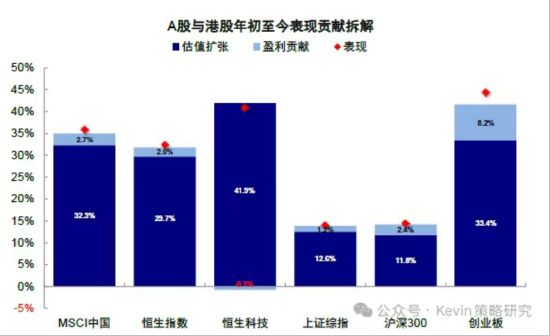
Core Insights - The Hong Kong stock market experienced a collective decline on September 23, 2025, with the Hang Seng Index down by 0.70% to 26,159.12, the Hang Seng Tech Index down by 1.45% to 6,167.06, and the Hang Seng China Enterprises Index down by 0.86% to 9,290.34 [3][6][10] - The market's total trading volume reached HKD 294.56 billion, with southbound funds recording a net sell of HKD 4.069 billion [3][10] - The industrial sector saw a notable shift, with the Hong Kong banking sector (+0.77%) and public utilities (+0.25%) gaining favor, while hardware equipment (-1.84%) and food and beverage (-1.94%) sectors faced declines [6][10] Industry Analysis - The Minister of Industry and Information Technology highlighted new industrial opportunities at the 25th China International Industry Fair, which positively impacted the Hong Kong machinery sector, leading to a strong performance [10] - A significant rotation in market preferences was observed, with defensive sectors like banking and public utilities attracting investment, while previously high-performing sectors like hardware equipment faced profit-taking [10] - Future growth in the Hong Kong market may be driven by AI technology and new consumption trends, with expectations of continued inflows from southbound funds and improved liquidity from potential U.S. interest rate cuts [10]
让钱动起来:M1回暖与企业现金流活化的交叉印证
Huachuang Securities· 2025-09-23 23:30
Group 1 - The report indicates that M1 has shown a significant recovery, with a year-on-year increase of 11 percentage points from September 2024 to June 2025, which correlates with a 9 percentage point increase in non-financial corporate cash flow, suggesting a new cash flow cycle for enterprises has begun [1][7][10] - Non-financial operating cash flow saw a notable year-on-year increase of nearly 1 trillion yuan in Q2 2025, marking it as the primary positive contributor to the growth of cash and cash equivalents [7][10][17] - Historical cash flow cycles are referenced, indicating that the current improvements in operating cash flow, narrowing negative contributions from financing cash flow, and reduced negative contributions from investment cash flow align with the characteristics of the beginning of a new cash flow cycle [1][7][17] Group 2 - The overall improvement in non-financial operating cash flow is primarily attributed to reduced purchasing rather than increased sales, with a notable contraction in cash outflows for purchases, which is a rare occurrence historically [2][20][27] - Industries experiencing net inflow expansion due to downstream prosperity include automotive, machinery, electronics, non-ferrous metals, and chemicals, while those benefiting from significant cost reductions include construction, transportation, real estate, utilities, and new energy [2][8][20] - Leading contributors to cash increment across the A-share market include construction (+1.4 percentage points), new energy (+1.3 percentage points), real estate (+1.0 percentage points), and electronics (+1.0 percentage points), while coal and food & beverage sectors showed negative contributions [3][8][17] Group 3 - The report highlights that the automotive and food & beverage sectors have shown healthy cash flow expansion, indicating improved cash collection and sales quality, which is crucial for maintaining cash flow health [35][36] - The construction and transportation sectors are noted for their significant net inflow expansions, driven by cost control and operational efficiency improvements [2][29] - The electronics sector has benefited from increased demand driven by AI and technological advancements, leading to improved operating cash flow and accelerated capital expenditures [3][8][35]
读研报 | 回流的外资,可能会买什么?
中泰证券资管· 2025-09-23 11:32
Core Viewpoint - The recent phenomenon of foreign capital inflow into A-shares has been a significant topic of discussion, indicating a growing interest from global investors in the Chinese stock market [2][4]. Group 1: Foreign Capital Inflow Data - From May to the end of July, long-term stable foreign institutional funds accumulated inflows of approximately 67.7 billion HKD, while short-term flexible foreign institutional funds saw inflows of about 16.2 billion HKD [2]. - During the week of August 14-20, the net inflow of foreign capital for allocation reached a new high since 2025, totaling 6.98 billion CNY, with active allocation foreign capital turning to net inflow for the first time since mid-October 2024, amounting to 140 million CNY [2]. - In the first week of September 2025, foreign capital net inflow into the Chinese mainland market was approximately 5.5 billion USD, with stock funds contributing 5.02 billion USD, primarily from passive funds [2]. Group 2: Foreign Investment Preferences - Foreign capital tends to favor industries with global competitive advantages and strong growth potential, such as innovative pharmaceuticals, leading internet companies in Hong Kong, the Nvidia supply chain, and renewable energy [4]. - Since July, foreign capital has shown a significant preference for sectors like technology, healthcare, and materials, particularly focusing on companies within the AI industry due to their clear technological advancements and profit growth expectations [4]. - The preference for core assets with local market characteristics is evident, with foreign capital increasing allocations in sectors like automotive, banking, and electronics in A-shares, while favoring software and services in Hong Kong stocks [5]. Group 3: Structural Characteristics of Foreign Investment - The structural characteristics of foreign capital allocation in A-shares are focused on high-growth technology, high-dividend assets, and high-end manufacturing [4]. - Foreign investors have shown a preference for stocks with strong fundamentals, as indicated by the higher return on equity (ROE) of foreign-held stocks in A-shares (17.2%) compared to the overall market [5]. - The trend of foreign capital favoring stocks with lower AH premium suggests a strategic approach to maximize returns while minimizing risks associated with market fluctuations [5].

2025年前8个月,越南对美国出口额约1000亿美元
Shang Wu Bu Wang Zhan· 2025-09-23 04:12
Core Insights - Vietnam's total exports to the United States reached $99.05 billion by the end of August, marking a year-on-year increase of 26.4%, solidifying the U.S. as Vietnam's largest export market [1] Export Performance - The top ten exported goods to the U.S. include: - Computers, electronic products, and accessories: $26.1 billion, up 67.7% year-on-year [1] - Machinery, equipment, tools, and accessories: $15.19 billion, up 15.2% year-on-year [1] - Textiles: $12.07 billion, up 11.8% year-on-year [1] - Mobile phones and accessories: $7.53 billion, up 2.9% year-on-year [1] - Wood and wood products: $6.2 billion, up 7.6% year-on-year [1] - Footwear: $6.07 billion, up 8.6% year-on-year [1] - Toys and sports equipment: $3.74 billion, up 228.1% year-on-year [1] - Plastic products: $2.45 billion, up 28.3% year-on-year [1] - Transport vehicles and accessories: $2.34 billion, up 7.8% year-on-year [1] - Aquatic products: $1.24 billion, up 6.9% year-on-year [1]
A股“924”行情一周年:总市值增长36万亿元,逾1400只个股涨超100%
Cai Jing Wang· 2025-09-23 02:54
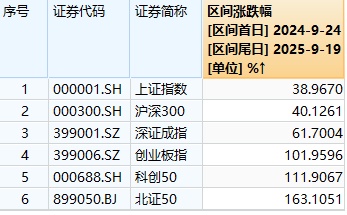
Market Overview - The current bull market in A-shares began on September 24, 2024, and has lasted approximately one year, with significant performance improvements in the A-share market [1][2] - As of September 19, 2025, major A-share indices have seen substantial increases, with the Shanghai Composite Index rising about 39% and the ChiNext Index soaring approximately 102% [1][2] - The total market capitalization of A-shares reached approximately 104 trillion yuan, reflecting a growth of about 36 trillion yuan over the past year [1][3] Policy Impact - The bull market is characterized as a "policy bull market" and a "confidence bull market," driven by a series of significant financial policies announced by the central government to support economic growth [1][2] - Key policies include promoting mergers and acquisitions of listed companies, reforming public funds, and implementing measures to protect small investors [2] Index Performance - Major indices have shown remarkable performance since the "924" market, with the North China 50 Index increasing over 160% and several indices doubling in value [2][3] - Specific index performances include: - Shanghai Composite Index: +39% - Shenzhen Component Index: +61.7% - ChiNext Index: +102% - CSI 300 Index: +40% - Sci-Tech 50 Index: +112% - North China 50 Index: +163% [2][3] Stock Performance - Over 3,000 stocks have risen more than 50%, with over 1,400 stocks increasing by more than 100% [1][4] - A total of 5200 stocks have risen since the "924" market, with 229 stocks declining [5] - Notably, 424 stocks have increased by over 200%, and 35 stocks have surged by over 500% [5] Sector Performance - All 30 major industry sectors have experienced gains, with the top five sectors being: - Communication: +120% - Electronics: +108% - Computer: +99% - Media: +88% - Machinery: +76% [5] - The bottom five sectors include coal, oil and gas, electricity, transportation, and food and beverage, with increases ranging from 6% to 24% [5] Future Outlook - Analysts suggest that the current bull market still has potential for further growth, despite recent adjustments due to external factors such as the Federal Reserve's interest rate changes [8][9] - The market is expected to undergo structural shifts in the fourth quarter, with potential opportunities in cyclical sectors and low-position technology branches [9]