
新消费

Search documents
【广发策略】基金一季报:科技主线外,还有哪些增持方向?
晨明的策略深度思考· 2025-04-23 06:21
Core Viewpoint - The article highlights the significant changes in fund allocations across various sectors, with a notable increase in the allocation to Hong Kong stocks and a balanced market style driven by multiple types of funds. Group 1: Fund Holdings and Market Dynamics - As of Q1 2025, the market capitalization of various fund types is approximately 2.5-3 trillion, indicating a balanced market style not dominated by a single fund preference [3][26]. - The active equity funds have a market capitalization of 2.9 trillion, while foreign capital also holds 2.9 trillion, and insurance funds hold 2.4 trillion [3][26]. - The allocation to Hong Kong stocks has reached a historical high of 18.9%, with significant increases in the technology sector [4][41]. Group 2: Sector Allocation Changes - The technology sector saw a notable increase in allocation, with the electronics industry being the most significantly increased sector in Q1 2025, breaking previous trends of underperformance [8][53]. - The automotive, non-ferrous metals, and electronics sectors were the most increased in allocation, while power equipment, communication, and transportation sectors saw the largest reductions [54][56]. - The semiconductor and chemical pharmaceutical sectors also experienced significant increases in allocation, while communication equipment and photovoltaic sectors faced substantial reductions [57][60]. Group 3: Specific Company Increases - Major companies in Hong Kong that saw increased allocations include Alibaba, Tencent, and Xiaomi, particularly in the internet, innovative pharmaceuticals, and new consumption sectors [4][47][52]. - The top companies with increased allocations in Q1 2025 include Alibaba (2.04%), Tencent (4.15%), and Xiaomi (1.13%) [52]. Group 4: Investment Trends and Future Outlook - The article suggests a shift towards domestic computing and application chains in the technology sector, with a focus on AI and robotics, indicating long-term investment opportunities [14]. - The article also notes that sectors such as consumer goods, building materials, and retail are expected to see increased trading activity due to policy expectations [15][17]. - The export chain has maintained high positions despite a reduction in overall allocations, with specific sectors like motorcycles and pneumatic tools still attracting investment [18].





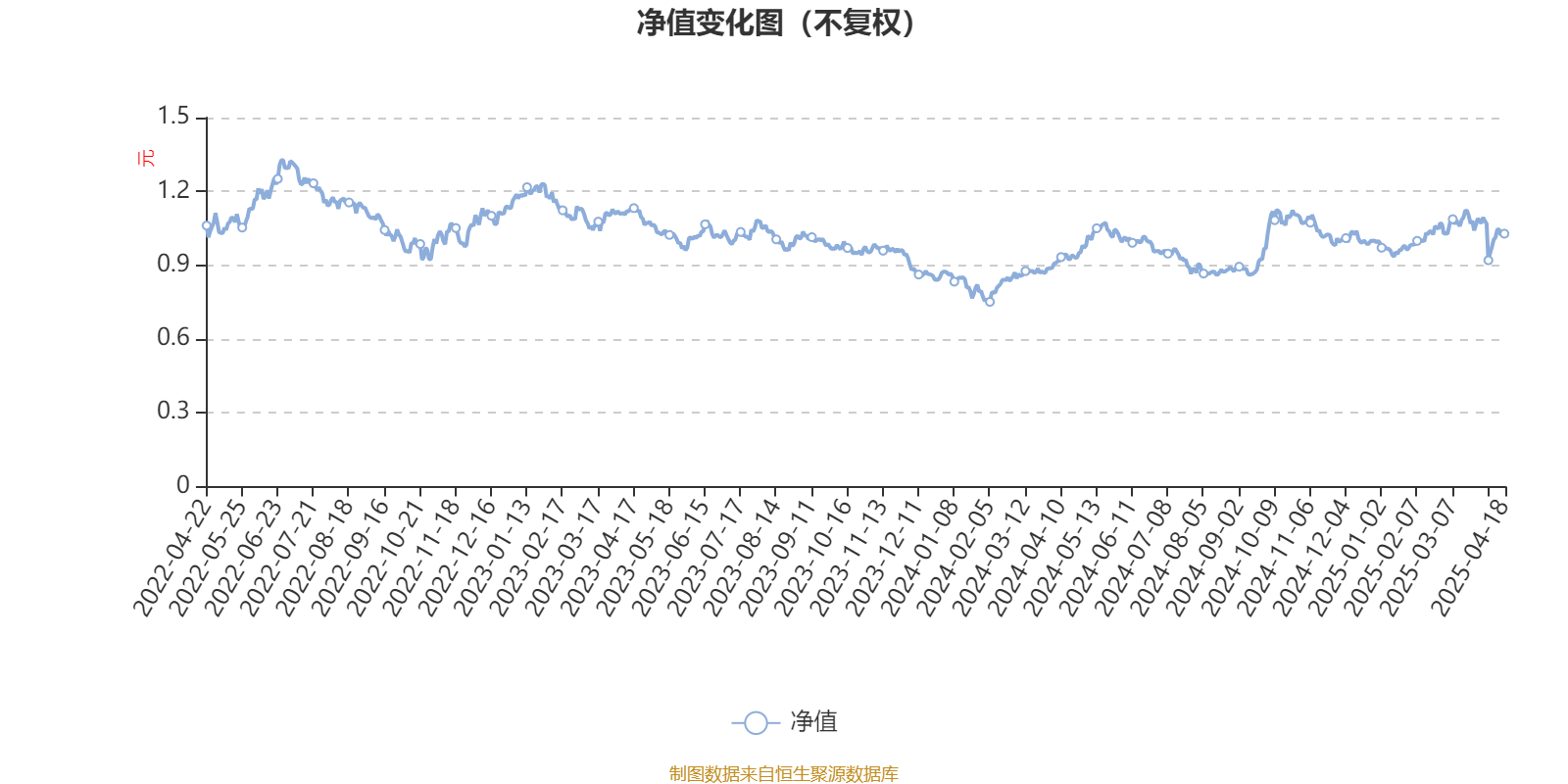
广发沪港深新机遇股票:2025年第一季度利润4214.76万元 净值增长率7.97%
Sou Hu Cai Jing· 2025-04-21 06:22
Core Insights - The AI Fund Guangfa Hong Kong and Shenzhen New Opportunities Stock (001764) reported a profit of 42.15 million yuan for Q1 2025, with a weighted average profit per fund share of 0.0675 yuan. The fund's net value growth rate was 7.97%, and the fund size reached 637 million yuan by the end of Q1 2025 [2][15]. Fund Performance - As of April 18, the fund's unit net value was 1.028 yuan. The fund manager, Li Yaozhu, oversees nine funds, with the Guangfa Hong Kong Stock Connect Growth Selected Stock A achieving the highest one-year return of 15.32%, while Guangfa Ju You Flexible Allocation Mixed A recorded the lowest at -7.17% [2][3]. Investment Strategy - The fund's management emphasized a focus on China's new consumption sector, particularly in Hong Kong stocks. The shift in consumer behavior towards quality of life and spiritual needs is expected to create new consumption giants. The fund aims to identify companies with brand advantages that provide high-quality products, particularly those reflecting Chinese cultural elements in sectors like trendy toys, luxury goods, tea drinks, cosmetics, and medical beauty [3]. Comparative Performance - As of April 18, the fund's performance metrics include a three-month net value growth rate of 6.87%, ranking 7 out of 74 comparable funds; a six-month growth rate of -6.79%, ranking 60 out of 74; a one-year growth rate of 9.37%, ranking 28 out of 74; and a three-year growth rate of -7.72%, ranking 40 out of 73 [3]. Risk Metrics - The fund's Sharpe ratio over the past three years was 0.3336, ranking 32 out of 73 comparable funds. The maximum drawdown over the same period was 43.41%, with the largest single-quarter drawdown occurring in Q1 2022 at 30.1% [8][10]. Investment Concentration - The fund has a high concentration in its holdings, with the top ten stocks consistently representing over 60% of the portfolio for nearly two years. As of Q1 2025, the top ten holdings included Tencent Holdings, Xiaomi Group-W, Alibaba-W, Pop Mart, Lao Pu Gold, BYD Co., Mao Ge Ping, Juzi Biology, TCL Electronics, and Ninebot [19].





【申万宏源策略 | 一周回顾展望】磨底期的注意事项
申万宏源研究· 2025-04-21 01:13
以下文章来源于申万宏源策略 ,作者申万宏源策略 申万宏源策略 . 我们强调体系性、实战性 一、市场超跌反弹后还要磨底的判断正在验证,市场对基本面压力的反映幅度到位,时间不足。磨底阶段需要消化的因素:关税的基本面影响逐 步显现;中美在金融和科技领域可能还有后续扰动;能够凝聚市场共识的主线仍需等待。 上周我们提示了,市场超跌反弹后,后续还需磨底,本周市场已开启磨底波段。市场对基本面压力的反映幅度基本到位,但时间不足。清明假期 市场对关税影响的预期过度悲观,4月7日市场大幅调整,市场迅速回到了长期高性价比区域,对基本面悲观预期的反映基本到位。但从时间上, 利好债市、不利于股市的资产配置环境还将持续一段时间。磨底阶段A股需要消化的因素:1. 关税影响是美国滞胀交易,国内衰退交易。后续外 需回落压力逐步显现,二季度即便有"抢转口",外需回落的方向不变,三季度回落压力可能放大。2. 中美对弈,关税层面的扰动已接近极限,关 税进一步加征已难产生边际影响,反倒会激励微观主体的腾挪行为。但后续中美在金融和科技领域可能还有扰动,这仍是触发A股脉冲式调整的 因素。这也是政策储备严阵以待,平准基金继续发挥稳定资本市场预期功能的契机。 ...
【十大券商一周策略】勿低估政策“稳股市”决心!聚焦内部确定性,升势远未结束
券商中国· 2025-04-20 14:25
Group 1 - The core viewpoint emphasizes that China's policy options are more abundant, providing greater space and endurance compared to the U.S. during the trade war stalemate [1] - A-shares are seen as a key factor in boosting confidence, with a belief in the government's commitment to stabilize the capital market [1] - The article suggests that sectors benefiting from European capital expenditure expansion, essential consumer goods, and materials that do not rely on short-term performance will outperform [1] Group 2 - The market is expected to be more self-reliant, with a stable domestic economic foundation and timely responses to external uncertainties [2] - Internal demand and self-sufficiency are highlighted as focal points for economic momentum and short-term policy support [2] - The market is better prepared psychologically to handle external uncertainties compared to the previous trade conflict in 2018 [2] Group 3 - A-shares are anticipated to see a stabilization in risk appetite, with defensive assets likely to yield absolute and relative returns during adjustment phases [3] - The technology sector is expected to gain weight in the market as confidence in capital market stability increases [3][4] - The next phase of A-share market growth is likely to be driven by structural technology trends [4] Group 4 - The configuration value of the A-share market is expected to rise, supported by a resilient domestic economy and ample policy reserves [5] - The market is projected to achieve stable and healthy long-term development as it adapts to tariff policies [5] Group 5 - The Chinese stock market's upward momentum is not yet over, with a shift in the main contradictions of valuation [6] - A decline in discount rates is identified as a key driver for the stock market's rise by 2025 [6] Group 6 - The market's downward volatility risk is considered limited, with a focus on internal demand policies [7] - The upcoming months are expected to see more fiscal policy implementation, particularly in May and June [7] Group 7 - The A-share market is viewed as having controllable downside risks and potential for upward movement, with a focus on sectors experiencing local economic recovery [9] - Recommendations include sectors with high free cash flow and low penetration but high growth potential, such as AI and humanoid robots [9] Group 8 - The resilience of A-shares and the government's determination to stabilize the stock market are emphasized, with a favorable outlook for medium to long-term investments [10] - The A-share market is expected to maintain an advantage over global indices due to valuation benefits [10] Group 9 - The short-term equity market is in a consolidation phase, but domestic policy support and resilient internal demand are expected to maintain its relative strength [11] - Focus areas include domestic technology self-sufficiency and quality assets benefiting from domestic demand expansion [11] Group 10 - The expectation of a rebound in global recession forecasts suggests a need for China to find suitable demand to maintain its manufacturing capacity advantage [13] - Recommended sectors include consumer industries benefiting from domestic demand and resource products amid global economic restructuring [13]



国信证券:关税政策终结美国两年多牛市 看好港股云计算、新消费与红利方向
智通财经网· 2025-04-03 08:43
Group 1 - Concerns over tariffs have altered long-term expectations for the US stock market, leading to the conclusion that the bull market that began in October 2022 has ended [1] - The impact of tariff policies is significant, as the current administration prioritizes reducing fiscal deficits over economic growth, inflation, and stock market performance [1] - The risk of stagflation may increase if oil prices rise sharply in the second quarter, with stagflation characterized by uncontrollable inflation beyond 3.0% [1] Group 2 - Domestic economic indicators are gradually improving, with social financing data showing year-on-year increases and PPI showing notable improvements [2] - The A-share market is expected to shift from sentiment-driven to performance-driven in the second quarter, favoring sectors with low valuations and strong earnings [2] Group 3 - The Hong Kong stock market is expected to face limited impact from US tariff policies, with a shift from broad-based gains to sector differentiation anticipated [3] - Key sectors to watch include: 1. Cloud computing, which is expected to benefit directly from deployments in various enterprises [3] 2. New energy vehicles and components, which have shown rapid growth and competitive advantages [3] 3. New consumption and pharmaceuticals, with the latter undergoing valuation recovery after three years of decline [3] 4. Dividend sectors, including insurance and stable earnings from operators, banks, and public utilities [3] 5. A performance revision pool in Hong Kong stocks, with approximately 51% of companies showing upward revisions in earnings [3]

为什么互联网企业是内需复苏的 "卖铲人"?
远川投资评论· 2025-04-01 04:57
而在过去两年,宏观经济的关键变量在于内需。 2023年,消费对于经济增长的贡献率达到了82.5%,2024年虽然降至44.5%,但依然是最大的贡献力 量。在今年两会期间,"扩大内需"更是上升至今年政府工作报告十大重点任务之首。 刺激内需不仅成为了政策端发力的重点,在资本市场中也成为了率先受益于经济复苏的方向。换句话来 说,找到内需增长的β也就意味着找到了消费行业的下一个机会。 距离消费板块2020年的辉煌已经过去了四年多的时间,资本市场对其的关注度却从未减少过。 2025年3月13日,呼和浩特推出了全国力度最强的育儿补贴政策,唤醒了人们沉睡许久的消费投资热 情:次日消费板块迎来了全面爆发,食品饮料ETF(515170)的涨幅也一度高达5.09%。 事实上, 消费作为一个顺周期的行业,板块性行情往往会同步于宏观经济拐点的出现 。根据信达证券 研究报告,在经济见底后的半年内以及经济回升期中,与经济增速较为敏感的行业会有超额收益;最具 有代表性的便是消费板块,在这两个阶段消费板块的胜率和月度超额收益都好于其他板块[1]。 结构性的增长 自 2024年 以 来,老铺黄金、泡泡玛特等公司的巨大涨幅让 资本市场再一次感受 ...
中金公司 宏观策略周论:行情还能持续多久?
中金· 2025-03-24 08:14
Investment Rating - The report maintains a cautious stance on the market, indicating that the cost-effectiveness of chasing high points is low, particularly around the 25,000 mark [2][3]. Core Insights - The current market exhibits extreme structural characteristics, with the technology sector driving index gains, while macro policies like monetary easing and fiscal policies are crucial for the expansion of other sectors [3][4]. - Southbound capital has become a significant driving force for the rebound in the Hong Kong stock market, with an expected inflow of nearly 200 billion HKD for the year, primarily from personal private equity and trend trading funds [3][11]. - The Hong Kong stock market's placement mechanism leads to almost unlimited chip supply, which can dilute the holdings of southbound capital, limiting its absolute pricing power [3][13]. - The U.S. stock market is influenced by AI, geopolitical issues, and policy uncertainties, with some bubbles already deflated, indicating a phase of bubble formation rather than a burst [3][14][15]. - The fiscal policy in 2025 will focus more on demand stimulation, particularly in the consumer sector, emphasizing the "investment in people" concept to enhance future supply potential and current consumption demand [3][25][34]. Summary by Sections Market Structure and Future Strategies - The market is characterized by a significant reliance on the technology sector, which constitutes about 40% of the Hang Seng Index, while the remaining 60% depends on macro policies [4]. - The performance of the new consumption sector in the Hong Kong market reflects structural opportunities and market sentiment recovery, benefiting from national trends and young consumer preferences [3][35][39]. Southbound Capital Dynamics - Southbound capital has seen a significant increase in inflow, averaging over 8 billion HKD daily since the Spring Festival, compared to over 3 billion HKD last year [11]. - Despite the increase in holdings, southbound capital does not possess absolute pricing power due to the open financial market and the stock placement mechanism [12][13]. U.S. Market Conditions - The U.S. stock market is currently facing several challenges, including AI-driven disruptions and policy uncertainties, which could affect the Federal Reserve's ability to lower interest rates [14][19]. - The valuation of the U.S. stock market remains high, but some bubbles have been deflated, making certain leading stocks' valuations more reasonable [15][17][23]. Consumer Sector Insights - The report highlights the importance of consumer demand in fiscal policy, with a focus on enhancing living standards through investments in education, healthcare, and social security [25][26][34]. - Recent policies aimed at boosting consumption have been comprehensive, addressing various factors affecting consumer behavior and emphasizing quality supply to stimulate demand [37][38]. New Consumption Trends - The new consumption sector in Hong Kong is expected to maintain rapid growth, driven by changing consumer preferences and the emergence of structural opportunities [35][36][39]. - The report suggests that the new consumption sector's performance is independent of traditional quality consumption factors, indicating a shift in market dynamics [35][36].

稳中求进,顺势而为
HTSC· 2025-03-10 01:50
Economic Policy and Market Sentiment - The Two Sessions continue the "seeking progress while maintaining stability" tone, with a focus on domestic demand to counter external uncertainties, positively impacting market sentiment[2] - The general public budget deficit is set at 5.66 trillion yuan, corresponding to a narrow deficit ratio of 4%, both historical highs[2] Market Trends and Liquidity - U.S. non-farm payrolls increased by 151,000 in February, slightly below the expected 160,000, with an unemployment rate of 4.1%, slightly above the previous value of 4.0%[3] - Passive foreign capital inflow into Hong Kong stocks accelerated, with net inflows of 1.09 billion USD last week, while active foreign capital saw a net outflow of 250 million USD[4] Investment Strategy - The short-term outlook for Hong Kong stocks is not pessimistic, with a long-term positive view on the revaluation of Chinese assets, supported by stable domestic economic indicators and strong performance from leading tech companies[5] - Recommended investment strategy includes a "barbell" approach focusing on technology revaluation (internet/hardware), new consumption, innovative pharmaceuticals, and high-dividend communication sectors[5] Risk Factors - Risks include geopolitical uncertainties, U.S. prioritization of investment policies, and overcrowding in the technology sector[6]
国泰君安:从两会看消费
2025-03-09 13:19
Summary of Key Points from Conference Call Industry Overview - The conference call primarily discusses the **consumer sector** in China, focusing on various industries such as **automotive**, **white spirits**, **food and beverage**, **cosmetics**, **home appliances**, and **light textiles**. [2][3][4][5][6][7][8][9][10][11][12][13][14][15][16][17][18][19][20] Core Insights and Arguments - **Government Policies on Consumption**: The 2025 government work report emphasizes boosting consumption, with measures including a **3,000 billion yuan** support for trade-in programs and expanding service consumption in health care and childcare. [2][3] - **Consumer Confidence**: Post-Spring Festival, business travel consumption shows signs of recovery, with improved sales in the real estate sector, particularly in first and second-tier cities, positively impacting consumer confidence. [3][4][5] - **White Spirits Industry**: The white spirits sector is in a downward adjustment phase but is expected to gradually find a bottom in 2025. Recommended companies include **本酒**, **迎驾贡酒**, and **今世缘**, with attention to **五粮液**, **泸州老窖**, and **茅台**. [3][6] - **Food and Beverage Sector**: The sector has shown improvement since Q3 of the previous year, with expected growth in the first half of 2025. Recommended companies include **东鹏饮料**, **燕京啤酒**, **青岛啤酒**, and **农夫山泉**. [3][7] - **Cosmetics Industry**: Expected to outperform food and beverage, with recommended companies including **瑞城**, **毛戈平**, and **润本股份**. [3][8] - **Home Appliances**: The subsidy for trade-in programs has doubled from **1,500 billion yuan** to **3,000 billion yuan**, benefiting leading companies and expanding the subsidy range to include small kitchen appliances. [3][9][11][12] - **Automotive Sector**: Focus on overall demand and the integration of smart driving and robotics. Anticipated recovery in passenger car sales in Q2, with recommended companies including **江淮汽车** and **理想汽车**. [3][14][15] - **Light Textile Industry**: The industry shows a mixed performance, with two-wheeler sales benefiting from trade-in policies. Recommended brands include **雅迪** and **爱玛**. [3][16] - **Outdoor Sports Consumption**: The sector remains strong, with traditional brands like **安踏** and **李宁** showing stability. [3][17] - **New Consumption Trends**: Emerging sectors such as AI glasses and electronic cigarettes present significant investment opportunities. [3][18] - **Agricultural Sector**: Benefiting from rural revitalization policies, with recommended companies including **荃银高科** and **丰乐种业**. [3][19] - **Retail Sector**: Policies aimed at increasing income for low- and middle-income groups will inject vitality into the retail sector. [3][20] Additional Important Insights - **Real Estate Impact**: The real estate market's recovery is crucial for consumer confidence and overall economic stability, with sales data showing positive trends. [5][13] - **Subsidy Effectiveness**: The effectiveness of the increased subsidies in stimulating demand for home appliances and the expected positive impact on the kitchen appliance sector. [11][12] - **Market Dynamics**: The differentiation in performance across various sectors, with some industries like cosmetics and food showing growth potential while others like white spirits are in a recovery phase. [6][8][16] This summary encapsulates the key points discussed in the conference call, highlighting the current state and future outlook of various industries within the consumer sector in China.
