
人形机器人

Search documents
恒立液压(601100):点评报告:主业加速向上,人形机器人突破放量在即
ZHESHANG SECURITIES· 2025-10-12 01:25
Investment Rating - The report maintains a "Buy" rating for the company [4] Core Insights - The humanoid robot industry is poised for significant growth, with the company's linear actuators successfully entering mass production [1][2] - The company has developed over 50 new products in the first half of 2025, with nearly 300 new clients added [1] - The company is expected to benefit from the upward cycle in the excavator sector, with domestic sales increasing by 15% year-on-year and exports up by 11% [3] - The company is expanding its product applications in precision ball screws, linear guides, and electric cylinders to enhance its leading position in electric and hydraulic transmission [1][3] Summary by Sections Humanoid Robot Sector - Major players like Tesla and Figure are accelerating their developments, indicating a catalytic period for the industry [2] - The demand for humanoid robots in manufacturing and domestic services in China and the US is projected to reach approximately 2.1 million units by 2030, representing a market space of about 314.6 billion RMB [2] Excavator Segment - The company is positioned to benefit from the ongoing infrastructure projects, with significant growth in excavator cylinder sales, which reached 308,000 units in the first half of 2025, a year-on-year increase of over 15% [3] - Non-excavator segments also saw over 30% growth in pump and valve sales, expanding market share in various machinery sectors [3] Financial Forecast and Valuation - Revenue projections for 2025-2027 are estimated at 10.4 billion, 12.1 billion, and 14.1 billion RMB, with year-on-year growth rates of 11%, 16%, and 17% respectively [4] - Net profit forecasts for the same period are 2.7 billion, 3.2 billion, and 3.7 billion RMB, with growth rates of 10%, 15%, and 17% [4] - The company is expected to maintain a PE ratio of 48, 42, and 35 for the years 2025, 2026, and 2027 respectively [4]

中央下达养老消费补助金,云深处发布全天候机器人 | 财经日日评
吴晓波频道· 2025-10-11 00:29
Group 1: Shipping Industry - The U.S. will impose additional port fees on Chinese-owned, operated, or built vessels starting October 14, with fees set at $50 per net ton for Chinese entities and $18 per net ton or $120 per unloaded container for Chinese-built vessels, capped at five assessments per year [2][3] - The impact of these port fees on large cargo ships is relatively limited, and international shipping companies may adjust routes to avoid these fees, with Chinese shipping companies likely bearing the brunt of the costs [2][3] Group 2: Elderly Care Services - The central government has allocated 1.16 billion yuan in subsidies for elderly care services, supporting various types of care including long-term and short-term institutional care, day care, and home care [4][5] - The initiative aims to alleviate the financial burden on elderly individuals, particularly those with moderate to severe disabilities, and is expected to stimulate the development of the elderly care industry [4][5] Group 3: Employment Support - The "Sunshine Employment" initiative aims to assist at least 250,000 individuals and provide employment services to over 1 million people, focusing on unemployed graduates and other vulnerable employment groups [6][7] - The program addresses structural employment issues, including the mismatch between job availability and skills, and emphasizes the need for skill training and expansion of service sectors to enhance employment opportunities [6][7] Group 4: Social Welfare - During the 14th Five-Year Plan period, urban and rural minimum living standards are projected to increase by approximately 19.6% and 21.3% respectively, ensuring support for nearly 39.4 million individuals [8] - The increase in minimum living standards is aimed at improving the living conditions of disadvantaged groups and reducing the urban-rural gap, although challenges remain in the accessibility of support for marginal groups [8] Group 5: Robotics Industry - Yunshen Technology has launched the DR02 humanoid robot, designed for industrial applications with IP66 protection, allowing for outdoor operations in various environments [9] - The humanoid robot market in China is expected to reach approximately 870 billion yuan by 2030, indicating significant growth potential in this sector [9] Group 6: AI Cloud Business - Oracle's AI cloud business reported a revenue of $900 million with a gross margin of only 14%, significantly lower than the company's overall gross margin of around 70% [11][12] - The low gross margin reflects the early investment phase of AI cloud services, which require substantial infrastructure and operational costs, with concerns about the long-term scalability and profitability of this segment [11][12] Group 7: Cryptocurrency Investment - Luxembourg's sovereign wealth fund has allocated 1% of its assets to Bitcoin, marking it as the first national fund in the Eurozone to make such an investment [13] - This investment reflects Luxembourg's strategy to enhance its financial innovation and position in the global market, despite the high volatility and speculative nature of Bitcoin [13] Group 8: Stock Market Performance - On October 10, the stock market experienced a decline, with the Shanghai Composite Index falling by 0.94% and trading volume decreasing by 137.6 billion yuan compared to the previous day [14][15] - The market's downturn was influenced by significant adjustments in high-profile sectors such as semiconductors and batteries, as well as a general cooling of speculative trading ahead of upcoming earnings reports [14][15]


机械行业 10 月投资策略暨三季报前瞻:三季报行情展开,把握 AI 基建、人形机器人等成长主线投资机会
Guoxin Securities· 2025-10-10 11:52
Core Viewpoints - The mechanical industry is expected to outperform the market, driven by growth opportunities in AI infrastructure and humanoid robots [1][4][16] - The report emphasizes the importance of focusing on high-quality leading companies with structural growth opportunities [16][20] Market Overview & Key Data Tracking - In September, the mechanical industry index rose by 5.29%, outperforming the CSI 300 index by 2.09 percentage points [1][12] - The TTM P/E and P/B ratios for the mechanical industry are approximately 38.26 and 3.12, respectively, showing a quarter-on-quarter increase [1][12] - The manufacturing PMI for September was reported at 49.80%, with a slight increase of 0.4 percentage points, while the equipment manufacturing PMI was at 51.90%, above the overall manufacturing level [1][12][19] Investment Strategy & Key Recommendations - The report recommends focusing on growth lines such as AI infrastructure, humanoid robots, and import substitution, particularly companies with strong fundamentals and technological capabilities [2][24] - Key investment directions include: 1. AI Infrastructure: Emphasis on AI liquid cooling, gas turbines, and cooling systems [2][25] 2. Humanoid Robots: Companies with strong positions in the supply chain, particularly those linked to Tesla [3][25] - Recommended stocks include: Huace Testing, Guodian Measurement, Yizhiming, and others [1][24][30] Key Focus Areas - AI Infrastructure: Companies like Feirongda, Gaolan Co., and others are highlighted for their potential in AI liquid cooling and related sectors [2][25][30] - Humanoid Robots: Companies such as Feirongda, Longxi Co., and others are noted for their strong market positions and growth potential [3][25][29] - Export Chain Equipment: Companies like Juxing Technology and Yizhiming are expected to benefit from overseas market expansion [30][31] Performance Forecast for Key Companies - The report provides a forecast for the third quarter of 2025 for various companies, indicating resilience in operations across the covered sectors [33] - For instance, Feirongda is projected to achieve a revenue of 18.18 billion yuan with a net profit of 1.18 billion yuan, reflecting a significant year-on-year growth [33]
华泰证券今日早参-20251010
HTSC· 2025-10-10 01:17
Group 1: Macro Insights - In September, global manufacturing maintained an expansion trend, with a slight decline in PMI, while the US showed relative resilience, and Japan and the Eurozone weakened significantly [2] - New orders in manufacturing slightly decreased, but new export orders increased, indicating resilience in the global manufacturing cycle [2] - The global services PMI further declined, with most developed and emerging market countries experiencing a decrease in service sector activity, although it remained at a high level [2] Group 2: Energy Equipment and New Energy - The National Development and Reform Commission and the State Administration for Market Regulation issued a notice to address price disorder in the market, aiming to maintain a good market price order [2] - The report is optimistic about wind and solar investments as key areas for recovery in profitability within the industry chain, driven by ongoing policy improvements [2] Group 3: Mechanical Equipment - The report discusses humanoid robots and the increasing complexity of robotic hands, with Tesla's single-hand freedom rising to 22 degrees [3] - It highlights the advantages of micro-ceramic screw rods, including lightweight, high strength, low noise, and low heat generation, which are expected to outperform traditional micro-screw rods [3] - The report suggests focusing on investment opportunities within the ceramic ball industry due to the anticipated growth in demand for micro-screw rods [3] Group 4: Media and Entertainment - The box office for the National Day holiday period in 2025 is projected to be approximately 1.84 billion yuan, a year-on-year decrease of 12.5% [6] - The decline is attributed to competition from similar-themed films, a lack of quality content, and a more diverse entertainment landscape [6] - Despite short-term pressures, there is optimism for recovery in the film industry with upcoming high-quality releases [6] Group 5: Consumer Discretionary - During the National Day and Mid-Autumn Festival holiday, key retail and catering enterprises saw sales increase by 3.3% year-on-year, indicating steady growth [7] - The report notes a rise in travel and emotional consumption, with an average of 304 million cross-regional trips per day during the holiday, a year-on-year increase of 6.2% [7] - It emphasizes structural opportunities in the consumer sector, particularly in emotional consumption, domestic brands, and AI-driven consumption [7] Group 6: Key Companies - Alibaba's revenue for Q2 FY26 is expected to grow by 2.9% year-on-year, driven by strong demand in AI cloud services and stable growth in e-commerce [8] - The report anticipates a decline in group-level profit due to investments in flash sales and other AI business explorations, with adjusted EBITA profit projected at 7.74 billion yuan [8] - Long-term prospects for Alibaba's cloud business remain positive, supported by ongoing improvements in its full-stack capabilities and self-developed chip initiatives [8] Group 7: Financial Institutions - HSBC announced a proposal to privatize Hang Seng Bank for a cash consideration of 106 billion HKD, which will increase HSBC's ownership from 63% to 100% [11] - The privatization is expected to enhance strategic collaboration and help HSBC capture market opportunities in Hong Kong [11] - The report maintains a "buy" rating for HSBC, despite potential short-term volatility due to the suspension of share buybacks [11] Group 8: Semiconductor Industry - The target price for Huahong Semiconductor has been raised to 119 HKD, reflecting a positive outlook on its integrated strategy [12] - The report highlights the rapid maturation of the domestic AI chip ecosystem, which is expected to reshape the wafer foundry landscape [12] - It also notes that new regulations may accelerate supply chain localization, benefiting Huahong's technological capabilities and revenue growth [12]
A股的泼天富贵,溢到了北交所
36氪· 2025-10-10 00:01
Group 1 - The core viewpoint of the article is that the A-share market is currently in a bull market driven by abundant liquidity, referred to as the "water buffalo" phenomenon, with the Shanghai Composite Index rising by 25% over six months [4][5] - The North Exchange (北交所) has also shown impressive performance this year, with the North 50 Index increasing by 47% year-to-date as of September 30 [5][12] - B-shares, previously quiet, have experienced several waves of trading activity, with the National B Index seeing a maximum increase of over 10% since mid-June [7][22] Group 2 - The trading activity in the North Exchange has significantly improved due to liquidity, with daily trading volumes often exceeding 20 billion, peaking at 52.8 billion, and an average turnover rate of 9.9% [10][13] - The North Exchange's liquidity issues have been alleviated, benefiting from the spillover effects of liquidity improvements in the main A-share markets [12][22] - The North Exchange's focus on small-cap stocks, which have higher price elasticity, and a more flexible trading system with a 30% price limit (excluding new stocks) have contributed to increased trading activity [12][19] Group 3 - The investment direction in the North Exchange has shown a clear trend of short-term theme-driven trading, with significant activity in AI-related and humanoid robot stocks [17][18] - Solid fundamentals in certain sectors, such as the automotive industry and new consumption, have attracted investor attention, with notable stock performances like a 300% increase for Yizhi Mogu and a 280% increase for Kaitex [19][21] - The North 50 Index's PE-TTM has recently exceeded 70 times, indicating a high valuation level that poses potential risks despite positive expectations for future performance [19][21] Group 4 - B-shares have benefited from the overall liquidity in the market, with recent trading activity driven by net inflows of funds [22] - Future opportunities for B-shares include improved transfer mechanisms and simplified account opening procedures, which may enhance market participation [22]

国金证券:“金九银十”旺季中行业分化的特征与逻辑
智通财经网· 2025-10-09 22:39
Core Viewpoint - The overall economic performance in September remained stable, with marginal recovery in domestic demand driven by the "Golden September and Silver October" peak season, but performance varied significantly across industries [1][4] Industry Summary - **Upstream Resource and Raw Material Industries**: - Upstream resource products benefited from "anti-involution" policies and supply constraints, leading to increased demand and rising prices during the peak season [1][3] - Upstream raw materials like steel and building materials showed limited improvement due to low investment chain sentiment [1][3] - **Midstream Manufacturing Sector**: - Emerging manufacturing and high-end equipment manufacturing sectors experienced significant expansion in peak season due to domestic industrial upgrades and recovery in overseas manufacturing and investment activities [1][2][3] - **Downstream Consumer Sector**: - The real estate market showed weak recovery in transaction volumes, with retail sales of major consumer goods continuing to slow down, indicating insufficient performance during the peak season [1][3] Logic Behind Industry Divergence - The shift in policy focus since July has contributed to the divergence in performance between upstream resource products and downstream consumer sectors, with more emphasis on supply-side optimization and less direct stimulus for demand [2] - Domestic industrial upgrades and economic transformation, along with accelerated recovery in overseas manufacturing and investment, have led to the performance divergence between emerging manufacturing and traditional investment chain-related industries [2] September Industry Information Review - **Energy and Resource Sector**: - Coal production checks improved supply-demand dynamics, leading to price increases; metal supply disruptions and seasonal demand recovery also contributed to price rises [3] - **Real Estate Sector**: - Weak recovery in commodity housing transactions, particularly in first-tier cities, with overall real estate investment remaining low [3] - **Financial Sector**: - A-share trading activity reached new highs, with insurance companies seeing continued growth in premium income [3] - **Midstream Manufacturing Sector**: - Mechanical equipment sales showed strong growth, with heavy truck sales increasing further [3] - **Consumer Sector**: - Service consumption showed slight decline, while overall commodity consumption momentum weakened [3] - **TMT Sector**: - Increased activity in domestic and international AI and humanoid robotics sectors [3] - **New Energy Sector**: - Strong demand for energy storage, positive production trends for lithium batteries, and potential early mass production of solid-state batteries [3]

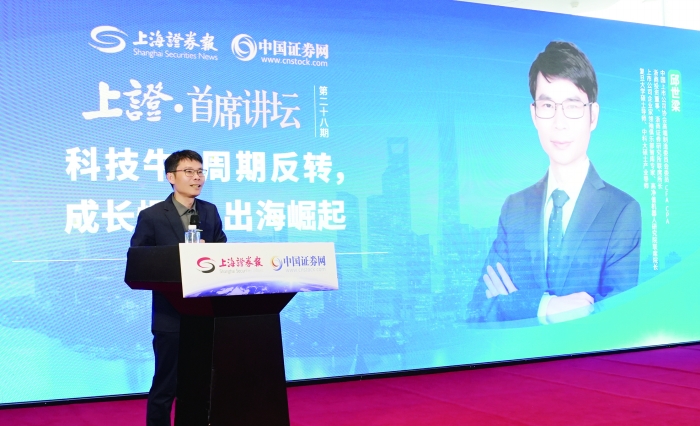
浙商证券邱世梁:着眼中长期 把握周期反转等三大方向
Shang Hai Zheng Quan Bao· 2025-10-09 18:39
Core Viewpoint - The current market is experiencing a technology-led cycle, with three key directions for medium to long-term investment: cyclical reversal, growth emergence, and overseas expansion [2] Group 1: Cyclical Reversal - The cyclical sector is expected to see improved profitability and cash flow, driven by technological iteration and innovation [2] - The shipbuilding industry is entering a new cycle due to the long lifespan of ships (approximately 20 years) and the trend towards new energy and environmental protection [3][4] - The recovery of the engineering machinery sector is analyzed through a "three-step recovery" framework, including high export growth, the initiation of a domestic renewal cycle, and stabilization of the real estate market [5][6][7] - The "three-step recovery" will collectively drive a reversal in the engineering machinery industry [8] - The "anti-involution" policy is expected to improve profitability and cash flow in industries like photovoltaic and lithium battery equipment, enabling technological innovation [8] Group 2: Growth Emergence - The current market cycle is led by artificial intelligence (AI), with a long industrial chain encompassing various applications and hardware [9] - The humanoid robot sector is identified as a promising area, with expectations for large-scale production by 2026 [9] - Investment strategies for humanoid robots should focus on industry leaders and undervalued companies that may transition from "interns" to "full-time employees" within the supply chain [10] Group 3: Overseas Expansion - Chinese companies are pursuing global expansion to mitigate single-market risks and tap into new growth opportunities [11][12] - The investment framework for export-oriented companies should consider whether their products are consumer or capital goods and identify core export markets, particularly in countries involved in the Belt and Road Initiative [13] - The emergence of "multinational companies with Chinese genes" is anticipated, which will benefit from diversified capacity allocation and open up new growth ceilings [13]

超50只基金翻倍!这两大赛道成最大赢家
Guo Ji Jin Rong Bao· 2025-10-09 15:00
Core Insights - The performance of public funds in the first three quarters of 2025 shows significant differentiation, with over 50 funds doubling their net value, particularly in technology and pharmaceutical themes, while funds heavily invested in traditional finance and cyclical sectors performed poorly [1][2]. Fund Performance - Active equity funds achieved an average return of 34.54% year-to-date, outperforming passive index funds which averaged 27.56% [2]. - A total of 53 funds recorded returns exceeding 100%, with 48 being active equity funds, highlighting the success of active management in a structural market [2]. - The top-performing fund, Yongying Technology Smart A, had a return of 194.49%, followed by Huatai-PB Hong Kong Advantage Selection A at 161.1%, both focusing on technology and innovative pharmaceuticals [2]. Traditional Sector Performance - In contrast, 41 funds reported returns below -5%, with 27 being active equity funds, primarily invested in traditional sectors like banking, real estate, and consumer goods [3]. - The performance gap between the best and worst active equity funds exceeded 200 percentage points, indicating a high level of market differentiation [3]. Gold ETFs - Gold ETFs have seen significant inflows due to their strong safe-haven appeal, with an average return of 41.04% year-to-date, outperforming the broader market [4]. - All 14 gold ETFs recorded positive growth in shares, with the largest ETF increasing by over 3.3 billion shares, and total market shares surpassing 20 billion [4]. Market Outlook - The market is expected to continue its differentiation, with technology and innovative pharmaceuticals likely to remain the main themes in Q4 [5][6]. - Investment strategies should focus on "high-cut low" approaches, shifting from high-performing sectors to undervalued areas [6][7]. - The innovation drug sector may see reduced overall beta in Q4, suggesting a focus on individual stock opportunities rather than broad sector plays [7].
晚报 | 10月10日主题前瞻
Xuan Gu Bao· 2025-10-09 14:24
Superhard Materials - The Ministry of Commerce and the General Administration of Customs announced export control measures on superhard materials, rare earth equipment, and other related items, effective from November 8 [1] - The production and sales ratio of superhard materials in China remains high, indicating a balanced supply-demand relationship, with diamond wire and micro-powder products nearing 100% [1] - The market for CVD diamond films is expected to exceed 5 billion yuan by 2030, indicating significant growth potential [1] Semiconductor Industry - TSMC reported a September sales figure of 330.98 billion NTD, a year-on-year increase of 31.4%, with Q3 revenue reaching 989.9 billion NTD, surpassing analyst expectations [2] - The demand for high-end chips driven by AI investments from global tech giants is providing strong support for TSMC's performance [2] - The semiconductor industry is anticipated to experience a full recovery by 2025, with improved profitability for companies [2] Humanoid Robots - Cloud Deep Technology launched the DR02 humanoid robot, featuring IP66 protection for outdoor operations [3] - The industry is on the verge of mass production, with major companies like Tesla and domestic leaders receiving significant orders [3] - The humanoid robot sector is expected to enter mass production by 2026, driven by advancements from leading companies [3] Rare Earths - Export controls on certain rare earth items will be implemented starting November 8, 2025, expanding previous measures [4] - China holds a dominant position in the global rare earth market, with 68.57% of production and 39.21% of reserves [4] - The new export control measures are expected to strengthen China's competitive advantage in the entire rare earth supply chain [4] Physical AI - XPeng Motors announced significant breakthroughs in physical AI, enhancing its ability to simulate the physical world [5] - The development of a large-scale physical AI model is seen as crucial for advancing autonomous driving and robotics [5] - The commercialization of physical AI is accelerating, with practical applications emerging in various sectors [5] Two-Dimensional Semiconductors - Fudan University's research team developed the world's first two-dimensional-silicon hybrid architecture chip, which could revolutionize traditional storage architectures [6] - This technology is expected to provide new pathways for chip development in the post-Moore's Law era [6] - The two-dimensional semiconductor technology is recognized as a key solution to global semiconductor challenges [6] Hydrogen Energy - A research team from Tokyo University of Science developed a high-performance solid electrolyte capable of reversible hydrogen absorption at 90 degrees Celsius [7] - The magnesium-hydrogen battery constructed from this electrolyte shows promising hydrogen storage capacity, nearing theoretical limits [7] - This advancement is expected to play a significant role in renewable energy storage and fuel cell vehicles [7]

突破!A股新一轮行情展开
Mei Ri Jing Ji Xin Wen· 2025-10-09 12:53
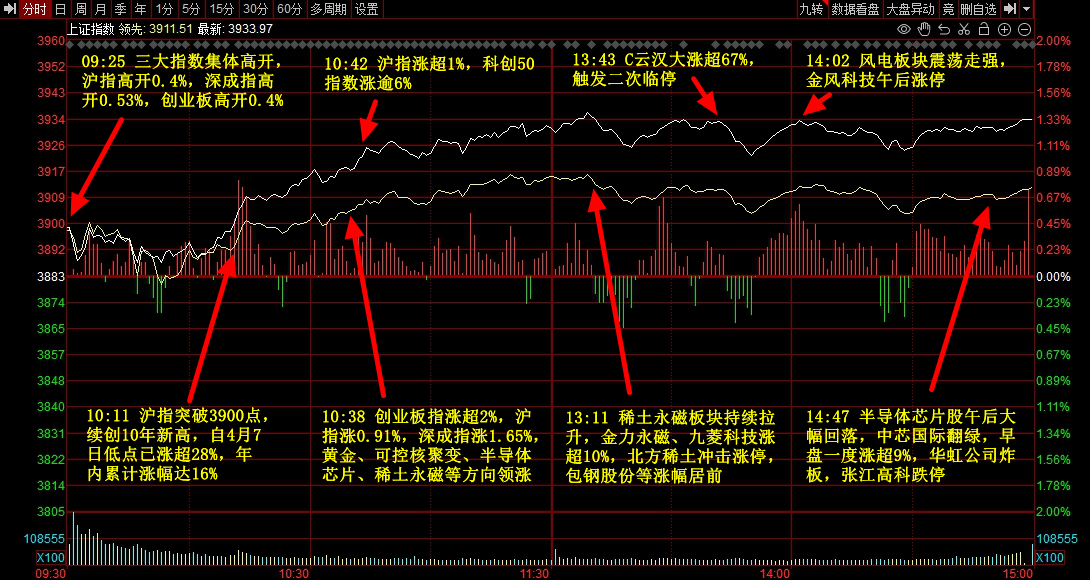
Group 1: OpenAI's Strategic Moves - OpenAI's CEO Sam Altman announced plans for "very aggressive infrastructure bets" to meet the future demand for AI models [1] - Altman indicated that more similar partnerships will be announced in the coming months, with collaborations with giants like NVIDIA, Oracle, and AMD being just the beginning [1] - The concept of an "AI closed-loop economy" is central to these initiatives, aiming to transform suppliers into stakeholders through innovative financing structures [1] Group 2: Market Reactions and Analysis - Morgan Stanley highlighted that the "circular financing" model is reshaping the AI industry chain but warned of potential risks if AI commercialization does not meet expectations [1] - Goldman Sachs expressed optimism, stating that the current AI market is driven by profits rather than speculation, with a median P/E ratio of about 27 times for seven major tech giants, significantly lower than the 52 times peak during the 2000 tech bubble [2] - Despite high market concentration and increased capital expenditure, Goldman Sachs noted that major players have ample cash flow and negative net debt ratios, indicating limited systemic risk [2] Group 3: Market Performance - The A-share market opened positively in October, with the Shanghai Composite Index surpassing 3900 points, marking a ten-year high [3] - The trading volume in the Shanghai and Shenzhen markets reached 26,532 billion, a significant increase of 4,718 billion from the previous trading day [3] - A total of 3,115 stocks rose while 2,186 stocks fell, indicating a generally bullish market sentiment [3] Group 4: Sector Insights - The non-ferrous metals sector saw significant gains, with over 20 stocks hitting the daily limit or rising more than 10% [4] - The performance of gold and copper stocks was particularly notable, with historical trends suggesting that other metal prices may follow gold in a bull market [4] - The recent surge in the non-ferrous sector indicates that the current bull market may have a longer duration, as it follows the gold market's upward trend [4] Group 5: Future Outlook - The U.S. has created a favorable environment for continuous interest rate cuts, which may catalyze an increase in non-ferrous metal prices [5] - The semiconductor sector showed strong performance but experienced a significant pullback, potentially due to market fluctuations related to key companies [5] - The human-robotics sector is entering a critical phase, with a focus on companies that can deliver substantial benefits and have deep institutional involvement [6]