纺织

Search documents
5位民营企业家谈信心:政策给力、加快创新
Di Yi Cai Jing· 2025-07-15 10:56
Core Viewpoint - The development prospects of the private economy in China are broad and promising, with significant opportunities for private enterprises and entrepreneurs to showcase their capabilities [1][3]. Group 1: Private Enterprises and Economic Development - The private economy is seen as having a bright future, supported by favorable policies and a conducive environment for investment in research and production [1][3]. - The private sector is increasingly recognized for its role in technological innovation and is expected to contribute significantly to the growth of various industries, including commercial aerospace and pharmaceuticals [3][4]. Group 2: Case Studies of Private Enterprises - Weiqiao Group has transitioned over 2 million tons of electrolytic aluminum production capacity to Yunnan, utilizing hydropower resources to achieve a green transformation, significantly reducing carbon emissions [2]. - Star River Dynamics focuses on launching satellites into space using its self-developed rockets, tapping into a projected market demand for thousands of satellites in the next decade [3]. Group 3: Industry Trends and Future Outlook - The manufacturing sector is encouraged to pursue green low-carbon development, digital transformation, and innovation-driven strategies to overcome development bottlenecks [4][5]. - The pharmaceutical market in China is nearing 5 trillion yuan, with expectations for further expansion driven by health consumption upgrades and technological advancements [3][4].
宇树科技CEO王兴兴:今年宇树机器人出货量有明显增长,未来3—5年人形机器人将加速在各行业应用落地
Hua Er Jie Jian Wen· 2025-07-15 10:18
Group 1 - The meeting held by the State Council Information Office featured private entrepreneurs discussing the promotion of entrepreneurial spirit and commitment to building socialism with Chinese characteristics [1][6]. - Wang Xingxing, CEO of Yushu Technology, stated that the company has the highest global shipment volume of humanoid robots and quadruped robotic dogs, with significant growth in shipments this year compared to last year [2][24]. - The overall growth rate of the robotics industry has been rapid in the first half of the year, reflecting a positive outlook for the private economy due to favorable policies [3][25]. Group 2 - Wang Xingxing emphasized the need for an open cooperative ecosystem in humanoid robotics, highlighting the strengths of both China and the U.S. in hardware and software, respectively [4][41]. - He projected that humanoid robots will accelerate their application across various industries in the next 3-5 years, including service, industrial, and disaster rescue scenarios [5][50]. Group 3 - Zhang Bo, Chairman of Weiqiao Chuangye Group, shared that the company has transitioned to green aluminum production, significantly reducing carbon emissions and contributing to local economic development [11][27]. - Wang Zhen, President of Inner Mongolia Erdos Investment Holding Group, discussed the unique advantages of the cashmere industry and the importance of innovation and sustainability in driving growth [14][29]. Group 4 - Liu Baiqi, founder of Beijing Xinghe Power Aerospace Technology, highlighted the company's success in launching satellites using privately developed rockets, positioning it as a leader in China's commercial space sector [17][30]. - Liu Changyun, Chairman of Jiuzhoutong Pharmaceutical Group, noted the importance of serving rural healthcare needs and the potential for growth in the health industry, which is projected to reach a market size of nearly 5 trillion [21][32]. Group 5 - The entrepreneurs collectively expressed confidence in the future of the private economy, citing strong government support and a favorable market environment as key factors for growth [25][32]. - They emphasized the importance of innovation, digital transformation, and sustainable practices as essential strategies for achieving high-quality development in their respective industries [56][57].


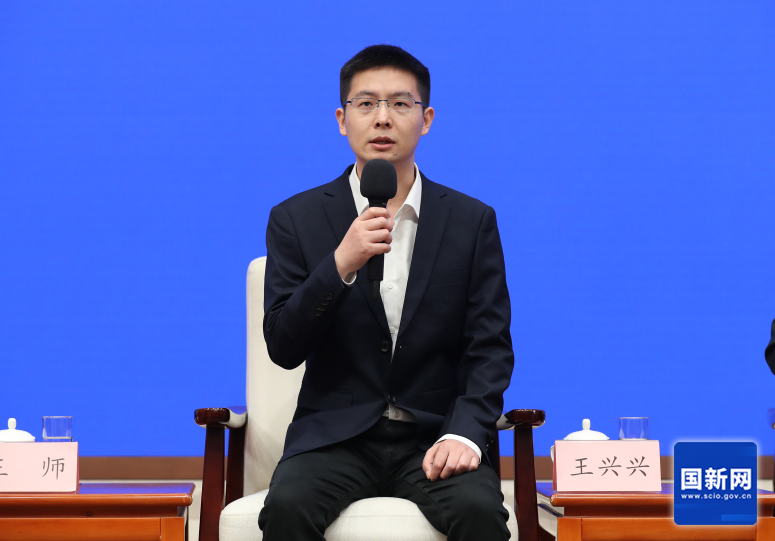
宇树王兴兴、九州通刘长云等多位民营企业家亮相中外记者见面会
智通财经网· 2025-07-15 09:17
Group 1 - The meeting highlighted the importance of promoting entrepreneurial spirit among private enterprises in China, emphasizing their role in the development of socialism with Chinese characteristics [3][53]. - Wang Xingxing, CEO of Yushu Technology, expressed confidence in humanoid robots becoming mainstream technology in the next 3 to 5 years, with significant growth in application scenarios across various sectors [1][45]. - Liu Baiqi, founder of Xinghe Power, discussed the development of the reusable rocket Zhi Shen Xing 2, which has a basic payload capacity of 20 tons and can be adapted for various space missions, aiming to reduce launch costs significantly [2][33]. Group 2 - The private sector is seen as having a bright future, with supportive policies and a conducive environment for innovation and development, as noted by various entrepreneurs during the meeting [20][26]. - The commercial space industry is rapidly growing, with Xinghe Power completing 19 successful rocket launches, establishing itself as a leading private rocket company in China [13][24]. - The meeting underscored the need for traditional manufacturing sectors to embrace green and low-carbon development, digital transformation, and innovation to achieve high-quality growth [50][52]. Group 3 - Yushu Technology has achieved significant technological advancements in high-performance quadruped and humanoid robots, aiming to promote their application in various fields [5][45]. - The meeting featured discussions on the challenges and opportunities faced by industries, including the need for innovation and adaptation to changing market demands [37][38]. - The entrepreneurs emphasized the importance of social responsibility and the integration of corporate development with national strategies, reflecting a commitment to contributing to society [41][48].

政策解读:上交所制定《推动提升沪市上市公司ESG评级专项行动方案》
Sou Hu Cai Jing· 2025-07-15 01:27
Core Insights - The Shanghai Stock Exchange (SSE) has launched a special action plan to enhance ESG ratings for listed companies, responding to regulatory requirements and aiming to improve the international competitiveness of the A-share market [1][2] - As of the end of 2024, 342 companies are included in the MSCI ESG ratings, with 8 achieving AAA ratings and 52 in the AAA-A tier, indicating significant progress but highlighting structural challenges [1][2] - The action plan aims to address issues such as climate disclosure and supply chain management, which lag behind international benchmarks, emphasizing the need for improved rating methodologies and data reliability [1][2] Policy Framework - The SSE's ESG rating initiative is built around six core measures that create a systematic breakthrough, focusing on institutional norms, information disclosure, and evaluation systems [2] - The initiative aims to eliminate market information barriers, strengthen corporate responsibility awareness, and transition the ESG ecosystem from fragmented exploration to standardized and systematic practices [2] Rating Improvement System - The plan establishes a logical chain of "indicators-disclosure-management" and develops industry-specific rating guidelines, providing templates for governance structure design and disclosure examples [3] - It includes performance benchmarking analysis to help companies identify "rating pain points," particularly in sectors like chemicals, where pollution control and environmental risk management disclosures are emphasized [3] Collaborative Governance Platform - A regular dialogue mechanism between listed companies and rating agencies will be established, facilitating communication through training and industry forums [4] - This two-way communication aims to resolve information asymmetry, allowing companies to better understand rating criteria and improve their ESG management practices [4] Disclosure Quality Enhancement - The plan promotes a "financial materiality" disclosure principle, requiring companies to reveal the impact of ESG issues on financial performance within a structured framework [5] - It also advances the electronic standardization of sustainability reports to enhance the traceability and comparability of ESG information [5] Best Practices Matrix - The initiative will compile ESG practice white papers across industries, showcasing leading companies and typical scenarios, and organize workshops to address common challenges [6] - This approach aims to create a virtuous cycle of "benchmark demonstration-industry follow-up" [6] ESG Financial Ecosystem - The plan integrates ESG ratings into financing product designs, encouraging banks to offer "ESG performance-linked loans" and promoting the issuance of sustainable development-linked bonds [8] - By 2025, the scale of ESG-themed funds in the SSE is expected to grow by 40%, with significant cost advantages for higher-rated companies [8] Management Capability Foundation - Companies are encouraged to involve ESG professional investors in governance to enhance management expertise and establish a "pre-rating" mechanism for early diagnosis [9] - This mechanism has already helped a medium-sized manufacturing company identify shortcomings in occupational health and safety indicators, leading to successful inclusion in the MSCI rating system [9] Policy Effect Assessment - The SSE's ESG rating initiative represents a systematic reshaping of the capital market's sustainable development ecosystem, driving companies to optimize their environmental governance and social responsibility practices [10] - The ongoing effects of the policy are expected to shift the capital market focus from short-term profit to long-term value investment [10] Value Creation Model Innovation - The initiative encourages companies to shift from "passive disclosure" to "active management," enhancing environmental governance and social responsibility [11] - For instance, a steel company improved its production processes and achieved cost-effective financing through ESG rating enhancements, demonstrating the synergy between environmental investment and economic benefits [11] Resource Allocation Optimization - As ESG ratings become deeply integrated into investment decisions, capital is expected to flow towards higher-rated companies, creating a positive cycle of "rating improvement-valuation premium-quality development" [12] - By 2026, the number of AAA-A rated companies in the SSE is projected to double, with ESG index fund scales surpassing one trillion [12] Global ESG Governance Contribution - The plan incorporates international rating experiences while emphasizing "Chinese characteristics" in ESG practices, providing a reference for developing countries [13] - As the international recognition of SSE companies' ESG ratings increases, the A-share market's influence in the global ESG investment system is expected to grow [13] Summary and Outlook - The SSE's ESG rating enhancement initiative is not just a technical optimization of rating indicators but a profound restructuring of capital market development logic [14] - The initiative aims to transform listed companies from "profit centers" to "value centers," establishing the capital market as a key link between economic development and social progress [14]
特朗普突然对越南下狠手!20% 关税砸向千亿美元产业
Sou Hu Cai Jing· 2025-07-14 17:18
Core Viewpoint - The sudden imposition of a 20% tariff on all Vietnamese exports to the U.S. by President Trump has disrupted Vietnam's economic plans, which were initially based on a lower expected tariff rate of 10-15% [1][3]. Group 1: Tariff Impact - The crisis originated from Trump's announcement of a "reciprocal tariff" plan, initially proposing a 46% punitive tariff on Vietnam, which was later negotiated down to 20% after three months of discussions [3]. - Vietnamese companies are facing significant challenges, with some, like JinkoSolar, facing tariffs as high as 120%, severely impacting their competitiveness [4]. Group 2: Vietnam's Response - Vietnam's trade surplus with the U.S. is projected to reach $123.5 billion in 2024, accounting for over 30% of its total exports, despite the 20% tariff potentially eroding 15-20% of corporate profits [5]. - The Vietnamese dong has depreciated to a historical low, and the Ho Chi Minh stock market lost $66 billion in value in a single week, indicating increased risks of foreign capital withdrawal [5]. Group 3: U.S. Strategic Goals - The U.S. aims to weaken China's influence in Southeast Asia through its tariff policies, despite data showing that only 3% of Vietnamese exports are used to circumvent tariffs, while 70% of materials for Vietnamese manufacturing come from China [7]. Group 4: Global Repercussions - The tariff conflict has broader implications, as Vietnam must balance its economic relationship with both the U.S. and China, with imports from China accounting for 62% of its total imports in the first four months of 2025 [8]. Group 5: Future Strategies - Experts predict that Vietnam may counteract the tariff impact through a 10% depreciation of the dong and a $5 billion government fund for export subsidies, although this could increase fiscal deficit pressures [9]. - Vietnam is pursuing a multi-faceted approach, including diplomatic negotiations, market diversification, and industrial upgrades, with exports to the EU and India increasing by 32% and 18% respectively [12].
联发股份: 2025年半年度业绩预告
Zheng Quan Zhi Xing· 2025-07-14 09:13
证券代码:002394 证券简称:联发股份 公告编号:LF2025-025 江苏联发纺织股份有限公司 本公司及董事会全体成员保证公告内容真实、准确和完整,不存在虚假记载、 误导性陈述或者重大遗漏。 股东的净利润 比上年同期增长:235.09% - 275.71% 盈利:11000 万元– 13000 万元 扣除非经常性损 盈利:10423 万元 益后的净利润 一、本期业绩预计情况 项 目 本报告期 上年同期 盈利:16500 万元–18500 万元 归属于上市公司 盈利:4924 万元 本次业绩预告未经会计师事务所审计。 三、业绩变动原因说明 报告期内,公司归属于上市公司股东的净利润预计 16500 万元-18500 万元, 同比增长 235.09%-275.71%。主要原因:1)公司持有的交易性金融资产产生的 非经常性损益约 0.6 亿,较去年同期增加约 1.38 亿,净利润增加 1.1 亿;2)煤 炭价格下降,公司订单毛利率上涨。 四、风险提示 江苏联发纺织股份有限公司董事会 二〇二五年七月十五日 比上年同期增长:5.54% - 24.72% 基本每股收益 盈利:0.5097 元/股–0.5715 元/股 ...

中国宏观周报(2025年7月第2周)-20250714
Ping An Securities· 2025-07-14 06:12
Industrial Sector - China's cement clinker capacity utilization rate increased by 1.3% this week[10] - The operating rate of petroleum asphalt rose by 3.2% this week[14] - The operating rate of automotive semi-steel tires increased by 3.6% this week[18] Real Estate - New home sales area growth rate increased by 0.7 percentage points year-on-year compared to last week[2] - The second-hand housing listing price index decreased by 0.29% in the last four weeks as of June 30[23] Domestic Demand - Retail sales of passenger cars from July 1-6 reached 238,000 units, a year-on-year increase of 1%[29] - The retail sales of major home appliances grew by 10.9% year-on-year in the last four weeks as of June 27[29] - The volume of postal express collection increased by 16.1% year-on-year as of July 6[31] External Demand - Port cargo throughput increased by 4.1% year-on-year as of July 6, up 3.4 percentage points from last week[34] - South Korea's export value increased by 9.5% year-on-year in the first ten days of July, up 5.2 percentage points from June[34]
美国对东盟宣战后,鲁比奥直飞亚洲,王毅也将赴会,双方正面交锋
Sou Hu Cai Jing· 2025-07-14 04:21
Core Viewpoint - The U.S. is imposing punitive tariffs on multiple countries, particularly targeting ASEAN nations, which is perceived as an economic declaration of war against Southeast Asia [1][3]. Group 1: Tariff Implications - The U.S. will impose tariffs ranging from 25% to 40% on various ASEAN countries, with Malaysia and Kazakhstan facing 25%, South Africa 30%, Laos and Myanmar up to 40%, Thailand and Cambodia 36%, and Indonesia 32% [1]. - The tariffs are expected to significantly impact the manufacturing sectors of these countries, especially in automotive and electronics industries [1][3]. Group 2: Diplomatic Maneuvers - U.S. Secretary of State Rubio's sudden change in travel plans to attend the ASEAN Foreign Ministers' meeting indicates a strategic move to mitigate the fallout from the tariffs and reassure ASEAN nations [1][3]. - China's Foreign Minister Wang Yi is also attending the ASEAN meetings, emphasizing China's commitment to its core interests and potentially countering U.S. narratives [3][5]. Group 3: Regional Response - ASEAN countries are showing strategic awareness, with leaders like Panama's president rejecting U.S. demands and countries like Malaysia and Indonesia refusing to act as proxies in U.S.-China tensions [5]. - ASEAN may consider a united front against U.S. tariffs, potentially following the EU's example of filing a WTO complaint against U.S. tariffs [5][7]. Group 4: Economic Context - The total GDP of ASEAN countries has surpassed that of Germany and the UK combined, indicating a shift in economic power dynamics in the region [7]. - The Regional Comprehensive Economic Partnership (RCEP) encompasses 30% of the global population, highlighting the growing economic significance of Asia [7][8].
印度:这就是信任美国的代价
Hu Xiu· 2025-07-14 04:06
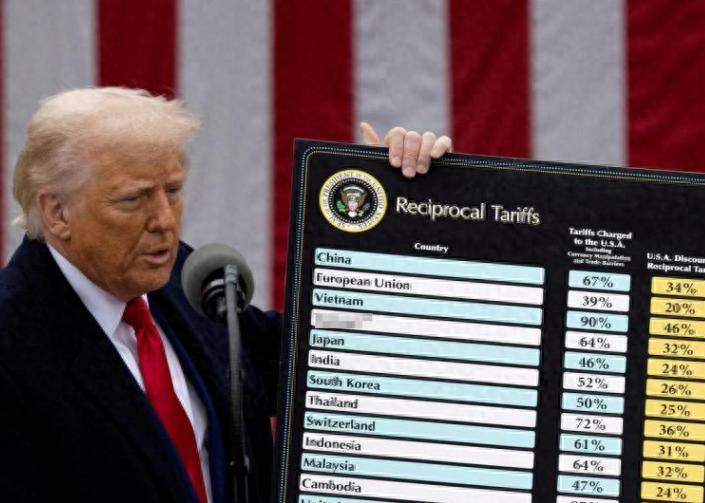
Group 1 - India is at a critical juncture, facing a tough test regarding energy security due to a proposed US Senate bill imposing punitive tariffs on countries buying oil from Russia [1][2][3][4] - The US bill threatens to impose tariffs as high as 500%, which could force India to choose between maintaining economic affordability and aligning with US geopolitical interests [2][4][10] - Since early 2022, Russian oil has been significantly cheaper than Middle Eastern oil, saving India nearly $7-8 per barrel, which has helped mitigate inflation and protect citizens' finances [5][6][18] Group 2 - The Indian government’s decision to import Russian oil is based on economic rationality, saving approximately $79 billion in oil import costs over the past year [6][18][19] - The US's geopolitical perspective views India's economic decisions as a lack of cooperation with its sanctions against Russia, leading to potential economic coercion [19][20] - The proposed tariffs are not merely economic penalties but a coercive measure aimed at forcing India to comply with US strategic objectives [20][48] Group 3 - India's long-standing commitment to "strategic autonomy" is now challenged by external pressures, particularly from the US [8][24][26] - The country must demonstrate its ability to maintain core interests, such as energy security and economic stability, under significant external pressure [11][28] - India's reliance on the US market, with exports amounting to $800-900 billion annually, makes it vulnerable to the proposed tariffs, which could devastate key industries [31][32][34] Group 4 - India is currently seeking to diversify its energy sources and reduce dependence on Russian oil, which requires significant time and investment [41][43] - The need for alternative markets and financial systems is critical, as India explores options to bypass reliance on the US dollar [41][42] - The ongoing geopolitical tensions are pushing India to develop a more complex diplomatic strategy, balancing relations with both the US and Russia [36][39][56] Group 5 - The situation reflects a broader trend of countries needing to navigate a complex geopolitical landscape, where they must maintain relationships with multiple powers while safeguarding their national interests [51][55] - The crisis serves as a test of India's national credibility, as it seeks to prove its resilience against US economic pressures while establishing itself as an independent player on the global stage [58][60] - The evolving dynamics indicate a shift towards a multipolar world, where countries must enhance their negotiating power and strategic autonomy to avoid being coerced by larger powers [61][62]
机构研究周报:有一点2014年底味道,利率下行趋势或放缓
Wind万得· 2025-07-13 22:42
Core Viewpoints - The current market environment shows similarities to the end of 2014, with a potential for policy changes aimed at stimulating domestic demand and addressing "involution" [5][4]. Economic Indicators - China's June CPI rose by 0.1% year-on-year, marking the first increase after four months of decline; core CPI increased by 0.7%, the highest in 14 months. PPI fell by 0.4% month-on-month and 3.6% year-on-year, with the decline expanding by 0.3 percentage points compared to the previous month [2]. - The shift in CPI is attributed to a recovery in industrial consumer goods prices, which saw a reduction in the year-on-year decline from 1.0% to 0.5% [2]. Equity Market Insights - A-shares are driven by capital rather than traditional macro factors, with significant inflows expected from insurance and public funds, particularly into the technology sector [4]. - Hong Kong stocks are viewed as having high cost-effectiveness and potential for growth, supported by expected inflows from Southbound capital and a favorable earnings outlook [6][7]. Industry Research - The "involution" policy is driving sectors like steel and new energy, while AI is enhancing the performance of technology leaders, suggesting a focus on high-quality stocks and sectors with significant growth potential [9][10]. - The introduction of Grok-4 is expected to significantly enhance AI reasoning capabilities, leading to new investment opportunities in the computing industry [10]. Macro and Fixed Income - The bond market is anticipated to experience a slowdown in the downward trend of interest rates, with a focus on the 10-year government bond yield remaining stable [18]. - The current high valuation of convertible bonds limits their upward potential, with a recommendation to focus on lower-priced strategies [19]. Asset Allocation Strategies - A "dividend base + small-cap growth" strategy is recommended, focusing on high dividend and cash flow assets to mitigate external risks while also investing in high-volatility new stocks [22].