
大宗商品

Search documents
金银多年来罕见暴跌!盘中黄金跌超6%,白银跌近9%,华尔街拉响回调警报
Hua Er Jie Jian Wen· 2025-10-21 16:09
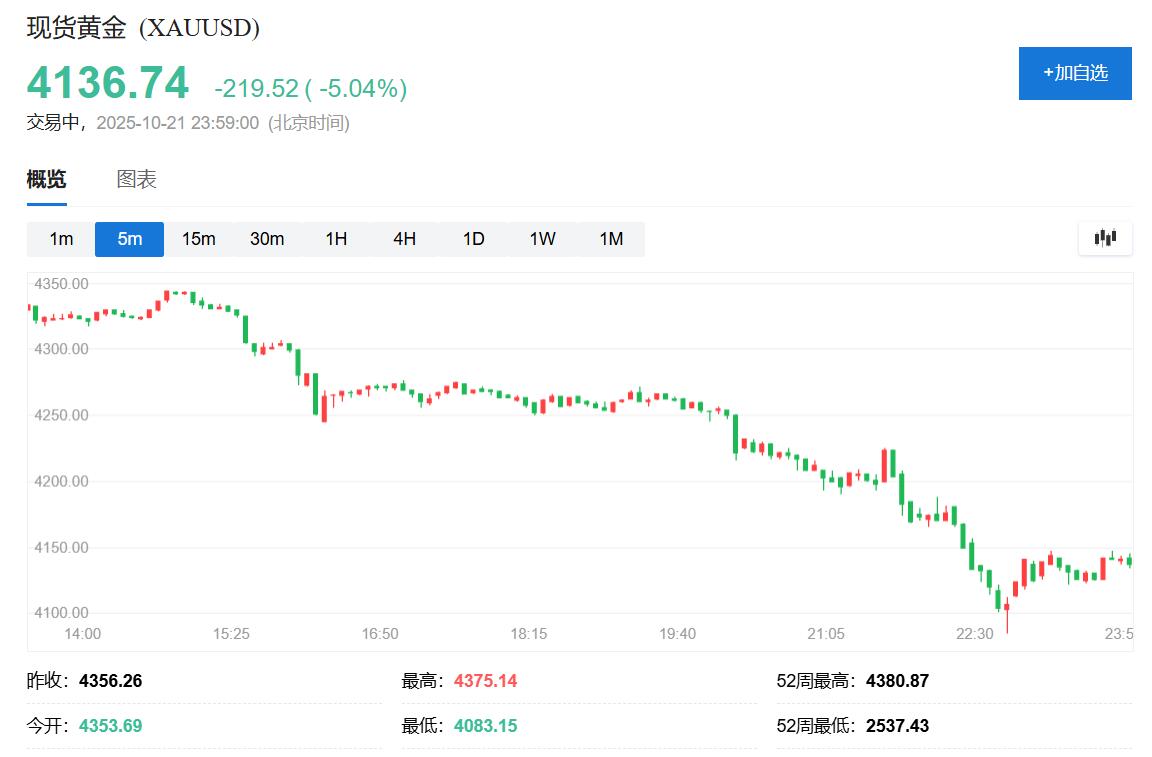
Core Viewpoint - The precious metals market experienced a significant downturn after a period of record highs, with gold and silver facing their largest daily declines in years, driven by multiple factors including a strong dollar and reduced safe-haven demand [1][4][7]. Price Movements - Gold prices fell approximately 6.3% to around $4082, marking the largest daily drop since April 2013, while New York futures dropped to $4093, down 6.1% [1]. - Silver prices dropped nearly 8.7% to below $47.90, the largest intraday decline since February 2021, with New York futures falling to $47.12, down about 8.3% [4]. Market Pressures - The decline in precious metals was influenced by expectations of easing trade tensions, a strengthening dollar, overbought technical indicators, and opaque investor positions, which collectively ended the previous upward trend [7]. - The ongoing U.S. government shutdown has resulted in a lack of critical positioning data, increasing uncertainty in the market [8]. Speculative Positions - Analysts noted that speculative long positions in gold and silver may have accumulated significantly, making them more susceptible to corrections [9]. - The absence of weekly positioning reports from the Commodity Futures Trading Commission (CFTC) due to the government shutdown has allowed speculators to build large one-sided positions [8][9]. Analyst Perspectives - Some analysts believe that despite the sharp declines, the fundamental factors supporting precious metals remain intact, suggesting potential buying interest may limit further corrections [7][10]. - There is a divergence in analyst opinions, with some indicating that the recent price drop may not be detrimental, while others caution that momentum could eventually fade, leading to increased selling pressure if U.S. economic data exceeds expectations [10]. Silver Market Dynamics - The silver market, which has surged nearly 80% this year, is also experiencing significant declines, influenced by macroeconomic factors and historical market tightness [11]. - Recent data indicated the largest single-day outflow of silver from warehouses associated with the Shanghai Futures Exchange since February, alongside a decrease in New York inventories [12].

恐慌指数飙升!美股平静期结束了?普通人还能上车吗?
Sou Hu Cai Jing· 2025-10-20 03:14
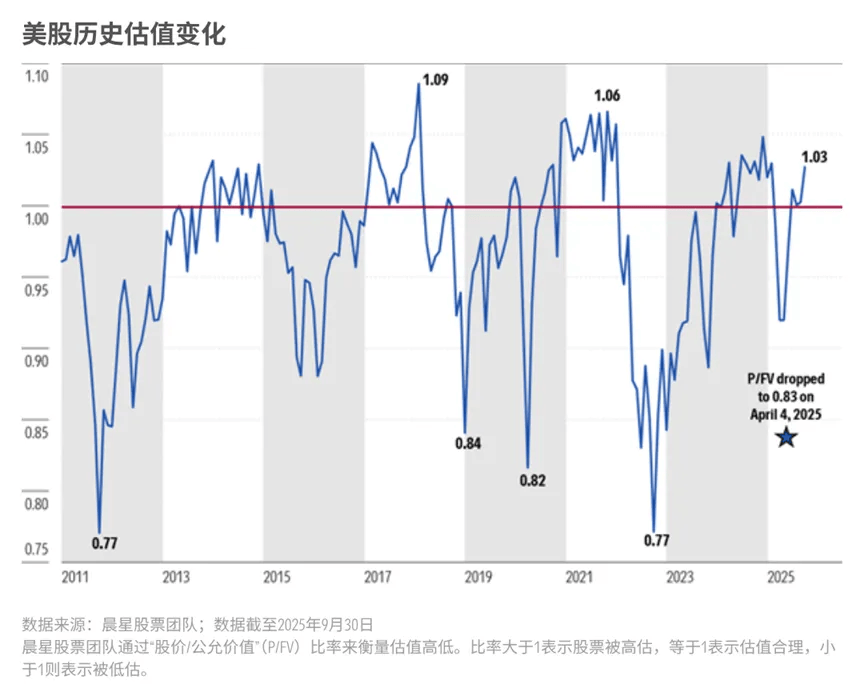
Group 1 - The U.S. stock market experienced a significant drop due to Trump's tariff threats, with major indices hitting a one-month low and the Dow facing its first five-day losing streak in two months [1] - Nearly 40% of the U.S. stock market's value is concentrated in 10 large-cap stocks, primarily in the AI sector, which carries high expectations for growth [7] - The overall valuation of the U.S. stock market is currently overvalued by 3% compared to fair value, a situation that has occurred only about 15% of the time since 2010 [4] Group 2 - The growth momentum driven by AI and related investments is providing new support for the U.S. economy, while expectations of two interest rate cuts by the Federal Reserve by year-end may mitigate macroeconomic headwinds [11] - Economic pressures such as slowing consumer spending, weak new home construction, and diminishing fiscal stimulus effects pose challenges for the U.S. economy in the coming months [11] - Historical data indicates that commodities typically rise by an average of 3% in the nine months following the first interest rate cut, with specific patterns observed in commodity price movements [12][13] Group 3 - The performance of commodities during interest rate cut cycles varies significantly based on the economic context, with strong returns in healthy economic conditions and declines during recessionary periods [15] - Energy and precious metals tend to perform well during rate cut cycles, with average increases of 10% and 7% respectively, while industrial metals lag behind with an average decline of 4% [15] - The current state of the U.S. stock market suggests that if it weakens, there may be a surge in profit-taking, while commodities could present more certain investment opportunities under the backdrop of rate cuts [15]
基金周报:首批巴西ETF申报,多只贵金属基金限购-20251020
Guoxin Securities· 2025-10-20 02:40
- The report introduces the "SSE STAR Market Innovation Growth Strategy Select Index," which focuses on selecting 80 listed companies with strong technological innovation and growth capabilities from various industries on the STAR Market[13][14] - The index incorporates traditional factors such as market capitalization and fundamentals, as well as innovative factors like R&D capability and profitability, and integrates the SPDB's Sci-Tech Evaluation System, which scores companies based on "technological innovation, team innovation, and equity innovation"[14] - The index aims to highlight companies with both "innovation strength" and "growth quality," reflecting the overall performance of listed companies on the STAR Market that possess these characteristics[13][14]
今年有极寒,冷冬?A股谁受益?| 1019 张博划重点
Hu Xiu· 2025-10-19 14:45
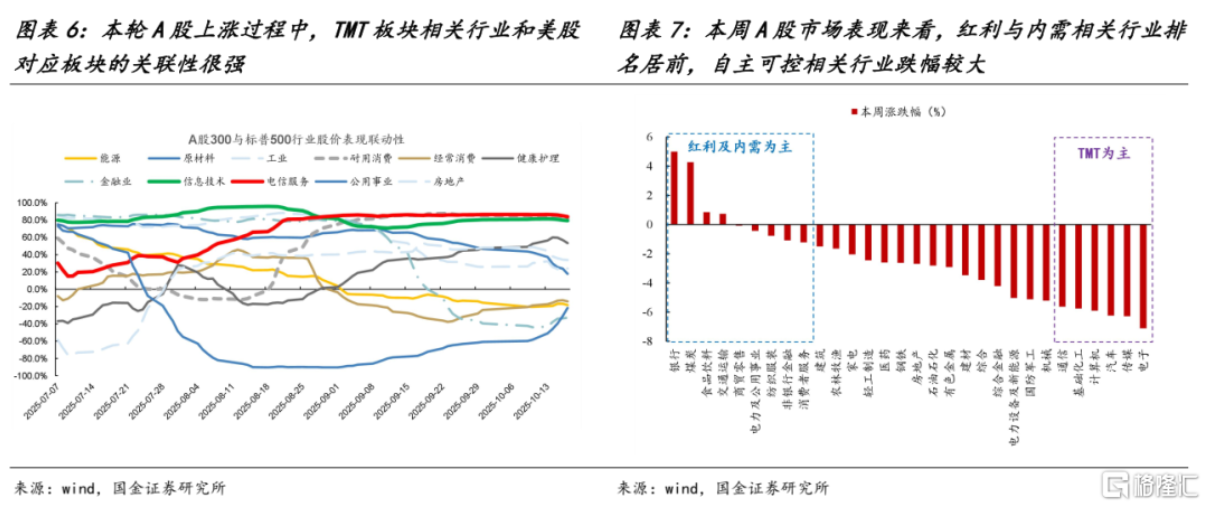
Group 1 - The deterioration of the China-US trade environment is a direct trigger for market adjustments this week, with Trump announcing a potential 100% tariff increase on China [1] - The US Department of Commerce released export control rules in late September, placing several Chinese companies on the entity list, prompting China to implement countermeasures, including stricter controls on rare earth exports [1] - Recent increases in Chinese assets were largely driven by overseas technology linkages, highlighting a short-term vulnerability in Chinese assets [1] Group 2 - A video call took place between Chinese Vice Premier He Lifeng and US Treasury Secretary Yellen, focusing on important issues in bilateral economic and trade relations, with an agreement to hold new rounds of China-US economic consultations [4] - Trump's softened stance indicates that a 100% tariff increase is unsustainable, and he expressed intentions to meet in the coming weeks [5] Group 3 - Citic Securities maintains an optimistic outlook on the stock market but advises caution in asset allocation [8] - The market's core contradiction lies in the pricing of economic fundamentals, with a need to pay attention to tactical changes in market valuation [9] - The fourth quarter is critical for validating leading indicators' transmission to the economic cycle, with a focus on non-bank sectors and commodity price expectations [9]
中信证券:对股市依旧可以保持乐观,配置方向更加谨慎
Bei Ke Cai Jing· 2025-10-18 03:10
Core Viewpoint - The report from CITIC Securities suggests maintaining an optimistic outlook on the stock market amid an economic cycle recovery, while advising caution in investment allocation due to valuation changes [1]. Group 1: Investment Recommendations - Investors are encouraged to focus on the non-bank sector, which is characterized by low valuations and rapid growth in investment performance, presenting a rebound opportunity [1]. - There is an emphasis on the investment opportunities in cyclical sectors, driven by expectations of rising commodity prices in the fourth quarter [1].

非美需求叠加低基数,出口再超预期:——9月进出口数据点评
Huachuang Securities· 2025-10-14 07:46
1. Report Industry Investment Rating - No information provided in the report 2. Core Viewpoints of the Report - China's exports in September continued to exceed expectations, with a year-on-year growth of 8.3%. The resilience of exports was mainly supported by the demand from non-US economies and emerging markets, low base effect, and the "anti-involution" effect on export prices. In the fourth quarter, although the rising base may suppress export readings, exports may still perform better than expected. [3][7] - China's imports in September had a year-on-year growth of 7.4%, reaching a new high for the year. The increase was mainly driven by price rises, and the import volume of some consumer goods remained weak. Attention should be paid to the improvement of import momentum after the accelerated implementation of wide - credit policies in the fourth quarter. [3][4] 3. Summary by Relevant Catalogues 3.1 Export: Strong Demand from Emerging Markets Supports Export Resilience - **Overall Export Situation**: In September, the export growth rate was +8.3%, 3.9 percentage points higher than that in August. The narrowing decline in exports to the US and the rising growth rate to non - US economies, along with the booming emerging markets, supported export resilience. [3][13] - **By Product Category** - **Consumer Goods**: The drag on consumer goods exports narrowed slightly but remained at a low level. In September, the year - on - year decline of four categories of consumer goods (clothing, shoes, bags, and toys) was - 12.7%, a 0.6 - percentage - point improvement from August. Price was still the main drag, with shoes and bags having year - on - year declines of - 13.0% and - 14.1% respectively. [15] - **Intermediate Goods**: The export of intermediate goods accelerated, significantly driving exports. In September, the combined year - on - year growth of five categories of intermediate goods (plastic products, steel, aluminum, integrated circuits, and general equipment) was +21.0% (compared to +12.3% in August), driving export growth by 2.4 percentage points. [18] - **Electronic Products**: Due to the low base, the drag of electronic products on exports significantly narrowed. In September, the combined year - on - year decline of mobile phones and laptops was - 1.0% (compared to - 8.1% in August), and the drag on exports narrowed to - 0.1%, the best performance since April. [23] - **Automobiles**: The contribution of automobiles declined slightly. In September, the year - on - year growth of automobile (including chassis) export value was +10.9%, a 6.5 - percentage - point decline from August, and the driving rate of export growth dropped to 0.4%. [23] - **By Country** - **Developed Economies**: In September, the decline in exports to the US narrowed slightly, with a year - on - year decline of - 27.0%, and its share in exports rose to 10.4%. The growth rate of exports to the EU continued to rise, reaching +14.2%. [24] - **Emerging Markets**: Exports to ASEAN slowed down, with a year - on - year growth of +15.6%, a 7 - percentage - point decline from the previous month, but still at a relatively high historical level. Exports to Latin America were remarkable, with the year - on - year growth turning positive to +15.2%, the highest since May. [24] 3.2 Import: Significantly Driven by Price, with the Growth Rate Reaching a New High for the Year - **Overall Import Situation**: In September, the import amount had a year - on - year growth of 7.4%, a 6.1 - percentage - point increase from August, reaching a new high for the year. The month - on - month growth was +8.5%, significantly higher than the usual 2% in the same period. Price increases were the main driver, while the import volume of some commodities remained weak, indicating that domestic demand still needed to be boosted by wide - credit policies. [29] - **By Product Category** - **Upstream Bulk Commodities**: The decline in imports of upstream bulk commodities significantly narrowed. In September, the combined year - on - year decline of five categories of upstream bulk commodities (iron ore, copper ore, coal and lignite, crude oil, and refined oil) was - 1.6%, the best performance this year, 10.5 percentage points narrower than in August. [30] - **Intermediate Goods**: The import of intermediate goods accelerated. The combined year - on - year growth of four categories of intermediate goods (primary plastics, copper materials, diodes, and integrated circuits) was +11.6%, a 6.2 - percentage - point increase from the previous month, also at a new high for the year. [30] - **Downstream Consumer Goods**: The decline in downstream consumer goods narrowed to single - digits for the first time. The combined year - on - year decline of three categories of consumer goods (medical materials and drugs, cosmetics, and automobiles) was - 9.9% (compared to - 25.1% previously), dragging down imports by - 0.2%. [30]
进出口高增,谁的贡献
HUAXI Securities· 2025-10-14 01:18
Import Data Insights - In September 2025, total imports reached $238.1 billion, a year-on-year increase of 7.4%, exceeding market expectations of 1.37%[1] - The increase in imports was driven by significant growth in bulk commodities and electromechanical products, with contributions of 2.5, 3.7, and 3.4 percentage points respectively[1] - Notably, crude oil, soybeans, and iron ore imports saw acceleration in growth rates by 7.6, 10.2, and 19.0 percentage points compared to the previous month[2] Export Data Insights - Total exports in September 2025 amounted to $328.6 billion, reflecting a year-on-year growth of 8.3%, surpassing the market forecast of 5.65%[1] - The increase in exports was influenced by the Mid-Autumn Festival's timing, resulting in more working days, which contributed to a higher export volume[3] - Exports to Africa and Latin America improved significantly, with year-on-year growth rates of 56.8% and 15.8%, contributing 2.7 and 1.2 percentage points to overall export growth[4] Product Category Contributions - Electromechanical and high-tech products were major contributors to export growth, with contributions of 7.7 and 3.1 percentage points respectively[5] - In contrast, automotive exports saw a decline, negatively impacting overall export performance by approximately 0.2 percentage points[5] Market Outlook - The strong import and export data may lead to an upward revision of GDP growth forecasts for Q3 2025, potentially reaching 4.8% or higher[6] - However, the fourth quarter may face challenges due to high base effects, with export growth expected to slow to below 5%[8]
华夏、易方达首批上报巴西ETF,指数成分股包含淡水河谷等
Sou Hu Cai Jing· 2025-10-13 12:20
Core Viewpoint - The report highlights that Huaxia, E Fund, and Huitianfu are submitting ETFs to Brazil, marking a significant step in the interconnection of capital markets between China and Brazil [1] Group 1: ETF Submissions - Huaxia's Brazil Ibovespa ETF and E Fund's Itaú Brazil IBOVESPA ETF have been submitted, both designed to track products issued by Brazilian asset management institutions [1] - The Ibovespa index is noted as the most representative stock index in Brazil and Latin America, primarily composed of major global commodity giants like Vale and Petrobras [1] Group 2: Market Connectivity - The submission of these ETFs is a result of the ongoing efforts to enhance connectivity between Chinese and Brazilian capital markets [1] - This year, Huaxia, E Fund, and Huitianfu have collaborated with Brazilian asset management institutions to launch products tracking China's ChiNext ETF, A50 ETF, and CSI 300 ETF, facilitating Brazilian investors' access to Chinese markets [1]


民生证券:9月进出口:为何又超预期?
Xuan Gu Bao· 2025-10-13 10:33
Core Viewpoint - The unexpected performance of September's export data reflects a combination of structural improvements in China's export landscape, including market diversification and industrial upgrades, rather than merely low base effects [1][8]. Export Performance - September's export value increased month-on-month, indicating a genuine recovery supported by China's diversified market strategies and industrial chain upgrades [1]. - The export structure has innovated under trade conflicts, with significant growth in high-tech product exports and expansion into emerging markets like Africa and Latin America, where exports to Africa surged by 56.4% [3][4]. - The trend of "anti-involution" has led to price recovery in exports, with many products showing a "stable volume and rising price" pattern [1][5]. Import Dynamics - September saw a notable rebound in import growth, driven primarily by rising commodity prices, although the recovery in domestic demand-related products remains weak [1][10]. - The increase in imports was largely concentrated in technology sectors, such as aircraft and integrated circuits, with the growth in raw materials like copper and iron ore being influenced more by price increases than by volume improvements [10]. Future Outlook - Despite ongoing trade tensions, exports are expected to maintain resilience due to diversified market strategies and industrial upgrades, supported by a marginal recovery in the global economy [8]. - The sustainability of the recent import growth is questioned, as it appears to be influenced by short-term price fluctuations rather than a robust recovery in domestic demand [10].

历次贸易摩擦中市场反馈模式复盘
Minsheng Securities· 2025-10-13 10:15
Report Industry Investment Rating The provided content does not mention the report industry investment rating. Core Viewpoints of the Report - The current tariff upgrade is likely to follow the pattern of April 2025, with smaller market fluctuations. Trump's subsequent remarks have shown signs of moderation, and the market may have a strong learning effect from the previous negotiation model. As a result, market volatility may be lower and the recovery may be faster in this round of trade frictions. In the short term, it strengthens the long - end bullish momentum of US Treasuries [3][17]. Summary by Relevant Catalogs 1. Review of Market Feedback Patterns in Previous Trade Frictions - **2018.03 - 2018.06: Gradual Recognition Stage at the Beginning of Trade Frictions** - In March 2018, the US announced steel and aluminum tariffs and planned to impose tariffs on $60 billion worth of Chinese goods. Initially, the scope was relatively narrow, and the impact on the global market was not significant. - Over the next three months, as the market recognized the threat of trade frictions, the Chinese equity market was under pressure, with the Shanghai Composite Index falling about 11.45% cumulatively. The bond market strengthened due to risk - aversion sentiment, and the yield of 10 - year Treasury bonds declined by about 19bp, showing a "strong bonds, weak stocks" pattern [1][9]. - **2019.05 - 2019.12: Global Resonance Stage with Re - emergence of Conflicts** - In May 2019, Sino - US negotiations broke down, and trade conflicts escalated again after a brief cease - fire. - Against the backdrop of high trade environment uncertainty and the global manufacturing PMI entering the bottom cycle, most global markets were in a "strong bonds, weak stocks" seesaw pattern in the second half of 2019. The yield of 10 - year US Treasuries dropped from 2.45% to around 1.74% within three months [1][12]. - **2025.04: Amplification and Rapid Recovery of Impact from "Reciprocal Tariffs"** - On April 2, 2025, Trump announced the "reciprocal tariff" policy, imposing a "reciprocal tariff" starting at 10% on all countries. This tariff had an unexpected magnitude and also targeted non - Chinese countries, causing a global impact. - The market reacted quickly. Within five days, major global stock indices fell between 5 - 15%. Funds flocked to "safe - haven" bonds. The yield of 10 - year Japanese Treasury bonds declined by about 32bp within five days, and safe - haven currencies such as the yen and Swiss franc strengthened. - After several rounds of negotiations, the stock market rebounded significantly, and the market gradually alleviated concerns about tariffs. The trading sentiment became relatively insensitive to marginal changes in tariff policies, reaching a consensus of "high - opening and low - running tariffs." The main stock indices basically recovered to pre - tariff levels, while the bond market showed differentiated performance due to factors such as fundamentals, inflation expectations, and political situations [2][14]. 2. This Week's Overseas Macroeconomic Interest Rate Review 2.1 Macroeconomic Indicator Comments - As of the week ending October 3, driven by rising production and increased imports, US EIA crude oil inventories continued to rise after the previous week's rebound. The change in US EIA crude oil inventories for the week was 3.715 million barrels, higher than the forecast of 2.25 million barrels and the previous value of 1.792 million barrels. Despite the larger - than - expected increase in inventories, concerns about Russian crude oil supply disruptions and the recovery of US demand boosted market sentiment to some extent, causing oil prices to rise slightly one hour after the data release [18]. 2.2 Review of Main Overseas Market Interest Rates - **US**: Trade frictions may intensify, and US Treasury yields are falling rapidly. This week (October 3 - October 10, 2025), US Treasury yields declined. Trump's tariff threat on Friday led to pressure on the US stock market, with the Nasdaq Index dropping 3.56% in a single day, the largest decline since April. The yield of 10 - year US Treasuries dropped 9bp in a single day, and COMEX gold rose 1.58% to $4035.5 per ounce. As the government shutdown may continue and trade frictions may re - emerge, funds are expected to further flow into the bond market. The recent unexpected increase in short - term debt issuance may imply a reduction in long - term debt issuance in November, which is beneficial for lowering long - end market interest rates [19]. - **Auction Results**: The 3 - year US note auction was neutral to robust, the 10 - year US note auction was weak, and the 30 - year US Treasury auction was relatively robust [22]. - **Europe and Japan**: - **Japan**: Under the expectation of "pro - stimulus" policies, the yield of long - term Japanese bonds is approaching a 17 - year high. The yield of 10 - year Japanese bonds is stable at around 1.70%, close to the highest level since 2008. However, the breakdown of the Japanese ruling coalition on Friday makes the future policy direction uncertain [30]. - **Germany**: German bond yields declined overall this week [30]. 3. Comments on Other Major Asset Classes - **Equity**: Vietnam and Japan reached new highs, while European and American markets generally weakened. Vietnam's VN30 had the strongest performance (+6.51%), followed by Japan's Nikkei 225 (+5.07%). European, American, and Hong Kong markets generally declined. The political turmoil in Paris led to a significant decline in the French stock market, and Trump's threat against China pressured the US stock market [31]. - **Commodities**: Safe - haven precious metals and base metals were strong, while energy, agricultural products were weak, and crypto - assets tumbled. Gold and silver prices rose significantly, driven by risk - aversion demand and a weaker US dollar. Base metals and energy raw materials also generally strengthened. In contrast, Brent crude oil, agricultural products, and Bitcoin declined [32]. - **Foreign Exchange**: The Russian ruble led the gains, and the Japanese yen led the losses. The ruble rose 1.73%, while the yen fell 3.63% due to easing expectations [33]. 4. Market Tracking The report provides data on the changes in bond yields, stock index returns, commodity price changes, and foreign exchange rate fluctuations of major global economies this week, as well as the latest economic data panels of the US, Japan, and the Eurozone [39][48][55][59].