
能源

Search documents
11.25犀牛财经早报:沪深ETF规模逾5.7万亿元 雷军超1亿港元增持小米集团
Xi Niu Cai Jing· 2025-11-25 01:39
Group 1: ETF Market Growth - The total scale of ETFs in Shanghai and Shenzhen has exceeded 5.7 trillion yuan, with 772 ETFs in Shanghai valued at 40,847.47 billion yuan and 559 ETFs in Shenzhen valued at 16,246.33 billion yuan [1] - Recent regulatory changes by the China Securities Regulatory Commission have optimized the ETF registration and listing review process, potentially enriching product supply and attracting more long-term capital into the market [1] Group 2: Financial Support for Consumption - Various regions have announced financial policies to support consumption, focusing on encouraging consumer-oriented companies to go public and guiding financial institutions to utilize loans for consumption and elderly care [1] - Supporting high-quality consumer companies is expected to enhance corporate credibility, expand quality supply, and optimize consumption structure [1] Group 3: Share Buybacks by Listed Companies - A-share listed companies have shown strong enthusiasm for share buybacks, with 1,859 buyback plans implemented this year, involving 1,365 companies, and 365 companies completing buybacks exceeding 100 million yuan [1] - The total buyback amount has reached approximately 227.5 billion yuan, signaling positive market sentiment and investor confidence [1] Group 4: Copper Industry Challenges - Copper prices have reached historical highs, but rising raw material costs are significantly impacting downstream operations, with 18% of small and medium-sized enterprises in the copper supply chain reducing production [2] - Many copper smelting plants are facing raw material shortages, leading to increased operational pressures and a potential shift towards aluminum in various applications due to cost advantages [2] Group 5: Quantum Computing Development - China's first optical quantum computer manufacturing plant has been established in Shenzhen, covering approximately 5,000 square meters and integrating R&D, manufacturing, and testing [3] - The plant aims to achieve engineering, standardization, and large-scale production of optical quantum computers, marking a significant step in the country's quantum computing capabilities [3] Group 6: Investment in Robotics - Three listed companies, Longqi Technology, Ningbo Yunsheng, and Ningbo Huaxiang, have announced plans to invest in a new venture capital fund focused on the embodied intelligence industry [5] - The fund aims to stimulate the growth of the supply chain ecosystem by investing in early-stage innovative companies within the industry [5] Group 7: Xiaomi Stock Buyback - Xiaomi Group's founder Lei Jun has personally invested over 100 million Hong Kong dollars to increase his stake in the company, raising his ownership to 23.26% [5] - The company has conducted significant stock buybacks, totaling over 2.3 billion Hong Kong dollars this year [5] Group 8: New H Shares Issuance - UBTECH has announced a placement of 31.468 million new H shares at a discount of approximately 11.39% from the previous closing price [6] - LeMo Technology plans to globally issue 5.5556 million H shares, with a maximum price of 40 Hong Kong dollars per share [7] Group 9: Control Change in ST Lvkang - ST Lvkang has undergone a change in controlling shareholder to Zongteng Network, with the actual controller now being Wang Zuan [8] - This change is not expected to have a significant adverse impact on the company's main business and operating performance [8] Group 10: Lithium Hexafluorophosphate Supply - Xinzhou Bang has reported that its self-supply ratio of lithium hexafluorophosphate is currently between 50% and 70%, with plans to maintain this level while optimizing costs [9] - The company aims to balance cost control with external partnerships to ensure supply chain stability [9] Group 11: Stock Issuance by Guangxun Technology - Guangxun Technology's application for a specific stock issuance has been accepted by the Shenzhen Stock Exchange, pending further regulatory approvals [10]

能源化工期权:能源化工期权策略早报-20251125
Wu Kuang Qi Huo· 2025-11-25 01:26
1. Report Industry Investment Rating - Not provided in the document 2. Core Viewpoints of the Report - The energy and chemical industry is divided into several sectors including energy, alcohols, polyolefins, rubber, polyesters, alkalis, and others [9]. - For each sector, specific options strategies and suggestions are provided based on the analysis of the underlying market, option factors, and option strategies [9]. 3. Summary by Relevant Catalogs 3.1 Futures Market Overview - The report presents the latest prices, price changes, price change rates, trading volumes, volume changes, open interests, and open interest changes of various energy and chemical option underlying futures contracts [4]. 3.2 Option Factors - Volume and Open Interest PCR - The report provides the volume and open interest PCR data for different option varieties, which are used to describe the strength of the option underlying market and the turning point of the underlying market [5]. 3.3 Option Factors - Pressure and Support Levels - The pressure and support levels of different option varieties are determined from the strike prices with the maximum open interest of call and put options [6]. 3.4 Option Factors - Implied Volatility - The report shows the at - the - money implied volatility, weighted implied volatility, change in weighted implied volatility, annual average implied volatility, call implied volatility, put implied volatility, historical volatility, and the difference between implied and historical volatility for each option variety [7]. 3.5 Option Strategies and Suggestions 3.5.1 Energy Options - Crude Oil - **Underlying Market Analysis**: US refinery demand has stabilized and rebounded. Shale oil production has little fluctuation during the oil price decline. OPEC's short - term supply is flat. Libya's short - term exports have declined but are expected to recover in two weeks. The restart of a Kuwaiti refinery in December weakens the support for low - sulfur fuel oil [8]. - **Option Factor Research**: The implied volatility of crude oil options fluctuates above the average. The open interest PCR is below 0.80, indicating a weak market. The pressure level is 540 and the support level is 460 [8]. - **Option Strategy Suggestions**: No directional strategy; construct a short - biased call + put option combination strategy for volatility; construct a long collar strategy for spot hedging [8]. 3.5.2 Energy Options - Liquefied Petroleum Gas (LPG) - **Underlying Market Analysis**: US propane is in the process of destocking but the inventory is still at a historical high. Crude oil is under pressure from oversupply and geopolitical issues, and the LPG price has shown an oversold rebound and slight consolidation [10]. - **Option Factor Research**: The implied volatility of LPG options has dropped significantly to near the lower - than - average level. The open interest PCR is around 0.80, indicating a weak market. The pressure level is 4500 and the support level is 4250 [10]. - **Option Strategy Suggestions**: No directional strategy; construct a neutral - biased call + put option combination strategy for volatility; construct a long collar strategy for spot hedging [10]. 3.5.3 Alcohol Options - Methanol - **Underlying Market Analysis**: Port inventory and enterprise inventory are both decreasing. The methanol price has shown a weak and bearish trend [10]. - **Option Factor Research**: The implied volatility of methanol options fluctuates around the historical average. The open interest PCR is below 0.60, indicating a weak and oscillating market. The pressure level is 2400 and the support level is 2000 [10]. - **Option Strategy Suggestions**: Construct a bear spread strategy with put options for direction; construct a short - biased call + put option combination strategy for volatility; construct a long collar strategy for spot hedging [10]. 3.5.4 Alcohol Options - Ethylene Glycol - **Underlying Market Analysis**: Port inventory has increased, but the expected inventory accumulation rate is expected to slow down. The ethylene glycol price has shown a weak and bearish trend [11]. - **Option Factor Research**: The implied volatility of ethylene glycol options fluctuates near the lower - than - average level. The open interest PCR is below 0.70, indicating strong bearish power. The pressure level is 4500 and the support level is 3800 [11]. - **Option Strategy Suggestions**: Construct a bear spread strategy with put options for direction; construct a short - volatility strategy for time - value gain; construct a long collar strategy for spot hedging [11]. 3.5.5 Polyolefin Options - Polypropylene - **Underlying Market Analysis**: The overall inventory pressure of polyolefins is high. The polypropylene price has shown a weak and bearish trend [11]. - **Option Factor Research**: The implied volatility of polypropylene options has dropped to near the average level. The open interest PCR is around 0.70, indicating a weakening market. The pressure level is 7000 and the support level is 6300 [11]. - **Option Strategy Suggestions**: Construct a bear spread strategy with put options for direction; no volatility strategy; construct a long collar strategy for spot hedging [11]. 3.5.6 Rubber Options - **Underlying Market Analysis**: Tire factory operating rates are decreasing, and the rubber price has shown a weak consolidation trend [12]. - **Option Factor Research**: The implied volatility of rubber options has decreased to near the lower - than - average level after a rapid increase. The open interest PCR is below 0.60. The pressure level has dropped significantly to 16000 and the support level is 15000 [12]. - **Option Strategy Suggestions**: No directional strategy; construct a short - biased call + put option combination strategy for volatility; no spot hedging strategy [12]. 3.5.7 Polyester Options - PTA - **Underlying Market Analysis**: PTA inventory has increased slightly, but it is expected to enter a destocking stage. The PTA price has shown a rebound with pressure [12]. - **Option Factor Research**: The implied volatility of PTA options fluctuates at a higher - than - average level. The open interest PCR is around 0.70, indicating an oscillating market. The pressure level is 4700 and the support level is 4300 [12]. - **Option Strategy Suggestions**: No directional strategy; construct a neutral - biased call + put option combination strategy for volatility; no spot hedging strategy [12]. 3.5.8 Alkali Options - Caustic Soda - **Underlying Market Analysis**: The capacity utilization rate of caustic soda enterprises has changed in different regions. The caustic soda price has shown a weak and bearish trend [13]. - **Option Factor Research**: The implied volatility of caustic soda options fluctuates at a relatively high level. The open interest PCR is below 0.60, indicating a weak market. The pressure level is 3000 and the support level is 2200 [13]. - **Option Strategy Suggestions**: Construct a bear spread strategy for direction; no volatility strategy; construct a long collar strategy for spot hedging [13]. 3.5.9 Alkali Options - Soda Ash - **Underlying Market Analysis**: Soda ash inventory has decreased. The soda ash price has shown a low - level weak consolidation [13]. - **Option Factor Research**: The implied volatility of soda ash options fluctuates at a relatively high historical level. The open interest PCR is below 0.60, indicating strong bearish pressure. The pressure level is 1860 and the support level is 1100 [13]. - **Option Strategy Suggestions**: Construct a bear spread strategy for direction; construct a short - volatility combination strategy for volatility; construct a long collar strategy for spot hedging [13]. 3.5.10 Urea Options - **Underlying Market Analysis**: Enterprise inventory has decreased, and port inventory is expected to increase. The urea price has shown a low - level oscillation and a gradual rebound [14]. - **Option Factor Research**: The implied volatility of urea options fluctuates slightly around the historical average. The open interest PCR is below 0.60, indicating strong bearish pressure. The pressure level is 1800 and the support level is 1600 [14]. - **Option Strategy Suggestions**: No directional strategy; construct a neutral - biased call + put option combination strategy for volatility; construct a long collar strategy for spot hedging [14].
视频丨产业链升级+制度护航 绿色贸易成我国外贸发展新动能
Yang Shi Xin Wen· 2025-11-24 23:28
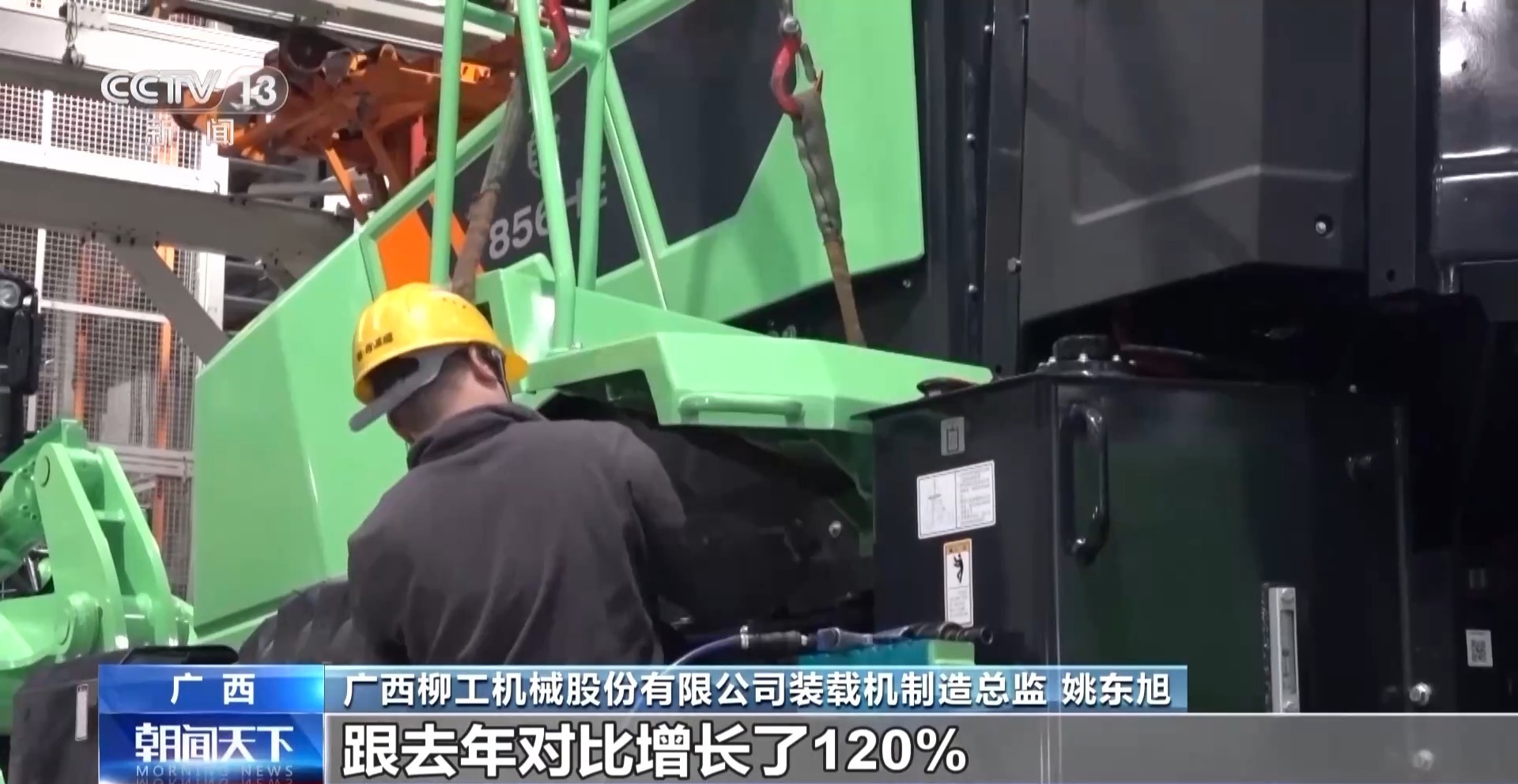
Core Viewpoint - China is actively expanding green trade to support its "dual carbon" goals, with green trade becoming a new driving force for foreign trade development as more green low-carbon products and services enter the international market [1][10]. Group 1: Green Product Export Growth - The export volume of electric loaders from Guangxi Liugong Machinery Co., Ltd. has increased by 120% compared to last year, with production capacity expanded from one to three production lines [3]. - In Zhejiang, a company is producing eco-friendly trademark belts made from recycled plastic bottles, showcasing the shift towards sustainable materials [5][8]. - In the first three quarters of this year, exports of wind turbine units and parts from China grew by over 30%, while photovoltaic products have maintained an export value exceeding 200 billion yuan for four consecutive years [10]. Group 2: Comprehensive Green Transformation - China's green product appeal in international markets stems from a comprehensive green transformation across the entire industrial chain, covering design, manufacturing, operation, and recycling [12]. - A refrigerator factory in Qingdao is producing energy-efficient refrigerators for the European market, with over 80% of its buildings equipped with solar panels, generating over 50 million kWh of green electricity annually [16][18]. - The factory expects to produce over 2 million refrigerators this year, saving approximately 10,000 tons of standard coal and reducing carbon dioxide emissions by over 26,000 tons [18]. Group 3: Institutional Support for Green Trade - The establishment of a green trade public service platform in Hubei aims to help export companies understand international carbon rules, addressing challenges in green transformation [28][31]. - China has accelerated the development of its green trade system, issuing 49 national standards for greenhouse gas emission accounting and 13 standards for carbon footprints [33]. - The Ministry of Commerce plans to promote high-quality development of green trade and enhance the green low-carbon development capabilities of enterprises [35].

在激烈国际竞争中赢得战略主动
Ren Min Ri Bao· 2025-11-24 22:31
Core Viewpoint - Achieving high-level technological self-reliance and strength is crucial for China's modernization, as emphasized by General Secretary Xi Jinping [2][3]. Group 1: Technological Self-Reliance - The "14th Five-Year Plan" emphasizes technological self-reliance as a strategic support for national development, while the "15th Five-Year Plan" aims to accelerate high-level technological self-reliance to lead new productive forces [2]. - Over the past five years, China has made significant technological innovations, establishing a solid foundation for further advancements [2]. - The "15th Five-Year Plan" suggests consolidating advantages, breaking bottlenecks, and enhancing weaknesses to gain strategic initiative in international competition [2][3]. Group 2: Key Technological Breakthroughs - The successful development of single-atom-layer metals by a team from the Chinese Academy of Sciences represents a significant innovation, challenging traditional views on metal forms [3]. - Key core technologies must be developed through independent innovation to address critical challenges, as demonstrated by advancements in the Beidou navigation system and domestic operating systems [4]. Group 3: Foundation of Basic Research - Basic research funding has increased by over 70% since 2020, with China leading in high-level international journal publications and patent applications for five consecutive years [6]. - The "15th Five-Year Plan" calls for a strategic, forward-looking, and systematic approach to enhance basic research, which is essential for original innovation [6][7]. Group 4: New Productive Forces - The integration of technological and industrial innovation is accelerating, with the "new economy" expected to account for over 18% of GDP by 2024, driven by sectors like artificial intelligence and biotechnology [13]. - The development of new productive forces is vital for high-quality growth, focusing on improving total factor productivity [13][14]. Group 5: Innovation Ecosystem - The establishment of a complete innovation ecosystem is necessary for transitioning from isolated breakthroughs to systematic capabilities, emphasizing collaboration across various sectors [9]. - The role of enterprises in driving technological innovation is highlighted, with initiatives to support high-tech enterprises and foster innovation clusters [15][16]. Group 6: Talent Development - The growth of high-impact scientists in China has reached 1,405, accounting for 20% of the global total, indicating a strong emphasis on nurturing talent in key technological fields [11]. - Educational reforms are needed to align talent development with industry needs, ensuring that students engage with real-world scientific challenges [11]. Group 7: Green Competitiveness - The introduction of carbon footprint reports for products, such as those from Zhejiang, showcases the importance of green competitiveness in global markets [12]. - Enhancing the "green attributes" of products is essential for improving the economic value of industries [12]. Group 8: Future Challenges and Opportunities - The next five years present significant challenges but also opportunities for China to enhance its technological capabilities and support modernization efforts [16].
大宗商品周报 2025年11月24日:美联储关于降息态度反复商品短期或震荡运行-20251124
Guo Tou Qi Huo· 2025-11-24 11:54
Report Information - Report Title: Commodity Weekly Report - Report Date: November 24, 2025 - Author: Hu Jingyi from Guotou Futures - Investment Consulting Number: Z0019749 - Futures Practitioner Qualification Number: F03090299 1. Report Industry Investment Rating No relevant content provided. 2. Report's Core View - The commodity market was under pressure last week, with an overall decline of 1.81%. All sectors closed lower, led by precious metals with a 4.07% drop. The Fed's wavering stance on interest rate cuts may lead to short - term volatility in the commodity market [2]. - The Fed's hawkish remarks tightened dollar liquidity, causing risk assets to fall. However, the weakening yen and a "dovish" speech by New York Fed President Williams on Friday improved market sentiment, though its sustainability is uncertain [2]. 3. Summary by Related Catalogs 3.1 Market Review - **Overall Market Performance**: The commodity market declined 1.81% last week. All sectors fell, with precious metals down 4.07%, energy and chemicals down 2.36%, agriculture down 1.55%, non - ferrous metals down 1.52%, and black metals down 0.25% [2][6]. - **Top - performing and Under - performing Varieties**: Iron ore, corn, and hot - rolled coils led the gainers with increases of 1.68%, 0.46%, and 0.43% respectively. Coking coal, silver, and pulp were the top losers, dropping 7.47%, 5.62%, and 4.6% respectively [2][6]. - **Volatility and Capital Flow**: The decline in the 20 - day average volatility of the commodity market narrowed, and the volatility of the precious metals sector further decreased. The overall market capital scale dropped significantly, with net outflows in all sectors, mainly concentrated in non - ferrous and precious metal varieties [2][6]. 3.2 Outlook for Different Sectors - **Precious Metals**: US economic data showed resilience, and Fed officials had different views. The probability of keeping interest rates unchanged in December is high, and the sector may remain volatile at high levels in the short term [2]. - **Non - ferrous Metals**: The release of lagging US economic data cooled the expectation of interest rate cuts, pushing up the dollar index and pressuring the sector. However, China's electricity consumption growth in October indicated economic resilience. The supply - demand structure is still loose, and the sector may fluctuate in the short term [3]. - **Black Metals**: The apparent demand for rebar improved last week, production increased, and inventory decreased. Iron - making still showed a seasonal decline, and steel mills continued to operate at a loss. The probability of further blast - furnace production cuts is high. The inventory of iron ore ports continued to accumulate, and the supply of coking coal tightened marginally. The sector may face pressure in the short term [3]. - **Energy**: The US is promoting the Russia - Ukraine agreement, suppressing the geopolitical risk premium. There is a greater expectation of inventory accumulation in the fourth quarter and the first quarter of next year, and oil prices may weaken in the short term [3]. - **Chemicals**: Positive news such as potential disruptions to PX imports, planned shutdowns of Korean toluene disproportionation plants, and PX flowing to the US initially boosted the market. However, the decline in oil prices and gasoline crack spreads and the drop in terminal weaving loads led to a weakening demand expectation, and the industry chain may fluctuate in the short term [3]. - **Agriculture**: The La Nina phenomenon is ongoing and is expected to last until the Northern Hemisphere winter. Attention should be paid to its impact on soybean production in Brazil and Argentina. Soybean meal may continue to adjust following US soybeans, and the oil and oil - seed sector may weaken in the short term [4]. 3.3 Commodity Fund Overview - **Gold ETFs**: Most gold ETFs had negative weekly returns. The total scale of gold ETFs was 223.739 billion yuan, with a 2.87% increase in share. The total trading volume was 1.297571899 billion, with an 8.02% decrease [35]. - **Other Commodity ETFs**: The energy - chemical ETF, soybean - meal ETF, non - ferrous metal ETF, and silver fund also had different degrees of decline in weekly returns. The total scale of all commodity ETFs was 234.997 billion yuan, with a 2.67% increase in share, and the total trading volume was 2.005203321 billion, with a 1.41% increase [35].
胜通能源:截至11月20日股东总数13727户
Zheng Quan Ri Bao Wang· 2025-11-24 08:41
Core Points - The company, Shengtong Energy, reported that as of November 20, 2025, the total number of shareholders is 13,727 [1]
杭州活动报名倒计时|新数据驾驭2026年大宗商品市场展望
Refinitiv路孚特· 2025-11-24 06:03
Core Insights - The article highlights the significant uncertainty and volatility in the commodity market for 2025, driven by global economic slowdown and geopolitical tensions, leading to a complex scenario of "falling prices and increasing volatility" [2] - The year 2025 is identified as a critical period for market restructuring and for companies to redefine resilience and competitiveness, particularly with the upcoming launch of platinum and palladium futures [2] Event Details - The event organized by the London Stock Exchange Group (LSEG) will take place on December 4, 2025, in Hangzhou, Zhejiang, from 15:00 to 17:00 [3] - The agenda includes various thematic discussions, including the impact of the "14th Five-Year Plan" on the copper market and the outlook for the cotton market amid changing tariffs [4][5] Speaker Profiles - Kian Pang Tan, Head of Agriculture Research at LSEG, specializes in palm oil and sugar market analysis, with over ten years of experience in agricultural research [9] - Fu Xiaoyan, Senior Director at Nanhua Futures Research Institute, has extensive experience in the futures industry and focuses on copper market research [10] - Wang Yaoyao, Head of Commodity Sales at LSEG, has over ten years of experience in the commodity sector, providing data and analysis solutions to enhance research efficiency and trading decisions [14] Commodity Market Insights - The article emphasizes the importance of structured data utilization in commodity trading, highlighting that timely and accurate information is crucial for decision-making [18] - LSEG offers comprehensive solutions for energy, metals, and agricultural trading, leveraging a vast database and a strong analyst team to provide insights and competitive advantages [19][22][23][25]

高频数据跟踪:生产持续回落,物价整体下行
China Post Securities· 2025-11-24 05:22
Report Information - Report Type: Fixed Income Report - Release Date: November 24, 2025 - Analysts: Liang Weichao, Cui Chao [2] Industry Investment Rating No industry investment rating information is provided in the report. Core Viewpoints - The production side's heat continues to decline, with significant decreases in the operating rates of blast furnaces, asphalt, PX, PTA, all-steel tires, and semi-steel tires. - The commercial housing transaction area has marginally rebounded but remains lower than the same period in previous years. The land supply area is on a seasonal upward trend, and a peak in land supply is expected at the end of the month. - Prices have generally declined, including those of crude oil, coking coal, copper, aluminum, zinc, and four key monitored agricultural products: pork, eggs, vegetables, and fruits. - In terms of shipping prices, the SCFI has declined for three consecutive weeks, while the BDI has risen significantly. Short-term focus should be on the implementation of incremental policies on the consumption and investment sides and the recovery of the real estate market [2][32]. Summary by Directory Production - Steel: The coke oven capacity utilization rate remained flat, the blast furnace operating rate decreased by 0.62 pct, and the rebar production increased by 7.96 tons [3][9]. - Petroleum Asphalt: The operating rate decreased by 4.2 pct [3][9]. - Chemicals: The PX operating rate decreased by 0.36 pct, and the PTA operating rate decreased by 4.25 pct [3][9]. - Automobile Tires: The all-steel tire operating rate decreased by 3.19 pct, and the semi-steel tire operating rate decreased by 2.61 pct [3][10]. Demand - Real Estate: The commercial housing transaction area marginally rebounded, the inventory-to-sales ratio increased, the land supply area grew, and the residential land transaction premium rate decreased [3][15]. - Movie Box Office: It increased by 444 million yuan compared to the previous week [3][15]. - Automobiles: The daily average retail sales of automobile manufacturers increased by 21,000 vehicles, and the daily average wholesale sales increased by 27,000 vehicles [3][17]. - Shipping Freight Rates: The SCFI index decreased by 3.98%, the CCFI index increased by 2.63%, and the BDI index increased by 7.06% [3][20]. Prices - Energy: The Brent crude oil price decreased by 2.84% to $62.56 per barrel, and the coking coal futures price decreased by 7.33% to 1,113 yuan per ton [4][22]. - Metals: The LME copper, aluminum, and zinc futures prices changed by -0.63%, -1.77%, and -0.75% respectively, while the domestic rebar futures price increased by 0.43% [4][23]. - Agricultural Products: The overall price slightly declined, with the Agricultural Product Wholesale Price 200 Index decreasing by 0.10%. The prices of pork, eggs, vegetables, and fruits changed by -0.83%, -3.46%, -0.70%, and -0.14% respectively compared to the previous week [4][25]. Logistics - Subway Passenger Volume: In Beijing, it decreased, while in Shanghai, it increased [4][28]. - Flight Operations: Both domestic and international flight volumes rebounded [4][29]. - Urban Traffic: The peak congestion index in first-tier cities stabilized and rebounded [4][29]. Summary - The production continues to decline, and prices are generally decreasing. Short-term focus should be on the implementation of incremental policies on the consumption and investment sides and the recovery of the real estate market [32].
快问快答:10大核心问题拆解加拿大上市要点!
Sou Hu Cai Jing· 2025-11-24 01:31
Group 1 - The article emphasizes that Canada is an attractive option for Chinese companies seeking overseas financing, especially given the increasing competition in the US capital markets [2] - It outlines ten core questions regarding the Canadian capital market to provide clear guidance for companies looking to go public [2] Group 2 - The main stock exchanges in Canada include the Toronto Stock Exchange (TSX), which has a main board for larger, mature companies and a venture board (TSXV) for smaller, growth-oriented firms [4] - The Canadian Securities Exchange (CSE) also offers listing services for small and micro enterprises, creating a multi-tiered capital market system [4] Group 3 - Advantages of financing in Canada include a stable financial services system, access to North American capital integration, and increased fundraising opportunities in the US [5] - The TSX offers two main listing methods: Initial Public Offerings (IPOs) and Capital Pool Company (CPC) listings [6] Group 4 - The CPC model is suitable for shell companies that only hold cash and seek to go public quickly while looking for acquisition targets [7] - Domestic companies can utilize various fundraising methods after listing in Canada, including IPOs, stock issuance, bond issuance, and stock pledges [8] Group 5 - Compared to the US capital markets, the time and cost of listing in Canada are more advantageous, with Canadian listings taking about six months and costing approximately 50% of Nasdaq fees [9] Group 6 - Companies listed in Canada can transfer to the US market using the Multi-Jurisdictional Disclosure System (MJDS), which allows for a quick transfer process within 90 days [10] Group 7 - Industries such as mining and energy have significant advantages in the Canadian capital market, with the TSX being a major global mining capital market [11] - Other sectors like fintech, environmental technology, and biomedicine can achieve high valuations, and even industries like cannabis are permitted to list [11] Group 8 - Domestic mining companies need to prepare various qualifications and financial requirements before listing on the TSX, and it is advisable to collaborate with experienced firms like Huayi Capital for guidance [12] Group 9 - Huayi Capital offers tailored listing advisory services for companies looking to enter the Canadian market, leveraging local resources and expertise to create efficient and cost-effective listing strategies [13]
美国降息预期发酵,俄乌解决方案进展有限
Dong Zheng Qi Huo· 2025-11-24 01:07
Report Industry Investment Ratings No relevant content provided. Core Views of the Report - The progress of the Russia-Ukraine solution proposed by the US is limited, with short - term market risk appetite stabilizing and the US dollar showing a volatile trend [2][15]. - The expectation of the Fed's interest rate cut is fermenting, the market sentiment is stabilizing, but concerns about the AI bubble remain. The US stock market rebounds, but the technology sector lags in gains [3]. - Although the A - share market has experienced a significant correction, it is expected to stabilize the decline in the future due to the easing of US liquidity expectations, support for AI performance, and China's policy support for the stock market [4]. - The prices of various commodities show different trends. For example, steel prices are expected to fluctuate in the short term; oil prices continue to decline; and the prices of some agricultural products are affected by factors such as production volume and policy [5][6]. Summaries by Directory 1. Financial News and Reviews 1.1 Macro Strategy (Gold) - New York Fed President Williams said there is room for an interest rate cut in December, and the Russian central bank sold some physical gold reserves. Short - term gold prices are expected to continue to fluctuate, with a risk of decline [11]. - Investment advice: Be cautious of the risk of decline in the short - term volatile gold market [12]. 1.2 Macro Strategy (Foreign Exchange Futures - US Dollar Index) - The US is reported to be ready to take action against Venezuela, and the European leaders think the US's Russia - Ukraine peace plan needs improvement. The US - Ukraine Geneva talks are considered "fruitful", but the Russia - Ukraine solution has limited progress, and the US dollar is expected to fluctuate in the short term [13][14][15]. - Investment advice: The US dollar index is expected to fluctuate in the short term [16]. 1.3 Macro Strategy (US Stock Index Futures) - Fed officials have different views on the December interest rate cut. The US service industry growth accelerated in November, while the manufacturing industry slowed down. The market's expectation of an interest rate cut has increased, and the US stock market is expected to fluctuate upward after the market volatility decreases [17][18]. - Investment advice: Be less pessimistic about the US stock market at the end of the year, and wait for the market volatility to decrease [19]. 1.4 Macro Strategy (Stock Index Futures) - The Trump administration may approve Nvidia's sales of some AI chips to China, and the Ministry of Housing and Urban - Rural Development held a national urban renewal work promotion meeting. The A - share market is expected to stabilize the decline [20][21]. - Investment advice: There may be a small rebound in the short term, but a trend - following opportunity requires more policy changes [22]. 1.5 Macro Strategy (Treasury Bond Futures) - The central bank conducted a 375 - billion - yuan 7 - day reverse repurchase operation. The bond market is affected by factors such as the redemption pressure of structured products and concerns about the stock market rebound. The bond market is expected to turn from volatile to bearish, and short - term short - selling strategies are recommended [23][24]. - Investment advice: The bond market may turn bearish, and short - term short - selling strategies can be considered [25]. 2. Commodity News and Reviews 2.1 Agricultural Products (Soybean Meal) - The soybean crushing volume of domestic oil mills last week was 2.3344 million tons, and it is expected to slightly decrease this week. The supply of soybean meal is sufficient, and the cost and supply - demand situation jointly affect the price. - Investment advice: The soybean meal market is currently "supported by cost and suppressed by supply - demand", and continue to pay attention to China's soybean procurement and South American production expectations [26]. 2.2 Agricultural Products (Soybean Oil/Rapeseed Oil/Palm Oil) - The US Department of Energy reorganized to prioritize fossil fuels and nuclear energy. From November 1 to 20, the production of Malaysian palm oil increased by 10.32% month - on - month. - Investment advice: For palm oil, wait and see on the long - short side and consider 1 - 5 reverse spread opportunities; for rapeseed oil, the overall trend is expected to be weakly volatile [27][28][29]. 2.3 Agricultural Products (Sugar) - In October 2025, China's imports of syrup and premixed powder decreased year - on - year. Indian sugar mills are gradually starting to crush, and the NFCSF urges the Indian government to raise the minimum sugar selling price. - Investment advice: Do not be optimistic about the downside space of ICE raw sugar and Zhengzhou sugar's January contract, and be cautious about short - selling [30][33][34]. 2.4 Agricultural Products (Cotton) - In October 2025, China's cotton imports decreased both month - on - month and year - on - year, while cotton yarn imports increased. The US cotton export sign - up continued to rise. - Investment advice: Zhengzhou cotton is expected to fluctuate in the short term, with an estimated range of 13,300 - 13,800 yuan; be cautiously optimistic in the long term and wait for opportunities to go long on dips [35][39][41]. 2.5 Black Metals (Rebar/Hot - Rolled Coil) - In 2025, China's long - product exports to Saudi Arabia almost doubled. In October, the global crude steel production was 143.3 million tons. - Investment advice: Adopt a volatile mindset when dealing with steel prices [42][44][46]. 2.6 Agricultural Products (Corn Starch) - The price difference between corn starch and tapioca starch widened. - Investment advice: The price difference is expected to fluctuate in the short term, and band trading is recommended [47][48][49]. 2.7 Agricultural Products (Corn) - The corn selling progress in Northeast and North China is faster than the same period last year. - Investment advice: Corn prices are expected to remain high and volatile in the short term. Wait and see for the near - month contracts and do not short them for now [50][52]. 2.8 Non - ferrous Metals (Copper) - Vedanta plans to invest $2 billion in Saudi copper and gold resources, and China Non - Ferrous Mining's Qianbixi Southeast Orebody is temporarily shut down. European copper manufacturers warn of a copper shortage. - Investment advice: Copper prices are expected to fluctuate widely in the short term. Consider going long on dips and wait and see for arbitrage [53][55][56]. 2.9 Non - ferrous Metals (Polysilicon) - Two leading silicon wafer companies lowered their quotes. The polysilicon market is affected by factors such as policy and demand. - Investment advice: The futures main contract of polysilicon may operate between 50,000 - 56,000 yuan/ton. Pay attention to range trading opportunities [57][59]. 2.10 Non - ferrous Metals (Industrial Silicon) - The shipments of northern silicon enterprises increased. The export of industrial silicon decreased more than expected. - Investment advice: The industrial silicon market may fluctuate between 8,800 - 9,500 yuan/ton in the short term. Pay attention to range trading opportunities [60][61]. 2.11 Non - ferrous Metals (Lithium Carbonate) - Ruitai New Materials plans to jointly invest 200 million yuan in Terui Lianteng. The futures price limit - down due to regulatory measures. - Investment advice: The short - term futures price may face pressure. Consider short - selling on rallies with a light position [62][64]. 2.12 Non - ferrous Metals (Nickel) - Some nickel intermediate product projects in an Indonesian park are expected to reduce production. - Investment advice: Existing short - positions can gradually take profits, and consider going long on dips with a light position. Evaluate the resource contraction in Indonesia in the medium term [66][67]. 2.13 Non - ferrous Metals (Lead) - The Garpenberg mine in Sweden was approved to expand its environmental permit. The LME lead inventory increased. - Investment advice: Take profits at low levels in the short term for the long - short side; wait and see for arbitrage and cross - market trading [68][69][70]. 2.14 Non - ferrous Metals (Zinc) - The LME 0 - 3 zinc premium is high, and the Garpenberg mine in Sweden was approved to expand its environmental permit. - Investment advice: Wait and see on the long - short side; hold long - spread positions for calendar spread arbitrage and short - spread positions for cross - market arbitrage in the short term [71][72]. 2.15 Energy Chemicals (Carbon Emissions) - On November 21, the closing price of the EUA main contract was 80.41 euros/ton. - Investment advice: The EU carbon price is expected to be strongly volatile in the short term [73][74]. 2.16 Energy Chemicals (Crude Oil) - The number of US oil rigs increased. Oil prices continued to decline. - Investment advice: Pay attention to the prospects of the Russia - Ukraine negotiations. Oil prices are expected to remain weakly volatile in the short term [75][76]. 2.17 Energy Chemicals (Pulp) - The prices of different pulp varieties in the import market showed different trends. - Investment advice: The pulp market is expected to fluctuate in the future [77]. 2.18 Energy Chemicals (Bottle Chips) - The export quotes of bottle chip factories were mostly lowered. - Investment advice: The short - term supply - demand contradiction of bottle chips is not prominent, and the absolute price mainly follows the fluctuations of polyester raw materials [78][81]. 2.19 Energy Chemicals (Soda Ash) - The price of soda ash in the South China market was stable on November 21. - Investment advice: In the short term, the soda ash market has certain support; in the medium term, adopt a bearish mindset and consider short - selling far - month contracts on rallies [82]. 2.20 Energy Chemicals (Float Glass) - The price of float glass in the Shahe market decreased on November 21. - Investment advice: The January contract of float glass is under pressure. Pay attention to the support at 950 yuan/ton and the risk of short - covering rebounds caused by news [83][84].