有色产品

Search documents
开门红!产值同比增四成
Sou Hu Cai Jing· 2026-02-26 23:50
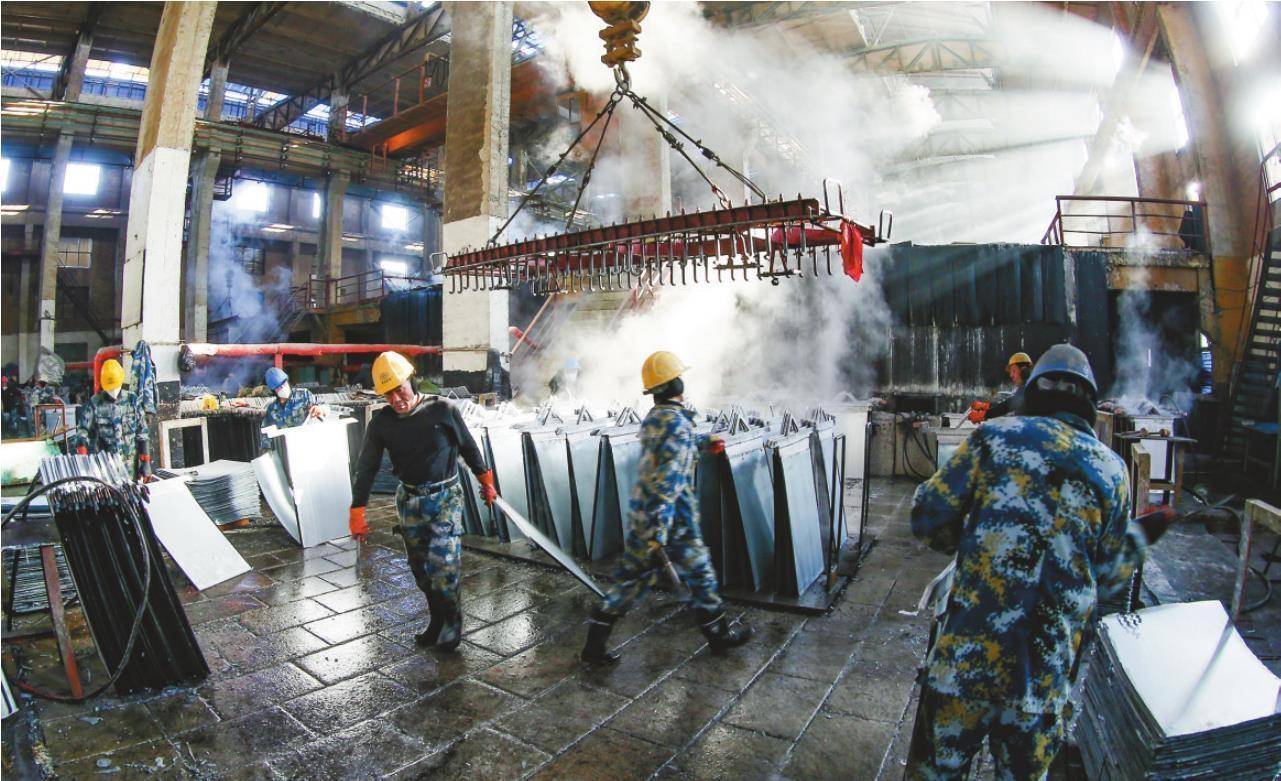
转自:辽宁日报 图为在电解作业区阴极锌生产现场,工人在进行剥皮作业。 刘希良 刘丹 本报特约记者 杨兵 摄 中冶葫芦岛有色金属集团有限公司有色产品、化工产品如期完成计划,1月份产值同比增长43.72%,以亮眼的成绩单实现首月开门红。 公司生产部强化信息预判,全力巩固总体平衡。各冶炼系统精细配料,细化工艺调控;加强防寒防冻,及时排查整治隐患。公司根据用户需求,专炉定制。 在做好主产品的基础上,加大中间物料处理力度,加快贵金属变现。 (来源:辽宁日报) ...

国内高频指标跟踪(2026年第2期):开年经济温和回暖
Haitong Securities International· 2026-01-13 09:18
Economic Overview - The economy is showing moderate recovery at the beginning of the year, supported by resilient domestic demand and improvements in external demand and production[1] - High-frequency data indicates that automotive consumption is boosted by trade-in subsidies, while service consumption has weakened marginally post-New Year[3] Investment Insights - Special bond issuance has been advanced, potentially stabilizing infrastructure investment in Q1, although the real estate sector remains weak[3] - In the first two weeks of January, special bonds worth CNY 110.2 billion were issued, compared to zero in the same period last year, indicating a shift in issuance pace[7] Trade and Production - External trade conditions are improving, with both export volume and price rising; port operation data shows a year-on-year increase in most metrics[7] - Production is generally recovering, with operating rates in the steel, petrochemical, and chlor-alkali sectors rising[7] Pricing Trends - Consumer prices are weak, with the iCPI index decreasing by 0.53% month-on-month; however, industrial prices are mostly rising, particularly in the non-ferrous metals and lithium carbonate sectors[7] - The price of lithium carbonate has surged by 74.5% year-on-year due to tight supply and demand from emerging industries[10] Liquidity and Interest Rates - Funding rates have slightly increased, with R007 rising by 6.3 basis points and DR007 by 4.4 basis points compared to the previous week[8] - The 10-year government bond yield increased by 3.1 basis points to 1.88%, while the one-year yield decreased by 4.9 basis points to 1.28%[8] Risks - There are uncertainties regarding trade conditions and the potential for domestic demand recovery to fall short of expectations[12]
国泰海通|宏观:消费温和改善
国泰海通证券研究· 2025-12-29 14:58
Group 1 - The core viewpoint of the article indicates a moderate improvement in consumption, with service consumption recovering ahead of the holiday, as evidenced by increased subway passenger flow in 18 cities and a positive shift in the Hainan tourism price index year-on-year [1] - In terms of investment, the issuance of special bonds has concluded, leading to an increase in physical workload, with asphalt operating rates rebounding and continuous improvement in building materials data [1] - The real estate sector shows a seasonal recovery in sales, with an increase in the proportion of second-hand housing, although overall prices and premiums remain low [1] Group 2 - In foreign trade, there is a divergence between rising domestic export freight rates and a decline in the Baltic Dry Index (BDI) [1] - Production continues to show differentiation, with emerging industries such as polyester, lithium batteries, and photovoltaic chains demonstrating strong resilience, while traditional cyclical industries like steel and some chemicals are experiencing a downturn [1] - Inventory levels are decreasing for coal and building materials, while PTA continues to deplete inventory and polyester shows a slight accumulation [1] Group 3 - Industrial product prices are generally rebounding, with oil and non-ferrous metals experiencing a rebound, and the South China index rising [1] - The Consumer Price Index (CPI) shows structural differentiation, with food prices fluctuating [1] - In terms of liquidity, funding rates have shown slight fluctuations, and the renminbi continues to strengthen due to a weaker dollar and increased demand for foreign exchange settlements [1]

A股策略周报:跨年攻势已经开始-20251214
GUOTAI HAITONG SECURITIES· 2025-12-14 09:56
Group 1: Market Outlook - The report indicates that after a prolonged period of sideways movement, China's "transformation bull market" is expected to regain momentum and reach new heights, with a cross-year offensive already underway [1][3][4] - The Shanghai Composite Index fell to 3,800 points on November 24, which was seen as a critical position for market recovery, with the ChiNext Index having recently regained lost ground [7][9] - The central economic work conference emphasizes the need to consolidate and expand the positive momentum of the economy, calling for a more proactive fiscal policy and a focus on domestic demand [4][8] Group 2: Spring Market Trends - Historical analysis shows that spring market trends typically occur from December of the previous year to April of the current year, with a significant start point around 10-15 trading days before the Spring Festival [9][10] - The report notes that large-cap stocks tend to perform better before the Spring Festival, while small-cap stocks often outperform after the festival due to seasonal liquidity improvements [10][12] - The current market environment, characterized by significant prior adjustments and supportive policies, presents an important window for positioning ahead of the spring market [10][12] Group 3: Industry Comparisons - The report highlights a positive outlook for technology, financial services, and consumer sectors as the market transitions into a cross-year offensive [4][8] - In the technology sector, advancements in AI models and applications are accelerating, with a recommendation for investments in internet, media, computing, and competitive manufacturing sectors [4][8] - The financial sector is expected to benefit from deepened capital market reforms, with recommendations for brokerage and insurance stocks [4][8] - The consumer sector is showing signs of recovery after three years of adjustment, with recommendations for low-priced, low-inventory consumer stocks such as food and beverage, agriculture, and tourism services [4][8]

公司固态变压器(SST)项目启动,多年数据中心深耕经验打开未来成长空间!
摩尔投研精选· 2025-11-10 10:41
Macro Strategy Insights - Recent price increases in commodities are driven by a rush to capitalize on the anticipated cyclical recovery in 2024, with potential synchronization between China and the U.S. [1] - Historically, years ending in 6 or 1 tend to see rising Producer Price Index (PPI) due to significant political events, while U.S. industrial metal prices typically bottom out in presidential election years and peak in midterm election years [1][2] Industry Tracking - The demand for lithium iron phosphate (LiFePO4) is improving, leading to price increases in various phosphate chemical products. Since 2024, phosphate rock prices have remained high, and the supply of phosphate rock may not meet expectations due to increased mining barriers and processing difficulties [3] - As of November 6, the average market price for yellow phosphorus reached 22,486 RMB/ton, up 527 RMB/ton from the previous week, reflecting a 2.34% increase [3] - The phosphate chemical market is supported by strong downstream demand, with companies actively seeking new suppliers to ensure stable supply amid tight market conditions [3] - The operational stability of phosphate chemical companies is bolstered by optimized product structures and sufficient operating cash flow, enhancing their capacity for cash dividends [3]

【十大券商一周策略】市场上涨趋势大概率延续,聚焦高景气赛道
券商中国· 2025-09-14 16:00
Group 1 - The core viewpoint emphasizes the need to evaluate the fundamentals of companies from a global exposure perspective rather than a domestic economic cycle perspective, as more Chinese companies shift towards global markets [2] - The current market trend is driven by "smart money" and structural market dynamics, suggesting a strategy that minimizes volatility and avoids broadening exposure [2] - The average daily trading volume is expected to stabilize around 1.6 to 1.8 trillion yuan, indicating the digestion of recent emotional premiums [2] Group 2 - The logic supporting the rise of the Chinese stock market is sustainable, with expectations for new highs in A/H shares due to accelerated transformation and reduced uncertainties in economic development [3] - The decline in opportunity costs for the stock market, driven by a sinking risk-free return system, is leading to an explosion in asset management demand and new capital inflows [3] - Institutional changes and timely economic policies are crucial for boosting market valuations and improving perceptions of Chinese assets [3] Group 3 - The Chinese market presents broad opportunities, with a "transformation bull market" encompassing both structural and traditional sectors, including emerging technologies and valuation recovery in established companies [4] - Key sectors to watch include internet, media, innovative pharmaceuticals, electronics, semiconductors, and consumer brands, alongside cyclical sectors like non-ferrous metals and chemicals [4] - Long-term stability and monopolistic assumptions remain important, with recommendations for sectors such as brokerage, insurance, banking, and telecommunications [4] Group 4 - The market is currently experiencing a "volume peak," which historically indicates a continuation of upward trends, although the pace may slow [5][6] - The positive spiral of index profitability and incremental capital remains intact, suggesting that the liquidity-driven bull market narrative is still valid [6] - Investors are advised to maintain a "bull market mindset," as trends once established are difficult to reverse [6] Group 5 - High M1 growth and narrowing M2-M1 differentials indicate a trend of residents moving savings into equity markets, with a focus on high-prosperity sectors like software and communication equipment [7] - The expectation of three interest rate cuts by the Federal Reserve has heightened interest in the A-share market, particularly in sectors poised for recovery [7] Group 6 - The focus on high-prosperity sectors and inflation improvement is crucial as the market transitions into a slow bull phase, with a need for fundamental support [8] - Key industries to monitor include AI, pig farming, new energy, new consumption, innovative pharmaceuticals, and basic chemicals [8] Group 7 - The market is entering a phase of rotation and expansion, with a focus on sectors driven by prosperity and industrial trends [9] - September is traditionally a strong month for industry rotation, providing opportunities for new growth directions [9] Group 8 - The improvement of fundamentals is expected to spread prosperity across more sectors, moving beyond just growth versus value discussions [10] - Key areas for investment include upstream resources, capital goods, and domestic demand-related sectors like food and tourism [10] Group 9 - A-shares are likely to continue a volatile upward trend, supported by global liquidity conditions and domestic capital flows [11] - The AI sector is anticipated to be a primary driver of market performance, with significant potential for growth [11] Group 10 - The market is expected to maintain an upward trajectory, supported by reasonable valuations and emerging positive factors like the potential for a Federal Reserve rate cut [13] - Key sectors for September include power equipment, communication, computing, electronics, and automotive [13] Group 11 - The "slow bull" market in A-shares is expected to continue, with high-prosperity sectors being the primary focus [14] - The upcoming policy changes and the ongoing AI investment trends are likely to provide further market support [14]
中国7月进出口超预期,特朗普拟对芯片征100%关税
Hua Tai Qi Huo· 2025-08-08 03:13
Report Industry Investment Rating - No relevant information provided Core Viewpoints - The market has returned to the fundamental verification stage. China's July import and export data exceeded expectations, but the export is still under pressure due to the upcoming "reciprocal tariff 2.0", and the progress of Sino-US trade negotiations needs to be continuously monitored. The US has imposed a series of new tariffs, and Trump plans to levy about 100% tariffs on chips and semiconductors, which will have a certain impact on the market. The UK central bank cut interest rates by 25 basis points as expected, and there are internal differences due to the increasing inflation risk. Putin said that he may meet with Trump in the UAE [1][2] Summary by Relevant Catalogs Market Analysis - The Politburo meeting on July 30 deployed the economic work for the second half of the year, emphasizing the need for continuous and timely strengthening of macro policies and more moderate "anti-involution" policies. China's official manufacturing PMI in July fell to 49.3, and the new order index fell to 49.4, while the non-manufacturing sector remained in expansion. China's foreign exchange reserves in July decreased by 0.76% month-on-month, and the central bank increased its gold holdings for the ninth consecutive month. China's exports in July increased by 7.2% year-on-year in US dollars, mainly supported by the low base last year and the "rush to export" effect under tariff uncertainty. Imports increased by 4.1%, with significant growth in the imports of integrated circuits, copper ore concentrates, and high-tech products [1] Impact of "Reciprocal Tariffs" - On July 31, the White House issued an executive order to reset the "reciprocal tariff" rate standards for some countries. The new tariffs will take effect on August 7. Trump plans to levy about 100% tariffs on chips and semiconductors, and the EU's chip exports to the US are subject to a 15% tariff cap. The US economic data in July was not as expected, and the uncertainty of Trump's tariff policy continued to drag down business activities. The market expects the Fed to cut interest rates twice this year [2] Commodity Segments - Domestically, the black and new energy metal sectors are the most sensitive to the supply side. Overseas, the energy and non-ferrous sectors benefit significantly from inflation expectations. The black sector is still dragged down by downstream demand expectations, and the implementation of "anti-involution" policies should be closely monitored. The supply constraints in the non-ferrous sector have not been alleviated, and the impact of tariff implementation on demand expectations needs to be followed. In the short term, the geopolitical premium in the energy sector has ended, and the medium-term supply is expected to be relatively loose. OPEC+ accelerated production increase, agreeing to increase production by 548,000 barrels per day in August, higher than expected. In the chemical sector, the "anti-involution" potential of methanol, PVC, caustic soda, urea and other products is also worthy of attention. There is no short-term weather disturbance in agricultural products, and the price fluctuation range is relatively limited [3] Key News - As of the end of July 2025, China's foreign exchange reserves decreased by $25.2 billion to $3.2922 trillion compared with the end of June, a decrease of 0.76%. China's gold reserves increased by 600,000 ounces to 73.96 million ounces in July, the ninth consecutive month of increase. China's exports in July increased by 8% year-on-year in RMB and 7.2% in US dollars, while imports increased by 4.8% in RMB and 4.1% in US dollars. Trump plans to levy about 100% tariffs on chips and semiconductors, and will sign an executive order to allow 401K accounts to invest in alternative assets such as cryptocurrencies and private equity funds. The Bank of England cut interest rates by 25 basis points as expected, and Putin said he may meet with Trump in the UAE [5]
深度思考:反内卷与供给侧改革的异同
雪球· 2025-07-06 07:50
以下文章来源于黑貔貅俱乐部 ,作者黑貔貅 黑貔貅俱乐部 . 宏观经济 ,亮点行业,大类资产配置 风险提示:本文所提到的观点仅代表个人的意见,所涉及标的不作推荐,据此买卖,风险自负。 作者:黑貔貅俱乐部 来源:雪球 站在当下看未来的3-5年 , 反内卷或许会成为影响中国社会以及经济最重要的事件之一 。 映射到资本市场 上也会带来巨大的投资机会 , 尤其是对商品而言 , 可能会成为影响部分品种的核心变量 。 尽管大家都在 类比16年的供给侧改革 , 但是我觉得还是有很大的差异性 。 01 有较大的背景跟性质差异 15年过剩的行业相对集中在中上游领域 , 产品的同质化竞争是比较严重的 , 比如钢铁 , 水泥 , 电解铝 , 玻璃等等 , 大家生成的东西没有多少不同 , 价格上也没有多少差距 。 而且这种过剩很大程度上是因为 2011-2012年的经济繁荣带来的投资 , 主要是周期性因素为主 , 通过棚改货币化刺激需求以及行政手段 压减无效产能 , 退出效果还是比较显著的 。 但是本轮产能主要集中在终端消费领域 , 产品的差距还是很大 , 中低高端都有 , 很难通过行政命令去去 化 , 比如光伏是差异化过剩问题 。 ...