
蛋鸡

Search documents
“中国粮”主要用上了“中国种” 我国连续两年实现农作物种子贸易顺差
Ren Min Ri Bao· 2026-01-22 00:02
Core Insights - China's seed industry has achieved significant advancements, with a focus on self-sufficiency in seed production, leading to a robust agricultural foundation [1][2] Group 1: Seed Export and Trade Surplus - By 2025, China's seed export volume is projected to reach 62,000 tons, resulting in a trade surplus of $7.5 million, marking the second consecutive year of surplus following 2024's first-time export exceeding imports [1] - The area of self-bred crop varieties in China accounts for over 95%, with domestic market shares for livestock and aquatic seeds exceeding 80% and 86%, respectively [1] Group 2: Technological Innovation and Development - The seed industry has entered the world's top tier in terms of technological innovation, supported by key projects and national research plans, establishing a comprehensive breeding innovation system [2] - The area of self-selected corn varieties has increased from 91% in 2020 to 94%, while vegetable self-selected varieties have risen from 87% to 91% [2] Group 3: Future Goals and Strategic Plans - The "14th Five-Year Plan" emphasizes the implementation of seed industry revitalization actions, aiming to enhance seed quality and ensure food security by 2030 [3] - Continuous efforts will be made to improve seed supply capabilities and promote the emergence of high-yield, quality, and specialized seeds [3]
我国连续两年实现农作物种子贸易顺差 “中国粮”主要用上了“中国种” 种业科技创新整体进入世界第一方阵
Ren Min Ri Bao· 2026-01-21 22:25
Core Insights - The core viewpoint of the articles emphasizes the significant progress in China's seed industry, highlighting the country's increasing self-sufficiency and export capabilities in agricultural seeds, particularly in hybrid rice and other crops [1][2][3]. Group 1: Seed Export and Trade Surplus - By 2025, China's seed export volume is projected to reach 62,000 tons, achieving a trade surplus of $7.5 million, marking the second consecutive year of surplus following the first instance in 2024 [1]. - Currently, over 95% of the area planted with crops in China consists of self-bred varieties, with domestic market shares exceeding 80% for livestock and over 86% for aquatic species [1]. Group 2: Technological Advancements and Innovation - The seed industry has seen a significant increase in self-bred varieties, with the area of self-selected corn varieties rising from 91% in 2020 to 94%, and vegetable varieties from 87% to 91% [2]. - China has established a world-class national resource bank for crop, livestock, and marine fish genetic resources, and has created multiple national and regional innovation platforms for seed industry development [2]. Group 3: Strategic Goals and Future Plans - The "14th Five-Year Plan" suggests the continuation of the seed industry revitalization actions, aiming to enhance seed quality and ensure food security by 2030 through improved breeding innovation and resource utilization [3].
ETF日报:2026年养殖业有望迎来利润与估值的同时修复 关注养殖ETF
Xin Lang Cai Jing· 2025-12-29 14:11
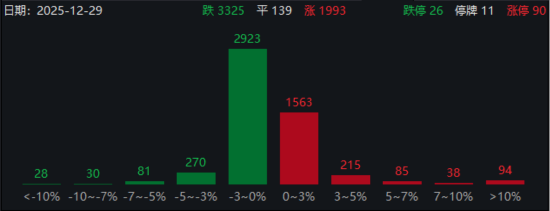
Market Overview - The A-share market experienced slight fluctuations, with the Shanghai Composite Index rising by 0.04% to 3965.28 points, marking a nine-day winning streak, while the Shenzhen Component Index fell by 0.49% to 13537.10 points. The total trading volume remained high at 2.15 trillion yuan, with more declines than gains in the overall market. As the year-end approaches, market hotspots are becoming more dispersed, with the oil and military sectors performing relatively well. After a brief adjustment in the fourth quarter, the market has resumed its upward trend, and the positive factors driving this rally are expected to remain unchanged, indicating a potential slow bull market next year [1][10]. Metal Market Dynamics - The metal market has shown significant volatility, with silver futures experiencing over a 10% increase during the day but closing lower. Copper futures broke the 100,000 yuan mark but also saw a narrowing of gains by the end of the day. Platinum and palladium contracts hit their daily limit down. The fluctuations in commodity prices have led to a decline in the non-ferrous metal sector in the stock market [3][12]. - Silver has been in a structural supply deficit for five years, driven by industrial demand from photovoltaic silver paste and AI electronics, with a cumulative increase of over 150% this year. The global supply of silver is primarily a byproduct of copper, lead, and zinc mining, and the expected increase in silver supply by 2026 is minimal, unable to fill the significant demand gap. The demand from the photovoltaic industry is stable despite the push for "de-silverization," while the rapidly expanding demand from AI data centers and automotive electronics will further support silver prices. A physical deficit of over 100 million ounces of silver is anticipated by 2026 [3][12]. - In contrast, copper is transitioning from an expected shortage to a real shortage, with projections indicating a deep deficit of 500,000 to 1 million tons in the global copper market by 2026. The decline in existing mine grades and lagging capital expenditures are hindering copper supply growth, while the explosive demand from AI and power grids is creating a rigid demand for copper, making price increases more likely in the long term [3][12]. Investment Strategies - Given the significant prior gains in metals like silver and copper, profit-taking has led to increased short-term volatility. Companies with high-quality mining resources are expected to benefit from both volume and price increases, providing a good safety margin and typically higher stock price elasticity than the metals themselves. Investors are advised to pay attention to mining ETFs (561330) and consider opportunities for low-cost acquisitions [4][13]. - The livestock sector saw a mild increase today, with pig supply expected to contract significantly due to strong policy and market-driven reductions, potentially leading to a rising price trend. The chicken sector is also expected to see price stabilization as seasonal demand increases, while the egg-laying industry faces upstream supply constraints that will gradually affect prices. Overall, the livestock industry is anticipated to recover in profits and valuations by 2026, making livestock ETFs (159865) worth monitoring [4][14]. Currency and Economic Outlook - The offshore RMB has strengthened against the USD, reaching the 7.0 mark, the highest in 15 months. It is expected that the RMB will maintain a strong trend in the short term, with a moderate appreciation anticipated in 2026, which could enhance the attractiveness of Chinese assets to global capital [4][14]. - In 2026, China is expected to continue its loose monetary and proactive fiscal policies, leading to a further recovery in total demand. Globally, fiscal expansions in the US, Europe, and Japan are also expected to improve demand. The Federal Reserve is likely to maintain a loose stance, benefiting the A-share market during the economic recovery phase [5][15]. Index Performance - The A500 index emphasizes industry balance and sector leaders, providing a more diversified and growth-exposed style that can offer a better beta base during the industrial upgrade cycle. Since its base period, the A500 has shown an annualized total return of 9.11% with a volatility of 21.41%, outperforming the CSI 300 in total returns, particularly in growth phases. The A500 index, covering leading companies across various sectors, offers investors a balanced choice between defensive and growth potential during market fluctuations [6][15].

豆菜粕:南美大豆大概率增产,豆菜粕或宽幅震荡为主
Hua Lian Qi Huo· 2025-12-15 09:59
1. Report Industry Investment Rating - No information provided in the content 2. Core Viewpoints of the Report - In 2026, South American soybeans are likely to have a significant yield increase, but the impact of La Niña on southern Brazil and Argentina should be monitored. The inventory - to - sales ratio of US soybeans in the 25/26 season remains at a historically low level, supporting US soybean prices, and there is still room for adjustment in US soybean yield and exports. It is expected that the downward price movement of US soybeans is limited [5]. - On the demand side, the crushing profit of imported soybeans in China is generally in the red, leading oil mills to strengthen their price - holding intentions, which supports the price of soybean meal. The Chinese government is releasing imported soybeans through auctions, and the high transaction prices support the near - month contracts of soybean meal. In the Chinese pig - farming sector, the number of pig slaughterings in 2026 may increase year - on - year, but due to the loss - making situation in farming, the average slaughter weight of pigs is expected to decline year - on - year. In the Chinese poultry sector, the number of major meat - type poultry slaughterings is expected to continue growing in 2026, but the growth rate may slow down. In the Chinese egg - laying hen sector, due to the large inventory base of laying hens, past profitability in farming, and low market enthusiasm for culling, the inventory of laying hens in the first quarter of 2026 is expected to remain at a high level [5]. - Overall, with a high probability of South American soybean yield increase and stable domestic demand, the supply - demand situation is loose. There is no strong driving force for a significant increase in soybean and rapeseed meal prices. It is expected that the prices of soybean and rapeseed meal will mainly fluctuate within a wide range [5]. 3. Summary by Relevant Catalogs Annual Viewpoints and Strategies - Supply - side: In 2026, South American soybeans are likely to increase in production, but attention should be paid to La Niña's influence on southern Brazil and Argentina. The low inventory - to - sales ratio of US soybeans supports prices, and there is potential for adjustment in US soybean yield and exports [5]. - Demand - side: Domestic soybean crushing losses lead to stronger price - holding by oil mills. The government's soybean auctions with high prices support near - month contracts. Pig slaughter volume may increase in 2026, but weight may decline. Meat - type poultry slaughter is expected to grow with a slowdown in the rate. Laying hen inventory is expected to stay high in Q1 2026 [5]. - Overall: With supply - demand balance, soybean and rapeseed meal prices are expected to have wide - range fluctuations [5]. Strategy Views and Outlook - Unilateral: The main contract of soybean meal may fluctuate widely, with a reference range of 2650 - 3000. For options, consider buying put options after price increases [7]. - Arbitrage: Adopt a wait - and - see approach for now [7]. - Outlook: Key factors to watch include the weather in South American soybean - growing areas, the arrival of imported soybeans, domestic demand for soybean meal, and China - Canada and China - US trade relations [7]. International Situation - US Interest Rates: In September 2025, the US unemployment rate was 4.4%, slightly lower than the Fed's expected 4.5% but higher than the long - term target of 4.2%. The number of new non - farm jobs was 119,000, less than the target of 200,000. Due to the lag in CPI data release caused by the government shutdown and the expected decline in core CPI after considering the easing of China - US trade relations, there is a need for the US to cut interest rates in 2026 [10][12][14]. - China - US Trade: After the meeting between Chinese and US leaders in late October 2025, trade relations eased, and China promised to purchase 1.2 billion tons of US soybeans. On November 5, China officially announced retaining a 10% tariff on US goods, so the current tariff rate for importing US soybeans is 13%. Since resuming imports, China has imported about 4 million tons of US soybeans [18]. - China - Canada Trade: On August 12, 2025, China's Ministry of Commerce imposed a 75.8% deposit on Canadian rapeseed imports, leading to a halt in imports in October [20]. Domestic Situation - Domestic Prices: In October 2025, China's CPI increased by 0.2% year - on - year, and PPI decreased by 2.1% year - on - year, indicating weak consumer demand [25]. - GDP Growth: In recent years, due to the in - depth adjustment of the domestic real estate market and the severe external environment, China's GDP growth rate has slowed down [29]. Policy - related Expectations - Anti - dumping Investigation on Canadian Rapeseed: The result of the anti - dumping investigation on Canadian rapeseed will be announced before March 9, 2026. The outcome is still uncertain, depending on China - Canada and Canada - US trade relations [34][35]. - State Auction of Imported Soybeans: On December 11, 2025, the National Grain Trading Center auctioned 512,500 tons of imported soybeans (from 2022 and 2023). The trading volume was 397,043 tons, with an average price of 3,935.3 yuan/ton and a trading ratio of 77.5%. The market expects a total of about 4 million tons of imported soybeans to be auctioned, and subsequent auctions need attention [37]. Fundamentals - Futures Price Trends: Since 2025, soybean meal futures prices have risen first, then fallen, and finally fluctuated widely. The price increase in Q1 was due to low imported soybean arrival; the decline in Q2 was due to sufficient supply; in Q4, prices fluctuated weakly with the easing of China - US trade relations [45]. - Feed Futures Contract Spreads: The spread between soybean and rapeseed meal has fluctuated widely and is currently at a historically low level. It is recommended to wait and see [50]. Impact Factors on Supply - La Niña's Impact: The latest Oceanic Niño Index (ONI) is - 0.6, below the - 0.5 threshold. Most models suggest La Niña will persist in the Northern Hemisphere winter. However, NOAA predicts a 61% chance of ENSO turning neutral from January to March 2026, and the impact on South American soybean production is expected to be limited [58]. - US Soybean Inventory - to - Sales Ratio: According to the December USDA report, the inventory - to - sales ratio of US soybeans in the 25/26 season is 6.74%, at a historically low level, which supports US soybean prices and limits the downward price space [60][61]. - Brazilian Soybean Exports: As of early December 2025, Brazilian farmers' soybean sales progress reached 95.17%. Before the new harvest, Brazil's available soybean exports are limited [67]. - South American Soybean Planting: As of December 5, 2025, Brazil's soybean planting rate was 90.3%, and as of December 11, Argentina's soybean planting progress was 58.6%. Overall, the planting progress is normal. Although La Niña needs attention, Brazil's soybean production is likely to increase due to the expanded planting area [71]. Demand - side Factors - Pig Farming: In 2025, the inventory of sows capable of reproduction was at a historically high level, indicating a possible year - on - year increase in pig slaughter in 2026. However, due to losses in farming, the average slaughter weight of pigs is expected to decline year - on - year [76]. - Poultry Farming: In 2025, the inventory of parent - generation white - feather broilers was high, and the supply of chicks in the first quarter of 2026 is expected to keep growing. The number of major meat - type poultry slaughterings is expected to grow, but at a slower rate. The inventory of laying hens in 2025 reached a historical high, and it is expected to remain high in the first quarter of 2026 [78]. Import and Inventory - Soybean Imports: In November 2025, China imported 8.107 million tons of soybeans, a decrease of 1.373 million tons from October and an increase of 953,000 tons (13.32%) from November 2024. From January to November 2025, the cumulative soybean imports were 103.7814 million tons, a year - on - year increase of 6.6872 million tons (6.89%) [80]. - Rapeseed Imports: In October 2025, China's rapeseed imports were 0 tons. From January to October, the cumulative rapeseed imports were 2.4458 million tons, a 51.8% decrease from the same period last year [84]. - Soybean and Soybean Meal Inventory: As of December 5, 2025, the national port soybean inventory was 7.1552 million tons, a 2.51% decrease from the previous week and a 30.80% increase from last year. The domestic oil - mill soybean meal inventory was 1.1619 million tons, a 3.43% decrease from the previous week and a 70.74% increase from last year [89]. - Rapeseed and Rapeseed Meal Inventory: As of December 5, 2025, the coastal oil - mill rapeseed inventory was 0 tons, and the rapeseed meal inventory was 0.02 million tons. The low inventory is due to the off - season of aquaculture, and the sufficient supply of soybean meal suppresses rapeseed meal prices [93]. Technical Analysis - The current price of the soybean meal 2605 contract is at a historically low level [99].
“四个农业”铺就农业强国路
Jing Ji Ri Bao· 2025-12-01 22:26
Core Viewpoint - The concept of "Four Agronomies" serves as a key to address various challenges in building an agricultural powerhouse, emphasizing the interconnectedness of technological, green, quality, and brand agriculture [1][4]. Group 1: Technological Agriculture - Technological strength is essential for high yield, quality, and profitability; during the 14th Five-Year Plan, China's agricultural technology innovation has reached a world-leading level, particularly in seed industry advancements [2]. - Despite progress, issues such as low-level repetition and low conversion efficiency in agricultural technology remain prominent, necessitating coordinated efforts from over 800 agricultural research institutions and more than 120,000 researchers [2]. Group 2: Green Agriculture - Agricultural land is viewed not only as a production resource but also as an ecological asset; the development of green agriculture represents a revolutionary shift in agricultural development concepts [3]. - Although improvements have been made in reducing environmental pollution and ecological degradation, the supply of green ecological products is still insufficient, with ongoing efforts to reduce chemical fertilizer and pesticide usage [3]. Group 3: Quality Agriculture - The focus on quality agriculture emphasizes the importance of nutrition, appearance, and taste, alongside standards and risk management as internal supports for quality [3]. - Transitioning from scale expansion to quality enhancement requires a shift in production methods and business philosophies, prioritizing quality over quantity [3]. Group 4: Brand Agriculture - Branding is crucial as it represents trust and amplifies the value of agricultural products; understanding consumer habits and cultural aesthetics is essential for creating successful brands [4]. - The agricultural sector is moving towards enhancing post-production processes and developing regional public brands, aiming to cultivate both large and niche product brands [4]. Group 5: Interconnectedness of the Four Agronomies - The "Four Agronomies" are not isolated but work together like the four wheels of a car; the success of one is dependent on the others, highlighting the need for systematic thinking and prioritization in their implementation [4].
资讯早班车-2025-11-26-20251126
Bao Cheng Qi Huo· 2025-11-26 02:00
1. Report Industry Investment Rating No relevant content provided. 2. Core Views of the Report - The US economy may face challenges as inflation re - heats in September, retail sales growth slows, and the Fed may need to cut interest rates. The peace plan for the Russia - Ukraine conflict is making progress, which could potentially impact global markets. In the domestic market, the A - share market rebounds, and the bond market shows mixed performance. The commodity market has different trends in various sectors such as metals, energy, and agriculture [3][22][31] - The report also provides macro - economic data, which shows the current economic situation such as GDP growth, PMI, and inflation rates in the domestic market, and also includes information on international economic data and events that may affect the global and domestic investment environment [1] 3. Summary by Relevant Catalogs 3.1 Macro Data - GDP growth in Q3 2025 was 4.8% year - on - year, lower than the previous quarter's 5.2%. The manufacturing PMI in October 2025 was 49%, down from 49.8% in the previous month. The non - manufacturing PMI was 50.1%, slightly up from 50% [1] - Social financing scale in October 2025 was 816.1 billion yuan, a significant drop from 3529.9 billion yuan in the previous month. M0, M1, and M2 growth rates all declined compared to the previous month [1] - CPI in October 2025 was 0.2% year - on - year, up from - 0.3% in the previous month. PPI was - 2.1% year - on - year, an improvement from - 2.3% [1] 3.2 Commodity Investment 3.2.1 Comprehensive - The China - US leaders' phone call was initiated by the US, with a positive atmosphere. The US is making progress in the Russia - Ukraine peace plan, and the Fed may cut interest rates [2][3] - On November 25, 47 domestic commodity varieties had positive basis, and 22 had negative basis.沪镍, 郑棉, and铸造铝合金 had the largest basis [2] 3.2.2 Metals - International precious metal futures generally rose due to factors such as the Fed's potential rate cut, the uncertain situation in the Russia - Ukraine conflict, and concerns about the US fiscal deficit [5] - Zinc, copper, aluminum, lead, tin, and nickel inventories in the London Metal Exchange changed on November 24. Hong Kong's gold exports to the Chinese mainland decreased in October [5] 3.2.3 Coal, Coke, Steel, and Minerals - As of mid - November, the prices of coke, coking coal, and rebar all increased. However, the increase in coke prices has squeezed steel mills' profits, and coke prices may face downward pressure at the end of the month or early December [7] 3.2.4 Energy and Chemicals - Norway aims to maintain its oil and gas production at 2020 levels by 2035 and will invest about 60 billion Norwegian kroner. European natural gas prices are expected to decline [9] - Iraq's oil exports in October were 110.9 million barrels, and measures are taken to maintain the production of the West Qurna - 2 oilfield [9] 3.2.5 Agricultural Products - As of mid - November, the prices of corn, wheat, and rice increased, while the price of cotton decreased. The price of natural rubber rose [11] - The inventory of breeding sows in China decreased, and the pig price is expected to rise moderately before the Spring Festival. The breeding of poultry and eggs is expected to face losses [12] 3.3 Financial News 3.3.1 Open Market - On November 25, the central bank conducted 302.1 billion yuan of 7 - day reverse repurchase operations, with a net withdrawal of 105.4 billion yuan [14] 3.3.2 Key News - The US is making progress in the Russia - Ukraine peace plan, and the China - US leaders' phone call is positive. The Chinese government will hold a press conference on promoting consumption [15][16] - China's foreign direct investment and overseas project contracting increased from January to October. Local government special bonds are being issued for government investment funds [16] 3.3.3 Bond Market - The A - share market is strong, while the bond market is weak. The yields of medium - and long - term interest - rate bonds generally increased, and the prices of some bonds of Vanke decreased significantly [22] - The exchange - traded bond market had mixed performance, and the convertible bond index rose. The money market interest rates had different trends [23] 3.3.4 Foreign Exchange Market - The on - shore RMB against the US dollar rose, and the US dollar index fell. Non - US currencies generally rose [27] 3.3.5 Research Report Highlights - Whether the Fed will cut interest rates in December is uncertain. Active management bond funds can break the situation through strategies such as "fixed income +" and medium - long - term credit amortization [28][29] - For 2026, it is recommended to set the GDP target at around 5% and implement more active fiscal and monetary policies [29] 3.4 Stock Market - The A - share market rebounded, with lithium mines and the Fujian sector performing strongly. The Hong Kong stock market also rose, and the repurchase amount of A - shares and Hong Kong stocks reached a high level this year [31][32] - Multiple funds have reported new ETF products [32]

华福证券:生猪产能去化逐步显现 10月全国能繁降至4000万头以下
智通财经网· 2025-11-25 09:00
Core Viewpoint - The recent losses in pig farming, combined with the implementation of capacity control policies, are expected to enhance the expectation of capacity reduction in the pig industry, potentially leading to a long-term increase in pig prices. Low-cost, high-quality pig enterprises are likely to gain excess returns [1][3]. Pig Farming - The national breeding sow inventory fell below 40 million heads by the end of October, a reduction of over 350,000 heads compared to September, indicating gradual effects of capacity reduction [1][3]. - Pig prices initially declined but later showed slight recovery due to improved terminal consumption as temperatures dropped. As of November 21, the pig price was 11.62 yuan/kg, with a week-on-week decrease of 0.04 yuan/kg [2]. - The average weight of pigs marketed increased to 128.81 kg as of November 20, with a week-on-week increase of 0.33 kg, driven by rising weights due to lower temperatures and increased marketing by farmers [2]. Cattle Industry - Short-term prices for beef cattle have slightly declined, with the price of calves at 32 yuan/kg (up 0.63% week-on-week) and fattened bulls at 25.58 yuan/kg (down 0.16% week-on-week). The cumulative increase for calves since the beginning of the year is 32.73% [4]. - The Ministry of Commerce's investigation into import beef safeguard measures has been extended to November 26, 2025, due to complex case circumstances, warranting attention to upcoming import safeguard measures [4]. - Long-term supply tightness in beef is anticipated due to previous losses leading to significant capacity reduction, with prices expected to enter an upward cycle around 2026-2027 [4]. Dairy Industry - Raw milk prices are currently at a cyclical low, with a price of 3.03 yuan/kg as of November 14, reflecting a 31% decline from the cyclical peak. Continued losses in raw milk are expected to drive ongoing capacity reduction [4]. - As supply contracts due to capacity reduction, raw milk prices are anticipated to stabilize and recover in the future. Companies to watch include Yuran Dairy and China Shengmu [4]. Poultry Sector - The price of white feather broilers is under pressure due to reduced purchasing activity, with a current price of 7.15 yuan/kg (up 0.03% week-on-week) and chick prices at 3.48 yuan each (down 0.01% week-on-week). Ongoing avian influenza outbreaks may restrict upstream capacity [5]. - The average price of eggs is 6.25 yuan/kg (down 0.24% week-on-week), with chick prices at 2.80 yuan each (down 0.1% week-on-week). The ongoing avian influenza is causing a shortage of quality breeding stock, which may drive egg prices up in the future [5]. Agricultural Products - The USDA report for November has led to a pullback in soybean meal prices, with spot prices at 3070 yuan/ton (down 28 yuan/ton week-on-week) and futures prices at 3012 yuan/ton (down 80 yuan/ton week-on-week) [6][7]. - The market is expected to remain volatile in the short term, awaiting positive drivers, while attention should be paid to actual soybean purchases and South American planting weather [7].
农林牧渔:25Q3猪企利润缩窄,周期底部加速分化
Huafu Securities· 2025-11-04 06:06
Investment Rating - The report maintains a "Buy" rating for the agricultural sector, specifically highlighting the potential for long-term price increases in the pig farming industry due to capacity adjustments and cost optimization by leading companies [4]. Core Insights - The report indicates that the pig farming industry is experiencing a narrowing of profits as it approaches the bottom of the cycle, with significant differentiation among companies based on cost management [2][3]. - The poultry sector is facing pressure, with varying performance across sub-industries, particularly in white and yellow feathered chickens, while egg production is also struggling [3][27]. - The beef and dairy sectors are expected to see tightening supply in the medium to long term, with potential price increases anticipated in the coming years [75][76]. - Recent developments in U.S.-China trade negotiations have positively impacted soybean meal prices, suggesting a return to cost-driven pricing dynamics [80]. Summary by Sections Pig Farming - In Q3 2025, 19 listed pig companies reported a total revenue of 1319.63 billion yuan, a decrease of 2.20% quarter-on-quarter and 5.31% year-on-year, with a net profit of 56.84 billion yuan, down 35.86% quarter-on-quarter and 71.26% year-on-year [14][19]. - The average debt ratio for the pig farming sector in Q3 2025 was 56.45%, reflecting a slight increase, indicating financial pressure amid a down cycle [22]. - The average price of live pigs on October 31 was 12.54 yuan/kg, showing a week-on-week increase of 0.73 yuan/kg, but the industry is still facing losses [39]. Poultry Sector - The poultry sector's performance in Q3 2025 was mixed, with white feathered chicken companies reporting a net profit of 2.08 billion yuan, down 66.33% quarter-on-quarter, while yellow feathered chicken companies turned a profit of 1.55 billion yuan [28][29]. - The average price of white feathered chicken was 7.09 yuan/kg as of October 31, with a week-on-week increase of 0.21 yuan/kg, indicating a tightening supply [59]. Beef and Dairy - The price of calves was 32.1 yuan/kg as of October 31, with a year-to-date increase of 33.14%, while the price of fattened bulls remained stable at 25.67 yuan/kg [75]. - The dairy sector is experiencing low prices, with the average price of raw milk at 3.04 yuan/kg, down 31% from the peak, leading to ongoing capacity reductions [76]. Agricultural Products - The soybean meal price increased to 3046 yuan/ton in the spot market, up 62 yuan/ton week-on-week, driven by recent U.S.-China trade negotiations [80]. - The report emphasizes the importance of monitoring upcoming USDA reports and South American planting weather for further price movements [80].
高层召开重磅会议!农牧渔板块持续盘整,资金接连加码!机构高呼底部或现
Xin Lang Ji Jin· 2025-10-24 01:25
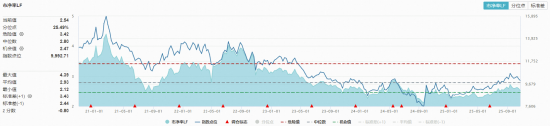
Group 1 - The agricultural sector is experiencing adjustments, yet funds are increasingly investing in related ETFs, with nearly 2 billion yuan accumulated since September 29 [1] - The Ministry of Agriculture and Rural Affairs held a meeting on October 21 to enhance grain yield through technology integration and support for genetically modified crops, benefiting related seed and planting companies [1] - In September, listed pig companies reported a decline in sales revenue, totaling 21.647 billion yuan, a year-on-year decrease of 18.74% and a month-on-month decrease of 10.77%, primarily due to falling pig prices [2] Group 2 - The average selling price of pigs dropped over 30% year-on-year and 5.42% month-on-month, reaching the lowest level since 2022 [2] - The Ministry of Agriculture and other authorities are focusing on controlling production capacity and reducing weight, which is expected to accelerate capacity reduction in the fourth quarter [2] - The current valuation of the agricultural sector is relatively low, with the agricultural ETF's price-to-book ratio at 2.54, indicating a good investment opportunity [2] Group 3 - Recent fluctuations in pork and piglet prices, along with increased slaughter rates, indicate a tightening supply in the pig farming industry [3] - The number of breeding sows is decreasing, and self-breeding operations are facing losses, leading to enhanced capacity reduction motivation [3] - In the livestock sector, beef prices are expected to rise in the medium to long term, while dairy prices remain low, and poultry prices are stable [3] Group 4 - The first agricultural ETF (159275) tracks the CSI Agricultural Index, with major holdings in leading companies like Muyuan Foods and Wens Foodstuffs, comprising about 40% of the index [4] - The ETF focuses on high-concentration industries, with over 90% of the top ten industries in agriculture, breeding, and feed sectors [4] - Investors can also access the agricultural ETF through linked funds for broader exposure [4]





益生股份:公司饲养的鸡主要为大型白羽肉种鸡
Zheng Quan Ri Bao Zhi Sheng· 2025-09-05 11:41
Core Viewpoint - Yisheng Co., Ltd. clarified that it primarily raises large white feather broiler chickens, while Xiaoming Co., Ltd. raises layer chickens, indicating that these two types belong to different market segments with distinct market conditions [1] Company Summary - The current market price for Yisheng's broiler chicken seedlings is 4 yuan per chick, and further pricing details can be found on the company's official WeChat account under the market information section [1]
