
Hua Er Jie Jian Wen

Search documents
AI网络超级周期杀到2026年,最大赢家从“易中天”变成“中天太长”?
Hua Er Jie Jian Wen· 2026-01-19 11:07
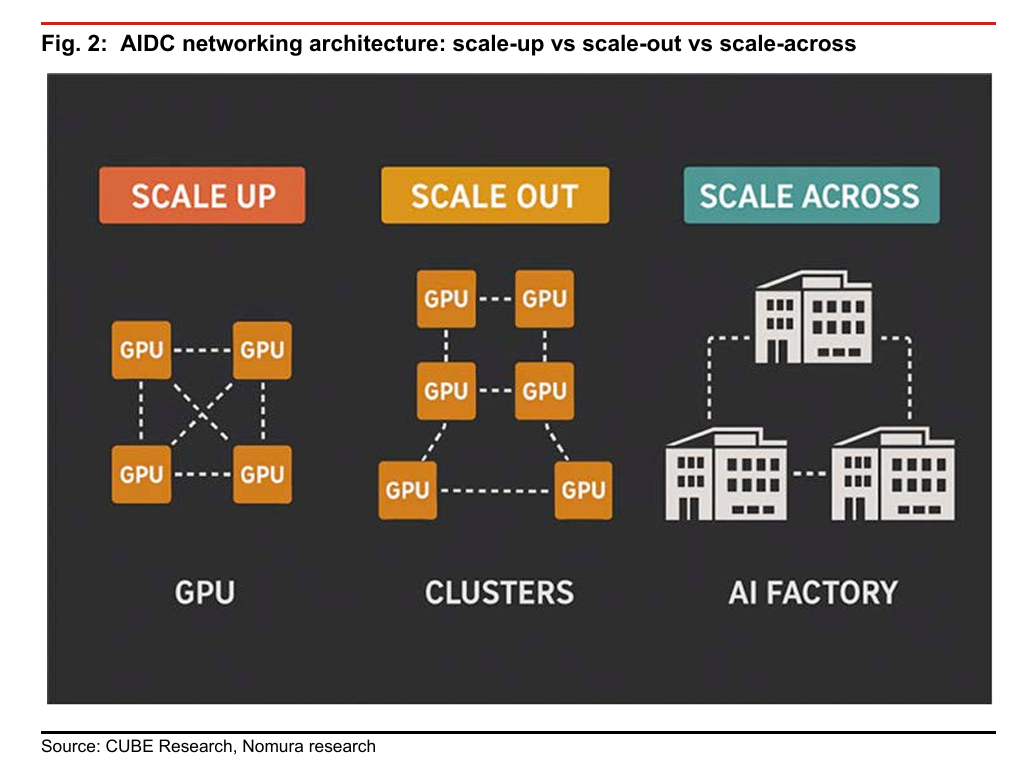
Core Insights - The global AI infrastructure investment is entering a new super cycle, driven by technology upgrades and supply shortages in key components, with significant growth expected in the AI network market until 2026 or 2027 [1] Group 1: Market Growth and Projections - The shipment of 800G optical modules is projected to increase from 20 million units in 2025 to 43 million units in 2026, while 1.6T optical module shipments are expected to surge from 2.5 million units to 20 million units [1] - The penetration rate of silicon photonics (SiPh) technology in the 800G/1.6T market is anticipated to reach 50-70% [1] - The optical module market is experiencing structural growth opportunities, with Ethernet optical module market revenue expected to surge by 93% in 2024, followed by 48% and 35% growth in 2025 and 2026, respectively [12] Group 2: Supply Chain Dynamics - Supply chain bottlenecks are expected to strengthen the competitive advantage of leading companies, with advanced optical chip production capacity projected to grow over 80% by 2026, yet still lagging behind demand by 5-15% [2] - Major players like Zhongji Xuchuang and Tianfu Communication are positioned to maintain significant market shares in the 800G/1.6T optical module market, with Zhongji Xuchuang expected to hold 25-30% and 35-40% shares, respectively [12] Group 3: Technological Advancements - The evolution of technology is critical, with AI giants like NVIDIA, Google, Meta, and Amazon AWS actively upgrading their network architectures through various technological paths, including SiPh, Co-Packaged Optics (CPO), and Optical Circuit Switching (OCS) [1] - CPO technology is expected to accelerate commercialization starting in 2026, with penetration rates projected to rise from 3% in 2026 to 20% by 2030, and market size expected to grow from $1.6 billion to $13.1 billion during the same period [14] Group 4: Market Segmentation and Trends - The optical fiber and cable market is showing a bifurcated trend, with strong demand from AI data centers, where AI application optical cable demand is expected to grow by 138% in 2024 and 77% in 2025 [13] - The Ethernet switch market is experiencing robust growth, with a 35.2% year-on-year increase in revenue in Q3 2025, and a significant rise in 800G switch revenue by 91.6% [17]




瑞派冲击港股IPO:宠物医疗十年整合,仍未走出“人力困局”
Hua Er Jie Jian Wen· 2026-01-19 10:09
Core Insights - The article discusses the recent submission of a prospectus by "Ruipai Pet Hospital," a national chain of pet medical service providers, to the Hong Kong Stock Exchange, marking a significant move into the pet medical market [2] - The domestic pet medical market is projected to have a CR5 of 15.4% by 2024, with Ruipai holding a 4.8% market share, ranking second [2] - Despite the industry's rapid expansion, challenges remain regarding profitability and standardization, raising questions about the maturity of the pet medical chain model [3][8] Market Overview - The pet medical sector is characterized by high consumer spending, with average treatment costs for cats and dogs at 2390 yuan and 2786 yuan respectively [4] - Ruipai's revenue from pet health management contributes approximately 90% of its income, with a gross margin slightly above 20% [5] - The industry has been in a "land grab" phase for over a decade, but fundamental issues regarding the viability of the pet medical chain model persist [3][12] Financial Performance - Ruipai's projected revenues for 2024 and the first half of 2025 are 1.76 billion yuan and 960 million yuan, with adjusted net profit margins of 4% and 7.7% respectively [3] - The average single visit expenditure increased from 409.3 yuan to 442.2 yuan in the first half of 2025, with gross margins rising from 23% to 24.8% [9] Operational Challenges - The pet medical industry lacks widespread insurance coverage, leading to direct consumer payment for most services [6] - High labor costs, which can account for nearly 50% of Ruipai's operational expenses, pose a significant challenge [10] - The industry faces a structural shortage of qualified veterinarians, impacting service quality and operational efficiency [10] Expansion Strategy - Ruipai has adopted a cautious approach to expansion, with a decrease in the number of hospitals from 580 to 538 in 2023 [15] - Future expansion will focus on small chain systems with integration potential, network supplements in core urban areas, and initial entries into untapped cities [15] - The company plans to encourage internal doctors to establish new clinics through an "elite entrepreneurship plan" and is considering a franchise model [15] Industry Dynamics - The pet medical market in China has a chain rate of 21.8%, which is close to the 30% in mature markets like the U.S., but the CR5 concentration is only 6.5% [14] - The industry is still in a developmental phase regarding revenue systems and standardized pricing, leading to significant variability in profitability [8][14] - The potential for growth exists in lower-tier cities, where the demand for systematic and chain-operated pet hospitals remains largely unmet [14]
日本首相高市早苗宣布将于23日解散众议院。(新华社)
Hua Er Jie Jian Wen· 2026-01-19 09:03
风险提示及免责条款 日本首相高市早苗宣布将于23日解散众议院。(新华社) 市场有风险,投资需谨慎。本文不构成个人投资建议,也未考虑到个别用户特殊的投资目标、财务状况或需要。用户应考虑本文中的任何 意见、观点或结论是否符合其特定状况。据此投资,责任自负。 ...
美联储独立性的分水岭!明天,美国最高法院审“特朗普诉库克案”
Hua Er Jie Jian Wen· 2026-01-19 08:45
本周二,美国最高法院将审理"特朗普诉库克案"(Trump vs Cook)。这不仅仅是一场人事纠纷,更是 美联储作为独立央行是否即将终结的"审判日"。 决定美联储命运的"审判日" 本周最高法院的听证会(案卷号25A312)将决定Lisa Cook是否能继续担任美联储理事。 此前,特朗普政府指控Cook在抵押贷款申请中涉嫌欺诈(由联邦住房金融局局长William Pulte提出), 并通过社交媒体宣布将其免职。Cook随即起诉并获得了法院的初步禁令,阻止了这一免职。 据追风交易台信息,瑞银在16日的报告中直言,这场审判关乎美联储独立性的生死存亡。如果法院裁决 允许白宫"因故"绕过《联邦储备法》罢免理事Lisa Cook,那么鲍威尔被解职的法律大门将被彻底踢 开。 这意味着基于数据的货币政策逻辑可能瞬间坍塌,取而代之的是政治驱动的降息指令。一旦防线失守, 美元、美债和美股的定价体系将面临长期的结构性重估。瑞银警告,2026年市场注定"颠簸",而本周就 是震源中心。 瑞银在报告指出,该案件直接挑战了《联邦储备法》中关于理事只能"因故"(for cause)被免职的保护 条款。 白宫方面认为,总统拥有广泛的权力,即使 ...
出口额创历史新高,中国变压器在海外卖爆了!
Hua Er Jie Jian Wen· 2026-01-19 08:26
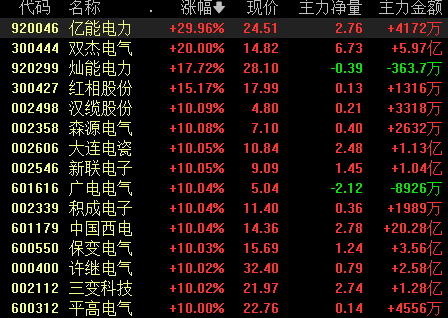
Core Insights - China's transformer exports are projected to reach a record high of 64.6 billion RMB in 2025, marking a nearly 36% increase from the previous year, driven by global shortages and rising prices in the power equipment market [1] - The average export price per transformer has risen to 205,000 RMB, reflecting a one-third increase year-on-year, amidst significant global demand for transformer infrastructure [1] - The global investment in power grids is expected to exceed 480 billion USD in 2024, with strong growth momentum anticipated in the coming years [1] Group 1: Market Dynamics - The demand surge for transformers is primarily driven by the modernization of aging power grids and a global boom in data center construction, with the global data center market projected to grow from 242.72 billion USD in 2024 to 584.86 billion USD by 2032 [4] - The International Energy Agency (IEA) forecasts that the delivery cycle for power transformers will remain high through 2025, with the U.S. expected to face a 30% supply shortfall in transformer demand [5][6] - The price index for global power transformers has increased 1.5 times since 2020, with some complex models reaching prices 2.6 times higher than pre-pandemic levels [5][6] Group 2: Supply Chain and Investment - China's transformer exports account for one-quarter of the global market, with significant reliance from Europe and the U.S. on imports due to severe shortages [10] - The State Grid of China has announced a fixed asset investment of 4 trillion RMB during the 14th Five-Year Plan, a 40% increase from the previous plan, aimed at building a new power system [10] - China's total electricity consumption is projected to exceed 10 trillion kWh by 2025, reflecting a 5% year-on-year growth, which will further support domestic demand for transformers [10]


菜鸟去年海外仓单量同比增长32%
Hua Er Jie Jian Wen· 2026-01-19 07:46
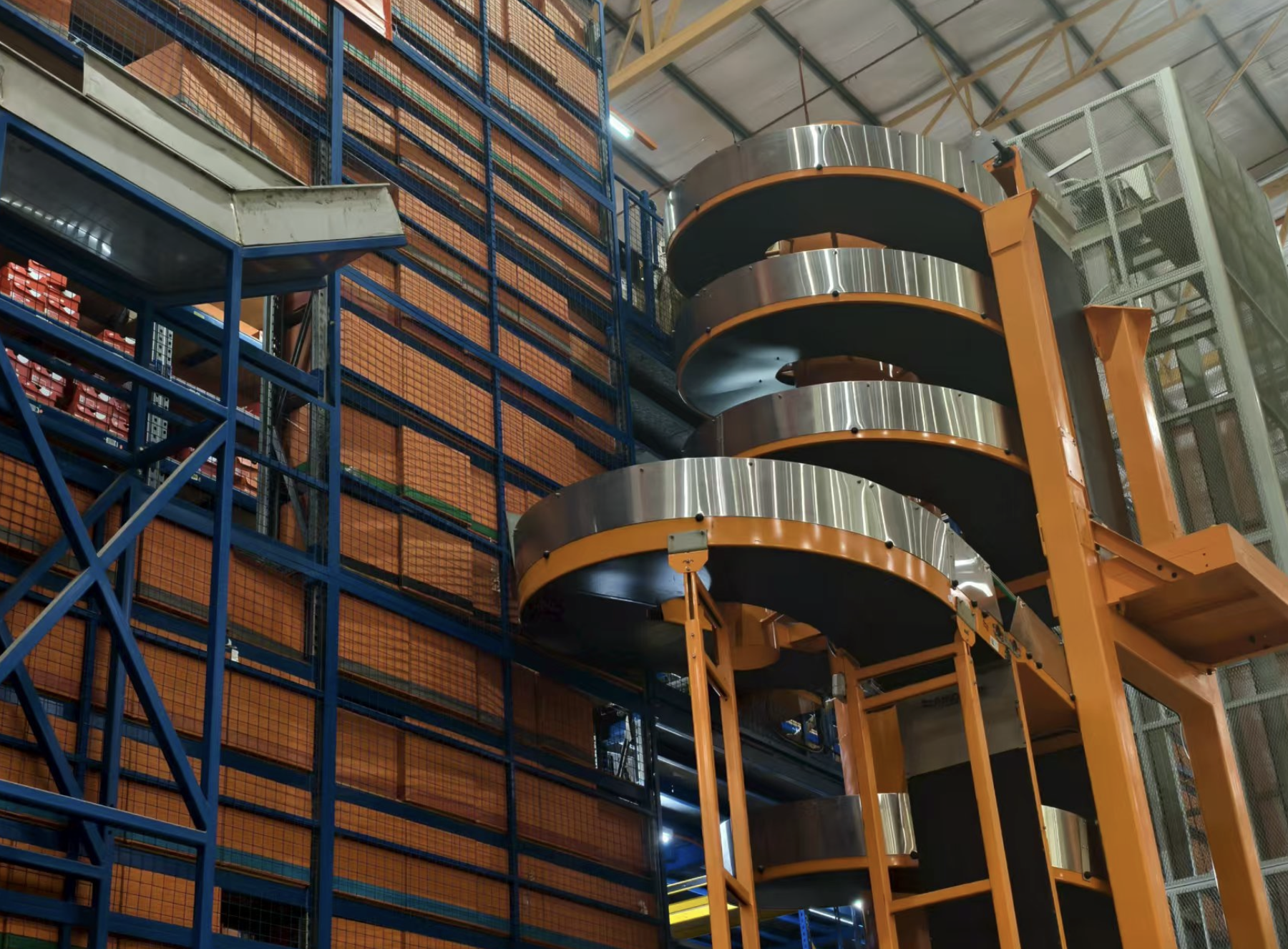
Group 1 - The core viewpoint of the article highlights that Cainiao's global overseas warehouse order volume is expected to grow by 32% year-on-year by 2025, continuing to lead the industry in growth rate [2] - The growth in order volume is attributed to the accelerated international expansion of "Made in China" brands, with an increasing share of smart products in Cainiao's overseas warehouse business [2] - A significant trend in the new wave of Chinese enterprises going global is the focus on building global brands, with a consensus that "globalization means localization," making overseas warehousing a key strategy for localization [2] Group 2 - According to customs data, China's high-tech product exports are projected to reach 5.25 trillion yuan in 2025, marking a growth of 13.2%, while exports of self-owned brand products are expected to grow by 12.9%, increasing their share of total exports by 1.4% [3] - Leading smart cleaning appliance brand Ecovacs and projector brand XGIMI have achieved triple-digit year-on-year growth in order volume from Cainiao's overseas warehouses, while several leading brands in 3D printing, such as Anycubic, have seen double-digit growth [3] - Cainiao plans to launch over 10 new warehouses globally in 2025 and increase investments in automation equipment like AGV robots and automated sorting lines, enhancing both order processing capacity and labor efficiency [3]
“只买不卖”!“香港巴菲特”将四分之一的财富投入黄金
Hua Er Jie Jian Wen· 2026-01-19 07:46
Core Viewpoint - The article highlights the investment strategy of Cheung Hai, known as the "Hong Kong Buffett," who allocates a significant portion of his wealth to gold, far exceeding the average allocation among peers, and adheres to a "buy and hold" strategy without trading or using derivatives [1][2]. Group 1: Investment Strategy - Cheung Hai has allocated approximately 25% of his family office assets, totaling around $1.4 billion, to precious metals, particularly gold, while the average allocation among family offices is only 2% [1][2]. - His investment in precious metals began with small amounts in 2008, leading to substantial purchases of physical gold ETFs ten years later, resulting in cumulative gains of $251.1 million and a growth rate of 167% [1][2]. - He recommends an investment portfolio consisting of 60% stocks, 20% bonds, and 20% precious metals, primarily gold, citing geopolitical tensions as a driving force for gold and silver [1][2]. Group 2: Historical Context and Performance - Cheung Hai's significant gold purchases were funded by selling shares of his company, Wei Li Group, before a major market correction in 2015 [4]. - He launched the Value Gold ETF in 2010, storing physical gold in Hong Kong, and remains the largest shareholder of the fund, valued at approximately HKD 1.3 billion ($167 million) [4]. - The prices of gold, silver, copper, and tin reached historical highs in early 2026, driven by anticipated easing policies from the Federal Reserve, political pressures from the Trump administration, and ongoing geopolitical tensions [1][4]. Group 3: Market Trends and Insights - Cheung Hai believes that the world is entering a period of large-scale "vault migration," with wealthy Asian families increasingly moving their assets back to the region to avoid U.S. sanctions or potential asset seizures [4]. - He emphasizes that owning physical gold is a secure way to store wealth, as it does not rely on any third party [4][5]. - The article notes that some Asian family offices are bypassing intermediaries to trade physical gold directly, reflecting a growing trend in precious metal investments [5].
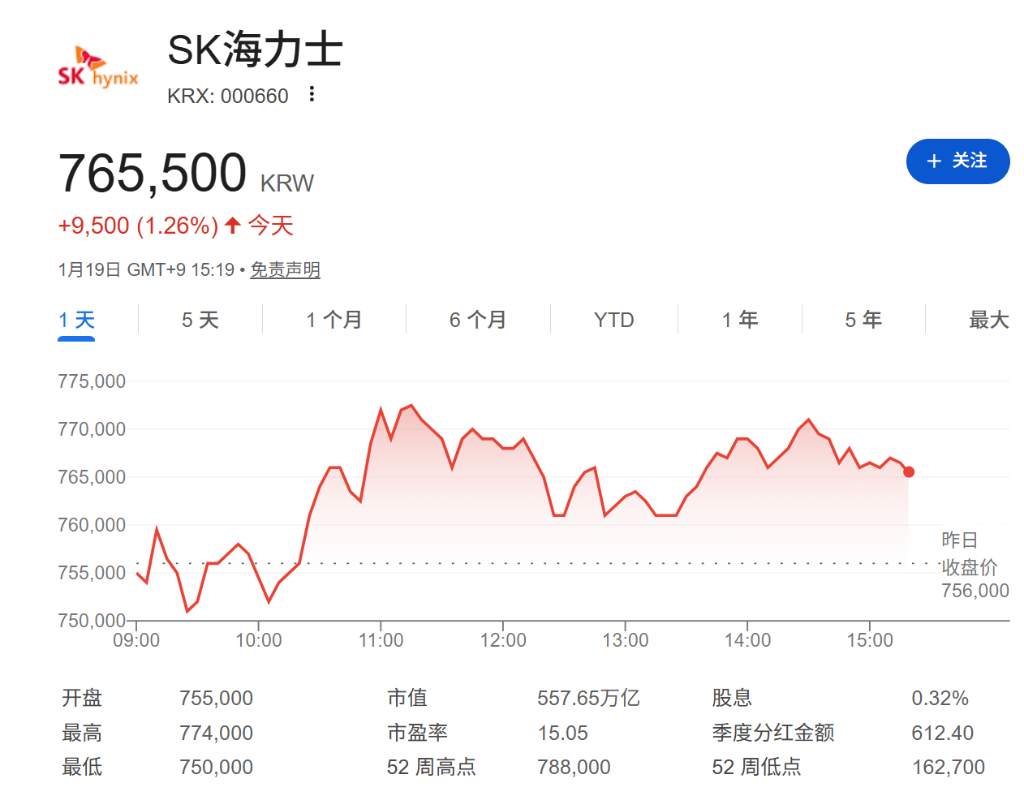
HBM4与美股上市双催化,摩根大通上调SK海力士目标价至100万韩元
Hua Er Jie Jian Wen· 2026-01-19 07:31
Core Viewpoint - Morgan Stanley has significantly raised the target price for SK Hynix to 1 million KRW, citing the long-term growth trend in AI memory demand and a potential US stock listing as dual catalysts for stock price increase [1][3]. Group 1: Target Price Adjustment - Morgan Stanley maintains an "overweight" rating for SK Hynix and has increased the target price for December 2026 from 800,000 KRW to 1 million KRW, anticipating strong pricing momentum to drive upward revisions in earnings expectations [1][3]. - The expected earnings per share (EPS) for the fiscal years 2026 to 2027 is projected to be revised upward by 20% to 25% [1][9]. Group 2: Capital Operations and US Listing - SK Hynix is evaluating various measures to enhance corporate value, including the potential for a US stock listing through American Depositary Receipts (ADR), which could narrow the valuation gap with US peers [3][15]. - The company is considering listing approximately 2.4% of its outstanding shares, equivalent to about 17.4 million shares, to attract capital from passive funds and ETFs that invest only in US-listed stocks [15]. Group 3: Technology and Market Position - The recent investment plan of 19 trillion KRW for a packaging plant reinforces SK Hynix's commitment to developing AI memory solutions, with large-scale production expected to begin in 2028 [4]. - Despite a temporary decline in HBM sales proportion to 30% this year, it is forecasted to rebound to 39% by 2027, supported by the company's leading position in HBM4 technology [4][9]. Group 4: Pricing Momentum and Earnings Outlook - Strong server demand is driving upward potential in the traditional DRAM and NAND markets, leading to a 7-9% upward revision in the total addressable market (TAM) for HBM [9]. - Capital expenditures for fiscal years 2026 to 2027 are projected to be adjusted to 36-48 trillion KRW, primarily due to infrastructure spending, with a capital intensity of 20-23%, significantly lower than the historical average of 33% from 2016 to 2025 [9].
韩国KOSPI站上4900点——外资加码、散户撤退,这轮行情还能走多远?
Hua Er Jie Jian Wen· 2026-01-19 07:31
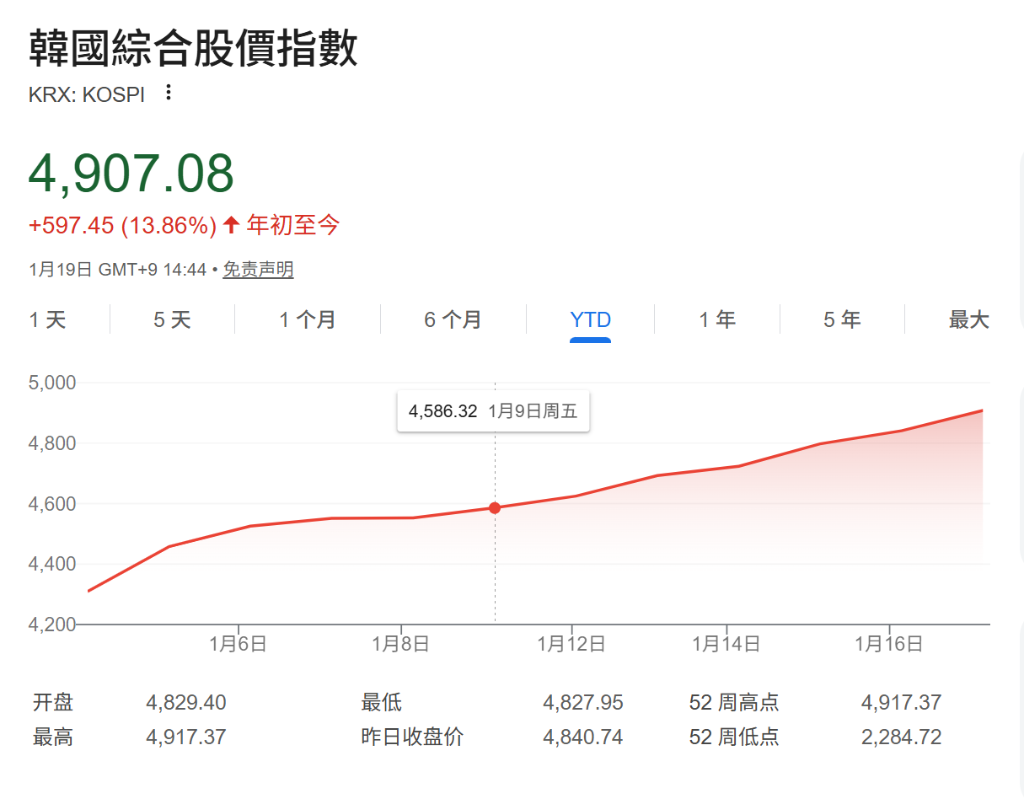
目前的韩国股市呈现出一种极具讽刺意味的流动性结构:市场在飙升,但散户在撤退。 当地时间本周一,韩国首尔综合指数首次突破4900点,日内涨1.3%,年初至今(YTD)涨幅高达15%,这一表现显著跑赢亚洲其他市场。然而, 这是一场典型的"机构进、散户退"的行情。 野村统计显示,虽然整体趋势是"外资进、散户退",但在个股层面,资金博弈更为复杂。根据对193只股票的资金流向分析(自2025年5月至 今),不同龙头的买家构成存在显著差异。 市场领头羊三星电子(Samsung Electronics)和SK海力士(SK Hynix)均呈现多类别买家净买入的态势。其中,三星电子主要由外资主导买入, 而SK海力士则主要由本地机构推动。 某些板块完全依赖外资驱动。例如,HD现代重工(HD Hyundai Heavy Industries)和HD现代(HD Hyundai)的上涨,几乎完全是由外国投资者的 净买入所推动的。 据追风交易台信息,野村在1月18日的报告中表示,目前推动市场上涨的动力完全来自于外国投资者和本地机构(主要是金融投资)。相比之下, 韩国散户投资者在此期间一直是股票的净卖家。 这种背离在ETF资金流向中尤为明 ...
鲍威尔的“历史罪状”!美联储公开2020年9月会议记录,鲍威尔力促“美联储容忍通胀走高”
Hua Er Jie Jian Wen· 2026-01-19 07:15
Core Viewpoint - The Federal Reserve's 2020 policy meeting minutes reveal that Chairman Jerome Powell strongly advocated for a key decision he later regretted, which many critics believe contributed to the Fed's slow response to rising inflation during the pandemic [1]. Group 1: Decision-Making Process - In the September 2020 meeting, Powell pushed for a strong and specific interest rate guidance, committing to keep rates near zero until full employment and a 2% inflation target were achieved [1]. - Despite opposition from several colleagues, Powell won the debate, emphasizing the need for immediate action rather than waiting [2]. Group 2: Internal Opposition - Multiple Federal Reserve officials expressed reservations about the strong commitment but did not publicly voice their dissent [2]. - In the formal vote, Dallas Fed President Rob Kaplan opposed the strong commitment, while Minneapolis Fed President Neel Kashkari supported it [3]. Group 3: Consequences of the Decision - The consequences of this interest rate guidance became evident in the following two years, with inflation starting to rise significantly in 2021, peaking at 7.2% in mid-2022 [4]. - The Fed did not begin raising interest rates until March 2022, months after inflation had clearly exceeded the target, with critics citing the strong commitment made in September 2020 as a key factor in the Fed's delayed action [4].