Hua Er Jie Jian Wen

Search documents
抗住芯片涨价压力,苹果 iPhone Q4出货大增28%,重夺中国手机市场榜首
Hua Er Jie Jian Wen· 2026-01-19 07:10
Core Viewpoint - Apple has regained the top position in the Chinese smartphone market during the holiday season, driven by strong demand for the iPhone 17 series, despite facing a significant shortage of storage chips [1][3]. Group 1: Market Performance - Apple's smartphone shipments in China surged by 28% year-on-year in the fourth quarter, capturing one-fifth of the total market share [1]. - For the full year of 2025, Apple's shipments in China increased by 7.5%, holding approximately 17% market share, closely following the leading local competitor [1][4]. - The high-end smartphone segment has shown resilience against the ongoing storage chip crisis, with minimal impact reported on premium devices [2]. Group 2: Supply Chain Challenges - The semiconductor supply shortage, particularly for storage chips, is intensifying, primarily due to manufacturers reallocating capacity to produce high-end AI storage chips for Nvidia [1]. - Analysts predict that storage prices will continue to rise, with an expected increase of 40% to 50% in the first quarter of 2026, followed by an additional 20% in the second quarter [1][4]. - This price pressure is likely to force smartphone manufacturers to optimize their product lines, particularly by reducing low-end models to maintain profit margins [4]. Group 3: Product Strategy - Despite Apple's strong overall performance, the iPhone Air model has underperformed due to its later launch in China compared to other regions and a compromise between weight and functionality [4]. - The new consumer subsidy policies in China have somewhat alleviated cost pressures for manufacturers [4]. - The trend indicates that brands with high pricing power will have a competitive advantage over those relying on low-margin volume sales in a high-cost chip environment [5].

硬刚特朗普?欧盟拟对930亿欧元美国商品征税
Hua Er Jie Jian Wen· 2026-01-19 06:53
欧盟已批准但暂停实施的930亿欧元报复性关税清单,将针对美国工业品,包括波音公司飞机、美国制 造的汽车和波旁威士忌等产品。据知情人士透露,如果特朗普在2月初对相关国家实施关税,欧盟可以 允许这些反制措施重新生效。 欧盟正准备对价值930亿欧元(约合1080亿美元)的美国商品征收报复性关税,以回应特朗普总统威胁 对八个欧洲国家加征关税的举动。这场围绕格陵兰岛引发的贸易冲突,可能对双方经济造成重大冲击。 据央视新闻19日报道,欧盟多国正考虑对价值930亿欧元的输欧美国商品加征关税,或限制美国企业进 入欧盟市场。一名欧盟外交官透露,如果欧盟与美国未能达成协议,报复性关税将从2月6日起自动生 效。 特朗普17日在社交媒体上宣布,将从2月1日起对来自丹麦、挪威、瑞典、法国、德国、英国、荷兰和芬 兰的输美商品加征10%关税,并宣称加征关税的税率将从6月1日起提高至25%,直到相关方就美国"全 面、彻底购买格陵兰岛"达成协议。 对此,欧盟27国代表周日召开会议开始准备应对方案。欧盟领导人本周晚些时候将在布鲁塞尔举行紧急 会议,探讨可能的报复措施。欧洲理事会主席Antonio Costa周日在社交媒体上表示,欧盟各国团结支持 ...

高盛解读特朗普“房改”:美国春季楼市或回暖,但机构禁令“雷声大雨点小”
Hua Er Jie Jian Wen· 2026-01-19 06:44
高盛分析师Arun Manohar在上周三发布的研报中指出,这些政策已对市场产生实质影响。自去年6月以 来房贷利率累计下降约80个基点,预计2026年成屋销售量较2025年至少增长5-7%。 不过分析师也警告,如果2000亿美元购买计划仅为一次性操作,且没有后续支持措施,MBS利差可能 在年底前走阔,导致房贷利率下降趋势逆转。 MBS购买计划推动利率降至三年低点 1月8日,特朗普在社交媒体宣布指示相关部门购买2000亿美元抵押贷款债券。随后,Director Pulte和财 政部长贝森特确认,该购买计划由政府支持企业房利美和房地美执行。 尽管项目细节有限,机构MBS市场已迅速消化这一利好。当前息票利差收窄约14-15个基点,房贷利率 同步下降,目前已接近2022年9月以来的最低水平。高盛认为,这一利差收窄幅度与计划规模相符,意 味着市场已充分定价。 高盛指出,自2025年6月以来房贷利率累计下降约80个基点,这将改善购房可负担性,提振春季购房旺 季前的市场情绪。分析师预计,这一降幅可使2026年成屋销售量较2025年增长至少5-7%。 美国房地产市场在经历三年交易低迷后可能迎来转机,高盛最新研究显示,特朗普政 ...
美股“七巨头”神话松动,美银Hartnett:下一轮赢家必须靠AI重塑业务
Hua Er Jie Jian Wen· 2026-01-19 06:39
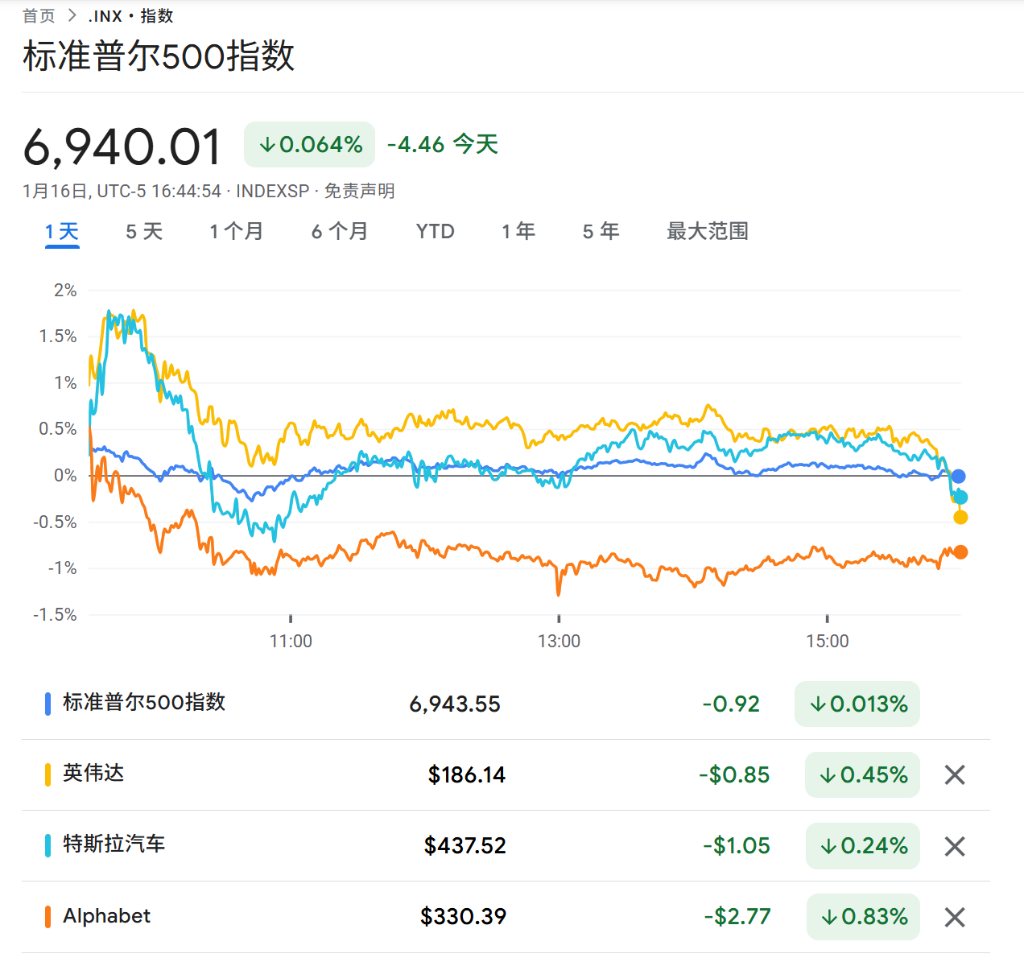
这种相关性的破裂正在重塑市场格局。投资经理们指出,"七巨头"——涵盖微软,Meta,苹果,亚马逊,特斯拉,Alphabet以及英伟达——已不 再是股市长红的代名词。随着AI军备竞赛的深入,这些公司在战略投入与核心业务增长上表现各异,导致其股价走势不再同步。 Bahnsen Group的首席投资官David Bahnsen直言:"它们之间的相关性已经崩溃。如今它们唯一的共同点,仅仅是都拥有万亿美元的市值。" 曾经共同推动美股市场的"七巨头"阵营正在瓦解,这一曾被视为铁板一块的巨型科技股组合,如今已不再是投资者眼中的单一资产类别。随着市 场对人工智能热潮的看法趋于理性与审慎,这些万亿市值巨头的命运在过去一年中发生了显著分化。 在刚刚过去的2025年,仅有Alphabet和英伟达两家公司的表现跑赢了标普500指数。进入新的一年,这种分化趋势仍在延续,"七巨头"中已有五家 公司的表现不及大盘基准。曾主导市场的AI交易策略正在发生转变,资金不再盲目涌入整个板块,而是开始进行更具选择性的押注。 AI交易的分化与重构 随着牛市的演进,围绕人工智能的交易逻辑已发生演变。部分投资者预计AI红利将向医疗保健等行业扩散,而另一部分 ...





严重依赖AI!美国经济正经历一场“危险的繁荣”
Hua Er Jie Jian Wen· 2026-01-19 03:12
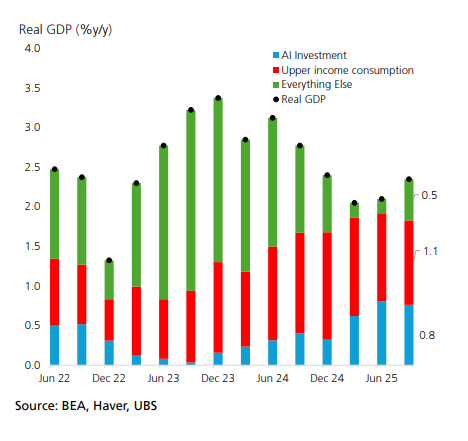
瑞银给美国经济泼了一盆冷水。 据追风交易台,瑞银在最新的研报中指出,在表面依然稳健的增长数据之下,美国经济的扩张基础正在 迅速变窄:投资、消费与就业的边际改善,几乎全部系于人工智能这一单一主题。 一旦AI投资放缓或 资产价格回调,当前扩张将失去核心支点。 瑞银模型显示,美国未来12个月衰退概率约为50%。如果AI投资热潮降温,美国经济将迅速失去核心 支撑。但瑞银对长期前景保持谨慎乐观,潜在GDP增速有望提升至约2.5%,得益于人口结构拖累减弱 与生产率改善。 同时,关税冲击正在以"慢变量"的形式重塑通胀结构。美国有效关税税率已从年初的2.5%跃升至13%以 上,规模相当于一次占GDP约1.1%的隐性增税。瑞银认为,这并非一次性冲击,而是将在未来数年持 续推高核心通胀,使其长期高于美联储2%的目标。 政策层面,财政与货币正陷入典型的"对冲—掣肘"格局。2026年,《大漂亮法案》(OBBBA)带来的 约550亿美元退税将在二季度短暂提振消费,但这一刺激随后将迅速衰减;而美联储虽计划继续降息, 却受制于关税推动的成本型通胀,宽松空间有限。 在此背景下,瑞银给出的判断并不激进,却异常尖锐:美国并非已步入衰退,但这是一 ...
白银暴涨,光伏流泪
Hua Er Jie Jian Wen· 2026-01-19 03:02
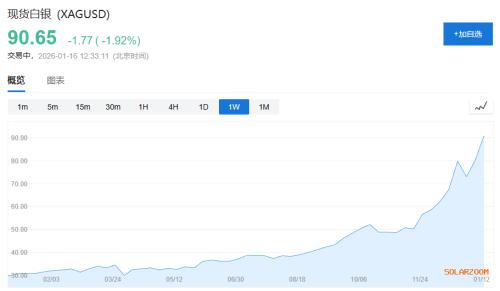
Core Insights - The cost of silver paste in photovoltaic (PV) modules has surged from 3.4% of total costs in 2023 to 29% currently, making it the largest cost component, surpassing silicon materials [1][3] - The rising silver prices have forced PV manufacturers to increase prices and accelerate plans to replace silver with cheaper materials like copper, with an expected 17% reduction in silver usage this year [1][7] Group 1: Cost Impact - A rise of 1000 yuan per kilogram in silver price increases the cost of solar cells by 0.01 yuan per watt, which is critical for the already thin profit margins in the PV industry [2] - The current silver consumption for TOPCon cells is approximately 10-13 mg/W, and if silver prices remain high, the cost from silver paste alone could reach 0.1-0.13 yuan per watt [3] Group 2: Price Adjustments - Chinese module manufacturers have raised prices by 1.4% to 3.8%, with mainstream 500W modules now priced around 400 yuan (approximately 57 USD) [3] - Leading companies like Longi Green Energy and Aiko Solar have recently increased their shipping prices, citing rising raw material costs [3] Group 3: Industry Challenges - Mid-tier companies are facing more severe challenges compared to leading firms, with some forced to halt production due to cash flow issues, financing difficulties, and inventory buildup [4][5] - A notable example includes a battery manufacturer in Hunan that ceased operations, stating there are currently no alternative solutions [6] Group 4: Supply and Demand Dynamics - The surge in silver prices is attributed to a supply-demand imbalance, with industrial demand, including solar energy, accounting for 65% of total silver demand [6] - The silver usage in the PV industry represents over 15% of global silver production, with a projected supply-demand gap of 5,000 tons by 2025 [6] Group 5: Material Substitution Efforts - Companies like Longi Green Energy are accelerating the replacement of silver with cheaper metals, with predictions that the PV industry could reduce silver usage by 17% this year [7] - Some technological routes have the potential to lower silver content to 25%, theoretically achieving a 90% reduction [7] Group 6: Risks of Substitution - The aggressive substitution strategy carries significant risks, as the stability of copper is inferior to silver, leading to potential long-term liabilities for manufacturers if panels fail before the warranty period [8] - Current substitution methods face challenges such as unstable printing of paste and suboptimal yield rates [8]





国家统计局:2025年最终消费支出对经济增长贡献率超过五成
Hua Er Jie Jian Wen· 2026-01-19 02:57
1月19日,国家统计局局长康义在国新办新闻发布会上表示,从开年以来,生产价格预期都出现了积极 变化,经济稳中有进的态势在持续。 2025年12月份,规模以上服务业增加值、服务业生产指数同比增速均比上月有所加快;核心 CPI涨幅也连续4个月保持在1%以上,PPI同比降幅收窄,环比连续三个月回升;制造业PMI 和非制造业商务活动指数双双重回扩张区间。 从政策支撑看,国常会部署实施财政金融协同的一揽子政策。扩大内需,"两新"政策也在不断优化,这 些都为今年经济的起步创造了有利条件。 从2026年全年看,我国经济长期向好的支撑条件和基本趋势没有改变,高质量发展的大势没有改变,有 基础、有条件保持经济稳定向好运行。 国家统计局局长康义在国新办新闻发布会上介绍,2025年最终消费支出对经济增长贡献率超过五成。 康义在国新办新闻发布会上介绍,2025年我国研发经费投入强度达到2.8%,比上年提高了0.11个百分 点,首次超过了OECD国家水平,我国创新指数排名也首次进入全球前十。 1月19日,国家统计局公布数据显示,2025年全年国内生产总值1401879亿元,按不变价格计算,比上年 增长5.0%。分季度看,一季度国内生产 ...
沪指涨0.5%,电网设备掀起涨停潮,人民币中间价创逾32个月新高,恒科指跌0.6%,科网股调整,沪锡跌超5%
Hua Er Jie Jian Wen· 2026-01-19 02:26
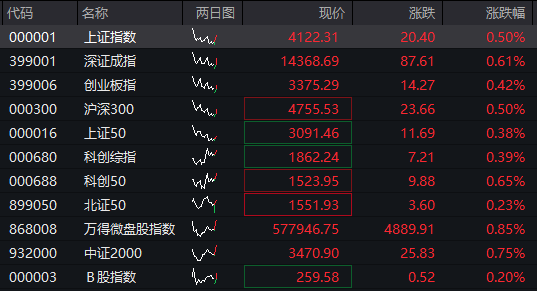
Market Overview - A-shares experienced a volatile rise in early trading on January 19, with all three major indices strengthening, particularly in the electric grid equipment and precious metals sectors [1] - The Hang Seng Index opened lower and continued to decline, with the Hang Seng Technology Index also falling, while new consumption concepts rebounded [2][3] A-shares Performance - The Shanghai Composite Index rose by 20.40 points, or 0.50%, to 4122.31 - The Shenzhen Component Index increased by 87.61 points, or 0.61%, to 14368.69 - The ChiNext Index gained 14.27 points, or 0.42%, to 3375.29 [1] Hong Kong Market Performance - The Hang Seng Index fell by 229.97 points, or 0.86%, to 26614.99 - The Hang Seng Technology Index decreased by 43.23 points, or 0.74%, to 5778.95 [2][3] Bond Market - The bond market showed mixed results, with the 30-year main contract down by 0.23% and the 10-year main contract down by 0.01% [3][4] Commodity Market - Most domestic commodity futures declined, with notable drops in tin (over 6%) and lithium carbonate (nearly 4%) - Silver and gold prices saw increases, with silver up by 2% and gold by 1% [4][5] Electric Grid Equipment Sector - The electric grid equipment sector saw a surge, with stocks like Shuangjie Electric hitting the daily limit up of 20%, and several others rising over 10% [6][7] Tourism and Hospitality Sector - The tourism and hotel sector showed positive movement, with Jiuhua Tourism hitting the daily limit up and several other hotel stocks also rising, driven by increased travel bookings for the upcoming holiday season [8] AI Application Sector - The AI application sector rebounded, with stocks like Baina Qiancheng rising over 10%, following news of OpenAI testing ad placements in its services [9][11] Precious Metals Sector - The precious metals sector was active, with Sichuan Gold rising over 9% and other gold stocks following suit, influenced by record high international gold and silver prices [10]




3nm产能告急,台积电大客户被迫分流,三星、英特尔机会来了?
Hua Er Jie Jian Wen· 2026-01-19 02:21
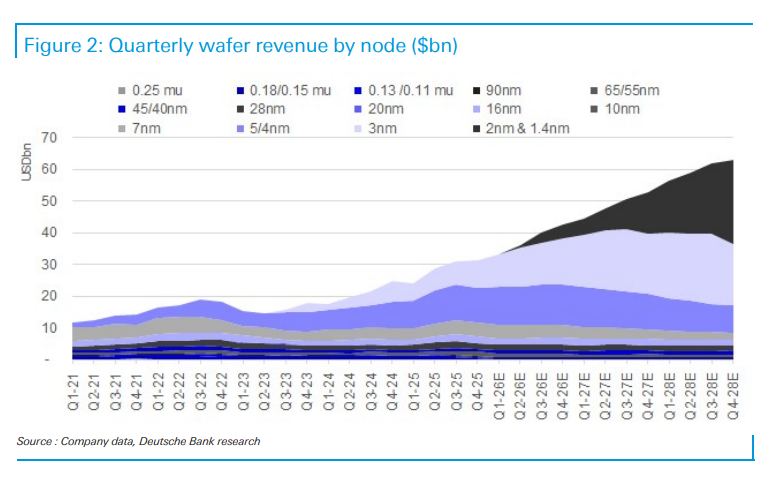
Core Viewpoint - The demand for chips is surging due to the AI wave, leading TSMC to face capacity constraints until 2027, prompting major clients like Apple and Nvidia to consider shifting some orders to Samsung and Intel [1][2]. Group 1: TSMC's Capacity and Capital Expenditure - TSMC is experiencing a "happy trouble" as its 3nm process capacity is extremely tight, with orders booked through 2026 and into 2027, necessitating a significant increase in capital expenditure plans [1]. - TSMC's capital expenditure guidance for 2026 is projected to be between $52 billion and $56 billion, exceeding Deutsche Bank's expectation of $50 billion and market consensus of $46 billion [1][3]. - The current situation reflects a severe shortage in core wafer manufacturing capacity, particularly for the 3nm process, rather than just CoWoS packaging capacity [1][3]. Group 2: Market Share and Client Dynamics - The supply-demand imbalance is causing a direct market spillover effect, with TSMC's market share in advanced process foundry expected to decline from 95% to 90% as clients seek alternative capacity [2]. - Major clients including Apple, Nvidia, AMD, Broadcom, Qualcomm, and MediaTek are left with no choice but to explore alternative suppliers due to the extreme capacity constraints [2][5]. Group 3: Client Shifts and Competitive Landscape - TSMC is delaying new 3nm development projects and encouraging clients to shift their product plans towards 2nm GAA processes for 2027/28 [5]. - Samsung's Taylor factory is likely to be the preferred alternative for clients seeking to diversify their supply sources, with Qualcomm and AMD being the most likely to consider Samsung [5]. - Apple and Broadcom are reportedly looking into Intel as an alternative, although Intel still has significant work to do despite its potential with the 14A process [5]. Group 4: Long-term Growth and Profitability - Despite short-term capacity challenges, the long-term growth potential driven by AI is highly certain, with TSMC raising its expected CAGR for AI-related growth from the mid-40s to the mid-to-high 50s for 2024-2029 [6]. - TSMC's long-term overall growth forecast has been adjusted to a 25% CAGR, with long-term gross margin targets raised to 56% [6][7]. - The focus remains on TSMC's core profitability, despite potential margin dilution from overseas expansion and challenges related to talent and infrastructure [6][7]. Group 5: Valuation Adjustments - Deutsche Bank has raised TSMC's target price by 10% to NT$2,200, reflecting a 20x P/E ratio based on expected EPS for 2027, consistent with industry peers [9]. - This valuation indicates TSMC's solid position and strong growth rate until 2028, although potential risks such as geopolitical tensions and competition from Intel are noted [9].
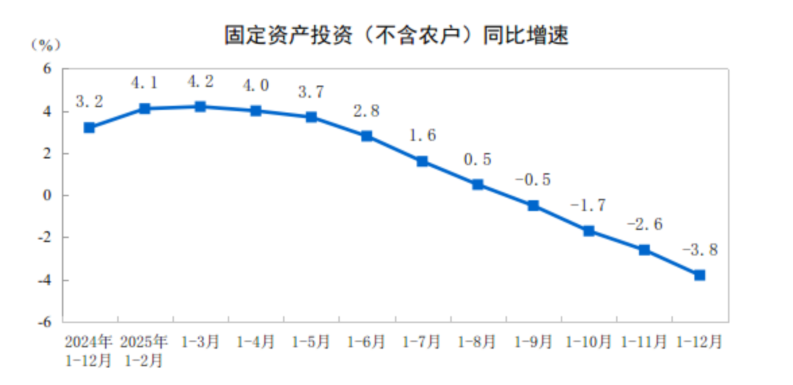
中国2025年固定资产投资同比下降3.8%,采矿业投资增长2.5%、制造业增长0.6%
Hua Er Jie Jian Wen· 2026-01-19 02:21
Core Insights - In 2025, China's total fixed asset investment (excluding rural households) reached 48,518.6 billion yuan, representing a decline of 3.8% compared to the previous year [1][3] - Private fixed asset investment decreased by 6.4% year-on-year, indicating a significant contraction in private sector investment [1][4] - The industrial investment within the secondary sector grew by 2.6% year-on-year, with mining investment increasing by 2.5% and manufacturing investment rising by 0.6% [1][3] Investment by Sector - Primary sector investment amounted to 957 billion yuan, showing a growth of 2.3% year-on-year [3] - Secondary sector investment totaled 177,368 billion yuan, reflecting a growth of 2.5% [3] - Tertiary sector investment was 298,248 billion yuan, which saw a decline of 7.4% [3] Regional Investment Trends - Investment in the eastern region decreased by 8.4% year-on-year, while the central region saw a decline of 2.7% [3] - The western region experienced a decrease of 1.3%, and the northeastern region faced a significant drop of 15.5% [3] Investment by Registration Type - Domestic enterprises' fixed asset investment fell by 3.8% year-on-year [4] - Investment from Hong Kong, Macau, and Taiwan enterprises decreased by 2.2% [4] - Foreign enterprises' fixed asset investment saw a substantial decline of 13.8% [4]