
Hua Er Jie Jian Wen

Search documents
贝森特:美联储可能不会迅速缩表
Hua Er Jie Jian Wen· 2026-02-09 06:32
此番言论正值市场关注新任美联储主席提名人可能带来的政策变动之际。尽管沃什此前曾主张削减美联 储持仓,但财政部长的最新表态缓解了对于货币政策可能迅速收紧并冲击市场流动性的担忧。专家分析 认为,总统特朗普希望大幅降低抵押贷款利率,而激进缩表将与此目标背道而驰,且难以在维持金融稳 定的同时实现。 审慎的政策路径与时间表 贝森特明确表示,沃什将是一位非常独立的美联储主席,关于资产负债表的具体操作将完全由美联储决 定。但他同时给出了较为明确的预期管理,即不应期待任何快速的行动。 贝森特指出,如果美联储决定采取所谓的"充裕(储备)机制"政策,这将从结构上要求央行维持较大规 模的资产负债表。基于此逻辑,他推测美联储决策者可能会选择暂时按兵不动,"至少花一年时间"来审 视和规划未来的路径。这一时间表的提出,为投资者评估未来流动性环境提供了一个较长的缓冲期。 美联储资产负债表的演变 美国财政部长贝森特周日表示,即便是在此前批评央行债券购买计划的沃什被提名美联储主席的情况 下,他不认为美联储会迅速采取行动缩减资产负债表。 据路透报道,贝森特在福克斯新闻频道的"周日早间期货"节目中指出,美联储可能需要长达一年的时间 来对其资产负债 ...
高盛重磅报告:十五年来最严重的存储芯片短缺正在逼近,即便消费端需求崩塌也无法阻止
Hua Er Jie Jian Wen· 2026-02-09 06:27
Core Viewpoint - Goldman Sachs warns that the market is on the brink of the most severe memory chip supply shortage in the past 15 years, with significant supply-demand gaps in DRAM, NAND, and HBM categories expected in 2026-2027 [1] DRAM Market Summary - Goldman Sachs significantly raised its DRAM supply shortage forecast, predicting a shortfall of 4.9% in 2026 and 2.5% in 2027, surpassing previous estimates of 3.3% and 1.1% [2] - The core driver of this tight situation is the explosive growth in server demand, with server DRAM demand (excluding HBM) expected to increase by 39% and 22% in 2026 and 2027, respectively [3] - In contrast, PC and mobile DRAM demand forecasts were downgraded, with mobile DRAM growth expected to slow to 7% in 2026 and PC DRAM growth at only 5% [4] - Global DRAM supply is projected to grow by 21% and 19% in 2026 and 2027, respectively, with limited capacity expansion from major suppliers [4] NAND Market Summary - The NAND market is also tightening, with supply-demand gaps expected to reach 4.2% in 2026 and 2.1% in 2027, higher than previous forecasts [5] - Strong growth in enterprise SSD demand is a major driver, with expectations for a 58% and 23% increase in enterprise SSD demand in 2026 and 2027 [5] - Mobile and PC NAND demand is expected to show significant weakness, with mobile NAND demand forecasted to experience zero growth in 2026 [6] HBM Market Summary - Goldman Sachs raised its HBM total addressable market (TAM) forecast to $540 billion in 2026 and $750 billion in 2027, reflecting improved demand from GPUs and ASICs [7] - ASIC demand for HBM is expected to accelerate, with forecasts for HBM demand from ASICs increased by 27% and 14% in 2026 and 2027, respectively [7] - Despite an increase in HBM capacity forecasts, supply-demand gaps are expected to reach 5.1% and 4.0% in 2026 and 2027, respectively, due to higher demand adjustments [8] BOM Cost Analysis - A detailed BOM cost analysis indicates that memory costs for smartphones and PCs are expected to rise significantly, with iPhone DRAM and NAND costs projected to reach about 23% of total BOM by Q3 2026 [9] - Even under extreme scenarios, DRAM demand is expected to grow by 21% in 2026, maintaining a supply-demand imbalance [9] Investment Recommendations - Goldman Sachs maintains buy ratings for Samsung Electronics and SK Hynix, highlighting their significant exposure in traditional memory markets [10] - The 2026 traditional DRAM pricing is expected to rise by approximately 176-184%, with operating profit margins reaching historical highs [11] - Micron's rating was downgraded to neutral with a target price of $235, as most positive factors have already been priced in [12]
AI冲击波从软件业蔓延至债市:最大债主Ares、KKR股价重挫,违约率恐飙至13%
Hua Er Jie Jian Wen· 2026-02-09 06:21
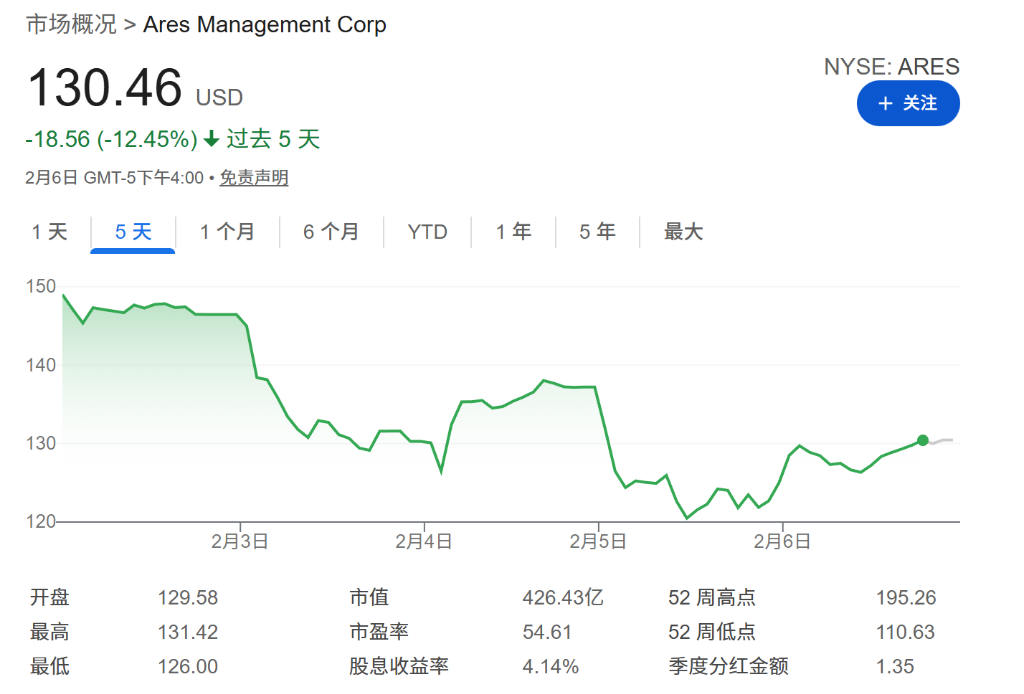
Core Insights - The disruptive wave of artificial intelligence (AI) technology is spreading from the software industry into the financial markets, creating unprecedented uncertainty in the private credit bond market, which is valued at approximately $3 trillion [1][12] - The release of a new AI tool by Anthropic has triggered a sell-off in software data supplier stocks, leading to significant declines in asset management companies heavily invested in private credit bonds [1][8] Group 1: Market Impact - The stock prices of major asset management firms with substantial private credit bond operations have experienced sharp declines, with Ares Management down over 12%, KKR down nearly 10%, Blue Owl Capital down over 8%, and TPG down about 7%, while the S&P 500 index only slightly decreased by approximately 0.1% during the same period [1][3] - Investors are increasingly uneasy about their exposure to the private credit bond market, particularly due to the software industry's significant concentration in this sector, which amplifies any disturbances [8][9] Group 2: Credit Quality Concerns - UBS has issued a stern warning that if the disruptive effects of AI accelerate beyond the adaptability of borrowing companies, the default rate in the U.S. private credit bond market could soar to 13% under aggressive scenarios, significantly higher than their estimates for leveraged loans (8%) and high-yield bonds (4%) [8][9] - The private credit bond market's heavy reliance on the software industry raises concerns about the quality of these assets, as any downturn in the software sector could lead to significant issues within investment portfolios [9][10] Group 3: Structural Risks - The structure of loans, particularly Payment-in-Kind (PIK) loans, exacerbates potential risks, as these loans allow borrowers to defer cash interest payments, which can become problematic if the borrower's financial situation deteriorates [10] - Moody's Analytics warns that the opacity of the private credit bond market complicates comprehensive risk assessment, highlighting the rapid growth of AI-related lending, rising leverage, and lack of transparency as significant warning signs [10][11] Group 4: Systemic Concerns - The market reassessment triggered by AI occurs against a backdrop of existing scrutiny of the private credit bond industry, which has long been criticized for high leverage and valuation opacity [12] - The private credit bond market, which has favored corporate software companies since 2020, must now prepare for the disruptive impacts driven by AI technology, prompting investors to reevaluate financing transactions that involve opaque, illiquid loans, especially those exposed to technological change risks [12]


软件股溢价已跌至金融危机以来新低,高盛:别急,还没跌透!
Hua Er Jie Jian Wen· 2026-02-09 05:55
Core Viewpoint - The global software and IT services sector is undergoing a significant revaluation, with software stocks experiencing a notable decline in relative valuation compared to the broader market, reflecting aggressive market responses to AI disruptions [1][2]. Group 1: Market Dynamics - Goldman Sachs analysts indicate that the valuation premium of software stocks has fallen to its lowest level since the financial crisis, suggesting a market reaction to the "AI impact" [1]. - The European software sector has seen a decline of approximately 16% year-to-date, significantly underperforming the broader European market, which is supported by financial, resource, utility, and industrial sectors [2]. - The rapid evolution of AI automation tools has led to a systematic reassessment of business models reliant on software and data services, resulting in double-digit declines across various sectors including software and gaming [2]. Group 2: Valuation Metrics - Current forward P/E ratio for European software and IT services companies is around 16.8 times, with only a 9% premium over the broader market, nearing the lows seen during the 2009 financial crisis [3]. - The broader digital economy sector's forward P/E has compressed from 18.7 times at the beginning of 2025 to 13.7 times, placing it at the lower end of the valuation range observed over the past two decades [3]. - The implied revenue growth assumption for software stocks is currently only 4%-5%, aligning with nominal GDP growth, while analysts maintain a long-term revenue growth expectation of nearly 9% for the software industry [3]. Group 3: Profitability Concerns - The primary concern in the market is not immediate profit collapse but the long-term sustainability of profit margins in the software sector [4]. - Historical data shows that net profit margins in the software and IT services industry have risen significantly, reaching about twice the average of non-financial sectors in Europe, raising concerns about vulnerability to disruption [4]. - The software industry has transitioned from a deflationary force to a source of moderate inflation, making it more susceptible to structural shocks [5]. Group 4: Historical Context and Future Outlook - Historical patterns indicate that stock price recoveries typically occur after earnings expectations have bottomed out, rather than prior to valuation declines [6]. - The current adjustment in software stocks is viewed as an early pricing of future risks rather than a complete market clearing process [6]. - Despite a cautious outlook for the software sector, there remains long-term investment value in technology stocks, particularly those with strong competitive advantages and pricing power [6].
3.5亿首付款、总额达85亿美元!信达生物与礼来合作布局肿瘤免疫新药研发
Hua Er Jie Jian Wen· 2026-02-09 05:55
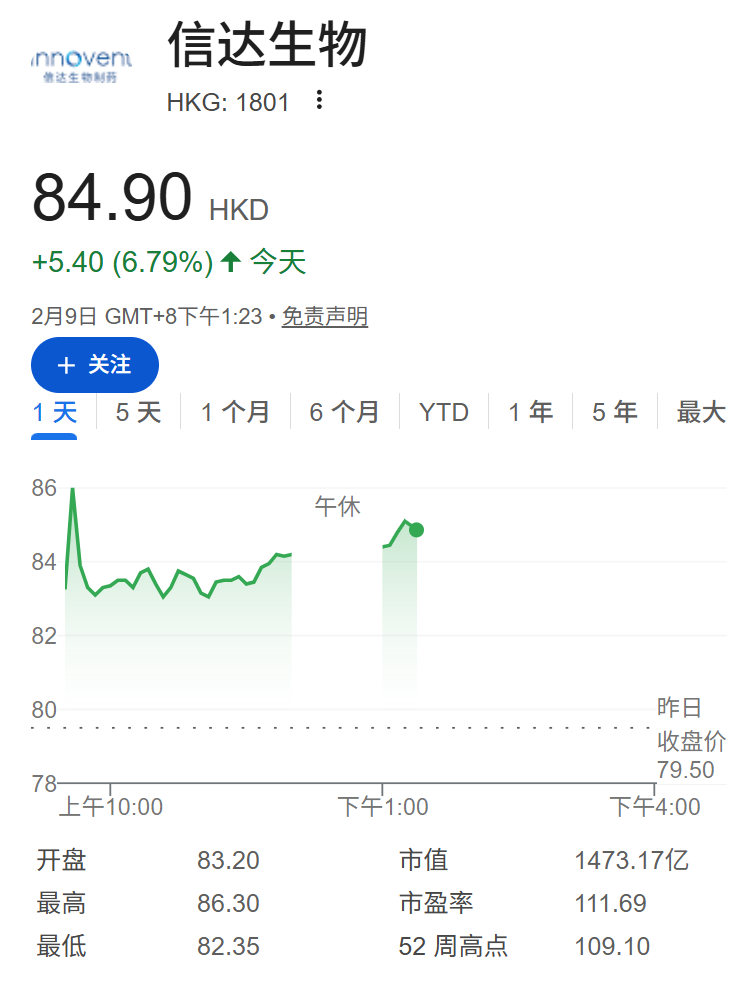
礼来公司将向中国生物制药企业信达生物支付3.5亿美元预付款,双方将在肿瘤和免疫疾病领域联合开发 全新药物,这标志着跨国药企对中国药企创新能力的进一步认可。 信达生物周日发布公告称,公司最高可获得85亿美元的里程碑付款。这项合作突破了传统的药物授权模式 ——礼来并非购买信达现有管线中某个特定药物的权益,而是双方将从零开始共同创造全新药物。协议未 披露涉及的具体药物数量。 受此消息提振,信达生物港股周一最高上涨8.6%。 这笔交易代表了中国生物科技公司与跨国药企合作的新模式。近年来,跨国制药公司持续从中国药企引进 在研药物,但此次合作更进一步,在化合物创建之前就建立了全球战略伙伴关系。 创新合作模式突破传统授权框架 信达生物首席商务官Samuel Zhang在投资者电话会议上表示: "从交易性质来看,这意味着信达在创造化合物之前就已经拥有了全球战略合作伙伴。" 信达生物在公告中表示,这项协议标志着公司加速其药物全球开发的新合作模式。这是双方建立的第七项 合作关系,此前六项合作涉及癌症、糖尿病和肥胖症治疗药物。信达去年还与罗氏控股和武田制药签署了 授权协议。 根据协议条款,信达生物将负责从概念阶段到在中国完成2期临 ...
高盛谈越南“10%增长目标”:任重而道远,存两大挑战
Hua Er Jie Jian Wen· 2026-02-09 05:51
越共中央第十四次全国代表大会在2026年1月23日结束后,越南把下一轮五年规划的"增速台阶"抬得很 高:2026—2030年实际GDP年均增速力争达到10%或以上。与过去五年6.5%—7.0%的目标、以及实际 6.2%(剔除2021年为7.2%)相比,这是一次明显加速。 第一大挑战:劳动力红利减弱,生产率压力陡增 在增长核算层面,高盛认为,劳动力因素已不再是可靠的"顺周期推手"。 研报指出,越南劳动年龄人口增速已明显放缓,劳动参与率也处于较高水平,这意味着通过"更多劳动 力"来拉动增长的空间极为有限。在这一现实约束下,政策目标转而高度依赖劳动生产率的跃升。 根据规划,未来五年越南希望将劳动生产率年均增速提升至约8.5%。高盛直言,这一假设本身就具有 相当挑战性: 换言之,如果生产率提升未能如期兑现,即便投资规模扩大,经济增长也可能遭遇边际回报递减的制 约。 据追风交易台,在最新发布的宏观研究报告中,高盛系统评估了越南未来五年力争实现"年均10%以上 实际GDP增长"的发展目标。在高盛看来,这一目标意味着越南经济增长轨迹将出现显著加速,但要在 中期内持续实现双位数增长,仍面临结构性约束与执行层面的双重挑战。 高 ...

德国制造业触底反弹?
Hua Er Jie Jian Wen· 2026-02-09 04:13
Core Insights - Goldman Sachs identifies a potential recovery in Germany's manufacturing sector, which is crucial for the European economy, despite recent fluctuations in industrial output [1][4]. Group 1: Economic Indicators - Germany's industrial production has been declining since its peak in 2017/18, but signs of a bottoming out were observed last year [1]. - A report indicates that January's industrial output is expected to rebound by 1.5% month-on-month following December's weakness, driven by order growth and improved business sentiment [3]. - The "Nowcasting" framework developed by Goldman Sachs shows that truck toll mileage and manufacturing sales are more accurate predictors of recent industrial output than traditional PMI data [2]. Group 2: Structural Changes in Manufacturing - The recovery in Germany's manufacturing is not uniform; significant structural disparities exist, particularly in the automotive and energy-intensive sectors, which continue to face challenges [5]. - The defense industry is highlighted as a key growth area, benefiting from expansionary fiscal policies, with expected increases in maintenance and procurement spending from 2024 to 2029 [6]. - The shift in Germany's growth narrative is moving from an export-driven model to one focused on domestic demand and security, with fiscal spending providing a stabilizing effect for the manufacturing sector [6]. Group 3: Future Outlook - Goldman Sachs' dynamic factor model indicates that while order growth is strong, it is concentrated in sectors with significant backlogs, suggesting a longer lead time for production increases [4]. - The underlying industrial momentum is at a recent high, indicating a recovery driven by domestic demand is likely in the first half of 2026 [4].
高市早苗胜选后,日本外汇主管警告“正密切关注日元走势”
Hua Er Jie Jian Wen· 2026-02-09 03:32
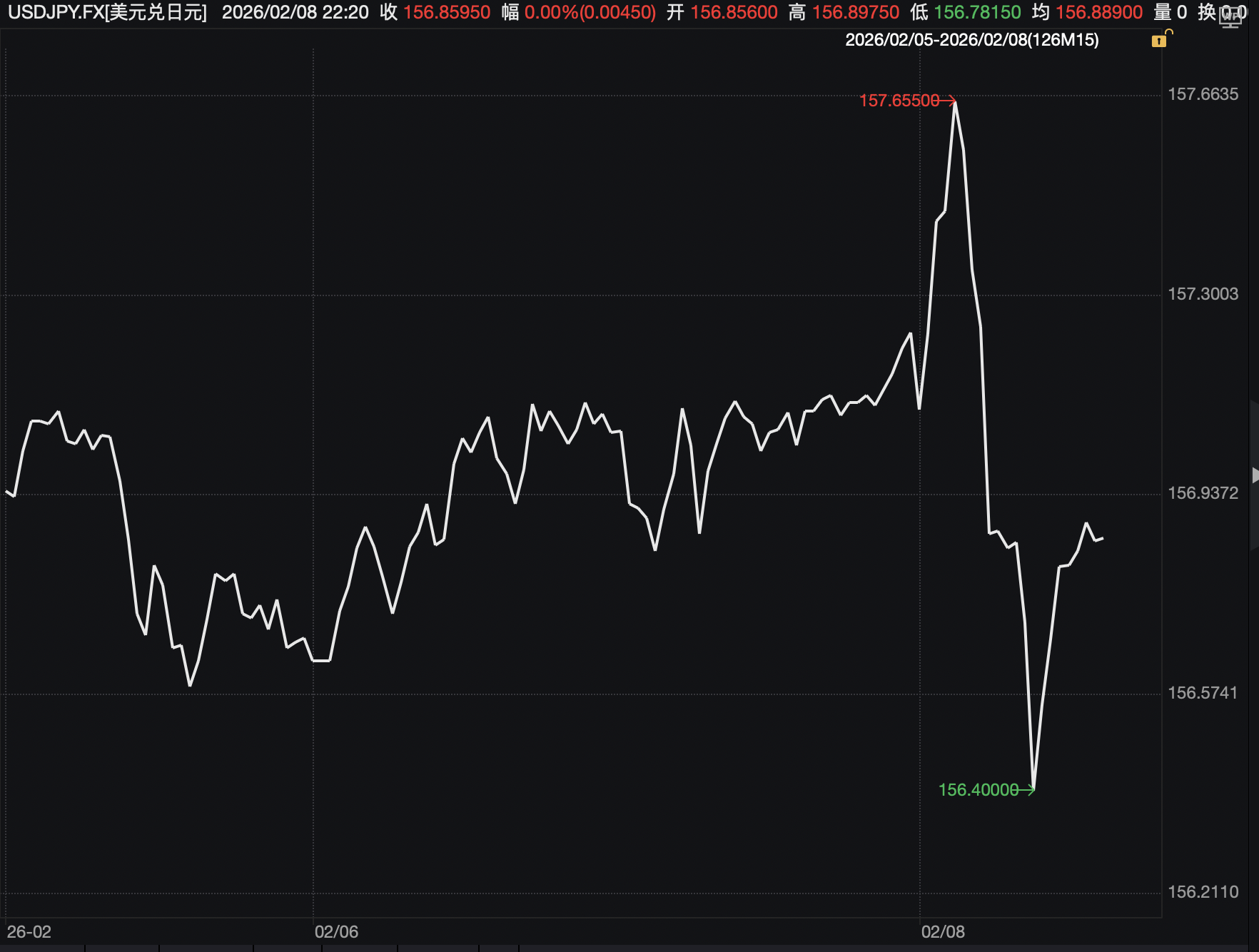
Core Viewpoint - The recent election victory of Prime Minister Sanna Takashi has led to increased pressure on the Japanese yen, prompting the Ministry of Finance to signal heightened vigilance to stabilize market expectations regarding fiscal expansion [1][2]. Group 1: Election Impact and Market Reaction - The direct trigger for the yen's depreciation was the policy expectation shift following Takashi's clear electoral victory, which is anticipated to lead to more aggressive fiscal spending [2]. - The ruling Liberal Democratic Party, led by Takashi, secured 316 out of 465 seats in the House of Representatives, marking the largest victory for a single party in post-war Japan [2]. - Takashi's post-election comments about potentially suspending the food sales tax for two years have raised concerns about fiscal health, further pressuring the yen and Japanese government bonds [2]. Group 2: Official Statements and Market Communication - Atsushi Mimura emphasized the government's ongoing commitment to monitor market movements with urgency and maintain open communication with the market [3]. - Satsuki Katayama's remarks included a warning about the potential for decisive measures, including intervention, in response to rapid fluctuations in the yen's value [3]. Group 3: US-Japan Coordination and Intervention Strategies - Katayama highlighted the importance of coordination with U.S. Treasury Secretary Janet Yellen, framing the responsibility for stabilizing the USD/JPY exchange rate as a shared obligation [4]. - Previous volatility in the yen was initially perceived as a potential intervention by Tokyo, but was later attributed to U.S. interest rate checks, indicating a complex interplay between U.S. and Japanese monetary policies [4]. Group 4: Market Dynamics and Fiscal Sustainability - As the yen weakened, Japanese stock markets and benchmark government bond yields rose, indicating a rapid reassessment of growth, inflation, and fiscal expansion expectations [5]. - Katayama reassured that the Takashi administration is focused on fiscal sustainability and will carefully monitor financial markets, with investors keenly observing the implementation of fiscal stimulus commitments and tax policy discussions [5].
市场对“量子计算”的最大误解:当前还“为时过早”
Hua Er Jie Jian Wen· 2026-02-09 01:45
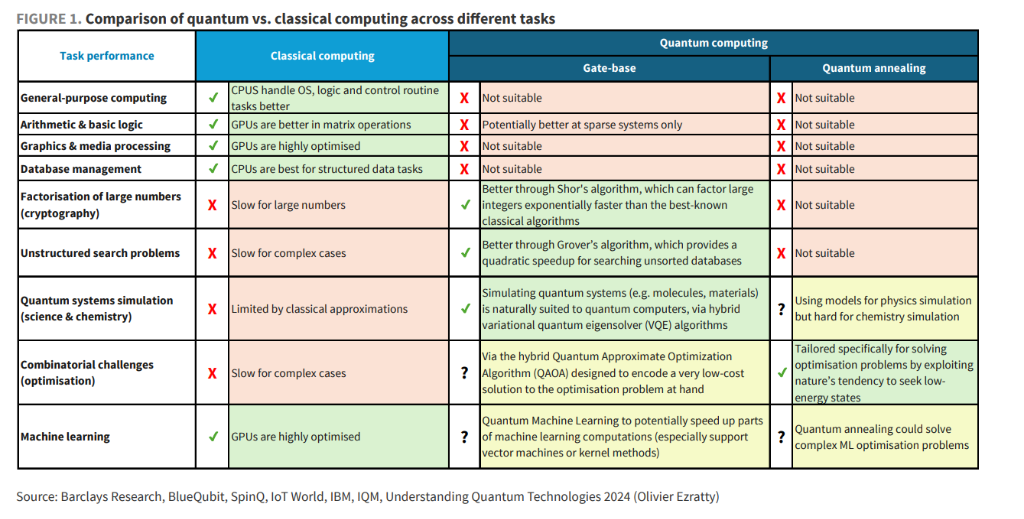
投资者普遍认为量子计算依然停留在科幻阶段,但巴克莱最新研报指出,这种"太早了"的错觉,可能让你错过未来12个月最关键的趋势。 据追风交易台消息,巴克莱分析师团队最新发布了一份研报《量子计算:纠正投资者的最大误解》。 报告的核心逻辑非常直白:华尔街低估了技术爆发的速度,同时完全搞错了量子与经典算力(如英伟达)的关系。巴克莱认为,我们正处于从"实 验室玩具"走向"商业利器"的前夜。 误解一:量子计算"为时过早" 巴克莱给出的第一条纠偏是:别把量子计算当成"十年后才有结果"的纯远期主题。 当前市场普遍认为,能完美运行的"容错量子计算"(FTQC)要到2030年以后。这没错,但巴克莱提醒投资者,千万别忽视了中间的"赛点"。 巴克莱指出,2026年至2027年将是行业的分水岭,届时将实现"量子优势"(Quantum Advantage)。 更重要的是"怎么定义优势"。巴克莱认为,"当系统瞄准100个逻辑量子比特时,优势才算被证明"。它同时提醒,任何"优势宣称"都需要"强技术 数据"背书,否则更像营销而非拐点。 "我们预计未来12个月内就会有重磅公告……当系统能稳定运行100个逻辑量子比特时,量子优势将被证明。" 这就像 ...
恒指高开1.6%,恒生科技指数涨1.9%
Hua Er Jie Jian Wen· 2026-02-09 01:23
风险提示及免责条款 市场有风险,投资需谨慎。本文不构成个人投资建议,也未考虑到个别用户特殊的投资目标、财务状况或需要。用户应考虑本文中的任何 意见、观点或结论是否符合其特定状况。据此投资,责任自负。 华虹半导体涨超4%,腾讯音乐、小鹏汽车、百度涨超3%,中芯国际涨近3%。 ...