Zhong Guo Neng Yuan Wang

Search documents
存储芯片加速扩产带来相关检测需求增长 | 投研报告
Zhong Guo Neng Yuan Wang· 2025-12-12 03:04
Group 1: AI and Storage Demand - The demand for high bandwidth and high-density memory is increasing due to the preprocessing of massive data and loading of large model parameters in the AI era. An AI server requires 8 times more DRAM and 3 times more NAND compared to a regular server, leading to a surge in demand for high-performance storage products like HBM and DDR5 [1] Group 2: 3D NAND Technology - The 3D NAND technology is a key trend in the semiconductor industry, significantly enhancing storage performance and capacity by vertically stacking memory cells. This method allows for increased density without relying solely on smaller process nodes, which face reliability issues below 15nm [2] Group 3: Non-Destructive Testing Methods - Non-destructive testing methods such as ultrasound and X-ray are crucial for ensuring the quality of advanced packaging in semiconductor manufacturing. These methods help in detecting internal structures and interface integrity, which are vital for maintaining yield stability in 3D stacking processes [2] Group 4: Recommended Companies - Companies like Jiao Cheng Ultrasound and Ri Lian Technology are highlighted for their innovative solutions in the semiconductor field. Jiao Cheng Ultrasound has developed a wafer-level ultrasonic scanning microscope for defect detection in semiconductor packaging, while Ri Lian Technology's open-ray source technology aids in identifying deep internal defects in chips [3]


广东电力市场开展2026年度交易,电投产融资产置换获深交所审核通过 | 投研报告
Zhong Guo Neng Yuan Wang· 2025-12-12 02:03
Core Viewpoint - The market review indicates that the CSI 300 index increased by 1.28% this week, while the public utility index rose by 0.12% and the environmental index fell by 0.15%, with relative weekly returns of -1.16% and -1.43% respectively [2] Market Performance - The public utility and environmental sectors ranked 17th and 19th among the 31 primary industry categories in terms of growth [2] - Within the electricity sector, thermal power decreased by 0.20%, hydropower increased by 0.66%, and renewable energy generation rose by 1.09% [2] - The water sector saw an increase of 0.59%, while the gas sector experienced a decline of 1.66% [2] Important Events - Guangdong's electricity market is set to conduct annual trading for 2026, with a market scale of approximately 680 billion kilowatt-hours and a trading cap of 420 billion kilowatt-hours [3] - The annual trading will be conducted in phases from December 5 to December 22, with various trading methods including bilateral negotiations and centralized competitive trading [3] Special Research - The major asset swap and issuance of shares for asset purchase by Electric Power Investment Corporation has been approved by the Shenzhen Stock Exchange, with a transaction value of 55.39 billion yuan for acquiring 100% of Electric Power Investment Nuclear [4] - The performance commitment for the acquired assets includes a net profit of no less than 3.37 billion yuan for 2025, 3 billion yuan for 2026, and 3.59 billion yuan for 2027 [4] Investment Strategy - In the public utility sector, coal and electricity prices are declining, which may maintain reasonable profitability for thermal power, recommending major thermal power companies [5] - Continuous government support for renewable energy development is expected to stabilize profitability, with recommendations for leading renewable energy firms [5] - The nuclear power sector is anticipated to maintain stable profitability, with recommendations for nuclear operation companies [5] - High-dividend hydropower stocks are highlighted for their defensive attributes in a global interest rate decline environment [5] - In the environmental sector, the water and waste incineration industries are entering a mature phase, with improved free cash flow [5]

11月乘用车零售量同比减少7%,特斯拉在欧洲推出平价版Model 3 | 投研报告
Zhong Guo Neng Yuan Wang· 2025-12-12 02:03
Core Viewpoint - The automotive market in China is experiencing a mixed performance, with a decline in overall retail sales but a significant increase in the new energy vehicle (NEV) segment [1][2][3] Market Overview - The automotive sector saw a weekly increase of +1.38%, with the best-performing sub-sector being automotive parts [2] - The cumulative retail sales of passenger vehicles from January to November reached 21.52 million units, a year-on-year increase of +6% [1][2] - In November, the retail sales of passenger vehicles were 2.263 million units, down -7% year-on-year but up +1% month-on-month [1][2] New Energy Vehicle Performance - In November, NEV retail sales reached 1.354 million units, marking a year-on-year increase of +7% and a month-on-month increase of +6% [1][2] - The penetration rate of NEVs in the passenger vehicle market reached 59.8% in November [1][2] Company-Specific Developments - BYD's sales in November were 480,200 units, continuing to show a year-on-year decline [3] - Li Auto launched its first AI smart glasses, marking its entry into the wearable AI device market [3] - Deep Blue Automotive initiated a new round of financing aimed at R&D and brand enhancement [4] Investment Recommendations - Companies involved in intelligent vehicle technology and those with potential overseas sales are recommended for investment [5] - Specific vehicle manufacturers to watch include BAIC Blue Valley, Great Wall Motors, and GAC Group [6] - Recommended automotive parts companies include Songyuan Safety, Zhejiang Xiantong, and Lingyun Co., Ltd. [7]

煤炭的“韧”与“实” | 投研报告
Zhong Guo Neng Yuan Wang· 2025-12-12 02:03
Core Viewpoint - The coal industry in China is experiencing a stable growth in production, with domestic coal output showing a slight increase while imports are significantly declining. The overall supply is entering a low growth phase, and the industry is expected to shift focus from increasing production to maintaining stable supply in the coming years [2][4]. Supply and Production - In the first ten months of 2025, China's raw coal production reached 3.97 billion tons, a year-on-year increase of 1.5%, with growth expected to remain within 1.5% for the entire year [2][3]. - The regional production structure shows a mixed trend: Shanxi is experiencing a recovery with a growth of 3.9%, while Inner Mongolia is seeing a slight decline of 1.1% [2][3]. - Coal imports from January to October 2025 totaled 388 million tons, a decrease of 11% year-on-year, primarily due to narrowing overseas coal price advantages and adjustments in the international shipping market [2][3]. Future Production Trends - The coal supply increment is limited, with the eastern and central regions expected to enter a phase of production decline. By 2035, the central region is projected to exit approximately 70 million tons of capacity [3]. - The coal production forecast indicates that by 2030, output will remain above 4.1 billion tons, but will enter a rapid decline thereafter due to resource depletion [3]. Consumption and Demand - Coal consumption is still on the rise, with total consumption in the first nine months of 2025 reaching 3.57 billion tons, a year-on-year increase of 0.5% [4][6]. - The power sector remains the main driver of coal demand, accounting for 63.5% of total consumption, while the chemical industry is the fastest-growing sector [4][5]. - Non-electric demand is also growing, with coal consumption in the chemical sector increasing by 17.4% year-on-year [6]. Price Trends - Coal prices are expected to show a "V-shaped" trend in 2025, with the average price of 5500 kcal thermal coal at Qinhuangdao Port at 690 yuan/ton, down 19% year-on-year [7]. - Policy guidance and cost support are anticipated to keep prices within a reasonable range, with the price center for 2026 projected to be around 730-760 yuan/ton for thermal coal [7][8]. Investment Opportunities - The coal sector is currently undervalued, with potential for upward adjustment as the Producer Price Index (PPI) turns positive. The sector is seen as having long-term investment value due to its high cash flow and dividend characteristics [8][10]. - Companies such as China Shenhua, Shaanxi Coal, and others are highlighted as stable investment opportunities, while those with growth potential and cost-effectiveness are also recommended [10][11].
TDI、有机硅价格上行,关注光刻胶自主可控 | 投研报告
Zhong Guo Neng Yuan Wang· 2025-12-12 02:03
Market Performance - The basic chemical index increased by 0.13% from November 29 to December 5, underperforming the CSI 300 index, which rose by 1.28%, resulting in a 1.15 percentage point lag behind the CSI 300 index, ranking 16th among all sectors [1] - The top-performing sub-industries included membrane materials (3.48%), rubber additives (3.42%), spandex (2.66%), potassium fertilizer (2.60%), and inorganic salts (1.99%) [1] Chemical Price Trends - The top five products with the highest weekly price increases were liquid chlorine (200.00%), hydrochloric acid (Shandong) (14.29%), ammonium chloride (12.82%), NYMEX natural gas (9.07%), and concentrated nitric acid (Jinhui Industrial) (7.69%) [2] - The top five products with the largest weekly price declines were acrylamide (-11.97%), trichloroethylene (-10.64%), VCM (vinyl chloride monomer) (-7.69%), modified asphalt (-6.19%), and liquid ammonia (-5.97%) [2] Industry Dynamics - Major MDI producers have announced price increases ranging from 200 to 350 CNY/ton across key markets in Europe, the Middle East, and Asia-Pacific due to cost pressures and supply constraints [3] - Dow Chemical announced a price increase of 300 EUR/ton for MDI products in the EMEAI region effective December 3 [3] - Wanhua Chemical plans to raise prices for its polymer MDI and pure MDI products in Southeast and South Asia by 200 USD/ton starting December 1, 2025 [3] - Hunstman announced a price increase of 350 EUR/ton for all MDI products in Europe, Africa, and the Middle East effective December 2 [3] - BASF raised prices for MDI products in South Asia by 200 USD/ton starting November 20 [3] TDI and Organosilicon Market - As of December 5, TDI prices in the East China market reached 14,400 CNY/ton, a 2.13% increase from the previous week, supported by supply constraints despite weak demand [4] - The price of organosilicon DMC in East China rose to 13,700 CNY/ton, up 3.79% week-on-week, with a total increase of 24.55% since November [4] Investment Recommendations - Focus on the refrigerant sector, anticipating a rebalancing of supply and demand, with price increases expected; recommended companies include Jinshi Resources, Juhua Co., Sanmei Co., and Yonghe Co. [5] - In the chemical fiber sector, recommended companies include Huafeng Chemical, Xin Fengming, and Taihe New Materials [5] - Other quality stocks to watch include Wanhua Chemical, Hualu Hengsheng, Luxi Chemical, and Baofeng Energy [5] - In the tire sector, recommended companies include Sailun Tire, Senqilin, and Linglong Tire [5] - In the agricultural chemical sector, recommended companies include Yara International, Salt Lake Co., Xingfa Group, Yuntianhua, and Yangnong Chemical [5] - For quality growth stocks, recommended companies include Bluestar Technology, Shengquan Group, and Shandong Heda [5]

英伟达对华芯片出口限制缓和,亚马逊Trainium3正式推出 | 投研报告
Zhong Guo Neng Yuan Wang· 2025-12-12 02:03
Group 1 - Nvidia is negotiating with the White House for the potential sale of its advanced H200 chips to China, which could significantly impact its business prospects in the region [1] - Nvidia's lobbying efforts have reportedly yielded key results, with the GAIN AI Act expected to be excluded from the annual U.S. defense bill, easing restrictions on AI chip exports [1] - The H200 chip's entry into the Chinese market is more likely if the U.S. allows its export, as the domestic market has primarily relied on A-series and H-series chips [1] Group 2 - Amazon Web Services (AWS) announced the launch of its third-generation custom AI chip, Trainium3, which offers a fourfold performance increase over its predecessor and reduces AI model training and running costs by 40% [2] - Trainium3 features 144GB of HBM3E high-bandwidth memory and provides 4.9TB/s memory bandwidth, achieving over 2.5 PFLOPS of dense FP8 computing performance [2] - AWS is developing the next-generation Trainium4 chip, expected to enhance computing performance by six times and memory bandwidth by four times, while supporting Nvidia's NVLink Fusion technology for seamless integration with GPUs [2]

11月份汽车工业产销创新高新能源与出口双轮驱动增长
Zhong Guo Neng Yuan Wang· 2025-12-12 01:23
Core Insights - The Chinese automotive industry continues to show strong growth, with November production exceeding 3.5 million units for the first time, indicating robust industry resilience and vitality [1][2]. Production and Sales Performance - In November, China's automotive production and sales reached 3.532 million and 3.429 million units respectively, marking a month-on-month increase of 5.1% and 3.2%, and a year-on-year increase of 2.8% and 3.4% [2]. - For the first 11 months of the year, total production and sales were 31.231 million and 31.127 million units, reflecting year-on-year growth of 11.9% and 11.4% [2]. Passenger Vehicle Market - Passenger vehicles, as the main segment, saw production and sales of 3.144 million and 3.037 million units in November, with month-on-month increases of 5% and 2.6%, and year-on-year increases of 1.1% and 1.2% [2]. - Chinese brand passenger vehicles sold 2.169 million units in November, accounting for 71.4% of total passenger vehicle sales, with a year-on-year increase of 5.8% [3]. Commercial Vehicle Market - The commercial vehicle sector showed strong recovery in November, with production and sales of 388,000 and 392,000 units, representing month-on-month increases of 6.6% and 8.6%, and year-on-year increases of 18.6% and 24.4% [3]. - Notably, heavy-duty truck sales reached 113,000 units, with a year-on-year growth of 65.4%, driving significant growth in the commercial vehicle market [3]. Market Structure Optimization - The market structure is evolving, with new energy vehicles (NEVs) and automotive exports becoming key growth drivers, reflecting positive outcomes from industry transformation [4]. - NEVs achieved production and sales of 1.88 million and 1.823 million units in November, with year-on-year growth of 20% and 20.6%, and NEVs accounted for 53.2% of total new vehicle sales [4]. Export Performance - Automotive exports reached 728,000 units in November, with month-on-month growth of 9.3% and year-on-year growth of 48.5%, marking the first time exports exceeded 700,000 units in a month [4]. - NEV exports were particularly strong, with 300,000 units exported in November, reflecting a year-on-year increase of 260% [5][6]. Future Outlook - The automotive market is expected to continue its upward trajectory, supported by policy measures and the ongoing transition to electric vehicles, with projections indicating a strong performance through 2026 [7].

巨亏之下押注具身智能 黑芝麻智能陷“迷途困境”
Zhong Guo Neng Yuan Wang· 2025-12-11 10:49
Core Viewpoint - Black Sesame Intelligence is attempting to enter the humanoid robot sector by acquiring Zhuhai Yizhi Electronics for a price between 400 million to 550 million yuan, which is close to the company's projected revenue for 2024 [1][2] Group 1: Acquisition Details - The acquisition of Yizhi Electronics, which specializes in AI machine vision algorithms and SoC chip design, will make it a non-wholly-owned subsidiary of Black Sesame Intelligence, with its financial performance integrated into the group's financial statements [1][2] - This acquisition is expected to enhance Black Sesame's product offerings in the robotics sector and improve its competitive advantage in the AI SoC chip market [2][3] Group 2: Business Performance - In the first half of the year, Black Sesame reported a revenue of 2.53 billion yuan, a year-on-year increase of 40.4%, but also experienced a net loss of 762 million yuan, a significant decline from a profit of 1.105 billion yuan in the same period last year [5][6] - The company's main business segments, including autonomous driving and smart imaging solutions, saw revenue growth but also a decline in gross margin, indicating financial pressure [4][6] Group 3: Market Context and Challenges - The humanoid robot industry is still in its early stages, with significant technological advancements expected to take 5 to 10 years, which poses a high-risk challenge for companies entering this market [5] - Black Sesame's current market share in the autonomous driving chip sector is low, and the competition is intense, which raises concerns about the company's ability to allocate resources effectively between its core business and new ventures [6][8] Group 4: Strategic Considerations - Experts suggest that companies entering new sectors like humanoid robotics must align their strategic goals and ensure that these new ventures complement their existing strengths [2][9] - The CEO's high compensation amidst the company's financial struggles has raised concerns about shareholder value and the alignment of executive incentives with company performance [9]

价格大涨、库存告急!这种“软黄金”缘何不可替代?
Zhong Guo Neng Yuan Wang· 2025-12-11 08:21
Core Insights - Recent international copper prices have reached historical highs, with LME copper futures showing a year-to-date increase of over 30% [1] - Global copper inventory is critically low, with LME available stocks dropping below 100,000 tons, raising concerns about a potential "copper shortage" [1] Group 1: Importance of Copper - Copper is deemed "irreplaceable" due to its unique physical properties and its deep integration with global industrial transformation, making it a critical resource in clean energy, digital economy, and high-end manufacturing [1] - The International Energy Agency (IEA) highlights that copper is essential for decarbonization, with significant copper requirements for wind and solar projects, as well as electric vehicles [3] - Copper's recycling value is significant, with global recycled copper accounting for 35%, which is crucial for resource security [3] Group 2: Supply and Demand Dynamics - Although global copper resources are abundant, they are unevenly distributed, with approximately 558 operational copper mines and a projected total capacity of 29.3 million tons by 2025 [4] - The average copper grade has declined from 1.3% in 2005 to 0.65% currently, and the cost of mining has increased by 42% over the past decade [4] - The IEA predicts a 2.5% increase in global copper consumption by 2026, with a projected supply gap of 30% by 2035, indicating a long-term supply-demand imbalance [6] Group 3: Technological Innovations in Copper Industry - Strategic emerging industries are becoming the main growth areas for copper consumption, with an expected consumption of 15.4 million tons in China by 2025, reflecting a growth rate of about 3% [6] - Chinese copper companies are focusing on technological breakthroughs, resource security, and recycling to support stable industry development [8] - Innovations include the development of clean separation technologies for complex copper-molybdenum ores and the establishment of a recycling system for rare metals, enhancing resource utilization [8]


国网固镇县供电公司:双线发力筑牢冬季用电保障网
Zhong Guo Neng Yuan Wang· 2025-12-11 08:08
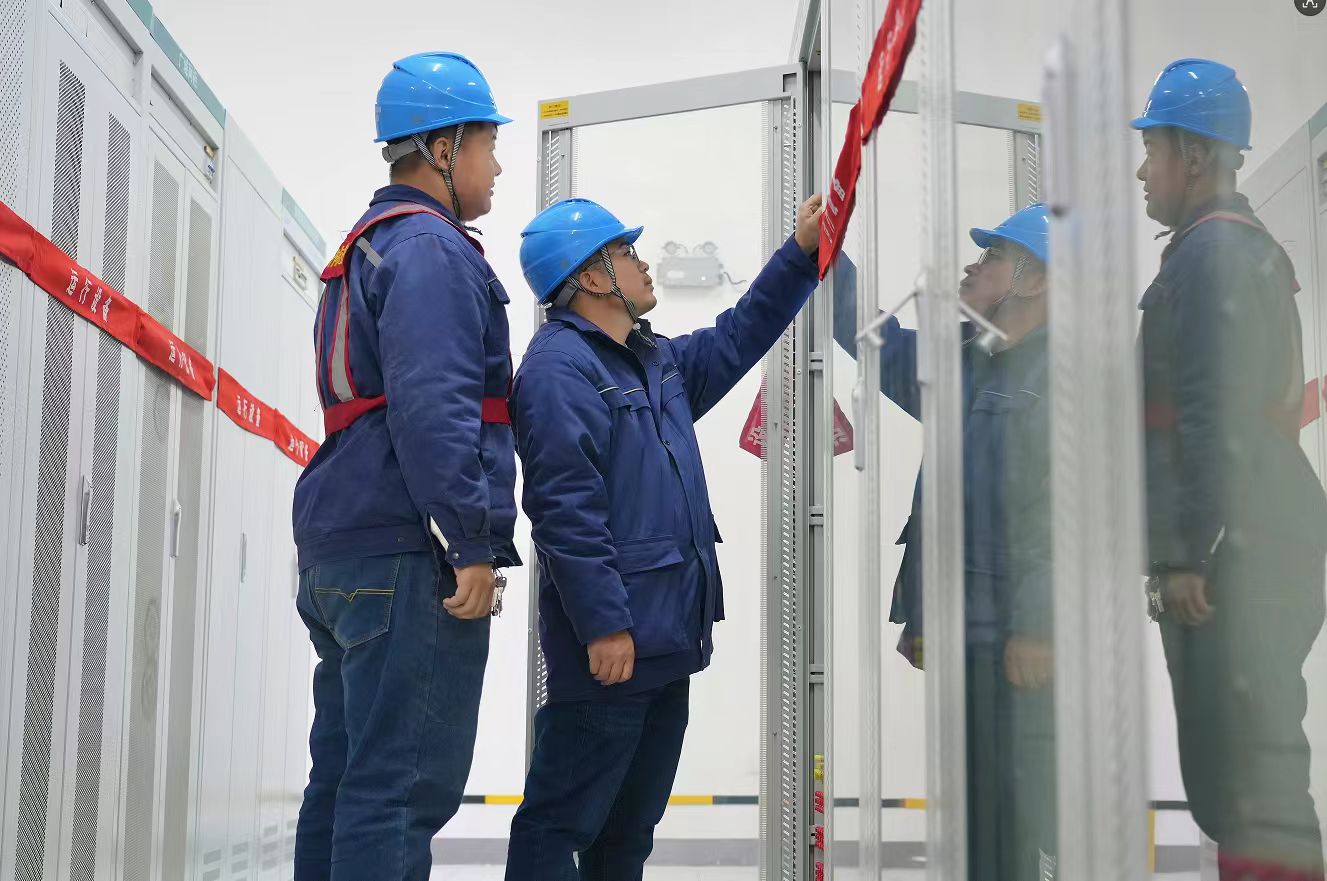
Group 1 - The company is focusing on ensuring safe and stable electricity supply during the winter peak by implementing proactive door-to-door services and upgrading the power grid [1][2] - In the Huaihe community, over 60% of residents are aged 60 and above, prompting the company to conduct safety checks specifically for elderly households, addressing issues such as aging wiring and the condition of heating equipment [1] - A total of 57 households were visited, with 23 safety hazards identified and addressed on-site, including the replacement of 3 damaged sockets [1][2] Group 2 - The company is simultaneously upgrading equipment at the 35 kV Shihu Substation, with over 90% of the renovation completed, which is part of the winter peak preparation [1][2] - The installation of grounding equipment at the substation will reduce fault handling time to under 5 minutes, enhancing the reliability of the power grid [3] - The company is conducting comprehensive inspections of lines and substation equipment, focusing on upgrading old lines and high-load areas, while also developing staggered power supply plans to ensure safety during the winter peak [3]