Zhong Guo Qi Che Bao Wang

Search documents
中国汽车从泰国出口欧洲,要“火”?
Zhong Guo Qi Che Bao Wang· 2025-11-13 07:25
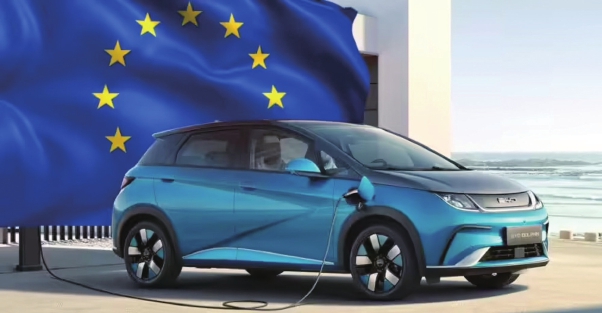
Core Insights - Changan Automobile has announced its strategy to establish a presence in Thailand and serve the local market, launching three new models and planning to export over 1,000 DEEPAL S05 SUVs to Europe by December 2023 [2] - BYD has also begun exporting electric vehicles from its Thai factory to Europe, with over 900 units shipped to countries like the UK, Germany, and Belgium, marking a significant step in its global expansion [2] Export Strategy - Chinese automakers are increasingly choosing to export vehicles from Thailand to Europe to avoid high EU anti-subsidy tariffs, which can reach up to 45.3% for electric vehicles produced in China [2][5] - The EU has imposed a maximum anti-subsidy tax of 35.3% on electric vehicles produced in China since October 2022, prompting companies like BYD, Geely, and SAIC to seek alternative production bases [2][5] Market Performance - Chinese brand vehicles in Europe are experiencing significant growth, with sales expected to reach 90,571 units by September 2025, a 149% increase year-on-year, capturing a market share of 7.4% [3] - MG, BYD, and Chery are leading the sales rankings among Chinese brands in Europe, with MG achieving a 62% year-on-year increase in September sales [3] Production Capacity - Chinese automakers have established substantial production capacity in Thailand, exceeding 600,000 units, which allows them to meet both local and export demands [6][7] - The Thai automotive market is projected to face challenges in 2024, with total new car sales expected to decline by 26%, highlighting the importance of exports for Chinese brands [6][7] Government Support - The Thai government is actively promoting the country as a regional electric vehicle manufacturing hub, offering incentives that encourage Chinese automakers to establish production facilities [8] - Recent adjustments to Thailand's electric vehicle support policies allow locally manufactured electric vehicles intended for export to count towards domestic production quotas, further incentivizing exports [8] Global Strategy - Chinese automakers are adopting a flexible global strategy, allowing them to navigate trade barriers and optimize production resources across different markets [9][10] - The shift from product export to a global brand presence signifies a maturation in the operational capabilities of Chinese automakers, enhancing their competitiveness on the world stage [11]



重塑轻型商用车市场格局 东风乾坤定义未来
Zhong Guo Qi Che Bao Wang· 2025-11-13 01:44
Core Viewpoint - The Chinese commercial vehicle industry is undergoing a significant transformation by 2025, driven by electrification, intelligence, and sustainability, with traditional manufacturers needing to adapt and innovate to remain competitive [1] Group 1: Brand and Product Development - Dongfeng Motor Corporation launched its new high-end light vehicle brand "Dongfeng Qiankun" at the 2025 China International Commercial Vehicle Exhibition, showcasing its technological capabilities and strategic ambitions [1][3] - The brand name "Qiankun" is inspired by traditional Chinese philosophy, symbolizing the pursuit of efficiency and user trust [3] - Dongfeng Qiankun aims to be a leader in high-efficiency fresh food transportation, focusing on cold chain and green transportation logistics [5] Group 2: Product Features and Market Positioning - The product strategy includes a dual approach of fuel and electric vehicles, utilizing established supply chains for fuel vehicles and advanced technology for electric vehicles [5][6] - The Dongfeng Qiankun K6 model features a new generation engine that reduces fuel consumption by 10% compared to competitors, saving over 5400 yuan annually [8] - The K6 model is designed for comfort and efficiency, with a spacious cabin and advanced features, while the Dongfeng Dolika has also been updated to improve fuel efficiency by 12% [8] Group 3: New Energy Strategy - Dongfeng's new energy strategy focuses on multiple technology routes, including pure electric and hydrogen fuel, with a goal of achieving over 60% penetration of new energy vehicles by 2030 [9][11] - The company is developing advanced technologies for intelligent driving and energy efficiency, with plans for future upgrades to its intelligent chassis and battery systems [11][12] Group 4: Strategic Vision and Market Trends - Dongfeng is building a comprehensive competitive system across the entire value chain, aiming to establish itself as a high-end brand and a leader in green technology [12][14] - The company recognizes the shift in customer demands from basic transportation to comprehensive lifecycle cost and intelligent efficiency, positioning itself to define future market trends [12][14] - Dongfeng's commitment to innovation and strategic foresight aims to redefine the value proposition in the light commercial vehicle sector [14]


全球份额稳定提升,中国汽车持续释放活力
Zhong Guo Qi Che Bao Wang· 2025-11-12 13:03
Core Insights - The global automotive market is experiencing significant growth, with global sales reaching 8.55 million units in September 2025, marking a 10% year-on-year increase and a 12% month-on-month increase. China's market share has risen to 38%, up 2 percentage points from the previous year, indicating an acceleration in the globalization of Chinese automobiles [2] Group 1: Domestic Market Dynamics - A series of favorable policies in China have injected strong momentum into the automotive and particularly the new energy vehicle (NEV) sector, driving domestic consumption through trade-in and replacement incentives [2] - Major Chinese automakers, including SAIC, BYD, and Geely, reported sales exceeding 300,000 units in October, with significant year-on-year growth, and the share of NEVs in traditional automakers' sales continues to rise [2] - New energy vehicle startups like Leap Motor, Xiaomi, and Xpeng have also achieved record sales, with Leap Motor's monthly sales surpassing 70,000 units for the first time [2] Group 2: Global Market Position - Chinese automakers are increasingly influential in the global market, with two Chinese companies, BYD and Geely, ranking 6th and 9th respectively among the world's top 10 automakers, and Chery approaching the top 10 at 11th place [4] - The shift in product strategy for Chinese automakers has moved from a one-size-fits-all approach to localized development tailored to the specific needs of different regional markets, enhancing their competitiveness [4][5] - Chinese NEV companies are adapting to stringent European emission regulations and are exploring mid-to-high-end products, improving their brand perception and market presence [4] Group 3: Strategic Shifts in Global Operations - Chinese automakers are transitioning from "going out" to "going in," establishing local production facilities overseas to comply with local regulations and reduce trade barriers [5] - The "ecological going out" strategy represents a new model of globalization for Chinese automotive companies, focusing on systematic output, localized R&D, and supply chain collaboration [5] - The future direction for Chinese automotive companies includes deepening technological innovation, enhancing supply chain collaboration, and building a comprehensive global service ecosystem to maintain stable growth in global market share [5]


车路云一体化规模发展时机已至
Zhong Guo Qi Che Bao Wang· 2025-11-12 10:21
重庆市经济和信息化委员会副主任涂兴永称,重庆当前车路云一体化应用试点范围已超5000平方公里, 道路里程超2500公里,率先建成标准化城市级云控基础平台,实现94个应用生态服务接口开放共享,直 连通信建设规模和车辆推广数量居全国前列。 在东风汽车集团有限公司原董事长竺延风看来,汽车产品正经历从集成机械技术高效的、点对点的个性 化交通方式,到集移动办公、休闲娱乐、社交互动于一体的第三生活空间,再到有温度、会思考、能决 策的移动智能体转变。在这一变革中,传统的汽车边界正在被打破,全新的生态系统不断被构建,车路 云一体化让汽车与交通、城市实现深度互联。 伴随人工智能、大数据等技术的突飞猛进,智能网联汽车已成为全球汽车业新的竞争高地。自2024 年7月全国20个城市(联合体)确定为首批车路云一体化应用试点以来,我国在推进车路云一体化发展 上取得诸多成效,为全球智能网联汽车发展贡献中国方案。 我国智能网联汽车已实现全球"并跑" 据工业和信息化部装备工业发展中心主任瞿国春介绍,今年1~7月,我国具备L2级组合驾驶辅助功能 的乘用车销量约776万辆,渗透率已达62%。目前,我国已累计开放测试示范道路3.5万公里,发放测试 ...

小鹏汽车可能是又一家将盈利的新势力造车企业
Zhong Guo Qi Che Bao Wang· 2025-11-12 09:35
Core Viewpoint - Xiaopeng Motors has experienced significant stock price increases, suggesting potential profitability and interest from large capital investors, rather than retail investors alone [2] Sales Growth - Xiaopeng Motors, along with NIO and Li Auto, is part of the first wave of new energy vehicle manufacturers, previously struggling with sales but showing improvement [3] - Despite sales growth, Xiaopeng's performance remains below the industry average, indicating reliance on overall market trends rather than internal mechanisms [5] - The company aims for a sales growth rate in 2024 that is double that of 2023, with projections of over 400,000 units sold by 2025, approaching profitability [5] Financial Performance - Xiaopeng's Q2 2025 financial report shows revenue of 18.27 billion yuan, a 125.3% year-on-year increase, with a gross margin of 17.3% and a reduced net loss of 480 million yuan [7] - Cumulative revenue for the first half of 2025 reached 34.09 billion yuan, with deliveries exceeding 197,200 units, a 279% increase year-on-year [7] Technological Advancements - Xiaopeng is transitioning from a traditional car manufacturer to a technology company, with significant revenue from technology services, including a partnership with Volkswagen [8] - The introduction of AI technologies and new products, such as the AI-driven Robotaxi and humanoid robots, marks a shift in the company's focus [8][9] Market Expansion - Xiaopeng's export volume to Europe increased by 320% in the first half of 2025, with a growing presence in 28 countries through partnerships [10] - The company plans to expand its global footprint to over 60 countries by the end of 2025, with a strong focus on the European market [11] Revaluation - Given the significant changes and growth potential, Xiaopeng Motors is due for a revaluation, with its stock price reflecting optimistic market expectations [11]

“阵痛期”勤换帅 跨国公司“水逆”何时休?
Zhong Guo Qi Che Bao Wang· 2025-11-12 09:35
Core Insights - The global automotive industry is undergoing a significant leadership transition, with major companies like Nissan, Stellantis, and Porsche facing unprecedented challenges and financial losses due to the shift towards electrification and market pressures [2][3][10]. Group 1: Industry Challenges - Traditional automakers are struggling with the dual pressures of regulatory policies and market demands for electrification, leading to increased financial strain and reliance on internal combustion engine (ICE) vehicles for revenue [2][3]. - The shift towards electric vehicles (EVs) has not met expectations, resulting in substantial losses for companies like Porsche, which reported a third-quarter operating loss of €966 million [10][11]. - The competitive landscape is intensifying, particularly from Chinese automakers that leverage flexible supply chains and localized technology, further squeezing the market share of established foreign brands [2][3]. Group 2: Company-Specific Developments - Stellantis reported a net loss of €2.256 billion in the first half of the year, a stark contrast to a profit of €5.647 billion in the same period last year, primarily due to asset write-downs and tariffs [4][5]. - Nissan announced a net loss of ¥221.921 billion for the first half of the fiscal year, with a projected loss of ¥670.9 billion for the entire fiscal year, prompting the sale of its headquarters to alleviate financial pressure [13][14]. - Porsche's financial performance has deteriorated significantly, with a 67.1% drop in operating profit to €1.01 billion in the first half of the year, attributed to strategic adjustments and increased costs from tariffs and restructuring [11][12]. Group 3: Leadership Changes - The leadership changes at Stellantis, Nissan, and Porsche are seen as urgent measures to address ongoing crises, with new CEOs tasked with implementing significant reforms [3][4][10]. - Stellantis' new CEO, Carlos Tavares, faces the challenge of balancing regional interests amid a shift in focus towards the U.S. market, including a $13 billion investment plan [5][6]. - Nissan's new CEO, Ivan Espinosa, is implementing a drastic restructuring plan aimed at reducing global production capacity and cutting 20,000 jobs, reflecting the depth of the company's crisis [14][15]. Group 4: Market Dynamics - The imbalance in regional markets and fluctuating policies, particularly U.S. tariffs on imported vehicles, are exacerbating operational pressures for multinational automakers [3][5]. - Renault's new CEO, Luca de Meo, is expected to navigate the company through a challenging landscape, with plans for voluntary layoffs and strategic partnerships to enhance competitiveness [7][9]. - Jaguar Land Rover is grappling with the aftermath of a cyberattack that halted production, highlighting vulnerabilities in the digital transformation of traditional manufacturers [16][17].


在央视舞台,长安马自达发布“全球好车”的底气与决心
Zhong Guo Qi Che Bao Wang· 2025-11-12 08:46
Core Viewpoint - The event marked the launch of the MAZDA EZ-60, a global strategic electric SUV by Changan Mazda, on a national platform, emphasizing China's manufacturing capabilities in the global automotive industry [1][3]. Group 1: Event Highlights - The launch event was described as a "cross-industry talk show" and aimed to convey a new standard for Chinese manufacturing in the global automotive sector [3]. - Changan Mazda's Executive Vice President, Wu Xuxi, highlighted the significance of the collaboration with CCTV, stating it reflects the company's global strategy and commitment to quality [3][10]. - The EZ-60 has achieved dual five-star certification in China and Europe, indicating its readiness for global markets [3][5]. Group 2: Product Features - The EZ-60 features a high-strength steel body (86.5% high-strength steel) and comprehensive safety measures, including nine airbags, showcasing its commitment to safety [5][7]. - The vehicle integrates advanced technology and user-friendly design, emphasizing a balance between aesthetics and functionality [7][9]. - Changan Mazda has invested heavily in R&D, with over 900 vehicles tested for more than 9 million kilometers, ensuring high quality and durability [9][12]. Group 3: Strategic Vision - The company is pursuing a "dual-hundred doubling strategy," aiming for significant investment and export growth, reflecting its ambition to leverage Chinese manufacturing for global markets [12][14]. - The launch is positioned not just as a product introduction but as a declaration of China's manufacturing strength and a new standard for global vehicles [14][15]. - Wu Xuxi emphasized that the company is not merely selling cars but also setting new standards in the automotive industry [10][12].

2025一带一路暨金砖大赛第三届智能网联汽车应用技术赛项全国总决赛圆满收官!
Zhong Guo Qi Che Bao Wang· 2025-11-12 08:33
逐梦赛场展绝技,拼搏奋进绽荣耀! 2025年11月9日,2025一带一路暨金砖国家技能发展与技术创新大赛第三届智能网联汽车应用技术(综合装调、计算平台部署与测试、仿真、车路协 同)赛项全国总决赛在安徽汽车职业技术学院圆满闭幕。 中国汽车保修设备行业协会副会长、上海英齐汽车设备有限公司董事长李刚,兰州石化职业技术大学汽车工程学院副院长、大赛专家组长张维军,广州 科技贸易职业学院未来技术学院院长、毛明院士工作站智能网联汽车项目总监、大赛总裁判长郭建英,绍兴市上虞区职业教育中心特级技师、大赛副裁判长 任城龙,中国汽车维修行业协会高级专家、大赛仲裁程玉光,中国汽车维修标准化技术委员会委员、大赛仲裁许行宇,威盛人工智能研究院主任刘海;安徽 汽车职业技术学院党委副书记、副校长束永红,党委委员、党政办公室主任张泳,党委委员、教务处处长卢晓玲等领导、嘉宾以及本次大赛的参赛队代表, 共同见证荣耀时刻。 安徽汽车职业技术学院党委副书记、副校长束永红为闭幕式致辞,他指出本次大赛是推动智能网联汽车技术人才培养与产业融合发展的生动实践。希望 全体选手以此次大赛为新的起点,把比赛中激发出的拼搏精神、创新意识和团队协作能力,带回课堂、带回 ...

以“绿色+智能”双翼驱动产业变革 法士特亮相2025武汉商用车展
Zhong Guo Qi Che Bao Wang· 2025-11-12 08:00
Core Viewpoint - The 2025 China International Commercial Vehicle Exhibition highlights the theme of "high-end, intelligent, and green" vehicles, showcasing the advancements and comprehensive solutions of Fawer Group in various sectors including automotive transmission, new energy, and intelligent driving [1][6]. Product Showcase - Fawer Group's exhibition features a diverse array of products, including the FS4E200A-2J heavy truck integrated dual electric drive, two pure electric power systems (465kw+F6E320 and 465kw+F4E320), and various intelligent products such as integrated AMTs and automatic transmissions [3][9]. - The booth is designed with a focus on "green vitality," displaying new energy and intelligent products in a circular arrangement to create a strong visual impact [3]. Technological Innovation - Fawer has developed a comprehensive ecosystem that includes core technology research, key component manufacturing, regional market sales, and full lifecycle services, emphasizing its strong R&D capabilities and market insight [5][14]. - The company has achieved a revenue growth of 7.43% year-on-year from January to October, with significant increases in new energy product orders [6]. New Energy Focus - Fawer is committed to the "new four modernizations" and "dual carbon" goals, establishing a full-system capability in the new energy sector, including pure electric drive systems and hybrid solutions, covering over 300 cities and collaborating with more than 90 vehicle manufacturers [8][12]. - The Fawer Blue Chariot 800V system represents a significant technological advancement, improving charging efficiency by 30% and reducing power loss by 40%, addressing key user concerns such as slow charging and high operational costs [11]. Agricultural Equipment Development - Fawer has launched the "Fawer Zhi Kun" brand for intelligent agricultural machinery, focusing on high-end smart agricultural equipment and establishing a production capacity of 2,000 units annually [12]. - The company aims to create a comprehensive smart agricultural ecosystem driven by technological innovation, enhancing its position in the agricultural machinery market [12]. Global Expansion and Collaboration - Fawer has established a robust international marketing network, exporting products to over 50 countries and regions, and is actively participating in global competition through partnerships with international industry leaders [14]. - The company has built a strong supply network and is recognized as a leader in the commercial vehicle transmission sector, continuously evolving to meet the demands of green and intelligent transportation [14][15].

欣旺达动力全电商用生态解决方案亮相中国国际商用车展
Zhong Guo Qi Che Bao Wang· 2025-11-12 07:43
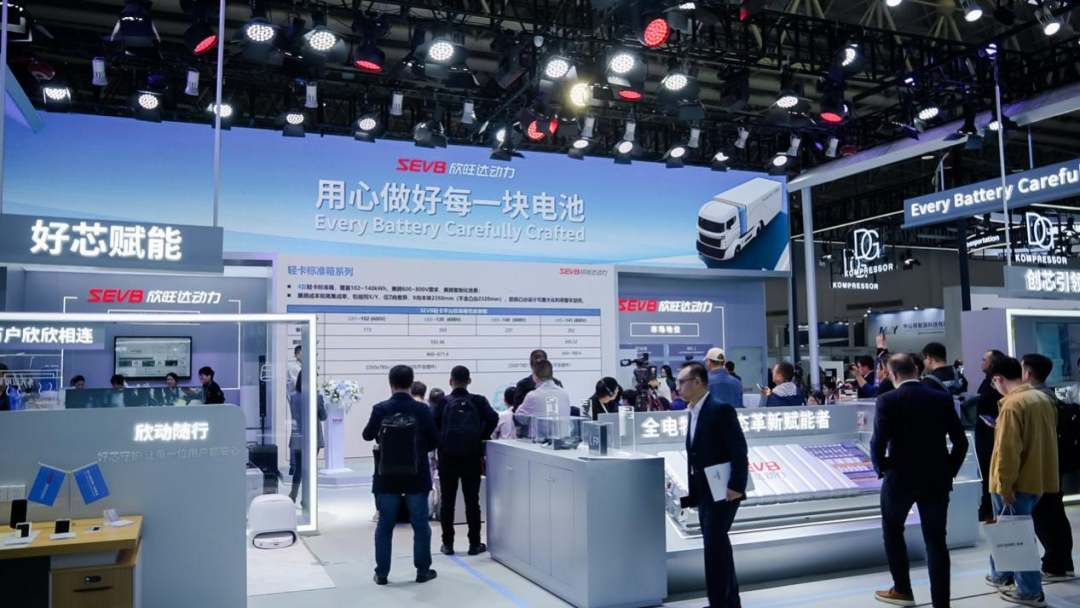
Group 1 - The China International Commercial Vehicle Exhibition, the only national-level commercial vehicle exhibition in China and the largest professional platform in Asia, commenced on November 10 in Wuhan, focusing on "high-end, intelligent, and green" themes [1] - XWANDA Power showcased its comprehensive electric commercial vehicle ecosystem solutions, highlighting its core technologies and complete product layout in electric heavy trucks, light trucks, construction machinery, and ships [1] - The exhibition featured XWANDA's systematic advantages and continuous innovation capabilities in commercial vehicle electrification solutions through a matrix of battery systems and ultra-fast charging technologies [1] Group 2 - XWANDA Power presented three core segments of commercial vehicle solutions: a complete battery product matrix from 3.5C ultra-fast charging to 1C standard charging, key electronic components including platform-based PDU products and self-developed BMS systems, and digital innovations such as battery passports for lifecycle management [1] - For heavy trucks, XWANDA introduced solutions covering seven standard box types with various layout options, providing three system solutions (vehicle-pile-battery collaboration) and featuring four large-capacity battery cells [3] - The light truck solutions emphasized lightweight design, fast charging, and optimized structure, catering to diverse scenarios such as urban delivery and logistics, with four standard box types covering a battery range of 102 to 140 kWh [3] Group 3 - XWANDA Power has established a nationwide service network for commercial vehicles, adhering to the principle of being close to customers and markets, and actively expanding certified service centers [5] - The company commits to a 12/48 principle for rapid response to customer needs, aiming to continuously optimize and upgrade service capabilities [5] - XWANDA Power aims to provide safer, more durable commercial vehicle solutions, supporting the transition of China's commercial vehicle industry towards green, efficient, and intelligent development [5]