
Zhong Guo Qi Che Bao Wang

Search documents
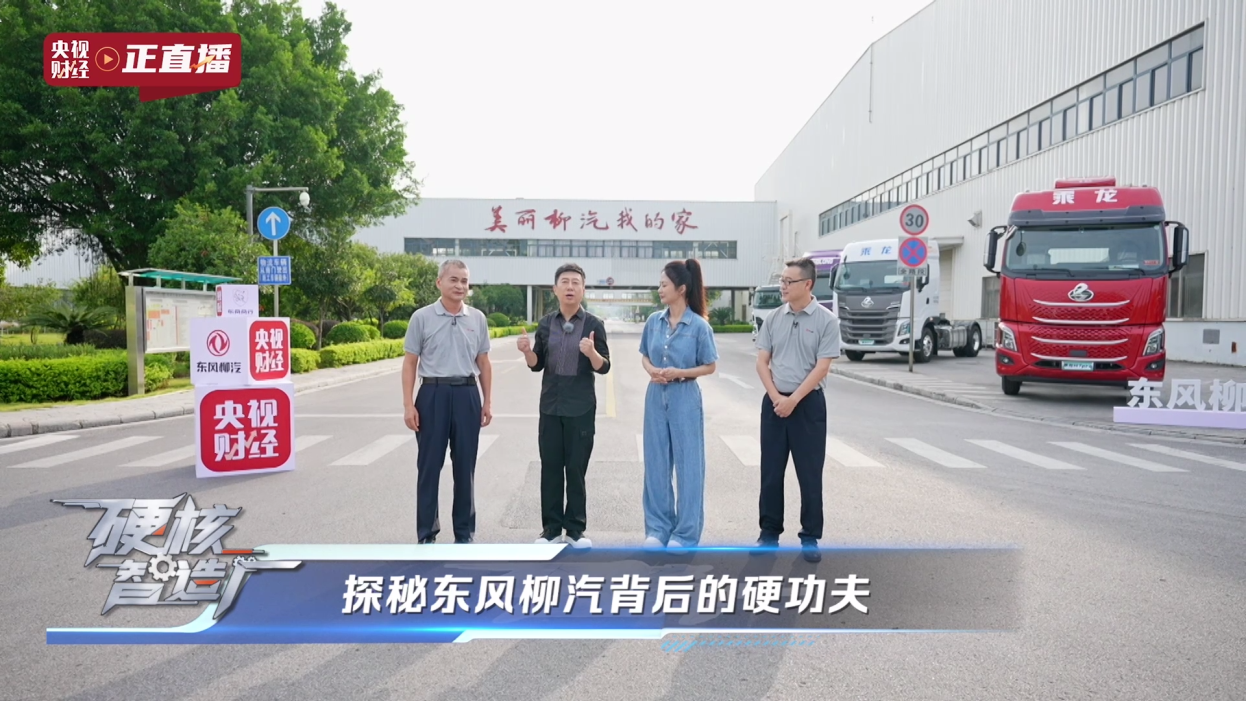
央视镜头下的东风柳汽:以央企担当,铸就中国商用车智造新高度
Zhong Guo Qi Che Bao Wang· 2025-09-19 00:46
Core Viewpoint - The article highlights the advancements and innovations of Dongfeng Liuzhou Motor Co., Ltd. (Dongfeng Liuzhou) in the commercial vehicle sector, showcasing its commitment to high-quality development and global competitiveness in the automotive industry [1][4][15]. Group 1: Company Overview - Dongfeng Liuzhou is positioned as a leading player in China's commercial vehicle industry, emphasizing its role as a state-owned enterprise in driving the high-quality development of the national automotive sector [4][15]. - The company operates a large manufacturing base in Liuzhou, covering over 5000 acres, which serves as the largest research and manufacturing hub for commercial and passenger vehicles in southern China [5][12]. Group 2: Product Innovations - The newly launched MPV model, Xinghai V9, features a length exceeding 5.2 meters and a wheelbase of over 3 meters, designed to accommodate multiple luggage items, showcasing the company's focus on user-centric design [7][8]. - Dongfeng Liuzhou employs a pain-point-driven R&D model, which includes extensive user feedback and rigorous testing processes, resulting in significant improvements in vehicle weight and performance [8][10]. Group 3: Technological Advancements - The company has established a comprehensive closed-loop system for product development, which includes a self-built testing facility that can simulate various extreme conditions, ensuring product reliability [10][11]. - Dongfeng Liuzhou has broken foreign technology monopolies by developing its own heavy-duty press control systems, enhancing manufacturing quality and reducing costs [13][15]. Group 4: Sustainability and Smart Manufacturing - Dongfeng Liuzhou is recognized as a green and smart factory, utilizing solar energy to generate 65% of its electricity needs and implementing advanced technologies for intelligent production and energy management [12][19]. - The company’s production processes incorporate environmentally friendly practices, such as water recycling and low-carbon manufacturing techniques, aligning with national carbon reduction goals [12][19]. Group 5: Global Expansion and Market Strategy - The "Chengfeng Shuangqing Plan" aims to enhance Dongfeng Liuzhou's global presence by investing 20 billion yuan in establishing nine overseas smart manufacturing bases, facilitating rapid product delivery and increasing brand value [17][19]. - The company is actively involved in social responsibility initiatives, including educational support for employees' children and contributions to rural development, reinforcing its commitment to community welfare [19].

“一带一路”上的中国汽车足迹
Zhong Guo Qi Che Bao Wang· 2025-09-18 10:36
Group 1: Overview of China's Automotive Industry Going Global - The "Belt and Road" initiative has led to significant achievements in international cooperation, with the automotive industry being a prime example of this success [3] - China has become the world's largest automobile exporter since 2023, surpassing Japan, with exports reaching 4.292 million vehicles from January to August 2025, a year-on-year increase of 13.7% [3] - Exports of new energy vehicles (NEVs) reached 1.532 million units during the same period, marking an impressive growth of 87.3% [3] Group 2: Export Channels and Logistics - The Horgos port has emerged as China's largest land port for automobile exports, with 421,000 vehicles exported in 2024, reflecting a 38.6% increase [4] - Chinese shipping companies have customized large roll-on/roll-off ships to meet the demands of automobile sea transport, with approximately 75% of vehicles exported via this method in the first half of the year [4] Group 3: Impact on Local Markets - Chinese automotive brands such as BYD, Chery, and Great Wall have gained popularity in international markets, significantly enhancing local automotive choices and improving transportation quality [5] - In Kazakhstan, six out of the top ten best-selling car brands in the first half of 2025 were Chinese brands, showcasing their market penetration [5] Group 4: Global Manufacturing and Talent Development - Chinese automakers are actively participating in the global automotive industry by establishing assembly plants in various countries, providing technical training to local employees, and fostering local talent [8][9] - The establishment of after-sales service networks in Brazil and the operation of factories in Russia exemplify the transfer of Chinese automotive manufacturing standards to international markets [9] Group 5: Social Responsibility and Green Development - Chinese automotive companies are committed to localizing production and contributing to the development of local industries, creating job opportunities, and supporting community projects [11] - Initiatives such as the establishment of scholarships and donations to educational institutions in various countries highlight the social responsibility of Chinese automakers [11] Group 6: Conclusion on Global Integration - The evolution of the automotive industry reflects China's commitment to open cooperation and mutual benefit, as it continues to share technological advancements and development opportunities with countries along the "Belt and Road" [12]


第二十五届武汉国际汽车展览会开幕
Zhong Guo Qi Che Bao Wang· 2025-09-18 09:33
Core Insights - The 25th Wuhan International Auto Show marks the 30th anniversary of the event, serving as a platform for showcasing the latest achievements in the automotive industry and promoting the development of Wuhan as an international R&D, exhibition, and consumption center [2] - The auto show emphasizes the theme of "smart manufacturing," integrating cutting-edge technologies such as artificial intelligence and advanced manufacturing, highlighting the industry's transition from traditional to smart manufacturing [4] - The event features a variety of creative activities aimed at promoting a multi-dimensional coexistence of "people, cars, and life," attracting diverse groups including car enthusiasts and youth [6] Industry Developments - The auto show strengthens the "exhibition-industry integration" mechanism, expanding the exhibition dimensions and deeply integrating high-level meetings, technical forums, and innovation displays to create a comprehensive industry empowerment system [7] - The event hosts multiple forums and summits, including the "2025 11th China (Wuhan) International New Energy and Intelligent Connected Vehicle Development and Cooperation Summit," focusing on high-quality development policies for new energy vehicles [9] - To stimulate automotive consumption, the show collaborates with manufacturers and dealers to launch various promotional policies, including trade-in programs and financial subsidies, making it easier for consumers to purchase vehicles [11] Policy and Market Trends - The auto show highlights the impending end of the exemption from vehicle purchase tax for new energy vehicles in 2025, encouraging consumers to take advantage of the policy window to purchase electric vehicles [13] - The event aims to leverage local and national subsidies to boost the automotive consumption market in Wuhan, reflecting optimism about the impact of these incentives on consumer behavior [13]

2025中国工业AI大会将于10月在杭州举行
Zhong Guo Qi Che Bao Wang· 2025-09-18 09:32
Core Viewpoint - The upcoming "2025 China Industrial AI Conference (IAIC 2025)" aims to drive industrial upgrading and high-quality economic development through artificial intelligence, aligning with national policies and industry needs [1][2][3] Group 1: Conference Highlights - The conference will focus on strategic goals to empower manufacturing upgrades, addressing production efficiency bottlenecks and enhancing industry chain collaboration [2] - It will facilitate the integration of industry, academia, research, and application, promoting the rapid implementation of AI technologies in real production scenarios [2] - The agenda will balance macro and micro perspectives, featuring both overarching policy discussions and specialized forums for various industries such as automotive, electronics, and renewable energy [2] - Key state-owned enterprises will be invited to share innovative applications and practices in industrial AI, reinforcing their role in leading industry advancements [2] Group 2: Location and Significance - Hangzhou was chosen for its unique advantages in the digital economy, being a hub for AI, industrial internet, and smart manufacturing with a strong ecosystem of competitive enterprises [3] - The conference is expected to inject new momentum into the development of China's industrial AI sector, facilitating a leap in smart industrialization and contributing to the goal of becoming a manufacturing powerhouse [3]
充电枪达到总数达到1734.8万个!以建设路径促新能源产业变革?
Zhong Guo Qi Che Bao Wang· 2025-09-18 08:47
Core Insights - The construction of electric vehicle charging infrastructure in China is experiencing significant growth, with a total of 17.348 million charging points as of August 2025, representing a year-on-year increase of 53.5% [2] - Public charging facilities have reached 4.316 million, up 37.8% year-on-year, while private charging facilities have surged to 13.032 million, marking a 59.6% increase [2][3] Infrastructure Development - The rapid development of charging infrastructure is alleviating "range anxiety" and "charging anxiety" for electric vehicle users, moving towards a scenario where charging is as convenient as refueling [3] - China has established the world's largest electric vehicle charging network, with public and private charging points developing in tandem [3][4] - Key cities like Shenzhen, Shanghai, and Beijing are leading the way in building a comprehensive charging network that includes supercharging stations, community chargers, and destination charging points [4] Market Dynamics - The domestic electric vehicle market is witnessing substantial growth, with cumulative sales surpassing 40 million units, maintaining the world's highest production and sales for ten consecutive years [5] - Car manufacturers are incentivizing consumers by offering free home charging stations as part of vehicle purchase packages, thereby increasing the installation rate of private charging points [5] Technological Advancements - The electrification of public transport and logistics vehicles is driving the demand for specialized charging stations, while advancements in liquid cooling technology are enhancing charging efficiency and user experience [6] - The charging infrastructure industry is thriving due to collaboration across the supply chain, with upstream material and equipment suppliers focusing on improving technology and reliability [6] Policy and Regulation - A unified national charging infrastructure information monitoring platform has been established to optimize resource allocation and enhance the efficiency of charging station operations [7] - The integration of AI algorithms in charging facility operations is improving service quality and operational efficiency [7] Future Outlook - Experts predict ongoing advancements in charging technology and the integration of big data and IoT, leading to transformative changes in operational models [8] - The commercialization of vehicle-to-grid (V2G) technology is expected to create a new era of energy interaction, where users can also act as energy producers [9] - The successful experience of China's charging infrastructure development reflects the broader transition of the electric vehicle industry from follower to leader on the global stage [9]

这一区域市场正在成为全球汽车竞逐的热点,原因何在?
Zhong Guo Qi Che Bao Wang· 2025-09-18 08:40
Core Insights - The ASEAN automotive market is becoming a global hotspot, with significant growth potential driven by increasing consumer awareness and acceptance of electric vehicles (EVs) [3][4][11] Market Growth - The International Energy Agency projects that EV sales in emerging markets in Asia, Africa, and Latin America will approach 600,000 units in 2024, marking a 60% year-on-year increase, with Southeast Asia's EV sales expected to grow nearly 50% [3] - By 2035, the total sales of EVs in Southeast Asian countries like Indonesia, Malaysia, Thailand, and Singapore are expected to rise from $2 billion in 2021 to between $80 billion and $100 billion [4] Regional Performance - The ASEAN automotive market has shown strong vitality, with countries like Vietnam and the Philippines experiencing sales growth of 9.2% and 7.7% respectively, despite fluctuations in markets like Indonesia and Thailand [4][5] - The region is projected to become the fifth-largest automotive market globally, driven by rising income levels and urbanization [5] Competitive Landscape - Global automotive brands are intensifying their strategic presence in the ASEAN market, with Chinese automakers achieving notable sales increases in countries like Thailand and Indonesia [6][7] - Traditional automotive powerhouses from Japan and South Korea are also enhancing their market strategies, leveraging established brand reputations and expanding their product offerings [7][8] Challenges and Opportunities - The ASEAN automotive market faces challenges such as insufficient EV charging infrastructure and reliance on imported auto parts, which can increase production costs and supply chain risks [9] - Experts anticipate a shift towards smart and green automotive solutions, with advancements in 5G and IoT technologies leading to the rise of intelligent connected vehicles [10][11] Future Outlook - The ASEAN automotive market is expected to accelerate towards intelligent and green development, with governments promoting charging infrastructure and battery recycling systems [10][11] - Companies must focus on localized development and address infrastructure challenges to capitalize on the growing market opportunities [11]

商用车领域“老将”入局农机
Zhong Guo Qi Che Bao Wang· 2025-09-18 08:00
Core Insights - The launch of the 7th Technology Innovation Week and the smart agricultural machinery equipment brand release by Fastech marks the company's entry into the smart agricultural machinery sector, showcasing 9 smart agricultural machinery transmission system assemblies and 9 core component products [2] - Fastech aims to address the structural contradiction in China's agricultural equipment industry, characterized by "low-end surplus and high-end shortage," particularly in the high-end heavy agricultural machinery sector, which heavily relies on imports [3][5] - The company leverages its decades of experience in transmission technology to fill gaps in the domestic agricultural machinery market, focusing on technological innovation to support the development of smart agricultural machinery [5][10] Strategic Timing and Market Position - The timing for entering the smart agricultural machinery field is favorable due to increasing government emphasis on agricultural modernization and supportive policies [5] - Fastech's extensive experience in automotive transmission systems provides a competitive edge in the smart agricultural machinery sector, as the core technologies in both fields are interconnected [5][15] Product Development and Collaboration - The "Zhikun" smart agricultural machinery innovations demonstrate Fastech's capability in technology transformation, with self-developed transmission components achieving industry-leading efficiency and reliability [7] - Fastech has established partnerships with major agricultural machinery companies, validating the reliability and economic viability of its products through practical operations [7][8] Capacity Expansion and Quality Assurance - Fastech is investing 500 million yuan in a new production base for high-power tractor transmission systems in Shaanxi, expected to enhance production capacity significantly by the end of the year [8] - The company applies strict quality management standards from the commercial vehicle sector to its agricultural machinery products, ensuring high durability and reliability under demanding conditions [11] Research and Development Collaboration - Fastech is collaborating with universities to establish a smart agricultural machinery transmission research institute, emphasizing the importance of industry-academia cooperation in innovation [10] - The company has set up scholarship programs and joint research initiatives with multiple universities to foster talent and integrate cutting-edge theoretical advancements into its operations [10][13] Supply Chain and Industry Ecosystem - Fastech focuses on building a collaborative supply chain, clearly defining business boundaries with suppliers to enhance efficiency and reduce costs [13] - The company aims to ensure stable supply throughout the product lifecycle while promoting a healthy development of the agricultural machinery industry ecosystem [13] Future Goals and Vision - Fastech's strategic expansion into the smart agricultural machinery sector is a rational extension of its core business in gear transmission technology, aiming to maintain leadership in commercial vehicles while exploring new markets [15][16] - The company is committed to increasing R&D investment and strengthening core technologies to support high-quality development in manufacturing and agricultural modernization [16]

这家新势力的车门把手问题被调查,重新设计能否解安全之忧?
Zhong Guo Qi Che Bao Wang· 2025-09-18 07:46
Core Insights - Tesla is redesigning its door handle system due to safety concerns raised by the NHTSA, which is investigating defects in approximately 174,000 vehicles [4][5] - The NHTSA has received over 140 consumer complaints since 2018 regarding door malfunctions, including incidents where doors could not be opened after power loss, leading to injuries [4][5] - The investigation highlights the risks associated with electric vehicles' reliance on electronic systems, particularly in low battery situations where door handles may fail [5][6] Design and Safety Concerns - The NHTSA's technical report indicates that some Tesla models require a manual unlocking force exceeding 40N, which is above the industry safety threshold of 20N, making it difficult for elderly and disabled users to operate [6] - Experts emphasize that electric vehicle escape operations should align with instinctive responses rather than relying on user training, advocating for designs that enhance user safety in emergencies [7] Redesign Initiatives - Tesla's redesign plan involves a "dual mechanism normalization" approach, integrating electronic release buttons with mechanical levers to allow for a single operation that works regardless of power status [8] - The new design aims to reduce the unlocking force to below 15N, making it accessible for all users, including those with disabilities [8] - Enhancements such as illuminated indicators and tactile feedback are intended to improve usability in emergency situations [8] Industry Implications - The situation serves as a reminder for the automotive industry to prioritize safety in design, advocating for redundancy and fail-safe principles in critical systems [9] - The shift in focus from "engineer-centric" to "user-centric" design is crucial, ensuring that innovations do not compromise user safety [10] - The evolution of electric vehicles into "mobile smart terminals" necessitates a commitment to maintaining safety standards amid technological advancements [10]


风云X3L上市,以技术+时尚重新定义“方盒子”生活
Zhong Guo Qi Che Bao Wang· 2025-09-18 06:52
Core Insights - The launch of the Fengyun X3L marks a significant step for Chery in the competitive new energy SUV market, targeting urban outdoor enthusiasts and advanced family users with a blend of individuality and practicality [3][16] - The vehicle is positioned as a "high-energy fashionable outdoor box," showcasing advanced performance, safety, intelligence, and design features [7][16] Pricing and Variants - The Fengyun X3L is available in four versions, with prices ranging from 109,900 to 149,900 yuan, including variants with different electric ranges: 135 km, 215 km, and a four-wheel drive version with a range of 205 km [1] Design and Features - The vehicle features a stylish design and advanced technology, with a focus on creating a lifestyle around the "box" model, including a strong emphasis on outdoor capabilities and customization options [4][12] - The dimensions of the Fengyun X3L are 4545×1950×1815 mm with a wheelbase of 2783 mm, providing ample interior space [9] Performance and Technology - The Fengyun X3L is equipped with a lightweight all-aluminum body, enhancing electric range by 15% and ensuring 30 years of rust resistance [7] - It utilizes the Kunpeng Golden Range CEM with a peak power of 100 kW and a thermal efficiency of 45.79%, while the four-wheel drive version boasts a total power of 315 kW and a 0-100 km/h acceleration time of just 4.7 seconds [9] User Engagement and Community Building - Chery has established the "Fengyun Box Club" to foster user interaction and community engagement, aiming to transition from a traditional car manufacturer to a proponent of lifestyle mobility [14] - The introduction of six official modified versions of the Fengyun X3L lowers the barriers for personalized modifications, enhancing user experience and brand loyalty [14] Market Positioning - The Fengyun X3L aims to set a new value benchmark in the market by offering competitive pricing below similar joint venture products while providing luxury brand-level technology and a flexible modification culture [16]

单周销量近千、跻身细分市场TOP 2 ,全新岚图知音成30万内华系纯电销冠
Zhong Guo Qi Che Bao Wang· 2025-09-18 06:37
Core Insights - The newly launched Lantu Zhiyin has demonstrated strong market performance, ranking second in the sales of pure electric mid-size SUVs in China within just two weeks of its release, with a sales figure of 950 units in the second week of September [1][2][3] Group 1: Sales Performance - Lantu Zhiyin achieved a sales volume of 950 units, surpassing competitors such as Wanjie M5 (800 units) and Avita 07 (300 units), establishing itself as the "sales champion" among Huawei's pure electric vehicles priced under 300,000 yuan [1][2] - The sales ranking for pure electric vehicles under 300,000 yuan in the second week of September is as follows: 1. Lantu Zhiyin - 950 units 2. Avita 06 - 510 units 3. Zhijie R7 - 460 units 4. Zhijie S7 - 340 units 5. Shenlan S7 - 310 units 6. Wanjie M5 - 290 units 7. Shensheng L07 - 270 units 8. Avita 07 - 180 units 9. Wu Bo HT - 180 units 10. Avita 12 - 160 units [2] Group 2: Product Features - Lantu Zhiyin is a fully electric SUV developed in deep collaboration with Huawei, featuring the latest ADS Max super version equipped with Huawei's advanced driving system ADS 4 and HarmonySpace 5 cockpit, providing a top-tier intelligent travel experience [2][3] - The vehicle has undergone comprehensive upgrades in its three-electric system, comfort configurations, and interior space, aiming to meet the core needs of Chinese families with its appealing design, excellent handling, spacious interior, full configurations, and range anxiety alleviation [2][3] Group 3: Market Positioning - In the highly competitive 200,000 to 250,000 yuan mid-size pure electric SUV market, Lantu Zhiyin has successfully differentiated itself through industry-leading intelligent technology and robust product capabilities [3] - The strong sales performance since its launch positions Lantu Zhiyin as a potential phenomenon in the market, following the success of Lantu Dreamer, and it aims to challenge for the top sales position in its segment [3]
