
Zhong Guo Qi Che Bao Wang

Search documents
德国重启补贴 欧洲追赶电动汽车时代
Zhong Guo Qi Che Bao Wang· 2026-02-02 08:07
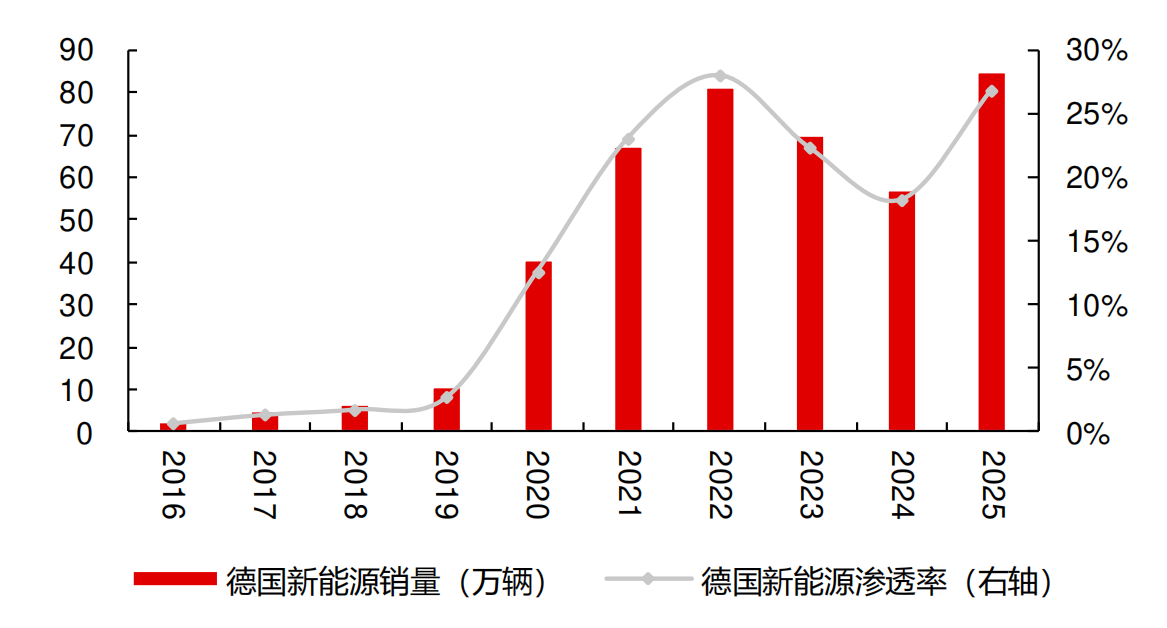
Group 1 - The German government announced the restart of a €3 billion electric vehicle subsidy program in early 2026, with a maximum subsidy of €6,000, aimed at revitalizing the domestic automotive industry and accelerating Europe's transition to electric vehicles [1][2] - The subsidy policy covers battery electric vehicles (BEVs), plug-in hybrid electric vehicles (PHEVs), and range-extended electric vehicles (EREVs), with a tiered subsidy structure based on household income and vehicle type [2][7] - The decision to restart the subsidy program comes after a significant decline in electric vehicle registrations in Germany, with a 27.4% drop in 2024, leading to a market share decrease from 18.7% in 2023 to 13.5% [2][5] Group 2 - The subsidy program is designed to stimulate consumption among middle and low-income households and promote a diversified technology approach in the electric vehicle market [2][5] - The absence of production restrictions in the subsidy policy is expected to benefit Chinese electric vehicle manufacturers, providing them with an opportunity to expand their market presence in Germany [6][8] - The competitive pricing of Chinese electric vehicles, enhanced by the subsidies, is likely to strengthen their market position, with brands like BYD and SAIC gaining traction in the German market [7][8] Group 3 - The overall economic conditions in Europe, including rising inflation and energy prices, may limit consumer purchasing power and affect the demand for electric vehicles despite the subsidies [10][13] - European automakers face challenges in battery technology and production costs, which may hinder their competitiveness against Chinese manufacturers [10][12] - The disparity in subsidies between traditional fuel vehicles and electric vehicles in Germany may reduce the incentive for local manufacturers to prioritize electric vehicle development [10][13]

商务部等启动“乐购新春”
Zhong Guo Qi Che Bao Wang· 2026-02-02 07:04
2月2日,商务部官网显示,商务部、中央宣传部、文化和旅游部、中国人民银行、金融监管总局、广电总局、体育总局、中国民航局、中国国家铁路 集团有限公司等9单位印发《2026"乐购新春"春节特别活动方案》(以下简称《活动方案》),意在繁荣节日市场,激发消费活力。 《活动方案》指出,2026年春节将迎来9天假期(2026年2月15日—23日),为繁荣节日市场、丰富群众文化生活、激发假期消费活力,打造全域联 动、全民乐享的春节消费盛宴,结合农历马年文化内涵与春节消费特点,制定本方案。 以下为《活动方案》全文: 2026"乐购新春"春节特别活动方案 2026年春节将迎来9天假期,为繁荣节日市场、丰富群众文化生活、激发假期消费活力,打造全域联动、全民乐享的春节消费盛宴,结合农历马年文 化内涵与春节消费特点,制定本方案。 一、工作思路 贯彻落实党中央、国务院关于扩大内需、提振消费系列决策部署,深入实施提振消费专项行动,打造"购在中国"品牌,坚持政府引导、市场主导、全 民参与,紧扣年俗文化、家庭团圆、购物出行等核心需求,聚焦首发经济、数字消费、绿色消费、智能消费、健康消费、入境消费等领域,通过商旅文体健 融合、线上线下联动,组 ...


共拓智能化新场景 中韩汽车供应链深化双向奔赴
Zhong Guo Qi Che Bao Wang· 2026-02-02 03:04
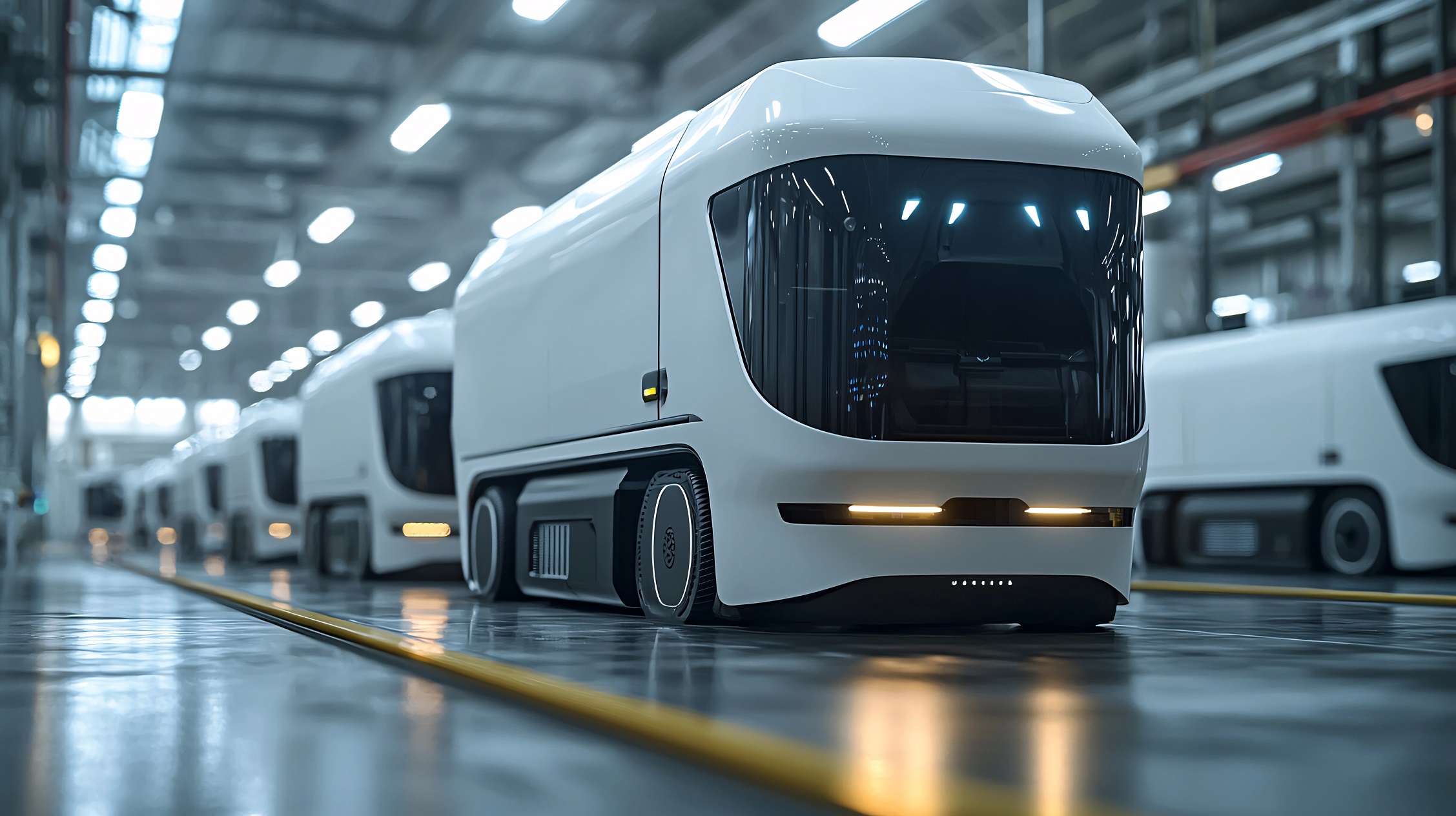
在2026 CES上,联想车计算与韩国自动驾驶领军企业SWM正式宣布达成战略合作,双方将联合研发并部署新一代L4级自动驾驶出租车,推动"韩国型 Robotaxi平台"全球化落地进程。 近期,中韩汽车产业链的互动愈发频繁且深入,尤其是在自动驾驶领域,一系列合作动态持续释放出"双向奔赴"信号,开启了中韩汽车产业携手共进的 新历程。 多领域合作落地 在产业变革浪潮的推动下,中韩汽车供应链的互动从以往的单一零部件贸易,升级为涵盖技术研发、平台共建、市场共拓的全链条协同。 值得注意的是,中韩汽车供应链合作的深化与拓展,还体现在智能物流等场景的延伸上,进而开辟出价值增长的新变量。2025年6月,新石器与韩国仁 川经济自由区域厅签署合作协议,实现了该国历史上无人配送车的首次引入。同年7月,新石器与韩国仁川市政府签署战略合作协议,标志着双方在自动驾 驶、智能物流及智慧城市建设领域的合作迈出关键一步。新石器无人车创始人兼首席执行官余恩源表示,与韩国相关方面的合作,是新石器无人车全球化战 略的重要布局,也是中国智慧物流解决方案"出海"的重要桥梁。 互补优势驱动 中国汽车供应链经过多年发展,已形成完整且成熟的产业体系,尤其在自动驾 ...
广汽华为深度牵手;特斯拉Model S/X将停产;汽车以旧换新1830万辆 | 1月车事月报
Zhong Guo Qi Che Bao Wang· 2026-02-02 02:55
Macroeconomic Policy - The Ministry of Commerce announced that from 2024 to 2025, China aims to achieve 18.3 million vehicle trade-ins, with nearly 60% being new energy vehicles [2] - A total of 17.67 million scrapped vehicles will be recycled nationwide, with an annual growth rate of 45.8% [2] - The second-hand vehicle transaction volume is projected to reach 39.686 million [2] Industry Trends - By 2025, China's second-hand vehicle transaction volume is expected to exceed 20 million for the first time, reaching 20.108 million, with a year-on-year growth of 2.52% [15] - In 2025, total vehicle sales are projected to be 34.4 million, with new energy vehicles surpassing 16 million, marking a year-on-year growth of 29% [17] - The domestic power battery installation volume is expected to reach 769.7 GWh in 2025, a year-on-year increase of 40.4% [19] - The total number of electric vehicle charging infrastructure units is projected to exceed 20 million by the end of 2025, with a year-on-year growth of 49.7% [21] - By 2025, the total number of motor vehicles in China is expected to reach 469 million, with 43.97 million being new energy vehicles, accounting for 12.01% of the total [23] International Developments - Toyota has maintained its position as the world's largest automaker for six consecutive years, with a total sales volume of 11.322 million vehicles in 2025, a year-on-year increase of 4.6% [26] - The European automotive parts industry announced layoffs of over 100,000 employees over two years, reflecting the challenges of transitioning to electric vehicles [28] - Canada will allow an annual quota of 49,000 Chinese electric vehicles to enter its market with a reduced tariff of 6.1% [30] - Germany has announced a new electric vehicle subsidy program with a budget of €3 billion, aimed at supporting the purchase of approximately 800,000 new vehicles [32] Corporate Dynamics - GAC Group and Huawei signed a comprehensive cooperation framework agreement to jointly develop smart mobility solutions [39] - Lixun Precision terminated its acquisition of assets from Wentai Technology in India due to compliance and delivery risks [41] - Aito aims to achieve an average annual sales target of 500,000 vehicles over the next two years [43] - Geely Holdings aims to exceed 6.5 million global sales by 2030, with 75% of sales coming from new energy vehicles [45] - Chery has maintained its position as the top exporter of Chinese passenger vehicles for 23 consecutive years, with over 1.34 million vehicles exported in 2025 [49] - Lantu Automotive has received approval for its listing in Hong Kong, marking a significant milestone for the company [51]
宝马中国换帅
Zhong Guo Qi Che Bao Wang· 2026-02-02 02:48
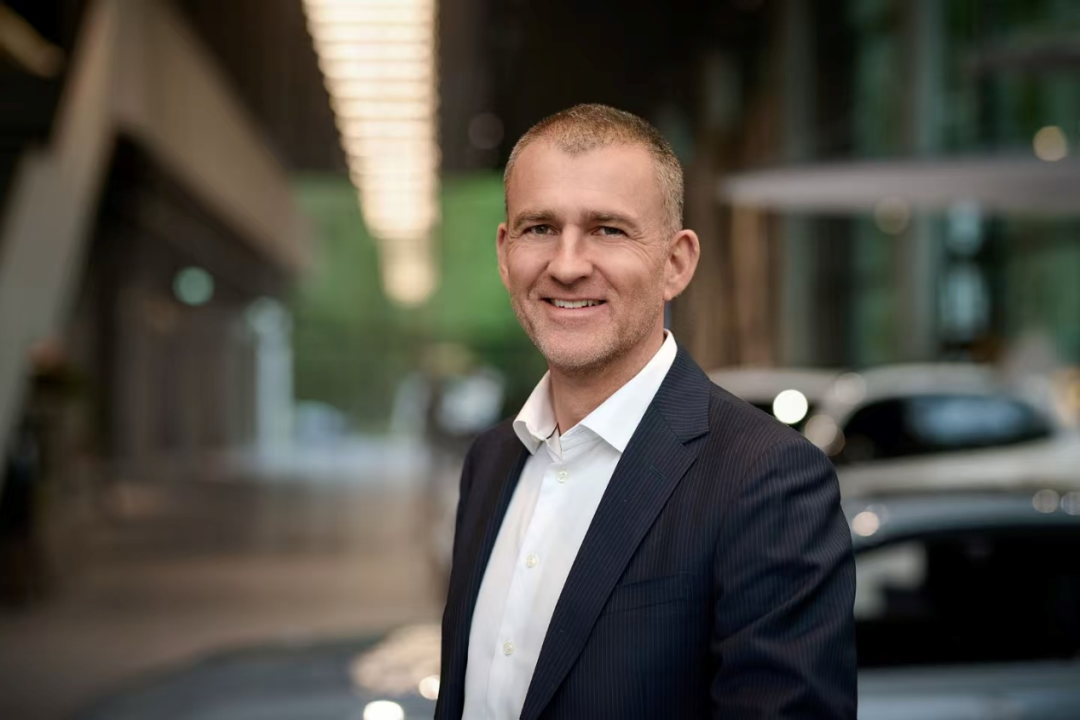
1月30日,宝马集团宣布,自2026年4月1日起,柯睿辰(Christian Ach)将接替高翔(Sean Green)出任宝马集团大中华区总裁兼首席执行官,全面负 责宝马集团大中华区业务,包括协调在中国的合资企业相关事务。高翔则将结束在华超过十年的管理任期。 柯睿辰 高翔 柯睿辰的履历透露出宝马此次选人的清晰逻辑。他拥有纯粹的宝马血统,1998年加入宝马集团,此后在集团销售体系内历任多个管理职务。2010至 2018年,他执掌MINI品牌德国业务,2018至2021年担任宝马德国销售负责人;2021年起负责涵盖瑞典、挪威、丹麦、芬兰等市场的宝马北欧区域销售, 2024年3月1日出任宝马德国首席执行官。 "高翔为我们在中国市场的业务发展和长期布局奠定了坚实基础,柯睿辰也将通过成熟的销售管理能力和国际化经验,推动宝马集团在中国市场迈入 新的发展阶段。"宝马集团负责客户、品牌及销售业务的董事高乐指出。 在柯睿辰的领导下,宝马集团在德国市场整体表现强劲,并实现电动汽车销量的显著增长。其积累的实战经验,为宝马集团拓展中国电动汽车细分市 场提供了重要参考。 再看高翔,12年在华任期内,他经历了中国豪华车市场的"黄金时代 ...
3.8万辆创佳绩!中国重汽专用车以四大主轴领航新程
Zhong Guo Qi Che Bao Wang· 2026-02-02 02:41
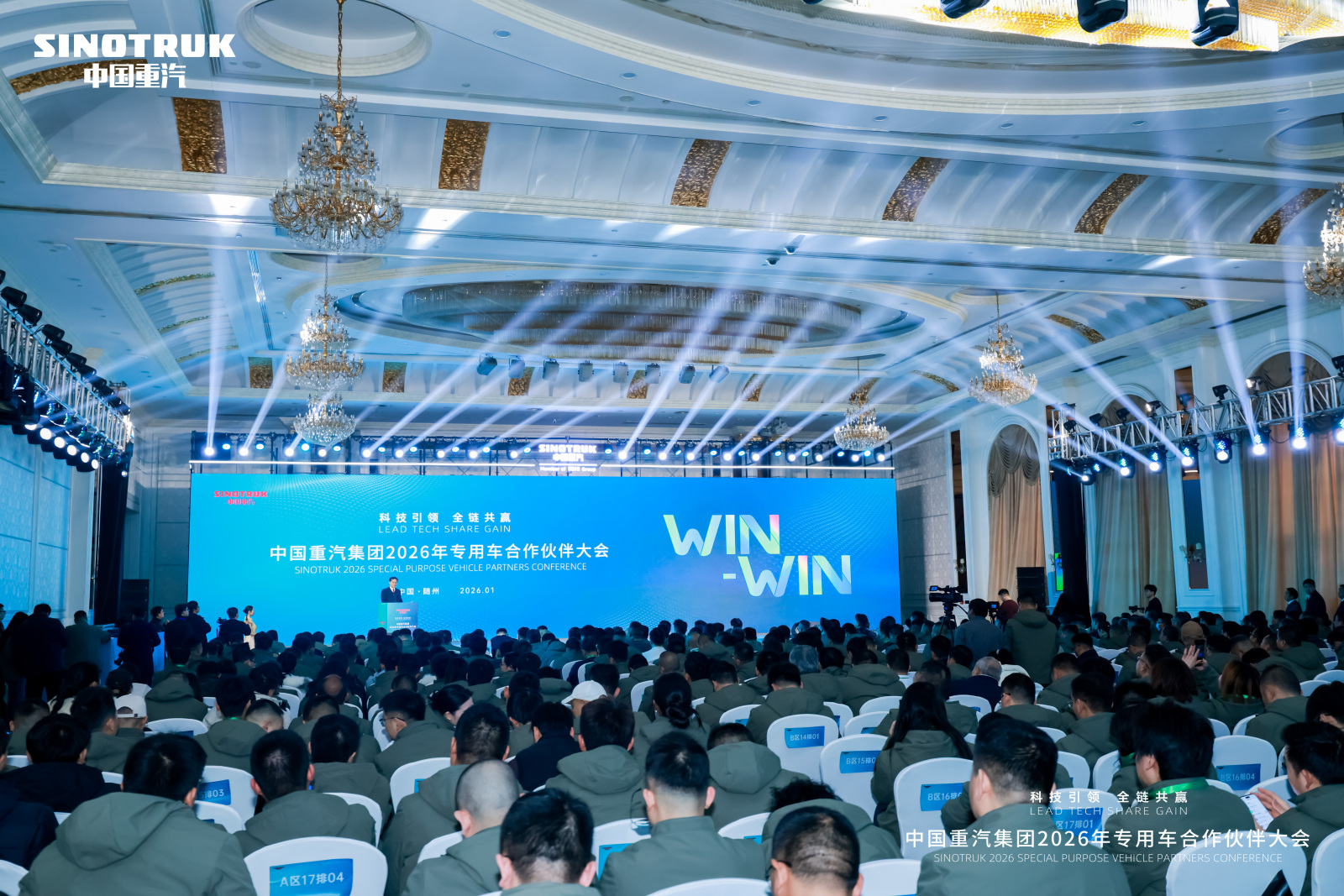
Core Insights - The Chinese special vehicle industry is accelerating its transformation towards electrification, intelligence, and efficiency, showing a positive trend in scale and quality improvement as it enters the "14th Five-Year Plan" period [1] - China National Heavy Duty Truck Group (CNHTC) aims to solidify its industry position by balancing market stability and progress, as well as integrating new and old strategies during the new competitive cycle [3] Market Performance - In 2025, the overall Chinese special vehicle market is stabilizing and growing, with CNHTC achieving annual sales of 38,000 units, including 20,000 medium and heavy-duty special vehicles and 18,000 light-duty special vehicles, marking significant breakthroughs in various segments [4] - CNHTC's market share in the medium and heavy-duty special vehicle sector reached its best performance in recent years, with over 75% market share in high-end special vehicles like fire and emergency trucks [4][6] Product Development - CNHTC's brands have shown strong performance in niche markets, with the HOWO brand leading in several categories, including a 44.8% market share in fire trucks and a 31.9% share in recovery vehicles [6] - The company emphasizes a dual approach of fuel and new energy products, showcasing over 40 vehicles and 20 key components at its recent partner conference, highlighting advancements in energy efficiency and adaptability [10] Strategic Focus - As part of its strategy for 2026, CNHTC has identified four key development pillars: product enhancement, ecosystem development, value marketing, and international expansion [12][14] - The company aims to deepen its understanding of market scenarios, enhance technical capabilities, and innovate business models to seize opportunities during structural transformations [11][14] Future Outlook - CNHTC is committed to customer satisfaction and aims to lead the special vehicle sector through technological innovation and collaboration with industry partners, focusing on creating high-quality, efficient products that meet market demands [16]

东风汽车:2026,迈入高质量发展跃迁年!
Zhong Guo Qi Che Bao Wang· 2026-02-02 02:20
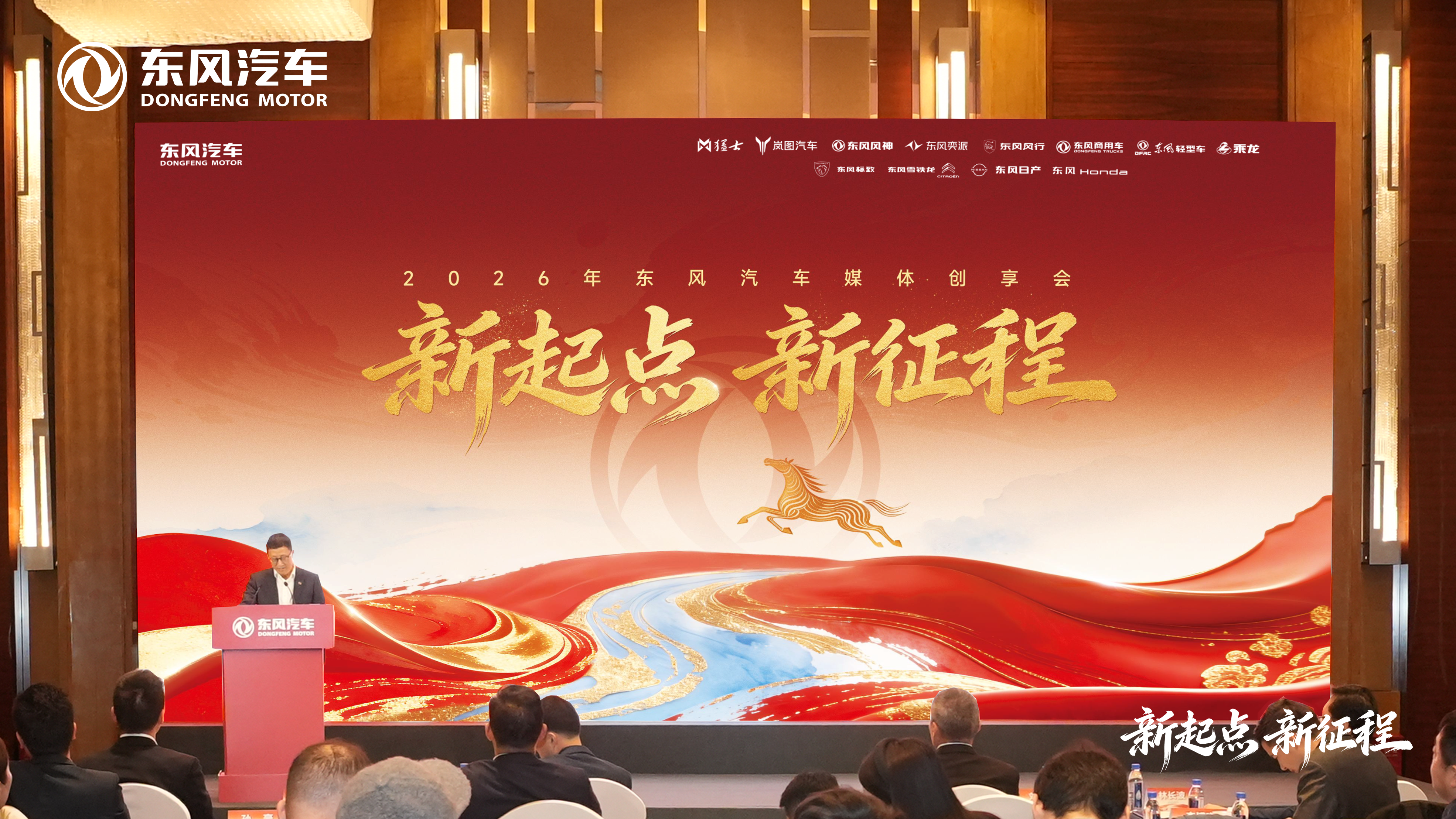
Core Insights - Dongfeng Motor is committed to a strategic transformation under the "One Dongfeng" initiative, aiming to enhance collaboration across its various business segments and achieve significant growth in the automotive market [1][29]. Group 1: Strategic Goals and Achievements - In 2025, Dongfeng's new energy vehicle sales reached 1.05 million units, marking a 21% year-on-year increase, while total sales of self-owned brands exceeded 1.5 million units, accounting for over 60% of total sales [4]. - The company aims to achieve overall sales of 3.25 million units in 2026, with specific targets of 1.7 million for new energy vehicles and 600,000 for exports [10][11]. Group 2: Technological Advancements - Dongfeng has significantly enhanced its core technology capabilities, with R&D investment intensity reaching 7.9%. The company has successfully mass-produced the DF30 automotive-grade MCU chip, achieving full-stack domestic control [7]. - The Mahle hybrid engine has achieved a thermal efficiency of over 48%, setting a new industry record, and the company has established a 16,000-ton integrated die-casting production line to improve vehicle manufacturing efficiency [7]. Group 3: Brand Development and Market Positioning - Dongfeng's brand strategy includes the launch of the "Yijing" brand in collaboration with Huawei, focusing on high-end intelligent vehicles, while the Dongfeng Warrior and Dongfeng Lantu brands aim to lead the luxury electric off-road and high-end markets, respectively [10][11]. - The company is exploring a new model characterized by "Chinese customers, Chinese standards, Chinese components, and Chinese speed," fostering a strategic community for co-creating value [10]. Group 4: Future Outlook and Reforms - In 2026, Dongfeng plans to implement deeper reforms to enhance market responsiveness by granting greater autonomy to frontline business units, enabling quicker decision-making and actions [24]. - The company emphasizes that its future growth will be driven by technological innovation, collaborative development, and internal reforms, positioning itself to lead in the evolving automotive industry [29].

奇瑞集团首月销量200269辆
Zhong Guo Qi Che Bao Wang· 2026-02-02 02:15
奇瑞集团公布了2026年首月成绩单,总销量突破20万辆,达到200269辆。其中,新能源汽车销量达 到了52131辆,出口量同比增长了48.1%,达到了119605辆。 ...
IVISTA智能指数年度洞察:自主品牌领跑,全场景测评升级
Zhong Guo Qi Che Bao Wang· 2026-02-02 02:15
细分领域呈现差异化发展态势。具体来看,智能行车整体表现优良,但在高速静止目标识别、复杂 路况处理及限速标志响应等方面仍有提升空间,部分车辆存在识别延迟、误识别等问题。 2025年,中国汽车产业从电动化加速迈向智能化。作为全球首个面向智能网联汽车的第三方测评体 系,在中国汽车工程研究院股份有限公司(以下简称"中国汽研")的主导下,IVISTA中国智能汽车指 数(简称:IVISTA智能指数)以创新为内核,通过测评规程与方法的系统性迭代,不仅勾勒出中国智 能网联汽车发展的真实图景,更发布前瞻测评框架,为产业高质量发展注入强劲动力。 再看智能泊车,搭载率整体呈现稳定上升趋势。尤其是自主品牌车型优秀率从2020版的58%提升至 2023版的100%,记忆泊车搭载率达84.6%,远超合资外资品牌,体现出自主品牌对本土停车需求的深度 适配。 细分领域亮点纷呈 IVISTA智能指数的发展历程,正是中国智能网联汽车产业崛起的生动缩影。2016年,指数研究正 式启动,工作组成立,为行业标准化发展埋下伏笔;2017年,指数框架首发,搭建起智能汽车测评的基 础蓝图;2018年,IVISTA智能指数首版也就是2018版规程发布,标志着 ...