
Qi Huo Ri Bao Wang

Search documents
以期市为纽带 联通全球产业链
Qi Huo Ri Bao Wang· 2025-08-17 16:07
Group 1 - The first PTA bonded delivery by Yisheng Petrochemical's subsidiary Yisheng Dahua and ITG is set to take place in September 2025, facilitating smoother cross-border transactions and integrating the Zhengzhou futures market with the global industrial chain [1] - The introduction of the export-type bonded delivery system by Zhengzhou Commodity Exchange has significantly reduced participation costs for foreign enterprises, attracting more international players to engage in PTA futures trading [2][4] - As of the end of 2024, over 700 foreign traders from more than 30 countries and regions have opened accounts to participate in specific trading at Zhengzhou Commodity Exchange, indicating a growing international interest [3] Group 2 - The PTA futures market has enhanced the international trade experience for companies by providing benchmark pricing, improving negotiation power, and ensuring efficient and transparent international deliveries [2] - Companies like Wan Kai New Materials have established a mature cooperation loop with South American clients, utilizing the Zhengzhou futures prices to lock in raw material costs and streamline export processes [2] - The growth of foreign participation in the PTA market has not only increased trading volumes but also reshaped the market ecosystem, leading to a more stable polyester market [3] Group 3 - The futures market has enabled Chinese companies to expand internationally, with firms like Wan Kai New Materials and Xiamen Guomao Petrochemical significantly increasing their production capacities and export volumes since 2018 [4][6] - The introduction of futures tools has allowed companies to manage risks across the entire supply chain, as seen with New Fengming Group's expansion in polyester production and export [5] - Yisheng Petrochemical has grown from a PTA producer with a capacity of 12.2 million tons to the world's largest with a capacity of 21.9 million tons, highlighting the transformative impact of futures trading on business models [6] Group 4 - The future outlook for the Zhengzhou futures market includes the expectation of incorporating more varieties and delivery points into the international framework, promoting global industrial chain collaboration [7]

中金所7月处理违反交易限额行为17起
Qi Huo Ri Bao Wang· 2025-08-17 16:06
Core Viewpoint - The China Financial Futures Exchange (CFFEX) has implemented self-regulatory measures to prevent market risks and maintain market order, addressing violations of trading rules [1] Summary by Categories Regulatory Actions - CFFEX announced self-regulatory measures on August 15 to safeguard traders' legal rights and maintain market order [1] - In July 2025, CFFEX addressed 5 cases of exceeding self-trading limits, 5 cases of frequent order cancellations, and 2 cases of large order cancellations, involving 18 clients [1] - For 4 clients, CFFEX imposed restrictions on opening new positions, while 14 clients' members received phone notifications [1] Violations and Penalties - CFFEX processed 17 cases of violating trading limits, imposing restrictions on opening new positions for 99 clients [1] - Additionally, 4 cases were identified where clients maintained positions exceeding their asset allocation requirements, leading to measures such as requiring adjustments and reporting [1]
国家统计局:7月份国民经济数据稳中有进
Qi Huo Ri Bao Wang· 2025-08-17 08:54
Core Viewpoint - The economic performance in July showed resilience despite external uncertainties and domestic challenges, with various sectors demonstrating stable growth and new momentum emerging in the economy [1][2][3]. Economic Performance - In July, the industrial added value of large-scale enterprises increased by 5.7% year-on-year, with the equipment manufacturing sector growing by 8.4%, indicating robust industrial performance [2]. - The service production index also saw a year-on-year increase of 5.8%, reflecting a stable service sector [2]. - The total retail sales of consumer goods rose by 3.7% year-on-year, with retail sales of goods increasing by 4% [2]. - The total import and export volume grew by 6.7% year-on-year, showing resilience in foreign trade [2]. Employment and Prices - The urban unemployment rate remained stable at 5.2%, indicating a steady employment situation [2]. - The core Consumer Price Index (CPI), excluding food and energy, has shown a positive trend with an expanding growth rate for three consecutive months [2]. New Growth Drivers - High-tech manufacturing industries are performing well, with a year-on-year increase of 9.3% in added value for large-scale high-tech manufacturing [2]. - The integrated circuit manufacturing sector saw a significant increase of 26.9% in added value, while the production of new energy vehicles grew by 17.1% [2]. - Online retail sales of physical goods increased by 6.3% year-on-year in the first seven months, indicating a strong growth in e-commerce [2]. Future Economic Outlook - The economic recovery is supported by expanding market demand, the positive development of new productive forces, and ongoing reforms [3]. - The International Monetary Fund has raised its forecast for China's economic growth by 0.8 percentage points, reflecting increased confidence from the international community [3]. - The implementation of more proactive macro policies is expected to support consumption and stabilize the economy [3][5].
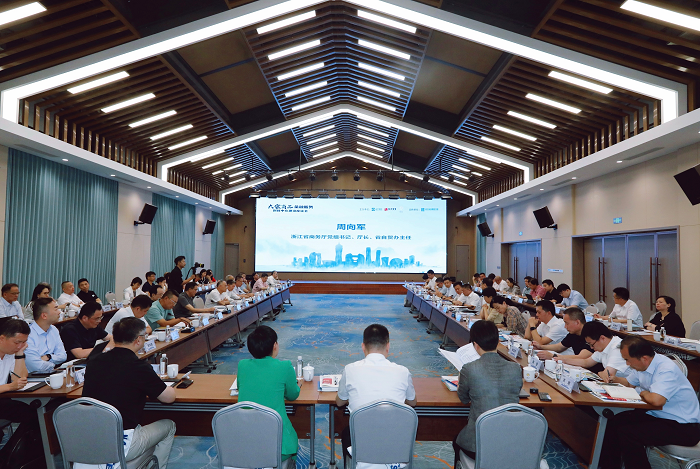
多方齐聚杭州玉皇山南 共绘大宗商品金融服务创新中心蓝图
Qi Huo Ri Bao Wang· 2025-08-16 13:32
Core Viewpoint - The establishment of a Commodity Financial Services Innovation Center in Hangzhou is a strategic response to the evolving global economic landscape and aims to enhance the city's role as a hub for commodity resource allocation [2][4][16]. Group 1: Event Overview - The Commodity Financial Services Innovation Center construction seminar was held in Yuhuangshan South Fund Town, attracting attention from various sectors including government, enterprises, academia, and research institutions [2]. - The seminar served as a platform for high-level exchanges and in-depth discussions on the construction of the center amidst increasing volatility in the commodity market [2]. Group 2: Government and Local Leadership Support - Zhejiang Province's Commerce Department expressed gratitude to industry elites for their contributions to building a commodity resource allocation hub in Zhejiang [4]. - Hangzhou's government emphasized its commitment to developing a nationally influential commodity ecosystem and supporting the establishment of the innovation center [6]. Group 3: Development Plans and Initiatives - The Hangzhou Commerce Bureau introduced a three-year action plan for high-quality development in commodity trade, which aims to strengthen Hangzhou's core position in both national and global markets [8]. - The local government plans to focus on talent cultivation, risk management, and service innovation to promote the integration of commodity trade and financial support [12][14]. Group 4: Industry Perspectives - Experts highlighted the necessity of government attention, corporate efforts, and a focus on talent development to realize the potential of the commodity financial services sector [18]. - The establishment of the innovation center is seen as a crucial step for Zhejiang to enhance its influence and competitiveness in the commodity sector [19].


国家统计局公布70城房价:各线城市商品住宅销售价格环比下降 同比降幅整体有所收窄
Qi Huo Ri Bao Wang· 2025-08-15 05:11
Core Insights - The July 2025 residential property sales price data shows a decline in prices across various city tiers, with a narrowing of the year-on-year decline in some areas [1][2] Group 1: Month-on-Month Changes - In July, the new residential property prices in first-tier cities decreased by 0.2% month-on-month, with a smaller decline compared to the previous month [1] - Beijing's prices remained stable, while Shanghai saw a 0.3% increase; Guangzhou and Shenzhen experienced declines of 0.3% and 0.6%, respectively [1] - Second-tier cities saw a 0.4% month-on-month decline, which is an increase in the rate of decline by 0.2 percentage points [1] - Third-tier cities also experienced a 0.3% month-on-month decline, with the rate of decline remaining unchanged from the previous month [1] Group 2: Year-on-Year Changes - Year-on-year, first-tier cities' new residential property prices fell by 1.1%, but the decline rate narrowed by 0.3 percentage points compared to the previous month [2] - Shanghai's prices increased by 6.1%, while Beijing, Guangzhou, and Shenzhen saw declines of 3.6%, 4.6%, and 2.2%, respectively [2] - Second-tier cities experienced a year-on-year decline of 2.8%, and third-tier cities saw a 4.2% decline, with both categories showing a narrowing of the decline rates [2] - In the second-hand housing market, first-tier cities' prices fell by 3.4% year-on-year, with the decline rate widening by 0.4 percentage points [2] - The year-on-year declines for second-hand housing in second and third-tier cities were 5.6% and 6.4%, respectively, with both showing a narrowing of the decline rates [2]
金融创新赋能棉花产业:喀什地区“收入保险+订单收购+场外期权”模式开启棉农收益保障新范式
Qi Huo Ri Bao Wang· 2025-08-15 03:30
Core Viewpoint - The successful implementation of a 5 million yuan cotton income insurance in the Kashgar region marks the launch of an innovative model combining "income insurance + order purchasing + off-market options," aimed at ensuring stable income for cotton farmers and enhancing financial services for rural revitalization [1][2]. Group 1: Insurance Model - The innovative model integrates income insurance with order purchasing and off-market options, moving beyond traditional insurance limitations [2]. - Income insurance focuses on the final revenue target of farmers, covering both price fluctuations and yield losses, thus addressing complex risk scenarios [2]. - The model creates a closed-loop system where price risks are hedged, sales are secured through orders, and income is guaranteed [2][3]. Group 2: Financial Support and Impact - The pilot project in 2024 covers 6,870 acres, with insurance claims amounting to 561,400 yuan, effectively addressing both price drops and yield losses [2]. - In 2025, the pilot will expand to cover 42,000 acres with a guaranteed amount exceeding 109.2 million yuan, supported by various financial contributions [3]. - The local government's financial involvement significantly enhances the coverage and effectiveness of agricultural support policies, demonstrating a successful model for rural financial services [4].

丰富碳金融产品和服务体系
Qi Huo Ri Bao Wang· 2025-08-15 00:52
Group 1 - The Shanghai Municipal Government has issued the "Action Plan for Comprehensive Deepening Reform of the Shanghai Carbon Market (2026-2030)", aiming to enrich the carbon financial products and services system [1] - The carbon emission trading mechanism is a core policy tool for achieving China's "dual carbon" goals, guiding enterprises to control emissions through carbon price signals [1][2] - The current national carbon market is limited to spot market trading, primarily involving power companies, indicating a relatively closed market [1][2] Group 2 - There is a growing demand for expanding carbon trading product varieties, with suggestions to introduce carbon futures and forwards to optimize quota allocation and compliance mechanisms [2] - The futures market is seen as a means to discover prices, manage risks, and allocate resources, which can enhance market liquidity and efficiency in carbon trading [2][3] - The introduction of carbon futures is expected to strengthen China's voice and competitiveness in the international carbon market [2] Group 3 - Financial derivatives are viewed as amplifiers for market effectiveness, with significant potential for the development of carbon financial products in China [3] - The futures industry is actively focusing on industry needs and innovating services to contribute to the construction of carbon emission rights [3][4] Group 4 - The Guangzhou Futures Exchange has been developing strategic products related to carbon emission rights since its establishment, collaborating with various research institutions to enhance contract design [4] - The exchange has completed the design scheme for carbon emission rights futures contracts and is preparing for their listing [4] Group 5 - Futures companies are preparing for the green development trend, actively participating in the research and design of green low-carbon futures and options [5] - Training and promotional activities are being conducted to enhance enterprises' understanding of green low-carbon financial tools and improve risk management awareness [5]
深入13家企业看华东纯苯产业全景
Qi Huo Ri Bao Wang· 2025-08-15 00:49
Core Viewpoint - The listing of pure benzene futures and options on July 8 provides enhanced risk management tools for the upstream and downstream of the industry chain, which is crucial given China's position as the largest producer and consumer of pure benzene globally [1][2]. Industry Overview - China accounts for 39% of global pure benzene production capacity and 43% of apparent consumption in 2024, with East China being the largest production and consumption area [1]. - The production capacity concentration in China is moderate, with the top three companies holding nearly 40% of the market share, where Sinopec alone accounts for 17.6% [2]. Pricing and Sales Mechanisms - Different scale refineries have varying sales methods for pure benzene, with large refineries primarily using contracts and pricing based on Sinopec's East China price [2]. - Trade enterprises often reference prices from sources like Argus and Platts for their pure benzene procurement, with imports mainly from South Korea and Southeast Asia [3]. Market Conditions and Outlook - The pure benzene market is currently experiencing a downturn due to insufficient downstream demand, but a supply-demand increase is expected in the second half of the year with over 1 million tons of new capacity planned [7]. - Inventory levels for pure benzene and styrene have risen to higher levels this year, with expectations of a de-inventory trend in August, followed by a potential accumulation in September and October [8]. Production and Operational Insights - The production processes for pure benzene are diverse, with catalytic reforming and ethylene cracking being the most significant methods [5]. - Maintenance cycles for pure benzene facilities typically occur every three years, with minor repairs having a limited impact on the market [6]. Futures Market Participation - Companies are increasingly engaging in futures trading for hedging purposes, with a notable number of enterprises participating in the pure benzene futures market [11]. - The introduction of pure benzene futures and options has enriched the risk management tools available to industry players, enhancing market liquidity [12].

以优良作风激发干事创业精气神
Qi Huo Ri Bao Wang· 2025-08-15 00:49
Core Viewpoint - The company emphasizes the implementation of the Central Eight Regulations, focusing on political responsibility and high-quality development through a comprehensive approach that includes learning, inspection, and practical actions [1][4]. Group 1: Learning and Ideological Foundation - The company has established a "Four-Dimensional Integrated" learning framework to strengthen ideological foundations, ensuring consistent understanding and application of the regulations [2]. - A "three-level linkage" learning model is in place, connecting the party committee, party branches, and party members to ensure uniformity in understanding [2]. - The company utilizes a dynamic visual work ledger to track learning progress and effectiveness, ensuring timely updates and guidance [2]. - Core learning requirements are integrated into annual plans and key task lists to facilitate the practical application of learning outcomes [2]. - The company analyzes negative case studies to educate and guide members, ensuring that lessons are internalized [2]. Group 2: Inspection and Improvement of Conduct - The company maintains a "zero tolerance" policy towards violations, focusing on genuine inspection and rectification to enhance conduct [3]. - A "look back" approach is adopted to identify and mitigate risks, with detailed operational norms for expense management [3]. - The inspection process involves a multi-tiered review system to ensure thoroughness and accuracy in identifying issues [3]. - Feedback from grassroots levels is actively sought to inform corrective measures, enhancing responsiveness to concerns [3]. - Special attention is given to key personnel, ensuring that new leaders and young staff receive targeted training and oversight [3]. Group 3: Practical Implementation and Results - The company leverages problem rectification as an opportunity to address operational challenges, linking conduct improvement with development goals [4]. - Responsibilities are clearly defined, with leadership actively involved in problem-solving and resource coordination [4]. - The company enhances its integrity framework, fostering a positive political environment through continuous improvement of ethical practices [4]. - A comprehensive platform for supervision and transparency is established, promoting a culture of integrity and accountability [4]. Group 4: Digital Empowerment and Efficiency - The company has developed an "Intelligent Service" platform to support efficient responses to diverse customer needs and complex data challenges [5]. - The implementation of intelligent calling applications and robots has significantly improved customer service efficiency, reducing the burden on staff [5]. - Since the initiation of learning education, the company has resolved 22 risk control issues and launched 11 key projects, resulting in a 145% increase in released manpower hours [6]. - Internal approval processes have been streamlined, enhancing operational efficiency and customer service [6]. - The company continues to integrate learning outcomes into operational effectiveness, driving sustainable growth and supporting national strategies [6].

债台高筑 美债、美元陷入“死亡双螺旋”
Qi Huo Ri Bao Wang· 2025-08-15 00:45
Group 1 - The total amount of US national debt has surpassed $37 trillion, indicating a significant increase in debt levels and suggesting that future growth is likely [1] - The ratio of US debt to GDP is projected to be 126.8% in 2024, raising concerns about potential debt crises, although the US has unique advantages compared to Greece due to its ability to print its own currency [1][2] - The US has two main strategies to manage its debt: selling bonds to foreign central banks and investors, and printing more dollars, which could lead to inflation [1][2] Group 2 - The accumulation of US debt is not without risks, as the credibility of the dollar is crucial for maintaining investor confidence [2] - The Federal Reserve's actions, such as interest rate hikes, are intended to support the dollar's credibility but may inadvertently accelerate debt accumulation [3] - The US government's inability to reduce spending and the rising interest on debt are contributing to the increasing debt burden [3] Group 3 - The Trump administration's policies have weakened the foundations of dollar credibility, impacting the US's global influence and economic stability [4][5] - Trade policies aimed at reducing deficits may undermine the dollar's status as the world's reserve currency, leading to potential challenges in selling US debt [5][6] - The rise of alternative currencies and assets, such as digital currencies and gold, poses a challenge to the dollar's dominance [6][7] Group 4 - The current strategy of the US to address its debt issues involves leveraging its position to pressure other countries, potentially leading to a loss of confidence in the dollar [8][9] - Central banks are encouraged to adapt to the changing environment by diversifying their reserves away from US debt and dollars into other valuable assets [9]