
Qi Huo Ri Bao

Search documents
俄乌突发,大规模空袭!谈判进展有限,美政府继续“停摆”!分析人士:油价大概率震荡下行
Qi Huo Ri Bao· 2025-11-08 23:41
Group 1: Oil Market Dynamics - The international oil market experienced fluctuations this week, initially rising before declining due to various factors including geopolitical tensions and economic data [7][8] - WTI crude oil futures for December increased by 0.69% to $59.84 per barrel, while Brent crude oil futures for January rose by 0.50% to $63.70 per barrel, despite a weekly decline of 1.87% and 1.65% respectively [7] - The market is currently facing concerns over oversupply, exacerbated by a significant increase in EIA inventory and a prolonged U.S. government shutdown impacting demand [8][10] Group 2: Geopolitical Events Impacting Oil Supply - Russia launched a large-scale missile and drone attack on Ukraine, targeting energy and transportation infrastructure, which has implications for oil supply stability in the region [1] - This attack marks the ninth major assault on Ukraine's energy infrastructure since October, leading to emergency power outages and damage to facilities responsible for gas and heating supply [1] - Analysts suggest that geopolitical conflicts, particularly involving Russia, could significantly influence oil prices if they lead to supply disruptions [10] Group 3: Inventory and Demand Trends - U.S. commercial crude oil inventories rose unexpectedly to 421.2 million barrels, reflecting a 1.25% increase, indicating weak demand [8] - Seasonal reductions in refinery processing rates are contributing to lower oil consumption, with the current processing rate at 15.256 million barrels per day, remaining in a low range for the year [8] - In Singapore, fuel oil inventories surged by 1.754 million barrels, a 7.6% increase, driven by a significant rise in import volumes, suggesting a growing supply glut [9]
知名棉企15亿元风险对冲计划的背后:价格显著波动下的必然选择
Qi Huo Ri Bao· 2025-11-08 23:40
Core Viewpoint - The announcement of a hedging plan by Xinjiang Saimu Modern Agriculture Co., Ltd. (referred to as XinSai) highlights the cotton spinning industry's struggle for survival amid price volatility, with a total hedging plan amounting to up to 1.5 billion yuan [1][3]. Summary by Sections Hedging Strategy - XinSai plans to seek shareholder approval for its subsidiary to engage in futures and options hedging, with a maximum margin requirement of 800 million yuan for futures and 700 million yuan for options [1][3]. - The move is seen as a typical response from the cotton spinning and agricultural processing industry to manage price volatility risks [3]. Industry Context - The company faces significant challenges in raw material procurement, cost management, and product sales due to fluctuations in the commodity market [3]. - XinSai's projected net loss of 244 million yuan for 2024 underscores the pressure the company is under [3]. Peer Actions - Other companies in the industry, such as Guannong Co., are also taking steps to stabilize operations through hedging, with plans to utilize up to 485.6 million yuan for hedging activities in 2025 [4]. - Guannong's successful past hedging practices demonstrate the value of such strategies in managing price risks [4]. Market Dynamics - The complexity and uncertainty in the macroeconomic and industry environment are driving companies to invest heavily in risk management [6][7]. - Factors such as changes in cotton planting subsidy policies and the competitive landscape in the textile sector are contributing to increased sensitivity to raw material cost fluctuations [7][8]. Evolving Risk Management Tools - The announcement from XinSai indicates a shift towards using both options and futures as part of a comprehensive risk management strategy, with a focus on non-linear risk management tools [10]. - The use of options allows companies to lock in minimum sales prices or control maximum procurement costs, providing flexibility in risk management [10]. - The trend towards more sophisticated and professional risk management practices reflects the modernization of agricultural enterprises in China [10].

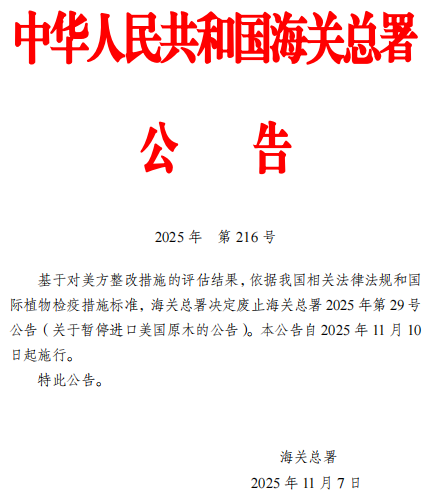
海关总署发布两则公告,事关进口美国原木和大豆
Qi Huo Ri Bao· 2025-11-07 17:51
Group 1 - The General Administration of Customs of China announced the repeal of the suspension on the import of U.S. logs, effective from November 10, 2025, based on an assessment of U.S. corrective measures [1] - The General Administration of Customs also announced the repeal of the suspension on the soybean import qualifications of CHS Inc. and two other companies, effective from November 10, 2025, following the evaluation of U.S. corrective measures [3]

聚焦“破壁·立标·赋能”,虹桥论坛共商绿色贸易自由化全球行动
Qi Huo Ri Bao· 2025-11-07 07:51
Core Viewpoint - The global green transition is irreversible, and there is a need to oppose unilateralism and "green protectionism" while promoting a collaborative and fair global governance framework to facilitate the free flow of green trade [1][2]. Group 1: Challenges in Global Green Trade - The urgency of addressing climate change and the significant market potential of green industries are driving strong trade demand, but fragmented green standards and unilateral measures like carbon tariffs are creating new trade barriers [1][2]. - Trade protectionism is identified as the biggest obstacle to green development, with the fragmentation of global green trade rules raising concerns about increased trade costs and uncertainties [3][4]. Group 2: International Cooperation and Standards - There is a consensus that countries lack sufficient agreement and clarity on rules regarding green transition and international cooperation, necessitating the sharing of China's green development experience and technology globally [2][4]. - The establishment of a collaborative governance mechanism involving governments, enterprises, and international organizations is essential to address the challenges posed by fragmented rules [5]. Group 3: Corporate Initiatives and Innovations - Multinational companies emphasize that technological innovation and collaboration across the entire industry chain are fundamental to breaking down barriers and achieving green development [5][6]. - Companies like BMW and Cargill are actively working on creating transparent green rules and standards, with Cargill focusing on sustainable agricultural practices and BMW advocating for comprehensive carbon footprint assessments [5][6]. - Chinese private enterprises are also taking significant steps in promoting green practices abroad, such as replacing fuel vehicles with electric ones in Africa and supporting local supply chains [6].
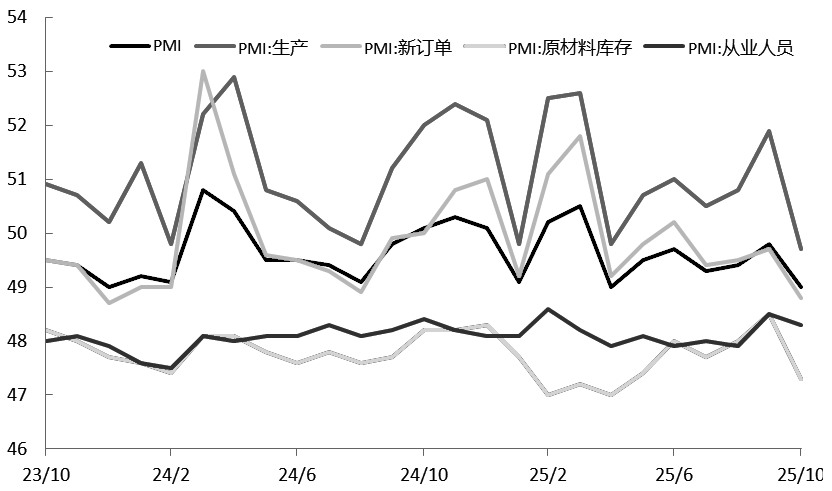
资金面转松 稳定债市预期
Qi Huo Ri Bao· 2025-11-07 07:47
图为十债主力合约日线 11月4日,美国国会参议院再次未能通过联邦政府临时拨款法案。美国国会预算办公室称,此次"停摆"可能使美国第四季度经济增速降低多达2个百分点。若 僵局延续至感恩节当周,约140亿美元的经济损失将彻底无法挽回。不过美国10月ADP就业人数增加4.2万人,大幅超过预期,ISM服务业PMI上升2.4点至 52.4,也创8个月新高。10月底美联储如期降息25个基点后,美联储主席鲍威尔表示,12月是否进一步降息"远非已成定局",加上偏强的就业和服务数据, 12月美联储降息概率下降,美债收益率回升。 预计央行将保持支持性的货币政策,后续国债买卖等操作将进一步加大,市场资金面处于合理充裕水平。 11月份以来,国债期货价格维持震荡,10年期国债收益率维持在1.8%附近。 央行发布的各项工具流动性投放情况显示,10月份公开市场国债买卖净投放200亿元,表明今年1月份以来暂停的国债买卖操作已恢复。同时,央行于11月5 日开展7000亿元3个月期买断式逆回购操作,有利于向市场投放长期流动性,稳定市场预期。 从市场资金利率看,最新DR007和Shibor1周利率分别为1.4378%和1.421%,较10月末分别回 ...
从产业链到生态圈——申万宏源以期货业务打开实体经济转型升级新空间
Qi Huo Ri Bao· 2025-11-07 03:32
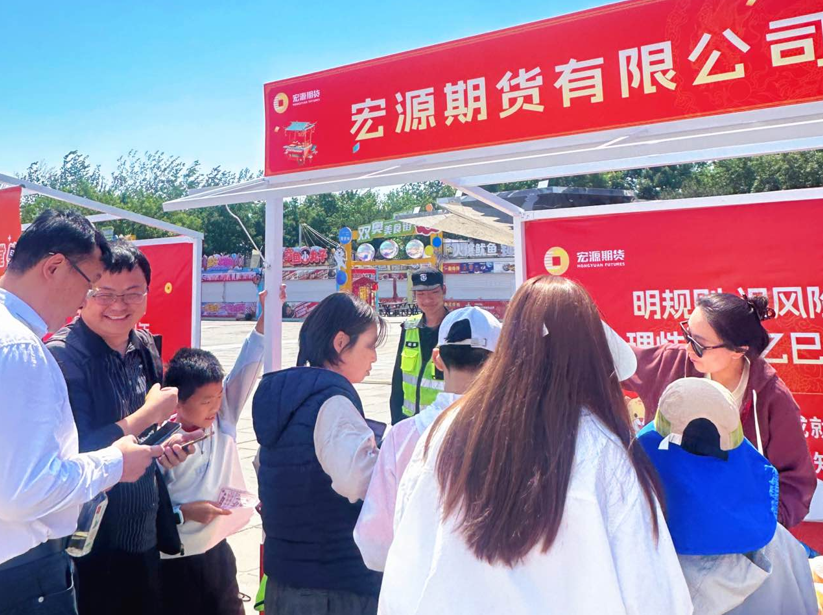
Core Viewpoint - The company is committed to supporting the national strategy and building a strong financial nation by providing in-depth and warm financial services, focusing on the transformation and upgrading of the economy [1] Group 1: Financial Services and Support - Hongyuan Futures, a subsidiary of Shenwan Hongyuan Group, aims to empower the real economy with high-quality futures products and services, contributing to high-quality economic development and the construction of a financial powerhouse [1] - In the field of green finance, Hongyuan Futures acts as a "risk protection shield" for new energy enterprises, utilizing tools like hedging and basis trading to help companies withstand price fluctuations [1] - The company has reduced costs for nearly 100 small and micro enterprises by 1.1791 million yuan and injected 149 million yuan into the spot trade of small enterprises in sectors like cotton and industrial silicon [1] Group 2: Elderly Financial Services - In the pension finance sector, Hongyuan Futures serves as a "caring steward" for elderly investors, focusing on product suitability management and enhancing investment education to protect and grow retirement funds [2] Group 3: Technology and Digital Finance - Hongyuan Futures has established a robust technological foundation by deploying comprehensive trading platforms and accelerating AI development to enhance customer service experiences [4] - The company has been recognized in the industry for its effective services to small and micro enterprises, ranking in the top 10 for two consecutive years in evaluations by the China Futures Association [4] Group 4: Future Directions - The company plans to continue focusing on serving the real economy, integrating resources to create a comprehensive financial service system that meets diverse risk management needs for enterprises [5]

铜市 维持短空长多思路
Qi Huo Ri Bao· 2025-11-07 01:36
宏观面与产业面共振 目前伦铜处于历史高位,短线需谨防价格回落风险,美联储偏鹰表态或使多头了结意愿升温。但长期来 看,AI需求加持,铜价定价逻辑有望重塑,其价格中枢或将上移。 9月下旬以来,沪铜在宏观政策宽松预期与铜矿供应收缩担忧共同推动下,增仓上行趋势显著。进入10 月中旬,由于外围局势不稳,铜价高位震荡加剧。10月中下旬,随着市场风险偏好回暖,沪铜价格重拾 升势,并接连突破年内及近5年高点。然而,至10月底,美联储议息会议释放鹰派信号,叠加伦敦铜价 已处于高位,铜价出现阶段性冲高回落。 行业政策助力 从宏观环境来看,美联储已启动连续降息,全球货币政策也同步转向宽松周期,为铜价提供了有利金融 环境。历史经验表明,在降息周期尾声阶段,流动性环境改善与市场对经济复苏预期升温通常会形成共 振,往往能推动铜价走出趋势性上涨行情。当前全球仍处于降息前半程,这或许意味着未来铜价仍有较 大上行空间。 与此同时,我国持续推出的宏观稳增长政策,以及针对铜冶炼行业产能过剩问题推出的"遏制内卷"产业 政策,共同为铜价构筑了坚实的底部支撑。中国有色金属工业协会在10月底的新闻发布会上,正式建议 对铜、铅、锌等大宗金属设立产能"天花板 ...
税收监管新规下的黄金市场新格局
Qi Huo Ri Bao· 2025-11-07 01:17
Core Viewpoint - The recent tax policy adjustment in China's gold market aims to enhance tax regulation and management, addressing issues of tax evasion and arbitrage in the context of a sustained "gold buying frenzy" [1][8]. Tax Policy Mechanism - The new policy introduces a dual classification of gold usage: "investment purposes" and "non-investment purposes," with specific tax implications for each category [2]. - For investment gold, a "special invoice blocking mechanism" is established to prevent tax deductions from being passed down the supply chain, effectively closing loopholes for tax evasion [2]. - Non-investment gold will have a fixed deduction rate of 6%, ensuring a tax base while allowing reasonable deductions for industrial enterprises [3]. Market Impact - The new tax policy is expected to reshape investment flows and channel choices in the gold market, favoring transactions through exchanges due to lower tax burdens compared to non-exchange channels [4][5]. - Ordinary investors may increasingly prefer exchange channels for large investments, while also considering virtual trading options like gold ETFs and futures to balance convenience and tax advantages [5]. Compliance and Risk Management - The policy imposes stringent compliance requirements on exchange members, necessitating precise internal accounting and usage declarations for physical gold deliveries [6]. - A strict record-keeping system is mandated, requiring members to maintain detailed documentation of gold purchases and sales for tax verification [6][7]. - The policy includes severe penalties for non-compliance, emphasizing the importance of tax compliance for market participants [7]. Future Outlook - The new tax policy is seen as a significant step towards tax fairness, risk prevention, and market standardization, enhancing China's gold market's international competitiveness and pricing power [8].
多重利多支撑 焦煤短期偏强震荡
Qi Huo Ri Bao· 2025-11-07 00:36
Core Viewpoint - The coking coal futures market is currently exhibiting a strong trend due to multiple macroeconomic and fundamental factors, with optimistic expectations for the future driven by policy guidance and improved market sentiment [1][4]. Group 1: Macroeconomic Factors - Recent statements in the "14th Five-Year Plan" regarding the governance of "involution" and "disorderly competition" have increased attention on the coal industry, significantly boosting industry sentiment [1]. - The easing of the Sino-U.S. trade situation has provided strong support for black commodities, including coking coal, which is a key product in this category [1]. Group 2: Supply Dynamics - The supply of coking coal remains tight, particularly in major production areas like Inner Mongolia and Shanxi, due to increased safety and environmental inspections and some mines undergoing relocation [1]. - Coking coal production last week was reported at 1.9933 million tons, a decrease of nearly 60,000 tons from the peak in October, while the capacity utilization rate of 314 washing plants dropped to 36.46% [1][2]. - The total inventory of coking coal is characterized by "upstream depletion and slight accumulation downstream," with upstream coal mine inventories decreasing to 4.3161 million tons [3]. Group 3: Demand Trends - Despite short-term fluctuations, overall demand remains stable, with downstream coking plants initiating a third round of price increases for coking coal, indicating strong procurement demand [2]. - Daily average pig iron production has decreased to 2.3636 million tons, but demand from steel mills is expected to remain stable following the lifting of emergency responses in Tangshan [2]. Group 4: Price Movements - Coking coal prices in production areas are on the rise, with prices for lean coking coal in the Changzhi market reaching 1,270 yuan per ton, reflecting an increase of 80 yuan per ton in October [2]. - The overall inventory structure, with moderate increases in downstream inventories, supports the market, indicating good demand for coking coal [3]. Group 5: Future Outlook - The coking coal futures market is expected to maintain a strong oscillating trend in the short term, supported by macroeconomic recovery and tight supply dynamics [4]. - However, if there are no new fundamental positive stimuli or policy support, the upward momentum may weaken after prices reach equilibrium [4]. - Investors should closely monitor actual recovery in pig iron production, supply release in major production areas, and changes in imported coal volumes, as these factors will directly influence the future direction of the coking coal futures market [4].
宏观面与产业面共振 铜市维持短空长多思路
Qi Huo Ri Bao· 2025-11-07 00:28
Core Viewpoint - The copper market is experiencing significant price fluctuations driven by macroeconomic policies, supply concerns, and emerging demand from AI infrastructure, with potential for further price increases in the future [1][2][4]. Group 1: Macroeconomic Environment - The Federal Reserve has initiated a series of interest rate cuts, contributing to a global shift towards a loose monetary policy, which is favorable for copper prices [2]. - Historical trends indicate that during the latter stages of a rate-cutting cycle, improved liquidity and rising economic recovery expectations often lead to a significant upward trend in copper prices [2]. Group 2: Industry Policies - China's ongoing macroeconomic policies aimed at stabilizing growth, along with measures to address overcapacity in the copper smelting industry, are providing strong support for copper prices [3]. - The China Nonferrous Metals Industry Association has proposed a capacity "ceiling" for major metals like copper, lead, and zinc to control new capacity and promote high-quality development, which is expected to strengthen the long-term price floor for copper [3]. - This policy is aligned with national goals for industry upgrading and sustainable development, promoting resource concentration towards leading companies [3]. Group 3: Supply and Demand Dynamics - Significant production disruptions at major global copper mines in Q3 have heightened supply concerns, leading to a downward revision of global copper production growth forecasts by the International Copper Study Group (ICSG) [4]. - The ICSG predicts a supply shortfall of approximately 150,000 tons in the global copper market by 2026, reversing previous expectations of oversupply [4]. - On the demand side, the rise of AI infrastructure is creating a transformative demand for copper, with AI servers consuming significantly more copper than traditional servers, although actual copper usage in AI remains limited and uncertain [4]. Group 4: Price Trends and Risks - Short-term risks of copper price declines are present, particularly with the London copper prices at historical highs and hawkish signals from the Federal Reserve potentially increasing profit-taking among bulls [5]. - Current overseas copper inventories remain relatively high, which may exert pressure on short-term copper prices despite the upward momentum driven by AI demand [5]. - The narrative surrounding AI is shifting copper's perception from a traditional industrial metal to a strategic resource for the digital age, potentially leading to a long-term increase in its pricing structure [5].