
Qi Huo Ri Bao

Search documents
旺季刚需和产线端影响为玻璃价格托底
Qi Huo Ri Bao· 2025-11-04 02:22
Core Viewpoint - The glass market is experiencing significant price fluctuations, with high inventory levels and weak downstream demand putting downward pressure on prices, despite some recent improvements in sales due to price reductions [1][2]. Inventory and Supply-Demand Dynamics - After the "Eleventh" holiday, glass inventory surged by 3.49 million heavy boxes, reaching 62.82 million heavy boxes, a year-on-year increase of 28.85% [1] - The average order days for deep processing enterprises in the glass industry decreased by 16.1% year-on-year to 10.8 days, indicating weak demand [1] - The current inventory days have increased to 28 days, contributing to the pressure on glass prices [1] Price Trends and Market Reactions - The average transaction price for large glass in the Shahe region dropped from approximately 1220 yuan/ton to 1113 yuan/ton, while prices in Hubei fell from 1160-1230 yuan/ton to 1040-1110 yuan/ton, reflecting a decline of over 100 yuan/ton overall [2] - Recent price reductions have stimulated demand from downstream buyers, leading to improved sales rates and a significant increase in production and sales [2] Policy and Market Sentiment - The market sentiment has shifted positively due to expectations of policy support for the real estate sector, with a narrowing decline in new construction and completion rates reported by the National Bureau of Statistics [2] - The trading volume for the glass futures contract increased to 1.81 million lots, indicating heightened market activity and a potential reversal in price trends [2] Future Outlook - The glass industry is facing uncertainties, particularly regarding the sustainability of demand and the impact of macroeconomic changes [5] - The upcoming peak season in November may provide some demand support, but the overall market remains dependent on capacity reduction to address excess supply [8] - The potential for increased production costs due to changes in energy sourcing in the Shahe region could further influence market dynamics [7]

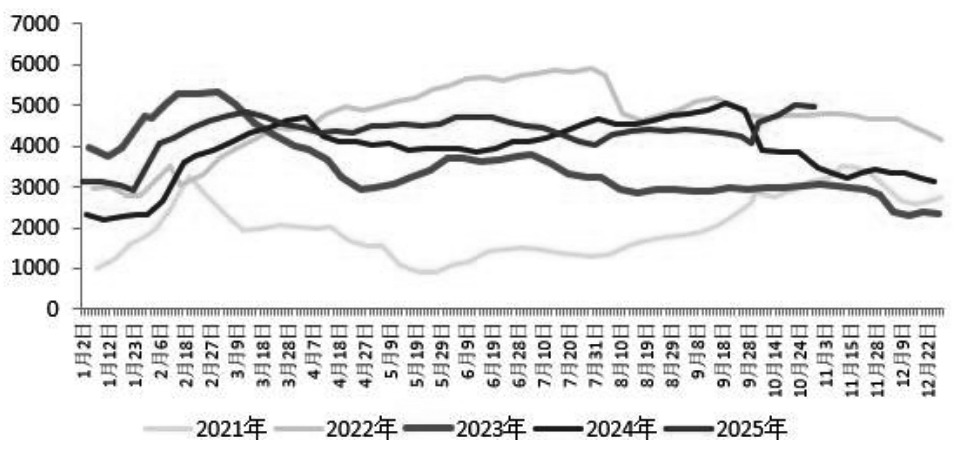
需求压制整体偏弱 聚丙烯继续下行空间不大
Qi Huo Ri Bao· 2025-11-04 02:22
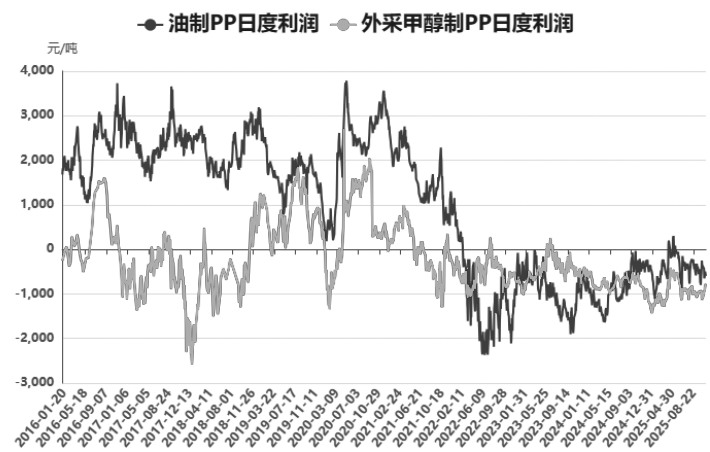
Core Viewpoint - The polypropylene (PP) prices have declined unexpectedly after the traditional peak demand season, primarily due to weaker-than-expected demand and falling oil prices, leading the industry into a state of overall losses [1][5][11] Demand and Supply Analysis - The traditional peak demand season, known as "Golden September and Silver October," did not exhibit significant characteristics this year, with the global economic downturn impacting PP's essential demand [1][9] - In September, domestic plastic product output was 7.303 million tons, a year-on-year decrease of 2.54%, marking two consecutive months of decline [1] - BOPP demand has shown limited improvement, with downstream sectors such as e-commerce, food packaging, and clothing packaging underperforming expectations, resulting in a 15% year-on-year decrease in orders for injection molding enterprises [3] - The PP industry is experiencing severe oversupply, with many companies, particularly PDH enterprises, reducing production or shutting down due to losses, which may help alleviate inventory pressure [9][11] Price and Profitability Trends - Oil prices have significantly dropped, with WTI crude oil falling from $78 per barrel to $55 per barrel, a nearly 30% decline, which has negatively impacted chemical products, including PP [5] - As of early November, the losses for various PP production methods are as follows: oil-based PP at 550 yuan/ton, coal-based PP at 300 yuan/ton, methanol-based PP at 1000 yuan/ton, propylene-based PP at 250 yuan/ton, and PDH-based PP at 800 yuan/ton [5] - The overall profitability of PP has been compressed, with the industry entering a comprehensive loss state [5][11] Production and Operational Insights - The PP maintenance season primarily occurs from April to July, with a notable increase in operating rates post-August, reaching over 85%. However, unplanned maintenance has led to a decline in operating rates below 85% in September and further down to 80% by the end of October, nearing historical lows [6][9] - The expansion of PP production capacity has mainly occurred in the first half of the year, resulting in limited market impact from new capacities in the second half, thus alleviating supply pressure [9][10] Trade Dynamics - In September, China's polypropylene imports reached 290,200 tons, a month-on-month increase of 17.49%, while cumulative imports from January to September totaled 2.4578 million tons, a year-on-year decrease of 9.01% [10] - Conversely, September's polypropylene exports were 237,600 tons, a month-on-month decrease of 13.88%, with cumulative exports from January to September amounting to 2.3411 million tons, a year-on-year increase of 28.27% [10] - The changing import-export dynamics have somewhat alleviated domestic supply-demand imbalances, with some months seeing higher export volumes than imports, indicating a potential shift from a net importer to a net exporter of PP [10]
OPEC+暂停增产 国际油价上行
Qi Huo Ri Bao· 2025-11-04 00:27
Core Viewpoint - OPEC+ has announced a pause in production increases for Q1 2024 due to seasonal factors, leading to a rise in oil prices both domestically and internationally [1][2]. Group 1: OPEC+ Production Decisions - OPEC+ will suspend production increases from January to March 2024, aligning with their recent stance to adjust production based on market conditions [1][2]. - Since Q2 of this year, OPEC+ has accelerated production, resulting in an increase of over 2 million barrels per day compared to the beginning of the year [2]. - The decision to pause production is seen as a strategy to alleviate supply pressure during a seasonal demand slump in Q1 [2]. Group 2: Market Reactions and Price Movements - Following OPEC+'s announcement, domestic SC crude oil futures rose by 1.85%, while Brent and WTI crude prices surpassed $64 and $60 per barrel, respectively [1]. - Analysts suggest that geopolitical tensions, particularly between the U.S. and Venezuela, are contributing to the recent price increases [1][3]. - The market has begun to factor in geopolitical risks and macroeconomic improvements, which have supported a gradual rise in oil prices since late October [2]. Group 3: Future Outlook - Analysts predict that while short-term oil prices may experience fluctuations, the long-term trend is likely to be downward due to OPEC+'s shift towards increasing production and weakening global economic growth expectations [4]. - The International Monetary Fund (IMF) forecasts global GDP growth at 3%, below the historical average, which may contribute to a supply surplus of over 2 million barrels per day starting in Q4 [4]. - The development of the new energy sector, particularly electric vehicles, is expected to lead to an earlier peak in oil demand [4].
探寻交易之道,共赴西安之约→
Qi Huo Ri Bao· 2025-11-03 23:49
Core Insights - The 19th National Futures (Options) Live Trading Competition and the 12th Global Derivatives Live Trading Competition Award Ceremony will be held on November 15 in Xi'an, attracting participants eager to learn and network in a volatile market environment [1][2] - The event serves multiple purposes, including recognizing outstanding traders and providing a platform for knowledge sharing and experience exchange among industry professionals [1][2] Group 1 - The current market volatility has made traditional trading strategies less effective, prompting traders to seek new insights and strategies for stable profits [1][2] - Participants, including newcomers to the futures industry, express a desire to learn advanced risk management concepts and trading systems from experienced peers [1][2] Group 2 - Industry experts emphasize the importance of strategy optimization and risk control for individual investors, while companies should focus on integrating finance with industry and developing green finance initiatives [2] - The success of participants in the competition increasingly relies on their professional knowledge and practical experience, highlighting the need for a deep integration of both in futures trading [2] - The event is anticipated by various stakeholders, including individual investors seeking knowledge enhancement and companies aiming for financial integration [2]
从亏损上百万元到产业组第五名,这是他的逆袭“攻略”
Qi Huo Ri Bao· 2025-11-03 23:41
Core Insights - The article highlights the transformation of a trader, He Yue, who overcame significant financial challenges to achieve success in futures trading, emphasizing that cognitive understanding is more important than technical skills in trading [1][4]. Group 1: Trading Journey - He Yue's trading career began in 2008, characterized by a cycle of gains and losses, leading to a debt of 1.5 million yuan due to short-term trading strategies [2]. - A pivotal moment occurred in 2018 when He Yue invested 200,000 yuan in palm oil futures, which eventually led to a significant profit that cleared his debts [2][3]. - Since 2019, He Yue adopted a trading strategy focused on "extreme varieties," selecting either deeply undervalued or significantly overvalued assets for investment [2][3]. Group 2: Trading Strategy - In early 2020, He Yue invested heavily in soybean meal futures at 2,850 yuan/ton, enduring a drop to 130,000 yuan but ultimately profiting by selling at 3,700 yuan/ton after holding for six months [3]. - He Yue successfully shorted tin futures in 2021 and identified a lucrative opportunity in BR rubber options in 2023, demonstrating his ability to capitalize on market trends [3]. - Looking ahead to 2024, He Yue plans to focus on stock index futures, believing in a long-term bullish trend supported by solid fundamentals and government policies [3]. Group 3: Key Components of Trading Success - He Yue emphasizes that trading success relies on three key components: cognitive ability, execution, and mental strength [4]. - Cognitive ability involves understanding macroeconomic policies and industry logic, which helps in making informed trading decisions [5]. - Execution requires a systematic approach to trading, where He Yue's strategy includes selecting extreme varieties, limiting positions to 30%, and adhering to stop-loss and take-profit levels based on fundamental analysis [6]. - Mental strength is crucial for maintaining confidence in one's trading system, especially during challenging market conditions [7][8].

天然橡胶“保险+期货”为乡村振兴保驾护航
Qi Huo Ri Bao· 2025-11-03 16:09
Group 1 - The core viewpoint of the news is the implementation of the "insurance + futures" project for natural rubber in Ruili City, Yunnan Province, which aims to help local rubber farmers manage price volatility and increase their income [1][2] - The project is a collaboration between China International Futures and the Yunnan branch of PICC Property and Casualty, with a total insurance coverage exceeding 47 million yuan and over 2,800 insured farmers [1] - The rubber planting area in Ruili City is 102,200 acres, with more than 7,700 farmers involved, and the project is expected to significantly improve the enthusiasm of farmers for rubber tapping due to the risk management it provides [1][2] Group 2 - The "insurance + futures" service model represents an innovative approach for futures companies to support agriculture, effectively linking local agricultural industries with the futures market [2] - This model enhances the motivation of producers to engage in risk management, demonstrating the unique value of the futures industry in increasing farmers' income [2] - The successful implementation of this project in Ruili City showcases the contribution of the futures market to agricultural income enhancement [2]
哪些因素会对白糖价格产生影响?
Qi Huo Ri Bao· 2025-11-03 11:29
Core Insights - The article discusses the historical fluctuations in sugar prices since 2000, highlighting five cycles of price increases and decreases, with an average duration of five years for each cycle. The overall trend shows a strong correlation between domestic and international sugar prices, with variations in volatility and market transitions [1]. Group 1: Sugar Price Trends - Sugar prices have shown a strong positive correlation with global demand, driven by population growth and increased applications of sugar, with an average annual consumption growth rate of 2.07% from 2000 to 2011, which decreased to 0.55% post-2012 [1]. - The global sugar supply-demand gap is a significant variable affecting sugar prices, with a negative correlation of -0.16 between raw sugar prices and the global supply-demand gap, becoming more pronounced after 2011 [1]. - The correlation coefficient between domestic sugar prices in Guangxi and international raw sugar prices is approximately -0.35 [1]. Group 2: Weather and Economic Factors - Weather factors, particularly the impact of La Niña and El Niño phenomena, play a crucial role in sugar production and price fluctuations. La Niña is expected to persist until early 2026, potentially causing drought in Brazil, which could affect sugarcane production in the 2026 season [2]. - The article notes that significant economic crises, such as the 2008 global financial crisis and the 2020 COVID-19 pandemic, have shown consistent impacts on sugar prices, with sugar being a staple commodity less affected by localized macroeconomic crises [2]. - The last strong El Niño occurred in 2023, which led to reduced sugar production and influenced the previous price surge. The next significant price increase is anticipated around 2027, aligning with macroeconomic cycles [3].
2025金融街论坛年会聚焦AI+金融 共谋科技金融创新新蓝图
Qi Huo Ri Bao· 2025-11-03 09:11
Group 1 - The 2025 Financial Street Forum Annual Conference will be held in Beijing from October 27 to 30, 2025, focusing on financial technology innovations [1] - The AI + Finance Forum will discuss the future of financial technology, emphasizing the integration of AI in various financial applications [1] - The Beijing municipal government aims to support the integration of AI and other advanced technologies into the financial sector, promoting digital finance in a secure and sustainable manner [1] Group 2 - The application of AI in the insurance sector is enhancing business efficiency and service quality, addressing issues in traditional insurance pricing and risk management [2] - Future improvements in digital insurance require better data governance, including data integration, standardization, and quality enhancement [2] - The financial technology sector is presented with significant opportunities during the 14th Five-Year Plan, necessitating a balance between development and security [2] Group 3 - A technology finance system that aligns with technological innovation is essential for optimizing economic structure and enhancing national competitiveness [3] - Current challenges in technology finance include a reliance on indirect financing and mismatches between bank risk control and the characteristics of tech enterprises [3] - Future strategies should focus on enhancing banks' capabilities to support technological innovation and improving direct financing channels for tech companies [3] Group 4 - The asset management industry is expected to align social capital allocation with technology-driven economic upgrades, focusing on new asset values [4] - Digitalization and intelligent methods will be employed to better understand investor needs and address funding homogeneity versus demand differentiation [4] - The forum featured over a hundred experts from government, financial institutions, enterprises, and academic organizations, highlighting the collaborative effort in advancing financial technology [4]

中国10月RatingDog制造业PMI 50.6 连续三月位于荣枯线上方
Qi Huo Ri Bao· 2025-11-03 08:03
Group 1 - The manufacturing PMI in China for October is 50.6, indicating continuous improvement in manufacturing sentiment for the third consecutive month, although it is lower than the previous value of 51.2, suggesting a slowdown in growth during the survey period [1] - The decline in the manufacturing PMI is partly attributed to a weakening increase in production, which is linked to a slowdown in new order growth in October. Despite improvements in domestic demand and ongoing promotional efforts by companies, external demand remains weak, impacting overall growth [1] - New export orders experienced the most significant decline since May, attributed to increased trade volatility, leading manufacturers to express concerns about growth prospects, although overall expectations remain optimistic for the next 12 months [1] Group 2 - Despite rising costs, intense market competition has led some manufacturers to offer discounts, resulting in a decrease in average selling prices for the manufacturing sector for the second consecutive month, with the most significant drop since July [2] - Weak external demand has also prompted manufacturers to lower export prices for the first time since April [2] Group 3 - New business volume continues to increase, contributing to a slight recovery in manufacturing employment in October, marking the highest growth rate in over two years, as manufacturers increase staffing to handle current workloads [1] - Although production capacity is expanding, the backlog of work continues to rise [1]
2025/2026季国际菜籽上量 国内供需双弱
Qi Huo Ri Bao· 2025-11-03 06:15
Group 1 - Canada is expected to have a bumper crop of canola for the 2025/2026 season, with a production estimate of 20.028 million tons, a 12% increase year-on-year, despite a 2% decrease in planting area [2] - Canadian canola exports are projected to decline by 7% to 7 million tons, with only 1.095 million tons exported as of October 17, compared to 2.599 million tons during the same period last year [2] - The carryover stock of Canadian canola is expected to rise significantly by 92% to 2.5 million tons, indicating a substantial increase in inventory pressure [2] Group 2 - Russia's canola production is projected to increase to 5.5 million tons, with a corresponding rise in canola oil exports, as China continues to import Russian canola oil [3] - Australia is in its canola harvest season, with an expected production of 6.4 million tons, but exports to China will be limited as Australia prioritizes meeting EU demand [3] - China's canola imports have sharply decreased to 2.446 million tons in the first nine months of the year, down from 4.23 million tons in the same period last year, with significant declines in imports from Canada and Russia [4] Group 3 - Domestic oilseed crushing has significantly slowed, with coastal oil mills reporting only 0.6 thousand tons of canola stock remaining as of October 24 [4] - The domestic supply of canola oil is heavily reliant on imported canola seeds, with a total canola oil supply of approximately 2.6 million tons in the first nine months, a 14% decrease year-on-year [5] - The demand for canola meal remains stable, with imports of canola meal from Dubai and India increasing despite a 35.5% decrease in imports from Canada due to tariffs [4][5]