
Qi Huo Ri Bao

Search documents
棉花:产量增、品质好、价格稳
Qi Huo Ri Bao· 2025-10-30 01:52
Core Viewpoint - The cotton harvest in Xinjiang is nearing completion, with overall production expected to increase despite some regional shortfalls. The mechanization of cotton harvesting and processing has improved efficiency, leading to stable cotton prices and positive farmer sentiment [1][4][5]. Group 1: Cotton Production and Harvesting - The cotton picking in northern Xinjiang is almost finished, while southern Xinjiang has completed about 70% of its harvest [1]. - Some areas in southern Xinjiang, such as Xinhe County, have seen a decrease in yield by 80 kg per mu compared to last year, with actual yields around 400-420 kg per mu, below market expectations [2]. - The overall cotton production in Xinjiang is optimistic due to expanded planting areas and favorable weather conditions during the growing season [2][3]. Group 2: Cotton Quality and Pricing - The quality of cotton this year is generally good, attributed to favorable weather and the use of superior seed varieties by farmers [5][6]. - The initial purchase price for seed cotton was around 5.9 CNY/kg, with prices in northern Xinjiang currently ranging from 6.1 to 6.3 CNY/kg, and slightly higher in southern regions [5][6]. - The cotton purchasing market is stable, with no significant "holdout" behavior from farmers, and processing plants are not aggressively buying due to lower processing profits [5][6]. Group 3: Mechanization and Efficiency - The mechanization of cotton planting, harvesting, and processing has significantly increased efficiency, with nearly 100% mechanization in northern Xinjiang [4]. - Advanced technologies such as satellite navigation and drones are being utilized, improving crop management and reducing labor costs [4]. - Despite rising production costs due to increased mechanization and resource management, stable cotton prices have led to favorable overall returns for farmers [4]. Group 4: Market Dynamics - The cotton supply is expected to be relatively ample, which may exert pressure on prices, as textile companies remain cautious in their purchasing strategies [6]. - There has been a slight recovery in the cotton yarn market since October, but demand remains subdued, with most textile companies adopting a cautious approach to inventory replenishment [6].
纯苯期价或先跌后涨
Qi Huo Ri Bao· 2025-10-30 01:12
Core Insights - The article discusses the seasonal decline in pure benzene futures driven by downstream demand, with a notable decrease in operating rates expected in late September [1][2] Group 1: Downstream Demand and Production - From January to September, downstream demand for pure benzene increased by 8% year-on-year, with specific products like styrene, caprolactam, and phenol seeing demand growth of 17.3%, 7.6%, and 2% respectively [1] - Styrene production profits were satisfactory from May to July, but high operating rates led to increased supply, causing profits to decline significantly from August onwards, reaching historical lows [1] - Operating rates for styrene, caprolactam, and adipic acid have shown a month-on-month decline recently, indicating a potential further decrease in production rates due to weak terminal demand [1] Group 2: Supply and Import Dynamics - China is the largest consumer and importer of pure benzene globally, with an import dependency of about 20% [2] - From January to September, domestic pure benzene production rose by 5.7%, while imports surged by 40.5%, leading to a total supply increase of 10.4% [2] - The significant rise in imports is attributed to the near-total shipment of Korean pure benzene to China since last year's fourth quarter, with a total of 4.115 million tons imported from Korea in the first three quarters of this year [2] Group 3: Cost and Price Outlook - The long-term outlook for the crude oil market suggests a supply surplus, with recent geopolitical risks decreasing, which may lead to lower crude oil prices and weaker cost support for pure benzene [2] - The expectation is that while short-term crude oil prices may decline and terminal demand remains weak, medium to long-term factors such as high downstream operating rates and decreasing import volumes could support pure benzene prices, with futures contracts anticipated to experience a decline followed by a rise [2]
棕榈油 承压运行
Qi Huo Ri Bao· 2025-10-30 01:06
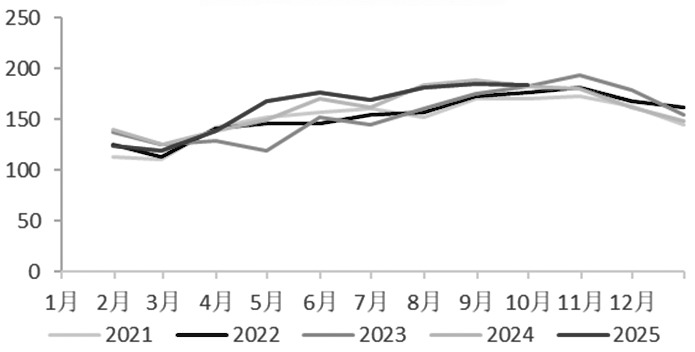
Core Viewpoint - Since October, palm oil prices have been continuously declining due to the accumulation of palm oil inventories and the increase in Argentine soybean oil production [1] Group 1: Palm Oil Production and Inventory - In September, Malaysia's palm oil production was 1.84116 million tons, a month-on-month decrease of 0.73% but a year-on-year increase of 1.06% [2] - The export volume for September was 1.42758 million tons, a month-on-month increase of 7.69% but a year-on-year decrease of 8.48% [2] - As of mid-October, Malaysia's palm oil production increased significantly by 10.77% month-on-month, contradicting market expectations of reduced production [2] - The palm oil inventory in Malaysia reached 2.3610 million tons in September, the highest level in nearly five years [2][10] - Historically, Malaysia is expected to enter a destocking period in November [2] Group 2: Demand Dynamics - Argentina's implementation of an export tax exemption policy in September led to a rapid decline in oil prices and weakened demand expectations [7] - India imported 300,000 tons of soybean oil from Argentina by the end of September, with expectations of over 450,000 tons in October, while palm oil imports are projected to drop to 600,000 tons [7] - From January to September 2025, India imported 5.6186 million tons of palm oil, a decrease of 12.29% year-on-year, while soybean oil imports increased by 27.51% to 3.5657 million tons [7] - Current edible oil stocks in Indian ports are high, indicating limited future replenishment demand [7] - The domestic soybean-palm oil price difference in China was -928 yuan/ton on October 24, the lowest level for the same period in five years, indicating poor price competitiveness for palm oil [9] Group 3: Global Market Trends - The EU's environmental policies have also suppressed palm oil demand, contributing to a decrease in demand from traditional consumer countries while increasing demand from regions like Africa and the Americas [11] - Overall, the global palm oil market is characterized by declining total demand [11] Group 4: Future Outlook - In the short term, palm oil futures prices are expected to remain under pressure due to inventory accumulation, increased Argentine soybean oil production, and weak demand [12] - In the medium term, there is potential for palm oil futures prices to rise due to tightening supply and the onset of the destocking period in Malaysia [12]

沥青 多头优势增强
Qi Huo Ri Bao· 2025-10-30 01:06
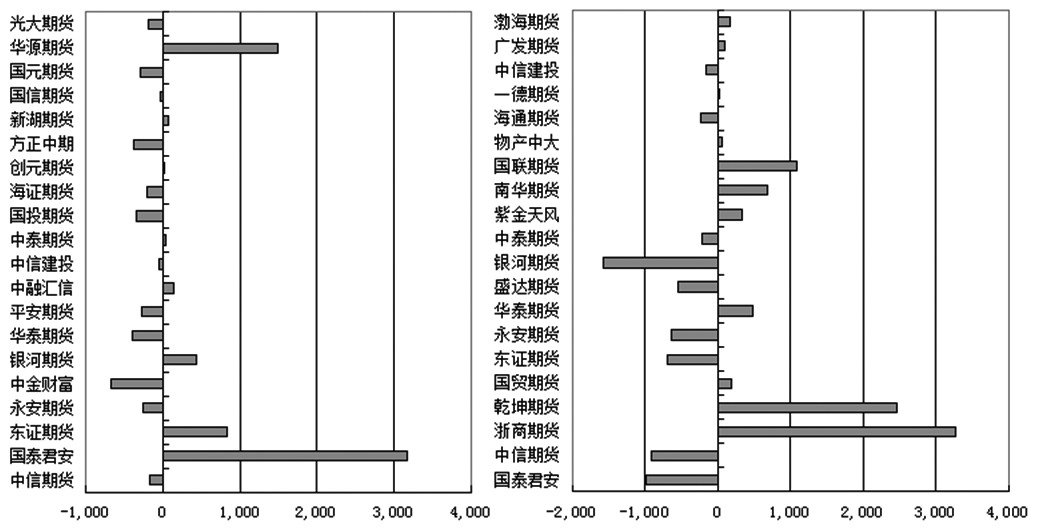
Core Viewpoint - The asphalt futures 2601 contract experienced a volatile consolidation, with a closing price of 3274 yuan/ton and a slight decrease in open interest by 1242 contracts to 196,026 contracts, reflecting a 0.63% decline [1]. Group 1: Market Dynamics - The top 20 positions in the futures market showed an increase in both long and short positions, with long positions rising by 2924 contracts to 143,435 contracts and short positions increasing by 2848 contracts to 141,415 contracts, resulting in a net long position expansion to 2020 contracts [1]. - Among the top 20 long positions, eight entities increased their long positions, with three firms—Guotai Junan Futures, Huayuan Futures, and Dongzheng Futures—raising their long positions by over 500 contracts, specifically by 3168, 1487, and 841 contracts respectively [1]. Group 2: Short Position Changes - In the top 20 short positions, 11 entities increased their short positions, with four firms—Zhejiang Merchants Futures, Qiankun Futures, Nanhua Futures, and Guolian Futures—raising their short positions by over 500 contracts, specifically by 3272, 2457, 675, and 1083 contracts respectively [2]. Group 3: Investor Sentiment - Notably, only one entity in the top 20 positions switched from long to short, indicating a cautious sentiment among investors regarding the potential for a rebound in asphalt prices. Huatai Futures reduced its long positions by 398 contracts while increasing its short positions by 476 contracts [4]. - Conversely, four entities adopted a short-to-long strategy, suggesting a belief in a potential price stabilization after a brief adjustment. Guotai Junan Futures, Dongzheng Futures, and others increased their long positions while reducing their short positions, reflecting a shift in investor sentiment towards a more bullish outlook [4].
分析人士:预计四季度价格重心上移
Qi Huo Ri Bao· 2025-10-30 01:03
Core Viewpoint - The People's Bank of China (PBOC) is set to resume open market operations for government bonds, signaling a potential strengthening of the bond market in the fourth quarter, following a period of adjustment in the third quarter [1][2]. Group 1: Market Reactions - Analysts note that the PBOC's announcement has transformed expectations into reality, with recent trading days showing a significant decline in yields for 10-year and 30-year government bonds, breaking through previous resistance levels [1]. - The bond market had already begun to anticipate the resumption of operations during the third quarter's significant adjustments, indicating a market shift towards a more favorable outlook [1][2]. Group 2: Economic Implications - The resumption of open market operations is viewed as a move to enhance monetary policy tools, improve the financial function of government bonds, and facilitate coordination between monetary and fiscal policies, which is crucial for the development of China's bond market [1][2]. - The PBOC's actions are aimed at achieving the annual economic growth target of around 5%, especially in light of a slowdown in GDP growth to 4.8% and a negative growth rate in fixed asset investment [2]. Group 3: Future Expectations - Analysts expect that the PBOC will likely focus on purchasing short to medium-term bonds, which could alleviate pressure on commercial banks holding bonds and serve a similar purpose to reserve requirement ratio cuts [2]. - The anticipated bond purchases may lead to a steepening of the yield curve, as seen in previous operations where short-term bonds were primarily targeted [2][3].
白银 调整提供做多机会
Qi Huo Ri Bao· 2025-10-30 01:02
Core Viewpoint - International silver prices surged from $38/oz to a historic high of $54.47/oz between late August and mid-October 2025, driven by macroeconomic factors such as safe-haven demand, allocation demand, and U.S. policy easing, alongside a fundamental supply-demand imbalance in the global silver market [1] Group 1: Supply and Demand Dynamics - The global silver supply-demand imbalance has shifted in the last four years, with supply deficits recorded in 2021 (1591 tons) and 2022 (7393 tons), and a narrowed deficit in 2023 (4400 tons), expected to widen again in 2024 (5000 tons) and 2025 (4500 tons) [2] - The structural supply-demand imbalance is attributed to increased investment and industrial demand for silver, coupled with insufficient capital expenditure from major silver mining companies, limiting long-term supply growth [2] - The London silver market experienced significant shortages, with only 24,600 tons remaining in the vaults by the end of September, and 83% of this locked in silver ETFs, leading to soaring leasing rates [4] Group 2: Impact of U.S. Policies - U.S. tariff policies and the inclusion of silver in the critical minerals list have exacerbated shortages in non-U.S. silver markets, as countries rush to export silver to the U.S. to avoid impending tariffs [3] - The proposal to add silver to the critical minerals list aims to reduce import dependency, further tightening global silver supply [3] Group 3: Market Sentiment and Price Movements - A recent easing of international trade tensions has led to a decrease in safe-haven demand for silver, as investors shift towards riskier assets like stocks and oil, contributing to a price correction from recent highs [5] - Despite short-term price adjustments, long-term bullish factors remain, including potential further interest rate cuts by the Federal Reserve, which could support silver prices [6][7] - The ongoing structural supply-demand tightness suggests that while silver prices may experience short-term fluctuations, the medium to long-term outlook remains positive [7]
花生:油料米供应充足 企业收购较积极
Qi Huo Ri Bao· 2025-10-30 01:02
Core Insights - The article discusses the current situation of peanut and corn harvesting in Henan province, highlighting the impact of weather conditions on crop quality and market dynamics [1][2][5] Group 1: Harvesting and Market Conditions - Farmers in Henan are actively selling their harvested peanuts and corn due to unfavorable market conditions and weather impacts, with many opting for immediate sales rather than storage [2][3] - The quality of peanuts has been affected by recent weather, with some crops showing signs of mold and sprouting, leading to a decline in market prices [2][5] - The overall planting area for peanuts in Henan has increased by approximately 10% this year, despite adverse weather conditions [5] Group 2: Trade and Supply Chain Dynamics - Peanut processing plants and traders are actively purchasing peanuts from farmers, with a significant increase in the number of trucks delivering peanuts to processing facilities [4][6] - The market for peanut oil and food-grade peanuts is currently favorable for processors, who are looking to stock up on raw materials due to lower prices [4][6] - The supply-demand relationship for peanuts is becoming more relaxed as the harvest concludes, leading to a decrease in prices for both oil-grade and food-grade peanuts [7][8] Group 3: Price Trends and Market Outlook - The purchase prices for peanuts in Henan have dropped significantly, with some grades falling to around 4 yuan per jin, while lower-quality peanuts are being bought for less than 3 yuan per jin [7][8] - The influx of low-priced peanuts from Henan is affecting market activity in Northeast China, where trading volumes are declining and prices are under pressure [9] - There is a cautious outlook for peanut futures, with expectations of further price declines due to reduced demand from the food industry and a lack of interest from traders in entering the market [9]
凌晨,全线跳水!美联储如期降息,鲍威尔“放鹰”
Qi Huo Ri Bao· 2025-10-30 00:30
北京时间10月30日凌晨,美联储宣布将联邦基金利率目标区间下调25个基点到3.75%至4.00%之间。这是美联储继9月17日降息25个基点后再次降息, 也是自2024年9月以来第五次降息。 美联储决策机构联邦公开市场委员会(FOMC)发表声明说,现有指标显示,经济活动一直以温和的速度扩张,今年就业增长放缓,失业率略有上 升,通胀率自年初以来有所上升,目前仍处于较高水平。鉴于风险平衡变化,委员会决定将联邦基金利率目标区间下调25个基点。 与此同时,FOMC决定于12月1日结束对整体证券持有规模的缩减,即"结束缩表"。 被问及美股估值时,鲍威尔表示,关注任何单一资产并非美联储的职责。但他评论道,人工智能与20世纪90年代泡沫不同,因为一些巨头已拥有与互 联网明星企业截然不同的收入、商业模式和利润。 美股盘中跳水 米兰主张美联储应该在本次会议上降息50个基点——在9月会议上,他也曾主张降息50个基点,但以11比1的投票结果被否决;施密德则认为应该维持 利率不变。 美联储主席鲍威尔:12月是否进一步降息远未成定局 美联储主席鲍威尔在随后举行的新闻发布会上提到,市场预期的12月份再度降息"远未成定局"。 鲍威尔表示,现 ...
终端需求偏弱 纯苯期价或先跌后涨
Qi Huo Ri Bao· 2025-10-29 23:57
Core Viewpoint - The article discusses the seasonal decline in pure benzene futures driven by downstream demand, highlighting the fluctuations in production rates and profitability across various downstream products [1][2]. Group 1: Downstream Demand and Production - From July to mid-September, downstream industries typically increase their inventory, leading to a rise in operating rates, which then decline in late September as demand weakens [1]. - In the first nine months of the year, downstream demand for pure benzene grew by 8% year-on-year, with specific products like styrene, caprolactam, and phenol seeing increases of 17.3%, 7.6%, and 2% respectively, while demand for adipic acid and aniline fell by 3.8% and 8.2% [1]. - Styrene production profits were decent from May to July, but high operating rates led to increased supply, causing profits to drop significantly from August onwards, reaching historical lows [1]. Group 2: Operating Rates and Future Projections - The operating rates for styrene, caprolactam, and adipic acid have recently decreased week-on-week, indicating a potential decline in production rates moving forward [1]. - The overall operating rate for pure benzene downstream is expected to decline further due to weak terminal demand and recent maintenance schedules [1]. - The maintenance of pure benzene facilities is projected to decrease from 213,600 tons in October to around 110,000 tons in November and December, suggesting a potential recovery in operating rates after an initial decline [1]. Group 3: Import and Supply Dynamics - China remains the largest consumer and importer of pure benzene globally, with an import dependency of about 20% [2]. - In the first nine months, domestic pure benzene production increased by 5.7%, while imports surged by 40.5%, leading to a total supply growth of 10.4% [2]. - The significant increase in imports is attributed to the near-total shipment of Korean pure benzene to China since last year's fourth quarter, with a notable drop in shipments observed in October [2]. Group 4: Cost Factors and Price Outlook - The long-term outlook for the crude oil market suggests a supply surplus, with recent geopolitical risks easing, which may lead to a decline in crude oil prices and weaken cost support for pure benzene [2]. - Given the anticipated decline in crude oil prices and weak terminal demand, the short-term outlook for pure benzene prices appears bearish, although medium to long-term factors such as high downstream operating rates and decreasing import volumes may support price recovery [2].
供应偏强需求偏弱 棕榈油短期或承压运行
Qi Huo Ri Bao· 2025-10-29 23:55
自10月以来,受马棕油库存持续累积、阿根廷豆油产量增长等因素影响,棕榈油价格持续下跌。 马棕油去库周期将至 9月马棕油产量为184.116万吨,环比减少0.73%,同比增加1.06%;出口量为142.758万吨,环比增加 7.69%,同比减少8.48%。根据MPOB数据,10月前20日马棕油产量环比大增10.77%,市场减产预期落 空。ITS出口高频数据显示,10月1日—25日马棕油出口128.38万吨,环比减少0.36%,出口表现偏弱。9 月马棕油库存为236.10万吨,处于近5年来最高水平。从历史规律来看,马棕油将在11月进入去库周 期。 印尼方面,据GAPKI数据,2025年1—7月印尼棕榈油累计产量为3058.8万吨,同比增加11.11%;累计消 费量为1430.6万吨,同比增加5.89%。近3个月印尼棕榈油国内月均消费量超过200万吨,月均出口量超 过250万吨,尚未出现累库迹象。受有利天气影响,GAPKI预计印尼2025年棕榈油产量将增长10%。 总需求下降 9月阿根廷推行出口免税政策,直接导致短期油脂价格迅速下跌、需求预期转弱。9月底,印度从阿根廷 采购了30万吨豆油,印度贸易商预计10月豆油进 ...