
Qi Huo Ri Bao

Search documents
大商所调整生猪指定交割机构
Qi Huo Ri Bao· 2025-08-28 16:07
Group 1 - Dalian Commodity Exchange announced the addition of Siyang Dekang Agricultural and Animal Husbandry Co., Ltd. as a sub-warehouse for Sichuan Dekang Agricultural and Animal Husbandry Food Group Co., Ltd. [1] - Guangxi Nongken Yongxin Animal Husbandry Group Shengtang Animal Husbandry Co., Ltd. has been added as a non-group delivery warehouse for live pigs [1] - The newly added group and non-group delivery warehouses are qualified designated delivery locations [1] Group 2 - Jiangsu Lihua Animal Husbandry Co., Ltd. has changed its name to Jiangsu Lihua Food Group Co., Ltd. [1] - Jiangsu Lihua Food Group Co., Ltd. inherits the rights and obligations of the designated delivery warehouse for live pigs previously held by Jiangsu Lihua Animal Husbandry Co., Ltd. [1]

中信期货上半年净利润约5.02亿元
Qi Huo Ri Bao· 2025-08-28 16:07
Group 1 - The core viewpoint of the article is the financial performance of CITIC Securities' subsidiary, CITIC Futures, for the first half of 2025 [1] - As of June 30, 2025, CITIC Futures has a registered capital of 7.6 billion yuan, total assets of approximately 209.335 billion yuan, and net assets of about 14.526 billion yuan [1] - In the first half of 2025, CITIC Futures reported an operating income of approximately 1.832 billion yuan and a net profit of around 502 million yuan [1]

光伏玻璃市场"绝地反击" 三大核心变量主导后市走向
Qi Huo Ri Bao· 2025-08-28 01:17
Core Viewpoint - The photovoltaic glass market is experiencing a significant rebound after a period of oversupply and high inventory, raising questions about whether this is a temporary recovery or a trend reversal [1][2]. Supply and Demand Dynamics - The daily melting capacity of photovoltaic glass is currently stable at 88,200 tons, down 11% from the peak in early May and 15.8% year-on-year, but supply is stabilizing due to the recovery of previously blocked capacity [1]. - The average inventory days in the industry have dropped sharply from over 32 days in June to 17.7 days currently, indicating a significant reduction in stock levels [1]. - Certain specifications, such as 2.0mm coated glass, are experiencing structural shortages, with some companies' inventories falling below the 10-day warning line [1]. Price Trends - The price of 2.0mm single-coated photovoltaic glass has increased from 10 yuan per square meter to 11-11.5 yuan per square meter in August, with expectations for further increases to 13 yuan per square meter in September [2]. - The market is witnessing a dual effect of preemptive stockpiling by component manufacturers and rising prices, leading to a shift from oversupply to a temporary supply shortage [2]. Demand Drivers - The current demand surge is primarily driven by stockpiling in anticipation of policy changes rather than a genuine increase in end-user demand [3]. - The cancellation of the export tax rebate for photovoltaic components has prompted manufacturers to stock up, leading to increased procurement of photovoltaic glass [2][3]. Future Outlook - Analysts predict that while demand may remain stable in September, it could weaken in October due to high overseas inventory and a potential reduction in exports following the policy changes [4]. - The future trajectory of the photovoltaic glass market will depend on three key variables: capacity adjustments, policy impacts, and price transmission to downstream sectors [5][6]. Key Variables - Capacity adjustments may lead to increased supply pressure if new production capacity is released as expected in October [6]. - The timing and enforcement of the cancellation of the export tax rebate will significantly influence future export levels [6]. - The ability of price increases to be transmitted downstream will determine whether the current market conditions can be sustained [6].
应对市场波动,焦煤企业避险有“妙方”
Qi Huo Ri Bao· 2025-08-28 00:36
Group 1 - The conference held by Galaxy Futures in Qingdao focused on the opportunities and challenges in the coking coal market under the new circumstances, with industry experts discussing how futures tools can aid in risk management and innovative business models for upstream and downstream enterprises [1] - Domestic coking coal supply has been affected by multiple factors this year, including a notice from the National Energy Administration that impacted coal mine production, along with safety and weather issues leading to low capacity utilization and slow recovery in production [1][2] - The chief analyst from Zhejiang Material Environmental Energy Co., Ltd. noted that with improved safety regulations and a decline in coal prices, the overproduction situation in coal mines is decreasing, but further checks and strict penalties on overproduction could lead to a contraction in coal supply [2] Group 2 - An Inner Mongolia washing plant faced challenges due to continuous declines in spot market prices, leading to a decrease in inventory value and increased operational risks [2] - To mitigate risks, the plant decided to use coking coal futures for inventory hedging, selling futures contracts at relatively high prices in early April, which resulted in significant profits despite losses in the spot market as prices continued to fall [3] - The successful hedging highlighted the positive role of coking coal futures in providing a channel for price risk avoidance, stabilizing operations, and ensuring normal cash flow, while also aiding in production and procurement decision-making [3]
期货交割加持,西北钢铁企业破解经营难题
Qi Huo Ri Bao· 2025-08-28 00:36
Core Viewpoint - The establishment of the hot-rolled coil futures delivery warehouse at the China Storage Development Co., Ltd. Xi'an Logistics Center marks a significant turning point for the steel industry in Northwest China, enhancing risk management and marketing possibilities for local enterprises [1][4]. Group 1: Market Characteristics - The steel market in Northwest China faces unique challenges, including high transportation costs and significant price volatility due to geographical distance and seasonal demand fluctuations [2][3]. - Local steel mills experience dual pressures from high raw material costs and oversupply in the central and western regions, leading to increased operational risks [2][3]. Group 2: Infrastructure Development - The approval and establishment of the hot-rolled coil futures delivery warehouse fill a critical gap in the local delivery infrastructure, facilitating easier participation in hedging activities for local steel companies [3][4]. - The logistics center integrates logistics, warehousing, processing, and supply chain finance, promoting industrial clustering and enhancing regional economic competitiveness [4][5]. Group 3: Economic Impact - The successful delivery of the first standard warehouse receipt for hot-rolled coils serves as a model for other companies, encouraging participation in futures trading and risk management [6]. - The development of the steel industry in Northwest China is expected to create more job opportunities and stimulate the growth of related industries, contributing to the overall economic stability of the region [6]. Group 4: Strategic Significance - The Xi'an hot-rolled coil futures delivery warehouse is positioned as a key node in the "Belt and Road" initiative, enhancing China's pricing power for bulk commodities and supporting infrastructure projects along the route [6][7]. - The establishment of this facility is anticipated to facilitate the transformation and upgrading of the local steel industry, improving trading efficiency in the Northwest region [7].

回归基本面交易逻辑 多晶硅期价跳水
Qi Huo Ri Bao· 2025-08-28 00:35
Core Viewpoint - The recent decline in polysilicon futures prices is attributed to a weakening of the "anti-involution" sentiment, leading to a return to fundamental trading logic [1][2]. Price Trends - On August 27, polysilicon futures prices fell below 50,000 yuan/ton, with the main contract PS2511 closing at 48,690 yuan/ton, marking a 4.89% decrease [1]. - The market has seen a shift from a backwardation structure to a contango structure, indicating increasing pressure on prices [3]. Market Dynamics - Analysts suggest that the current decline in polysilicon prices is influenced by reduced bullish sentiment and a lack of substantial policy support following a rapid rebound in July and August [1][2]. - The supply side is showing increasing pressure, with the industry operating at approximately 48% capacity and weekly production reaching 29,700 tons [2]. Demand Factors - The demand for polysilicon is under pressure, with July's domestic installation capacity dropping to 11.04 GW and low levels of new installations in August [2]. - Component manufacturers are facing dual pressures from rising upstream raw material prices and scarce downstream orders [2]. Inventory and Market Outlook - As of August 22, polysilicon weekly inventory stood at 245,020 tons, with delivery warehouse receipts reaching 20,640 tons by August 27 [3]. - The market is expected to experience intensified speculative trading as policy expectations weaken, and without further supply-side stimulation, prices may continue to decline [3]. Policy Implications - The revised Anti-Unfair Competition Law restricts platform operators from forcing sellers to price below cost, which may impact market competition and the likelihood of effective capacity consolidation [3][4]. - Despite expectations of price declines, there remains strong support at lower price levels, suggesting that the current price drop is a temporary adjustment rather than a reversal [4].
铁矿石价格面临下行压力
Qi Huo Ri Bao· 2025-08-28 00:25
Core Viewpoint - The global iron ore supply is expected to increase, while demand is projected to decline, leading to downward pressure on iron ore prices in the latter half of the year [1][11]. Supply - China's steel production capacity and output account for over 50% of the global total, requiring more than 1.1 billion tons of iron ore annually, which constitutes over 70% of global iron ore imports [1]. - Global iron ore production is expected to increase by 30.39 million tons in 2025, with a significant rise of 62.37 million tons in the second half of the year due to projects like the Iron Bridge and Onslow [3]. - The four major mining companies dominate the global iron ore market, controlling pricing and capturing over 90% of the profits in China's steel industry [1][11]. Demand - Global crude steel production decreased by 1.6% year-on-year to 1.086 billion tons in the first seven months of the year, with expectations of negative growth in 2025 [8]. - Despite a strong demand for iron ore in the domestic market, steel mills are likely to reduce production in the latter half of the year due to declining steel demand and the implementation of "anti-involution" policies [8][11]. - China's iron ore imports decreased by 2.4% year-on-year in the first seven months, impacting total domestic iron ore supply [4][9]. Cost - The cash cost of iron ore from the four major mining companies is between $20 and $40 per ton, while domestic production costs range from $80 to $90 per ton [10]. - The average import price of iron ore for China was around $117 to $120 per ton in 2022-2023, with a projected decrease to approximately $109 per ton in 2024 [2]. Profitability - Domestic steel mills are facing thin profit margins, with some operating at breakeven, while the four major mining companies enjoy profit margins exceeding 200% [11]. - The anticipated increase in iron ore supply and the decline in steel demand are expected to pressure iron ore prices downward in the latter half of the year [11].

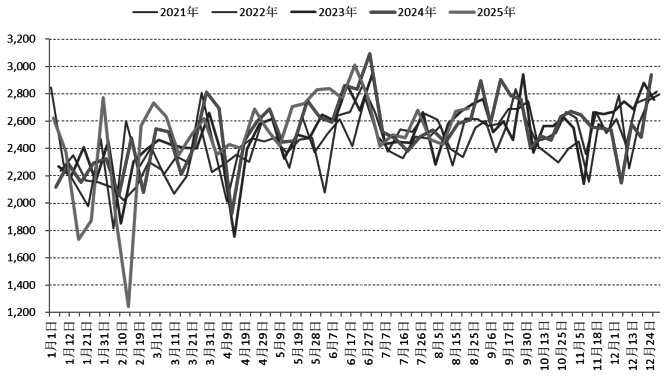
烧碱 短期偏强运行
Qi Huo Ri Bao· 2025-08-28 00:17
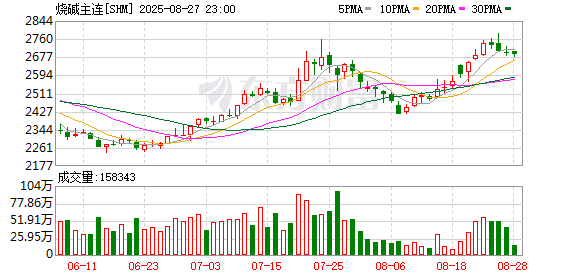
Group 1 - The core viewpoint is that the caustic soda market is experiencing a shift towards a stronger price trend due to supply reductions, increased demand, and recovering exports [2][6] - Since July, the market sentiment for caustic soda has been bullish, with futures prices rebounding significantly after hitting a low, with the 2601 contract increasing by over 500 yuan/ton [2] - The supply of caustic soda is expected to decrease due to maintenance schedules for several production facilities, which will support prices [2][6] Group 2 - The demand for caustic soda is anticipated to rise during the "golden September and silver October" period, driven by increased operating rates in industries such as alumina, viscose staple fiber, and lithium hydroxide [4] - As of late August, the domestic alumina operating rate has risen to approximately 85%, an increase of over 15 percentage points from previous lows, with further increases expected [4] - Exports of caustic soda have also shown significant growth, with July exports reaching 30.78 million tons, markedly higher than the same period last year, and cumulative exports from January to July totaling 203.3 million tons, indicating a strong export outlook for the fourth quarter [4][6]
光伏玻璃市场“绝地反击” 三大核心变量主导后市走向
Qi Huo Ri Bao· 2025-08-28 00:16
Core Viewpoint - The photovoltaic glass market is experiencing a significant rebound after a period of oversupply and high inventory, raising questions about whether this is a temporary recovery or a long-term trend [1] Supply and Demand Dynamics - The daily melting capacity of photovoltaic glass is currently stable at 88,200 tons, down 11% from the peak in early May and 15.8% year-on-year [1] - The average inventory days in the industry have decreased sharply from over 32 days in June to 17.7 days currently, indicating a significant reduction in stock levels [1] - Certain specifications, such as 2.0mm coated glass, are experiencing structural shortages, with some companies' inventories falling below the 10-day warning line [1] Price Movements - The price of 2.0mm single-coated photovoltaic glass has risen from 10 yuan per square meter to 11-11.5 yuan per square meter in August, with expectations to reach 13 yuan per square meter in September [2] - The anticipation of price increases has led to a stocking behavior among downstream companies, which has not affected their purchasing pace [2] Market Drivers - The sudden market shift is primarily driven by policy expectations leading to a temporary release of demand rather than a substantial improvement in end-user demand [2] - The announcement of the cancellation of the export tax rebate for photovoltaic components has prompted companies to stock up in anticipation of policy changes, leading to increased procurement of photovoltaic glass [2][3] Demand Limitations - Despite the current market enthusiasm, the growth in demand is still limited, with component production increasing only slightly and remaining below supply levels [3] - The current demand surge is driven by inventory replenishment rather than actual growth in terminal installation demand, raising concerns about the sustainability of this market rebound [3] Future Outlook - The market's trajectory will depend on three core variables: capacity adjustments, policy changes regarding export tax rebates, and the ability of price increases to be transmitted downstream [5][6] - If new production capacity is released as expected in October, it could increase supply pressure in the market [6] - The cancellation of export tax rebates and potential supply-side production limits will significantly impact future market dynamics [6] Conclusion - The photovoltaic glass market is currently in a state of cautious optimism, with short-term price increases and inventory reductions, but the long-term sustainability of this trend remains uncertain due to underlying demand issues and potential policy impacts [4][6]
股债“双牛”行情不具持续性
Qi Huo Ri Bao· 2025-08-28 00:15
Group 1 - The bond market is expected to experience weak fluctuations in the short term due to high market risk appetite and the influence of stock market performance on bond market dynamics [1][4] - Recent policies focus on "anti-involution," promoting consumption, and stabilizing expectations, leading to a strong stock market while the bond market remains weak [1][3] - The "seesaw" effect between stocks and bonds is evident, where optimistic economic expectations lead to increased stock allocation and reduced bond allocation, and vice versa [1][2] Group 2 - Historical data shows that there have been four notable "dual bull" markets in stocks and bonds since 2016, typically lasting less than one month and occurring when economic fundamentals remain stable [2] - The current strong stock market is driven by global liquidity easing and a stable domestic economic and policy environment, attracting steady capital inflow [3][4] - The bond market has shown relative resilience due to stable institutional liabilities and controlled redemption pressures, with a strong demand for government bonds despite rising yields [4]