
Qi Huo Ri Bao

Search documents
丙烯期货首月交割平稳落地
Qi Huo Ri Bao· 2026-01-20 16:10
Core Viewpoint - The successful completion of the first contract for propylene futures (PL2601) marks a significant step for China's propylene industry, transitioning from "scale advantage" to "pricing advantage" through effective risk management and pricing reference tools [1] Group 1: Delivery Process and Participation - The delivery process showcased high industry participation and efficiency, with a total registered warehouse receipt volume of 28,800 tons from three production warehouses in Shandong [1] - A total of 1,500 tons were delivered, involving two production companies and one trading company, highlighting the practical value of futures tools for real business operations [1][2] - The delivery process was smooth and exceeded expectations, aided by detailed guidance from the exchange, ensuring seamless connections in registration, matching, and payment processes [2][3] Group 2: Price Discovery Mechanism - The effective functioning of the price discovery mechanism was a highlight, with the basis narrowing from -148 yuan/ton on November 4 to -22 yuan/ton by December 31, indicating a good convergence of futures and spot prices [1] - This convergence provides a reliable basis for enterprises to engage in hedging and basis trading, validating the scientific design and practicality of the propylene futures delivery rules [1] Group 3: Industry Insights and Future Plans - Companies involved in the delivery, such as Shandong Binhua New Materials and Jinneng Chemical, emphasized the importance of futures for stabilizing operations and managing risks, with futures prices being a more authoritative benchmark than spot prices [2][3] - The experience gained from the first delivery will be utilized to optimize inventory management and stabilize production operations in the future [3][4] - The propylene futures market is expected to further assist the industry in converting "scale advantages" into "pricing advantages" as participation increases and services are optimized [4][5] Group 4: Market Context and Future Developments - Propylene is a core product in the chemical industry, widely used across various sectors, and China's propylene production capacity ranks first globally [5] - The futures and options for propylene are set to enhance the derivative product system in the energy and chemical sector, addressing the urgent risk management needs of industry chain enterprises [5] - The exchange plans to optimize delivery warehouse layouts and enhance training for industry participants to improve their engagement with the futures market [5]
国家发展改革委:综合整治“内卷式”竞争,实现从卷价格向优价值转变
Qi Huo Ri Bao· 2026-01-20 04:36
Core Viewpoint - The Chinese government is focusing on expanding domestic demand and optimizing supply to achieve a dynamic balance and virtuous cycle in the economy, emphasizing the need for a new economic development model driven by domestic demand and consumption [2][3][4]. Group 1: Economic Strategy - The National Development and Reform Commission (NDRC) is developing a strategic plan for expanding domestic demand from 2026 to 2030, addressing the current issues of insufficient demand and supply [2]. - The strategy aims to strengthen the domestic circulation of the economy, adapting to the trend of demand upgrading and aligning with the new technological revolution and industrial transformation [2]. Group 2: Focus on Real Economy - The emphasis is placed on developing the real economy and constructing a modern industrial system, which is seen as the foundation of China's economic development [3]. - The approach includes fostering new supply through innovation and creating new job opportunities, with a focus on intelligent, green, and integrated development [3]. Group 3: Market Regulation and Competition - The government aims to enhance market vitality by advancing the construction of a unified national market and addressing issues of "involution" in competition [3]. - Measures will be taken to improve market access, ensure fair competition, and regulate prices in key industries to promote a healthy market order [3]. Group 4: Innovation and Development Potential - By 2026, China's economic structure is expected to continue improving, with new productive forces developing steadily and significant potential being released across consumption, investment, technology, and regional development [4]. - New economic growth points are emerging in sectors such as renewable energy, aerospace, and quantum technology, with new energy storage capacity exceeding 100 million kilowatts, accounting for over 40% of the global total [4][5]. Group 5: Regional Innovation and Investment - China has 24 global top 100 innovation clusters, leading the world for three consecutive years, with plans to establish major international technology innovation centers in key regions [5]. - The establishment of national venture capital funds aims to enhance regional investment and innovation, contributing to the creation of a global technology innovation hub [5].
以基差贸易为钥 开启金融解困之门
Qi Huo Ri Bao· 2026-01-20 01:40
Core Viewpoint - The article discusses the challenges faced by grain enterprises in China, particularly in Heilongjiang province, due to frequent fluctuations in grain prices and issues related to selling, pricing, and capital efficiency. It highlights a successful case of using basis trading to mitigate these challenges and improve cash flow and pricing stability for grain companies [2][9]. Industry Challenges - Grain enterprises in Heilongjiang face difficulties such as "selling difficulties," "pricing difficulties," and "low capital efficiency," which hinder the development of the agricultural sector [2]. - The domestic soybean market is in a tight supply-demand balance, influenced by macroeconomic factors and rising import costs due to US-China trade tensions, leading to stronger domestic prices [2]. - The demand for soybean products is weak, and companies are caught in a dilemma between waiting for higher prices and the risk of cash flow issues [2]. Company Strategy - Guotou Guozheng Investment utilizes its core advantage in risk management through spot trading and futures pricing mechanisms to help enterprises avoid price volatility risks [3]. - The company designed a basis trading plan to assist clients in purchasing standard warehouse receipts for soybeans and corn, locking in profits while managing risks [4]. Implementation Process - Guotou Guozheng Investment signed a storage contract with a designated delivery warehouse to ensure proper storage of soybeans, facilitating trade and reducing credit risks [5]. - The company provided immediate payment to clients upon signing contracts, helping them alleviate cash flow pressures while securing the rights to the goods [6]. Service Expansion - The basis trading model was successfully expanded to non-standard warehouse receipt grain trading, allowing for the use of related futures products to enhance service coverage [7]. - The introduction of options and insurance products aims to address extreme price fluctuations and improve service robustness [7]. Application Results - The company successfully assisted clients in selling 1,000 tons of soybeans and 2,000 tons of corn at favorable prices, resulting in additional profits of 31 CNY/ton and 28 CNY/ton, respectively [8]. - The company realized profits of approximately 20 CNY/ton from hedging positions, achieving a win-win situation [8]. Project Summary - The basis trading model effectively addresses the dual challenges of low prices and tight cash flow for grain enterprises, with potential for replication across other grain types and regions [9]. - The integration of futures tools with spot trading enhances pricing power and stabilizes operational expectations for grain companies [10]. Beneficiaries and Participation - Under the rural revitalization strategy, Guotou Guozheng Investment leverages its risk management capabilities to serve agricultural entities, creating diverse cooperation models to meet varying needs [11].


期货日报:利好汇集,黄金配置价值仍存
Qi Huo Ri Bao· 2026-01-20 01:37
Core Viewpoint - The global monetary easing cycle is expected to continue into 2026, supporting a strong outlook for gold due to reserve demand, safe-haven demand, and allocation demand [1]. Monetary Policy Easing - The monetary easing cycle includes both monetary and fiscal policies, with the Federal Reserve likely to implement and extend easing measures in 2025 and 2026, including interest rate cuts and balance sheet expansion [3]. - Weak non-farm data and lack of inflation rebound in the U.S. will prompt the Fed to initiate a new round of interest rate cuts, which will lower the opportunity cost of holding gold [3]. Reserve Demand - The restructuring of the global monetary order continues, with major central banks increasing gold reserves to hedge against potential credit crises [4]. - The ongoing monetary easing by central banks creates excess liquidity, benefiting gold as a monetary asset [4]. Safe-Haven Demand - The upcoming U.S. midterm elections in 2026 and ongoing global political uncertainties will sustain strong safe-haven demand for gold as investors seek to hedge risks [5]. - The likelihood of continued tension in global trade relations and a multipolar political landscape will further support gold's appeal [5]. Allocation Demand - Strong allocation demand for gold persists, with significant capital inflows into the market, as gold serves as a foundational asset for optimizing portfolios and hedging risks [6]. - Global gold ETF holdings are nearing historical highs, indicating robust demand for gold as a hedge against market volatility [6]. Bull Market Outlook - The combination of monetary easing, safe-haven demand, reserve demand, and allocation demand suggests that the gold bull market may not be over [7]. - There is a high possibility of gold prices rising further, with potential for increased volatility, especially if the U.S. economy remains weak and the Fed continues its easing policies [8].
甲醇关注下游负反馈情况
Qi Huo Ri Bao· 2026-01-20 01:01
Core Viewpoint - Methanol prices have ended a downward trend since July of the previous year and have entered an upward market in 2026, supported by low valuations, expectations of inventory reduction at ports, and geopolitical factors that have increased price volatility [1] Group 1: Inventory and Supply Dynamics - Methanol port inventory has been in a seasonal accumulation cycle since May of the previous year, reaching a historical high in September, which has suppressed prices [2] - Due to the cold weather, Iranian methanol production facilities began to shut down in November 2025, leading to a significant reduction in methanol imports to China, which is expected to alleviate port inventory pressure [3] - As of January 15, 2026, coastal methanol inventory stands at 1.42 million tons, down approximately 220,000 tons from the peak in mid-November 2025, indicating a marginal improvement in supply-demand dynamics [3] Group 2: Price and Profitability Trends - Domestic methanol production is characterized by high supply and low profitability, with overall operating rates at 77.91% as of January 15, 2026, slightly down from the previous week but up year-on-year [4] - Production profits have significantly decreased, with coal-based methanol in Inner Mongolia showing a loss of 251.60 yuan/ton, a 17.79% decrease month-on-month, and similar declines observed in other regions [4] - The upward movement in methanol prices is constrained by rising raw material costs, particularly during the winter demand peak for coal and natural gas [4] Group 3: Downstream Demand and Market Sentiment - The operating rate of methanol-to-olefins (MTO) facilities has decreased to 80.75%, with several plants undergoing maintenance, indicating pressure on downstream demand for methanol [5] - Traditional downstream sectors such as formaldehyde and acetic acid are performing poorly, with overall operating rates at historically low levels, limiting demand support for methanol as the Spring Festival approaches [6] - The geopolitical situation, particularly tensions between the U.S. and Venezuela, has raised concerns about methanol supply, further contributing to price volatility [3][6]
玉米短期维持震荡偏强
Qi Huo Ri Bao· 2026-01-20 00:08
禽畜养殖下游补充库存,深加工消费同比下降 截至1月15日,生猪自繁自养模式下的养殖利润为25.77元/头,较上周升高26元/头,外购仔猪模式下 养殖利润为-100.5元/头,较上周升高29元/头。蛋鸡养殖利润-0.04元/斤,略高于前周的-0.28元/ 斤。饲料厂通过拍卖玉米补充库存,物理库存天数以上涨为主,但是还未出现集中补库的情况。截至1 月15日,全国饲料企业平均库存可用天数为31.15天,较上周增加1.05天,环比上涨3.49%,同比下跌 6.71%。 截至1月14日,全国12个地区96家主要玉米加工企业库存总量为359万吨,环比增加1.41%,虽然库存增 加,但还是近3年同期最低的,东北地区深加工企业继续提价收购,华北地区玉米到货量平稳。1月8日 至1月14日,全国149家主要深加工企业共消耗玉米135.59万吨,比上周减少2.59万吨,低于2025年同期 的141万吨。截至1月9日,黑龙江地区玉米制乙醇利润在-742元/吨,低于2025年同期的-377元/吨, 玉米淀粉加工利润在-79元/吨,低于2025年同期的5元/吨。尽管淀粉价格小幅上涨,但是玉米价格偏 强,加工亏损扩大,淀粉库存高,下游采购 ...
供应宽松与需求淡季局面延续 短纤静待春节后破局
Qi Huo Ri Bao· 2026-01-20 00:05
Core Viewpoint - The short fiber market is currently in a downward adjustment phase, driven by weakened cost support and persistent weak demand, with prices expected to maintain a range-bound pattern above the 60-day moving average [1] Group 1: Market Dynamics - Since the peak price of short fiber contracts on December 26, 2025, the market has entered a volatile downward channel, with current prices supported at the 60-day moving average [1] - The processing profit margins in the short fiber industry have been continuously compressed, leading to many companies operating below cash flow cost lines, which has made production rates a key self-regulating mechanism in the market [2] - As of January 15, 2026, domestic short fiber profits were reported at -155.65 yuan/ton, showing a 39.17% increase from the beginning of 2026, indicating a marginal improvement due to stabilization in upstream raw material prices [2] Group 2: Supply and Demand Balance - The short fiber industry’s operating rate rebounded to 90.86% in the third week of 2026, with weekly production reaching 173,200 tons, reflecting the effectiveness of the "profit-operating rate" adjustment mechanism [5] - The main market contradiction has shifted from the direct conflict between cost pressure and processing profits to the balance between rapid supply elasticity and actual terminal demand capacity [5] Group 3: Seasonal Demand Trends - The downstream textile industry is entering a systematic contraction phase ahead of the Spring Festival, leading to a rapid decrease in demand for short fibers due to seasonal production slowdowns and a gap in new orders [6] - The market's turning point is expected to occur post-Spring Festival, with demand recovery dependent on the scale and timing of new spring orders and strategic inventory adjustments by downstream enterprises [6] Group 4: Cost Fluctuations - Short fiber prices are highly correlated with PTA and ethylene glycol prices, with a correlation coefficient above 0.85, primarily influenced by crude oil market dynamics [7] - Global oil inventory pressures and supply surplus are expected to suppress oil price levels, but geopolitical risks could lead to short-term volatility in oil prices, affecting PTA and short fiber cost trends [7] - The short fiber market is likely to remain in a volatile pattern in the short term, with ongoing supply looseness and seasonal demand weakness, awaiting new driving factors for market direction [7]
多重因素驱动 沪铝价格中枢有望上移
Qi Huo Ri Bao· 2026-01-20 00:02
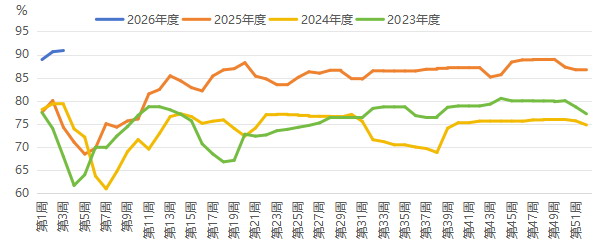
Group 1: Macro Economic Overview - The global economy is characterized as "stable but fragile," with the IMF projecting a growth rate of approximately 3.1% [2] - The cautious monetary policy stance of the Federal Reserve is expected to support commodity prices, including aluminum, by enhancing liquidity and exerting pressure on the dollar [2] - Domestic policies for 2026 emphasize stability and proactive measures, with an expected continuation of moderately loose monetary policy and more aggressive fiscal policies aimed at major projects and infrastructure [2] Group 2: Supply and Demand Dynamics - Global electrolytic aluminum supply is entering a low-elasticity growth phase, with rigid constraints becoming the core issue [4] - Overseas supply faces risks of reduction in existing capacity, while new capacity growth is hindered by systemic challenges [4] - Domestic electrolytic aluminum production is projected to reach 44.8 million tons in 2026, with a growth rate of 1.4%, indicating a significant slowdown compared to previous years [5] Group 3: Cost Structure and Profitability - The domestic electrolytic aluminum industry is expected to maintain high profits in 2026, but internal differentiation will intensify [6] - Alumina prices are expected to decline due to a relaxed supply, contributing to cost advantages, while electricity prices may rise slightly, increasing cost disparities among companies [6] - Companies with stable low-cost electricity structures are likely to maintain a competitive edge in terms of costs and profits [6] Group 4: Demand Trends - Demand for aluminum is increasingly focused on green and high-end manufacturing sectors, with significant contributions from energy transition investments and the automotive sector [7] - The trend of "aluminum replacing copper" is accelerating in various industries, driven by cost and policy factors [7] - The aluminum market is expected to enter a new cycle defined by supply constraints and green demand, with prices likely to rise throughout the year despite potential pressures in the latter half [7]
债市 迎来小幅修复行情
Qi Huo Ri Bao· 2026-01-19 17:52
Group 1 - The core viewpoint of the news is that the central bank's recent monetary policy adjustments aim to support key sectors and enhance financial stability while managing inflation expectations [1][2][3] - In January, the bond market experienced fluctuations, initially declining due to stronger-than-expected economic indicators, including a manufacturing PMI above 50% and CPI rising to its highest level since March 2023 [1] - The central bank implemented a structural interest rate cut of 0.25 percentage points on January 15, optimizing various monetary policy tools to support strategic sectors and small private enterprises [1][2] Group 2 - The overall economic resilience and the acceleration of high-quality transformation are emphasized, with the central bank's policies focusing on targeted support rather than broad measures [2] - The central bank conducted a 900 billion yuan six-month reverse repurchase operation on January 15, indicating a continued injection of medium-term liquidity into the market [2] - The bond market is expected to remain supported by a reasonable liquidity environment, with short-term bonds stabilizing while long-term bonds face more negative factors due to rising inflation signals [3]
5%,GDP突破140万亿元!国家统计局重磅公布
Qi Huo Ri Bao· 2026-01-19 04:35
Economic Overview - In 2025, China's GDP reached 14,018.79 billion yuan, growing by 5.0% year-on-year at constant prices [1] - The first, second, and third industries contributed 93.35 billion yuan (3.9%), 499.65 billion yuan (4.5%), and 808.88 billion yuan (5.4%) respectively to the GDP [1] Agricultural Production - National grain production totaled 714.88 million tons, an increase of 0.838 million tons (1.2%) from the previous year [3] - Meat production reached 100.72 million tons, a 4.2% increase, with pork production at 59.38 million tons (4.1% growth) [3] Industrial Growth - The industrial added value for large-scale enterprises grew by 5.9%, with manufacturing increasing by 6.4% and high-tech manufacturing by 9.4% [5] - The production of 3D printing equipment, industrial robots, and new energy vehicles saw significant increases of 52.5%, 28.0%, and 25.1% respectively [5] Service Sector Performance - The service sector's added value grew by 5.4%, with notable growth in information transmission (11.1%) and rental and business services (10.3%) [5] - The revenue of large-scale service enterprises increased by 7.8% year-on-year [5] Consumer Market - Total retail sales of consumer goods reached 501.20 billion yuan, growing by 3.7% [7] - Online retail sales amounted to 159.72 billion yuan, an 8.6% increase, with physical goods online retail at 130.92 billion yuan (5.2% growth) [7] Investment Trends - Fixed asset investment (excluding rural households) decreased by 3.8% to 485.19 billion yuan, with manufacturing investment growing by 0.6% [9] - High-tech industries, particularly information services and aerospace manufacturing, saw investment growth of 28.4% and 16.9% respectively [9] Trade and Export - Total goods import and export reached 454.69 billion yuan, a 3.8% increase, with exports growing by 6.1% [11] - High-tech product exports increased by 13.2% [11] Price Stability - The Consumer Price Index (CPI) remained stable year-on-year, with food prices decreasing by 0.7% [13] - Core CPI, excluding food and energy, rose by 0.7%, reflecting a slight increase in inflationary pressure [13] Employment and Income - The urban unemployment rate averaged 5.2%, with a slight decrease to 5.1% in December [15] - Per capita disposable income reached 43,377 yuan, a nominal increase of 5.0% [17]