Xin Lang Ji Jin

Search documents
自主可控逻辑崛起,国防军工ETF(512810)持续溢价交易!长城军工、奥普光电封死涨停板!
Xin Lang Ji Jin· 2025-10-13 06:54
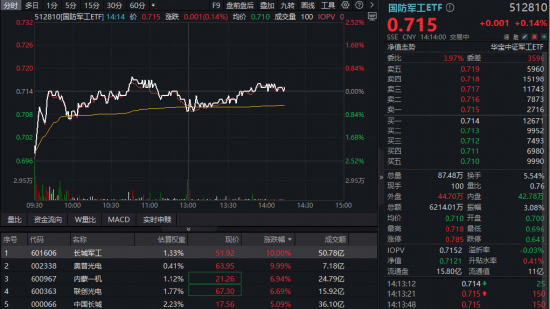
Group 1 - The defense and military industry showed resilience in the market, with the popular defense ETF (512810) experiencing significant trading volume of over 62 million yuan and multiple instances of premium pricing [1] - Key stocks such as Changcheng Military Industry and Aopu Optoelectronics reached their daily limit up, while Inner Mongolia First Machinery Group saw a rise of 6.94% [1] - The AG600 amphibious aircraft entered mass production, marking a breakthrough in domestic large civil aircraft self-supply, with the successful test flight of the second aircraft and the delivery of the third [3] Group 2 - The unveiling of the J-6 drone at the Changchun Airshow highlights the trend towards unmanned and intelligent equipment, which is expected to boost orders in upstream materials and electronics within the defense sector [3] - The defense industry is closely tied to national five-year plans, with upcoming significant meetings likely to clarify the focus areas for the 15th five-year plan, emphasizing the development of unmanned and intelligent equipment [3] - The defense and military sector is benefiting from industrial upgrades and the trend towards self-sufficiency, with sustained high demand for core equipment and an overall high industry prosperity [3] Group 3 - The defense ETF (512810) passively tracks the CSI Military Index, with its top ten weighted stocks including China Shipbuilding, AVIC Shenyang Aircraft, and Guoke Technology [3]


杨德龙:特朗普挑起关税战不得人心 不会改变本轮牛市大趋势
Xin Lang Ji Jin· 2025-10-13 06:50
Group 1 - The market experienced a significant drop followed by a rebound, influenced by Trump's proposal for a 100% tariff, which is seen as a negotiation tactic rather than a long-term threat [1] - The impact of the tariff proposal on the market is expected to be less severe than previous instances, with investor confidence remaining relatively stable [1] - China's export dependence on the US has decreased from 19% in 2018 to below 10% currently, indicating a strengthening of its economic position [1] Group 2 - The current market rally is supported by strong economic policies and an influx of retail investors, with nearly 300 million new stock accounts opened in September [2] - The low-interest-rate environment is driving residents to invest in stocks and funds, potentially shifting 20-30 trillion yuan into the capital market over the next few years [2] - Foreign investment in Chinese assets is increasing, with $4.6 billion inflow in September and expectations for continued growth [2] Group 3 - The bull market is characterized by a divergence between sectors, with technology and innovation-driven industries seeing significant gains while traditional sectors lag [3] - Investors are advised to hold quality stocks during market adjustments and consider reducing positions in overvalued tech stocks [3] - The overall trend of the bull market is expected to continue despite short-term fluctuations [3] Group 4 - International gold prices have surpassed $4,000, reflecting concerns over US government credit and increasing debt levels, which have reached $37 trillion [4] - The rise in gold prices is accompanied by a significant increase in silver prices, driven by industrial demand, particularly in the photovoltaic sector [4] - The gold-silver ratio remains stable, with silver's price increase exceeding 70% this year compared to gold's over 50% [4] Group 5 - The current slow bull market in A-shares and Hong Kong stocks is anticipated to continue, marking a shift from real estate investment to stock market opportunities [5] - Investors are encouraged to focus on value investing and hold quality stocks for the medium to long term to capitalize on technological innovation [5]
自主可控提速再上日程,关注科创半导体设备ETF(588710)布局窗口!
Xin Lang Ji Jin· 2025-10-13 06:21
Core Viewpoint - The semiconductor sector is experiencing significant downward pressure due to intensified international competition, particularly following the U.S. House of Representatives' report on semiconductor export controls related to China, which emphasizes the urgency for domestic semiconductor industry self-sufficiency [1] Group 1: Semiconductor Industry Dynamics - The urgency for domestic semiconductor industry self-sufficiency is reinforced by the recent U.S. report, highlighting the need to accelerate the development of a controllable local chip supply chain [1] - The equipment and materials segments of the semiconductor industry are positioned upstream and are crucial for overall industry development, possessing strong bargaining power and likely to expand first amid the domestic substitution wave [1] Group 2: ETF Performance and Market Trends - The Sci-Tech Semiconductor Equipment ETF (588710) has seen a trading volume of 331 million yuan as of 14:12, indicating strong market interest [1] - The ETF closely tracks the Shanghai Stock Exchange Sci-Tech Board Semiconductor Materials and Equipment Index, with a significant focus on semiconductor equipment and materials, which together account for 84.45% of the index [2] - Since September, the Sci-Tech Semiconductor Equipment ETF has attracted 799 million yuan in new investments, increasing its total size to 1.048 billion yuan, a 516% increase compared to the end of August [2] Group 3: Fund Management and Strategy - The fund manager, Huatai-PB Fund, is one of the first ETF managers in China with over 18 years of experience, managing the largest ETF in the A-share market, the CSI 300 ETF [2] - Huatai-PB Fund has developed a comprehensive suite of ETFs focused on the Sci-Tech sector, including the Sci-Tech Board ETF and others, aiming to help investors benefit from technological advancements [2]
“反内卷”再发力,哪些行业ETF或将受益?
Xin Lang Ji Jin· 2025-10-13 06:21
Core Insights - Recent policies in China aim to combat "involution" and promote high-quality economic development through various measures targeting ten key industries [1][3][7] - The Ministry of Industry and Information Technology has released new growth plans for ten major industries, which collectively account for approximately 70% of the industrial economy [1][3] - The National Development and Reform Commission and the State Administration for Market Regulation have issued guidelines to address chaotic pricing competition, emphasizing fair market practices [1][3] Group 1: Policy Initiatives - The ten industries targeted for growth include steel, non-ferrous metals, petrochemicals, chemicals, building materials, machinery, automotive, electrical equipment, light industry, and electronic information manufacturing [1] - Each industry has been assigned specific quantitative growth targets, such as a 5% annual increase in value added for the petrochemical and non-ferrous metals sectors from 2025 to 2026 [1][3] - The recent announcement of measures to regulate pricing competition indicates a systematic approach to governance, moving from recognition to execution at both central and local levels [1][3] Group 2: Economic Indicators - In August, profits of industrial enterprises showed a significant turnaround, increasing by 20.4% year-on-year, marking the highest growth rate since December 2023 [3][4] - The Producer Price Index (PPI) remained stable in August, ending an eight-month decline, with a narrowing year-on-year drop of 0.7 percentage points [3][4] - Profit growth was particularly noted in upstream industries such as coal, steel, non-metallic minerals, and chemicals, suggesting a positive impact from the "involution" policies [3][4] Group 3: Investment Opportunities - Investors are encouraged to consider ETFs that align with the sectors benefiting from the "involution" policies, as these can provide efficient exposure to the relevant industries [5][6] - Specific ETFs are highlighted for sectors such as non-ferrous metals, petrochemicals, coal, and new energy vehicles, reflecting the anticipated benefits from the policy measures [6][7] - The ongoing "involution" policies are expected to enhance gross margins and capacity utilization, thereby improving the long-term investment value of related sectors [7]

贸易摩擦骤然升级,海外算力链被短线错杀?光模块巨头“易中天”四连跌,能否借道高“光”159363抄底买入?
Xin Lang Ji Jin· 2025-10-13 06:18
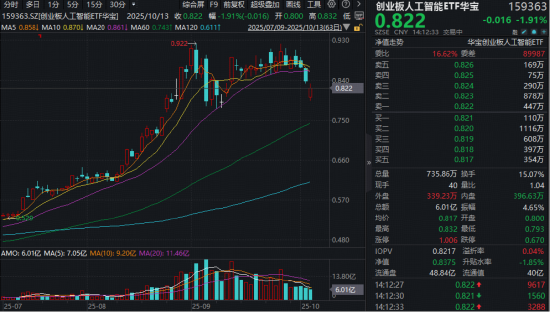
Core Viewpoint - The recent escalation of trade tensions has led to a significant decline in A-shares, particularly affecting the overseas computing power sector centered around optical modules, with a notable drop in related stocks [1][3]. Group 1: Market Impact - A-shares opened sharply lower due to negative influences from trade friction, with the ChiNext AI sector experiencing a drop of over 5% at one point, although the decline has since narrowed [1]. - Major stocks in the optical module sector, such as Zhongji Xuchuang and Lian Te Technology, fell more than 5%, while others like Xinyi Sheng and Ruijie Network saw declines exceeding 2% [1]. - The largest and most liquid ChiNext AI ETF (159363) hit a 5% drop during trading but later reduced its decline to 2.86%, with real-time trading volume exceeding 500 million yuan [1]. Group 2: Long-term Outlook - According to China International Capital Corporation (CICC), the short-term impact of the trade tensions is not expected to alter the mid-term trend, with ongoing asset revaluation in China [3]. - The overall market foundation for upward movement remains intact, supported by upcoming policy plans and a favorable fundamental outlook for technology sectors [3]. - The global AI landscape is projected to maintain high activity levels through the first three quarters of 2025, with significant investments from major companies like OpenAI, Oracle, and Google [3]. Group 3: Investment Recommendations - Citic Securities emphasizes the sustained high demand for computing power infrastructure, with North American cloud service providers planning capital expenditures exceeding $370 billion in the 2025 fiscal year, a 40% year-on-year increase [4]. - Investors are encouraged to focus on optical devices and modules, particularly the ChiNext AI ETF (159363), which has over 70% of its portfolio in computing power and more than 20% in AI applications [4]. - The ChiNext AI ETF has a recent scale exceeding 4.3 billion yuan, with an average daily trading volume of over 1.1 billion yuan in the past month, ranking first among seven ETFs tracking the ChiNext AI index [4].
机构:关税不确定性催生防御性配置需求,银行股直线拉升,百亿银行ETF(512800)放量涨逾1%
Xin Lang Ji Jin· 2025-10-13 06:07
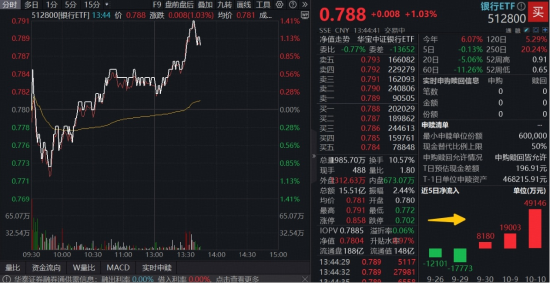
Core Viewpoint - The banking sector is experiencing a rebound, with significant gains in bank stocks and increased inflows into bank ETFs, indicating a potential investment opportunity in this sector [1][3]. Group 1: Market Performance - Bank stocks showed strong performance, with Shanghai Pudong Development Bank and Nanjing Bank rising over 5%, while Qilu Bank and Chongqing Rural Commercial Bank increased by over 3% [1]. - The bank ETF (512800) saw a brief decline but then surged, with a peak increase of 1.4% and a current rise of 1.03%, achieving a real-time transaction volume of 1.551 billion yuan, surpassing the previous day's total [1]. Group 2: Investment Opportunities - According to Galaxy Securities, the impact of potential new tariffs on banks is manageable, and the uncertainty may increase demand for defensive asset allocations, presenting opportunities for bank investments [3]. - The banking sector's price-to-book (PB) ratio has fallen to 0.67x, placing it in the 73rd percentile over the past five years, with state-owned banks offering an average dividend yield of 4.11%, which is attractive compared to the ten-year government bond yield [3]. - Some city commercial banks, such as Jiangsu Bank, Shanghai Bank, and Chengdu Bank, have dividend yields exceeding 5.5%, indicating high investment value [3]. - The bank ETF (512800) has attracted significant capital inflows, with a net inflow of 763 million yuan over three days [3]. Group 3: ETF Details - The bank ETF (512800) and its linked funds are designed to passively track the CSI Bank Index, which includes 42 listed banks in A-shares, making it an efficient investment tool for the banking sector [3]. - The fund size of the bank ETF remains robust, with an average daily transaction volume exceeding 600 million yuan this year, making it the largest and most liquid among the ten bank ETFs in A-shares [3].





什么是关键软件?美国为何对此出口管制?科技当自立!信创ETF基金一度涨超3%,大数据产业ETF逆市活跃
Xin Lang Ji Jin· 2025-10-13 06:07
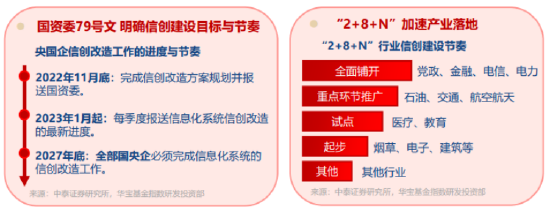
Group 1 - The U.S. President announced an additional 100% tariff on Chinese imports starting November 1, along with export controls on "critical software" [1] - Critical software includes operating systems, databases, and various industrial software, highlighting its strategic importance in national security and economic stability [1] - The move is expected to accelerate the domestic production of industrial and foundational software in China, as the country seeks to enhance its self-sufficiency in technology [1][2] Group 2 - The "信创" (Xinchuang) industry is transitioning from policy-driven to a dual-driven approach of policy and market, with significant growth expected in the coming years [2] - By 2026, the market size of the 信创 industry is projected to exceed 2.6 trillion yuan, with growth rates of 17.84% and 26.82% anticipated for 2025 and 2026, respectively [2] - Government procurement standards are being refined to support the replacement of foreign technology with domestic alternatives [2] Group 3 - The domestic software sector is experiencing active trading, with the 信创 ETF fund showing a price increase of over 3.1% at one point, indicating strong buying interest [4] - Key stocks in the sector, such as 华大九天 and 麒麟信安, have seen significant price increases, reflecting investor confidence in the domestic software market [4] - The 大数据产业 ETF is also showing positive performance, with stocks like 中国软件 and 中国长城 experiencing notable gains [6] Group 4 - The 信创 ETF fund tracks the core segments of the 信创 industry, which includes foundational hardware, software, and information security, and is characterized by high growth potential [8] - The current geopolitical climate and the push for self-sufficiency in technology are driving the demand for domestic solutions in the 信创 sector [8] - The 大数据产业 ETF focuses on data centers and cloud computing, with a strong emphasis on companies that are leading in the technology self-reliance movement [9]
关税再升级,对医药板块影响多大?基金经理提示“TACO交易”机会,港股通创新药ETF(520880)溢价高企
Xin Lang Ji Jin· 2025-10-13 05:48
Group 1 - The core viewpoint of the news is that the escalation of US-China trade tensions, particularly the announcement of a 100% additional tariff on Chinese goods and new export controls on key software products, has led to significant volatility in global markets [1] - The Chinese stock market experienced a downward trend, with major indices falling over 1% and the Hang Seng Index dropping more than 3% [1] - The A-share market saw a decline in the innovative drug sector, with notable drops in companies like Hengrui Medicine and WuXi AppTec [1][3] Group 2 - The Hong Kong stock market also faced declines in innovative drugs, with the Hong Kong Stock Connect Innovative Drug ETF (520880) experiencing a drop of over 10% for leading stocks [3] - Despite the downturn, the Hong Kong Stock Connect Innovative Drug ETF (520880) showed strong buying interest, accumulating over 680 million yuan in inflows over the past 20 days [3] - East Wu Securities believes that the impact of tariff policies on China's pharmaceutical industry is limited, as the market had already anticipated the drug tariffs [5] Group 3 - The analysis indicates that many Chinese innovative pharmaceutical companies utilize licensing and new overseas company models, which are not affected by tariffs as they involve intellectual property transactions rather than physical drug exports [6] - The CRO (Contract Research Organization) services are not impacted by tariffs, and the long-term competitiveness of China's CRO/CDMO (Contract Development and Manufacturing Organization) remains intact [6] - The report suggests that the medical device sector is minimally affected by tariffs, with a positive outlook for domestic substitution and self-control [6] Group 4 - The fund manager of the Hong Kong Stock Connect Innovative Drug ETF (520880) noted that macro geopolitical factors have become significant in pricing the innovative drug sector, leading to increased volatility in stock prices [7] - The market is expected to eventually return to fundamentals, considering the interconnectedness of the US and Chinese biopharmaceutical industries [7] - The TACO trading strategy, which bets on Trump's tendency to back down from threats, is highlighted as a potential investment approach during market downturns [7] Group 5 - Investment strategies suggested include focusing on innovative drugs, leading pharmaceutical companies, and medical leaders, with specific ETFs recommended for each category [7] - The medical ETF has the largest scale in the market at 26.4 billion yuan, while the drug ETF is the only one tracking the China Pharmaceutical Index [8]
港股AI重挫4%,资金逢低抢筹513770,自主可控逻辑强化,金山软件大涨18%
Xin Lang Ji Jin· 2025-10-13 05:28
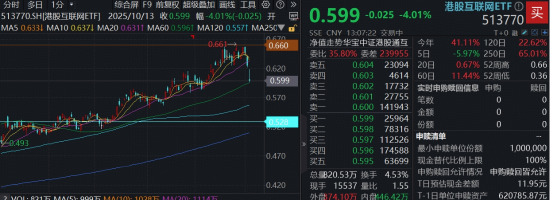
Core Viewpoint - The Hong Kong stock market experienced a collective decline, with the Hang Seng Technology Index dropping by 4.54%, and major tech stocks like Alibaba and Tencent facing significant pullbacks. The Hong Kong Internet ETF (513770) also saw a decrease of 4.17%, indicating a bearish trend in the market [1]. Group 1: Market Performance - The Hong Kong Internet ETF (513770) recorded a trading volume of nearly 500 million yuan, reflecting a significant market activity despite the downturn [1]. - The ETF has seen a net inflow of over 1.1 billion yuan in the past 20 days, indicating a strong interest from investors despite recent volatility [3]. - The ETF's latest scale has surpassed 11 billion yuan, marking a historical high, with an average daily trading volume exceeding 600 million yuan this year [9]. Group 2: Key Holdings - The top three holdings in the Hong Kong Internet ETF are Alibaba-W (18.92%), Tencent Holdings (15.60%), and Xiaomi Group-W (11.54%), collectively accounting for over 73% of the ETF's total weight [5][6]. - The ETF tracks the CSI Hong Kong Internet Index, which has shown significant resilience and outperformance compared to the Hang Seng Technology Index this year [7]. Group 3: Industry Insights - The recent announcement by the Ministry of Commerce regarding the use of WPS format for official documents is seen as a move towards promoting key technology independence and ensuring information security [3]. - The AI industry is expected to see accelerated domestic production processes, with significant capital expenditures anticipated from major tech players, indicating a broad growth potential in the sector [3]. - The valuation of the CSI Hong Kong Internet Index is currently at a PE ratio of 26.69, which is lower than both the US and A-share tech sectors, suggesting a potentially attractive investment opportunity [7].

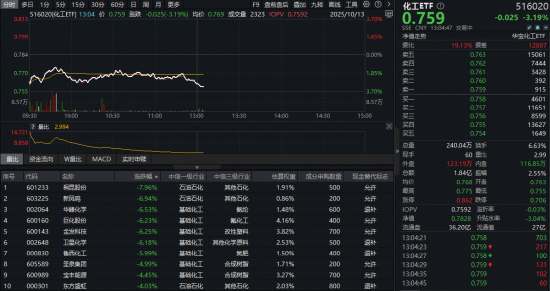
能否抄底?化工ETF(516020)跌超3%,近3日吸金超8000万元!机构:行业整体格局向好
Xin Lang Ji Jin· 2025-10-13 05:24
Group 1 - The chemical sector experienced a significant pullback on October 13, with the chemical ETF (516020) declining by 3.19% [1][2] - Key stocks in the sector, including Tongkun Co., Ltd., fell over 7%, while several others like Xin Fengming and Huafeng Chemical dropped more than 6%, negatively impacting the overall sector performance [1][2] - The chemical ETF has seen a capital inflow of over 80 million yuan in the last three trading days, indicating renewed interest from investors [1][2] Group 2 - The chemical industry is currently at a historical low in terms of profitability and valuation, with a profit margin of 4.14% for the chemical raw materials and products sector as of August 2025 [3] - The price-to-book ratio for the chemical ETF (516020) is at 2.4 times, which is in the 41.57 percentile of the last decade, suggesting a favorable long-term investment opportunity [3] - The construction of new projects in the basic chemical sector has seen a decline for three consecutive quarters, confirming a supply turning point and indicating a potential improvement in the industry landscape [4] Group 3 - Investment strategies suggest focusing on sectors with significant profit elasticity, such as pesticides, organic silicon, and polyester filament, which are expected to benefit from supply-side improvements [4] - The chemical ETF (516020) tracks the CSI segmented chemical industry index, covering various sub-sectors and concentrating nearly 50% of its holdings in large-cap stocks like Wanhua Chemical and Salt Lake Industry [4] - Investors can also consider the chemical ETF linked funds (A class 012537/C class 012538) for exposure to the chemical sector [4]