Tai Mei Ti A P P

Search documents
不造车的第五年:2025 年,车企已无法回避华为
Tai Mei Ti A P P· 2025-12-28 02:03
2025年,是华为承诺"不造车"的第五年,但几乎每一家车企都在思考如何与华为合作。 一方面,终端BG主导的鸿蒙智行"四界"拓展为"五界",另一方面车BU牵头的全新"境"系列——广汽启 境、东风奕境亮相。官方数据显示,今年前三季度,搭载华为乾崑智驾系统的车型销量达45.2万辆,市 场占有率约27.8%。与此同时,HI模式的合作伙伴不断增加。 来源:鸿蒙智行 然而,这种多线布局也伴随着必然的张力。资源的内部争夺、市场的重叠交锋、与合作方之间关于品牌 主导权的微妙博弈,都让这条双轨的前路充满张力。不仅如此,华为的生态扩张如同投入湖面的巨石, 其涟漪迫使每一位"非华派"玩家重新审视自己的生存法则,是融入生态,是另辟蹊径,还是被时代洪流 所边缘化? 不造车,但"拿下"半个车圈 要理解华为的棋局,首先要看清它设计的合作"阶梯"。这绝非简单的二选一,而是一套从浅到深、步步 为营的精巧体系。 | 对比维度 | 传统零部件供应模式 | HI 模式 | 鸿蒙智行模式("五界") | | "境" 系列赋能模式 资本合作模式 (引望持股) | | --- | --- | --- | --- | --- | --- | | 核心是位 ...


百度将于2026年在英国测试无人驾驶;香飘飘拟在泰国投资建设生产基地;小鹏公布中东非市场进展|一周大公司出海动态
Tai Mei Ti A P P· 2025-12-27 12:25
Group 1: Autonomous Driving and Mobility - Baidu's autonomous driving service platform,萝卜快跑, will launch autonomous driving tests and ride-hailing services in London by 2026, marking its first entry into a right-hand drive market outside of Hong Kong [1] - Uber and Lyft will collaborate with Baidu to initiate autonomous taxi trials in the UK next year, reinforcing the UK's position as a leading market for robotic taxi commercialization in Europe [1] Group 2: AI and Smart Home Technology - Tuya Smart launched an AI life assistant named "Hey Tuya," which operates across various physical AI devices and can be accessed through multiple platforms, including the Tuya app and smart speakers [2] - The "Hey Tuya" assistant is available for consumers and global brand clients, with over 12,000 AI agents developed on the Tuya platform, facilitating 155 million AI interactions daily [2] Group 3: Renewable Energy and International Orders - Goldwind Technology reported a total of 7,161.72 MW in overseas external orders as of the end of Q3 2025, with significant installations across various continents [3] - The company has successfully expanded its international business across North America, Oceania, Europe, Asia, South America, and Africa, demonstrating its capability to provide reliable renewable energy solutions globally [3] Group 4: Battery Supply Agreements - CATL signed a five-year supply contract with South Korean electrolyte manufacturer Enchem for a total of 350,000 tons of electrolyte, equivalent to approximately 7,268 million RMB, making it Enchem's largest single customer order to date [4] Group 5: International Market Expansion - XPeng Motors announced its entry into the Middle East and Africa markets, launching its brand in Qatar and establishing partnerships in Mauritius and the UAE [5][5] - The company aims to provide a diverse range of smart mobility options to local consumers, including the upcoming launch of the XPeng P7+ model [5] Group 6: Overseas Manufacturing Investments - Jingfang Technology plans to invest 150 million ringgit in Malaysia to advance its integrated circuit industry internationalization strategy, establishing a joint venture for semiconductor manufacturing [8] - Xiangpiaopiao Foods announced plans to invest $38 million in establishing a liquid beverage production base in Thailand, aligning with its strategy for international market expansion [9] Group 7: Entertainment and Community Engagement - Jet Li has joined TikTok to create a global kung fu action community, aiming to share his martial arts experience with a wider audience [10] Group 8: Financing and Acquisitions - "Yis Innovation" completed a Pre-A round financing of 100 million RMB to enhance its laser processing technology and expand its product line [11] - "Obita" raised nearly $30 million in total through its Pre-A round financing to accelerate business development and improve its global payment infrastructure [12] - Hualian Holdings plans to acquire 100% of Canadian company Argentum Lithium S.A. for $175 million, enhancing its investment in the lithium industry [13] - Ugreen Technology is preparing for an IPO on the Hong Kong Stock Exchange to strengthen its global strategy and enhance its brand image [14]

死磕“冰冷”赛道15年,野人先生接棒星巴克成为新“多巴胺放大器” | 穿越周期的消费品
Tai Mei Ti A P P· 2025-12-27 03:12
Core Insights - The article highlights the rapid growth of the ice cream brand "Mr. Wildman," which has expanded from 431 stores in 2024 to over 1,200 stores by 2025, surpassing Haagen-Dazs in mainland China [1][4][9] - The brand's founder, Cui Jianwei, emphasizes the need for market education regarding fresh ice cream, as traditional views on health and diet still pose challenges [1][2] - Mr. Wildman differentiates itself by using fresh ingredients and a "made on the same day" principle, competing against established brands like DQ and Haagen-Dazs [2][4] Company Growth and Strategy - Mr. Wildman started as a small shop in Beijing in 2011, leveraging social media to attract young customers [5][6] - The brand initially faced challenges with rapid expansion, leading to a retreat and a more cautious approach to growth [7][8] - After a three-year period of stabilization, the brand successfully re-entered the market, focusing on major cities like Shanghai [8][9] Market Position and Consumer Engagement - The brand has developed a unique customer engagement strategy, including a trial system that encourages potential customers to sample products without pressure [9][10] - Mr. Wildman aims to create a strong emotional connection with consumers, positioning ice cream as a lifestyle product rather than just a dessert [11][17] - The brand's innovative flavors, such as the Five常大米 (Wuchang rice) ice cream, reflect a commitment to local ingredients and cultural relevance [12][13] Founder’s Vision and Market Perspective - Cui Jianwei, with a background in investment, has chosen not to seek external funding, focusing instead on organic growth and a solid supply chain [14][16] - The founder believes in the potential for the fresh ice cream market to grow independently, without the intense competition seen in coffee and tea sectors [17] - The brand's success is attributed to the overall improvement in consumer spending power and a shift towards premium lifestyle products [17]

科沃斯“闪击”石头科技,反转成“乌龙大案”
Tai Mei Ti A P P· 2025-12-27 02:04
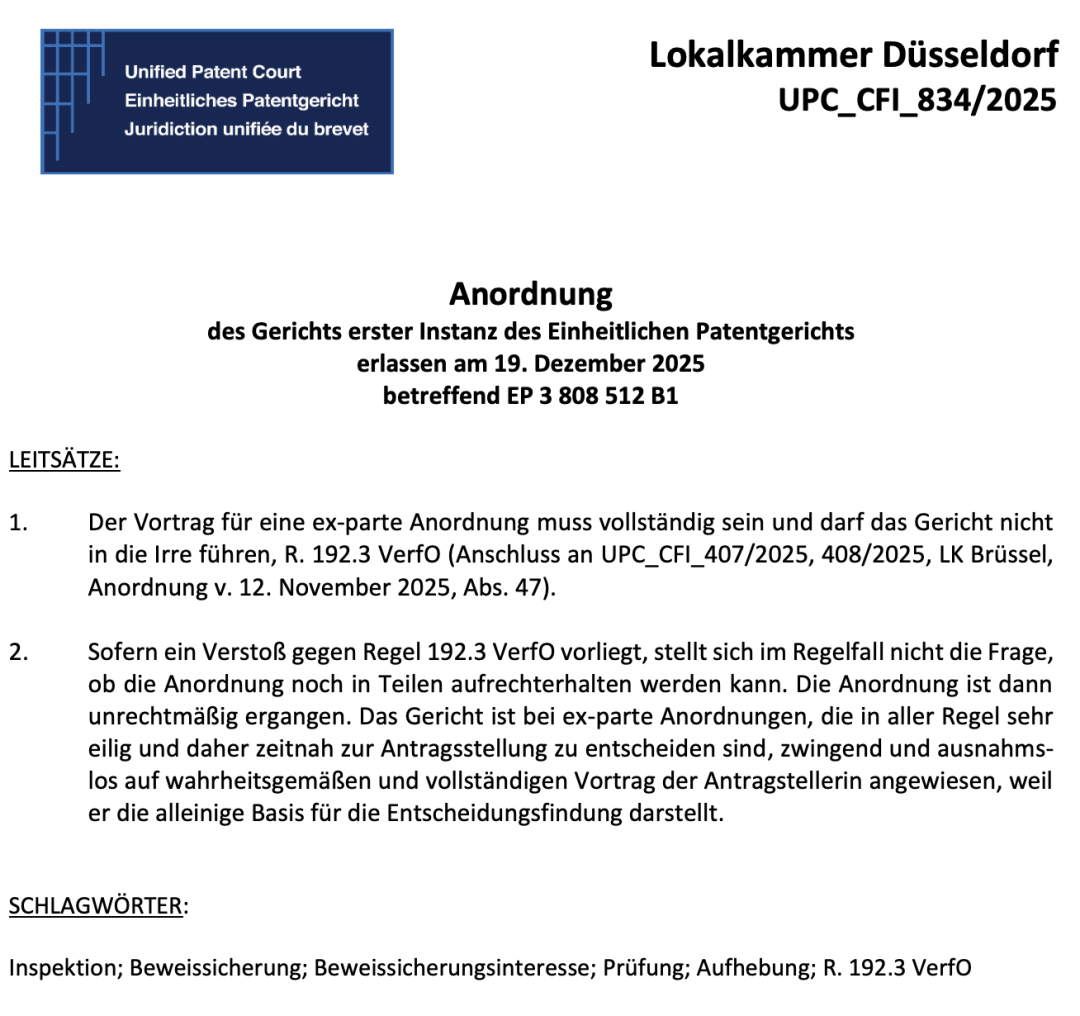
Core Viewpoint - The European Unified Patent Court (UPC) ruled that Ecovacs' request for an ex-parte order against Roborock during the IFA event was unlawful and subsequently revoked the order, highlighting the misuse of the UPC's emergency protection mechanism [1][4][13]. Group 1: Event Background - Ecovacs and Roborock are prominent domestic vacuum cleaner companies that have gained significant market share in Europe in recent years [4]. - During the IFA 2025, Ecovacs claimed that Roborock infringed its EP3808512 patent and sought evidence preservation from the UPC [10]. - The UPC is a supranational court established to address patent litigation across EU member states, providing jurisdiction that surpasses national courts [4]. Group 2: Legal Mechanism - An ex-parte order allows the court to issue orders without hearing the defendant's side, aimed at protecting urgent patent infringement cases [6][7]. - The UPC's emergency measures are designed to prevent the loss of critical evidence that may occur if immediate action is not taken [8][9]. Group 3: Court's Ruling - The UPC determined that Ecovacs' application for the ex-parte order was based on misleading and incomplete factual statements, violating the UPC's procedural rules [15][18]. - The court emphasized that if the facts had been fully disclosed, the ex-parte order would not have been issued, indicating a lack of urgency in the case [19][20]. Group 4: Principles of Ex-Parte Orders - The UPC operates under four key principles for issuing ex-parte orders: truthful representation, urgency, necessity, and proportionality [21][28]. - Ecovacs failed to demonstrate urgency as Roborock's products were already available for purchase on platforms like Amazon, undermining the claim of immediate need for evidence preservation [25][26]. Group 5: Industry Implications - The incident reflects the competitive nature of the cleaning appliance industry, where companies may leverage patent disputes to gain market advantages [35][40]. - The outcome of patent disputes can significantly impact market access, as seen when Roborock successfully sought a sales ban on Ecovacs' products in Germany [40].


顺丰、京东、美团打响“天空之战”,无人机重塑物流
Tai Mei Ti A P P· 2025-12-27 01:08
Core Insights - The rapid expansion of drone logistics routes reflects the explosive growth of the market, with projections estimating the low-altitude logistics market to reach between 1200 billion to 1500 billion yuan by 2025, and potentially climb to 4500 billion to 6050 billion yuan by 2035 [2] Group 1: Company Developments - SF Express has been a pioneer in drone logistics since 2012, receiving its first operational certificate in early 2024 and launching the first "air-ground collaborative" smart logistics center in February 2025 [4][5] - As of November 30, 2024, SF Express has opened over 600 drone routes nationwide, establishing a three-tier drone logistics system centered on "hub-grid-terminal" [7][8] - JD Logistics has been developing drone technology since 2015, focusing on remote area collection and creating efficient "air collection channels" during cherry harvest seasons, demonstrating significant time savings compared to traditional transport [8][9] - Meituan, which started its drone business in 2017, has launched multiple drone products and operates 65 routes across cities including Shenzhen, Shanghai, and Beijing, completing 740,000 commercial orders [10][11] Group 2: Market Dynamics - The core value of drones in logistics lies in achieving extreme efficiency and cost optimization, as evidenced by JD Logistics' use of drones to significantly reduce transportation time for perishable goods [11][12] - In emergency situations, drone delivery has shown to enhance delivery efficiency by over 50%, as demonstrated by the rapid transport of blood plasma to hospitals [12][13] - The implementation of drone logistics has proven to increase logistics efficiency by 60% and reduce costs by approximately 20% in specific applications, highlighting its economic viability [13] - Government support for the development of low-altitude logistics is evident in recent policy initiatives, including the 2025 government work report and local regulations promoting drone applications in various logistics scenarios [14][15]


反内卷不能只靠自律,还要靠法律,这场会议给出清晰信号
Tai Mei Ti A P P· 2025-12-27 00:52
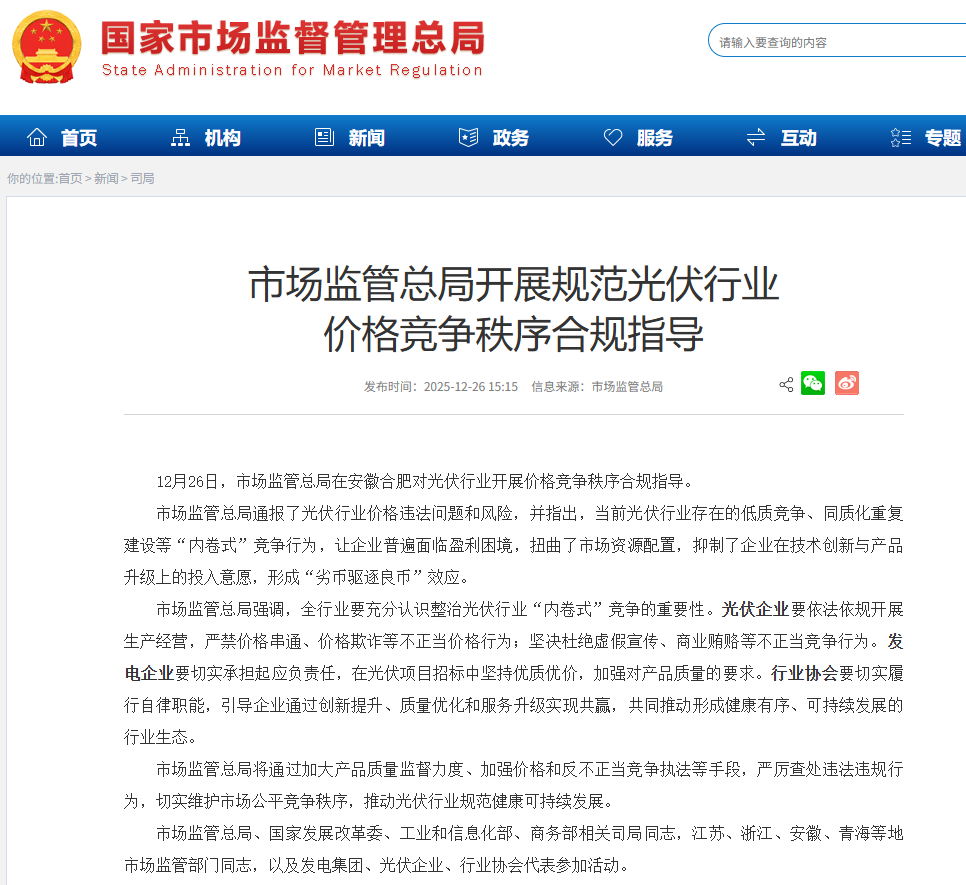
文 | 赶碳号科技 12月26日,权威媒体新华社、人民日报等均报道了光伏行业的一则重磅新闻,标题为《市场监管总局开展规范光伏行业价格竞争秩序合规指导》。正文如 下: 12月26日,市场监管总局在安徽合肥对光伏行业开展价格竞争秩序合规指导。 市场监管总局通报了光伏行业价格违法问题和风险,并指出,当前光伏行业存在的低质竞争、同质化重复建设等"内卷式"竞争行为,让企业普遍面临盈利 困境,扭曲了市场资源配置,抑制了企业在技术创新与产品升级上的投入意愿,形成"劣币驱逐良币"效应。 市场监管总局强调,全行业要充分认识整治光伏行业"内卷式"竞争的重要性。光伏企业要依法依规开展生产经营,严禁价格串通、价格欺诈等不正当价格 行为;坚决杜绝虚假宣传、商业贿赂等不正当竞争行为。发电企业要切实承担起应负责任,在光伏项目招标中坚持优质优价,加强对产品质量的要求。行 业协会要切实履行自律职能,引导企业通过创新提升、质量优化和服务升级实现共赢,共同推动形成健康有序、可持续发展的行业生态。 市场监管总局将通过加大产品质量监督力度、加强价格和反不正当竞争执法等手段,严厉查处违法违规行为,切实维护市场公平竞争秩序,推动光伏行业 规范健康可持续发 ...
谁是AI时代的有色金属之王?
Tai Mei Ti A P P· 2025-12-26 12:47
Core Insights - The AI revolution is not only about algorithms and codes but also a significant materials revolution, highlighting the critical role of metals like copper and silver in AI infrastructure [2][14] - The demand for specific metals is driven by the increasing power requirements of AI servers and data centers, which are essential for efficient energy transmission and heat dissipation [3][4] Group 1: Copper's Role in AI - Copper is essential for efficient power distribution in AI data centers, with a conductivity efficiency of 97%, minimizing energy loss during transmission [3][4] - The transition from traditional to AI data centers has led to a 60% increase in copper usage per rack due to higher power density requirements [4] - The demand for copper is expected to rise significantly, with estimates suggesting an additional 1 million tons of copper demand annually by 2030 due to AI data center construction [6][5] Group 2: Silver's Importance in AI Hardware - Silver, while used in smaller quantities than copper, plays a crucial role in high-performance AI hardware due to its superior electrical and thermal conductivity [7][8] - The shift towards advanced packaging technologies in AI chips is increasing the use of silver, particularly in chip interconnections and high-end connectors [9][10] - The demand for silver in AI applications is changing structurally, with a focus on high-value applications rather than sheer volume, as its role in critical connections is irreplaceable [10][11] Group 3: Key Rare Metals in AI - Rare metals such as gallium, indium, cobalt, and rare earth elements are vital for the performance of AI hardware, especially as silicon-based semiconductors approach physical limits [11][12] - These rare metals are essential for advanced processes in AI chips and high-performance motors used in AI applications, contributing to enhanced efficiency and performance [12][13] - The ongoing technological trends in AI hardware will continue to drive demand for these critical rare metals, emphasizing their importance despite lower usage volumes compared to copper [13][14]
抖音杀入移动支付,微信支付宝慌不慌?
Tai Mei Ti A P P· 2025-12-26 12:47
Core Insights - Douyin has launched its offline payment feature, "Douyin Buy," in major cities, marking a significant expansion into the payment sector, which is seen as a crucial piece of its commercialization strategy [1][4] - The Chinese mobile payment market is dominated by WeChat Pay and Alipay, which together hold over 90% market share, making it a challenging environment for new entrants like Douyin [2][3] - Douyin's strategy is to create a complete commercial ecosystem that retains user data and enhances user experience by keeping transactions within its platform [5][6] Market Dynamics - WeChat Pay and Alipay have established a stronghold in the payment market, with WeChat Pay leading at 59.7% and Alipay at 36.2% as of Q1 2025 [2] - Douyin's entry into the payment space is viewed as a defensive move to complement its existing online content and e-commerce offerings [2][6] - The competitive landscape is characterized by a "dual oligopoly," with both WeChat and Alipay continuously innovating to maintain their market positions [3][8] Douyin's Strategic Intent - Douyin aims to create a seamless transaction experience by integrating payment into its existing content and e-commerce ecosystem, thus preventing user data from flowing to competitors [4][5] - The introduction of "Douyin Buy" is seen as essential for Douyin to achieve its goal of a complete commercial loop, facilitating user transactions directly within the app [5][10] - Douyin's payment strategy is not merely optional but a necessary infrastructure for its broader ambitions in local commerce [5][12] Challenges Ahead - Douyin faces significant challenges in gaining market share due to the entrenched positions of WeChat and Alipay, which have established ecosystems that provide essential value beyond just payment [9][10] - Initial promotional strategies, such as subsidies, have shown limited effectiveness and may not sustain long-term user engagement [7][11] - The lack of unique payment scenarios and the reliance on existing payment methods like WeChat and Alipay within its own platform may undermine Douyin's payment initiative [11][12] User Experience and Merchant Perspective - User experience issues have been reported, including delays in transaction confirmations and refunds, which could hinder adoption [11] - Merchants prioritize transaction volume over the choice of payment method, making it difficult for Douyin to incentivize its payment solution [12] - The perception of Douyin's payment service as an additional option rather than a necessity may limit its growth potential in the competitive landscape [12]


对话神经科学家:情绪不是洪水猛兽,而是大脑的主动构建
Tai Mei Ti A P P· 2025-12-26 02:04
Core Insights - The article discusses the evolving understanding of emotions, particularly among the younger generation, who are often labeled as "more emotional" or "more fragile" [3][4] - Lisa Feldman Barrett presents the concept of "emotional construction," arguing that emotions are not uncontrollable waves but rather actively constructed by the brain based on bodily sensations, past experiences, and current contexts [3][5][6] Emotional Construction - Emotions are described as the brain's ongoing creative process, where it synthesizes complex signals from the body to produce basic feelings like pleasure or discomfort [5][6] - The brain does not have specific centers for emotions; instead, it dynamically constructs emotional experiences based on internal signals and contextual information [7] Emotional Granularity - Emotional granularity refers to the ability to differentiate and label emotional experiences accurately, which can significantly impact emotional regulation and coping strategies [8][9] - Individuals with high emotional granularity can identify subtle differences in their emotions, leading to better mental health and interpersonal relationships [9] Misconceptions About Emotions - There is no inherent "good" or "bad" emotion; emotions serve as tools whose value depends on the context and how they are utilized [11] - Common stereotypes, such as the belief that women are more emotional than men, are challenged by research showing no significant differences in emotional experiences between genders [12] Impact of Childhood on Emotional Construction - Early childhood experiences shape emotional construction abilities, with stressful or adverse environments potentially leading to heightened sensitivity to bodily sensations and emotional responses [17] - Emotional health is framed as not just an individual issue but a broader societal concern, particularly for those struggling with basic survival needs [17] Practical Implications - Understanding that individuals are co-creators of their emotional experiences can empower them to take more control over their emotional responses [18] - Emotional expression and regulation are likened to skills that can be developed through practice, similar to learning an instrument or a sport [18]

连英伟达都开始抄作业了
Tai Mei Ti A P P· 2025-12-26 01:38
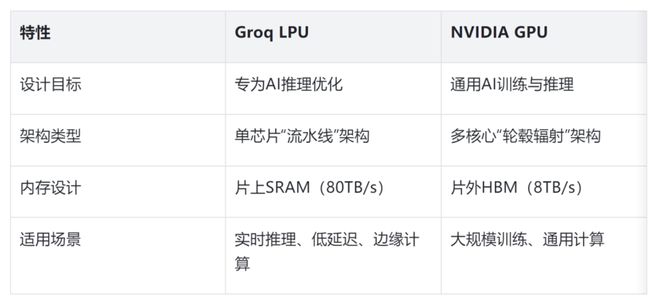
Core Insights - Nvidia announced a $20 billion cash technology licensing agreement with AI chip startup Groq, which is seen as a strategic move to mitigate competition and enhance its position in the AI market [1][9][19] - The deal allows Groq to operate independently while transferring most of its core technology assets to Nvidia, effectively turning a potential competitor into an ally [1][9] - The AI industry is undergoing a significant shift from centralized model training to large-scale inference, with the inference market expected to grow at a compound annual growth rate (CAGR) of 65%, reaching $40 billion by 2025 and $150 billion by 2028 [1][19] Group 1: Nvidia's Strategic Move - The $20 billion payment is 2.9 times Groq's valuation of $6.9 billion just three months prior, indicating a rare "valuation inversion" in the tech industry [1][10] - Analysts suggest that this transaction is a way for Nvidia to buy time and eliminate a significant threat while avoiding antitrust scrutiny [1][9] - Nvidia's cash and short-term investments totaled $60.6 billion as of October 2025, making the $20 billion investment manageable [10] Group 2: Groq's Technology and Market Position - Groq was founded by Jonathan Ross, a key developer of Google's TPU, aiming to create a chip optimized for AI inference, known as the Language Processing Unit (LPU) [2][3] - The LPU architecture offers significant advantages over Nvidia's GPUs, including ultra-low latency, high energy efficiency, and deterministic computing [3][12] - Groq's rapid rise in valuation and market presence includes partnerships with major clients like Meta and Saudi Aramco, and it has served over 2 million developers [4][5] Group 3: Competitive Landscape - Nvidia faces increasing competition in the inference market from Google TPU, AMD MI300X, and Huawei Ascend, which are gaining market share and offering cost advantages [6][7][8] - The dominance of Nvidia's CUDA ecosystem poses a significant barrier for competitors like Groq, as switching costs for enterprises are prohibitively high [5][15] - The AI chip market is expected to solidify, with Nvidia projected to maintain a market share of 75-80% by 2027, while other players like AMD and Google will hold smaller shares [14][19] Group 4: Future Trends and Opportunities - The integration of Groq's technology into Nvidia's ecosystem could lead to a dual-compute solution combining GPUs for training and LPUs for inference, enhancing overall efficiency [11][17] - The shift towards heterogeneous computing is anticipated, with over 80% of AI data centers expected to adopt this architecture by 2028 [17] - Despite the consolidation of power among major players, niche opportunities remain for startups in edge computing and specialized applications [18][19]