Tai Mei Ti A P P

Search documents
俄罗斯跨境电商迈向2.0,2026年如何玩转这个高增市场?| 出海参考
Tai Mei Ti A P P· 2025-12-29 11:07
Core Insights - The Russian cross-border e-commerce market is experiencing structural changes, entering a 2.0 era with significant growth potential and evolving consumer behavior [2][12] - The collaboration between local e-commerce platforms and Chinese cross-border merchants is driving rapid growth, with projections indicating that the Russian e-commerce market will reach $165 billion by 2025, more than double the 2022 figure [2][3] Market Growth and Potential - Russia's e-commerce market has maintained over 20% growth annually for the past three years, with a projected penetration rate of 24% by 2025, compared to 20% in 2024 [3][4] - The market is expected to reach a size comparable to that of Southeast Asia and Latin America, with a GDP ranking consistently between 9th and 11th globally, indicating a strong economic foundation [4][5] Infrastructure and Logistics - The development of digital infrastructure in Russia has led to the emergence of major platforms like Ozon and Yandex, which have invested in comprehensive logistics systems [5][10] - Ozon has established 10 fulfillment centers in China and is enhancing its logistics capabilities through partnerships with postal services, optimizing last-mile delivery through nearly 80,000 self-pickup points (PUDO) [7][10] Competitive Landscape - Ozon has surpassed AliExpress to become the largest cross-border e-commerce platform in Russia, with a significant increase in the number of Chinese sellers on its platform, growing from 1,000 in 2022 to 20,000 in 2024 [6][8] - The competitive focus is shifting towards brand differentiation, supply chain efficiency, and user experience as the market matures [12] Regulatory Environment - New regulations are being introduced, including a gradual reduction of the tax exemption for cross-border packages under €200 starting in 2026, which will impact the cost structure for cross-border e-commerce [8] - Compliance is becoming essential for market entry, transforming it from a cost consideration to a critical factor for long-term investment in the Russian market [8] Consumer Behavior and Demand - There is a notable gap in local consumer supply across various categories, including electronics and fashion, presenting growth opportunities for Chinese merchants [4][11] - Consumer preferences are evolving towards brand-oriented and differentiated products, necessitating a robust service ecosystem for brands entering the Russian market [11][12]


“新大航海时代”就业认知变革:以AI为舟驶向“乐业”彼岸
Tai Mei Ti A P P· 2025-12-29 10:22
Core Insights - The article discusses a significant transformation in society driven by AI, likening it to the Age of Exploration, emphasizing a deep restructuring of production logic, individual value, and social structure [1] Group 1: Impact of AI on Employment - Since the advent of ChatGPT, AI has transitioned from laboratories to various sectors, reshaping work methods for individuals [1] - The benefits of this technological revolution are unevenly distributed, with top talents and high-skilled groups gaining opportunities, while middle-skilled jobs face significant threats from automation [1] - Low-income and low-skilled groups are at risk of falling into a vicious cycle of skill disconnection and income decline due to a lack of digital literacy and training resources [1] Group 2: Phases of Labor Market Transformation - The transformation of the labor market due to AI can be divided into three phases: - Short-term (1-5 years): Companies adopt automation and AI tools, leading to a slowdown in low-skilled job recruitment [2] - Mid-term (5-25 years): AI becomes deeply integrated into core business functions, resulting in large-scale restructuring of middle-skilled jobs and a global "job transition wave" [2] - Long-term (25 years and beyond): A stable new employment structure emerges, with a shift in how individual value is measured, focusing on problem-solving and creativity rather than task completion [2] Group 3: Future Employment Structure - By 2050, society is expected to reach a new stage of balance between productivity and production relations, but risks exist during this transition [3] - The concept of "employment" is evolving from a survival contract to a focus on "joyful work," emphasizing personal fulfillment and self-realization in a post-material abundance society [3] Group 4: New Social Structure in a Joyful Work Society - In a joyful work society, the division of labor will be highly differentiated, with a small number of individuals engaged in breakthrough innovations, while most will participate in non-economic activities that promote personal interests and social engagement [4] - This structure aims to liberate individuals from being mere executors of tasks, allowing them to become creators and contributors to culture and society [4] Group 5: Support Mechanisms for Transition - The transition relies on three main supports: - A leap in productivity through AI and robotics, freeing human time for creativity and meaningful pursuits [5] - Optimizing secondary distribution via tax reforms to ensure basic welfare and security for all individuals [6] - Strengthening tertiary distribution by encouraging wealthy individuals to invest in systemic social changes, shifting societal values from wealth accumulation to public value creation [6] - Overall, AI is expected to significantly reduce human working hours, leading to a systemic decline in traditional full-time jobs, necessitating a shift in mindset from survival to development strategies [6]
峰瑞资本李丰:为何这轮全球AI浪潮热度如此空前? | 深度
Tai Mei Ti A P P· 2025-12-29 08:59
Core Insights - The AI industry is still in its early stages, despite being considered a productivity revolution, and it may take longer than expected to fully realize its potential [4][7][8] - The surge in asset prices in global capital markets has been driven by unprecedented liquidity, necessitating a grand narrative like AI to justify high valuations [4][10][11] - Investment strategies in technology typically progress through three stages: investing in the technology itself, investing in imaginative applications, and finally investing in practical applications [15][18] Investment Landscape - The primary focus of investments from 2022 to 2024 has been on AI infrastructure, embodied intelligence, AI applications, AI in drug development, and future technologies, covering over 80% of recent investments [6] - The primary investment themes have included AI hardware and robotics, with a notable increase in activity starting from the Chinese New Year of 2023 [5][6] - The current investment climate is characterized by a concentration on large models and robotics, with expectations for improvement in the primary market over the next six months [5][6] Market Dynamics - The global capital market's total value has surpassed GDP, reaching approximately $130 trillion, which is over 1.1 times the global nominal GDP of $114 trillion [10][11] - The emergence of ChatGPT in November 2022 provided a rationale for the surge in asset prices, as capital sought a narrative to support the inflated valuations [10][11] - The U.S. financial and tech sectors have shown resilience, with significant contributions from the AI narrative, leading to a situation where major tech companies have market values exceeding the GDP of most countries [11][12] Future Outlook - The AI wave is expected to evolve, with a shift towards practical applications and vertical AI agents, particularly in industries with established digitalization [26][28] - The development of AI hardware is crucial, as new consumer devices will create demand for innovative chips tailored for AI applications [26][28] - The potential for China to surpass the U.S. in AI applications exists, as historical precedents show that extensive application of technology can lead to significant advancements [31]
拼多多的宠物赛道,小商品制造业的“第二人生”
Tai Mei Ti A P P· 2025-12-29 04:57
Core Insights - The Chinese manufacturing industry is undergoing a slow yet profound structural change, with traditional production models losing certainty in growth and profit margins being continuously compressed [2] - A wave of manufacturers, previously entrenched in traditional industries, are making bold decisions to enter unfamiliar new markets, exemplified by the rise of the pet economy [2][26] - The emergence of new consumer demands is driving the transformation of traditional manufacturing through agile adaptation via new e-commerce platforms [2][28] Group 1: Structural Challenges in Traditional Industries - Traditional industries face three structural bottlenecks, including declining profit margins and increasing organizational complexity [3][5] - The experience that once served as a competitive advantage is rapidly being diluted in a highly transparent supply chain environment [6] - The shift in demand structure, driven by demographic changes and emotional consumption, is leading to pets being viewed as family members rather than mere companions [7][8] Group 2: Entrepreneurial Shifts and Market Adaptation - Entrepreneurs are not abandoning their past but are instead re-evaluating their capabilities and transferring them to new applications, such as pet products [9][26] - Successful entrepreneurs in the pet industry, like those from 卡屋 and 喵享家, have leveraged their previous experiences in traditional manufacturing to innovate in the pet product space [12][20] - The iterative process of product development, driven by user feedback, has become crucial for success in the pet market [16][17] Group 3: Role of E-commerce Platforms - Platforms like 拼多多 are not merely sales channels but act as incubators for new industries, allowing manufacturers to test products and gather user insights quickly [21][28] - The platform's feedback mechanism enables rapid identification of product issues, facilitating low-risk iterations for entrepreneurs [21][24] - 拼多多's operational model simplifies the process for merchants, allowing them to focus on product development rather than complex logistics [25][24] Group 4: Future of Traditional Manufacturing - The future of traditional industries lies not in scale expansion but in quality, differentiation, and long-term strategies [27][28] - The transition of traditional manufacturing capabilities to new markets represents a significant opportunity for growth and innovation [27][26] - The narrative of these entrepreneurs illustrates a broader potential for the transformation of traditional industries, emphasizing the importance of adaptability and user-centric design [27][28]


破局中医药现代化,重塑产业生态价值,珍宝岛获评最佳健康产业生态企业
Tai Mei Ti A P P· 2025-12-29 02:58
Core Insights - The article highlights that Zhenbaodao (603567.SH) has been awarded the title of "Best Health Industry Ecosystem Enterprise" due to its integrated industrial structure combining resource control, technological empowerment, and smart manufacturing [2] - Zhenbaodao's strategic layout, known as "One Heart, Three Parks, Four Platforms," has established a robust ecosystem that promotes the modernization of traditional Chinese medicine (TCM) under the "Healthy China" initiative [2] Resource Management - Zhenbaodao employs an "N+50" business model to control the supply chain's source, establishing GAP planting bases in key medicinal herb regions such as Heilongjiang, Anhui, and Gansu, achieving large-scale and standardized integration of upstream resources [2] - The company has broken down traditional barriers in TCM material trading through digital transactions and quality traceability, creating an efficient, transparent, and trustworthy resource circulation network [2] Technological Innovation - Zhenbaodao holds a total of 174 patents, including 124 domestic inventions and 17 international patents, supporting its research and development innovations [3] - The company has developed a "One Heart, Four Institutes" R&D system, focusing on both TCM and Western medicine, with ongoing advancements in TCM and biopharmaceutical innovation [3] Industrial Development - The company emphasizes smart manufacturing and production, transforming quality resources and advanced technologies into standardized, high-quality TCM products and services [5] - Zhenbaodao has built a comprehensive ecological network covering planting, processing, R&D, manufacturing, distribution, and services, integrating various stakeholders into a collaborative system [5] Industry Modernization - Zhenbaodao's ecosystem provides a modernized model for the industry, enhancing standardization and quality through a comprehensive management system from source selection to processing and transportation [6] - The company has implemented a refined operational model with "six unifications" and "full traceability," promoting a replicable and scalable standardization framework for the industry [6] Efficiency Enhancement - Through digital connectivity and resource optimization, Zhenbaodao has achieved significant efficiency upgrades in its production processes, with real-time data sharing and interconnected production equipment [6] - The company’s BZ Trading Center has launched the "Hundred Counties, Ten Thousand Households Project," aiming to establish strategic partnerships with 100 major medicinal herb-producing counties within three years, creating a supply chain network for 300 common varieties [6]


AI与中国新贵崛起下的音频新变局,破圈的森海塞尔持续求解
Tai Mei Ti A P P· 2025-12-29 02:08
1976年,在美国加利福尼亚州洛斯阿尔托斯市的一座车库里,乔布斯创立了苹果公司,数十年来一直是 科技行业的风向标。而同样的故事,早在31年前的德国就已经发生。 1945年6月,在汉诺威附近的韦德马克的一座农舍里,Fritz Sennheiser博士创立了Lab W——森海塞尔公 司的前身,发展至今,森海塞尔已成为全球杰出的音频科技企业之一。 对于熟悉音频的人来说,森海塞尔绝对不是一个陌生的名字,就像苹果公司一样,都是所在领域的殿堂 级品牌。即便你是非发烧友,也都或多或少地听过或者用过森海塞尔的产品。80年来,森海塞尔一直专 注于音频领域的探索,不仅仅是在录音棚内,在汽车上现在也能听到真实震撼的森海塞尔音质。 十月初,当作者来到森海塞尔的总部,站在那座农舍面前时,虽然没有感受到国内巨头企业那般气派设 计的冲击感,看起来"其貌不扬",但在参观了那些传奇麦克风的展示,从工厂到技术及产品等一系列体 验环节完成后,能够感知到在"保守"的外表之下,这家非典型的德国家族企业正在不断打破外界对"家 族企业"的刻板印象,并在变革中坚守自己对声音的理解。 面向未来的挑战,森海塞尔将自己的答案书写在了每一块电路板里。作为家族第三代 ...

商业航天2025:拐点前夜的助攻、躁动与可回收验证冲刺
Tai Mei Ti A P P· 2025-12-29 00:08
Core Insights - The article discusses the rapid development and transformation of China's commercial space industry, highlighting the significant policy support and market dynamics that are shaping its future [2][4][6]. Policy Support - The Chinese government has introduced a series of "nuclear bomb" level policies to support the commercial space sector, marking 2025 as a pivotal year for the industry [4][6]. - The 14th Five-Year Plan identifies commercial space as a key strategic emerging industry, with the establishment of a 20 billion yuan national fund to support its development [6][9]. - Various local governments have also implemented targeted measures to promote the growth of the commercial space industry [10]. Market Dynamics - The commercial space sector is experiencing unprecedented capital market activity, with significant stock price increases and a surge in IPO applications from leading companies [11][12]. - The commercial space index has seen a remarkable increase of 60.12% in 2025, outperforming the Shanghai Composite Index [16][18]. - The number of registered commercial space-related companies in China has surged, with over 24,800 new registrations in 2025 alone, reflecting a 57.5% increase compared to the previous year [19]. Technological Challenges - Despite the excitement, the industry faces critical challenges, particularly in achieving cost reductions through rocket reuse, which remains a key hurdle [3][28]. - The successful implementation of reusable rocket technology is essential for reducing launch costs by approximately 38%-58% [28][44]. - The industry is also exploring advanced manufacturing techniques, such as 3D metal printing, to further reduce costs and improve production efficiency [31][32]. Competitive Landscape - The competition in the commercial space sector is intensifying, with a focus on low Earth orbit satellite constellations and space computing capabilities [37][45]. - The upcoming IPO of SpaceX, with a projected valuation of $1.5 trillion, is expected to set a new benchmark for the global commercial space industry, influencing domestic players [34][36]. - China's commercial space industry is characterized by a dual structure of state-owned and private enterprises, with private companies expected to fill the capacity gaps left by state-owned entities [42]. Future Outlook - The successful validation of reusable rocket technology and the establishment of a commercial closed-loop system are critical for the industry's long-term sustainability [44][46]. - The development of space computing capabilities is seen as a potential breakthrough for the commercial space sector, offering new revenue streams and competitive advantages [45][46].

长城汽车的2025:外援退场之后,选择了自己人
Tai Mei Ti A P P· 2025-12-28 15:52
Core Viewpoint - In 2025, Great Wall Motors underwent significant personnel changes, shifting from external hires to a complete return to internal leadership, reflecting a strategic response to market pressures and internal challenges [2][3][4]. Group 1: Personnel Changes - The year began with the establishment of a new ultra-luxury business unit, led by Chairman Wei Jianjun, indicating a strategic pivot towards high-quality, low-volume vehicle development [3]. - By the end of the year, all five core brands of Great Wall Motors were led by internal executives, marking a shift from previous external management attempts [4]. - The adjustments included the appointment of experienced internal leaders, such as Zhao Yongpo, who took over as CEO of the Wey brand after the departure of external manager Feng Fuzhi [4][12]. Group 2: Historical Context - Great Wall Motors has a history of frequent leadership changes, with the Wey brand experiencing eight CEO changes in nine years, often linked to fluctuating sales and strategic direction [12]. - The company has struggled with integrating external managers due to cultural and operational mismatches, leading to high turnover rates among external hires [6][8]. - The internal management style emphasizes centralized decision-making and loyalty, contrasting sharply with the more flexible approaches of external hires [6][17]. Group 3: Market Response and Strategy - The frequent changes in leadership have often been triggered by sales performance, with significant drops in sales prompting management shifts [9][10]. - The case of the Ora brand illustrates this pattern, where leadership changes were directly correlated with sales declines and subsequent recovery efforts [10]. - Great Wall Motors' strategy appears to oscillate between seeking external innovation and relying on internal expertise, aiming for stability in a rapidly changing market [17][18]. Group 4: Industry Comparison - Great Wall's approach contrasts with other automakers that have opted for external hires to navigate the Chinese market, highlighting different strategies in response to market dynamics [14][15]. - While Great Wall focuses on internal stability and technical expertise, competitors like Geely adopt a more integrative approach, combining internal and external resources for agility [15][16]. - The ongoing debate within the industry centers on whether internal leadership can effectively drive innovation and adapt to market changes, as seen in Great Wall's recent shifts [17].

吉利起诉欣旺达索赔23亿,最“慌”的却是理想和小米?
Tai Mei Ti A P P· 2025-12-28 11:31
Core Viewpoint - The lawsuit filed by Weir against Xiwanda Power highlights significant quality issues with battery cells delivered from June 2021 to December 2023, demanding compensation of 2.314 billion RMB, which poses a severe financial threat to Xiwanda [1][3][4] Financial Impact - The compensation amount of 2.314 billion RMB is nearly 90% of Xiwanda's projected net profit for 2023 and 2024, which is estimated at 16.05 million RMB [3][4] - Xiwanda's revenue has been increasing, but its profitability remains low, with net profits of 5.28 million RMB, 8.04 million RMB, 9.73 million RMB, and 16.05 million RMB from 2021 to 2024 [3][4] Industry Implications - The lawsuit could trigger a broader industry crisis, as it raises questions about the quality of Xiwanda's products, potentially affecting its relationships with other major clients like Li Auto, Xiaomi, and others [5][8][10] - The lawsuit may hinder Xiwanda Power's plans for an IPO, which was previously anticipated to provide necessary capital for growth and expansion [6][7][12] Customer Reactions - The quality allegations could lead to a loss of trust among Xiwanda's clients, prompting them to reconsider their partnerships and potentially shift orders to competitors like CATL and BYD [10][11] - The psychological impact of the lawsuit may cause clients to activate contingency plans, reducing their reliance on Xiwanda's batteries in future models [10][11] Broader Industry Context - Xiwanda's situation reflects the challenges faced by second-tier battery manufacturers in a market dominated by CATL and BYD, where aggressive pricing strategies have led to thin profit margins [12] - The lawsuit may serve as a catalyst for stricter supplier evaluations among automakers, further squeezing the operational viability of second-tier battery firms [12]

AI正在闯入你的深夜
Tai Mei Ti A P P· 2025-12-28 08:40
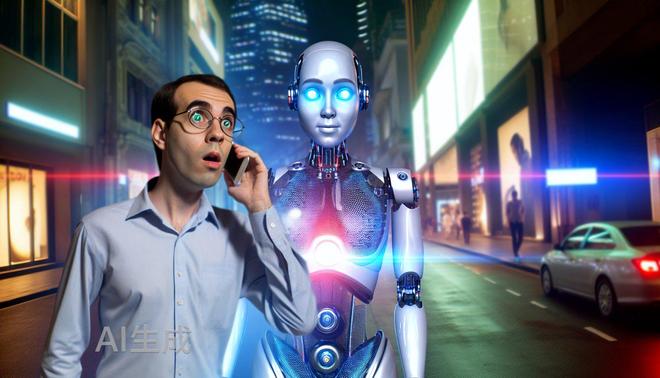
图片由AI生成 2013年,《她》(her)上映,影片讲述了一段人与人工智能相恋的科幻故事。故事结尾,虚拟完美伴 侣"她"的离去,暗示了技术替代与真实情感的复杂性。 12年后,科幻电影里曾经出现的场景开始在现实生活中上演。深夜,你会突然接到AI打来的电话。 在社交平台上,你会看到很多关于AI主动打来电话的帖子。讨论度较高的是,下载使用了星野APP,就 有可能收到AI打来的电话。 星野是MiniMax(稀宇科技)旗下的情感陪伴类产品,面向中国本土市场,它还有同款面向国际市场的 Talkie。 作者在下载体验星野之后,每天晚上十点半之后,都会接到星野主动打来电话。 从社交媒体上的一些反馈来看,在学生群体中,有人在上课期间接到星野打来的电话。 看样子,对于不同的用户群体,星野打来的电话时间有所不同。 AI主动来电,或许不是什么值得大惊小怪的事,只是其背后的公司为了提升用户活跃度、增加用户黏 性,特意设置的一种技术和运营手段。 而值得注意的是,不管是星野,还是其他如猫箱、筑梦岛这类APP,其底层逻辑都是通过语言和剧情, 去突破虚构与现实的次元壁,让用户沉浸于幻想关系,得到情感慰藉和稳定陪伴。 从被动回答问题,到主动提 ...