半导体行业观察

Search documents
AMD CPU,市占飙升
半导体行业观察· 2026-02-13 01:09
Core Viewpoint - AMD achieved significant growth in CPU market share across all major segments by the end of 2025, with a record high x86 processor shipment share of 29.2% in Q4, capturing 35.4% of x86 CPU revenue, indicating a strong competitive position against Intel [2][19]. Client CPU - AMD's client CPU market share increased by 3.8% in a single quarter, driven by competitive desktop and mobile CPU product lines, while Intel struggled with supply issues [3][6]. - In Q4 2025, AMD's client CPU market share rose to 29.2%, with a year-over-year increase of 4.6%, reflecting strong sales in desktop and mobile products [6][19]. - Intel maintained a dominant position with 70.8% of client CPU shipments but faced significant declines, reallocating manufacturing capacity to server CPUs [6][19]. Desktop CPU - AMD's desktop CPU market share reached 36.4%, benefiting from strong demand for its Ryzen 9000 series, while Intel's share dropped by 9.5% compared to Q4 2024 [9]. - AMD's desktop CPU revenue share hit 42.6%, indicating robust sales of high-margin processors, while Intel held 57.4% of total revenue due to strong OEM relationships [9]. Mobile CPU - AMD achieved a record market share of 26% in the mobile CPU segment, with a quarter-over-quarter increase of 4.1%, while Intel retained 74% of the market [13]. - AMD's mobile CPU revenue share reached 24.9%, showing significant growth and indicating increased competitiveness in both high-volume and high-margin segments [13]. Server CPU - AMD's server CPU market share increased to 28.8%, with a quarter-over-quarter growth of 1%, as the adoption of EPYC processors accelerated in cloud and AI/HPC deployments [18]. - AMD's server CPU revenue share rose to a record 41.3%, highlighting its success in selling high-priced, high-margin processors, while Intel held 58.7% of total revenue [18]. Summary - AMD's performance in the CPU market in 2025 was characterized by increased shipment volumes and revenue shares across all segments, with a notable x86 processor shipment share of 29.2% and revenue share of 35.4% in Q4 [19]. - The company's success is attributed to a strong product portfolio, while Intel's decline is linked to a lack of competitive products in the high-end market and supply constraints in the low-end market [19].


欧洲也想重返存储芯片赛道
半导体行业观察· 2026-02-13 01:09
Core Insights - The semiconductor industry is leaving Europe not solely due to high labor and operational costs, but rather due to the need for substantial investment and support from financial institutions and large corporations [2] - The geopolitical tensions and changing regulations present a critical opportunity for action in the semiconductor sector [3] Group 1: Industry Dynamics - Over the past 15 years, the semiconductor industry has seen a significant shift, with most funding, talent, and infrastructure concentrated in Asia and the U.S. [4] - The implementation of the European Chips Act aims to revitalize the memory sector in Europe, creating a unique opportunity to regain control over the entire memory supply chain [4] - Existing front-end manufacturing facilities in Europe, such as those operated by Robert Bosch and GlobalFoundries, are crucial for sectors like automotive and industrial automation [4][5] Group 2: Emerging Technologies - The current mainstream memory technologies, DRAM and NAND flash, have limitations, prompting interest in newer storage technologies like ferroelectric memory [6] - The German startup Ferroelectric Memory Company (FMC) has developed advanced circuit designs utilizing hafnium dioxide (HfO2), which is compatible with existing CMOS processes, making it a promising candidate for market introduction [6] - FMC's new funding will accelerate the commercialization of its memory technologies, aiming to fill the gap left by the bankruptcy of previous players in the market [7] Group 3: Future Outlook - The opportunity to fill the void left by the bankruptcy of previous companies represents a significant milestone for the semiconductor memory sector in Germany [7] - Long-term investment and support are essential for the semiconductor industry to establish a sustainable presence in Europe, particularly in Germany [7]
全年营收增近20%,华虹创下历史新高
半导体行业观察· 2026-02-13 01:09
Core Viewpoint - The company reported a record sales revenue of $659.9 million for Q4 2025, reflecting a year-on-year growth of 22.4% and a quarter-on-quarter growth of 3.9% [2][3]. Financial Performance - Q4 2025 sales revenue reached $659.9 million, with a gross profit of $85.5 million and a gross margin of 13.0%, compared to 11.4% in Q4 2024 [3]. - The company achieved a total annual revenue of $2.402 billion for 2025, marking a 19.9% increase year-on-year [2]. - The shipping volume for 8-inch wafers was 1.448 million pieces, up 19.4% year-on-year [3]. Capacity Expansion - The company is making significant progress in capacity expansion, with the first phase of the second 12-inch production line in Wuxi (FAB9) exceeding expectations [2][9]. - The acquisition of the Shanghai 12-inch manufacturing base (FAB5) is progressing smoothly, laying a solid foundation for future capacity enhancement and process upgrades [2][9]. Revenue Breakdown by Region - Sales revenue from China was $539.3 million, accounting for 81.8% of total sales, with a year-on-year increase of 19.6% [4][5]. - North America contributed $72.8 million, showing a significant growth of 51.3% year-on-year [4][5]. - Revenue from Europe reached $19.3 million, up 35.6% year-on-year, driven by demand for MCU and IGBT products [4][5]. Revenue Breakdown by Technology Platform - Embedded non-volatile memory sales reached $180.2 million, a 31.3% increase year-on-year, primarily due to demand for MCUs and smart card chips [6][7]. - Standalone non-volatile memory sales were $56.6 million, up 22.9% year-on-year, driven by increased demand for flash products [6][7]. - Power devices sales were $168.9 million, reflecting a modest growth of 2.4% year-on-year [6][7]. Revenue Breakdown by Process Node - Sales from 65nm and below process nodes reached $186.7 million, a 44.7% increase year-on-year [8]. - Revenue from 90nm and 95nm nodes was $163.9 million, up 54.0% year-on-year [8]. - Sales from 0.25um nodes decreased by 32.0% year-on-year to $1.9 million, primarily due to a decline in demand for power devices [8]. Revenue Breakdown by End Market - Consumer electronics remained the largest end market, contributing $419.6 million, which is 63.7% of total sales, with a year-on-year growth of 21.8% [9]. - Industrial and automotive products generated $146.7 million, up 18.3% year-on-year [9]. - Communication products sales reached $83.5 million, reflecting a 29.1% increase year-on-year [9].

CAN总线技术,新里程碑
半导体行业观察· 2026-02-13 01:09
Core Insights - Bosch demonstrates its leadership in the development and implementation of Controller Area Network (CAN) technology with the introduction of CAN XL, which bridges the performance gap between CAN FD and 100Base-T1 Ethernet [2][5] - The evolution of CAN technology has seen significant advancements, including the introduction of CAN FD in 2016 and the new SIC transceiver achieving data rates of up to 8 Mbit/s [3][5] - CAN XL offers a cost-effective solution with a data rate of up to 20 Mbit/s, while maintaining the classic advantages of CAN, such as robustness and arbitration [5][8] Development History - The development of CAN technology has two main paths: transceiver performance and the protocol itself, starting with the first CAN CC devices in 1990 and evolving to the latest CAN XL [3][5] - CAN XL represents a milestone in CAN technology development, designed to complement existing technologies while enhancing safety, reliability, and service-oriented architecture (SOA) support [5][7] Technical Features - CAN XL includes both physical hardware and communication protocol, with the latest NT156 transceiver supporting data rates of up to 20 Mbit/s [7] - The protocol ensures reliable data exchange among connected devices and has been standardized in ISO 11898-1:2024 [7] - It supports a payload capacity of up to 2,048 bytes, accommodating various applications and enabling seamless integration of service-oriented communication [9] Advantages of CAN XL - CAN XL provides a single bus for three types of traffic (CAN FD, CAN XL, and Ethernet), balancing speed, cost, and network complexity [8] - It allows for coexistence of CAN FD and CAN XL nodes on the same network, enhancing scalability and adaptability for different applications [9][12] - Compared to Ethernet solutions, CAN XL is a more economical option, especially in applications that do not require the complexity of Ethernet [12][10] Future Outlook - Bosch is committed to advancing vehicle communication standards and collaborating with industry partners to develop security protocols essential for secure software-defined vehicle (SDV) architectures [14][16] - The ongoing investment in performance, interoperability, and reliability positions Bosch as a trusted partner in the future of vehicle architecture [16]

OpenClaw一夜爆红,SoC站上风口,此芯xAI助力新智能引擎
半导体行业观察· 2026-02-13 01:09
Core Insights - The article highlights the rise of AI Agents, exemplified by Alibaba's "Qianwen" and the open-source AI assistant "OpenClaw," which have transformed user interactions and hardware demand in the AI landscape [1][5][25] Group 1: AI Agent Development - Alibaba's "Qianwen" allows users to perform complex tasks with a single command, showcasing the potential of AI in everyday applications [1] - OpenClaw, an open-source AI assistant, has gained significant traction in the developer community, leading to increased sales and discussions around the Mac mini [3][5] - The emergence of AI Agents signifies a shift from traditional computing tasks to more complex, system-dependent operations, indicating a need for new evaluation criteria in the chip industry [8][11] Group 2: Hardware Implications - The success of OpenClaw validates the SoC (System on Chip) architecture, particularly Apple's M series, as essential for the AI Agent era due to its integrated capabilities [8][10] - The article emphasizes that AI Agents require not only high computational power but also efficient resource management and stability for long-term operations [12][22] - The transition from GPU-centric models to AI Agents necessitates a focus on decision-making and task orchestration, moving beyond mere computational performance [11][25] Group 3: Market Trends and Future Outlook - The article predicts a shift in the semiconductor industry towards edge computing and AI-driven applications, with domestic chip manufacturers poised to capitalize on this trend [19][25] - The demand for AI Agents is expected to grow across various sectors, including personal assistants and edge computing devices, as they become integral to local decision-making [18][21] - The future landscape will prioritize system capabilities, ecosystem collaboration, and security mechanisms, marking a new competitive dimension for chip manufacturers [25]

芯片年出货量超300亿颗,Arm求变
半导体行业观察· 2026-02-13 01:09
Core Viewpoint - Arm, a company deeply embedded in the semiconductor industry, faces challenges despite its widespread design usage in smartphones and connected devices. The company is optimistic about future growth driven by artificial intelligence, even as its stock price has declined due to weak demand in consumer electronics [2][3]. Group 1: Company Overview - Arm does not sell chips but licenses its designs, allowing clients to modify and produce chips themselves, generating revenue through upfront licensing fees and royalties [2]. - The company has shipped over 300 billion chips, with more than 30 billion shipped in the last year alone [2]. Group 2: Market Dynamics - Despite the growth in the Philadelphia Semiconductor Index by 65% since early 2025, Arm's stock has decreased by 2% due to sluggish demand in smartphones and consumer electronics [2]. - The rise of artificial intelligence is expected to stimulate demand for Arm's chips, particularly in data centers, which are increasingly reliant on both GPUs and CPUs [4]. Group 3: Strategic Choices - Arm may need to evolve from merely selling design blueprints to developing its own chips to capture more value from the AI boom, which could alienate existing clients [3][6]. - The company is exploring new revenue streams through pre-assembled processor modules, which could triple income per chip compared to traditional designs [5]. Group 4: Financial Performance - Analysts project Arm's revenue for the current fiscal year to be around $5 billion, with half coming from patent royalties and the other half from licensing fees, marking a 20% growth from 2025 [4][5]. - The patent royalty per mobile chip was approximately $0.86, representing 2.5% to 5% of the chip's price [5]. Group 5: Competitive Landscape - Arm's revenue is significantly lower compared to major chip manufacturers like Nvidia and Intel, highlighting the need for strategic shifts to enhance profitability [5]. - The company faces competition from China's push for RISC-V architecture, which is seen as a domestic alternative to Arm and Intel designs [7]. Group 6: Future Outlook - Arm's CEO expresses concern over the company's ability to keep pace with the rapid evolution of AI technologies, as chip design and manufacturing can take years, while AI models can evolve in months [7]. - The company's ownership structure, with SoftBank holding over 85% of shares, may influence its strategic direction, particularly as SoftBank seeks to build a competitive chip portfolio [6].

HBM 4,首个赢家
半导体行业观察· 2026-02-13 01:09
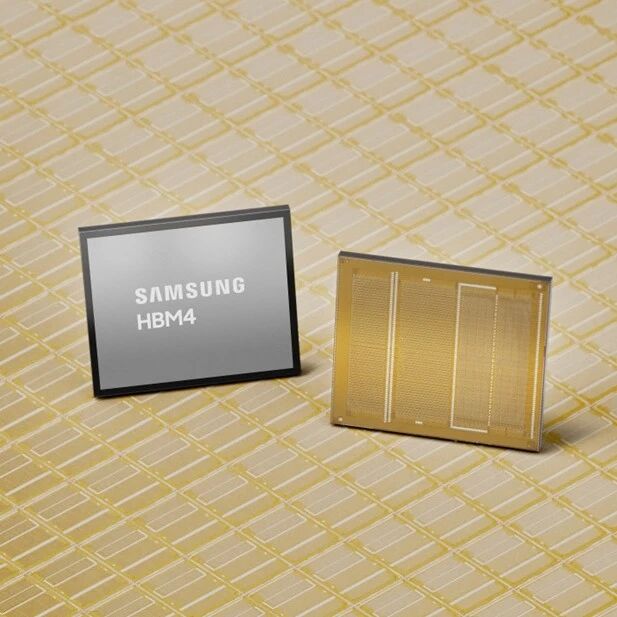
三星电子周四表示,已开始出货其第六代高带宽存储器 HBM4,成为首家开始大规模生产这种对人工智能至关重要的 下一代存储芯片的芯片制造商。 公众号记得加星标⭐️,第一时间看推送不会错过。 在经历了一轮"混战"之后,HBM 4市场终于迎来了第一个赢家,HBM市场也迎来了新的不确定性。 此次发布对三星而言意义重大。在前一轮HBM周期中,三星一直落后于竞争对手,这引发了人们对其在人工智能驱 动型半导体领域竞争力的担忧。凭借HBM4,三星旨在重振旗鼓,并在下一波人工智能内存需求浪潮中抢占先机。 提前一周出货,三星野心勃勃 据韩媒业内人士透露,三星在与客户协商后,将出货计划提前了约一周。据悉,该芯片已提前通过英伟达的质量测 试,这反映出其卓越的性能,正如消息人士所说。 从一开始,三星就立志超越全球半导体标准组织——联合电子器件工程委员会(JEED)制定的基准。为了实现这一 目标,它将最新的1c DRAM与4纳米制程工艺相结合——业内人士称,这种方法此前从未有人尝试过。 三星表示,三星的HBM4显存可提供高达11.7 Gbps的稳定处理速度,比业界标准的8Gbps提升约46%,树立了HBM4 性能的新标杆。这比其前代产品H ...
偷偷挣钱的芯片巨头
半导体行业观察· 2026-02-12 00:56
Core Insights - Nvidia stands out as a leading player in the current AI wave, primarily due to its GPU architecture and CUDA ecosystem, which have positioned it at the center of the computing power competition [2] - The rise of Nvidia is not an isolated event; it is part of a broader evolution involving various components such as wafer manufacturing, advanced packaging, storage bandwidth, and network interconnects [2] - The AI infrastructure competition has shifted from a focus on computing power to addressing connectivity bottlenecks, highlighting the importance of interconnect technologies [10] Group 1: Nvidia and AI Infrastructure - Nvidia's data center revenue has reached new highs, with its latest GPU products being in high demand even before full release [2] - The AI computing power explosion is not solely dependent on GPUs but requires a complex ecosystem of interconnected technologies [2] - The emergence of companies like Credo, which specializes in active electrical cables, illustrates the hidden champions supporting Nvidia's growth [3][4] Group 2: Connectivity Technologies - Credo's active electrical cables have gained significant market share, with an estimated 88% of the active cable market, and are projected to double its revenue to nearly $1 billion by 2026 [6] - Corning's optical fibers are becoming the preferred choice for data center networks due to their superior speed and energy efficiency compared to copper cables [7][9] - The coexistence of copper and fiber technologies in AI data centers reflects a unique symbiotic relationship driven by the specific demands of AI workloads [9] Group 3: Optical Communication and Components - Lumentum is transitioning from a telecommunications provider to a core enabler for AI data centers, with significant revenue growth driven by data center demands [12][13] - Coherent is also innovating in optical transceivers, with a focus on high-speed communication driven by AI and machine learning [16] - The demand for optical components is expected to surge as AI workloads increase, but companies must be cautious of potential demand fluctuations once connectivity bottlenecks are resolved [19] Group 4: Precision Timing and Materials - SiTime specializes in MEMS-based timing devices, which are crucial for maintaining synchronization in AI data centers, showing significant revenue growth [20][23] - T-glass, a critical material for advanced chip packaging, is in high demand but faces supply constraints, highlighting the vulnerabilities in the supply chain [24][26] - The importance of precision timing and reliable materials underscores the foundational elements that support AI infrastructure, often overlooked in discussions about advanced technologies [27][28] Group 5: Supply Chain Dynamics - The supply chain supporting Nvidia's empire is characterized by both strength in technological barriers and vulnerability due to single-source dependencies [30] - Companies like Corning and SiTime have shown resilience and adaptability, indicating a long-term commitment to technological advancement despite market uncertainties [30][31] - The future of AI infrastructure will depend on the ability of these suppliers to meet the exponential growth in computing power demand while managing risks associated with supply chain dependencies [31]

惠特科技起诉三安光电背后:另有隐情?
半导体行业观察· 2026-02-12 00:56
Core Viewpoint - The article discusses a dispute between Taiwanese semiconductor equipment manufacturer FitTech and Sanan Optoelectronics, focusing on equipment quality issues that led to financial losses and operational disruptions for Sanan [1][3]. Group 1: Dispute Background - FitTech announced that the China International Economic and Trade Arbitration Commission ruled that Sanan's subsidiaries must pay approximately 327 million yuan to FitTech due to delays in equipment delivery [1]. - Sanan claims that the reason for withholding payment is due to serious quality issues with the equipment supplied by FitTech, which has caused significant losses for Sanan [3]. Group 2: Equipment Quality Issues - The core of the dispute revolves around the LED die sorter, a critical automation device in semiconductor and LED manufacturing, which is responsible for sorting chips based on performance parameters [3]. - Sanan reported that the equipment delivered by FitTech did not meet contractual technical specifications, citing hardware deficiencies and software issues that hindered production [4]. - The quality defects in the equipment have severely impacted Sanan's production capacity and ability to meet international customer orders, leading to significant order losses and damage to reputation [4]. Group 3: FitTech's Strategic Shift - FitTech has indicated a strategic shift towards focusing on optical communication-related equipment and services, moving away from the LED die sorter business [6][7]. - The company plans to launch silicon photonics-related equipment and expand its applications in laser cleaning equipment, indicating a departure from its previous product focus [7]. Group 4: Domestic Competitors Rising - The article highlights the rise of domestic semiconductor equipment suppliers, such as Silan Microelectronics, which have improved testing efficiency and production capacity, posing a competitive threat to FitTech [10][11]. - Silan's market share in the domestic probe station market has increased from 13% in 2019 to 23.3% in 2024, indicating a shift in customer preferences towards more reliable domestic suppliers [11].

硅光推动,Tower营收创历史新高
半导体行业观察· 2026-02-12 00:56
Core Viewpoint - Tower Semiconductor reported strong financial performance for Q4 2025, with all key financial metrics showing comprehensive growth, indicating a continuation of the upward trend seen since the beginning of the year [2][3]. Financial Performance - Q4 revenue reached $440 million, a 14% increase compared to the same period in 2024 [2]. - Gross profit grew by 27% to $118 million, while operating profit increased by 39% to $71 million [2]. - Net profit totaled $80 million, marking a 48% year-over-year increase, with earnings per share at $0.71 [2]. - For the full year, revenue rose by 9% to $1.6 billion, and net profit increased by 6% to $220 million [2]. Future Guidance - For Q1 2026, Tower expects revenue of $412 million, projecting a 15% year-over-year growth with a fluctuation range of 5% [2]. Capital Expenditure and Investments - Tower announced a $650 million capital expenditure plan, with an additional $270 million investment aimed at expanding infrastructure for silicon photonics component production [2][3]. - The total investment of $920 million aims to significantly increase the production capacity of silicon photonics wafers by over five times the actual monthly shipment volume in Q4 2025 by December 2026 [3]. Strategic Partnerships - Tower has entered into a collaboration with NVIDIA to supply silicon photonics components for their products [2]. - However, the partnership with Intel is set to end, as Intel intends to withdraw from a 2023 agreement to produce 300mm wafers for Tower's customers [4][5]. Context of Intel Partnership - The agreement was established shortly after Intel's failed $5.4 billion acquisition of Tower, which was intended to solidify their business relationship [5][6]. - The contract envisioned a $300 million investment from Tower to support the production of next-generation 300mm chips at Intel's facility [5].