虎嗅APP

Search documents
找到人工客服的最好方法,除了发疯还有什么?
虎嗅APP· 2025-12-13 03:08
Core Viewpoint - The article discusses the deteriorating customer service experience in the internet industry, likening it to a challenging game where users struggle to reach human customer service representatives. The piece highlights the increasing reliance on AI and outsourced customer service, which often leads to unsatisfactory interactions for users [5][8][27]. Group 1: Customer Service Challenges - Finding human customer service on internet platforms has become increasingly difficult, requiring users to navigate through multiple layers of AI and scripted responses [12][16]. - AI customer service often fails to understand user queries, leading to frustration and the need for users to resort to unconventional methods to reach human agents [12][14]. - The experience of reaching a competent human customer service representative has become rare, with companies treating skilled agents as scarce resources hidden behind complex systems [25][26]. Group 2: Cost-Cutting and Industry Trends - The customer service industry is highly competitive and standardized, with companies focusing on cost reduction by outsourcing and utilizing AI [28][30]. - Companies typically retain sensitive operations in-house while outsourcing routine tasks to third-party service providers, which can lead to a decline in service quality [31][32]. - The trend of moving customer service operations from first-tier cities to lower-tier cities has resulted in cost savings but may also impact service quality due to varying employee skill levels [36][37]. Group 3: The Future of Customer Service - The article suggests that while AI is becoming more prevalent in customer service, it currently lacks the emotional intelligence needed to handle complex customer interactions effectively [39][40]. - The shift from a customer-centric approach to a cost-centric model has led to a significant decline in service quality, with companies prioritizing immediate financial savings over long-term customer satisfaction [43][44]. - There is a call for a more straightforward and efficient customer service process that does not frustrate users, emphasizing the need for genuine assistance rather than scripted responses [52][53].


2026,如何留在“牌桌”上?
虎嗅APP· 2025-12-12 13:54
Core Viewpoint - The core issue for enterprise management in 2026 will be "workforce productivity," shifting focus from growth to efficiency as investors no longer support "cost-agnostic growth" [5]. Group 1: AI Reshaping Work - By 2026, AI will transition from being a tool to becoming a digital employee, fundamentally altering knowledge work and enhancing human capabilities rather than merely replacing them [8][11]. - McKinsey reports that the adoption rate of generative AI in enterprises surged from 33% to 65% in just one year, with predictions that by 2030, 30% of work hours could be automated [8][11]. Group 2: Compliance as a Survival Line - Compliance will become a critical filter for business survival, as companies relying on non-compliant practices will be deemed outdated and at risk of being eliminated [12][13]. - The pressure for compliance will force business leaders to address internal efficiency issues, such as excessive meetings and redundant approvals, which consume employee time [14][15]. Group 3: From Cost Reduction to Empowerment - The focus will shift from "cost-cutting" to "empowerment-driven efficiency," emphasizing the need for management to view employees as investments rather than costs [16][21]. - Empowerment will involve enhancing time management, skills, and motivation, transforming management from a monitoring role to one that fosters excellence [22][27]. Group 4: The Great Elimination of Middle Management - By 2026, AI is expected to lead to the elimination of over half of existing middle management positions as organizations flatten their structures [24][26]. - The value of traditional management roles will diminish as AI takes over routine tasks, prompting a reevaluation of management's role in driving productivity [26][28]. Group 5: Global Operations and Efficiency - As Chinese companies increasingly expand overseas, the focus will shift to enhancing operational efficiency in global markets, requiring a unified approach to management across different regions [29][30]. - Compliance with local labor laws and cultural expectations will be essential for maintaining a competitive edge in international markets [32]. Group 6: The Five Transformations - The five key transformations—AI disruption, compliance pressure, management quality improvement, organizational streamlining, and global operations—will collectively redefine workforce productivity as a core organizational capability for the future [33].

假如每十年财产清零,现在最该做什么?
虎嗅APP· 2025-12-12 13:54
Core Viewpoint - The article discusses the concept of life being reset every ten years, emphasizing the importance of experiences over material wealth and the need for continuous learning and personal growth in a rapidly changing world [6][12][21]. Group 1: Importance of Experiences - The idea of wealth losing its significance if it is not spent within a decade suggests that experiences should take precedence over material possessions [6]. - Living in the moment and prioritizing experiential consumption, such as travel and personal hobbies, is deemed more valuable than accumulating physical goods [7][9]. Group 2: Knowledge and Skills - In a scenario where knowledge and skills are also reset every ten years, the focus should shift to developing transferable abilities that can be quickly adapted to new environments [12]. - Skills such as communication, adaptability, and creative thinking are highlighted as essential for thriving in a world where knowledge can be forgotten [12][13]. Group 3: Relationships and Trust - Building deep, trust-based relationships is emphasized as a crucial investment that remains valuable despite periodic resets [12][13]. - The article suggests that accumulating trust and social capital is more important than merely gathering resources [13]. Group 4: Health and Well-being - The significance of health is underscored, with a focus on investing time in physical and mental well-being, which cannot be reset [16]. - Creating lasting memories through rich experiences and personal creativity is presented as a way to find meaning in life despite the resets [17]. Group 5: Embracing Change - The article encourages embracing the cyclical nature of life, suggesting that each decade should be viewed as a new opportunity rather than a continuation of past burdens [21][22]. - The notion of accepting endings and welcoming new beginnings is framed as essential for personal growth and fulfillment [22].

我在深圳上性教育课
虎嗅APP· 2025-12-12 13:54
Core Viewpoint - The article emphasizes the importance of sexual education for children, highlighting the need for open discussions about sexuality to prevent misinformation and promote healthy understanding among youth [4][5][6]. Group 1: Sexual Education in Schools - Parents of fourth-grade students are increasingly advocating for sexual education classes due to concerning incidents among children [5][6]. - The sexual education instructor, Pi Pi, notes that the issues faced by parents are common across various schools in Shenzhen [6][7]. - The article discusses the challenges of teaching sexual education in a society where discussions about sex are often taboo, stressing that sexual education is about fostering critical thinking rather than merely discussing physical aspects [7][8]. Group 2: Classroom Dynamics - In a sexual education class, students exhibit a range of reactions, from excitement to discomfort, indicating a lack of prior exposure to such topics [10][11]. - The instructor's efforts to teach about body autonomy and privacy are met with both enthusiasm and resistance from students, reflecting their unfamiliarity with the subject [9][12]. - The article highlights that many students resort to online searches for information about sexuality due to a lack of guidance at home [12][13]. Group 3: Variability in Education Quality - There is a significant disparity in the quality and availability of sexual education across different schools in Shenzhen, with some students receiving comprehensive education while others do not [22][25]. - The article points out that the openness of schools towards sexual education does not necessarily correlate with the city's overall progressive reputation [21][22]. - The lack of consistent sexual education leads to students acquiring knowledge from unreliable sources, such as peers or inappropriate online content [26][27]. Group 4: Role of Parents - Parents play a crucial role in their children's sexual education, and their willingness to engage in discussions can significantly impact children's understanding [48][49]. - The article illustrates how some parents have successfully integrated discussions about sexuality into their family life, while others struggle due to their own discomfort [39][43]. - It emphasizes that early and open communication about sexuality can foster a healthier understanding and relationship with the topic as children grow [60][62]. Group 5: Broader Implications - The article warns that without proper sexual education, children may be misled by sensationalized or inappropriate content available online [49][50]. - It stresses the importance of teaching children to critically evaluate the information they encounter, particularly regarding sexual content [64][65]. - The ultimate goal of sexual education is to empower children to make responsible choices regarding their bodies and relationships as they mature [64][65].

AI 野火即将来临:疼痛无比,却极其健康
虎嗅APP· 2025-12-12 13:54
以下文章来源于经纬创投 ,作者经纬创投主页君 经纬创投 . 经纬创投的官方信息发布平台 本文来自微信公众号: 经纬创投 ,作者:经纬创投主页君,原文标题:《AI 野火即将来临:疼痛 无比,却极其健康 |【经纬低调出品】》 当下,对于AI大规模投资的"泡沫"讨论热火朝天,投资者应该如何理性地看待AI科技革命热潮? 但其实,AI领域的狂热从不是转瞬即破的泡沫,而是一场重塑生态的野火。这里面蕴藏着疼痛却暗 藏健康生长的力量。野火历来是行业周期的清醒剂,清理冗余、沉淀养分,为新物种腾挪空间, 2000年初的互联网泡沫和2008年的金融危机的浪潮早已印证,每一次燃烧后的修正,都能催生一批 核心强者。 如今硅谷资本充盈但赛道拥挤,人才稀缺且同质化竞争凸显,地表增量枯竭,野火的纠偏已然临近。 这场火势更集中于核心领域,算力既是燃料也是关键约束,过度建设的产能终将转向实际需求,而能 源根基的比拼更决定长远格局。 不同参与者如同生态里的各类植物,或易燃成养分,或耐火更坚韧,或借火获新生。唯有扎根核心能 力、筑牢商业闭环、适配真实需求,方能扛过周期考验。野火必然烧尽浮华,而真正的价值与机遇, 正藏在灰烬之后的新生之中,见证AI生 ...






不是年轻人嫌弃“老登”,是时代在出清“老登”
虎嗅APP· 2025-12-12 09:32
Core Viewpoint - The term "Old Deng" has become a widely recognized label in various sectors, indicating traditional industries and brands that are perceived as outdated or lacking innovation, particularly among younger consumers [5][10]. Group 1: Characteristics of "Old Deng" Brands - "Old Deng" brands are typically from traditional industries with low technological content, heavily reliant on channel construction and often family-owned, maintaining strong ties with political and business relationships [5][10]. - The essence of "Old Deng" consumption focuses on "preservation of value," with products like Moutai liquor, fuel vehicles, luxury goods, and cultural artifacts being favored, reflecting a preference for stability and understated sophistication [5][10]. - Brands that have been labeled as "Old Deng" often fail to resonate with younger consumers due to a lack of empowerment in decision-making during social drinking scenarios, leading to a negative perception of products like liquor [8][9]. Group 2: Evolution of Brands - The phenomenon of "brand aging" occurs as consumer demographics shift, with brands that were once popular among older generations losing appeal to younger consumers, exemplified by the transition of Hai Lan's Home from a trendy brand to one associated with older generations [17][18]. - The historical context of brands shows that many successful companies emerged during the rapid urbanization of the 1990s, capitalizing on the economic boom, but they now face the risk of becoming "Old Deng" as consumer preferences evolve [22][24]. - The case of Gome and its founder Huang Guangyu illustrates how a once-innovative business can struggle to adapt to changing market conditions after a significant period of absence from the industry [28][30]. Group 3: The Future of "Middle Deng" Companies - Current "Middle Deng" companies, which have validated their business models and possess strong cash flows, face the challenge of avoiding the "Old Deng" label as they struggle to innovate and grow user bases [35][36]. - Companies like Alibaba and Baidu are at risk of becoming "Old Deng" as their core businesses mature, but their ventures into AI and other emerging technologies provide opportunities to remain relevant [36][39]. - The ongoing technological advancements in areas such as drones, robotics, and AI suggest that companies maintaining their innovative spirit are less likely to transition into the "Old Deng" category [39].

这家被欧莱雅看中的中国公司,如何从资本寒冬死里逃生?
虎嗅APP· 2025-12-12 09:32
Core Viewpoint - The synthetic biology industry is facing a critical juncture, with the entrepreneurial window closing and competition shifting towards a survival of the fittest scenario, as highlighted by the experiences of companies like Weiming Shiguang [2][16]. Group 1: Company Overview - Weiming Shiguang, a synthetic biology startup, has completed six rounds of financing and achieved a valuation of over $100 million, gaining significant attention through a partnership with L'Oréal [3][4]. - The company has over 100 clients, including major players like L'Oréal and Huaxi Biological, and has registered 158 raw materials with the National Medical Products Administration [4]. Group 2: Challenges and Market Dynamics - The company faced significant challenges during the 2022 funding crisis, where many synthetic biology firms went bankrupt, including the pioneer Amyris [5]. - The investment landscape has shifted, with a focus on practical outcomes and stable supply capabilities rather than just potential market stories, making it harder for new entrants to secure funding [16][18]. Group 3: Product Focus and Innovation - Weiming Shiguang's strategic choice to focus on the relatively unknown 17-type collagen, rather than the more established 3-type collagen, reflects a commitment to scientific potential despite market uncertainties [10][11]. - The company is also exploring the potential of plant callus extracts, which are gaining traction in new raw material registrations, indicating a forward-looking approach to product development [11]. Group 4: Future Outlook - The company aims to leverage AI technology in material design and expand its application scenarios and global channels, aspiring to become a leader in the biomanufacturing sector [19]. - The historical context of synthetic biology suggests a transformative potential similar to that of chemical synthesis in the past, with implications for health and beauty industries [20].

大厂留给00后的好岗位不多了
虎嗅APP· 2025-12-12 09:32
Core Insights - The article discusses the challenges faced by the post-2000 generation entering the workforce, particularly in large internet companies, highlighting the limited high-quality job opportunities available to them [4][15]. - It emphasizes a shift in mindset among these young workers, who view jobs more as life experiences rather than mere means of survival, leading to a more pragmatic approach to their careers [4][10]. Group 1: Job Market Dynamics - Many post-2000 graduates are finding that high-paying positions often come with excessive workloads, leading to a realization that their effective hourly wage may be lower than expected [9][10]. - The job market for traditional roles, such as operations, remains saturated, while positions in AI and technology are growing but require specific skills and qualifications [4][32]. - The competitive landscape is further complicated by older employees blocking advancement opportunities and younger, cheaper interns entering the workforce [17][21]. Group 2: Employee Perspectives - Employees like Yezi and Ganlan express a sense of disillusionment with their roles, recognizing that despite the allure of working for a prestigious company, the actual work can be mundane and unfulfilling [10][12]. - Ganlan's decision to leave a high-profile job for a smaller company reflects a desire for personal growth and a more meaningful work experience, rather than just a prestigious title [14][30]. - The article notes that many young workers are aware of the limited career progression in large firms, leading them to seek alternative paths that offer better work-life balance and personal satisfaction [18][31]. Group 3: Future Outlook - The article suggests that while large companies are transitioning to more stable operations, the opportunities for new graduates are becoming increasingly competitive, particularly in high-skill areas like AI [32][33]. - The overall sentiment among young workers is one of caution, as they navigate a job market that is both promising and daunting, with many fearing the long-term implications of their career choices [30][31].

群狼围上来了,黄仁勋最大的竞争对手来了
虎嗅APP· 2025-12-12 09:32
Core Insights - The article discusses the competitive landscape for NVIDIA, particularly focusing on the recent approval by the U.S. government for NVIDIA to sell high-end H200 GPU chips to China and other approved clients, albeit with a 25% sales commission [4][5]. - Despite this approval, NVIDIA faces significant competition from major hyperscalers like Google, Amazon, and Microsoft, who are accelerating their development of self-designed AI chips [5][6]. Group 1: NVIDIA's Market Position - NVIDIA's market share in the AI GPU sector has drastically declined from 95% to nearly zero in the Chinese market due to previous export restrictions [4]. - The company's data center revenue reached $130 billion in the most recent fiscal year, but it is heavily reliant on a few major clients, with the top two clients accounting for 39% of revenue [5][6]. Group 2: Competitors' Developments - Amazon's new AI chip, Trainium 3, is designed to be a low-cost alternative to NVIDIA's GPUs, boasting training speeds four times faster than its predecessor and reducing costs by 50% [8][9]. - Google has released its seventh-generation TPU, Ironwood, which offers a tenfold performance increase over its predecessor and is optimized for high throughput and low latency [11][12]. Group 3: Market Dynamics - The article highlights a shift in the AI chip market, with major companies moving towards self-designed chips, which could potentially capture up to 25% of the market share from NVIDIA [22]. - Amazon aims to increase its self-designed chip usage to 50% and expand its AI cloud market share from 31% to 35% [20]. Group 4: Future Outlook - The competition between performance and cost is expected to intensify by 2026, as NVIDIA maintains a performance edge while competitors emphasize cost savings [17][19]. - The article suggests that while NVIDIA currently dominates the market, the increasing adoption of self-designed chips by major players could significantly alter the competitive landscape in the coming years [22].


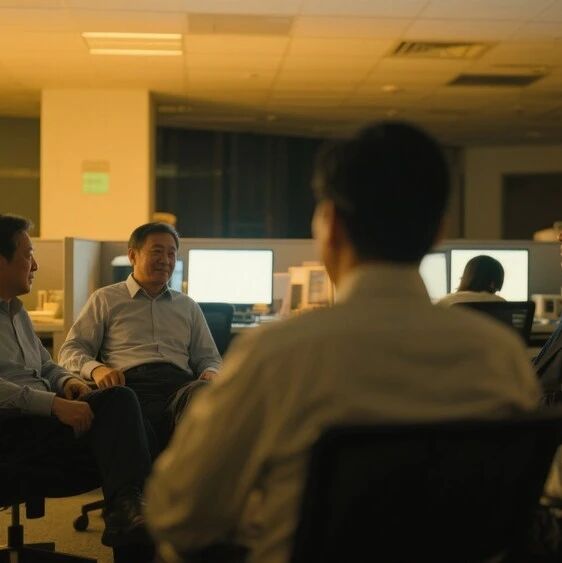
在大厂,人人都想成为老白兔
虎嗅APP· 2025-12-12 00:13
Core Viewpoint - The article discusses the phenomenon of "old rabbits" in large internet companies, referring to long-tenured employees who are perceived as low performers but are difficult to remove due to their established positions and relationships within the organization [4][9][20]. Group 1: Definition and Origin of "Old Rabbits" - The term "old rabbit" originated from Alibaba's talent assessment matrix, describing employees with good values but consistently low performance [9][10]. - As the internet industry matured, many early employees lost their business drive, becoming "old rabbits" characterized by long tenure, low output, and stable relationships [9][10]. - The criticism of "old rabbits" became more pronounced as companies faced slower growth and began to prioritize efficiency, leading to a push for their removal [10][12]. Group 2: Organizational Dynamics - The presence of "old rabbits" is often a symptom of deeper organizational issues, such as stagnation and outdated systems, which create an environment where low performance can thrive [16][17]. - Employees in higher positions often adopt a "do not disturb" attitude, leading to communication breakdowns and inefficiencies within teams [7][20]. - The article highlights that as companies enter a contraction phase, the likelihood of "old rabbits" emerging increases, particularly among older employees who may feel stuck in their careers [16][17]. Group 3: Employee Perspectives - Many employees express frustration with "old rabbits," viewing them as detrimental to team performance and resource allocation [22][23]. - The article illustrates how "old rabbits" can create a toxic work environment, where their lack of engagement negatively impacts younger employees and overall productivity [22][23]. - Despite the negative perceptions, some employees also recognize the survival strategies of "old rabbits," who navigate the corporate landscape by leveraging their experience and understanding of company dynamics [27][28]. Group 4: Challenges in Removing "Old Rabbits" - The difficulty in removing "old rabbits" stems from their deep understanding of company processes and the potential disruption that their removal could cause [25][26]. - Companies face significant costs associated with replacing "old rabbits," including recruitment, training, and potential declines in team performance during transitions [25][26]. - The article concludes that the presence of "old rabbits" is a complex issue, with organizations often becoming "rabbit dens" where inefficiency is tolerated due to the challenges of change [26].