雪球

Search documents
重磅利好!20万颗卫星点燃市场!马斯克也获批第二代星链7500颗卫星!商业航天还能持续多久?
雪球· 2026-01-11 06:47
Group 1: Commercial Aerospace Developments - Chinese companies have submitted an application for 203,000 satellites to the International Telecommunication Union (ITU), focusing on 14 satellite constellations, with CTC-1 and CTC-2 being the main contributors, each applying for 96,714 satellites [4] - The application aims to support the satellite internet industry and enhance the utilization of spectrum resources, with a vision to create an innovation platform for radio frequency technology [4][5] - The ITU mandates that newly submitted satellite applications must launch their first satellite within seven years and complete deployment of the total number of satellites within 14 years, making satellite manufacturing and launching a critical focus for the industry [5] Group 2: SpaceX Developments - The U.S. Federal Communications Commission (FCC) has approved SpaceX's application to deploy an additional 7,500 second-generation Starlink satellites, bringing the total approved to 15,000 [7] - The approval allows for technical upgrades and operation across five frequency bands, removing previous restrictions on signal overlap and network capacity [7] - SpaceX is required to launch 50% of the authorized satellites by December 1, 2028, and complete the deployment of the remaining satellites by December 2031 [7] Group 3: AI Developments - DeepSeek is reportedly planning to release its V4 version around the Chinese New Year in 2025, which is expected to surpass current leading models in programming capabilities [9] - The previous release of DeepSeek's large model R1 generated significant attention in both the AI industry and capital markets, indicating high expectations for the upcoming V4 release [9] Group 4: App Development - The "Is It Dead?" app, designed for solitary individuals, has gained popularity, reaching the top of the paid app charts, and requires a subscription fee of 8 yuan [13][14] - The app was developed quickly with a minimal initial investment of around 1,000 yuan and has already achieved profitability [16] - The app's founders estimate its valuation at 10 million yuan based on a proposed sale of 10% equity for 1 million yuan [16]


不要眼红极致的高收益,它跟我们没有半毛钱关系
雪球· 2026-01-10 13:30
Core Viewpoint - The article emphasizes that extreme high returns in the investment market are rare and often the result of luck rather than replicable strategies [6][7][9]. Group 1: Nature of Extreme Returns - Extreme high returns are small probability events and are often products of extreme luck rather than a reliable investment strategy [7][8]. - The majority of investors who achieve extraordinary returns are statistically similar to random chance, indicating that many so-called "investment gurus" are simply lucky [9]. Group 2: Investment Strategy - The article highlights that an investor's ability and effort determine the lower limit of investment success, while luck influences the upper limit [10]. - Successful investing requires a rigorous investment system, risk management, and emotional control, rather than solely chasing high returns [11]. Group 3: Asset Allocation - Unexpected excess returns in a well-structured asset allocation should be viewed as pleasant surprises rather than goals to pursue actively [12]. - Successful investors differentiate between planned returns and unexpected gains, maintaining their overall strategy despite occasional windfalls [13]. Group 4: Mindset Towards Investing - Investors should accept the uncertainty of outcomes and focus on improving their probability of success rather than trying to control every aspect of the investment process [14]. - Recognizing that market myths are often noise helps investors maintain a rational approach and focus on opportunities that align with their understanding and investment framework [15][16].

做好三件事,投资其实不难!
雪球· 2026-01-10 05:21
Core Viewpoint - Investment success hinges on three key factors: buying price, portfolio structure, and patience [4][5]. Group 1: Buying Price - It is crucial to avoid purchasing assets at inflated prices; even a good company can lead to poor returns if bought at a high price [6][7]. - Valuation metrics, such as the price-to-earnings (P/E) ratio, serve as a straightforward measure to assess whether an asset is overvalued or undervalued [8][10]. - Historical comparisons of valuation can provide context; for instance, the average P/E ratio of the CSI 300 index over the past decade is approximately 12 times, and deviations from this average can signal potential risks or opportunities [10][11]. Group 2: Portfolio Structure - Diversification is essential as it acknowledges the unpredictability of market movements; overconfidence in one's judgment can lead to significant losses [13][14][15]. - Relying solely on one stock or sector increases risk, as market conditions can change unexpectedly, leading to potential capital loss [17][18]. - Embracing broad market indices, such as the CSI 300 or Hang Seng Index, allows investors to capture growth across various sectors, reducing the risk associated with individual stocks [19][20]. Group 3: Patience - The stock market is volatile in the short term but tends to stabilize over the long term; thus, long-term investment strategies are more likely to yield positive returns [21][22]. - Historical data indicates that holding investments for longer periods significantly increases the probability of achieving positive returns, with a 60% chance of profit after one year and over 80% after three years [24]. - Long-term investments should be made with funds that are not needed in the near future, as this reduces anxiety during market fluctuations and helps avoid panic selling [26][27].

3万亿成交堆出的上涨,或许还能持续一段时间
雪球· 2026-01-10 05:21
Market Overview - A-shares have seen a significant increase, with the index rising by 1.18% on Friday and a month-to-date gain of 5.07% [4] - The trading volume in A-shares reached 3.1 trillion yuan, marking the first time since September 18 of the previous year that the volume exceeded 3 trillion yuan [5] Performance Analysis - The performance of small-cap stocks has notably improved, with the CSI 2000 index showing a strong relative performance compared to the CSI A-shares [7] - The CSI 1000 and CSI 2000 indices have outperformed the CSI 300 index, reversing the historical trend of small-cap stocks underperforming in January [7] Calendar Effect - The calendar effect indicates that the CSI 300 index had a return of 2.31% while the CSI 1000 index saw a return of 7.03% in January [10] - Historical data suggests that January typically favors large-cap stocks, but exceptions can occur [11] Sector Performance - The satellite, animation, and robotics sectors have led the market, while traditional sectors like telecommunications and semiconductors have underperformed [15] - The satellite industry has seen a significant increase in trading volume, reaching a market share of 5.98% [16] Investment Opportunities - The biotechnology sector has shown promising growth, with a recent increase of 3.74%, indicating potential for future gains [21] - The satellite industry is currently testing market sentiment and risk appetite, with a divergence in performance compared to traditional sectors [22] Comparative Analysis - The performance of Hong Kong stocks remains weak compared to A-shares, with a lack of capital inflow from mainland investors [25][34] - The Hang Seng Technology Index has diverged from the CSI TMT Index since July of the previous year, indicating a significant gap in performance [29]

降息暂停!股指新高!非农“喜忧参半”,存储+半导体再次上演暴力拉升!
雪球· 2026-01-10 05:21
Group 1: Market Overview - The US stock market indices reached new historical highs following the non-farm employment report, with the Nasdaq up 0.81%, S&P 500 up 0.65%, and Dow Jones up 0.48% for the week [1][2]. - The Russell 2000 index, representing small-cap stocks, also increased by approximately 0.8%, indicating a broad recovery in risk appetite [4]. Group 2: Non-Farm Employment Data - The US non-farm employment data showed a mixed picture, with an increase of only 50,000 jobs in December, below the market expectation of 60,000, marking one of the smallest increases since the pandemic [9]. - The unemployment rate recorded at 4.4% was slightly better than the expected 4.5%, suggesting that the job market has not "suddenly stalled" [9]. - The three-month moving average of employment showed a decline of about 22,000 jobs, raising concerns about future consumer spending [10]. Group 3: Interest Rates and Dollar Index - Following the non-farm data release, the probability of a rate cut in January dropped significantly from 11.6% to 2.8%, while the probability of maintaining the current rate rose from 88.4% to 97.2% [10]. - The dollar index increased by approximately 0.25% to 99.13, marking its second consecutive week of gains, reflecting a temporary retreat from expectations of further easing [11]. Group 4: Semiconductor and Storage Sector - The storage chip sector saw significant activity, with Micron Technology's stock rising over 5% to reach a historical high, driven by strong demand for AI servers [12][13]. - Analysts have raised Micron's target price to the range of $350-$400, with a report from Mizuho increasing it from $290 to $390, highlighting "AI accelerators + storage + equipment" as key investment areas for 2026 [16]. - SanDisk, another key player in the storage sector, has seen its stock price increase by over 550% since its re-listing, with a further rise of approximately 30%-35% in the first nine trading days of 2026 [17]. Group 5: Semiconductor Industry Dynamics - The semiconductor industry experienced a collective surge, with Intel, TSMC, and ASML all benefiting from increased investment in AI infrastructure [21]. - Intel's stock rose over 10%, reaching a nearly two-year high, following the announcement of its new Core Ultra Series 3 processors aimed at enhancing local AI capabilities [26]. - TSMC reported a 20.45% year-on-year revenue increase for Q4 2025, driven by AI chip orders, which are expected to support high capital expenditures in 2026 [26].

套用这个神秘公式,普通人也能省心赚钱
雪球· 2026-01-09 13:01
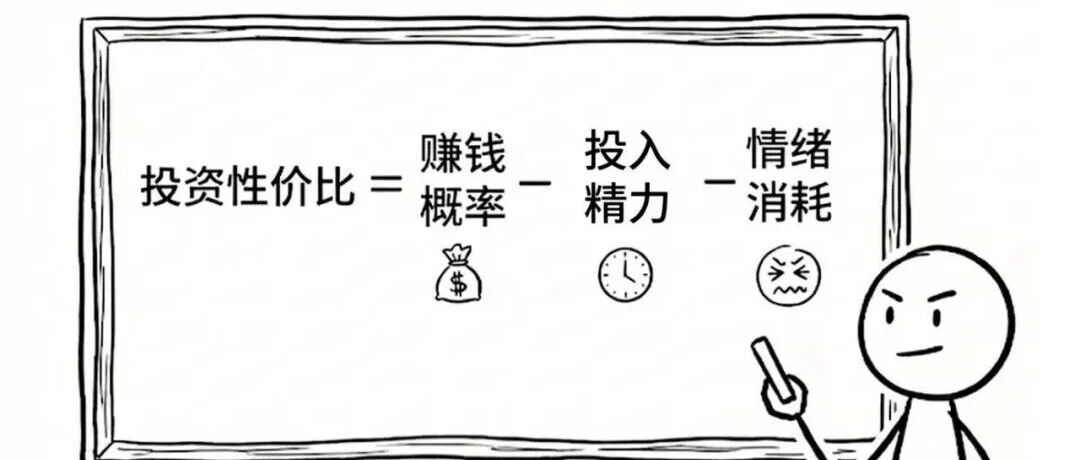
以下文章来源于我画你财 ,作者我画你财 我画你财 . 告别枯燥理论,看图学习理财。 ↑点击上面图片 加雪球核心交流群 ↑ 如何找到一个 「赢面大、努力少、心不累」 的投资方式呢? 我琢磨了一个非常简单的公式,把几种投资方法套进去,用它打分结果一目了然,最快筛选出投资性价比之王。 投资方法1 :【小道 消息】无法复制的运气游戏 经济学里,把咱们所处的投资环境称为 "非有效市场" 。 即一个消息、事件发生后,市场里的所有人不会马上知道,也不会立刻百分百体现在股价上。 但与此同时,情绪消耗却拉爆9分,每天都处于焦虑中。 投资方法2:【技术分析】 股价预测 的陷阱 技术分析通过研究历史价格、成交量等数据,试图预测股价短期走势。 它的赚钱概率仅 能 拿到3分: 试图通过历史价格预测未来,但市场影响因素庞杂,普通人的数据和分析工具有限,胜率很低。 别看它赚钱概率如此不稳定,但是使用起来所要承担的 压力可一点都不少 : 在这样的市场中,我们普通人作为信息链的最末端,经层层转手听到的"小道消息",要么越传越错,要么早已失去了时效性,买入正好在最高点。 所以此法,赚钱概率极低。 当然,这个方法的好处是,投入精力很少,不需要我们 ...
拉爆了!沪指10年新高,突破4100点!超3900只个股上涨,放量成交超3万亿!后市怎么看?
雪球· 2026-01-09 07:57
Market Overview - The A-share market continues to rise, with the Shanghai Composite Index achieving a 16-day consecutive increase, reaching 4100 points for the first time in 10 years [1][2]. Trading Performance - As of the market close, the Shanghai Composite Index rose by 0.92%, the Shenzhen Component Index by 1.15%, the ChiNext Index by 0.77%, and the North Star 50 Index by 1.05% [2]. - The total trading volume in the Shanghai, Shenzhen, and Beijing markets reached 31,523 billion yuan, an increase of 3,261 billion yuan from the previous day, with over 3,900 stocks in these markets showing gains [3]. Sector Performance - Leading sectors include AI applications, commercial aerospace, military equipment, controllable nuclear fusion, small metals, medical services, oil and gas extraction and services, computing power leasing, and retail, which saw significant gains [3]. - Underperforming sectors include insurance, airport and shipping, glyphosate, photovoltaics, brain-machine interfaces, and banking [3]. Robotics Sector - The humanoid robot sector is particularly active, with Fenglong Co., Ltd. achieving an 11-day consecutive limit-up, surpassing the previous record of 10 days [4][7]. - Fenglong's stock closed at 51.06 yuan per share, with a market capitalization of 11.157 billion yuan, and a static P/E ratio of 2,208.41 times, significantly higher than the industry average [10][8]. AI Applications - The AI application sector is experiencing a surge, with companies like Kunlun Wanwei and others reaching limit-up levels [11]. - The global leading AI company MINIMAX-WP listed in Hong Kong, with its stock price increasing by over 80% shortly after opening [13][14]. - The penetration of AI applications in consumer sectors is rapidly advancing, with significant growth expected in areas such as surgical robots and intelligent diagnostic systems [15]. Financing and Market Sentiment - As of January 8, the financing balance on the Shanghai Stock Exchange reached 1,306 billion yuan, an increase of 77.92 billion yuan from the previous day, indicating a positive market sentiment [17]. - Analysts suggest that the first half of 2026 may see a window for interest rate cuts, which could further enhance liquidity and support market growth [20][21].


2026年,保险公司还要买多少股票?
雪球· 2026-01-09 07:57
Core Viewpoint - The insurance industry is experiencing a strong sales performance, with original premium income expected to exceed 4 trillion yuan this year, leading to significant investment requirements for insurance companies [2][4]. Group 1: Insurance Sales and Investment Needs - The original premium income for insurance companies has reached approximately 3.7 trillion yuan, with projections suggesting it could surpass 4 trillion yuan due to robust sales [2]. - The decline in bank deposit interest rates and the maturity of high-interest long-term deposits are driving customers to consider alternative investment options, including insurance [4][7]. Group 2: Investment Strategies of Insurance Companies - Insurance companies are expected to allocate a significant portion of their investments to stocks, with estimates suggesting they may need to purchase between 6.8 billion to 8 billion yuan worth of stocks this year [13][18]. - The necessity for insurance companies to invest in stocks arises from the inability of fixed-income assets to cover liability costs, especially in a declining interest rate environment [11][13]. Group 3: Stock Preferences and Market Impact - High-dividend stocks are favored by insurance companies, as they provide better returns compared to fixed-income investments, with some companies already investing up to 20% in stocks [11][15]. - The total stock investment by insurance companies is projected to reach 3.6 trillion yuan by the end of Q3 2025, indicating a substantial presence in the market [17]. Group 4: Dividend Trends and Market Sentiment - The dividend yield for high-dividend stocks is notably higher, with the CSI Dividend Index showing a yield of 5.18%, compared to an average of 1.42% for the remaining A-shares [19][21]. - There is a contrasting trend in net purchases, with high-dividend stocks seeing a net increase of approximately 13.8 billion yuan, while other A-shares experienced a net reduction of 351.5 billion yuan [21].



投资的15条底层逻辑,战略性思维很重要!
雪球· 2026-01-09 07:57
Group 1 - The article emphasizes the importance of modifying the underlying logic of investors to achieve success in the stock market, suggesting that learning from successful investors is not enough [2] - It advocates for dedicating significant time to studying investment, recommending reading over 100 books on value investing and prioritizing financial freedom [2] - Understanding oneself and recognizing personal weaknesses is crucial, as these weaknesses can be magnified in the stock market [3] Group 2 - The article encourages independent thinking and breaking away from herd mentality, stating that the majority is often wrong in the stock market [4] - It highlights the importance of recognizing correlations rather than seeking causation in market movements, as causation is difficult to establish [4][5] - Investors should rely on statistical principles and probability rather than intuition, as emotional responses can lead to poor decision-making [5] Group 3 - Strategic thinking is deemed essential, with a focus on long-term perspectives and historical context to avoid being swayed by short-term market fluctuations [6] - The article asserts that mindset plays a significant role in investment success, with a stable mindset being more beneficial than high cognitive ability [7] - Acknowledging one's flaws and being open to learning from others is crucial for improvement in investment practices [8] Group 4 - Gaining family support and understanding in investment endeavors is important, as societal biases against investors can create challenges [9] - The article stresses the need to focus on important matters and people, avoiding distractions from trivial issues [9] - It discusses the significance of recognizing cycles in the market and the inevitability of fluctuations, emphasizing the need for a cyclical perspective in investment [9][10] Group 5 - The article warns against complacency and advocates for maintaining a humble and diligent approach to investing, as comfort can lead to poor performance [11] - It encourages maintaining passion for investment and curiosity for knowledge, which are essential for continuous learning and success [11]

牛市还亏钱?这几天的选择,决定了你的全年收益
雪球· 2026-01-08 13:00
Core Viewpoint - The article discusses the disparity between index performance and individual investor experiences during the bull market of 2025, highlighting that missing key trading days can significantly impact overall returns [5][6][8]. Group 1: Market Performance - The Shanghai Composite Index rose by 21.54% in 2025, while the CSI 500 and CSI 1000 indices saw nearly 30% gains [6]. - Despite the overall market gains, many investors reported losses, indicating a divergence in individual performance versus index performance [7][8]. Group 2: Importance of Key Trading Days - Missing the top 10 trading days in 2025 could have turned a 21.54% gain into a -1.37% loss due to the compounding effect of returns [17]. - Historical analysis from 2005 to 2025 shows that missing the best trading days consistently leads to significantly lower annual returns, with missing the top 10 days resulting in a drop from 582.66% to 220.03% in cumulative returns [22][32]. Group 3: Market Behavior Patterns - The article notes that significant market gains often occur after substantial declines, suggesting that the best days for returns are frequently found at the beginning of bull markets or the end of bear markets [36]. - A study by Hartford indicates that 78% of the highest daily returns in the S&P 500 occurred during bear markets or the first two months of a bull market [31]. Group 4: Investment Strategy Insights - The difficulty of timing the market is emphasized, as investors often react to downturns by attempting to avoid losses, which can lead to missing subsequent gains [40]. - The article suggests that maintaining a long-term investment strategy and staying invested in a diversified index can help capture significant market gains over time [46][52].