是说芯语

Search documents
艾睿风波,竟然“帮TI 清了波库存”?
是说芯语· 2025-10-21 06:12
Core Viewpoint - Arrow Electronics has been removed from the U.S. Entity List by the Bureau of Industry and Security (BIS), which is expected to impact the semiconductor distribution market positively, particularly for Texas Instruments (TI) [5][10]. Group 1: Events Leading to Removal - On October 8, 2023, BIS placed Arrow Electronics' subsidiaries in mainland China and Hong Kong on the Entity List due to their involvement in procuring U.S. electronic components for organizations in Iran [9]. - The removal notification from BIS indicates that several Arrow Electronics subsidiaries, including Arrow China Electronics Trading Co., Ltd., have been cleared from the Entity List [6][8]. - A temporary authorization was granted by BIS, allowing Arrow Electronics and its partners to maintain trade of specific controlled items until February 14, 2026, or until the official removal notice is published [7]. Group 2: Market Impact - The removal of Arrow Electronics from the Entity List has led to increased demand for TI products, as Arrow was previously a significant distributor for TI [10]. - Following the removal announcement, there was a notable increase in the prices of TI components, although some market participants reported mixed feelings about price changes [11]. - The market has shown signs of becoming more cautious, with customers adopting a wait-and-see approach after the initial surge in demand [11].




荷兰经济部长:安世半导体已上升至最高层级讨论!
是说芯语· 2025-10-21 04:47
Core Viewpoint - The recent statements from Dutch Economic Affairs Minister Karremans indicate a significant shift in the Netherlands' approach to semiconductor trade with China, emphasizing the need for cooperation to resolve issues related to chip supply for Chinese automotive manufacturers [1][3]. Group 1: Dutch Semiconductor Industry - The Dutch semiconductor industry employs 120,000 people, with 20% of these jobs linked to trade with China, highlighting the sector's dependence on the Chinese market [1]. - ASML, a key player in the industry, is projected to derive 28% of its revenue from China in 2024, with nearly 90% of this revenue coming from DUV lithography machines [1]. Group 2: Global Supply Chain Dynamics - The unique position of Nexperia in the semiconductor market makes it a "must-have" in the automotive electronics sector, as its products, while not cutting-edge, are irreplaceable in the short term [3]. - A hardline stance from either side could lead to a "lose-lose" situation, resulting in asset losses for Chinese companies and supply chain disruptions for Dutch and European industries [3]. Group 3: Diplomatic and Trade Relations - The Chinese Ministry of Commerce has emphasized the importance of the Netherlands maintaining an independent stance and respecting market principles to protect the rights of Chinese investors [3]. - There is a call for the Netherlands to move away from politically motivated thinking influenced by the U.S. and to resolve differences through negotiation [3].


收入归零!美光宣布退出!
是说芯语· 2025-10-20 13:43
Core Viewpoint - Micron Technology has announced its exit from the data center server chip business in China, while continuing to supply chips for the automotive and smartphone sectors in the Chinese market [1][3]. Group 1: Business Impact - Micron's revenue from mainland China was approximately $3.4 billion, accounting for 12% of its total global revenue in the last fiscal year [3]. - The business segment being exited is the "server chip" sector, which includes critical storage components such as DRAM and SSD [3]. - Micron is one of the "big three" in the global DRAM market, alongside Samsung and SK Hynix, controlling over 90% of the market share [3]. Group 2: Financial Performance - For the fourth quarter of fiscal year 2025, Micron reported revenues of $11.32 billion, a 46% increase year-over-year [4]. - The total revenue for fiscal year 2025 reached $37.378 billion, with the cloud storage business (CMBU) generating $4.543 billion, a significant year-over-year growth of 213.5% [4]. - High Bandwidth Memory (HBM), used for AI data processing, is one of Micron's most profitable products [4].


曝:安世半导体东莞工厂限制出货,员工将“上四休三”!
是说芯语· 2025-10-20 04:43
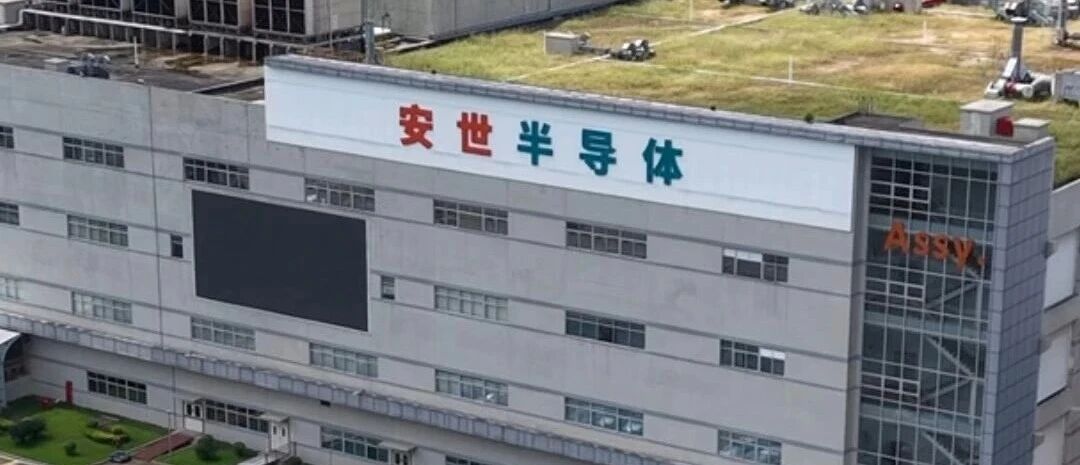
Core Viewpoint - The article discusses the impact of Dutch government intervention on Anshi Semiconductor's operations in Dongguan, leading to shipment restrictions and reduced working hours for employees, which may affect the supply chain and production efficiency [1][2]. Group 1: Company Operations - Anshi Semiconductor's Dongguan factory has restricted shipments since the National Day holiday due to Dutch government intervention, with some positions shifting to a "four days on, three days off" schedule starting next week, and overtime hours being reduced from 70-80 hours per month to 40-50 hours [1][2]. - The Dongguan factory is responsible for 70% of global packaging tasks, but currently faces raw material shortages, with inventory only sufficient until the end of December [2]. Group 2: Supply Chain and Market Impact - Trade merchants have confirmed that the products are facing shortages and price increases, indicating a significant supply chain disruption [2]. - The parent company, Wentai Technology, has initiated a "self-rescue" strategy in China to localize the supply chain, but challenges remain due to core design and wafer manufacturing being based in Europe, complicating technology transfer and customer certification [2]. Group 3: Regulatory and Management Changes - On October 12, Wentai Technology announced that Anshi Semiconductor's assets and intellectual property were frozen due to Dutch government directives, effective from September 30, for a period of one year [2]. - Some foreign executives at Anshi Semiconductor have requested to transfer their shares and have suspended the CEO position appointed by Wentai Technology [2].

突发!三大科技巨头,加速撤离中国
是说芯语· 2025-10-20 02:18
Group 1 - Major tech giants Microsoft, Amazon, and Google are intensifying efforts to relocate their product manufacturing and data centers outside of China [1] - Microsoft plans to fully transition production of Surface devices and data center servers outside of China by 2026, requiring suppliers to prepare for this shift [2][5] - Microsoft has been moving a significant portion of its server production overseas since last year, aiming for at least 80% of the bill of materials (BOM) to come from outside China [4] Group 2 - Amazon's AWS is also pursuing a strategy to produce servers and AI data center equipment outside of China, considering reducing reliance on long-term PCB supplier SYE [9][10] - Industry insiders note that completely eliminating Chinese suppliers from AWS's supply chain is unrealistic due to their significant role and advantages in technology, quality, and cost [11][12][16] Group 3 - Google is actively expanding its production base in Southeast Asia, specifically requesting suppliers to increase server production capacity in Thailand, where new facilities are being established [16] - Thailand is emerging as a major server assembly hub, with companies like Quanta and Inventec planning to build SMT production lines, including a $25 million investment by Quanta [19] - Vietnam is becoming a key server production base for Foxconn outside of China, while India is also experiencing significant opportunities with Apple's production expansion, which now accounts for about 20% of Apple's global iPhone output [20][22] Group 4 - Southeast Asian countries are enhancing infrastructure investments and offering tax incentives to attract global tech manufacturing shifts [23]




豪掷200亿元!500亿芯片龙头官宣要建高端生产线
是说芯语· 2025-10-19 23:39
Core Viewpoint - Silan Microelectronics (士兰微) and its subsidiaries are investing a total of 51 billion yuan in Xiamen Silan Jihua Microelectronics Co., Ltd. to advance the construction of a 12-inch high-end analog integrated circuit chip manufacturing line project, with a total planned investment of 200 billion yuan for the project [1][2][4]. Investment Details - The investment will be made in collaboration with Xiamen Semiconductor Investment Group and Xiamen New Wing Technology Industrial Co., Ltd. Silan Microelectronics will contribute 15 billion yuan, while the total registered capital of Silan Jihua will increase from 1 million yuan to 51.1 billion yuan after the capital increase [1][2][5]. - The project will be implemented in two phases, with the first phase requiring an investment of 100 billion yuan, including 60.1 billion yuan in equity and 39.9 billion yuan in bank loans, aiming for a monthly production capacity of 20,000 wafers [2][4][5]. Project Capacity and Timeline - Upon completion of both phases, the project is expected to achieve a total monthly production capacity of 45,000 wafers (540,000 wafers annually), with the first phase projected to commence production in Q4 2027 [2][4][5]. - The project targets high-end analog integrated circuit chips, focusing on emerging industries such as new energy vehicles, computing servers, and robotics, addressing critical chip shortages in these sectors [2][4]. Strategic Partnerships - The investment is part of a broader strategic cooperation agreement with the Xiamen municipal government and aims to deepen the industrial ties between Silan Microelectronics and Xiamen, following a previous investment plan of 12 billion yuan for an 8-inch SiC power device chip production line [4][5]. - The collaboration is expected to accelerate the aggregation of the semiconductor industry chain in Xiamen and contribute to the establishment of an international high-end chip industry ecosystem [4].

安世中国致全体员工信(全文)
是说芯语· 2025-10-19 04:04
Core Viewpoint - The article discusses the operational status and employee welfare of Nexperia China amidst external pressures and government interventions affecting its parent company in the Netherlands. It emphasizes the independence of the Chinese entity and reassures employees about their rights and compensation. Group 1: Company Operations - Nexperia China has confirmed that all domestic operations and employee salaries are functioning normally despite the recent account restrictions imposed by the Dutch headquarters [1][4] - The company is taking measures to ensure the continuity of its supply chain and operations in response to potential risks from Europe [1][3] Group 2: Employee Communication - An open letter from Nexperia China reassured employees that they are part of an independent Chinese enterprise and should follow domestic company directives [3][4] - Employees are entitled to refuse any external instructions that are not authorized by the legal representative of the domestic company, ensuring their rights are protected [3][4] Group 3: Government and Industry Response - The Chinese Ministry of Commerce has expressed hope that the Dutch side will adhere to contractual obligations and rectify any erroneous actions [3] - The China Semiconductor Industry Association has stated it will continue to monitor the situation and express concerns through legal means [3]
黄仁勋:是的,我们已100%退出中国市场!
是说芯语· 2025-10-19 02:55
Core Insights - Nvidia's CEO Jensen Huang stated that the company's market share in China's advanced AI accelerator market has plummeted from approximately 95% to 0% due to ongoing U.S. export controls [1][3] - Nvidia has effectively exited the Chinese market, with Huang indicating that the company has removed China from its business forecasts [4] - The U.S. government's export restrictions have significantly impacted Nvidia's data center GPU product line, which previously contributed 20% to 25% of the company's data center revenue [3] Group 1: Market Impact - Nvidia's data center business revenue exceeded $41 billion, reflecting a year-over-year growth of 56% [3] - The rapid decline in market share highlights the unexpected speed of market changes due to policy decisions [3] - Huang expressed concerns that the U.S. has lost access to one of the largest markets globally, with the current policies leading to a complete market exit [3] Group 2: Industry Trends - The AI industry is showing signs of fragmentation, with Chinese tech companies increasingly turning to domestic chips and alternative hardware in response to export restrictions [3] - Huang warned that comprehensive restrictions could accelerate the development of competitive alternative products within China [3] - The shift towards domestic solutions indicates a significant transformation in the demand landscape and supply chain dynamics for AI infrastructure in China [3]

突发!美国 “实体清单” 再洗牌!艾睿电子关联公司被移除,是 “误伤止损” 还是 “谈判筹码”?
是说芯语· 2025-10-18 11:04
Core Points - The U.S. Department of Commerce's Bureau of Industry and Security (BIS) has officially notified Arrow Electronics that its associated companies will be removed from the export control "Entity List" [1][3] - This removal will allow the associated companies to trade controlled technologies and products with U.S. companies without strict limitations [1][4] - The decision to remove Arrow's associated companies comes just over a month after they were initially placed on the Entity List [2][6] Summary by Sections Removal Notification - Arrow Electronics, Inc. received a notification from BIS indicating that the End-User Review Committee has decided to remove several of its associated companies from the Entity List, including Arrow China Electronics Trading Co., Ltd. and Arrow Asia Pacific Limited [3][4] - The removal will be formally published in the Federal Register and is expected to take effect in the coming weeks [4][7] Implications of Removal - The removal signifies a positive turn in the case against Arrow Electronics, which was previously listed due to alleged violations of U.S. national security or foreign policy interests [6] - The industry is closely monitoring the official announcement in the Federal Register for further details [7] Analysis of the Decision - The decision to remove Arrow from the Entity List may indicate that the U.S. government recognized the potential negative impact on its own semiconductor companies, as Arrow is a key distributor in the global chip supply chain [8] - There is speculation that Arrow may have provided compelling new evidence to demonstrate compliance, or that the situation was leveraged as a bargaining chip in broader negotiations [8][9]

国产GPU四小龙上市竞速,沐曦10月24日上会
是说芯语· 2025-10-18 07:37
Core Viewpoint - The article discusses the competitive landscape of domestic GPU companies in China, highlighting the upcoming IPO of Mu Xi Integrated Circuit and the recent success of Mo Er Thread, emphasizing the importance of capital in advancing technology and market positioning in the AI computing sector [1][2][4][8]. Group 1: Mu Xi Integrated Circuit - Mu Xi Integrated Circuit's IPO on the Sci-Tech Innovation Board is set for review on October 24, following the successful listing of Mo Er Thread [1]. - The company focuses on high-performance GPU chip development, with a product matrix covering AI computing, general computing, and graphics rendering, achieving over 25,000 units sold [2]. - Mu Xi aims to leverage capital to overcome technical bottlenecks in high-performance GPUs and enhance penetration in vertical sectors like education, finance, and healthcare [2]. Group 2: Mo Er Thread - Mo Er Thread has set a benchmark by successfully passing its IPO review, with its MTT S5000 chip nearing the performance level of NVIDIA's A100 [4]. - The company reported a revenue scale of 1.8 billion yuan and has over 2 billion yuan in pending orders, indicating market recognition of its technology [4]. - Mo Er Thread plans to use its proposed fundraising of 8 billion yuan entirely for the development of next-generation chips targeting AI training and graphics rendering [4]. Group 3: Other Competitors - Suiruan Technology and Biran Technology are in the preparatory stages for their IPOs, with unique technological highlights: Suiruan focuses on a "reasoning before training" strategy, while Biran's BR100 chip boasts performance three times that of the A100 [4][6][7]. - The progress of these companies may influence the capital landscape of the domestic GPU industry [4]. Group 4: Market Context - The global GPU market has been dominated by foreign manufacturers, with NVIDIA's CUDA ecosystem presenting significant barriers to entry for domestic firms [7]. - The urgency for domestic GPU companies to achieve self-sufficiency in computing power is underscored by NVIDIA's H100 graphics card price soaring to 200,000 yuan per unit [7]. - The high investment and complexity of GPU R&D are highlighted, with Mo Er Thread having accumulated losses exceeding 5 billion yuan over three years, indicating the need for substantial funding to alleviate R&D pressures [8]. Group 5: Future Implications - The outcome of Mu Xi's IPO review on October 24 will be pivotal in the ongoing capital race among domestic GPU companies [8]. - The collective push for IPOs among these companies represents a critical step in overcoming technological barriers and advancing China's autonomous computing infrastructure [8].