国泰海通证券研究

Search documents
国泰海通|策略:中国“转型牛”:改革迈向新高度——2025金融街论坛金融政策和资本市场改革点评
国泰海通证券研究· 2025-10-28 12:00
Group 1 - The article emphasizes the upcoming financial policy and capital market reforms in China, which are expected to further promote economic transformation and enhance the perception of Chinese assets [2][3]. - The Shanghai Composite Index is approaching 4000 points, indicating a "transformation bull" market in China, which is becoming an increasingly important asset in global allocations [2]. - The 20th Central Committee's Fourth Plenary Session reaffirmed the focus on economic development, serving as a cornerstone for capital market valuations [2]. Group 2 - The People's Bank of China announced the resumption of public market treasury bond trading, signaling a shift towards substantial monetary policy easing and a decrease in risk-free interest rates [3]. - The introduction of the "Double Innovation" reform and the new refinancing framework is expected to create a virtuous cycle between capital markets, economic transformation, and technological advancement [4]. - The establishment of the Sci-Tech Innovation Board's growth tier and the reform of the ChiNext Board will support economic transformation and align with national strategies [4]. Group 3 - Strict regulatory measures and the establishment of market stabilization mechanisms are aimed at improving the investability of Chinese assets and enhancing resilience against risks [5]. - The article highlights the potential for a diverse market with various sectors, including technology, new materials, and financial stability, to experience revaluation [5]. - The focus on technology growth sectors such as internet, TMT, new energy, and innovative pharmaceuticals is noted as a key driver for the current market trend [5].



国泰海通|固收:买卖国债如何理解:从“长”计议
国泰海通证券研究· 2025-10-28 12:00
Core Viewpoint - The resumption of government bond trading is more significant for long-term logic than for short-term market points, indicating a potential shift in monetary policy and market stability [1][2]. Group 1: Short-term Market Reactions - The People's Bank of China (PBOC) announced the resumption of government bond trading, which may serve as a response to recent market conditions and the Fourth Plenary Session's directives [1]. - The bond market showed a stronger performance in long-term bonds compared to short-term ones, with 10-year and 30-year government bonds declining over 5 basis points [1]. - The strengthening of the RMB in the night market suggests that foreign capital may interpret the resumption as an expansionary economic stimulus policy [1]. Group 2: Long-term Implications - The primary significance of resuming government bond trading is to provide a safety net for the bond market, establishing an upper limit on long-term interest rates and enhancing the safety cushion for long-term bond investments [2]. - The resumption allows for better coordination with fiscal policies, especially as government leverage increases, preventing rapid upward movement of bond market interest rates that could constrain fiscal space [2]. Group 3: Flexible Operations Post-Resumption - The operations following the resumption of government bond trading are expected to be more flexible, with uncertainty regarding the pace, direction, duration, and scale of transactions [3]. - The approach may resemble the reform of reverse repos and MLF, allowing for adjustments based on market conditions rather than a fixed strategy [3]. Group 4: Broader Market Impact - The resumption of government bond trading is not only beneficial for the bond market but is also expected to support the stock market in the medium to long term [4]. - The fundamental nature of government bond trading as a liquidity management tool can complement fiscal issuance, potentially benefiting equity assets in a broader economic context [4]. - The current bond market conditions validate the expectation of a "weak front, strong back" scenario for the fourth quarter, with opportunities for capital gains in long-term bonds [4].

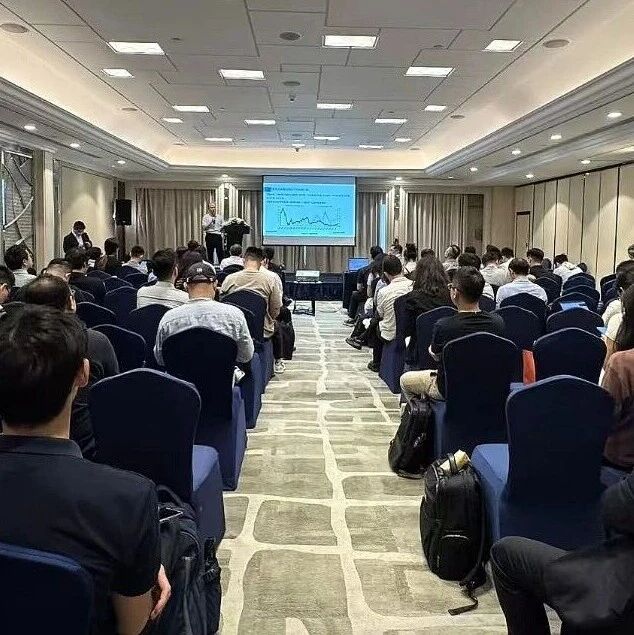
国泰海通证券2025海外市场投资峰会成功举办
国泰海通证券研究· 2025-10-28 12:00
Core Insights - The conference "AI Accelerates, Connecting Global Capital Markets" held by Guotai Junan Securities focused on AI transformation and investment opportunities, gathering insights from listed companies, industry experts, and investment institutions to enhance global capital market connectivity [1][3]. Group 1: Conference Highlights - Guotai Junan Securities aims to enhance its global research and asset allocation capabilities driven by technology, showcasing its international service capabilities through this summit [3]. - The chief analyst of overseas technology at Guotai Junan, Qin Heping, emphasized that globalization through social networks is accelerating, creating a collaborative global community that enhances AI application and evolution [3]. - The summit attracted over 40 listed companies from Hong Kong and the US for in-depth discussions on new engines in the AI era, allowing investors to better understand the operational strategies of technology companies [5]. Group 2: Future Directions - Guotai Junan Securities plans to leverage its research advantages in the global technology sector and build an overseas research network focused on cutting-edge technologies like AI and semiconductors [5]. - The research institute will actively participate in top international technology summits and organize closed-door seminars with industry experts to strengthen technology ecosystem connections and help clients seize investment opportunities in global technological innovation [5].
国泰海通 · 晨报1029|买卖国债如何理解:从“长”计议
国泰海通证券研究· 2025-10-28 12:00
Core Viewpoint - The resumption of government bond trading by the People's Bank of China (PBOC) is seen as a significant move to stabilize the bond market and provide a safety net for long-term interest rates, enhancing the attractiveness of long-term bond investments and trading opportunities [4][5]. Group 1: Short-term Market Reactions - The recent announcement of resuming government bond trading comes amid a strong stock market and stable bond market, indicating a potential response to the Fourth Plenary Session's directives [4]. - The bond market's short-term reaction shows that long-term bonds (10-year and 30-year) have seen yields drop by over 5 basis points, reflecting accumulated bullish sentiment rather than immediate PBOC actions [4]. - The strengthening of the RMB in the night market suggests that foreign investors may interpret the resumption of bond trading as an expansionary economic stimulus policy [4]. Group 2: Long-term Implications - The primary significance of resuming government bond trading is to provide insurance for the bond market, establishing an upper limit on long-term interest rates and improving the safety cushion for long-term bond investments [5]. - The PBOC's stance indicates a favorable overall bond market pricing, which opens up space for downward adjustments in long-term interest rates while maintaining control over potential disturbances from a strengthening stock market [5]. - In the context of increasing fiscal efforts and government leverage, the bond market's interest rate center should not rise too quickly, necessitating PBOC's bond purchases to support liquidity [5]. Group 3: Flexible Operations Post-Resumption - The operations of government bond trading post-resumption are expected to be more flexible, with uncertainty regarding the timing, direction, duration, and scale of transactions [6]. - The approach may resemble the reform of reverse repos and Medium-term Lending Facility (MLF), allowing for adjustments based on market conditions rather than fixed strategies [6]. - Given the ample medium- to long-term funding already available, the release of significant funds through government bond trading is not anticipated, limiting the speculative value of short-term bonds [6]. Group 4: Broader Market Impact - The resumption of government bond trading is not only beneficial for the bond market but is also expected to support the stock market in the medium to long term [7]. - As a liquidity management tool, government bond trading can complement fiscal issuance, potentially benefiting equity assets under conditions of liquidity easing and fiscal stimulus [7]. - The short-term bond market is expected to validate the assessment of a "weak front, strong back" scenario for the fourth quarter, with the current 30-10 bond yield spread still having room for convergence [7].

国泰海通|政策研究:中国五年规划的演进脉络——从“十三五”到“十五五”的战略转型与路径深化
国泰海通证券研究· 2025-10-28 12:00
Core Viewpoint - The article outlines the strategic progression from China's "13th Five-Year Plan" to the "15th Five-Year Plan," emphasizing a shift from high-speed growth to high-quality development, with a focus on "technological self-reliance" and "expanding domestic demand" as dual engines for a new model that balances quality, efficiency, and safety [1][2]. Group 1: Strategic Evolution - The planning focus has transitioned from "ensuring speed and efficiency" during the "13th Five-Year Plan" to establishing "high-quality development" in the "14th Five-Year Plan," and now to "deepening Chinese-style modernization" in the "15th Five-Year Plan," highlighting a profound transformation in China's economic development stage and social contradictions [1][2]. Group 2: Fundamental Changes in Growth Drivers - The economic growth engine has shifted from relying on factor inputs to being driven by innovation and domestic demand, with "technological self-reliance" rising to the primary task in the "15th Five-Year Plan" and "expanding domestic demand" becoming a strategic cornerstone [2]. Group 3: Systematic Upgrade of Target Framework - The indicator system has evolved from focusing on "quantity and scale" to "quality and efficiency," and further to "systemic effectiveness and equitable welfare," with specific changes in economic growth targets, innovation metrics, green indicators, and social welfare goals [2]. Group 4: Modernization of Governance Concepts - The implementation mechanism of the plans has progressed from government-led initiatives to a better combination of "effective market and proactive government," further deepening into "multi-party collaboration and systemic governance," with an emphasis on balancing development and security [2]. Group 5: Comprehensive Development Model - The evolution from the "13th" to the "15th Five-Year Plan" clearly demonstrates a maturing development model that prioritizes quality, efficiency, equity, safety, and sustainability, which not only shapes China's future but also provides significant insights and solutions for global development [3].

国泰海通|建材:水泥出海国别研究之南非
国泰海通证券研究· 2025-10-27 11:33
Economic Overview - South Africa's economic development is stagnant, but the country has a friendly foreign exchange environment and stable cement demand at around 12 million tons [2] - The financial sector is well-developed, and the country has abundant mineral resources and sufficient foreign exchange reserves [2] Supply and Demand - The supply structure is acceptable, with six major cement companies; PPC holds a 35% market share, while Huaxin Cement ranks fourth with a 13% share [3] - Cement demand has remained stable over the years, with no significant increase in production capacity, and even a decrease in active capacity [3] Import Impact - South Africa's cement imports are significant, projected at 1.69 million tons in 2024, with 88% sourced from Vietnam and 76% entering through Durban [4] Profitability - The ex-factory price of Dangote cement in South Africa is around $65 per ton, with high transportation costs leading to low profitability for PPC and Dangote [5] - There is potential for profitability improvement through policy measures to restrict imports and enhance domestic transportation conditions, as well as technological advancements to reduce costs [5] Carbon Tax Considerations - The imposition of a carbon tax in South Africa necessitates monitoring of its impact on policies and profitability [6]

国泰海通 · 晨报1028|纺服、轻工
国泰海通证券研究· 2025-10-27 11:33
Group 1: Luxury Goods Industry - The luxury goods sector in Q3 2025 showed better-than-expected performance, particularly in North America, with a slight improvement in consumption in mainland China [3][4] - Major brands like LVMH, Hermès, KERING, and PRADA reported revenue changes of +1.0%, +9.6%, -5.0%, and +8.5% respectively, all exceeding consensus expectations [3] - Miu Miu led the industry with a 29% revenue increase, while Hermès maintained a steady growth trend with a 9.6% increase [3] Group 2: Retail Performance in China - In September, China's retail sales for clothing and textiles grew by 4.7% month-on-month, indicating a faster pace compared to August [5] - The online retail sales of clothing items increased by 2.8% year-on-year from January to September, showing an acceleration in growth [5] - The export of Swiss watches showed a month-on-month improvement, with a 17.8% increase in exports to China, recovering from a significant decline in the previous year [5] Group 3: Adidas and Deckers Financial Guidance - Adidas reported Q3 revenue of €6.63 billion, with a neutral year-on-year growth of 8%, but raised its full-year revenue guidance to a neutral growth of 9%, below the consensus of 10% [4] - Deckers' FY26 Q2 revenue was $1.43 billion, a 9% year-on-year increase, but its full-year guidance of $5.35 billion fell short of the consensus expectation of $5.45 billion [4] - Deckers anticipates that tariff impacts will become more pronounced in the second half of FY26, affecting consumer attitudes [4] Group 4: Tobacco Industry Trends - The new type of oral tobacco products, combining heated non-combustible and vaporized electronic cigarette characteristics, is gaining popularity globally [10] - The market for new oral tobacco products is expected to grow due to lower tax rates and less intense competition compared to vaporized electronic cigarettes [10][11] - PMI's $16 billion acquisition of ZYN's parent company and the FDA's approval of ZYN products are expected to catalyze industry growth [12]

国泰海通|农业:十五五聚焦三农,双十一大促关注宠物表现
国泰海通证券研究· 2025-10-27 11:33
Group 1: Agriculture Focus - The 14th Five-Year Plan continues to prioritize "agriculture, rural areas, and farmers," aiming to promote urban-rural integration and accelerate the construction of a strong agricultural nation [2] - The plan emphasizes enhancing agricultural comprehensive production capacity and quality efficiency, as well as improving the effectiveness of policies benefiting farmers [2] Group 2: Crop Prices - Since October, corn prices in major production areas have declined, with current spot prices at 2248.63 yuan per ton, reflecting a weekly decrease of 0.64% [3] - The decline in corn prices is attributed to increased risks of damaged and rotten grains due to prolonged rainfall, delayed harvesting, and unsuitable storage temperatures [3] - Conversely, soybean prices have risen, driven by expectations of reduced new season soybean yields in Brazil due to continuous rainfall in the northern production areas [3] Group 3: Pet Industry Performance - During the Double 11 shopping festival, domestic pet brands performed excellently, with top rankings on Tmall's pet brand sales list [5] - Brands such as Xianlang, Fliegate, and Blue's ranked in the top five, showcasing strong performance from domestic companies [5] - Traditional foreign brands like Natural Balance and ZIWI have seen a decline in their rankings [5] Group 4: Blueberry Market - Attention is drawn to the market rhythm of Yunnan blueberries, which began to be listed in October [4]

国泰海通|煤炭:煤炭板块周期底部确认,多因素共振供需逆转
国泰海通证券研究· 2025-10-27 11:33
Core Viewpoint - The coal sector has confirmed its cyclical bottom in Q2 2025, with a reversal in the supply-demand pattern and sufficient release of downside risks [1] Supply and Demand Analysis - Short-term supply and demand factors have led to an unexpected rise in coal prices, which exceeded 770 RMB/ton as of last week, marking a significant upward trend since September 15 [2] - The coal supply has contracted significantly due to government intervention against "involution," with national production figures for July to September at 380 million, 390 million, and 410 million tons, showing a year-on-year decline [2] - Demand has rebounded sharply, with total electricity consumption growth reaching 4.6% in August and September, compared to only 2.5% in Q1, and is expected to exceed 5% for the year [2] Price Trends - As of October 24, 2025, the price of Q5500 coal at Huanghua Port was 778 RMB/ton, reflecting a 4.7% increase from the previous week [3] - The price of coking coal at Jingtang Port was 1740 RMB/ton, up 3% week-on-week, indicating a rebound in both futures and spot markets [3] Industry Review - As of October 24, 2025, the price of coking coal at Jingtang Port was 1740 RMB/ton, with a slight increase of 3%, while the inventory of coking coal across three ports decreased by 7.7% [4] - The offshore price of Newcastle Q5500 coal rose by 2 USD/ton, while the cost of domestic coal remains lower than that of imported coal by 10 RMB/ton [4]

国泰海通|交运:快递量持续较快增长,反内卷开启盈利修复
国泰海通证券研究· 2025-10-27 11:33
Core Viewpoint - The express delivery industry is expected to maintain resilient growth in business volume, driven by the ongoing trend of small parcelization and the release of consumption potential in lower-tier markets [1][2]. Group 1: Business Volume and Trends - By August 2025, the cumulative express delivery volume reached 128.2 billion pieces, reflecting a year-on-year growth of 17.8% (on a comparable basis), indicating a counter-cyclical growth trend [1]. - The small parcelization trend continues, with expectations for resilient growth in business volume in the second half of 2025 and into 2026, particularly in the central and western regions and rural areas [1]. Group 2: Pricing and Revenue - From January to August 2025, the average revenue per express delivery ticket was 7.48 yuan, showing a year-on-year decline of 7.3%, but the decline has narrowed compared to the 12.3% drop at the end of 2024, suggesting a stabilization in pricing due to anti-involution policies [1]. - The anti-involution policies have spread nationwide, significantly improving the single-ticket revenue for companies and indicating a potential recovery in profitability for e-commerce express delivery firms in the latter half of the year and next year [2]. Group 3: Cost Dynamics - The scale effect is diminishing under the trend of small parcelization, leading to a slowdown in the decline of core costs per ticket. The cost reduction potential for transportation and transfer is narrowing [1]. - The introduction of unmanned vehicles is expected to open up cost reduction opportunities in last-mile delivery, although new social security regulations may lead to a short-term increase in costs per ticket [1].