点拾投资

Search documents
2万字收藏,段永平罕见公开访谈
点拾投资· 2025-11-14 07:07
Core Views - The essence of investing is to understand that "buying stocks is buying companies," a concept that only about 1% of people truly grasp [3][6][61] - Investment is simple but not easy; it requires a deep understanding of the business and future cash flows [6][52] - The importance of company culture is highlighted, as a good culture helps a company return to the right path after mistakes [7][30] Investment Philosophy - "Buying stocks is buying companies" emphasizes the need to understand the business behind the stock [6][52] - The concept of safety margin is not just about price but about how well one understands the company [6][52] - Rationality in investment is challenging; the probability of making mistakes is similar across investors, but the key is to minimize those mistakes [6][39] Understanding Companies - Understanding the business is crucial; without it, investing becomes very difficult [6][51] - The speaker feels relatively knowledgeable about companies like Apple, Tencent, and Moutai, but acknowledges limitations in understanding other businesses [6][51] Company Culture - A strong company culture guides the organization and helps it stay on the right path [7][30] - Good culture does not prevent mistakes but allows the company to correct its course [7][30] Decision-Making and Management - The decision to pivot from feature phones to smartphones was driven by market necessity rather than initial support [36][39] - The management style emphasizes delegation and trust in the team, allowing them to make decisions independently [38][47] Investment Experience - The speaker's investment journey began post-retirement, focusing on understanding businesses rather than just stock prices [50][51] - Significant investments include companies like NetEase, Apple, and Moutai, with a focus on understanding their business models [53][60] Market Trends and Adaptation - The rapid decline of feature phones was unexpected, highlighting the need for sensitivity to market changes [40][41] - The transition to smartphones was a response to market demands, showcasing the importance of adaptability in business strategy [39][40]





一个低波产品的十年,从200户到50万户的跃迁
点拾投资· 2025-11-13 11:05
Core Viewpoint - The article discusses the evolution and success of the Zhongou Jintong fund over the past decade, highlighting its growth in both the number of investors and total assets, as well as its stable performance in a changing market environment [1][2]. Group 1: Fund Growth and Performance - Zhongou Jintong has grown from 211 investors at the end of 2016 to 510,000 investors by the end of September 2025, with total assets reaching 5.161 billion [1][2]. - Since its inception, Zhongou Jintong A has achieved a cumulative return of 72.81%, significantly outperforming its benchmark return of 24.14% [2][24]. - The fund has demonstrated strong stability, only recording negative returns in 2022 during a market downturn [2]. Group 2: Market Context and Investor Behavior - Over the past decade, there has been a significant shift in investor behavior, with a growing preference for low-volatility and absolute return products as economic growth transitions from high-speed to high-quality [6][8]. - The rise of "fixed income plus" products reflects a broader trend where investors prioritize stability and lower volatility over high returns [6][7]. Group 3: Investment Strategy Evolution - The investment strategy of Zhongou Jintong has evolved through several iterations, moving from a "workshop" model to an "industrialized" management approach, enhancing its ability to manage risk and achieve stable returns [4][10][13]. - The introduction of the MARS framework (Multi-Asset Solution) has allowed for a more diversified and systematic investment process, focusing on predictable risk-return profiles and clear attribution of performance [12][13]. Group 4: Investor Experience and Trust - The fund manager, Hua Licheng, emphasizes the importance of investor experience, advocating for metrics like rolling win rates to enhance investor confidence and encourage long-term holding [15][16]. - The growth in investor numbers reflects a strong trust in the fund's ability to deliver consistent performance, which is crucial for maintaining long-term relationships with investors [15][18]. Group 5: Future Outlook - The article suggests that the strong performance and adaptability of Zhongou Jintong may signal the beginning of a new era for low-volatility investment products as market conditions continue to evolve [19].

复胜资产陆航:抓住每一次市场主线的必然性
点拾投资· 2025-11-12 11:00
Core Viewpoint - The investment philosophy of Fusheng Asset emphasizes performance-driven investment, focusing on identifying opportunities through objective analysis and understanding market dynamics [2][7][22]. Investment Strategy - Fusheng Asset has consistently adapted its investment strategy to market conditions, successfully identifying major growth stocks in various sectors over the years, including new energy, coal, oil, and consumer goods [2][3][4]. - The firm emphasizes the importance of understanding supply and demand dynamics, with a focus on scarcity as a key factor in stock selection [3][4]. Key Investment Themes - The concept of "female consumer population dividend" has been highlighted as a significant investment opportunity, with increasing willingness among female consumers to pay for emotional value [3][10][19]. - The firm has successfully identified and invested in stocks related to new consumption trends, such as trendy blind boxes, ancient gold, and gaming stocks, which cater primarily to female consumers [11][12][21]. Performance Analysis - Fusheng Asset's investment decisions are driven by performance metrics, with a clear strategy of buying undervalued stocks based on dynamic valuations and selling when valuations exceed 35 times [4][22]. - The firm has demonstrated a disciplined approach to investment, avoiding speculative trading and focusing on companies with strong fundamentals and performance [4][22]. Market Outlook - The firm maintains an optimistic outlook on the market, citing undervalued currency and signs of economic recovery as potential catalysts for growth [30][31]. - Fusheng Asset is cautious about investments driven solely by liquidity without fundamental support, emphasizing the importance of valuation in investment decisions [31][32].

价值投资的对立面不是“小登科技”
点拾投资· 2025-11-10 11:00
Core Viewpoint - The article discusses the relationship between value investing and technology investment, emphasizing that they are not opposites. Value investors can participate in the benefits of the AI era by applying their investment principles to technology sectors [1][20]. Group 1: Value Investing Principles - Value investing is defined as earning returns from the long-term cash flows of companies, without being restricted to specific industries [1][20]. - The core of value investing is to avoid permanent loss of capital, and careful evaluation may lead to missed opportunities, but value investors can still act decisively when confident [2][20]. - Value investors like Tian Yu focus on long holding periods, high concentration in a few stocks, and the importance of a company's competitive advantages [1][2]. Group 2: Technology Investment Insights - Tian Yu has been researching AI and its implications for value assessment early on, indicating that value assessment does not differentiate between emerging and traditional industries [2][4]. - The evaluation framework for technology companies includes understanding demand limits, assessable business models, and identifiable competitive advantages [4][6]. - The semiconductor industry, particularly wafer foundries, is analyzed through a physical perspective, highlighting the challenges and opportunities in advanced process technologies [5][10]. Group 3: Market Dynamics and Investment Strategy - The demand for AI has increased the value of competitive advantages in technology sectors, as performance differences become more significant [6][10]. - Tian Yu's investment strategy involves a dynamic view of future cash flows rather than static earnings, allowing for investments in companies that may not currently be profitable but have strong long-term potential [7][8]. - The article highlights the importance of understanding the underlying business models and competitive dynamics in technology sectors, which can be complex and require specialized knowledge [6][11]. Group 4: Portfolio Management - Tian Yu maintains a concentrated portfolio with a high percentage of top holdings, reflecting a strategy of focusing on quality investments [16][17]. - The portfolio is diversified across different sectors, including technology and chemicals, to mitigate systemic risks while maintaining a focus on companies with strong supply-side competitive advantages [17][18]. - The article emphasizes that value investing is not limited to traditional industries and can adapt to modern technological advancements, allowing investors to benefit from current market trends [20][22].

投资大家谈 | 长城基金“科技+”:等待新的市场主线,AI中期配置价值不改
点拾投资· 2025-11-09 11:00
Core Viewpoints - The A-share market is experiencing a structural divergence, with cyclical industries leading while the technology sector is undergoing a correction. The "slow bull" pattern is expected to continue, driven by the "14th Five-Year Plan" which emphasizes technological self-reliance and the construction of a modern industrial system [1] Group 1: Market Overview - In October, the Shanghai Composite Index successfully approached the 4000-point mark, indicating a recovery phase in the domestic economy [1] - The market is currently characterized by rapid capital rotation among various sectors, with a focus on stocks that show changes in their fundamentals [2][3] Group 2: Sector Focus - The AI and terminal application sectors are highlighted as key areas for investment, with expectations of limited downside for the overall market [3][7] - The military industry is noted for its potential short-term catalysts, while the commercial aerospace sector is also expected to see significant developments in the coming months [5][6] Group 3: Investment Strategies - Investors are advised to look for stocks with strong performance and valuation support, particularly in the AI industry and semiconductor sectors [4][11] - The focus is on growth stocks, especially those benefiting from AI technology, including hardware infrastructure, robotics, and smart driving applications [9][12] Group 4: Future Outlook - The market is anticipated to remain in a state of fluctuation, with a cautious approach recommended due to the significant gains observed earlier in the year [7][10] - The technology innovation sector is expected to remain a crucial growth engine, with emerging opportunities in AI infrastructure and applications [12]

柏基投资穿越百年的基石
点拾投资· 2025-11-08 11:00
Core Viewpoint - The article highlights the investment philosophy and strategies of Baillie Gifford, emphasizing its long-term global growth strategy that has led to superior returns compared to major indices and investment firms over the past two decades [2][16]. Investment Strategy and Performance - Baillie Gifford's flagship product, the Scottish Mortgage Investment Trust (SMT), has achieved a total return of 13.64 times over nearly 20 years, with an annualized return rate of approximately 13.88%. In comparison, the S&P 500 and Nasdaq indices returned 3.85 times and 7.88 times, respectively, during the same period [2]. - The firm has successfully invested in major companies like Amazon, Tesla, and Nvidia, often being an early investor and holding these stocks for extended periods, which has contributed to its reputation as a "super growth stock catcher" [1][2]. Historical Context and Evolution - Baillie Gifford has a history of over 110 years, evolving from a law firm to a prominent investment management firm, adapting its investment focus from convertible bonds to global equity investments and now to a long-term global growth strategy [14][15]. - The firm has consistently leveraged technological revolutions, such as the automotive and information technology revolutions, to identify and capitalize on investment opportunities [6][14]. Investment Philosophy - The investment logic of Baillie Gifford is rooted in understanding technological evolution and emerging markets, focusing on first principles to identify long-term trends and patterns in economic, social, and technological changes [6][7]. - The firm emphasizes the importance of patience in capital investment, maintaining a low turnover rate of 10%-20%, which allows for an average holding period of 5-10 years for its investments [10][11]. Organizational Consistency - Baillie Gifford's success is attributed to the organizational consistency in its investment philosophy, culture, and structure, which supports the execution of its long-term growth strategy [11][12]. - The firm fosters a collaborative environment with academic institutions and thought leaders, enhancing its knowledge network and investment insights [8]. Lessons for Other Markets - The article suggests that Baillie Gifford's investment approach can serve as a model for Chinese asset management firms, particularly in fostering long-term relationships with technology companies and supporting their growth through patient capital [15][16].

连续三个月被推荐金股,海尔智家为何屡被看好?
点拾投资· 2025-11-08 11:00
Core Viewpoint - Haier Smart Home has been consistently recommended as a "gold stock" by various brokerages due to its strong performance and strategic initiatives in both domestic and international markets [1][2]. Domestic Performance - Haier Smart Home has undergone a comprehensive digital transformation across its R&D, manufacturing, marketing, and logistics, leading to improved operational efficiency [1]. - The company has established an efficient product incubation platform, resulting in a 15.6% increase in SKU efficiency in the first three quarters [1]. Inventory Management - The implementation of a more agile and efficient operational system has enhanced overall operational efficiency, with 74% of products reaching customers directly from county-level specialty stores in the first three quarters [2]. International Growth - Haier Smart Home's overseas market revenue grew by 10.5% year-on-year in the first three quarters, with significant growth in various regions: over 25% in South Asia, over 15% in Southeast Asia, and over 60% in the Middle East and Africa [2]. - The company has maintained stable operations in North America and steadily increased its market share in Europe [2]. Strategic Resilience - Haier Smart Home's robust performance and clear strategic direction demonstrate its operational resilience in navigating the complexities of the global market, contributing to its favorable outlook among brokerages [2].


风起青萍,财随势动——解读十五五中暗藏了哪些机会
点拾投资· 2025-11-07 06:45
Core Viewpoint - The article emphasizes the importance of the "15th Five-Year Plan" in shaping investment strategies, highlighting the shift towards a modern industrial system and the prioritization of technological self-reliance and innovation as key drivers for economic growth [1][12]. Summary by Sections Introduction - The "15th Five-Year Plan" prioritizes the construction of a modern industrial system and sets "technological self-reliance" as the second development goal, providing quantifiable targets for the capital market [1]. Historical Context - Previous five-year plans have led to the emergence of significant industries: - The 12th Five-Year Plan (2011-2015) focused on seven strategic emerging industries including energy conservation and new energy vehicles [2]. - The 13th Five-Year Plan (2016-2020) emphasized supply-side reforms [3]. - The 14th Five-Year Plan (2021-2025) introduced a focus on carbon neutrality and supply chain security [4]. Investment Opportunities - The "15th Five-Year Plan" is expected to drive investment in strategic emerging industries, with a focus on sectors such as new energy, biotechnology, and high-end equipment [7][12]. - Historical data shows that industries highlighted in the 14th Five-Year Plan have outperformed the market, with significant excess returns observed in sectors like photovoltaics and new energy vehicles [6][8]. Policy Tools - The article outlines the policy tools prepared for the "15th Five-Year Plan": 1. Fiscal measures to enhance macroeconomic policies and increase central government spending. 2. Monetary policies aimed at developing direct financing and financial markets. 3. Industrial policies to boost innovation and new productivity [4]. Strategic Focus Areas - The "15th Five-Year Plan" identifies key strategic areas for investment, including: - Advanced manufacturing, artificial intelligence, and semiconductor industries as core components of the hard technology sector [15][18]. - Emphasis on the integration of technology and industry, with a focus on scaling innovations [12][16]. ETF Recommendations - Specific ETFs are highlighted as investment vehicles to capitalize on the trends outlined in the "15th Five-Year Plan": 1. Chip ETF focusing on semiconductor industries. 2. AI ETF targeting companies in the artificial intelligence sector. 3. Robotics ETF covering the entire robotics supply chain [18][29]. Conclusion - The article concludes that the "15th Five-Year Plan" is not just a domestic economic strategy but also a framework for global capital reallocation, with significant implications for investment in technology and innovation [28].

波动最小化,收益“+”起来,两位低波“固收+”舵手的平衡术
点拾投资· 2025-11-06 11:00
Core Viewpoint - The article discusses the strategies and insights shared by industry experts on how to achieve better returns in a low-volatility environment through "fixed income plus" strategies, emphasizing risk management and disciplined investment approaches [1][2]. Group 1: Strict Control of Drawdown - Two main paths for strict drawdown control are identified: model-based constraints and refined security selection [4]. - The investment framework includes a unified approach across different product types, utilizing a target volatility model and a maximum drawdown control model to manage risk [5][6]. - For low-volatility products, a drawdown target of 2% is considered low, while a range of 2%-4% is aimed for open-end products [6][7]. Group 2: Avoiding "Fixed Income Minus" Risks - The article emphasizes the importance of maintaining a clear risk-return profile to prevent "fixed income minus" scenarios, especially during market upswings [10][11]. - A disciplined position design is crucial, with a focus on maintaining a maximum stock allocation of 12% and the possibility of reducing stock positions to zero when valuations are too high [13][14]. - Daily liquidity and risk management mechanisms are highlighted, including strict evaluation of risk-reward ratios for individual securities [14]. Group 3: Methodological Origins - The investment framework is rooted in asset pricing theory, focusing on managing volatility and diversifying risk rather than relying solely on macro timing [15][16]. - A three-layer system for portfolio construction is proposed, which includes style structure, industry allocation, and individual security selection [18][19][20]. Group 4: Future Outlook in a Low-Interest Rate Environment - The article notes that as interest rates decline, the investment logic for "fixed income plus" products must evolve, with a potential long-term return of 2%-2.5% expected from bonds [23][24]. - The shift towards equity over bonds is suggested as a strategy to achieve higher returns in a low-yield environment, with a focus on sectors like technology and cyclical finance [25][26]. - The importance of balanced allocation and diversification is emphasized, particularly in the context of emerging industries such as AI and robotics [27].
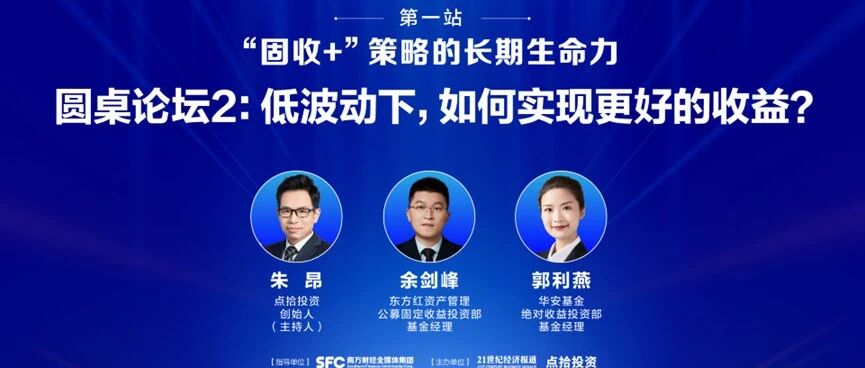
股债混搭的艺术:三位“固收+”投资舵手细谈如何搭出高性价比
点拾投资· 2025-11-05 11:00
Group 1: Optimizing Risk-Return Ratio - The management of "fixed income +" products requires a balance between risk and return, with a focus on understanding client expectations and market volatility [4][5][6] - A diverse team approach enhances research depth and breadth, allowing for better asset allocation and risk management [6] - Implementing a three-tiered drawdown warning mechanism helps in controlling risks while aiming for returns [6][9] Group 2: Preserving Returns - In challenging equity markets, maintaining a flexible investment style and adapting to market trends is crucial for preserving returns in "fixed income +" products [11] - Continuous learning from equity fund managers can provide insights into long-term asset value analysis [11] Group 3: Pursuing Absolute Returns - Achieving absolute return targets has become increasingly difficult due to declining bond yields, necessitating exceptional trading and timing skills [13] - Risk budget management is essential, with a focus on maintaining a portion of risk exposure within the bounds of market conditions [13] Group 4: Risk Control and Opportunities in Growth Style - A dual approach of macroeconomic risk identification and sector-specific investment can help mitigate risks associated with high-volatility assets [16][17] - Focusing on industries with clear trends and improving profit expectations can yield positive returns in a non-systemic risk environment [17] Group 5: Market Evolution and Adaptation - The capital market has seen a systematic decline in asset yields, necessitating a broader research focus that includes global markets and various asset classes [19][20] - Adapting to changes in market structure and investor behavior is vital for maintaining effective investment strategies [20] Group 6: Dynamic Rebalancing - Dynamic rebalancing strategies are employed to manage asset volatility and ensure stable returns, particularly in fluctuating market conditions [23] Group 7: Growth Style "Fixed Income +" - The growth style in "fixed income +" products aims to capture societal development benefits while providing stable returns through fixed income assets [25] Group 8: Combining Active and Quantitative Approaches - Integrating quantitative tools with fundamental research enhances the investment management process, allowing for more efficient decision-making [27] Group 9: Insights and Compounding - Identifying companies with long-term growth potential requires a clear understanding of investment objectives and continuous industry learning [29][30] Group 10: Forward-Looking Technology Layout - Early investments in technology sectors, particularly AI, are based on recognizing transformative trends and potential for long-term growth [33][34]