美股IPO

Search documents
达利欧:现在就像70年代,投资者应持有更多黄金,承认美股有些泡沫
美股IPO· 2025-10-08 01:23
达利欧将当前的经济环境比作20世纪70年代初,当时美国通胀高企、政府支出庞大、债务负担沉重,导致人们对纸质资产和法定货币的信心动摇。他表 示,即使黄金价格已飙升至每盎司4000美元以上的历史新高,投资者仍应将其投资组合中多达15%的资产配置在黄金上。对于近期美国股市的涨势,达 利欧说,觉得现在的市场有些泡沫的味道,但他不会去做空超级规模的科技巨头。 周二,桥水基金(Bridgewater Associates)创始人达利欧表示,现在就像20世纪70年代,投资者应该比平常持有更多的黄金。即使黄金价格已飙升至 每盎司4000美元以上的历史新高,投资者仍应将其投资组合中多达15%的资产配置在黄金上。黄金无疑比美元更具避险属性。 达利欧周二在康涅狄格州格林尼治的格林尼治经济论坛(Greenwich Economic Forum)上发言。当被问及他是否同意城堡投资(Citadel)创始人Ken Griffin的观点——即黄金上涨反映出市场对美元的担忧时,达里欧表示: 黄金是投资组合中极佳的分散化资产。从战略性资产配置的角度来看,你可能会希望将大约 15% 的资产配置在黄金上。因为当投资组合中传统资产表现下滑时, 黄金往 ...


英特尔大涨超7%,报道称在磋商纳AMD为新代工客户
美股IPO· 2025-10-02 03:53
Core Viewpoint - Intel is in discussions with AMD regarding potential wafer foundry collaboration, which could significantly bolster Intel's foundry business and manufacturing technology investments [2][4]. Group 1: Intel's Foundry Business - Intel is actively seeking large clients to support its foundry business, with AMD potentially becoming a key customer if negotiations succeed [2][6]. - Recent investments and support from various entities, including SoftBank and the U.S. government, have provided Intel with a financial boost, totaling $111 billion in investments [6]. - The collaboration with AMD would signal to other chip companies that Intel is capable of handling foundry operations, despite its current technology being perceived as less advanced than TSMC's [7]. Group 2: AMD's Strategic Move - AMD's choice to partner with Intel for manufacturing signifies a level of confidence in its main competitor, breaking traditional competitive dynamics in the x86 architecture market [8]. - The recent easing of export restrictions by the U.S. government has influenced AMD's decision to consider domestic manufacturing options, aligning with broader governmental policies aimed at boosting U.S. chip production [8]. - Although the partnership may initially focus on lower-technology chips, it reflects AMD's strategic alignment with U.S. manufacturing goals [8].


苹果暂停Vision Pro开发,全力转向AI智能眼镜,挑战Meta
美股IPO· 2025-10-02 03:53
Core Viewpoint - Apple has paused the development of the Vision Pro lightweight headset originally planned for 2027, redirecting resources towards the development of AI-driven smart glasses to compete with Meta's leading position in the market [1][3] Group 1: Strategic Shift - Apple is reallocating personnel from the Vision Pro project to accelerate the development of smart glasses, which are seen as a more urgent task [3] - The company is currently developing at least two different models of smart glasses, with the first model (codename N50) expected to pair with the iPhone and be unveiled as early as next year [3] - The second model will feature a screen and is anticipated to challenge Meta's recently launched Ray-Ban Display [3] Group 2: Market Position - Despite the strategic shift, Apple remains significantly behind Meta in the smart glasses market, which has seen Meta successfully launch products like Ray-Ban Stories and the upgraded Ray-Ban Meta [4] - Meta has enhanced its smart glasses with improved camera performance and battery life, establishing a foothold in the device market [4] Group 3: Technological Challenges - Apple's smart glasses will heavily rely on voice interaction and artificial intelligence, areas where the company has historically lagged [5] - The development of the Apple Intelligence platform has fallen behind schedule, and upgrades to the Siri voice assistant have also been delayed [5] Group 4: Vision Pro Performance - The decision to pivot towards smart glasses is partly due to the underwhelming performance of the Vision Pro, which has been criticized for being too heavy and expensive at a price point of $3,499 [6] - Apple had initially planned to follow up the Vision Pro with a simplified version but has since shelved that plan in favor of a new design for the smart glasses [6] Group 5: Future Prospects - Apple is not completely abandoning the Vision Pro, as there are plans for minor updates, including a chip upgrade expected by the end of this year [7] - The company has invested billions and a decade of time into the original Vision Pro, indicating a potential future release of a lighter and cheaper version [7] Group 6: Industry Trends - Both Apple and Meta are focused on developing true AR glasses that can integrate digital content with the real world, surpassing current heads-up display technologies [8]



“存储双雄”三星、SK海力士股价大涨,此前与OpenAI就“星际之门”达成初步供应协议
美股IPO· 2025-10-02 03:53
Core Viewpoint - The stock prices of Samsung and SK Hynix surged significantly following a preliminary supply agreement with OpenAI, indicating strong market optimism regarding the demand for memory chips driven by AI infrastructure projects [3][4][7]. Group 1: Stock Market Reaction - On October 2, Samsung's stock rose by 4.5%, while SK Hynix's stock increased by 9.7%, marking the largest intraday gains since April [4][5]. - The collaboration with OpenAI has led to a notable increase in investor confidence, reflected in the stock price movements of both companies [3][4]. Group 2: Partnership Details - Samsung and SK Hynix signed a letter of intent with OpenAI, aiming to integrate their memory chip production capabilities into the Stargate data center project, which also involves major players like NVIDIA and Oracle [7]. - The projected demand from OpenAI could reach 900,000 wafers per month, which is more than double the current global capacity for high-bandwidth memory (HBM) [7]. Group 3: Market Outlook - The Stargate project signifies a peak in AI infrastructure development, highlighting a substantial demand for high-performance memory chips [8]. - Analysts from JPMorgan predict a structural growth phase for the memory industry, driven by the "memory hunger" trend due to AI computing needs, affecting both HBM and traditional DRAM and NAND flash markets [8]. - The DRAM market is expected to enter an unprecedented four-year pricing upcycle from 2024 to 2027, with a significant increase in market size projections, estimating nearly $300 billion by 2027 [8].
“科技投资大师”警告:AI估值飙升“令人不安”,英伟达千亿押注OpenAI让人想起互联网泡沫
美股IPO· 2025-10-02 03:53
Core Viewpoint - James Anderson warns about the alarming rise in valuations within the AI sector, drawing parallels to the internet bubble era and expressing concerns over Nvidia's planned $100 billion investment in OpenAI [1][3][4]. Group 1: Valuation Concerns - Anderson highlights that OpenAI's valuation skyrocketed from $157 billion to $500 billion in less than a year, while competitor Anthropic's valuation nearly doubled to $170 billion in six months, indicating a troubling trend [3]. - The scale and speed of these valuation increases are described as "disturbing" by Anderson, who notes that he had not observed clear signs of a bubble until recently [3][4]. Group 2: Historical Context - Anderson compares the current situation to the late 1990s, when telecom equipment manufacturers heavily borrowed to finance their clients' internet infrastructure, a model that ultimately proved unsustainable [4][5]. - He expresses that the term "vendor financing" does not evoke positive memories for those familiar with the past, suggesting that there are similarities to the practices of telecom suppliers during the internet boom [5]. Group 3: Investment Strategy Shift - The Lingotto Innovation Strategy fund, managed by Anderson, has reduced its holdings in Nvidia, which was previously its largest position, now shifting to focus on Chinese battery manufacturer CATL as its top holding [6]. - This change in investment strategy marks a stark contrast to Anderson's earlier optimistic predictions regarding Nvidia's potential market value, which he had estimated could reach trillions [6]. Group 4: Future Investment Focus - Despite concerns over current AI valuations, Anderson and his team are actively pursuing early-stage technology investments, indicating a strategic shift towards identifying future growth areas [7]. - The Lingotto investment management company is expanding its focus from seed-stage to post-IPO startups, with particular interest in opportunities in autonomous vehicles and AI in healthcare [7].


微软CTO:希望未来主要采用自研AI数据中心芯片,自主设计数据中心系统
美股IPO· 2025-10-02 03:53
Core Viewpoint - Microsoft aims to transition its data centers to primarily utilize self-developed chips, reducing reliance on major chip manufacturers like NVIDIA and AMD [3][4][6]. Group 1: Chip Development Strategy - Microsoft is focusing on designing a complete data center system, which includes not only chips but also networking and cooling systems [7]. - The company has already launched the Azure Maia AI accelerator chip and Cobalt CPU, and is reportedly developing next-generation semiconductor products [5]. - Microsoft emphasizes the importance of selecting chips based on the best cost-performance ratio, indicating a willingness to consider various solutions as long as capacity meets demand [5][4]. Group 2: Market Context and Competition - Major cloud computing companies, including Microsoft, are increasingly designing custom chips for their data centers to enhance efficiency and reduce dependency on NVIDIA and AMD [4][7]. - The AI sector is driving significant capital expenditure, with tech giants committing over $300 billion this year, primarily towards AI-related investments [8]. Group 3: Capacity Challenges - There is a significant shortage of computing power, described as a "massive crunch," particularly since the launch of ChatGPT, which has made it difficult to rapidly scale capacity [9]. - Despite aggressive deployment of computing resources over the past year, projections often fall short of actual demand, indicating ongoing challenges in meeting the needs of AI workloads [10].


Altman密访鸿海、台积电:探讨星际之门合作细节、自研ASIC芯片项目
美股IPO· 2025-10-01 11:33
Group 1 - The core agenda of OpenAI CEO Sam Altman's visit includes ensuring stable AI server supply from Hon Hai for the "Gateway to the Stars" project and finalizing collaboration with TSMC for the production of self-developed AI chips, aiming for mass production by 2026 to reduce reliance on Nvidia [1][2][6]. - The "Gateway to the Stars" project involves building five new data centers in the U.S., marking one of the largest investments in computing power in the country, with Hon Hai being the largest AI server supplier for this initiative [4][5]. - OpenAI is actively developing its custom AI chips (ASIC) to decrease dependence on external suppliers like Nvidia, with plans to have TSMC manufacture these chips, focusing on production details for a target mass production in 2026 [6][8]. Group 2 - Altman's discussions with Hon Hai primarily focused on ensuring the production and delivery capabilities of AI servers to support the extensive infrastructure needs of the "Gateway to the Stars" project [5]. - The initial versions of OpenAI's self-developed chips are expected to be primarily used for inference rather than training, and their successful mass production will serve as a significant validation of the tech giants' self-developed chip strategies [8].

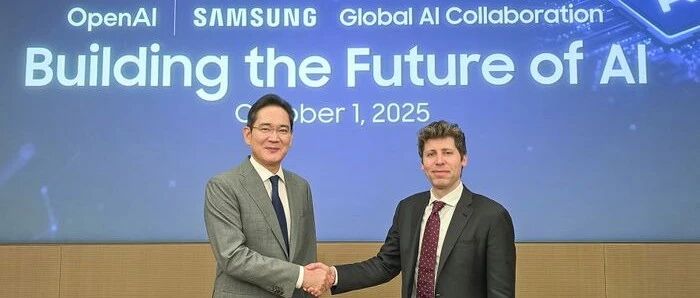
重磅!OpenAI与三星、SK海力士达成初步协议,为星际之门项目供应芯片
美股IPO· 2025-10-01 11:33
Group 1 - OpenAI has signed a preliminary agreement with South Korean chip giants Samsung Electronics and SK Hynix for the supply of chips and other equipment for its large-scale Stargate project [3][5] - The projected demand from OpenAI could reach 900,000 wafers per month, which is more than double the current global capacity for high bandwidth memory (HBM) [1][3] - This collaboration aims to solidify the leadership of SK Hynix and Samsung in the advanced AI storage chip sector, enhancing their competitive position against companies like Micron Technology [5] Group 2 - The partnership will extend beyond chip supply, involving other Samsung Group companies to explore future technologies, including floating data centers and data center design [5] - SK Telecom will collaborate with OpenAI to jointly build a dedicated OpenAI data center in southwestern Korea [5] - The collaboration has received support from the South Korean government, with President Yoon Suk-yeol expressing hopes for Samsung and SK Hynix to play a key role in the global proliferation of AI [5]
七年来首次!美国政府正式“关门”
美股IPO· 2025-10-01 11:33
Core Viewpoint - The U.S. federal government has entered a shutdown for the first time in nearly seven years, leading to the furlough of hundreds of thousands of federal employees and creating new uncertainties for the economy and financial markets [1][3]. Group 1: Government Shutdown Details - The shutdown officially began at midnight on October 1, 2023, with the White House instructing agencies to implement their "orderly shutdown" plans [3][5]. - The last significant shutdown occurred from late 2018 to early 2019, lasting 35 days due to disputes over funding for a border wall [4]. Group 2: Legislative Stalemate - The immediate cause of the shutdown was a voting deadlock in the Senate, where a Republican proposal to extend government funding until November 21 failed to pass [5][6]. - The proposal required 60 votes but only received 55 in favor, with all Democratic senators voting against it [6]. Group 3: Political Divisions - The core of the deadlock lies in fundamental disagreements over the content of the temporary funding bill, with Republicans seeking a short-term extension and Democrats pushing for additional spending and policy priorities [7]. - The White House's memo highlighted a $1 trillion increase in spending demands from Democrats, indicating a significant divide in fiscal policy [7]. Group 4: Economic Impact - The shutdown is expected to lead to the furlough of "hundreds of thousands" of federal employees, with some essential workers required to continue without pay [8][9]. - The Congressional Budget Office (CBO) estimates that the shutdown could result in approximately 750,000 federal employees being furloughed daily, depending on its duration [9]. Group 5: Data Release Delays - The shutdown will likely delay the release of key economic data, including employment and inflation reports, which could complicate the Federal Reserve's decision-making process [10][12]. - Historical data indicates that even after a government reopens, it may take a significant amount of time for data releases to return to normal, potentially causing market volatility [12]. Group 6: Comparison to Previous Shutdowns - The current situation is compared to the 2013 shutdown, which lasted three weeks, but the current deadlock does not involve a debt ceiling debate, reducing the risk of a financial crisis [13][14]. - Goldman Sachs estimates that each week of shutdown could reduce quarterly GDP growth by 15 basis points, with a three-week shutdown potentially cutting growth by 45 basis points [13].

AI业务强劲,谷歌母公司Alphabet股价创下二十年来最佳季度表现
美股IPO· 2025-10-01 11:33
Core Viewpoint - Alphabet's stock price surged 38% in Q3, marking its best quarterly performance since 2005, with a year-to-date increase of over 28%, second only to Nvidia among the "Tech Giants" [1][2][5]. Group 1: Stock Performance and Catalysts - The primary catalysts for the stock price increase were the strong growth of its AI product Gemini and a favorable outcome in a recent antitrust case [4][6]. - Gemini reached the top of the U.S. App Store rankings, indicating its significant market impact [4]. - Investor confidence has notably rebounded, as the stock had previously seen a year-to-date decline of 24% in April [7]. Group 2: AI Strategy and Market Position - Alphabet has successfully shifted market sentiment regarding its AI strategy, countering concerns that generative AI tools like ChatGPT could undermine its traditional search business [8]. - The company is integrating AI deeply into its search functions and promoting Gemini, alongside exploring multimodal search tools like the Nano Banana image editor [8]. - Analysts believe that the market will continue to swing from viewing generative AI as a "loser" to a "winner" [8]. Group 3: Revenue Streams and Analyst Outlook - Analysts are optimistic about Alphabet's future, with Mizuho initiating coverage with an "outperform" rating and a target price of $295, citing strong growth in advertising and cloud revenue streams [8][9]. - Alphabet is well-positioned to monetize AI through its Performance Max advertising product and extensive consumer data [9]. - YouTube is also expected to have significant monetization potential, with AI enhancing user experience and ad relevance [9]. Group 4: Infrastructure and Competitive Advantage - Alphabet's technological infrastructure, including its data centers and proprietary chips, is a key advantage in the AI field [11]. - The combination of Nvidia chips and Alphabet's Tensor Processing Units (TPUs) in data centers provides flexibility and a competitive edge for large-scale AI computations [11][12]. - These infrastructure advantages are expected to support long-term growth in Alphabet's cloud business, especially with increasing demand for AI inference [12]. Group 5: Long-term Competition - Despite the strong quarterly performance, analysts caution that the long-term competitive landscape in AI remains uncertain [13][14]. - The ultimate winner in the AI race is not expected to be determined in the near term [14]. - Recent market sentiment has shifted positively for Alphabet, indicating that investors believe the company is moving in the right direction after earlier turbulence [15].