TENCENT(00700)

Search documents
2026最炸赛道,中国人最快?
3 6 Ke· 2026-01-20 02:42
Core Insights - The application of AI in the gaming industry is rapidly evolving, with independent developers leveraging AI tools to bring their ideas to life, indicating a shift in how games are developed and created [1][3] - The current AI wave is seen as a transformative opportunity, moving from a phase of hype to one of practical application and commercialization [3][4] Industry Trends - The AI industry in China is experiencing significant activity, with companies like Zhiyu and MiniMax successfully listing in Hong Kong, outperforming market expectations [3] - The AGI-Next conference highlighted the advancements in AI, with discussions indicating that China's AI capabilities in commercial applications and engineering design may surpass those of the U.S. [3][4] AI Applications in Gaming - The integration of AI in gaming can be categorized into two types: AI for Game, which enhances the workflow of game development teams, and AI in Game, which directly influences gameplay [4][5] - Tencent's VISVISE, an AI-driven 3D character animation pipeline, exemplifies the efficiency gains possible with AI, reducing the time for skinning from 1-3.5 days to under 5 minutes [4][5] Developer Insights - Many game developers are moving beyond using AI as a mere asset generation tool, instead allowing it to influence game design and development processes [6][7] - A report indicates that 86.36% of game companies in China are utilizing AI in their development processes, showcasing widespread adoption [7] Competitive Landscape - Chinese game developers are reportedly advancing faster in AI applications compared to their Western counterparts, who are often more cautious due to concerns about originality and the impact of AI on creativity [16][18] - The preference for rapid iteration and long-term operational models in China allows for more agile integration of AI technologies into games [18][20] Future Directions - AI NPCs are emerging as a key area of focus, with potential to enhance player experiences by making NPC interactions more dynamic and engaging [21][24] - The development of AI NPCs can address common player complaints about static and repetitive NPC behaviors, thereby improving overall gameplay [24][25] Conclusion - The gaming industry is positioned as a critical testing ground for AI technologies, with the potential for significant advancements in both game development and player experience [42][44] - As AI continues to evolve, its integration into gaming is expected to drive innovation and create new gameplay experiences, making it a competitive frontier for companies [41][44]


未知机构:弘则研究科技国内外AI应用冰火两重天模型和应用的矛盾加剧发布于2026年-20260120
未知机构· 2026-01-20 02:40
Summary of Key Points from the Conference Call Industry Overview - The report focuses on the structural changes in the global AI industry as of early 2026, particularly highlighting the divergence in AI application markets between China and the United States [1][1]. Macro Trends and Market Divergence - The AI application market in China and the U.S. is experiencing a stark contrast, described as "ice and fire" [1][1]. - U.S. software stocks have significantly declined since January 2026, primarily due to concerns raised by Anthropic's release of an Agent product capable of fully automated workflows, which has disrupted market perceptions of software development costs and value [1][1]. AI Application Ecosystem - The Chinese AI application ecosystem is more inclined towards "closed-loop integration," with leading companies leveraging their own traffic and ecosystems to rapidly implement Agent functionalities [2][2]. - Since August 2025, upstream computing power (chips, devices, storage) has shown strong performance, while downstream application sectors (internet, software companies) have exhibited weakness [2][2]. Technology Evolution and Model Landscape - Basic models are entering a linear growth phase, with the first tier consisting of Anthropic, OpenAI, and Gemini, while the second tier includes Grok, Zhiyu, and Kimi [3][3]. - Domestic models like Tongyi Qianwen are lagging, while Deepseek V4 is expected to challenge the first tier [3][3]. - There has been no breakthrough leap in capabilities, but overall abilities are steadily improving [4][4]. - Multimodal capabilities are becoming critical, with models like Google’s NanoBanana enhancing Agent performance in various applications [4][4]. - Vertical models are shifting towards a "post-training + reinforcement learning" approach, internalizing expert reasoning rather than relying on external retrieval systems [4][4]. Comparison of Domestic and International AI Applications - In China, companies like ByteDance, Tencent, and Alibaba are integrating AI into their ecosystems effectively, with Alibaba's Tongyi Qianwen being recognized as the first true consumer-facing Agent [5][5]. - In contrast, international players like Anthropic focus on programming workflows, while OpenAI and Google are still primarily chatbot-oriented, lacking in task planning capabilities [5][5]. Investment Logic and Recommendations - Upstream sectors such as storage (DRAM/HBM/SSD), semiconductor equipment, and power equipment are expected to benefit from the shift in AI inference demand and TSMC's planned capital expenditure increase of 30%-40% in 2026 [6][6]. - Platform companies that integrate ecosystems, models, and traffic are highlighted, with Alibaba and Tencent being key players in China [6][6]. - Recommendations for terminal scene companies include Meitu, Roblox, and Reddit, while ToB tool companies like Adobe and Figma are noted for their collaborations with large model companies [7][7]. Core Judgments and Outlook - The year 2026 is termed the "third year of the Agent," with high market premiums but uncertain outcomes [7][7]. - The core competitiveness of Agents is shifting from "general dialogue" to "automated workflow execution," particularly in vertical fields like programming and healthcare [7][7]. - Domestic AI applications are advancing rapidly in consumer markets due to closed ecosystems, while international markets are more disruptive in B2B workflow automation [7][7]. - Storage demand is transitioning from training to inference, with SSDs expected to become the foundational infrastructure for the next generation of Agents [7][7]. - The document emphasizes a critical turning point in the AI industry from "model competition" to "application implementation," with clear divergence in paths between China and the U.S. [7][7].

大行评级|高盛:游戏与娱乐板块风险回报仍具吸引力,核心买入股份包括腾讯、快手等
Ge Long Hui· 2026-01-20 02:22
Core Viewpoint - Goldman Sachs reports that the Chinese gaming and entertainment sector experienced significant stock price increases in 2025, with mid to large-cap stocks rising by 50% to 80% compared to the Hang Seng China Enterprises Index's 26% [1] Group 1: Market Performance - The strong performance continued into early 2026, with some stocks increasing by as much as 30% compared to related indices' growth of approximately 3-5% [1] - The price increase is attributed to a combination of valuation expansion and earnings per share growth [1] Group 2: Future Outlook - For 2026, Goldman Sachs outlines key themes and debates for the sector, indicating that the risk-reward profile remains attractive but is more alpha-driven [1] - The firm prefers companies with new growth potential, such as those benefiting from AI application penetration and accelerated overseas expansion [1] Group 3: Competitive Landscape - Companies that still have compound growth and profit expansion potential amid increasing competition, particularly with ByteDance raising competitive concerns, are favored [1] - Core buy stocks selected by Goldman Sachs include Tencent, NetEase, Kuaishou, Bilibili, and Tencent Music [1] Group 4: Stock Ratings - Goldman Sachs maintains a "Buy" rating on Tencent, adjusting the target price from HKD 770 to HKD 752 [1]



大摩闭门会:科技、金属、亚洲,开门普涨能持续么?
2026-01-20 01:50
Summary of Key Points from the Conference Call Industry or Company Involved - Focus on the Asian stock market, particularly China, Japan, and South Korea, as well as the technology and resource sectors [1][3][4] Core Points and Arguments - The recent rally in Asian stock markets, including China, is attributed to three main factors: strong belief in technological innovation, liquidity support from institutional investors reallocating from bonds to stocks, and global sentiment influenced by geopolitical factors [4][5] - The technology sector, particularly AI applications, is highlighted as a key area of investment interest, with concerns about regulatory scrutiny and potential overvaluation in certain tech stocks [3][5][6] - The resource sector is also experiencing price increases, with insights from recent research in Southeast Asia indicating sustained demand [3][4] - The current market sentiment shows signs of overheating, with indicators suggesting a potential for a correction if not managed properly [5][10][21] - The Chinese government is implementing moderate regulatory measures to cool down the overheated market without stifling overall market confidence [11][12][20] - Economic indicators show that while there is optimism in the stock market, underlying economic recovery, particularly in consumer spending and the real estate sector, remains weak [9][10][49] - The recent decline in consumer retail sales growth, which fell below 1% year-on-year, raises concerns about the sustainability of the current market rally [10][49] - The central bank has room for interest rate cuts and reserve requirement ratio reductions, which could further support market liquidity [45][46] Other Important but Possibly Overlooked Content - The potential for a significant portion of household deposits, estimated at 80 trillion RMB, to mature this year, which could lead to increased investment in the stock market if economic conditions improve [51][52] - The geopolitical landscape, including trade relations with Japan and potential export controls, could impact market dynamics and investor sentiment [53][54] - The importance of monitoring the A-share market sentiment index, which has shown signs of overheating, indicating the need for regulatory intervention to maintain market stability [21][23][26] - The performance of the Hong Kong stock market and its attractiveness to foreign investors, driven by a favorable exchange rate and strong IPO activity [34][35] - The ongoing discussions about the balance between technological advancement and regulatory oversight, particularly in the context of AI and major internet platforms [56][57]
亚洲互联网2026 前瞻_核心稳健,边缘动态;人工智能实际应用之年-Year Ahead 2026_ Stable Core, Dynamic Edge; Year of Real AI Adoption
2026-01-20 01:50
Summary of Key Points from the Conference Call Industry Overview - **Industry**: Internet sector in Asia Pacific - **Outlook for 2026**: Stable fundamentals with reasonable valuations, driven by steady competition, improving regulatory clarity, and a focus on balancing revenue growth with profitability [1][2] Core Themes and Insights - **AI Adoption**: Transition from hype to real-world adoption of Generative AI (Gen AI) is a key theme, with companies leveraging AI expected to outperform [2][38] - **Competition**: Stable competition across most sectors, with notable exceptions in quick commerce in China and India, and pressure from ByteDance across various sub-sectors [4][9] - **Regulatory Environment**: Key regulations to monitor include the enforcement of the Mobile Software Competition Act in Japan and gig-economy regulations in India [4][10] Preferred Companies and Investment Picks - **Tencent**: Leading in AI-driven growth with stable competition and attractive valuation [3][13] - **Baidu**: Unlocking value through fast-growing cloud services and AI applications [3][13] - **Eternal**: Positioned well in the quick commerce sector in India, with potential for market share increase [3][13] - **Recruit**: Expected rise in average revenue per user (ARPU) due to AI-driven recommendations [3][13] - **Naver**: Anticipated growth in search and commerce business through AI implementation [3][13] Market Dynamics - **China**: Focus on AI deployment, with Tencent, Alibaba, and ByteDance leading the charge. E-commerce remains competitive, but online gaming is preferred for investment [32][38] - **India**: Strong fundamentals but high valuations. Quick commerce expected to rationalize in 2026, with potential consolidation [56][60] - **Australia**: Classifieds sector under pressure from Gen AI narratives, but seen as undervalued with significant moats [21][23] Financial Metrics and Projections - **Valuations**: Most companies in the sector are trading at reasonable multiples, with Tencent and Baidu highlighted for their growth potential [3][13] - **Earnings Growth**: Expected double-digit EPS growth for classifieds in Australia, with SEK projected to deliver the fastest growth [26][29] Risks and Challenges - **Competition from ByteDance**: Increasing pressure on incumbents across various sectors, particularly in e-commerce and online services [39] - **Regulatory Risks**: Potential for stricter regulations impacting profitability and operational flexibility [10][40] - **Market Sentiment**: Concerns over AI's impact on traditional business models, particularly in classifieds and online travel [21][60] Conclusion - The Asia Pacific internet sector is poised for stable growth in 2026, driven by AI adoption and a rationalization of competition in key markets. Investors are encouraged to focus on companies with strong fundamentals and growth potential, while remaining cautious of regulatory changes and competitive pressures.

腾讯控股(00700):游戏广告稳健增长,把握机遇加大AI投入
Guoxin Securities· 2026-01-20 01:18
Investment Rating - The investment rating for Tencent Holdings is "Outperform the Market" (maintained) [2][8][23] Core Views - Tencent is expected to achieve revenue of CNY 194.6 billion in Q4 2025, representing a year-on-year growth of 13%. The network advertising sector is anticipated to perform steadily, benefiting from the release of advertising inventory and AI integration. The gaming business is expected to show strong performance, particularly with the game "Delta Action" [4][9] - The company is increasing its investment in AI, which is expected to offset some operational leverage release. The R&D expenses related to AI are projected to grow by 28% in Q4 2025 [4][10] - The gaming revenue is projected to reach CNY 58 billion in Q4 2025, with a year-on-year growth of 18%. Domestic game revenue is expected to grow by 16%, supported by established titles like "Honor of Kings" and "Peacekeeper Elite" [5][21] - Marketing services revenue is expected to be CNY 41.3 billion in Q4 2025, reflecting an 18% year-on-year increase, driven by AI enhancements in advertising [6][19] - Financial technology and enterprise services are projected to grow by 9% year-on-year, with revenue expected to reach CNY 61.2 billion in Q4 2025 [20] Summary by Sections Financial Performance - For Q4 2025, Tencent's Non-IFRS operating profit is expected to be CNY 68.1 billion, a 15% increase year-on-year. The Non-IFRS net profit is projected to be CNY 65.2 billion, reflecting an 18% year-on-year growth, with a net profit margin of 34% [10][11] - The overall revenue for 2025 is forecasted to be CNY 752 billion, with a year-on-year growth of 14% [11][30] Gaming Sector - The gaming business is expected to generate CNY 58 billion in revenue for Q4 2025, with a year-on-year growth of 18%. The domestic gaming revenue is projected to grow by 16% [5][21] - Upcoming game releases, including "Delta Action" and "Future of Counterattack," are anticipated to enhance revenue streams [21] Marketing Services - Marketing services revenue is expected to reach CNY 41.3 billion in Q4 2025, with an 18% year-on-year increase. AI-driven advertising solutions are expected to improve operational efficiency for advertisers [6][19] Financial Technology and Enterprise Services - Financial technology and enterprise services are projected to grow by 9% year-on-year, with expected revenue of CNY 61.2 billion in Q4 2025. The growth is primarily driven by payment services and the introduction of AI applications in WeChat mini-programs [20]
智通港股通持股解析|1月20日
智通财经网· 2026-01-20 00:36
Group 1 - The top three companies by Hong Kong Stock Connect holding ratios are China Telecom (71.07%), Gree Power Environmental (69.49%), and Kaisa New Energy (67.59%) [1][2] - Alibaba-W, Tencent Holdings, and China Construction Bank have seen the largest increases in holding amounts over the last five trading days, with increases of +4.028 billion, +3.291 billion, and +1.432 billion respectively [1][2] - The companies with the largest decreases in holding amounts over the last five trading days are China Mobile (-2.322 billion), China Aluminum (-0.963 billion), and SMIC (-0.934 billion) [1][3] Group 2 - The latest holding ratios for the top 20 companies in Hong Kong Stock Connect show that China Telecom leads with 98.63 billion shares, followed by Gree Power Environmental with 2.81 billion shares and Kaisa New Energy with 1.69 billion shares [2] - The top 10 companies with the largest increases in holdings over the last five trading days include Alibaba-W (+40.28 billion), Tencent Holdings (+32.91 billion), and China Construction Bank (+14.32 billion) [2] - The top 10 companies with the largest decreases in holdings over the last five trading days include China Mobile (-23.22 billion), China Aluminum (-9.63 billion), and Zijin Mining (-8.69 billion) [3]

8点1氪丨SK海力士向全体员工发放人均超64万元绩效奖金;深圳水贝市场推出投资铜条;茶颜悦色回应在北上深开店传闻
3 6 Ke· 2026-01-20 00:12
Group 1 - SK Hynix announced a record performance bonus of over 1.36 million KRW (approximately 640,000 RMB) per employee, benefiting from the AI boom, with stock prices increasing by 275% in 2025 [1] - The company has sold out all chip production capacity for 2026, indicating strong demand [1] Group 2 - Bubble Mart announced a share buyback plan, investing 251 million HKD to repurchase 1.4 million shares at prices ranging from 177.7 to 181.2 HKD per share [11] - Tencent and Taobao have invested in Zhijia Power Technology, a smart driving technology developer, indicating growing interest in AI and smart driving sectors [9] Group 3 - Tea Yan Yue Se is expanding its workforce in major cities, leading to speculation about market expansion, although the company clarified that this is part of regular personnel reserves [2][3] - The company currently operates 758 stores across four provinces and is known for its cautious expansion strategy [2] Group 4 - Vanke has been ordered to pay over 1.089 billion RMB due to enforcement actions, highlighting potential financial challenges [4] - The company is facing scrutiny as it navigates legal and financial obligations [4] Group 5 - The price of gold and silver has risen, with new investment copper bars being introduced in Shenzhen, although concerns about copper's investment viability were raised [2] - The market is reacting to rising commodity prices, which may influence consumer behavior and investment strategies [2]




智通港股通资金流向统计(T+2)|1月20日
智通财经网· 2026-01-19 23:36
Group 1 - The top three companies with net inflow of southbound funds are Alibaba-W (09988) with 1.954 billion, Tencent Holdings (00700) with 638 million, and China Construction Bank (00939) with 358 million [1][2] - The top three companies with net outflow of southbound funds are China Mobile (00941) with -883 million, Zijin Mining (02899) with -450 million, and Innovent Biologics (01801) with -435 million [1][2] - In terms of net inflow ratio, ICBC South China (03167) leads with 100.00%, followed by 361 Degrees (01361) with 78.85%, and Qin Port Co. (03369) with 67.10% [1][2] Group 2 - The top ten companies by net inflow include Alibaba-W (09988) with 1.954 billion and a closing price of 164.600, and Tencent Holdings (00700) with 638 million and a closing price of 622.000 [2] - The top ten companies by net outflow include China Mobile (00941) with -883 million and a closing price of 80.600, and Zijin Mining (02899) with -450 million and a closing price of 40.000 [2] - The top three companies by net inflow ratio also include South China Airlines (01055) with 59.53% and a closing price of 5.630 [3]


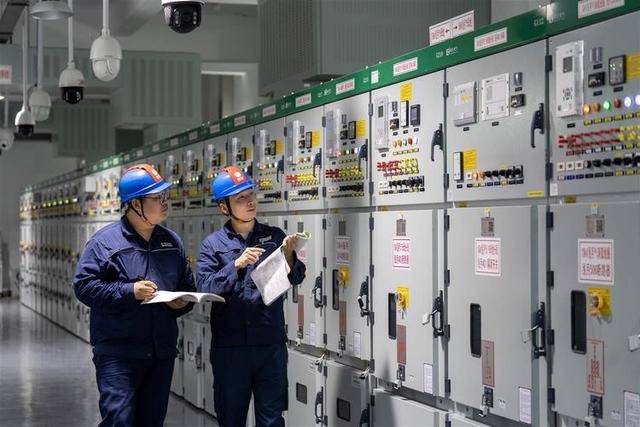
算力猛增耗电惊人!东数西算能解数据中心能源困局吗?
Sou Hu Cai Jing· 2026-01-19 18:17
Core Insights - The article discusses the increasing energy consumption of data centers in China and the government's initiative "East Data West Computing" to address this issue [2][4][6] - The focus is on the energy transition of data centers, particularly the challenges and opportunities related to green energy usage and cost management [14][19][35] Group 1: Energy Consumption and Government Initiatives - Data centers are significant energy consumers, with their electricity usage continuing to rise [2] - The "East Data West Computing" initiative was established to redirect data processing from the eastern regions to the western regions of China, where energy costs are lower [4][6] - The initiative has led to the establishment of eight national computing hubs and ten clusters to facilitate this energy transfer [6] Group 2: Cost and Resource Management - Western regions offer attractive electricity prices, with costs potentially below 0.4 yuan per kilowatt-hour due to abundant renewable resources [8] - Many companies are shifting their focus to the west for data center construction due to high electricity costs in the east [10] - However, challenges such as high network transmission costs and a shortage of skilled personnel in the west remain significant barriers [10][12] Group 3: Green Energy Transition - Companies are exploring various methods to increase the use of green energy, including distributed renewable energy projects and direct green electricity purchasing [16][19] - The government mandates that new data centers in computing hubs must achieve over 80% green energy usage, presenting a significant challenge for companies [24] - Storage technology, particularly lithium batteries, faces limitations in terms of lifespan and cost, while liquid flow batteries have potential but are not yet widely adopted [21][22] Group 4: Future Technologies and Strategies - Small Modular Reactors (SMRs) are gaining attention as a potential solution for powering data centers, although large-scale application is still a distance away [29] - The integration of microgrids and distributed power systems could enhance energy efficiency and supply stability [33] - The article emphasizes the need for a multi-faceted approach to achieve a green transition in data centers, balancing cost, technology, and policy [35][39]