
INNOVENT BIO(01801)

Search documents
中国创新药龙头大涨近7%,拿下国际巨头88亿美元合作,首付3.5亿美元
2 1 Shi Ji Jing Ji Bao Dao· 2026-02-09 05:49
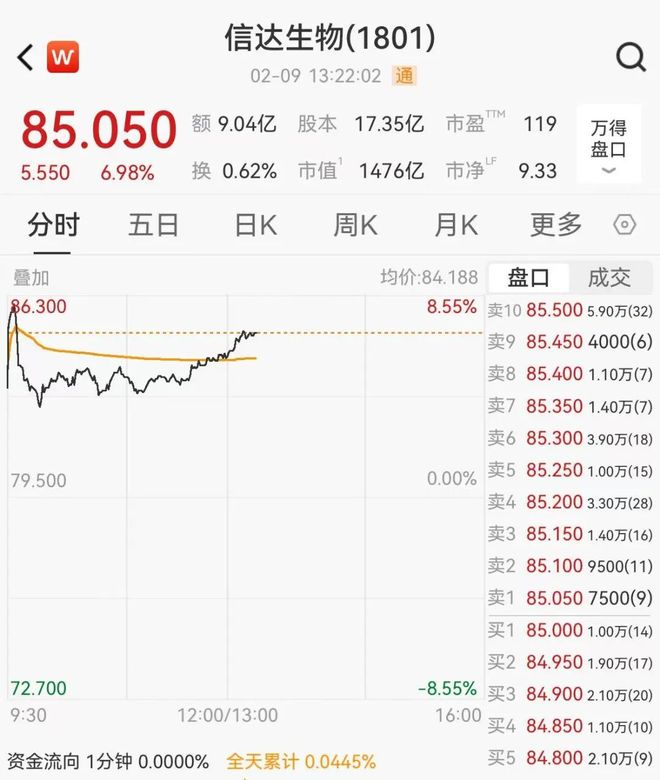
Core Viewpoint - The strategic collaboration between Innovent Biologics and Eli Lilly aims to advance global research and development of innovative drugs in oncology and immunology, with Innovent leading the development in China and retaining rights in the Greater China region while granting Eli Lilly exclusive rights outside this area [1][3]. Group 1: Collaboration Details - Innovent Biologics will receive an upfront payment of $350 million and is eligible for up to $8.5 billion in milestone payments related to research, regulatory, and commercialization achievements [1]. - The collaboration structure is designed to accelerate Innovent's global development pipeline, marking a new model for cooperation in the industry [1]. - This partnership is the seventh collaboration between Innovent and Eli Lilly, highlighting a long-standing relationship that has included significant financial and developmental support [5]. Group 2: Financial Impact - Following the announcement of the collaboration, Innovent's stock surged nearly 7%, reaching HKD 85 per share, with a market capitalization of HKD 147.6 billion [1]. - Innovent's revenue for 2025 is projected to reach approximately CNY 11.9 billion, a 45% increase year-on-year, marking the first time product revenue exceeds CNY 10 billion [10]. - The company aims to achieve CNY 20 billion in product revenue by 2027 and plans to advance five core pipelines into global Phase III clinical trials by 2030 [10]. Group 3: Market Position and Future Outlook - The collaboration reflects a broader trend where multinational pharmaceutical companies are increasingly recognizing the value of Chinese innovative drug assets, shifting from high-risk acquisitions to strategic partnerships [3]. - Innovent's growth strategy includes reducing reliance on external collaborations while enhancing its own research and development capabilities [13]. - The company is positioned to leverage its partnerships to enhance its competitive edge in the global market, as evidenced by its recent collaborations and product approvals [12][13].

中金:维持信达生物跑赢行业评级 目标价118.3港元
Zhi Tong Cai Jing· 2026-02-09 05:47
Core Viewpoint - CICC has raised the revenue forecast for Innovent Biologics (01801) for 2025 by 5.0% to 12.6 billion yuan, and the net profit forecast for 2026 by 274% to 6.68 billion yuan due to the impact of the Takeda collaboration, while introducing a net profit forecast of 4.14 billion yuan for 2027 [1] Group 1 - The company forecasts a product revenue of approximately 11.9 billion yuan for 2025, representing a year-on-year growth of about 45%, with Q4 product revenue expected to be around 3.3 billion yuan, showing over 60% growth year-on-year, aligning with CICC's expectations [2] - The company's product revenue has surpassed 10 billion yuan for the first time, driven by innovative products, with the oncology product portfolio expanding to 13 products by 2025 [3] - The company’s innovative product, Sintilimab, is expected to generate a revenue of 551 million USD in 2025, reflecting a year-on-year growth of about 5% [3] Group 2 - Seven products have been newly included in the national medical insurance catalog, which will be implemented starting in 2026, indicating clear performance drivers for 2026 [4] - The company expects the synergistic effects of its products to further manifest in 2026, with strong commercial momentum anticipated [4] - The company has reached a 10 billion USD collaboration with Takeda regarding IBI363 and is expected to see significant profit increases in 2026 due to upfront payments [5]
中国创新药龙头大涨近7%,拿下国际巨头88亿美元合作,首付3.5亿美元
21世纪经济报道· 2026-02-09 05:42
Core Viewpoint - The article discusses the strategic collaboration between Innovent Biologics and Eli Lilly to advance global research and development of innovative drugs in oncology and immunology, highlighting the financial terms and potential implications for both companies [1][3]. Summary by Sections Strategic Collaboration - Innovent Biologics announced a strategic partnership with Eli Lilly to develop innovative drugs in oncology and immunology, with Innovent leading the projects from drug discovery to clinical validation in China [1]. - The agreement includes an upfront payment of $350 million and potential milestone payments totaling up to $8.5 billion, along with a sales revenue sharing model for net sales outside Greater China [1]. Market Reaction - Following the announcement, Innovent's stock surged nearly 7%, reaching HKD 85 per share, with a market capitalization of HKD 147.6 billion [1]. Industry Context - Analysts note that multinational pharmaceutical companies are increasingly recognizing the value of Chinese innovative drug assets, shifting from high-risk acquisitions to collaborative models that leverage China's cost-effective and efficient R&D capabilities [3]. - However, some industry voices express concern that Innovent's role in drug development and commercialization in China may limit its long-term growth potential, as Eli Lilly retains global market rights [3]. Historical Collaboration - Innovent has a long-standing relationship with Eli Lilly, dating back to early investments and collaborations in drug development, including significant agreements in 2015 that set records for collaboration amounts between multinational and local companies [4][5]. - The partnership has led to successful product launches, including the PD-1 inhibitor, which became the first to be included in China's national medical insurance directory [4]. Financial Performance - Innovent's revenue has seen significant growth, with total revenue reaching CNY 3.844 billion in 2020, a 266.9% increase year-on-year, driven by product sales, particularly from its core product [5]. - The company aims to achieve CNY 11.9 billion in total product revenue by 2025, marking a 45% year-on-year increase, and has set a target of CNY 20 billion by 2027 [9]. Future Outlook - Innovent is focusing on expanding its product pipeline and has several products in critical phases of development, with plans to enhance its global presence through strategic collaborations [12]. - The company is also addressing potential challenges related to its pipeline and market positioning, aiming to balance revenue generation with R&D investments [14]. Industry Transformation - The article highlights a broader trend in the Chinese pharmaceutical industry, emphasizing the need for innovation to be recognized and valued globally, transitioning from efficiency-driven to quality and originality-driven innovation [15].

信达生物:与礼来制药达成最高88.5亿美元的全球战略合作,推进肿瘤及免疫领域的新药开发
Cai Jing Wang· 2026-02-09 04:12
Core Insights - The core viewpoint of the article is the strategic collaboration between Innovent Biologics and Eli Lilly to advance the global development of innovative drugs in oncology and immunology, marking their seventh partnership and strengthening their long-term relationship [1] Group 1: Partnership Details - The agreement allows both companies to leverage their complementary strengths to accelerate the global R&D of innovative drugs [1] - Innovent Biologics will lead the projects from drug discovery to clinical proof of concept in China, specifically completing Phase II clinical trials [1] - Eli Lilly will obtain exclusive development and commercialization rights outside Greater China, while Innovent retains all rights within Greater China [1] Group 2: Financial Aspects - Innovent Biologics will receive an upfront payment of $350 million [1] - Upon achieving specific milestones, Innovent is eligible for up to approximately $8.5 billion in milestone payments related to R&D, regulatory, and commercialization [1] - Innovent will also have the right to receive a tiered sales share based on net sales outside Greater China for each product [1]

研报掘金丨中金:维持信达生物“跑赢行业”评级,上调盈利预测
Ge Long Hui· 2026-02-09 03:17
中金发表研报指,信达生物预告去年全年产品收入约119亿元,年增约45%,其中第四季度产品收入约 33亿元,年增超过60%,符合中金预期。由于四季度公司计提了六款首次纳入2026年医保目录新产品的 库存补差,预计剔除该影响,公司四季度实际收入将体现更明显增长,略超中金预期,主要得益于新品 放量。考虑到2026武田合作款影响,上调2026年归母净利润预测274%至66.8亿元,并引入2027年归母 净利润预测41.4亿元。该行维持对其"跑赢行业"评级,基于DCF模型维持目标价118.3港元不变。 ...
信达生物大涨近9%,与礼来合作推进肿瘤及免疫领域创新药物全球研发
Ge Long Hui· 2026-02-09 03:14
Core Viewpoint - The company has entered into a strategic collaboration with Eli Lilly, a U.S. pharmaceutical firm, to advance the global research and development of innovative drugs in oncology and immunology [1] Group 1: Financial Terms - The agreement includes an upfront payment of $350 million (approximately HKD 2.73 billion) to the company [1] - The company is eligible for additional milestone payments totaling up to $8.5 billion (approximately HKD 66.3 billion) upon achieving specific subsequent milestones [1] - The company will also have the right to receive a tiered sales share based on the net sales of each product outside Greater China [1]
大行评级丨美银:维持信达生物“买入”评级,管理层重申对达成明年销售目标具信心
Ge Long Hui· 2026-02-09 03:04
美银证券发表报告指,信达生物2025年营收达119亿元,按年增长45%,基本符合该行预期。报告指, 在与信达生物的电话会议中,管理层重申对达成2027年销售目标具信心,因为成熟产品线包括 sintilimab(PD-1)持续展现强劲竞争力,市场份额保持韧性。高增长产品例如mazdutide(GCG/GLP-1 dual agonist)、tafolesimab(PCSK9)、teprotumumab(IGF-1R)及limertinib (EGFR TKI),预期将在未来数年占据 显著市场份额。美银证券维持信达生物"买入"评级,目标价113.5港元。 ...
美银证券:维持信达生物(01801)“买入”评级 目标价113.5港元
智通财经网· 2026-02-09 03:00
美银证券指,信达生物2025年第四季表现强劲,2025年营收达119亿元人民币,同比增长45%,基本符 合该行预期。2025年第四季营收达33亿元人民币,同比增逾60%。两项重点值得关注,包括六款产品获 列入2026年国家医保目录,预期将面临降价压力;及先前按原价销售的产品进行库存价格调整,暂时拖 累第四季增长。 智通财经APP获悉,美银证券发布研报称,维持信达生物(01801)"买入"评级,目标价113.5港元。 报告指,在与信达生物的电话会议中,管理层重申对达成2027年销售目标具信心,因为成熟产品线包括 sintilimab(PD-1)持续展现强劲竞争力,市场份额保持韧性。高增长产品例如mazdutide(GCG/GLP-1 dual agonist)、tafolesimab(PCSK9)、teprotumumab(IGF-1R)及limertinib (EGFR TKI),预期将在未来数年占据 显著市场份额。 ...
美银证券:维持信达生物“买入”评级 目标价113.5港元
Zhi Tong Cai Jing· 2026-02-09 02:59
美银证券发布研报称,维持信达生物(01801)"买入"评级,目标价113.5港元。 美银证券指,信达生物2025年第四季表现强劲,2025年营收达119亿元人民币,同比增长45%,基本符 合该行预期。2025年第四季营收达33亿元人民币,同比增逾60%。两项重点值得关注,包括六款产品获 列入2026年国家医保目录,预期将面临降价压力;及先前按原价销售的产品进行库存价格调整,暂时拖 累第四季增长。 报告指,在与信达生物的电话会议中,管理层重申对达成2027年销售目标具信心,因为成熟产品线包括 sintilimab(PD-1)持续展现强劲竞争力,市场份额保持韧性。高增长产品例如mazdutide(GCG/GLP-1dual agonist)、tafolesimab(PCSK9)、teprotumumab(IGF-1R)及limertinib(EGFR TKI),预期将在未来数年占据 显著市场份额。 ...
未知机构:信达生物更新与礼来达成全球战略合作驱动创新加速与价值兑现-20260209
未知机构· 2026-02-09 02:45
Summary of the Conference Call on Innovent Biologics and Eli Lilly Collaboration Company and Industry Involved - **Company**: Innovent Biologics (信达生物) - **Partner**: Eli Lilly (礼来制药) - **Industry**: Biopharmaceuticals, specifically focusing on oncology and immunotherapy Core Points and Arguments - **Strategic Collaboration Announcement**: On February 8, 2026, Innovent Biologics announced a strategic partnership with Eli Lilly to advance global research and development of innovative drugs in oncology and immunology [1][2] - **Seventh Collaboration**: This agreement marks the seventh collaboration between the two companies, further deepening their long-term and productive partnership aimed at delivering innovative therapies to global patients [1][2] - **New Collaboration Model**: The unique structure of this collaboration is designed to accelerate the global development process of Innovent's innovative R&D pipeline [1][2] Financial Aspects - **Initial Payment**: Innovent will receive an upfront payment of $350 million [3] - **Milestone Payments**: The company is eligible for up to approximately $8.5 billion in additional milestone payments related to R&D, regulatory, and commercialization achievements [3] - **Sales Revenue Sharing**: Innovent will have the right to receive a tiered sales share from net sales outside Greater China [4] Key Highlights of the Collaboration - **Complementary Strengths**: The collaboration aims to leverage the complementary strengths of both companies to accelerate the global R&D of innovative drugs [3][5] - **Innovent's Core Competencies**: Innovent's competitive edge lies in its mature antibody technology platform and efficient clinical development capabilities, which are emphasized as foundational for leading early-stage R&D [5] - **Antibody Technology Platform**: Innovent has a well-established platform for discovering fully human antibodies, supporting various formats such as monoclonal antibodies, bispecific antibodies, antibody-drug conjugates (ADCs), and fusion proteins [5] - **Clinical Development**: The company has a strong end-to-end capability from drug discovery to proof of concept (POC) in China, with 18 products approved for market [6] Pipeline and Clinical Experience - **Pipeline Scale**: Innovent has 18 products approved for market, with 4 molecules in Phase III/critical clinical trials and over 15 in clinical stages [6] - **Global Clinical Experience**: The company has extensive experience in conducting international multi-center research (MRCT) across various regions including the US, Australia, Japan, and Europe [6] - **Regulatory Progress**: Several pipeline products are expected to achieve breakthrough therapy designation (BTD) and initiate international Phase III trials by 2025 [6] Eli Lilly's Role - **Global Development and Commercialization**: Eli Lilly will be responsible for exclusive development, registration, commercialization, and manufacturing outside Greater China, utilizing its extensive global network to expedite product entry into major markets [7] - **Support for Innovent's Molecules**: Innovent's innovative molecules will benefit from Eli Lilly's international clinical platform for MRCT and rapid advancement in FDA/EMA registration processes [7]