LI AUTO-W(02015)

Search documents
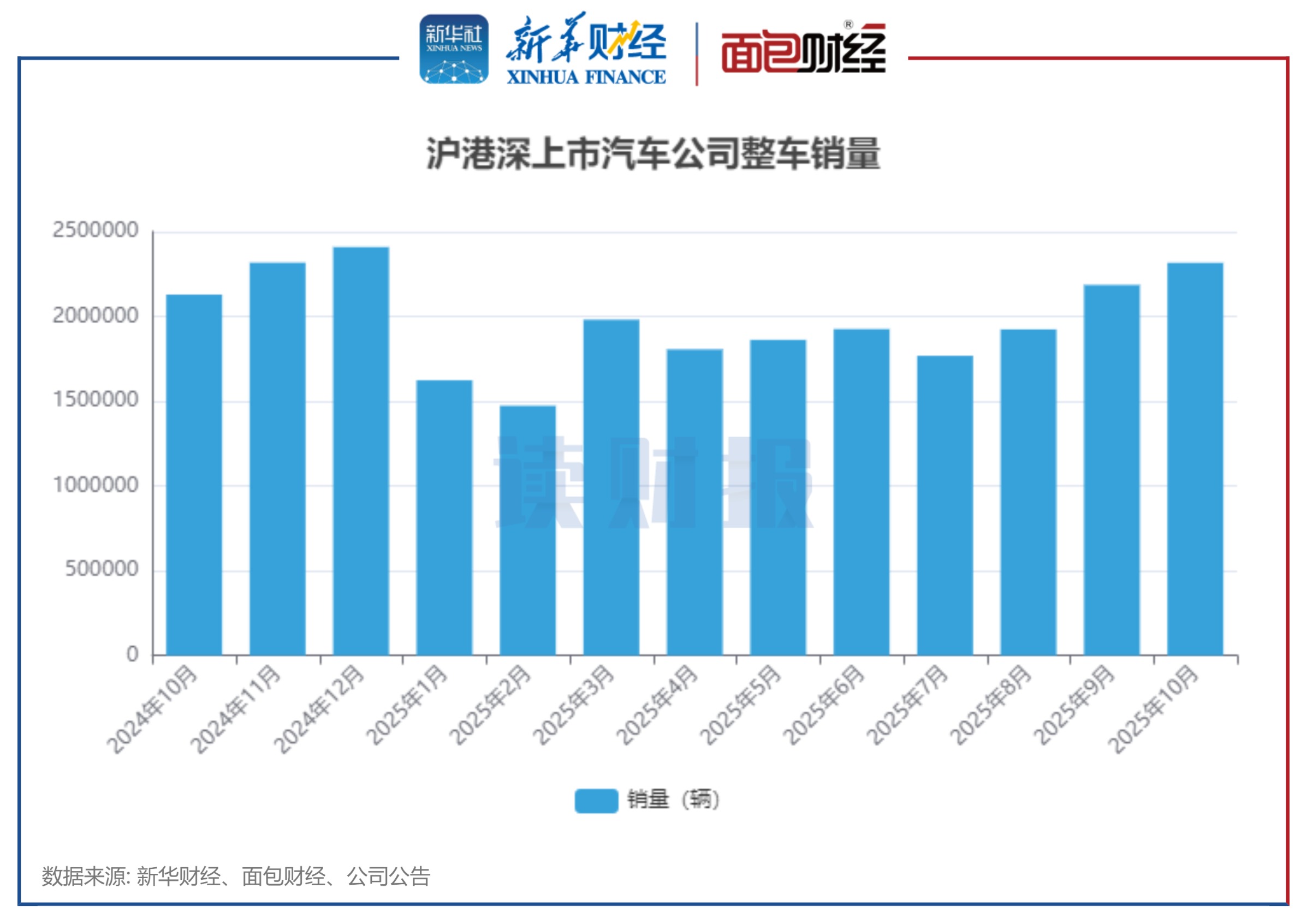
【读财报】上市车企10月销量:整车销量超231万辆 北汽蓝谷、蔚来等销量增速加快
Xin Hua Cai Jing· 2025-11-12 22:59
Core Insights - In October 2025, 20 A and H-share listed automotive manufacturers collectively sold 2.3166 million vehicles, representing a year-on-year increase of 8.82% and a month-on-month increase of 5.97% [2][12]. Group 1: Overall Vehicle Sales - The top-selling company in October was SAIC Motor, with sales of 454,000 vehicles, showing a year-on-year growth of 12.96% [11][19]. - BYD followed closely with sales of 441,706 vehicles, but experienced a decline of 12.13% year-on-year [19]. - Other notable performers included Geely Automobile with 307,133 vehicles sold (up 35.49%) and Changan Automobile with 278,436 vehicles (up 11.00%) [8][19]. - Companies like BAIC Blue Valley and Qianli Technology saw significant growth, with year-on-year increases exceeding 100% [7][11]. Group 2: New Energy Vehicle Sales - A total of 16 companies reported new energy vehicle sales, with approximately 1.3078 million units sold in October, marking a year-on-year increase of 15.63% and a penetration rate of 57.48% [12][15]. - Leading new energy vehicle manufacturers included BYD, SAIC Motor, and Geely, with sales of 441,706, 206,692, and 177,882 units respectively [15][19]. - BAIC Blue Valley and NIO reported growth rates exceeding 100%, while Li Auto and BYD experienced declines in year-on-year sales [15][19].






【新能源周报】新能源汽车行业信息周报(2025年11月3日-11月9日)
乘联分会· 2025-11-12 08:53
Industry Information - Jiangsu Province's new energy commercial vehicle power and control system innovation center construction plan has been approved, focusing on core issues in the industry such as high-power electric drive systems and intelligent control systems [8] - CATL has established a new energy technology company in Yunnan with a registered capital of 5 million RMB, focusing on new energy technology research and battery swap facilities [8] - Tsinghua University has developed a new solid-state battery using soybean protein, which shows potential for high performance and environmental benefits [10][11] - Zhengli New Energy plans to launch a pilot line for all-solid-state batteries in the first half of 2026, aiming to solve production challenges [11] - Wuhan Weinan completed a C-round financing of 670 million RMB, with funds directed towards battery asset management and technology development [12] - The number of electric vehicle charging facilities in China has exceeded 18 million, reflecting a 54.5% year-on-year increase [22][23] Policy Information - Guangdong Province is offering a one-time subsidy for personal consumers purchasing new energy passenger vehicles as part of a broader consumption promotion campaign [29] - The National Development and Reform Commission has issued a plan to support the construction of smart charging facilities and improve community services [30] - A new policy in Huzhou, Zhejiang, aims to establish over 10,000 public charging stations by 2025, enhancing the charging network [34] - The city of Zhengzhou has suspended applications for vehicle scrapping subsidies due to budget exhaustion [38] Company Information - BYD's Tengshi brand has launched new models with competitive pricing, indicating strong market activity [9] - Xpeng Motors has begun trial production of its flying car, marking a significant step in the development of flying vehicles [15] - Huawei's driving assistance system has accumulated over 58.11 billion kilometers of assisted driving mileage, showcasing its technological advancements [17] - SAIC's MG4 has introduced a cross-year tax subsidy plan, reflecting competitive strategies in the automotive market [12]



伯特利:理想汽车是公司的重要客户之一
Zheng Quan Ri Bao· 2025-11-12 07:13
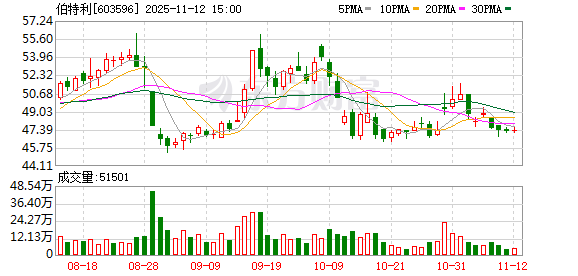
Group 1 - Bertel's response on November 11 indicates that Li Auto is an important client for the company [2] - The company supplies various products, including basic braking and electronic braking systems, to Li Auto [2]


理想汽车调整组织架构,李想直管人事
3 6 Ke· 2025-11-12 05:52
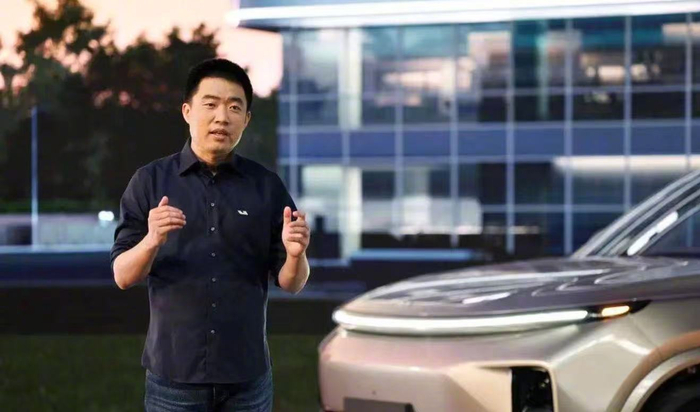
Core Viewpoint - Li Auto has undergone significant organizational and personnel adjustments, with CEO Li Xiang taking direct control over human resources and organizational structure, indicating a shift in management strategy away from previous Huawei influences [1][2][3] Group 1: Organizational Changes - Li Auto announced the integration of the "Organization Department" and "Human Resources" into a single "Human Resources" department, which will now report directly to CEO Li Xiang [1] - The previous CFO function group has been renamed to reflect its new role, with Yang Haishan appointed as the head of human resources [1] - Li Xiang's direct management of human resources suggests a potential change in the company's previously aggressive personnel management approach [3] Group 2: Shift from Huawei Influence - Li Auto previously recruited talent from Huawei to address gaps in processes, sales, chips, and intelligence, including hiring Zou Liangjun and Li Wenzhi [2] - In July, Li Auto announced a shift from Huawei's PBC to the OKR management system, marking a move towards "de-Huawei" practices [2] - The departure of key figures from Huawei, such as Zou Liangjun, indicates a broader trend of reducing reliance on Huawei's management style [2] Group 3: Strategic Focus - Li Xiang continues to manage product lines, branding, and strategy while also dedicating significant time to AI initiatives, attending multiple AI meetings weekly [2] - Despite previous successes with range-extended vehicles, Li Auto faced challenges after the MEGA setback, leading to a rapid adjustment in sales targets and workforce reductions [2]
纯电与增程“龙虎斗”造车新势力“技术对调”打破“路线围城”
Zheng Quan Shi Bao Wang· 2025-11-12 02:31
Core Viewpoint - The Chinese electric vehicle market is witnessing a "technical route adjustment," with companies like Xpeng shifting towards range-extended electric vehicles while Li Auto accelerates its focus on pure electric models, reflecting a complex response to market demands and competitive pressures [2][4][11]. Group 1: Market Dynamics - The market currently favors range-extended and hybrid technologies, despite the long-term goal of pure electric vehicles being the ultimate target of policy [4][10]. - Xpeng's new range-extended model, the X9, features a fast-charging lithium iron phosphate battery and a large fuel tank, achieving over 450 km of pure electric range and over 1600 km of total range [5][9]. - Li Auto is increasing its commitment to pure electric vehicles, driven by competitive pressures and the need to adapt to market trends [6][10]. Group 2: Competitive Landscape - The sales of pure electric vehicles have surpassed 60% of total new energy vehicle sales in China from January to September this year, indicating a shrinking market for range-extended vehicles [6][10]. - Companies like Lantu are also entering the range-extended market, with models like the Lantu Taishan gaining traction, showcasing the competitive nature of this segment [6][9]. - The shift towards range-extended vehicles is seen as a strategic move to capture market share and respond to consumer preferences, with Xpeng's strategy viewed as a way to maintain brand value without resorting to price cuts [9][12]. Group 3: Strategic Implications - The dual approach of offering both pure electric and range-extended models is seen as a way to maximize market opportunities while addressing consumer needs [10][12]. - The integration of both technologies allows companies to leverage the benefits of each, with range-extended vehicles providing a solution to range anxiety while maintaining the driving experience of pure electric vehicles [12][13]. - The ongoing competition in the range-extended segment is expected to intensify, with more players entering the market, leading to a scenario where only the strongest will survive [9][10].

理想汽车架构调整:组织部与人力资源整合,李想直管人事
Xin Lang Ke Ji· 2025-11-12 02:07
Core Points - Li Auto has announced an organizational restructuring, merging the "Organization Department" and "Human Resources" under a single "Human Resources" department, which will now report to CEO Li Xiang instead of CFO Li Tie [1] - Yang Haishan has been appointed as the head of the newly formed Human Resources department, previously serving as the after-sales director since 2016 [1] - The restructuring also involves the departure of former HR head Yuan Chunfeng and the head of the Organization Department, Li Wenzhi, who has left the company [1]
套现415亿!软银回应清仓英伟达:筹钱投OpenAI;李想直管人事,华为系高管淡出理想管理层;Meta首席AI科学家杨立昆将离职
雷峰网· 2025-11-12 00:56
Group 1 - SoftBank has liquidated its entire stake in NVIDIA, raising $5.83 billion (approximately 415 billion RMB) to fund investments in OpenAI [4][5] - The CFO of SoftBank indicated that the decision was influenced by the need to secure financial stability while seizing investment opportunities, amidst rising concerns about potential AI investment bubbles [5] - SoftBank's investment gains from OpenAI's valuation increase amounted to approximately 992 million RMB during the period from April to September [4] Group 2 - Tencent celebrated its 27th anniversary, revealing that the QQ group chat feature was originally created for employees to coordinate lunch plans [7][8] - The company confirmed that its first logo was not a penguin but a pager, with the penguin design winning in a vote [7] - Tencent's headquarters, referred to as "Penguin Island," is undergoing construction and is set to enter trial operations [8] Group 3 - Li Auto has undergone significant personnel changes, with CEO Li Xiang taking direct control of human resources, indicating a shift in management strategy [10][11] - The company is facing challenges in maintaining its market position, as its delivery numbers have been surpassed by competitors like NIO and Xpeng [11] Group 4 - Modern Automotive is reportedly in talks with Xpeng regarding collaboration on autonomous driving technology, marking a shift from its previous independent development approach [18][19] - The collaboration aims to leverage the advanced capabilities of Chinese autonomous driving firms, which are considered to be at the forefront of the technology [19] Group 5 - Meta's chief AI scientist, Yann LeCun, is planning to leave the company to establish a new AI startup, amid strategic shifts within Meta [33][34] - LeCun has expressed differing views on large language models, focusing instead on developing "world models" for better understanding and prediction capabilities in AI [34] Group 6 - Tesla is preparing to expand its Texas Gigafactory to produce the Optimus humanoid robot, with a target annual production capacity of 10 million units [36] - The company is currently testing production lines in California while planning to centralize most of its production in Texas [36] Group 7 - AMD is expected to raise its AI market size forecast to between $750 billion and $850 billion, significantly higher than previous estimates [44][45] - The company reported a 36% year-over-year revenue increase in Q3, driven by strong demand for its EPYC processors and Instinct accelerators [45]





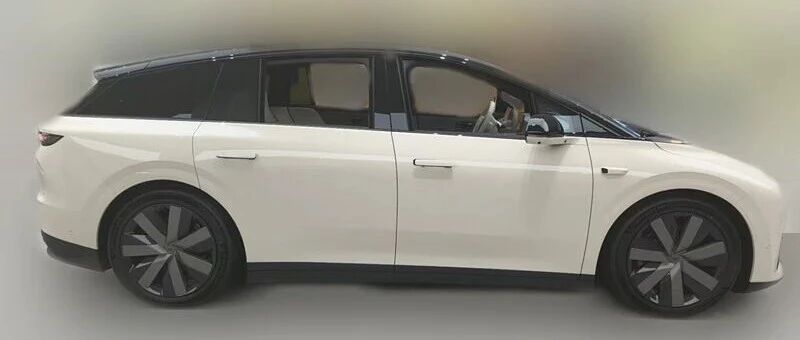
理想i6:客户比L系列年轻10岁,60%车主不做任何选装
车fans· 2025-11-12 00:30
Core Insights - The launch of the i6 has generated significant customer interest, with 25 batches of customers visiting the dealership daily since October, 60% of whom are specifically interested in the i6 [2][4]. Sales and Customer Preferences - The i6 is sold in a single configuration with optional features, with 60% of customers opting for no additional options. The most popular model is the white two-wheel drive standard version, accounting for 40% of sales [4]. - The current waiting period for the i6 is approximately 16 weeks, with a promotional discount of 10,000 yuan available until October 31, followed by a reduced discount of 5,000 yuan starting in November [6][18]. Financing and Pricing - The total cost for the i6, including financing, is approximately 101,620 yuan, with a monthly payment of 2,750 yuan based on a loan amount of 150,000 yuan [7]. - The financing options include a 1.99% annual interest rate, with down payments ranging from 0% to 80% and loan terms of 1 to 5 years [6]. Target Demographics and Competitors - The primary customer demographic for the i6 is younger individuals, with an average age around 25-30 years, often from elite families or early in their careers. The main competitors are Tesla Model Y and Xiaomi Yu7, with customers comparing these models frequently [8][10]. - Customers are drawn to the i6 for its advanced battery technology and intelligent driving features, which are perceived as superior to competitors [14]. Customer Feedback and Concerns - Common customer complaints include long waiting times for vehicle delivery and mixed opinions on the vehicle's exterior design, with some customers loving it while others do not accept it [17]. - Customers who place orders are informed about potential changes to battery brands and vehicle configurations without affecting their position in the queue [18]. Special Offers and Incentives - Special incentives are available for specific professions, such as police officers and teachers, offering 20,000 ideal points for eligible buyers [19].
热门中概股周二收盘涨跌不一
Xin Lang Cai Jing· 2025-11-11 22:39
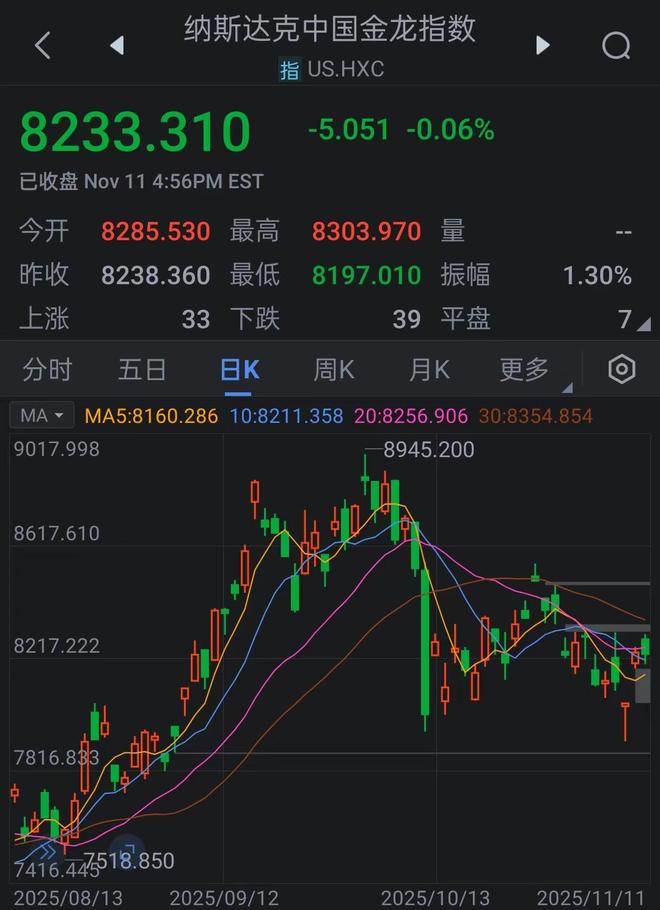
Group 1 - The Nasdaq Golden Dragon China Index experienced a slight decline of 0.06% [1] - Alibaba's stock fell by over 3% [1] - Netease's stock increased by over 1% [1] Group 2 - Tencent Music's stock dropped by over 3% [1] - XPeng Motors saw a rise of over 7% [1] - Li Auto's stock increased by over 1% [1] Group 3 - NIO's stock decreased by over 1% [1] - Bilibili's stock also fell by over 1% [1]


汽车2026年投资策略:品牌化、全球化、智能化,迎接AI浪潮下的产业升级机遇【国信汽车】
车中旭霞· 2025-11-11 16:02
Core Viewpoint - The Chinese automotive industry is transitioning from a growth phase to a mature phase, with a significant slowdown in sales growth and a shift in focus towards brand building and globalization to maintain profitability and market share [1][11]. Group 1: Industry Characteristics and Changes - The automotive industry is experiencing three main characteristics: diminishing total volume dividends, low growth normalization in sales, and a shift in production capacity from traditional fuel vehicles to new energy vehicles [11][19]. - The industry has undergone significant changes, including the transition from a focus on meeting transportation needs to a broader application in various life scenarios, and the evolution of vehicles from mere transportation tools to intelligent entities [42][45]. Group 2: Sales and Market Trends - The sales volume of the automotive industry is expected to reach 34.89 million units in 2025, with a growth rate of approximately 11%, driven by tax incentives and subsidies [1][11]. - The penetration rate of new energy vehicles is projected to increase significantly, with sales expected to rise from 1.21 million in 2019 to 14 million by 2024, reflecting a compound annual growth rate of 63% [19][24]. Group 3: Brand and Globalization Strategies - Brand building and globalization are essential strategies for automotive companies to counteract intense competition and maintain market share, with a focus on creating brand premiums and establishing barriers through advanced technologies [2][4]. - Domestic automotive brands are increasingly expanding overseas, supported by the establishment of production capacities, distribution channels, and service systems in international markets [2][4]. Group 4: Technological Advancements - The automotive industry is on the brink of a technological revolution, with advancements in intelligent driving expected to transition from co-pilot (L3) to agent (L4) capabilities, creating new investment opportunities in various components [2][3]. - The expected mass production of robots in 2026 will mark a significant milestone for the robotics industry, with a high overlap in components between automotive and robotics sectors, presenting investment opportunities in related supply chains [3][4]. Group 5: Policy and Economic Influences - The automotive industry is influenced by macroeconomic cycles, industry cycles, and policy cycles, with the latter playing a crucial role in shaping market dynamics through incentives and regulations [1][50]. - The upcoming reduction in new energy vehicle purchase tax incentives in 2026 is anticipated to stabilize overall automotive sales, with a slowdown in the growth rate of new energy vehicle sales [1][50].