
LI AUTO-W(02015)

Search documents
小米、华为、理想等先后报警!烟台公安破获新型网络水军案
Qi Lu Wan Bao· 2025-12-18 07:34
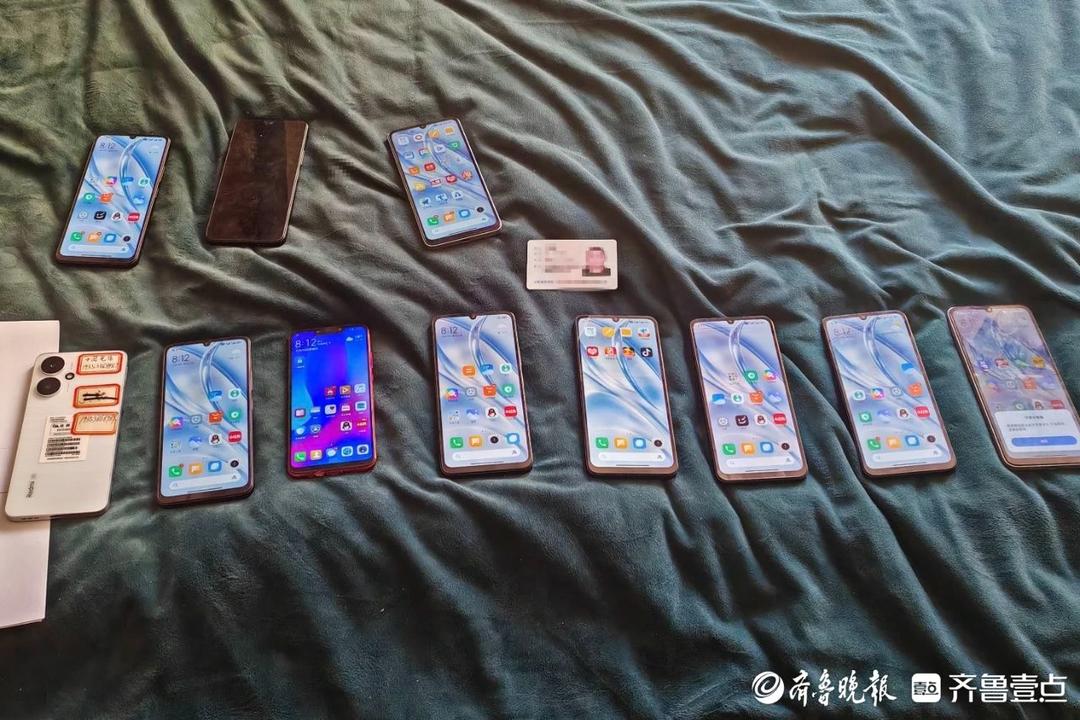
Core Insights - A criminal gang involved in spreading negative information about electric vehicle brands has been dismantled by the Yantai Public Security Bureau, resulting in the arrest of 12 individuals and the seizure of over 1 million yuan in funds [1][4]. Group 1: Criminal Activities - Since July, companies such as Xiaomi, Huawei, and Li Auto reported a surge in negative articles targeting their brands, indicating a highly organized effort to defame these companies [3]. - The negative content was characterized by coordinated efforts, including distorted interpretations and malicious slander, with some accounts impersonating consumers to post false experiences [3]. - The gang utilized technology to scrape keywords related to "Xiaomi," "Huawei," and "Li Auto," employing artificial intelligence to mass-produce low-quality, similar "internet garbage" for profit [3]. Group 2: Law Enforcement Actions - Following the reports, Yantai Public Security initiated an investigation, analyzing over 3,000 negative articles and identifying a network of suspicious accounts with short registration times and abnormal activity [3]. - A special task force was established to conduct a thorough investigation, leading to the analysis of over 80,000 pieces of online information and tracing over 100,000 financial transactions to clarify the gang's structure and operations [3][4]. - The operation culminated in a coordinated crackdown in Yantai and Liaocheng, successfully apprehending 12 suspects and shutting down over 8,000 illegal online accounts [4].



小米、华为、理想先后报案,警方抓获12人!
新华网财经· 2025-12-18 07:15
Core Viewpoint - The article discusses the organized efforts to spread negative information about emerging industries, particularly in the electric vehicle sector, and highlights a police operation that dismantled a group responsible for this misinformation campaign [1][3]. Group 1: Background and Context - Since July, companies like Xiaomi, Huawei, and Li Auto reported a surge in negative articles targeting their brands on a specific platform, indicating a coordinated attack on their reputations [1]. - The negative content exhibited characteristics of organized operations, including malicious defamation, impersonation of consumers, and the amplification of isolated issues through manipulated media [1]. Group 2: Investigation and Findings - Following reports from affected companies, the Yantai police conducted an investigation, identifying over 3,000 negative articles linked to accounts with short registration times and unusual activity patterns, suggesting a systematic operation [3]. - The criminal group utilized technology to scrape keywords related to major brands and employed artificial intelligence to generate low-quality, repetitive content aimed at driving traffic for profit [3]. Group 3: Law Enforcement Action - The police established a special task force to analyze over 80,000 pieces of online information and trace more than 100,000 financial transactions to understand the group's structure and operations [5]. - The operation culminated in the arrest of 12 suspects, the seizure of over 1 million yuan in illicit funds, and the shutdown of more than 8,000 illegal accounts, effectively dismantling the network of "internet water army" involved in the misinformation campaign [5].
小米、华为、理想等报警,12人被抓
Nan Fang Du Shi Bao· 2025-12-18 04:15
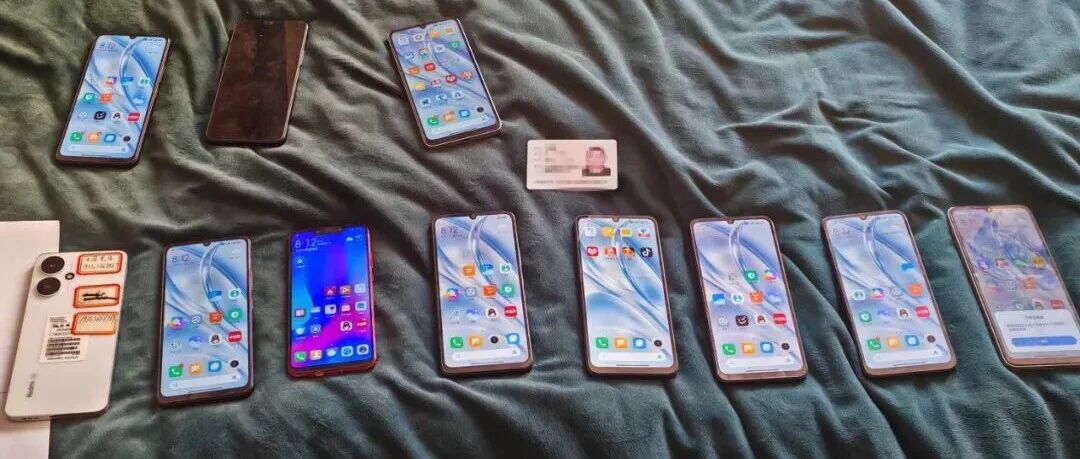
Core Viewpoint - Since July, companies like Xiaomi, Huawei's HarmonyOS, and Li Auto have reported a surge of negative articles targeting their automotive brands on a certain platform, leading to police intervention in a case involving organized misinformation against the new energy vehicle sector [1][3]. Group 1: Police Action - Yantai police have dismantled a gang that was orchestrating negative information about new energy vehicles, arresting 12 individuals and seizing over 1 million yuan in funds, while shutting down more than 8,000 accounts [1][4]. - The police investigation revealed that the negative content was highly organized, involving tactics such as distorting facts, impersonating consumers, and creating misleading experiences to damage brand reputations [3][4]. Group 2: Investigation Findings - The investigation identified over 3,000 negative articles that originated from accounts with short registration times and unusual activity levels, indicating a systematic operation likely involving "internet water armies" aiming to generate profit through traffic manipulation [3][4]. - The criminal group utilized technical tools to scrape keywords related to "Xiaomi," "Huawei," and "Li Auto," employing artificial intelligence to mass-produce low-quality, repetitive "internet garbage" solely for profit [4]. Group 3: Ongoing Efforts - Yantai police have announced plans to continue their series of special operations aimed at cleaning up the internet and combating misinformation [5].

「二次创业」大戏拉开帷幕
3 6 Ke· 2025-12-18 03:31
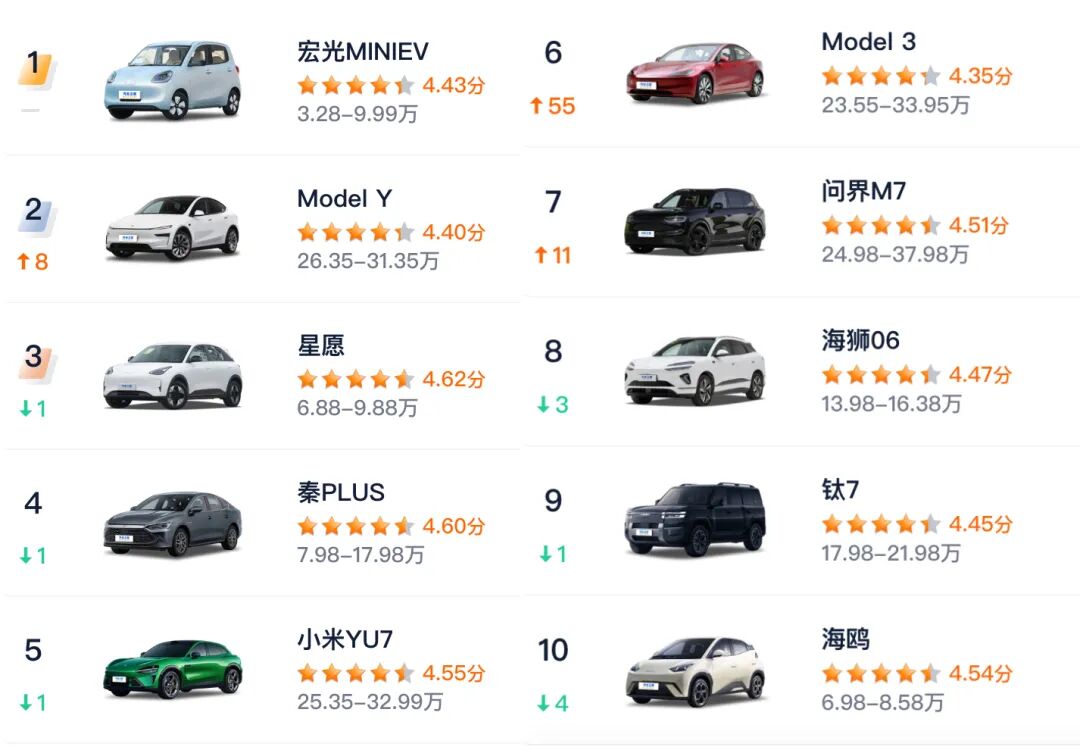
Core Insights - The rapid growth of the new energy vehicle market in China has led to a significant division in the automotive market, with distinct trends emerging in the price segments below and above 200,000 yuan [1][2][5] Market Trends - In November, vehicles priced above 200,000 yuan occupied four spots in the sales rankings, with the Model Y selling over 47,000 units and the AITO M7 selling over 25,000 units [1] - Conversely, vehicles priced below 100,000 yuan also claimed four spots, with the Hongguang MINIEV selling over 56,000 units and the BYD Seagull selling over 21,000 units [2] - The market has bifurcated into segments below 100,000 yuan and above 200,000 yuan, leaving the 100,000-200,000 yuan segment relatively quiet [2][5] Sales Performance - The top-selling models in the overall automotive market for November included the Hongguang MINIEV, Model Y, and others, with significant sales figures indicating a preference for lower-priced vehicles [4] - The sales figures for electric vehicles showed a notable increase, with pure electric vehicles selling 7,155 units and plug-in hybrids 28,213 units [4] Consumer Behavior - The shift in consumer behavior reflects a change from purchasing vehicles out of necessity to buying based on emotional appeal, particularly in the above 200,000 yuan market [7] - The lower-priced market is seeing a mix of consumption downgrade and upgrade, with traditional brands like Geely and BYD dominating this segment, while new entrants struggle to penetrate [7][8] Competitive Landscape - New energy vehicle brands such as Xiaomi and Hongmeng Zhixing are gaining traction, with Xiaomi achieving over 40,000 units sold in November, marking its entry into the top three for the first time [9][10] - Traditional automakers are facing challenges in the above 200,000 yuan market, where they need to enhance their overall offerings to regain competitive advantage [19][20] Industry Evolution - The automotive industry is undergoing a "second entrepreneurship," with traditional manufacturers transitioning from fuel vehicles to smart new energy vehicles, while new entrants are establishing themselves in the market [20]



小米、华为、理想报案,警方抓获12人
21世纪经济报道· 2025-12-18 02:59
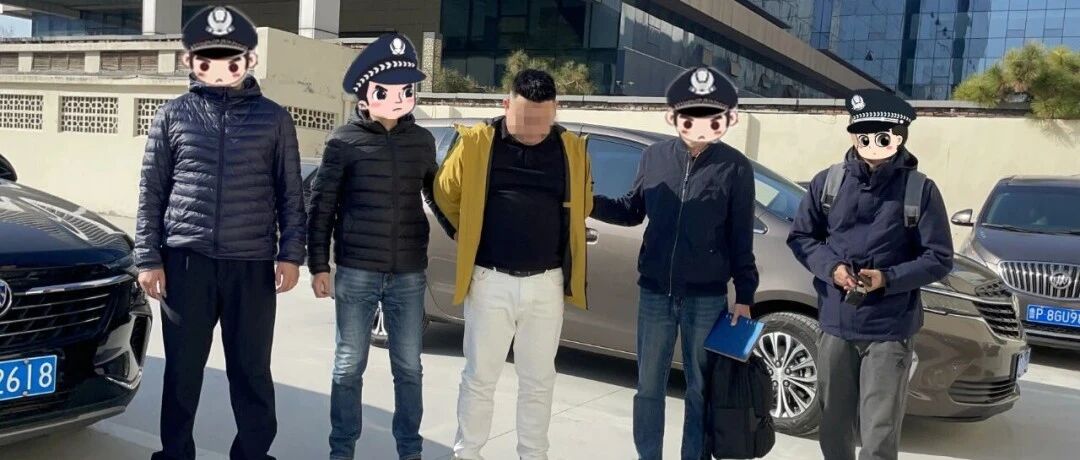
Core Viewpoint - The article discusses the crackdown on a criminal gang involved in orchestrating negative information about electric vehicle brands, highlighting the organized and industrialized nature of these activities [1][3]. Group 1: Criminal Activities - The gang was responsible for a large number of negative articles targeting companies like Xiaomi, Huawei, and Li Auto, which were characterized by organized efforts to distort facts and maliciously defame these brands [1][6]. - The operation involved creating fake consumer experiences and amplifying isolated issues through manipulated content, severely damaging brand reputation and disrupting normal business operations [1][3]. Group 2: Investigation and Arrests - After a thorough investigation, the police identified over 3,000 negative articles linked to accounts with suspicious activity patterns, indicating a systematic operation likely run by "internet water armies" [3]. - The police analyzed over 80,000 pieces of online information and traced more than 100,000 financial transactions to uncover the gang's structure and operational methods, leading to the arrest of 12 suspects and the seizure of over 1 million yuan in illicit funds [3][6]. Group 3: Industry Response - Li Auto's legal department reported a surge in organized attacks against the company, emphasizing the serious implications of these actions on consumer trust and corporate reputation [6]. - In September, a joint initiative by multiple government departments was launched to address online chaos in the automotive industry, focusing on illegal profit-making, exaggerated claims, and malicious defamation [9].
12人团伙用AI炒作发布小米华为理想诋毁文章!查扣逾百万
Nan Fang Du Shi Bao· 2025-12-18 01:39
Core Viewpoint - A criminal gang involved in the organized dissemination of negative information about electric vehicle brands, including Xiaomi, Huawei, and Li Auto, has been dismantled by the Yantai police after a four-month investigation, resulting in the arrest of 12 individuals and the shutdown of over 8,000 accounts [1][2][3]. Group 1 - Multiple companies, including Xiaomi, Huawei's HarmonyOS, and Li Auto, reported a surge of negative articles targeting their brands on a specific platform [1][2]. - The negative content exhibited organized characteristics, including malicious defamation, identity impersonation, and the amplification of isolated issues through manipulated videos, severely harming brand reputation and disrupting normal business operations [2]. - The Yantai police identified over 3,000 negative articles linked to a group of suspicious accounts with short registration times and unusual activity, indicating a premeditated operation by a "network water army" to generate profit through traffic manipulation [2][3]. Group 2 - The special investigation team analyzed over 80,000 pieces of online information and traced 100,000 financial transactions to clarify the gang's organizational structure and operational processes [3]. - Following the collection of evidence, the police conducted simultaneous operations in Yantai and Liaocheng, successfully apprehending 12 suspects, seizing over 1 million yuan in illicit funds, and shutting down more than 8,000 illegal accounts [3]. - Yantai police announced plans to continue special operations aimed at cleaning up the internet and combating misinformation [4].
观车 · 论势 || 理想“造镜”为博一张“明日船票”?
Zhong Guo Qi Che Bao Wang· 2025-12-18 01:27
那么,在汽车主业正面临增程市场格局生变、竞争空前激烈、公司营收承压并重陷亏损的当下,理想为 何要"兵出奇招",闯入早已是红海的智能眼镜市场? 笔者认为,这并非一次心血来潮的"跨界",而是一套深思熟虑、攻守兼备的战略"组合拳"。首先,这是 一次应对主业压力的主动出击。在主业务承压之际,开辟一条具科技光环的"第二增长曲线",能在资本 与舆论层面有效转移市场对短期财务表现的过度聚焦,为团队和投资者讲述一个关于未来的新故事。其 次,这是一次企业身份的重塑宣言。通过Livis,理想急切地试图撕下"汽车公司"旧标签,将自己重新定 义为具身智能企业。 这副眼镜正是其承载AI服务、无缝串联"车、家、人"三大场景的战略入口,其符号意义远大于作为配件 的硬件本身。更深层来看,这也是一次为长远技术护城河蓄能的隐秘工程。Livis作为用户在车外的感 官延伸,能够持续收集真实世界的第一视角、多模态数据。这些珍贵的数据流,将源源不断地反哺理想 的AI大模型与自动驾驶系统的迭代。 近日,理想汽车正式推出了首款量产AI眼镜——Livis。这款仅重36克的消费电子设备,被官方赋 予一个颇具野心的定义:最强人工智能附件。它的登场,远非一次简单的 ...
AI加速“上车” 智能汽车操作系统迈向千亿级市场
Xin Hua Cai Jing· 2025-12-18 01:09
Core Insights - Major automotive companies are increasingly adopting AI as a core strategy for future development, with significant investments in AI technologies and models [1] - The automotive software industry is undergoing structural changes, shifting the value focus from traditional hardware manufacturing to software and services, with projections indicating a rise in software profit share from 6% in 2020 to 25% by 2030 [2][3] - The integration of software is fostering a new ecosystem that bridges various sectors, enhancing collaboration and resource efficiency across the automotive industry [3][4] Group 1: Industry Trends - The automotive software industry's value is transitioning from a "one-time sale" model to a "full-cycle service" model, with hardware profit share decreasing from 79% in 2020 to an expected 59% by 2030 [2] - The commercial value of in-vehicle operating systems is becoming increasingly significant, with the market projected to reach approximately 600 billion yuan by 2025 and exceed 1 trillion yuan by 2030 [3] - The future of automotive software development is expected to focus on integration, moving towards highly adaptive intelligent operating systems that support comprehensive resource management [4] Group 2: Challenges and Solutions - The automotive industry faces challenges in establishing a unified and open software and hardware ecosystem, with varying levels of openness and interface standards among chip manufacturers [7] - Collaboration between companies remains inefficient, often requiring extensive customization and debugging, which hampers the overall efficiency of solutions [7] - The industry is encouraged to adopt open-source models to build a unified technical foundation, reducing costs and fostering innovation through community collaboration [5][9] Group 3: Future Directions - The integration of advanced safety features and the expansion of collaborative boundaries are essential for building sustainable competitive advantages in the automotive sector [11] - The industry is exploring the incorporation of satellite technology into existing vehicle-road-cloud systems to enhance data and computational networks [12] - The relationship between AI and the automotive industry is expected to evolve, with AI becoming a critical component in the development of intelligent vehicles and applications [12]


可靠吗?苹果考虑在印度封装iPhone芯片;腾讯升级大模型研发架构,姚顺雨出任首席AI科学家;小米发布最新MiMo大模型
雷峰网· 2025-12-18 00:45
Key Points - Apple is in talks with Indian semiconductor manufacturers to assemble and package iPhone chips in India, marking a shift from just final assembly to more complex semiconductor packaging [4][5] - Tencent has upgraded its large model research architecture, establishing new departments to enhance its AI capabilities, with a former OpenAI researcher appointed as chief AI scientist [7][8] - Xiaomi's new model, MiMo-V2-Flash, was launched by "genius girl" Luo Fuli, achieving a top 2 ranking among global open-source models [12] - MiniMax and Zhiyu have passed the Hong Kong Stock Exchange hearing, aiming to become the first publicly listed large model companies [21][22] - Neta Auto has established a new company named "Qianhe Auto" for restructuring purposes amid financial difficulties [24][25] - OPPO's executive shared a humorous experience of meeting a fan while undergoing dental surgery, highlighting the company's engagement with consumers [27][28] - Meta is planning layoffs in its metaverse department, reallocating resources towards AI smart glasses due to better market performance [44][45] - BYD has commenced comprehensive testing of its L3 autonomous driving technology, having completed over 150,000 kilometers of road validation [34] - Xiaomi plans to invest approximately 400 billion yuan in R&D in 2026, as part of a larger 2 trillion yuan investment over the next five years [40][41] - iRobot has entered bankruptcy and is being acquired by its main manufacturer, Sunkwan Group, which will retain the iRobot brand and continue operations in China [39][40]





小米、华为、理想报警,12人被抓获
Xin Jing Bao· 2025-12-18 00:23
Core Viewpoint - Yantai Public Security has dismantled a gang involved in the manipulation of negative information regarding electric vehicle brands, arresting 12 individuals and seizing over 1 million yuan in funds, while shutting down more than 8,000 accounts [1][2] Group 1 - The gang targeted companies such as Xiaomi, Huawei, and Li Auto, creating a large volume of negative articles that were highly organized and maliciously distorted the companies' reputations [1] - The negative content included impersonation of consumers and the use of AI technology to generate low-quality, repetitive "internet garbage" aimed at driving traffic for profit [1][2] Group 2 - The investigation involved analyzing over 80,000 pieces of online information and tracing more than 100,000 financial transactions to clarify the gang's structure and operational process [2] - The operation resulted in a comprehensive crackdown on this new type of "internet water army" crime, achieving a full-chain and penetrating strike against the organization [2]