HAIDILAO(06862)

Search documents
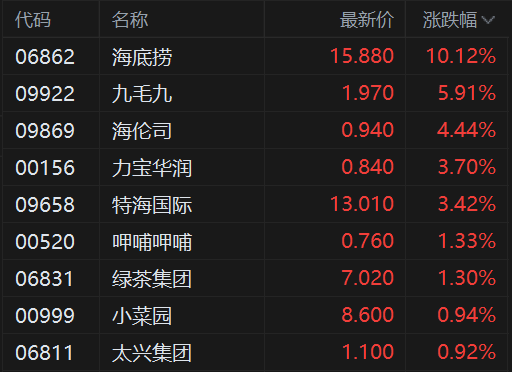
港股异动丨餐饮股集体回升 海底捞大涨超10%领衔 九毛九涨6%
Ge Long Hui· 2026-01-14 02:47
Group 1 - The Hong Kong restaurant stocks experienced a collective surge, with Haidilao leading the increase by over 10%, followed by Jiumaojiu with a 6% rise, and Helen's with a 4.4% increase [1] - On New Year's Day 2026, many regions in China saw a strong consumer market performance, particularly in the restaurant sector, with Haidilao reporting over 4.5 million customers served during the holiday period [1] - Haidilao's founder and chairman, Zhang Yong, has returned to the front line of management, taking on the role of CEO after nearly four years [1] Group 2 - The restaurant market's growth is driven by two main strategies: "going down" to lower-tier cities and "going out" to international markets, as leading brands seek to penetrate these areas amid high costs and intense competition in first-tier cities [1] - Many restaurant brands are now targeting fourth and fifth-tier cities for new growth opportunities, moving beyond second-tier cities [1]


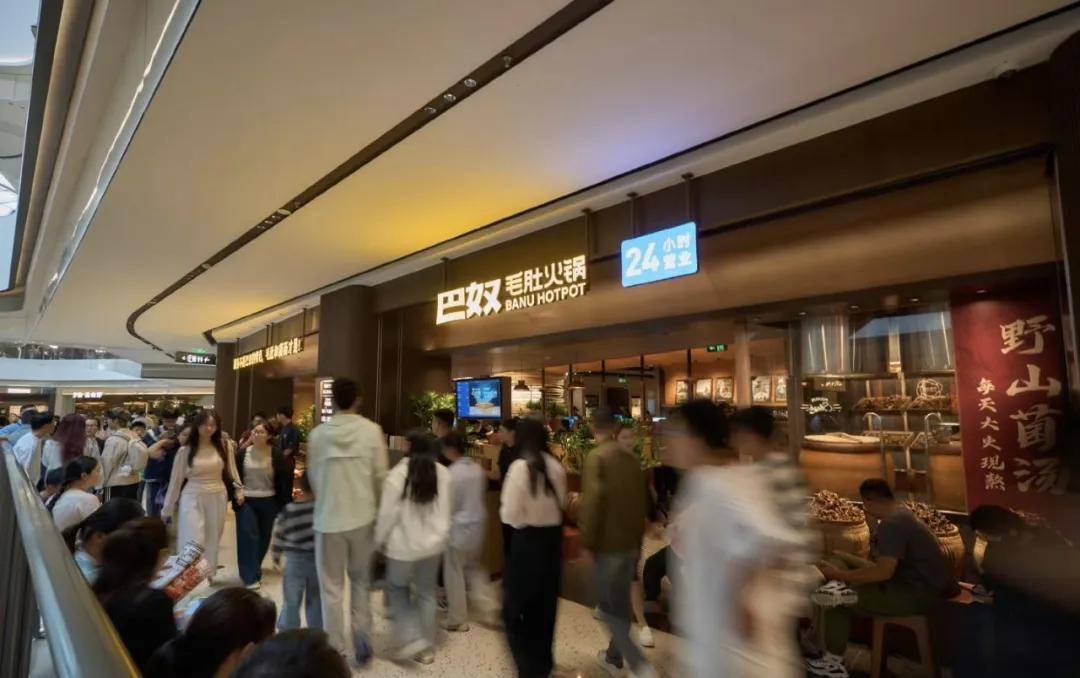
9个月狂揽20亿,硬刚海底捞,“火锅界爱马仕”冲刺上市
Sou Hu Cai Jing· 2026-01-14 02:45
Core Viewpoint - Banu International Holdings Limited is making a second attempt to go public on the Hong Kong Stock Exchange, aiming to become the "third stock" in the Chinese hot pot market, following the recent update of its financial data after an initial failed submission [1][6]. Financial Performance - Banu's revenue is projected to grow significantly, with total revenues of RMB 14.33 billion, RMB 21.12 billion, and RMB 23.07 billion from 2022 to 2024, nearly doubling over three years [3][4]. - Adjusted net profits are expected to rise from RMB 41.5 million in 2022 to RMB 168 million in 2024, with a strong performance in the first three quarters of 2025, achieving RMB 2.35 billion in revenue and a profit margin of 24.3% [3][4]. - The average customer spending is reported at RMB 138, indicating a high turnover rate with an increase in table turnover from 3.0 times in 2022 to 3.6 times in the first three quarters of 2025 [3][15]. Market Position - Banu holds a 3.1% market share in the high-end hot pot segment, making it the largest brand in the quality hot pot market by revenue in 2024, while being the third largest in the overall hot pot market with a 0.4% share [1][9]. - The hot pot market is expected to grow to RMB 650 billion by 2025, with a notable concentration of market share among leading brands, highlighting the importance of capitalizing on this window for brand expansion [9][10]. Strategic Adjustments - In response to regulatory inquiries, Banu has restructured its ownership to alleviate concerns about concentrated voting rights and has introduced institutional investors to its capital structure [6][7]. - The company plans to use funds raised from the IPO for store expansion and supply chain optimization, with a goal of opening 157 new stores over the next three years [10][16]. Competitive Landscape - Banu faces intense competition from established players like Haidilao and Xiaobai Xiaobai, as well as emerging high-end brands, necessitating a strong differentiation strategy focused on its unique product offerings [5][18]. - The brand's commitment to high-quality ingredients, such as its signature beef tripe and mushroom soup, is central to its market positioning, although it must navigate challenges related to consumer price sensitivity and market dynamics [13][14]. Operational Challenges - Banu's workforce includes a significant proportion of non-formal employees, raising compliance concerns that the company is addressing through measures to improve labor practices [7][8]. - The company has experienced a decline in average daily customer volume, particularly in first-tier cities, which poses a challenge to maintaining its high-end market position [14][15].
三年首遇营利双降,创始人张勇重掌CEO,海底捞一度大涨超10%
2 1 Shi Ji Jing Ji Bao Dao· 2026-01-14 02:36
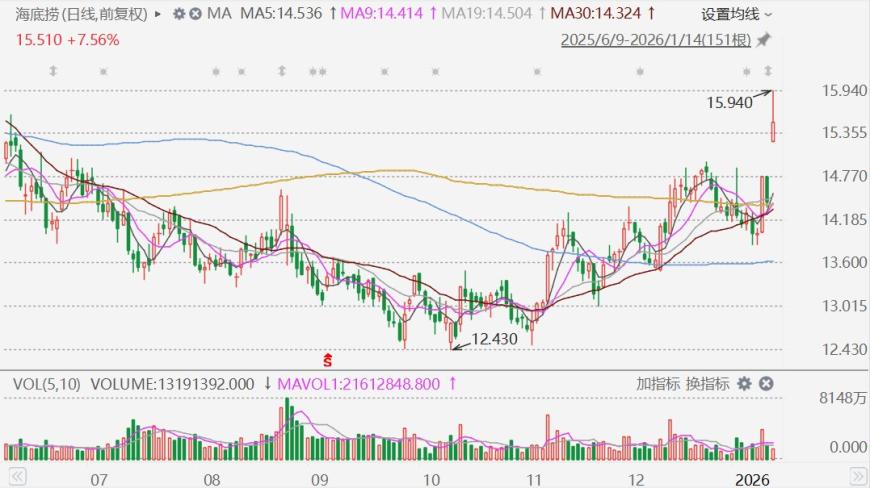
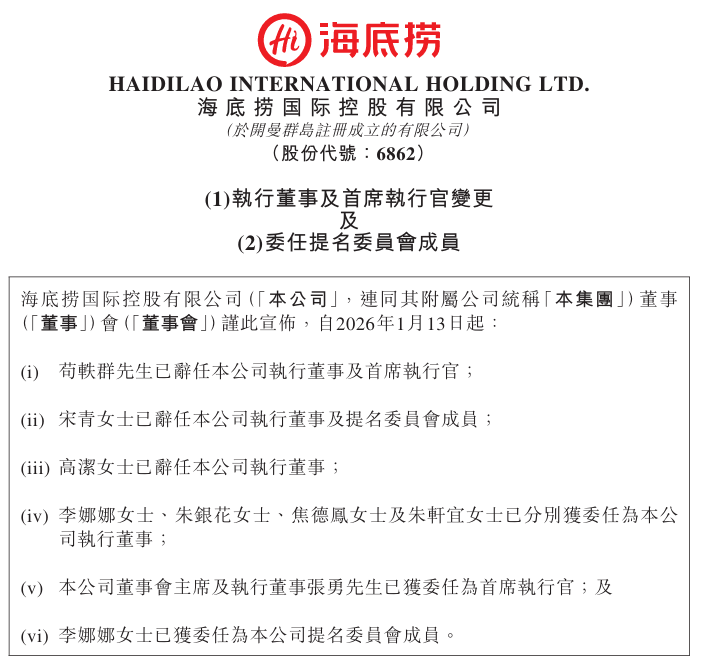
1月14日,海底捞(6862.HK)盘初一度飙升超10%,股价创去年5月以来新高。截至09:53,海底捞涨 9.08%,报15.73港元/股,总市值为876亿港元。 消息面上,时隔近四年,海底捞创始人及董事会主席张勇回归管理一线,接任公司CEO。与此同时,公 司董事会也发生调整,为培养年轻一代管理团队,迎来四位新董事加入。 1月13日,海底捞发布公告称,因服务于公司战略发展的董事会组成及角色调整,即日起,苟轶群辞任 公司执行董事及首席执行官(即CEO),同时,基于对本公司管理层安排的整体调整及综合考量,董事 会主席兼执行董事张勇已经获委任为海底捞CEO。 公开资料显示,张勇出生于1971年,是海底捞的创办人之一,在海底捞积累了逾30年食品行业及管理经 验。2018年,海底捞在港交所上市,张勇担任公司首席执行官,后于2022年3月卸任。目前,张勇持有 海底捞股票33.64亿股,持股占比37.35%。 据智通财经,2022年3月,张勇卸任海底捞CEO后,由被称为"最牛服务员"的杨利娟接棒,负责"啄木鸟 计划"的落实与推进。2024年7月,杨利娟辞任公司CEO,由苟轶群接任。 伴随苟轶群上任,海底捞开启了"红石榴计 ...
创始人张勇重掌CEO,海底捞飙升超10%
Ge Long Hui· 2026-01-14 02:24
港股频道更多独家策划、专家专栏,免费查阅>> 昨晚,海底捞发布公告称,因服务于公司战略发展的董事会组成及角色调整,自1月13日起,苟轶群辞任公司CEO,由张勇 接任。苟轶群卸任后,将在集团统筹推动管理流程的智能化与自动化规划,推动运营模式升级和智能中台建设,提升组织 管理效率与决策效能。 1月14日,海底捞(6862.HK)盘初飙升超10%,报15.94港元,股价创去年5月以来新高。消息面上,时隔近四年,海底捞创始 人及董事会主席张勇回归管理一线,接任公司CEO。与此同时,公司董事会也发生调整,为培养年轻一代管理团队,迎来 四位新董事加入。 责任编辑:栎树 ...
港股异动丨创始人张勇重掌CEO,海底捞飙升超10%
Ge Long Hui· 2026-01-14 01:51
昨晚,海底捞发布公告称,因服务于公司战略发展的董事会组成及角色调整,自1月13日起,苟轶群辞 任公司CEO,由张勇接任。苟轶群卸任后,将在集团统筹推动管理流程的智能化与自动化规划,推动运 营模式升级和智能中台建设,提升组织管理效率与决策效能。 海底捞(6862.HK)盘初飙升超10%,报15.94港元,股价创去年5月以来新高。消息面上,时隔近四年,海 底捞创始人及董事会主席张勇回归管理一线,接任公司CEO。与此同时,公司董事会也发生调整,为培 养年轻一代管理团队,迎来四位新董事加入。 ...
港股开盘 | 恒指高开0.46% 消费股走强 海底捞(06862)涨超5%
智通财经网· 2026-01-14 01:35
Group 1 - The Hang Seng Index opened up by 0.46% and the Hang Seng Tech Index rose by 0.42%, with consumer stocks performing strongly, including Haidilao up over 5% and Nongfu Spring up over 3% [1] - The banking sector showed weakness, with China Bank declining by 0.22% [1] Group 2 - CITIC Securities anticipates that the Hong Kong stock market will benefit from internal "15th Five-Year Plan" catalysts and external economic stimulus, predicting a second round of valuation recovery and performance revival by 2026, recommending focus on technology, healthcare, resource products, essential consumer goods, paper, and aviation sectors [2] - Huaxi Securities believes that the Hong Kong market will continue to underperform compared to A-shares, with a recovery in market sentiment requiring time, and notes that since early October last year, the market has been weak until a rebound in late December, suggesting that even with a strong start to the year, profit-taking may occur [2] - Guoyuan International states that the Hong Kong market is currently in a relatively quiet period, with market sentiment needing further catalysts, and mentions that the announcement of a new Federal Reserve Chair in January may reignite interest in rate cuts, potentially bringing new capital into the Hong Kong market [2] Group 3 - Industrial Securities recommends prioritizing leading internet companies in the AI sector, expecting a resonance of buying interest from both domestic and foreign investors, and suggests focusing on dividend assets in a low-interest-rate environment, including opportunities in insurance, banking, energy, property management, and public utilities [3] - The new consumption sector is highlighted, with three main lines of focus: traditional service-oriented consumption transformation led by chain hotels, Z-generation consumption such as trendy toys and beauty products, and high-end consumption [3]
港股异动 | 海底捞(06862)高开近6% 时隔四年海底捞创始人张勇重任CEO
智通财经网· 2026-01-14 01:28
消息面上,海底捞发布公告称,自1月13日起,创始人及董事会主席张勇回归管理一线,接任公司 CEO。公开资料显示,2022年3月,张勇曾卸任海底捞CEO,由被称为"最牛服务员"的杨利娟接棒,负 责"啄木鸟计划"的落实与推进;2024年7月,杨利娟辞任公司CEO,由苟轶群接任。 与此同时,海底捞董事会迎来四位新董事。公告称,为支持公司持续创新及长期发展,积极磨砺培养年 轻一代的管理团队,李娜娜、朱银花、焦德凤以及朱轩宜分别委任为公司执行董事,自1月13日起生 效。 智通财经APP获悉,海底捞(06862)高开近6%,截至发稿,涨5.76%,报15.25港元,成交额3210.13万港 元。 ...
海底捞高开近6% 时隔四年海底捞创始人张勇重任CEO
Zhi Tong Cai Jing· 2026-01-14 01:28
海底捞(06862)高开近6%,截至发稿,涨5.76%,报15.25港元,成交额3210.13万港元。 消息面上,海底捞发布公告称,自1月13日起,创始人及董事会主席张勇回归管理一线,接任公司 CEO。公开资料显示,2022年3月,张勇曾卸任海底捞CEO,由被称为"最牛服务员"的杨利娟接棒,负 责"啄木鸟计划"的落实与推进;2024年7月,杨利娟辞任公司CEO,由苟轶群接任。 与此同时,海底捞董事会迎来四位新董事。公告称,为支持公司持续创新及长期发展,积极磨砺培养年 轻一代的管理团队,李娜娜、朱银花、焦德凤以及朱轩宜分别委任为公司执行董事,自1月13日起生 效。 ...
张勇重新任职海底捞CEO;茉莉奶白2026年目标开出超百家海外新店
Sou Hu Cai Jing· 2026-01-14 00:58
Group 1: Company Leadership Changes - Zhang Yong has been reappointed as the CEO of Haidilao, following the resignation of Guo Yiqun as the executive director and CEO [2][4] - Other resignations include Song Qing and Gao Jie, who will continue to hold important management roles within the group [4] - New executive directors have been appointed to support innovation and long-term development, including Li Nana, Zhu Yinhua, Jiao Defeng, and Zhu Xuanyi [4] Group 2: Regulatory Issues - The "People's Cafe" in Datong has been fined 3,000 yuan by the local market supervision administration for using a trademark that caused negative impact [5] Group 3: Industry Developments - Shake Shack projects revenue of $1.6 to $1.7 billion for the fiscal year 2026, with a compound annual growth rate of approximately 12% to 14% [6] - Jasmine Milk Tea plans to open 80-100 stores in North America and 40-50 in Indonesia by 2026, having already established 40 overseas locations [7] - Kuddi Coffee has established a new company in Suzhou with a registered capital of $160 million, focusing on various services including food sales and supply chain management [12] Group 4: Market Exits - Lele Tea has officially exited the Zhengzhou market, with a current total of over 300 operating stores across 27 provinces, falling short of its goal to open 1,000 stores by the end of 2024 [11]
嫣然天使儿童医院被曝拖欠房租,李亚鹏回应;DeepSeek发布梁文锋署名新论文;海底捞张勇再“出山”;麦当劳回应汉堡越做越小丨邦早报
创业邦· 2026-01-14 00:09
Core Viewpoint - The article discusses various developments in technology, healthcare, automotive, and entertainment sectors, highlighting significant changes, investments, and market trends that could present investment opportunities and risks. Group 1: Technology Developments - The U.S. has relaxed export controls on Nvidia's H200 chips to China, allowing sales to proceed under the supervision of the Commerce Department [3] - DeepSeek released a new paper on conditional memory for large language models, significantly improving performance in knowledge retrieval and reasoning tasks [4] - ByteDance has raised its option price by nearly 13% from $200.41 to $226.07 since last August, marking a more than fourfold increase since 2019 [5] Group 2: Healthcare Sector - The Yanran Angel Children's Hospital is facing rental debt issues, with the hospital's management stating they are negotiating with landlords to adjust rent to market levels [4] - Meta has begun layoffs in its Reality Labs division, shifting resources from VR and the metaverse to AI devices, affecting about 10% of its workforce [19] Group 3: Automotive Industry - Xiaopeng Motors plans to establish a localized supply chain team in Europe and Southeast Asia by 2026 to enhance operational efficiency [15] - BYD has maintained its position as the leading exporter of new energy buses for three consecutive years, exporting 4,234 units in 2025, a year-on-year increase of 18.2% [18] - Nissan's sales in China have declined for seven consecutive years, with a total of 653,000 units sold in 2025, a drop of 6.26% from the previous year [22] Group 4: Market Trends - The second-hand car market in China has surpassed 20 million transactions in 2025, marking a historical high with a total transaction value of 1,289.79 billion yuan [22] - The global smartphone market saw a 2% increase in shipments in 2025, with Apple leading with a 25% market share in Q4 [22] - Japan reported over 10,300 corporate bankruptcies in 2025, marking a 2.9% increase from the previous year, with the service industry being the most affected [24][25]