Workflow
HAIDILAO(06862)
icon
Search documents
海欣食品:公司与永辉超市、胖东来、海底捞等多家大型客户保持长期的合作关系
Mei Ri Jing Ji Xin Wen· 2025-09-18 04:32
Core Viewpoint - The company is actively preparing for the upcoming sales peak during the Mid-Autumn Festival and National Day by focusing on product innovation and marketing strategies [1] Group 1: Sales Strategy - The company is enhancing its product innovation and market marketing efforts in anticipation of the sales peak during the festive season [1] - The company has established long-term partnerships with major clients such as Yonghui Supermarket, Pang Donglai, and Haidilao [1]
餐饮商家,集体上演“擦边餐”
Xin Lang Cai Jing· 2025-09-18 04:00
Core Insights - The article discusses the emerging trend of combining dining with entertainment in the restaurant industry, particularly focusing on the "borderline economy" where restaurants incorporate performances to attract customers [1][6][8] - The shift in consumer preferences, especially among younger generations, emphasizes the need for a comprehensive experience that includes social interaction and entertainment, rather than just food [4][12] Industry Trends - The integration of performance elements in dining experiences is rapidly being adopted across various restaurant brands, such as Hai Di Lao and others, to enhance customer engagement and drive foot traffic [1][2][3] - Hai Di Lao has launched a "night snack" theme store that has gained significant attention, with over 10 million views on Xiaohongshu and 9 million on Douyin, leading to the opening of nearly 30 such stores in major cities [2][3] Financial Performance - The restaurant industry is facing significant financial pressures, with several well-known brands reporting losses in 2024, including Nayuki's Tea with a net loss of 919 million yuan and Xiaobing Xiaobing with a revenue of 4.755 billion yuan and a total loss of 401 million yuan [3][6] Consumer Behavior - The "experience generation" of consumers, particularly those born in the 1990s and 2000s, seeks not only food but also social and entertainment experiences, driving restaurants to innovate beyond traditional offerings [4][5] - The perception of value has shifted, with consumers willing to pay for multi-faceted experiences that combine dining with entertainment, as seen in the popularity of Hai Di Lao's new offerings [5][12] Risks and Challenges - The reliance on "borderline" entertainment strategies poses risks, as evidenced by the closure of previously successful establishments like Staneemeehoi in Bangkok and Hooters in the U.S., highlighting the potential pitfalls of such marketing approaches [6][7] - Regulatory scrutiny is increasing, with incidents of restaurants being penalized for inappropriate performances, indicating that the sustainability of the "borderline economy" is uncertain [7][8] Future Directions - A new trend of "positive performance" is emerging, where restaurants incorporate culturally rich and meaningful entertainment that enhances the dining experience without compromising food quality [9][10] - Successful models are focusing on integrating local culture and culinary traditions into performances, creating a more authentic and engaging dining experience [10][12]
预制菜风波扩散!绿茶被曝撤下“现做”招牌,海底捞标注“部分预加工”
Sou Hu Cai Jing· 2025-09-18 03:24
Group 1 - The controversy surrounding "Xibei pre-made dishes" is impacting the industry, with reports of restaurants like Green Tea removing signs claiming "no pre-made dishes" [2] - Green Tea Restaurant previously faced allegations of using pre-made dishes without proper labeling, particularly regarding a dish priced at 38 yuan [4] - The company submitted its listing application in July 2022, prompting inquiries from the regulatory body regarding food safety and the proportion of pre-made dishes [4] Group 2 - Green Tea Group reported a revenue of 2.29 billion yuan for the first half of the year, a year-on-year increase of 23.1%, with a net profit of 234 million yuan, up 34% [4] - The company has established a digital and standardized business model supported by a flexible supply chain and strict food safety controls [4] - In contrast to Green Tea, Haidilao has started labeling some menu items as "partially pre-processed" [5][6] Group 3 - As of September 18, the pre-made dish sector saw a decline of 0.56%, with stocks of companies like Jiahe Foods and Delisi dropping approximately 6% and over 3% respectively [7]
预制菜风波扩散:绿茶被曝撤下“现做”招牌,海底捞标注“部分预加工”
Xin Lang Cai Jing· 2025-09-18 02:51
Core Insights - The controversy surrounding "Xibei pre-made dishes" is spreading within the industry, with some restaurants like Green Tea removing signs that claim "no pre-made dishes, freshly made" [1][3] - Green Tea Restaurant has faced scrutiny regarding the use of pre-made dishes, particularly after a report last year revealed that a dish priced at 38 yuan was made from pre-made ingredients without proper labeling [3] - The company has recently released its first half-year report since going public, showing a revenue of 2.29 billion yuan, a year-on-year increase of 23.1%, and a net profit of 251 million yuan, up 40.4% [3] Company Actions - Green Tea Restaurant has removed its "no pre-made dishes" signage from some locations, indicating a shift in its marketing strategy [1][3] - In contrast, Haidilao has begun labeling certain dishes as "partially pre-processed" on its menu, reflecting a more transparent approach to ingredient sourcing [4][5] Market Reaction - As of September 18, the pre-made dish sector has seen a decline of 0.56%, with specific stocks like Jiahe Foods dropping approximately 6% and Delisi falling over 3% [6]
海底捞多款儿童套餐标注部分预加工?客服回应
Di Yi Cai Jing· 2025-09-17 10:44
Core Viewpoint - The recent discovery of "partially pre-processed" labels on children's meal products at Haidilao restaurants has raised concerns among customers regarding food preparation practices and safety [2] Group 1: Company Response - Haidilao's customer service confirmed that the menu does indicate which products are partially pre-processed, ensuring transparency for customers [2] - A representative from a Wuhan Haidilao location explained that the partially pre-processed items are produced by a central kitchen and then delivered to the restaurant for final cooking, aimed at maintaining food safety and consistent quality [2] Group 2: Customer Guidance - The staff at Haidilao suggested that for children on a no-salt diet, customers could opt for fresh ingredients available at the restaurant, such as sliced beef, corn, and spinach [2] - In a Guangzhou location, it was also confirmed that the pre-processed products are clearly marked in the ordering system, and staff provide information to customers during the ordering process [2]
海底捞多款儿童套餐标注部分预加工?客服回应
第一财经· 2025-09-17 10:42
Core Viewpoint - The article discusses the recent revelation regarding the labeling of certain children's meal products at Haidilao restaurants, indicating that some items are "partially pre-processed" [2][4]. Group 1: Company Response - Haidilao's customer service confirmed that the menu does indicate which products are partially pre-processed, and this labeling is consistent across their locations [4]. - A representative from a Wuhan Haidilao location explained that the partially pre-processed items are produced by a central kitchen and then delivered to the restaurant for final preparation, ensuring safety and quality consistency [4]. Group 2: Product Offerings - Currently, Haidilao offers three types of children's meal sets, with two of them marked as partially pre-processed on the menu [4]. - For customers seeking options suitable for infants on a no-salt diet, the staff recommended fresh ingredients available at the restaurant, such as sliced beef, corn, and spinach [4].
“再平衡”信号:谁是下一个魏家?
Sou Hu Cai Jing· 2025-09-17 10:12
Core Viewpoint - The exit of Wei Family Restaurant Group from the Ele.me platform signals a significant shift in the platform economy, as it emphasizes a focus on physical store expansion while other major players like Haidilao and Xiaocaiyuan continue to invest in delivery services [1][7]. Company Summary - Wei Family has confirmed its withdrawal from the Ele.me platform, stating that it may return in the future but has not set a specific timeline [1]. - The company is experiencing high customer traffic, with occupancy rates around 70% in various locations, indicating strong demand for its offerings [3]. - Wei Family's pricing strategy remains competitive, with menu items priced affordably even in high-cost cities like Shanghai, where the average rent is significantly higher than in other cities [5]. - The company has successfully opened new locations in major cities, with initial customer responses showing long wait times and high demand [6]. Industry Summary - The overall restaurant industry is facing challenges, with several listed companies reporting losses or declining revenues. For instance, three out of twelve companies reported losses in the first half of the year [7]. - Companies like Haidilao and Xiaocaiyuan are increasingly relying on delivery services, with Haidilao's delivery revenue growing nearly 60% in the first half of the year [11]. - The competitive landscape is intensifying, with large restaurant chains leveraging their bargaining power to minimize delivery platform fees, thus maintaining profitability [14]. - The shift towards online delivery services is becoming a critical growth avenue for both struggling and profitable companies, contrasting with the challenges faced by smaller restaurants [10][23].
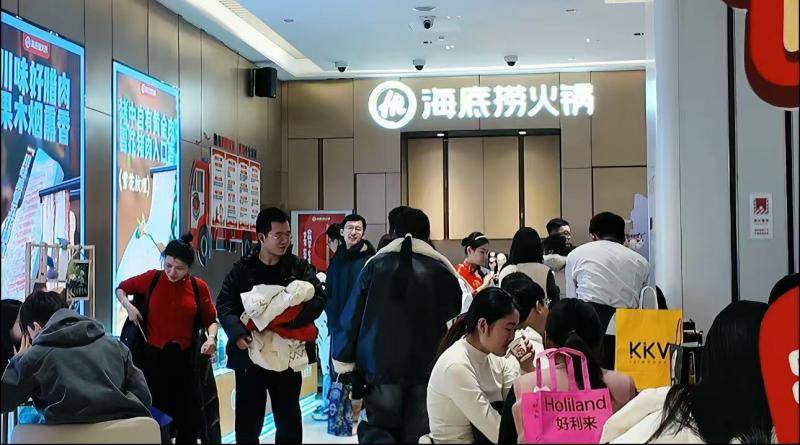
海底捞都入局,小火锅凭啥火
Core Insights - The self-service hot pot industry is experiencing significant growth, with major players like Haidilao and Yang Guofu entering the market with offerings priced at 59.9 yuan, which, despite being higher than the previous average of 20-30 yuan, has successfully captured a substantial market share [1][2] - The overall hot pot market is projected to grow at a rate of only 5.6% in 2024, with per capita consumption dropping to around 70 yuan, while over 300,000 hot pot restaurants have closed in the past year [1] - The number of small hot pot outlets has exceeded 50,000 nationwide, accounting for over 10% of the entire hot pot market, indicating a strong performance in a challenging environment [1] Market Dynamics - The average spending at large hot pot restaurants has surged to 150 yuan, positioning small hot pots as a cost-effective alternative, with prices as low as 9.9 yuan for broth and ingredients [1] - The social dynamics of dining are shifting, with large hot pots requiring group participation and cost-sharing, while small hot pots cater to individual preferences, allowing for solitary or light social dining experiences [1][2] Entrepreneurial Opportunities - The low entry barrier for small hot pot establishments has made it an attractive option for young entrepreneurs, as it does not require professional chefs and can be set up with basic equipment and a selection of ingredients [2]
现炒美味,藏在那些不做外卖的餐厅?
Hu Xiu· 2025-09-17 01:09
Core Viewpoint - The article discusses the evolving landscape of the restaurant industry in China, particularly focusing on the shift from dine-in only to incorporating delivery services, highlighting the reasons behind this trend and the varying approaches among different types of restaurants [5][6][29]. Group 1: Shift to Delivery Services - Many restaurants that previously only offered dine-in services are now adopting delivery options to supplement their revenue streams, especially in light of changing consumer behaviors post-pandemic [5][9]. - A notable example is Haidilao, which expanded its delivery offerings to include single-serving meals, resulting in a significant increase in its delivery revenue, which grew by 59.72% while dine-in revenue declined by 6.89% [8][9]. - Statistics show that 80.65% of restaurants in a specific area have adopted delivery services, with even high-end restaurants increasingly participating in this trend [10][11]. Group 2: High-End Restaurants and Delivery - High-end restaurants are also entering the delivery market, with 7.87% of the "Black Pearl" restaurants offering delivery services, indicating a shift in consumer expectations for quality dining options at home [11][14]. - The article notes that the penetration rate of delivery services is higher among higher-rated restaurants, with 40% of three-diamond restaurants offering delivery compared to lower rates for two and one-diamond restaurants [13][20]. - Examples include high-end restaurants like Da Dong, which have tailored their delivery menus to include single-serving meals while maintaining a focus on quality [14][15]. Group 3: Reasons for Not Offering Delivery - Some restaurants, particularly those with a strong local customer base, choose not to offer delivery due to stable dine-in business and concerns over maintaining food quality during delivery [25][28]. - The article identifies three main categories of restaurants that do not offer delivery: the highest-priced establishments, casual dining spots with low margins, and those whose menu items are not suitable for delivery [18][25][29]. - The decision to forgo delivery is often based on the belief that it is unnecessary due to sufficient dine-in demand or the inability to maintain profitability through delivery channels [29][30][33]. Group 4: Market Dynamics and Future Outlook - The article suggests that as competition intensifies, restaurants with strong value propositions may continue to thrive without delivery services, while others may adapt to meet online demand [36][37]. - The evolving market presents opportunities for platforms to help consumers discover quality dining options, particularly in the mid to high-end segments where delivery penetration remains low [39][40].
海底捞低调收购人均60的平价小火锅“举高高”,优化“红石榴计划”,要顺应消费者追求极致性价比
3 6 Ke· 2025-09-16 01:13
Core Insights - Haidilao, with an annual revenue exceeding 42.7 billion, has launched a new budget hotpot brand called "Jugaogao," which was acquired from former employees [1][4] - The introduction of "Jugaogao" aligns with the trend of consumers seeking high cost-performance in dining, indicating a strategic shift in Haidilao's approach to brand expansion [1][4] - The "Red Pomegranate Plan," aimed at fostering entrepreneurship within and outside the company, has been optimized to include acquisitions as a means to expand the brand matrix [1][4] Company Strategy - The new brand "Jugaogao" offers a self-service hotpot experience at an average cost of approximately 60 yuan per person, significantly lower than Haidilao's nearly 100 yuan pricing [4][10] - "Jugaogao" features a unique dining setup with individual pots and a wide variety of food options, including pizza and fried chicken, differentiating it from Haidilao's traditional large-table format [4][10] - The acquisition of "Jugaogao" is seen as a response to consumer demand for better value, with the brand reportedly showing stable revenue and good profit margins [4][12] Market Context - The overall dining market in China is experiencing a decline in per capita spending, with the average dropping from 86.7 yuan in 2022 to 77.4 yuan in 2024 for hotpot [12] - Haidilao's other brands generated 597 million yuan in revenue in the first half of the year, accounting for only 2.9% of total revenue, indicating that new brands have yet to significantly impact overall performance [10][12] - The competitive landscape is intensifying, with consumers increasingly favoring brands that offer high cost-performance, which poses challenges for Haidilao's traditional dining model [12][13] Acquisition Insights - The acquisition of "Jugaogao" marks Haidilao's return to a strategy of diversification through mergers and acquisitions after several years of focusing on internal brand development [9][12] - The operational integration of acquired brands presents challenges, including team management and resource allocation, which will be critical for maximizing the success of the acquisition [12][13] - Industry experts suggest that acquiring established brands can provide quicker market entry and validation compared to internal incubation, which often involves higher costs and longer timelines [12]