XPENG-W(09868)

Search documents
南极光:公司车规级背光模组已应用于小鹏汽车、上汽集团等知名车企
Jin Rong Jie· 2026-01-22 08:29
Core Viewpoint - The company, Nanji Guang, confirmed that its automotive-grade backlight modules are being utilized by well-known automotive manufacturers such as Xiaopeng Motors and SAIC Group [1] Summary by Categories Company Information - Nanji Guang's automotive-grade backlight modules are currently applied in vehicles produced by Xiaopeng Motors and SAIC Group [1]


小鹏汽车-W跌超3% 宣布推出全系7年低息分期购车方案
Zhi Tong Cai Jing· 2026-01-22 06:35
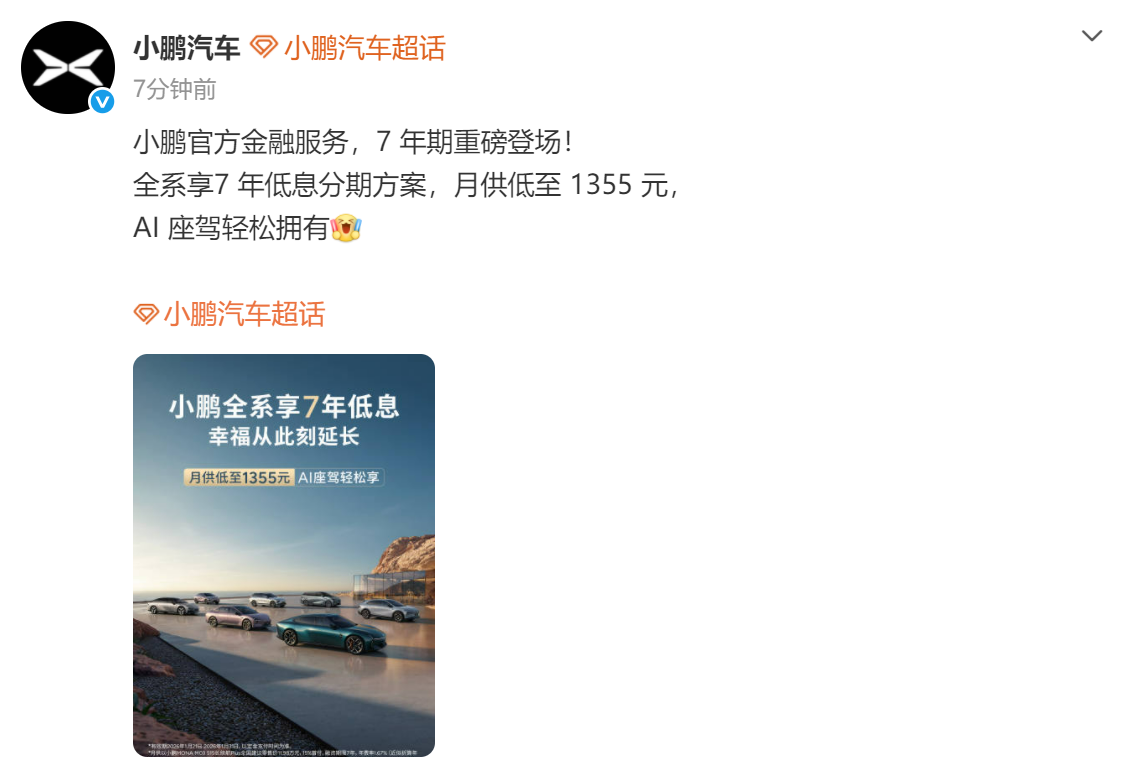
Group 1 - Xpeng Motors announced a 7-year low-interest installment car purchase plan with a minimum down payment of 15% and monthly payments starting at 1355 yuan, valid until January 31, 2026 [1] - CMB International released a report indicating that due to weaker-than-expected sales data in November and December last year, they are maintaining their forecast for China's passenger car retail and wholesale sales, expecting a year-on-year decline of 0.1% and a growth of 2.9% respectively [1] - The report suggests that the poor sales performance in the last quarter may lead to some automakers, including Xpeng, not meeting profit expectations, but still anticipates that Xpeng can achieve breakeven in the last quarter [1] Group 2 - Xpeng Motors' stock price fell over 3%, leading the decline among new energy vehicle stocks, with a current price of 76.8 HKD and a trading volume of 743 million HKD [2]
港股异动 | 小鹏汽车-W(09868)跌超3% 宣布推出全系7年低息分期购车方案
智通财经网· 2026-01-22 06:05
Group 1 - Xpeng Motors-W (09868) experienced a decline of over 3%, leading the drop in the new energy vehicle sector, with a current price of 76.8 HKD and a trading volume of 743 million HKD [1] - On January 22, Xpeng Motors announced a 7-year low-interest installment car purchase plan, requiring a down payment starting at 15% and monthly payments as low as 1355 RMB, valid until January 31, 2026 [1] - CMB International released a report indicating weaker-than-expected sales data for November and December last year, maintaining its forecast for China's passenger car retail and wholesale sales, predicting a year-on-year decline of 0.1% and a growth of 2.9% respectively [1] Group 2 - The report suggests that the poor sales performance in the last quarter may lead to some automakers not meeting profit expectations, resulting in a downward revision of Xpeng and other automakers' profit forecasts for the fourth quarter of last year [1] - Despite the challenges, it is still expected that Xpeng can achieve breakeven in the last quarter [1]
小鹏汽车官宣全系7年低息购车政策:首付15%起,月供低至1355元
Xin Lang Cai Jing· 2026-01-22 04:44
Core Viewpoint - The automotive industry is witnessing a trend of introducing low-interest financing options, with companies like Xiaopeng Motors, Xiaomi Motors, and Li Auto launching 7-year low-interest car purchase plans to lower the barriers for consumers [1] Group 1: Xiaopeng Motors - Xiaopeng Motors announced a 7-year low-interest installment car purchase plan, with a down payment starting at 15% and monthly payments as low as 1355 yuan, valid until January 31, 2026 [1] Group 2: Li Auto - Li Auto introduced a 7-year ultra-low monthly payment car purchase plan, effective from January 20, 2026, with a down payment starting at 32,500 yuan and monthly payments as low as 2578 yuan [1] Group 3: Xiaomi Motors - Xiaomi Motors launched a 7-year low-interest policy starting January 16, with a down payment of 49,900 yuan for the Xiaomi YU7 and monthly payments starting at 2593 yuan [1]

小鹏汽车官宣全系7年低息购车政策
Mei Ri Jing Ji Xin Wen· 2026-01-22 01:28
Group 1 - Xpeng Motors announced a 7-year low-interest installment car purchase plan with a down payment starting at 15% and monthly payments as low as 1,355 yuan, valid until the end of the month [1] - Tesla and Xiaomi Motors have also introduced similar 7-year low-interest car purchase policies, further lowering the barriers to car ownership [1]

英国要恢复疫情前市场规模?中国新车加速进程
Guan Cha Zhe Wang· 2026-01-21 10:38
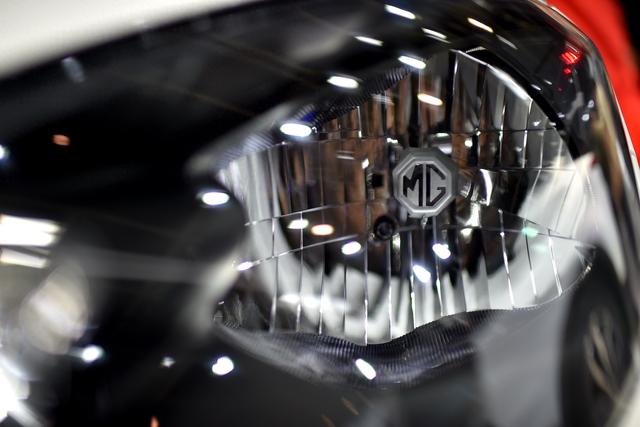
Group 1 - The UK automotive market is attracting attention from Chinese manufacturers due to the lack of domestic automakers targeting the mass market and the absence of tariffs on Asian electric vehicle imports [1][3] - The UK automotive market has not yet recovered to its pre-pandemic level of 2.5 million vehicles annually, and the entry of Chinese brands is expected to accelerate this recovery [1] - Chinese brands, led by SAIC's MG, doubled their market share in the UK to 10% last year, with BYD and Chery increasing their shares significantly in December [3][5] Group 2 - New entrants such as Geely, Changan, Xpeng, and Leap Motor have entered the UK market since 2023, with Geely's premium electric brand targeting the UK after entering 12 European markets [3] - BYD plans to introduce its high-end brand Tengshi, while Chery may launch its new energy brand Lepas in the UK [5] - The UK market is projected to see Chinese brands capture 20% of the market share by 2028, with plans to offer not only electric vehicles but also fuel and hybrid models [5]



广州:支持广汽、小鹏汽车拓展业务布局 打造万亿级汽车产业集群
Ge Long Hui A P P· 2026-01-21 02:37
Core Viewpoint - Guangzhou aims to strengthen its industrial economy by promoting the integration of industry and technology, focusing on key sectors such as automotive, electronics, petrochemicals, and fashion consumption [1] Group 1: Key Industries - The city will stabilize and support the automotive industry, particularly companies like GAC and Xpeng Motors, to expand their business and achieve "smart electric transformation" [1] - There is a plan to enhance the supply chain for core automotive components, aiming to create a trillion-yuan automotive industry cluster [1] Group 2: Emerging Industries - Guangzhou will focus on developing mid-tier industries with potential, such as low-altitude economy, aerospace, biomedicine and health, and artificial intelligence [1] - The government will implement special policies and measures, establish dedicated industrial funds, and support new infrastructure layouts to foster these emerging sectors [1]

广州:支持广汽、小鹏汽车拓展业务布局,打造万亿级汽车产业集群
Jin Rong Jie· 2026-01-21 02:24
Core Viewpoint - Guangzhou aims to strengthen its industrial economy by promoting the integration of industry and technology, focusing on key sectors such as automotive, electronics, petrochemicals, and fashion consumption [1] Group 1: Industry Focus - The automotive industry will undergo a "smart electric transformation," with support for companies like GAC and Xiaopeng Motors to expand their business layout [1] - Aiming to create a trillion-level automotive industry cluster by enhancing core component support [1] Group 2: Emerging Industries - Emphasis on developing mid-tier industries such as low-altitude economy, aerospace, biomedicine and health, and artificial intelligence, which have foundational support and growth potential [1] - Implementation of special policies and measures, establishment of specialized industrial funds, and development of new infrastructure to support these emerging sectors [1]
重磅利好,中国电车能领德国补贴了,两国为新能源出海开政策绿灯
3 6 Ke· 2026-01-21 01:39
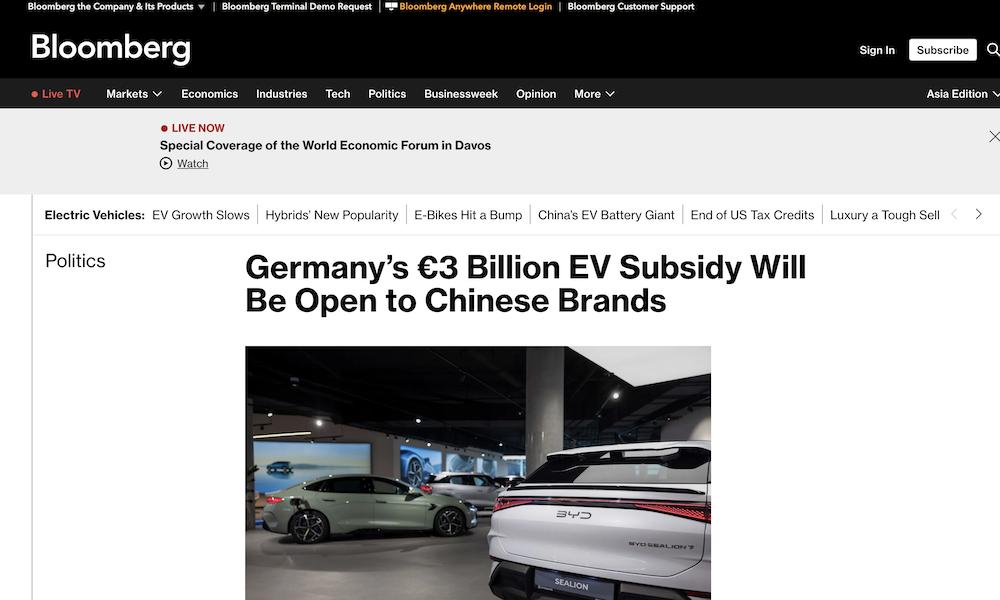
Core Viewpoint - Recent policy changes in Germany and Canada are creating favorable conditions for Chinese electric vehicle manufacturers to expand internationally, particularly in the European and North American markets [1][2][5]. Group 1: Germany's Policy Changes - The German government has announced a €3 billion (approximately ¥24.5 billion) subsidy plan for electric vehicles, providing up to €6,000 (approximately ¥49,000) for households purchasing new electric cars, which is open to all manufacturers, including Chinese brands [1][2]. - This subsidy aims to boost electric vehicle sales and support the automotive industry after a significant drop in demand following the end of previous subsidy programs [5]. - The German Federal Environment Minister emphasized the need to embrace competition rather than impose restrictions, indicating a welcoming stance towards Chinese automotive manufacturers [5]. Group 2: Canada's Policy Adjustments - Canadian Prime Minister Justin Trudeau announced the cancellation of a 100% tariff on Chinese electric vehicles and introduced an annual quota of 49,000 vehicles that will benefit from a 6.1% most-favored-nation tariff rate [1][8]. - This quota corresponds to the export volume from China to Canada before the imposition of additional tariffs, with expectations for gradual increases over the years [10]. - Trudeau highlighted China's undeniable advantages in the electric vehicle sector, aiming to learn from innovative partners to enhance Canada's competitive automotive industry [10]. Group 3: Export Growth of Chinese Automakers - In 2025, China's total automobile exports are projected to reach 8.32 million units, marking a 30% year-on-year increase, continuing a five-year growth trend [11]. - The export value is expected to grow from $34.5 billion (approximately ¥240.1 billion) in 2021 to $142.4 billion (approximately ¥991 billion) in 2025, reflecting a 21% increase [11]. - Notably, the export volume of new energy vehicles is anticipated to double, reaching 2.615 million units in 2025, with significant contributions from major automakers like BYD and Chery [11][16]. Group 4: Performance of Major Chinese Automakers - Chery is expected to lead in export volume in 2025, with 1.34 million units, while BYD's exports are projected to reach 1.05 million units, a 144% increase from the previous year [16][18]. - SAIC Group is also set to export 950,000 units, leveraging its joint ventures and brand portfolio [18]. - New entrants like Leap Motor and Xpeng are showing remarkable growth, with exports increasing by 600% and 150%, respectively, indicating a strong competitive presence in the international market [19][20]. Group 5: Industry Implications - The evolving international landscape for Chinese automakers signifies a historic shift from "bringing in" to "going out," enhancing the global influence of Chinese automotive brands [21]. - The advancements in technology, such as smart cabins and battery innovations, are contributing to the transformation of the global automotive industry [21]. - The current complex international environment and restructuring of the global automotive landscape suggest that Chinese automotive exports are likely to maintain a robust trajectory, becoming a key driving force in global mobility transformation [21].

美股大跌,科技股全线下挫,热门中概股普跌
Di Yi Cai Jing Zi Xun· 2026-01-20 23:31
Group 1 - The global market risk appetite has significantly decreased following President Trump's renewed tariff threats towards Europe, leading to a sell-off in major stock indices [2][3] - The Dow Jones Industrial Average fell by 870.74 points, a decline of 1.76%, closing at 48,488.59 points; the S&P 500 dropped by 143.15 points, down 2.06%, at 6,796.86 points; and the Nasdaq Composite decreased by 561.07 points, a 2.39% drop, ending at 22,954.32 points, marking the worst single-day performance since October 10 of the previous year [2] - Major tech stocks experienced declines, with Nvidia down 4.32%, Apple down 3.45%, and Microsoft down 1.16%, among others [2] Group 2 - The CBOE Volatility Index (VIX), often referred to as the "fear index," rose to a two-month high, reflecting increased market anxiety [3] - Trading volume on U.S. stock markets reached approximately 20.6 billion shares, significantly above the 20-day average of 17.01 billion shares, indicating concentrated selling pressure [3] - Analysts suggest that the current geopolitical tensions regarding tariffs are more of an emotional shock rather than a fundamental change that would trigger a deep market correction [3] Group 3 - The global bond market is also experiencing spillover effects, with upward pressure on some European government bonds due to potential increases in defense spending [4] - The yield on the U.S. 10-year Treasury note reached a high of 4.313%, the highest since late August, closing at 4.287% after a rise of 5.6 basis points [5] - Market expectations for interest rate cuts by the Federal Reserve have been adjusted downward, with projections for a reduction of approximately 47 basis points in 2026, down from 53 basis points at the end of the previous year [5] Group 4 - Netflix reported fourth-quarter revenue of $12.1 billion, exceeding market expectations of $11.97 billion, with adjusted earnings per share of $0.56, also slightly above forecasts [6] - The company anticipates full-year revenue for 2026 to reach between $50.7 billion and $51.7 billion, with expectations for advertising revenue to potentially double in the future [6] - Following the announcement, Netflix's stock price fell by 4.9% in after-hours trading, influenced by merger financing and market sentiment [7] Group 5 - Gold prices surged significantly, with spot gold rising approximately 2% to $4,757.33 per ounce, reaching a historical high of $4,756.93 during the session [7] - Silver prices experienced a slight decline of 0.3%, settling at $94.38 per ounce, after hitting a record high of $95.87 [7] - Oil prices showed volatility, with light crude oil futures for February delivery rising by $0.90 to $60.34 per barrel, a 1.51% increase [8]