
POP MART(09992)

Search documents
年终报道丨文创跨越国界,中国潮玩跻身全球顶流
Xin Hua Wang· 2025-12-31 03:09
Core Insights - Labubu, an original IP from China, has gained global popularity, becoming a cultural phenomenon and a symbol of China's creative industry [1][2] - The success of Labubu is attributed to continuous innovation in IP incubation, supply chain management, user engagement, and cultural dissemination [1] - The rise of Labubu reflects a significant shift in China's cultural and creative industry from "Made in China" to "Created in China" [2] IP Development and Market Response - Labubu's design, influenced by Nordic fairy tales, initially faced skepticism but gained traction after a partnership with Pop Mart in 2018 [4][5] - The product line's success is largely due to the development of soft vinyl plush toys, which resonated with the youth's desire for unique and expressive designs [5] - Pop Mart's patient and restrained approach to IP management has allowed Labubu to grow organically without succumbing to market pressures [5][6] Supply Chain Innovations - The supply chain has undergone a transformation to meet the surging demand for Labubu products, with production capacity increasing from 300,000 units per month to 3 million units by 2025 [9][10] - Pop Mart has implemented a dual expansion strategy, focusing on local and overseas production to enhance responsiveness to market demands [10][11] - The company has also adopted automation and precision techniques to maintain product quality while scaling production [10] Emotional Connection and Long-term Strategy - Labubu's appeal lies in its ability to resonate emotionally with consumers, transforming them from passive buyers to active co-creators of the IP [15][18] - The company emphasizes long-term value creation over short-term gains, ensuring that Labubu remains relevant and cherished by its audience [13][14] - Pop Mart's strategy includes creating immersive experiences and expanding into new markets, such as fashion, to enhance the IP's cultural significance [15][20] Global Expansion and Cultural Resonance - By 2025, Pop Mart plans to open flagship stores in major cities worldwide, including New York, and has already established a significant presence in North America and Europe [17][19] - Labubu's success is attributed to its ability to convey universal values that resonate with global youth, such as acceptance and self-expression [18][19] - The brand's growth reflects a broader trend of Chinese creative industries gaining recognition and influence on the global stage [19][21]

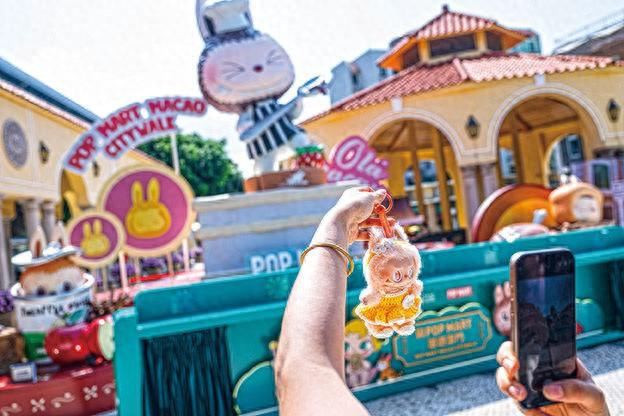
Labubu价格崩了,结局可能早已定下
3 6 Ke· 2025-12-31 02:31
Core Insights - The significant drop in Labubu's second-hand market prices and the decline in Pop Mart's stock prices have sparked widespread discussion on social media, often interpreted as a "bubble burst," but this view may be overly simplistic [1] - The initial success of Pop Mart was driven by a "controlled scarcity" model, transforming ordinary toys into collectible items through blind box mechanisms and limited releases [1][4] - The rapid introduction of new series and increased market supply diluted the perceived uniqueness of previously scarce items, leading to a decrease in their value [3][4] Market Dynamics - The premium prices for Labubu collectibles were contingent on a continuous willingness from buyers to pay high prices [2] - As new products were launched too quickly, the perceived scarcity diminished, creating a challenge for early speculators who relied on rising prices to sell their inventory [3][6] - The rise and fall of Labubu's prices mirrored the formation and collapse of speculative bubbles in financial markets, as described by economist Hyman Minsky [5] Consumer Behavior - Initially, buyers were attracted to the surprise and collection aspects of blind boxes, but as prices rose, an investment mentality took over [11][12] - The current price decline is prompting a psychological reset among consumers, shifting focus back to personal enjoyment of the product rather than potential financial returns [13][14] - Consumers are becoming more rational, calculating the expected value of collectibles, which is facilitated by increased price transparency on second-hand platforms [15][16] Industry Implications - The cooling of the Labubu market is indicative of a broader industry value reassessment, with other brands experiencing similar price adjustments [16] - The reliance on "scarcity narratives" and speculative value is deemed unsustainable, suggesting a need for a shift towards product quality, design innovation, and emotional connection [16] - Future trends may include clearer differentiation between high-end limited editions and mass-market products, a focus on storytelling in IP management, and evolving sales models that combine blind boxes with other purchasing options [16] Cultural Context - The social value of collectible toys is dynamic; as products become more common, their status as symbols of identity and taste diminishes [7][8] - The challenge for Pop Mart lies in balancing the need for new product launches to sustain revenue growth while avoiding the dilution of individual IP value [8][10] - Unlike established IPs like Disney, which have deep cultural narratives, Labubu lacks a robust story background, affecting its long-term sustainability [9][10] Conclusion - The fluctuations in Labubu's prices reflect normal market behavior and highlight the rapid dissemination of information in the social media era [20] - The case illustrates the limitations of artificially created scarcity and the eventual return to fundamental values when speculation dominates the market [20] - For the industry to mature, the focus should shift from investment potential to genuine enjoyment of products, fostering a healthier market environment [20]
厦门:男子在闲鱼开设店铺,卖仿冒泡泡玛特被索赔6万余元,法院判了
Huan Qiu Wang· 2025-12-30 23:48
Group 1 - A seller on the platform Xianyu was found guilty of copyright infringement for selling counterfeit Dimoo figurines, leading to a court ruling for compensation [1][2] - The plaintiff, M Company, is the copyright holder of the DimooWorld series, which is a popular line of collectible toys under the brand POPMART [1] - The court ruled that the seller, referred to as Xiao Lin, infringed on the plaintiff's distribution rights by selling similar products without authorization, resulting in a compensation order of 9,000 yuan [2] Group 2 - The court considered factors such as the high recognition of the Dimoo series, the inducement behavior during evidence collection, and Xiao Lin's status as a small seller on Xianyu [2] - The ruling reflects the legal stance on intellectual property rights within the collectible toy industry, emphasizing the importance of authorization for sales [2]
智通ADR统计 | 12月31日
智通财经网· 2025-12-30 22:39
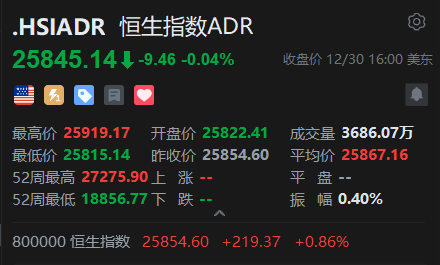
Market Overview - The Hang Seng Index (HSI) closed at 25,845.14, down by 9.46 points or 0.04% [1] - The index had a trading volume of 36.86 million shares, with a high of 25,919.17 and a low of 25,815.14 [1] Blue-Chip Stocks Performance - HSBC Holdings closed at HKD 123.376, up by 0.31% compared to the previous close [2] - Tencent Holdings closed at HKD 599.528, down by 0.08% compared to the previous close [2] Individual Stock Movements - Tencent Holdings: Latest price HKD 600.000, up by HKD 3.500 or 0.59%, ADR price HKD 599.528, down by HKD 0.472 [3] - Alibaba Group: Latest price HKD 144.500, up by HKD 1.200 or 0.84%, ADR price HKD 143.326, down by HKD 1.174 [3] - HSBC Holdings: Latest price HKD 123.000, up by HKD 1.100 or 0.90%, ADR price HKD 123.376, up by HKD 0.376 [3] - AIA Group: Latest price HKD 81.650, down by HKD 0.550 or 0.67%, ADR price HKD 82.070, up by HKD 0.420 [3] - Meituan: Latest price HKD 104.300, up by HKD 0.100 or 0.10%, ADR price HKD 103.410, down by HKD 0.890 [3] - Ctrip Group: Latest price HKD 571.000, up by HKD 11.500 or 2.06%, ADR price HKD 562.723, down by HKD 8.277 [3] - BYD Company: Latest price HKD 97.600, up by HKD 0.500 or 0.51%, ADR price HKD 97.496, down by HKD 0.104 [3]


2025,“中国风”的世界回响
Ren Min Wang· 2025-12-30 21:57
Group 1: Core Insights - In 2025, China's global image has significantly improved, with the country being perceived as "cool" and innovative, driven by technological advancements and cultural exports [15][19][22] - The emergence of Chinese brands like DeepSeek and the popularity of cultural IPs such as Nezha and Labubu highlight China's growing influence in technology and pop culture [16][20][21] Group 2: Technological Innovations - DeepSeek's R1 model, launched in January 2025, surpassed ChatGPT in downloads, achieving this with a training cost of only $294,000, showcasing China's competitive edge in AI technology [16] - China has entered the top ten most innovative economies globally, with the highest number of top innovation clusters for three consecutive years [16] Group 3: Cultural Influence - The animated film "Nezha: The Devil's Child" became one of the top five highest-grossing films globally, marking a significant achievement for Chinese animation [19] - Labubu, a toy character, has gained international popularity, with sales exceeding 10 million RMB on its opening day in Thailand, indicating the global reach of Chinese design [20] Group 4: Market Expansion - BYD captured 18% of the global electric vehicle market in Q2 2025, while Mixue Ice Cream became the largest fast-food chain globally with over 46,000 stores [20][21] - The expansion of brands like Bawang Tea and Meituan reflects China's growing presence in international markets, with plans for significant overseas store openings [21] Group 5: Global Perception - A historical shift in global public opinion occurred in April 2025, with more people believing China will positively impact world affairs compared to the U.S. [23][24] - China's net favorability score reached 8.8, surpassing the U.S. for the first time, indicating a significant change in global perceptions of China [24]



泡泡玛特股价暴跌背后:LABUBU二手价跳水 门店仍缺货
Nan Fang Du Shi Bao· 2025-12-30 15:44
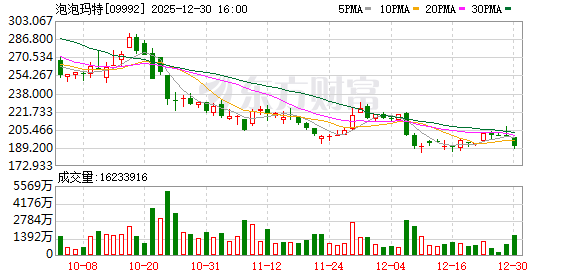
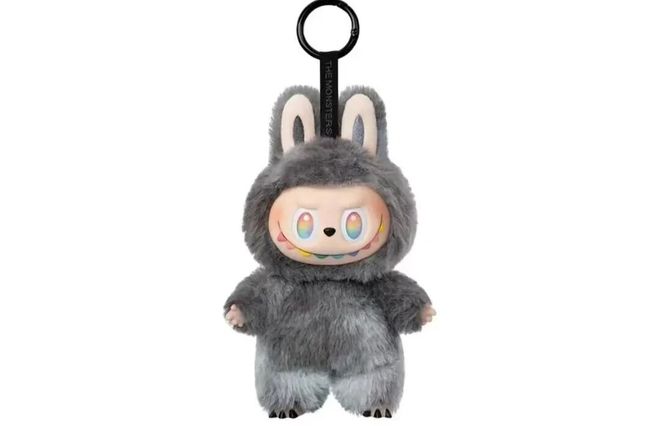
Core Viewpoint - The market sentiment towards Pop Mart is increasingly bearish, with a significant rise in short-selling activity and a notable decline in the resale prices of its core IP product, LABUBU [2][3][4]. Group 1: Market Sentiment and Short Selling - From December 2 to December 8, the number of shares sold short increased from 1.11 million to 5.39 million, and the short-selling amount rose from 241 million HKD to 1.09 billion HKD [2]. - On December 30, the short-selling amount for Pop Mart reached 458 million HKD, with 2.39 million shares sold short [2]. Group 2: LABUBU Product Performance - LABUBU, a core character of Pop Mart's THE MONSTERS family, generated revenue of 3.04 billion CNY in 2024, marking a year-on-year growth of 726.6% [3]. - The average transaction price for LABUBU products on second-hand platforms has decreased, with some styles selling below the official price [5]. - Recent data shows that the average transaction price for LABUBU on Xianyu platform was 83.5 CNY, with 68% of users expecting further price declines [5]. Group 3: Stock Performance and Market Capitalization - On December 30, Pop Mart's stock closed at 190.8 HKD per share, down 4.55%, with a total market capitalization of 256.23 billion HKD [4]. - Since reaching a peak in August, Pop Mart's stock has declined over 40%, resulting in a market value loss exceeding 200 billion HKD [4]. Group 4: Industry Analysis and Future Outlook - Analysts indicate that the decline in secondary market prices undermines the speculative value of collectible toys, leading to a shift from buying to selling among consumers and resellers [8]. - Deutsche Bank's report suggests that Pop Mart is gambling on short-term revenue growth at the expense of long-term brand value by increasing production capacity from 10 million units per month to 50 million units [8]. - The company is advised to diversify its IP strategy and create a content system rather than relying solely on LABUBU [10].
12月30日南向资金净卖出38.45亿港元





Zheng Quan Shi Bao Wang· 2025-12-30 14:51
Market Overview - On December 30, the Hang Seng Index rose by 0.86%, closing at 25,854.60 points, while southbound funds through the Stock Connect recorded a net sell of HKD 3.845 billion [1][3] - The total trading volume for the Stock Connect on the same day was HKD 92.3 billion, with a net sell of HKD 3.845 billion [1][3] Trading Activity - In the Shanghai Stock Connect, the trading volume was HKD 59.138 billion with a net sell of HKD 1.327 billion, while in the Shenzhen Stock Connect, the trading volume was HKD 33.161 billion with a net sell of HKD 2.518 billion [1][3] Active Stocks - The most actively traded stock in the Shanghai Stock Connect was SMIC, with a trading volume of HKD 35.17 billion, followed by Alibaba-W and Tencent Holdings with trading volumes of HKD 30.32 billion and HKD 22.02 billion, respectively [1][2] - In terms of net buying, Industrial and Commercial Bank of China had the highest net buy amount of HKD 357 million, with its stock price increasing by 0.64% [1][2] - The stock with the highest net sell was the Tracker Fund of Hong Kong, with a net sell of HKD 1.612 billion, while its stock price rose by 0.93% [1][2] Shenzhen Stock Connect Highlights - In the Shenzhen Stock Connect, SMIC led with a trading volume of HKD 25.32 billion, followed by Alibaba-W and Tencent Holdings with HKD 23.47 billion and HKD 16.79 billion, respectively [2] - The highest net buy was also for SMIC, with a net buy of HKD 410 million, and its stock price increased by 4.24% [2] - Alibaba-W recorded the highest net sell in this segment, amounting to HKD 798 million, while its stock price rose by 0.84% [2]
南向资金今日净卖出38.45亿港元 盈富基金净卖出16.12亿港元
Zheng Quan Shi Bao Wang· 2025-12-30 14:51
Group 1 - The Hang Seng Index rose by 0.86% on December 30, with a total turnover of southbound funds amounting to HKD 923.00 billion, including buy transactions of HKD 442.28 billion and sell transactions of HKD 480.72 billion, resulting in a net sell of HKD 38.45 billion [1] - The southbound trading through Stock Connect (Shenzhen) had a total turnover of HKD 331.61 billion, with buy transactions of HKD 153.22 billion and sell transactions of HKD 178.40 billion, leading to a net sell of HKD 25.18 billion [1] - The southbound trading through Stock Connect (Shanghai) recorded a total turnover of HKD 591.38 billion, with buy transactions of HKD 289.06 billion and sell transactions of HKD 302.33 billion, resulting in a net sell of HKD 13.27 billion [1] Group 2 - Among the actively traded stocks, SMIC had the highest turnover with a total of HKD 60.49 billion and a net buy of HKD 7.59 billion, closing with a price increase of 4.24% [1][2] - CNOOC had a total turnover of HKD 21.87 billion with a net buy of HKD 4.61 billion, while ICBC recorded a net buy of HKD 3.57 billion [2] - Tencent Holdings had a total turnover of HKD 38.81 billion with a net sell of HKD 12.79 billion, and Alibaba-W had a turnover of HKD 53.79 billion with a net sell of HKD 4.93 billion [2] Group 3 - The stock with the longest consecutive net buy from southbound funds was Huahong Semiconductor, with a total net buy of HKD 5.45 billion over three days [2] - The stocks with the highest consecutive net sell included China Mobile, Tencent Holdings, and Alibaba-W, with total net sells of HKD 96.46 billion, HKD 32.97 billion, and HKD 18.05 billion respectively [2]

Labubu部分款二手价最高跌幅88%
Di Yi Cai Jing Zi Xun· 2025-12-30 13:24
Group 1 - The prices of certain Pop Mart products in the second-hand market have significantly dropped due to increased supply [2][3] - The Labubu 3.0 series, which was highly sought after at launch, saw its prices plummet after large-scale restocks [2] - The hidden variant "Ben Wo" reached a peak price of 4,522 yuan, a 44.7 times markup, but fell to 540 yuan by December 30, representing an 88% decrease from its peak [2] Group 2 - The average transaction price for the Labubu series over the past 30 days is 117.17 yuan, down from a peak of 130.76 yuan on December 16 [2] - Some second-hand platforms show prices for certain Labubu models falling below their original retail prices, leading consumers to consider purchasing directly at retail [3] - Pop Mart's stock price has declined approximately 40% since its peak of 339.8 HKD per share in August [3]
在巨变中触摸真实
Di Yi Cai Jing· 2025-12-30 12:41
Group 1 - The consumer market in 2025 has transitioned from a broad recovery narrative to a phase of structural differentiation, focusing on balance amidst competition and transformation [1] - The contribution of consumption to economic growth is significant, accounting for 53.5% [1] - Key themes in the industry discussions have shifted from "recovery" to "differentiation" and "transformation" [1] Group 2 - Wahaha is undergoing significant changes following the passing of its founder, with challenges in leadership succession and channel reforms leading to potential mergers and eliminations [2] - The company achieved a revenue growth of 500 million yuan in 2025, amidst speculation about its future structure [2] - The beverage industry is experiencing a shift from rapid expansion to a focus on supply chain development and market positioning, as seen with brands like Bawang Tea and Mixue Ice City [2] Group 3 - Pop Mart has seen its stock price increase nearly 15 times over 17 months, becoming a notable player in the consumer market [3] - The popularity of the Labubu toy reflects the emotional engagement of consumers, particularly among the younger generation [3][4] - However, the prices of some products have started to decline, indicating a potential cooling in demand [3] Group 4 - The film "Nezha: The Devil's Child" has made a significant impact on the 2025 consumer market, generating a box office of 15.446 billion yuan and accounting for over 52% of the total box office in the first half of the year [6] - This highlights the extreme "head effect" in consumer spending, showcasing the market's structural differentiation [6] - Brands that can accurately capture niche demands and build competitive barriers are likely to thrive in this complex environment [6]