
Hisense V.T.(600060)

Search documents
家电行业2025年中报业绩前瞻:内销政策拉动延续,关税扰动出口不改长期趋势
Shenwan Hongyuan Securities· 2025-07-09 08:42
Investment Rating - The report maintains a "Positive" outlook on the home appliance industry for the mid-2025 performance forecast [3] Core Insights - The home appliance sector is expected to benefit from domestic sales policies and the "old-for-new" program, which is driving demand for major appliances and kitchen appliances [4][5] - The air conditioning industry saw a cumulative production of 101.54 million units from January to May 2025, representing an 8% year-on-year increase, while sales reached 103.49 million units, up 9% year-on-year [4][17] - The report identifies three main investment themes: 1. **White Goods**: The reversal of real estate policies and the "old-for-new" program are expected to catalyze growth in the white goods sector, which is characterized by low valuations, high dividends, and stable growth [5][6] 2. **Exports**: Companies like Ousheng Electric are recommended due to stable income growth driven by large customer orders, while Dechang shares are highlighted for their expanding automotive parts business [6] 3. **Core Components**: The report suggests that the demand for core components will exceed expectations due to the strong performance of white goods, recommending companies like Huaxiang and Shun'an Environment for their competitive advantages [6] Summary by Sections 1. Air Conditioning and Major Appliances - The air conditioning sector is experiencing high growth in exports, with a 11% year-on-year increase in external sales from January to May 2025 [4][17] - The "old-for-new" policy is expected to enhance the average price of white goods, with major companies like Midea and Gree projected to see revenue growth of 8% and 5% respectively in Q2 2025 [4][29] 2. Kitchen Appliances - The kitchen appliance market is recovering due to real estate policies and the "old-for-new" program, with online sales of range hoods and gas stoves increasing by 17.5% and 16.5% respectively [40] - Companies like Boss Appliances are maintaining strong market shares in the kitchen appliance sector, with expected revenue growth of 5% in Q2 2025 [41] 3. Small Appliances - The small appliance sector is benefiting from high growth in domestic sales and exports, with companies like Supor and Joyoung expected to see revenue increases of 5% and 120% respectively in Q2 2025 [4][41] - The "old-for-new" policy is set to include small appliances, which is anticipated to significantly boost sales [5][20] 4. New Displays and Lighting - The emerging display market is at a turning point, with companies like Hisense and Jimi Technology expected to see revenue growth of 5% in Q2 2025 [4][5] 5. Investment Highlights - The report emphasizes the potential for a rebound in the home appliance sector driven by favorable policies and market conditions, recommending a combination of leading companies such as Midea, Haier, and Gree for investment [5][6]





海信视像(600060) - 海信视像关于独立董事离任的公告
2025-07-09 08:15
证券代码:600060 证券简称:海信视像 公告编号: 2025-028 二、离任对公司的影响 丁文华先生因个人原因辞去公司独立董事职务,辞职生效日为公司股东会选 举产生新的独立董事之日,不会导致公司董事会成员低于法定人数。在股东会选 举产生新的独立董事前,丁文华先生将继续履行独立董事和董事会专门委员会委 员职务,不会影响公司的平稳规范运作。丁文华先生正式离任后,将按照公司《董 事和高级管理人员离职管理制度》要求做好相关交接工作。 截至本公告披露日,公司董事会提名委员会已启动新的独立董事的遴选工作, 1 / 2 海信视像科技股份有限公司 关于独立董事离任的公告 本公司董事会及全体董事保证本公告内容不存在任何虚假记载、误导性陈述 或者重大遗漏,并对其内容的真实性、准确性和完整性承担法律责任。 海信视像科技股份有限公司(以下简称"公司")于 2025 年 7 月 9 日收到独 立董事丁文华先生提交的辞职申请,丁文华先生因个人原因申请辞去公司第十届 董事会独立董事职务,一并辞去所担任的董事会薪酬与考核委员会、审计委员会、 提名委员会、战略委员会等专门委员会委员职务。为保障公司平稳规范运行,丁 文华先生的上述辞职申请 ...
赛场内裁决比赛,赛场外引领趋势:海信借世俱杯引领100吋市场格局
Sou Hu Wang· 2025-07-07 02:31
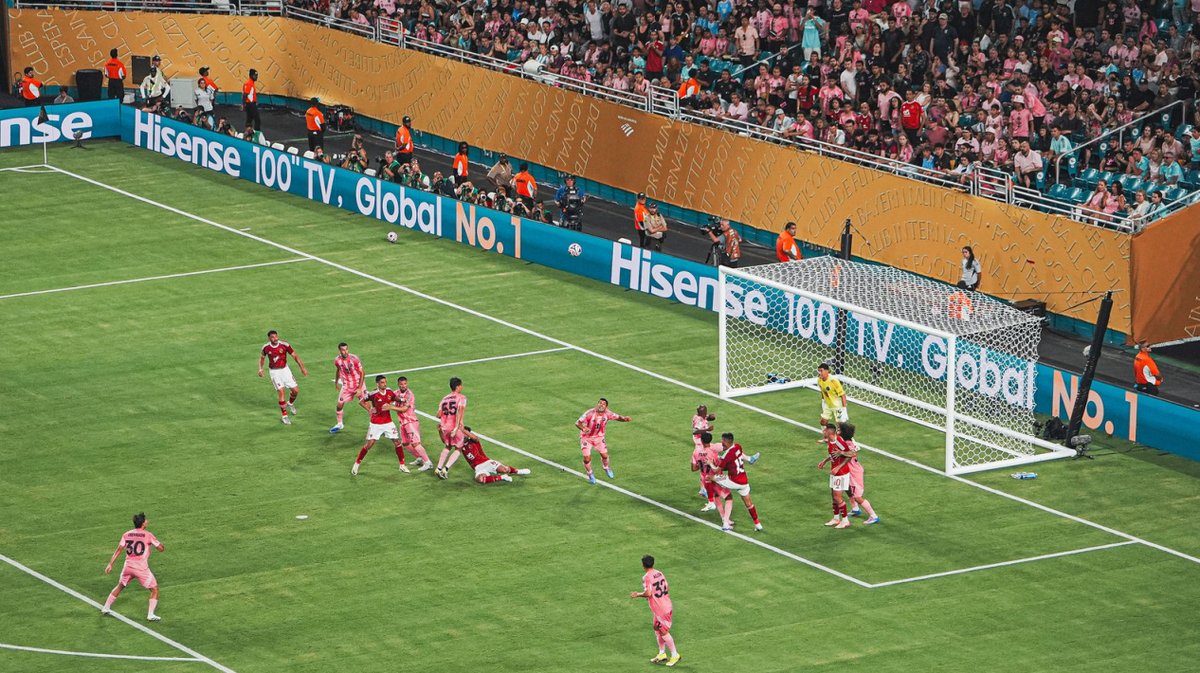
Group 1 - The FIFA Club World Cup has intensified competition, with unexpected teams like Al Hilal advancing, disrupting traditional football hierarchies, while major clubs like Paris Saint-Germain and Real Madrid are also competing fiercely [1] - The event's heightened intensity is reflected in global consumer markets, with Hisense experiencing a significant increase in sales of 100-inch and larger televisions, showing a 109.6% year-on-year growth in the domestic market and a 66% increase in key overseas markets [3][6] - Hisense's involvement goes beyond sponsorship, as their technology was crucial in officiating key moments during matches, showcasing the brand's recognition in high-stakes environments [3] Group 2 - Hisense has invested heavily in display technology, offering over 50 models of large-screen products, including a flagship 100-inch TV equipped with an AI picture quality chip for enhanced viewing experiences [5] - Market data supports the rise of large-screen televisions, with Hisense holding a 56.71% share of the global 100-inch TV market in Q1 2025, and achieving top sales during major shopping events [6] - The demand for larger screens in the high-end consumer market is evident, as demonstrated by the sale of a 163-inch Hisense Micro LED TV for 799,900 yuan, indicating a shift towards immersive viewing experiences driven by major sporting events [6]

家用电器行业点评:越美关税谈判落地,利好在越产能布局企业
CMS· 2025-07-06 14:33
Investment Rating - The investment rating for the home appliance industry is "Strongly Recommended" for key companies such as Midea Group, Gree Electric Appliances, Hisense Home Appliances, Supor, and others [2]. Core Insights - The recent trade agreement between the US and Vietnam is expected to benefit companies with production capacity in Vietnam, as tariffs on Vietnamese exports to the US have significantly decreased from 46% to 20% [1]. - The US labor market data indicates a mixed outlook, with a decrease in ADP employment numbers and a slight drop in the unemployment rate, which may increase the probability of a rate cut by the Federal Reserve in September [1]. Industry Scale - The home appliance industry consists of 88 listed companies, with a total market capitalization of 1,835.5 billion and a circulating market capitalization of 1,748.9 billion [3]. Key Company Financials - Midea Group: Market Cap 563.3 billion, 2024 EPS 5.03, 2025 EPS 5.61, 2025 PE 13.1, PB 2.5, Investment Rating: Strongly Recommended [2]. - Gree Electric Appliances: Market Cap 261.8 billion, 2024 EPS 5.75, 2025 EPS 6.25, 2025 PE 7.5, PB 1.8, Investment Rating: Strongly Recommended [2]. - Hisense Home Appliances: Market Cap 36.5 billion, 2024 EPS 2.42, 2025 EPS 2.71, 2025 PE 9.7, PB 2.2, Investment Rating: Strongly Recommended [2]. - Supor: Market Cap 42.0 billion, 2024 EPS 2.80, 2025 EPS 3.03, 2025 PE 17.3, PB 6.1, Investment Rating: Strongly Recommended [2]. - Other companies such as Zhaochi Co., Juxing Technology, and Stone Technology also received a "Strongly Recommended" rating [2]. Market Performance - The absolute performance of the home appliance sector over 1 month, 6 months, and 12 months is 4.9%, 10.1%, and 30.3% respectively, indicating a strong upward trend [5]. - The relative performance against the benchmark index (CSI 300) is 2.0%, 4.6%, and 14.8% for the same periods [5]. Supply Chain and Production Insights - Major appliance manufacturers like Hisense and TCL are primarily sourcing from Mexico and Vietnam, mitigating tariff impacts [6]. - The shift in TV imports to the US shows that Vietnam's share has increased to 36%, while China's has decreased to 5% [8]. - Companies in the smart home sector, such as Stone Technology, are also benefiting from reduced uncertainties in supply chains due to the Vietnam agreement [6]. Future Outlook - The anticipated rate cut by the Federal Reserve is expected to boost demand in the tools market, with a 66% probability of a 25 basis point cut in September [9][10]. - Companies are advised to focus on production in Vietnam to meet local origin requirements and capitalize on the upcoming peak season for orders [6].


618家电零售增长稳健,美越关税落地有望带动出口链情绪回温
SINOLINK SECURITIES· 2025-07-06 05:21
Investment Rating - The report suggests a positive outlook for the home appliance industry, indicating a strong growth potential driven by domestic demand and favorable policies [7][47]. Core Insights - The 618 home appliance market in 2025 showed robust growth, with major categories experiencing increases in both retail volume and value, particularly in white goods and black goods [2][13]. - The recent US-Vietnam trade agreement is expected to boost sentiment in the Chinese home appliance export chain, providing greater policy certainty for regional export chains [3][21]. - The home appliance sector is transitioning from price-driven competition to a focus on user experience and product value, with significant upgrades in product structures [20][45]. Market Performance Tracking - The overall market is showing a recovery trend, with white goods maintaining stable prices and black goods experiencing significant growth, particularly in the TV market, which saw a 9.7% increase in volume and a 14.5% increase in value during the 618 period [2][13]. - The air conditioning segment demonstrated strong growth, with retail sales increasing over 15% both online and offline, driven by leading brands like Midea, Xiaomi, and Haier [15][20]. - The washing machine market also saw substantial growth, with online and offline retail sales increasing by 17.1% and 12.1% respectively, indicating a shift towards larger capacity and upgraded features [15][20]. Raw Material Price Tracking - Recent trends show a decrease in copper and aluminum prices, with copper down 0.69% and aluminum down 0.23% in the last week, while cold-rolled steel prices increased by 2.58% [29][34]. Exchange Rate and Shipping Price Tracking - As of July 4, 2025, the USD to RMB exchange rate was reported at 7.15, with a slight decrease of 0.01% week-on-week [35][36]. Investment Recommendations - The report highlights three main investment themes: 1) Opportunities in new product forms and industry phases 2) Quality companies with solid fundamentals focusing on robotics 3) Leading companies in the black and white goods sectors [7][47].

海外建厂隐性成本易被忽略,配持枪保安、建食堂是当地刚需丨鲸犀百人谈Vol.39
雷峰网· 2025-07-04 11:07
Core Viewpoint - The article emphasizes that going global is akin to a new era of entrepreneurship, where heavy asset investment must adhere to a long-term perspective [1] Group 1: Historical Context of Chinese Companies Going Global - 28 years ago, Haier established its first overseas factory in the Philippines, marking a milestone for Chinese manufacturing brands [2] - 10 years ago, Hisense acquired Sharp's factory in Mexico for $23.7 million, allowing for local production and significant time savings compared to shipping from China [2] - In the past 7 years, numerous Chinese e-commerce platforms like Pinduoduo and Alibaba have begun exploring overseas markets, leading to increased competition and market dynamics [2][3] Group 2: Key Drivers for Supply Chain Expansion - Geopolitical factors and tariffs significantly influence companies' decisions on where to expand internationally [7] - The demand for near-shore delivery has risen, prompting companies to locate closer to their customers to mitigate risks associated with long-distance shipping [7] - Cost considerations remain crucial, with companies seeking to optimize logistics by shipping components for local assembly rather than complete products [7] Group 3: Stages and Criteria for Going Global - Companies typically progress through three stages: product export, brand export, and manufacturing/supply chain export [10] - A threshold of $500 million in annual sales is identified as a benchmark for companies considering supply chain expansion [10] - Smaller companies are advised to start with product or sales export before attempting manufacturing abroad due to higher risks and capital requirements [10] Group 4: Changes in the Global Environment for Manufacturing - The geopolitical landscape has shifted, making it a critical factor in site selection for overseas factories [12] - Labor costs have increased in traditional low-cost regions, impacting the attractiveness of locations like Vietnam and Thailand for new factories [12] - The rising land prices and increased brand recognition of Chinese companies abroad have altered the dynamics of overseas manufacturing [13] Group 5: Challenges and Hidden Costs in Overseas Manufacturing - Companies must prepare for unexpected operational costs, such as security measures and compliance with local labor laws [20] - Low labor costs do not necessarily equate to lower overall costs due to potential inefficiencies and training expenses [21] - The complexity of compliance and legal requirements can lead to additional costs that companies must account for in their budgets [20] Group 6: Strategies for Successful Overseas Expansion - Joint ventures can reduce capital investment and help navigate local market challenges, but they may also dilute decision-making power [32] - Companies are encouraged to establish local partnerships to leverage existing networks and resources, particularly in regions with complex regulatory environments [32] - The article suggests that companies should consider existing facilities rather than building new ones to minimize initial investment risks [31]




足球与电视的双向奔赴,海信RGB-Mini LED点亮全球高端足球赛事
Xin Lang Cai Jing· 2025-07-04 09:49
Group 1: Core Insights - The FIFA Club World Cup showcased the growing influence of Chinese brands, particularly Hisense, on the global stage, despite the absence of Chinese teams in the tournament [1] - Hisense's 100-inch television was selected as the official choice for the FIFA Club World Cup, highlighting its market leadership, with a global share of 58.8% in 100-inch and larger TVs projected for 2024 [6][11] - The introduction of RGB-Mini LED technology by Hisense represents a significant advancement in display technology, enhancing the viewing experience with improved color accuracy and dynamic performance [7][9] Group 2: Historical Context - The relationship between football and television has evolved significantly, with FIFA adapting rules and equipment to enhance broadcast quality since the introduction of the "Telstar" ball in 1970 [3][4] - Technological advancements in broadcasting, such as the introduction of high-definition and VAR (Video Assistant Referee) systems, have transformed how football is experienced by fans [4][8] Group 3: Technological Innovations - Hisense's RGB-Mini LED technology marks a fundamental shift from traditional backlighting to RGB multi-color backlighting, improving efficiency by 15% and enhancing color purity [9][10] - The company's proprietary AI picture quality chip, H7, allows for precise control over lighting and color, significantly enhancing the viewing experience [10] Group 4: Market Positioning - Hisense's branding strategy has evolved from "China's first" to "world's first" in the context of large-screen televisions, reflecting its ambition to lead in global display technology [12][11] - The company's commitment to innovation and technology positions it as a key player in defining future display standards, moving from merely producing products to setting industry benchmarks [12][13]

世界顶级赛事成科技“秀场”,谁是体育竞技最大赢家
2 1 Shi Ji Jing Ji Bao Dao· 2025-07-04 08:21
Group 1: VAR Technology and Its Impact - VAR technology has significantly improved the accuracy of referee decisions in football, increasing the decision accuracy from 95% to 99.2% [3] - The implementation of VAR in the current World Cup has enhanced the viewing experience by synchronizing VAR footage on stadium screens for both referees and spectators, reducing the average decision time to 22 seconds [3] - The use of advanced VAR systems has contributed to a more fair and transparent football environment, gaining the trust of event organizers and fans [3] Group 2: Market Trends and Company Performance - The global television market saw a 2.4% year-on-year increase in shipment volume in Q1 2025, driven by heightened interest in major football events [5] - Hisense has emerged as a market leader in the 100-inch television segment, with a year-on-year shipment increase of 179.3% in Q1 2025, capturing a 56.71% market share globally [5][7] - The demand for high-end televisions, particularly those over 100 inches, has surged, with a 44% year-on-year increase in shipment volume and a 35% increase in sales revenue in Q1 2025 [7] Group 3: Technological Advancements - Hisense has introduced the world's first RGB-Mini LED television, marking a significant advancement in display technology that enhances viewing experiences by providing more vivid and detailed images [6] - The RGB-Mini LED technology allows for personalized frame-level picture adjustments based on content recognition, improving the overall viewing experience for sports events [6] - The evolution of display technology from CRT to advanced LED systems illustrates the transformation of the Chinese display industry from a follower to a leader in global technology [7]
RGB-Mini LED首登世俱杯,全球显示技术开启“中国纪元”
Tai Mei Ti A P P· 2025-07-04 08:05
Core Insights - The 2025 FIFA World Cup will showcase the RGB-Mini LED technology, marking a significant milestone in global display technology, primarily led by the Chinese company Hisense [1][3][6] - Hisense's RGB-Mini LED technology enhances viewing experiences by providing vibrant colors, smooth motion, and eliminating light reflection issues, allowing for immersive viewing in various lighting conditions [3][4] - The technology is supported by Hisense's self-developed AI picture quality chip, which significantly improves performance metrics such as CPU single-core performance by 40% and scene adaptation capabilities by 100% [6][11] Company Developments - Hisense has a history of involvement in major sporting events, having sponsored the Australian Open in 2008 and becoming a partner for the UEFA Euro 2016, showcasing its commitment to global sports marketing [7][9] - The company has been recognized as the first official VAR display technology partner for the UEFA Euro 2024, highlighting its technological advancements and global recognition in display technology [9][11] - Hisense's 100-inch television sales have led the global market, with a remarkable 179.3% year-on-year growth in the first quarter of 2023, capturing a 56.71% market share [11] Industry Impact - The introduction of RGB-Mini LED technology at the World Cup signifies a shift in the global display industry, moving from a passive observer to a leading innovator [9][11] - The collaboration with FIFA and UEFA in advanced display technologies indicates a new era for the Chinese display industry, emphasizing both technological prowess and market presence [9][11] - The success of Hisense's RGB-Mini LED technology is expected to elevate the quality of sports broadcasting and consumer electronics, setting new standards in the industry [4][11]
世俱杯上的尖端显示竞赛:RGB-Mini LED缘何强势突围
Jing Ji Guan Cha Wang· 2025-07-04 07:49
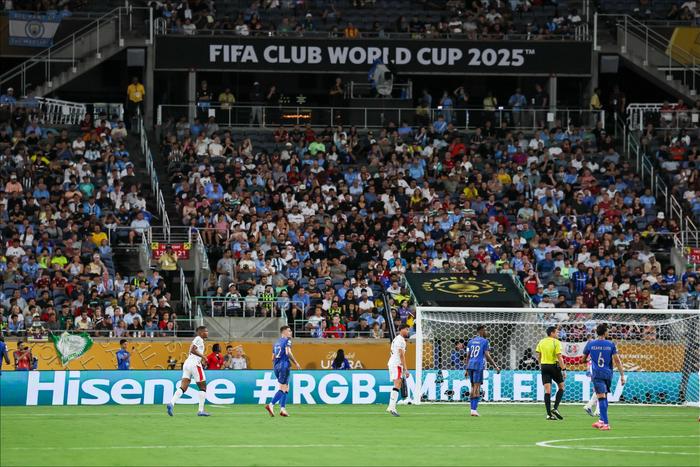
Core Viewpoint - The FIFA Club World Cup 2025 has officially announced its top 8 teams, including Real Madrid and Manchester City, with a total prize pool of $1 billion, igniting global fan enthusiasm. Hisense, as the first global official partner and VAR technology supplier, is leveraging this event to showcase its cutting-edge RGB-Mini LED technology [1][2][6]. Group 1: Hisense's Role in the FIFA Club World Cup - Hisense's RGB-Mini LED technology has been pivotal in enhancing the viewing experience during the FIFA Club World Cup, with its large-screen TVs providing superior picture quality and performance [4][5]. - The VAR system, supported by Hisense's specialized display equipment, successfully disallowed a goal due to a foul, demonstrating the effectiveness of their technology in critical game situations [2][3]. - Hisense's advertising presence at the event emphasizes its commitment to merging sports and technology, showcasing its products as essential for an optimal viewing experience [1][2]. Group 2: Technological Advancements - The RGB-Mini LED technology offers significant improvements over traditional TVs, including enhanced color accuracy and motion clarity, addressing common issues like blurriness and lag during fast-paced sports [4][8]. - Hisense's RGB-Mini LED TVs have achieved a 180% year-on-year increase in global shipments for 100-inch and larger models, capturing a 56.7% market share, positioning the company as a leader in this segment [7][8]. - The technology's ability to maintain high performance in various lighting conditions, including direct sunlight, sets a new standard for viewing experiences [8][9]. Group 3: Industry Impact and Future Prospects - Hisense's advancements in RGB-Mini LED technology mark a significant milestone in the display industry, transitioning from traditional methods to innovative solutions that redefine viewing experiences [10][14]. - The company's commitment to research and development has led to breakthroughs in chip technology and backlight systems, establishing it as a frontrunner in the global display market [12][13]. - The success of RGB-Mini LED technology at major sporting events signifies a shift in the industry from "made in China" to "created in China," highlighting the country's growing influence in display technology [14].