NNCI(600301)

Search documents
A股收评 | 指数放量上涨 深成指、创指涨超1% 涨价题材全线爆发
智通财经网· 2026-02-25 07:33
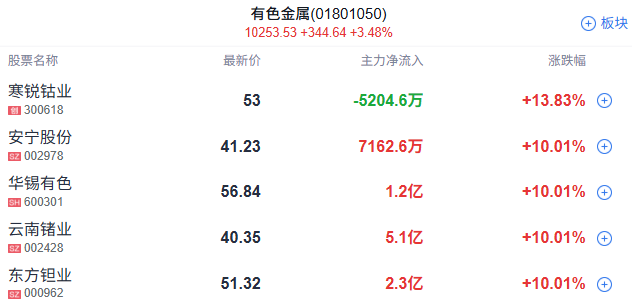
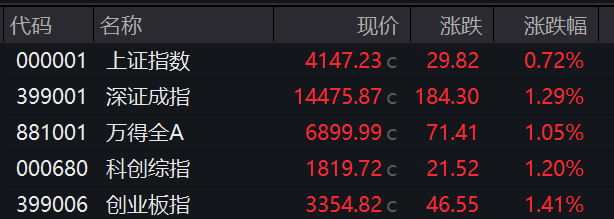
2月25日,A股市场高开高走,午后小幅回落后再度拉升,创业板指、深成指均涨超1%。截至收盘,沪 指涨0.72%,深成指涨1.29%,创业板指涨1.41%。沪深两市成交额2.46万亿,较上一个交易日放量2605 亿。 1、有色金属板块走高 小金属、贵金属等有色板块大涨,东方钽业、华锡有色、中钨高新等多股涨停。 | | | 有色金属(01801050) 10253.53 +344.64 +3.48% | + 板块 | | --- | --- | --- | --- | | 股票名称 | 最新价 | 主力净流入 | 涨跌幅 | | 寒锐钻业 300618 | 53 | -5204.6万 | +13.83% (+) | | 安宁股份 sz 002978 | 41.23 | 7162.6万 | +10.01% (+) | | 华锡有色 SH 600301 | 56.84 | 1.2亿 | +10.01% + | | 云南错业 sz 002428 | 40.35 | 5.1亿 | +10.01% + | | 东方锂业 sz 000962 | 51.32 | 2.3亿 | +10.01% + | 点评:中银证券发布研报称, ...


收盘丨沪指涨0.72%,小金属、磷化工板块全线走高
Di Yi Cai Jing· 2026-02-25 07:25
具体来看,小金属板块走强,东方钽业、华锡有色、云南锗业、安宁股份、中钨高新等多股涨停。 | 代码 | 名称 | 涨幅√ | 现价 | | --- | --- | --- | --- | | 000962 | 东方辑业 | +10.01% | 51.32 | | 600301 | 华锡有色 | +10.01% | 56.84 | | 002428 | 云南错业 | +10.01% | 40.35 | | 002978 | 安宁股份 | +10.01% | 41.23 | | 000657 | 中钨高新 | +10.00% | 58.83 | | 002378 | 章源钨业 | +10.00% | 33.55 | | 600111 | 北方稀土 | +9.99% | 60.43 | | 600259 | 中稀有色 | +9.84% | 95.64 | | 000960 | 锡业股份 | +8.97% | 40.21 | | 000831 | 中国稀土 | +8.49% | 62.71 | | 600392 | 盛和资源 | +8.45% | 31.58 | | 600549 | 厦门钨业 | +7.29% | 6 ...


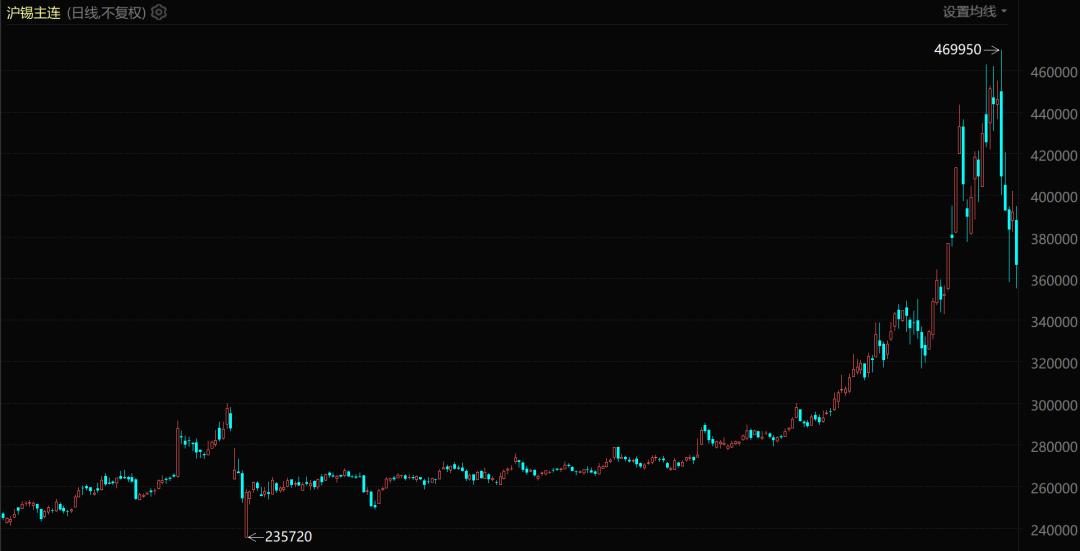
基建与新兴产业支撑,锡价大涨!云南锗业、华锡有色涨停,有色矿业ETF招商(159690)涨3.31%
Sou Hu Cai Jing· 2026-02-25 04:17
该机构认为,短期关税裁决与地缘冲突对贵金属形成共振驱动,中长期角度来看,去美元化、地缘风险 等因素将支撑黄金重回上行通道。由于工业属性与金融属性共振,短期白银有望延续震荡偏强走势。 工业金属方面,LME锡涨超3%,现报51920美元/吨,锌、铜、铝、镍等不同幅度上涨。 长江证券分析认为,从国内场景看,基建项目加速落地,电网升级、光伏电站建设等工程密集开工,带 动锡镍等工业金属需求刚性增长;新能源汽车、AI算力基础设施等新兴领域产能快速恢复,单台AI服 务器用锡量远超传统设备,成为需求新增长点。海外市场同样传来积极信号,全球央行宽松预期延续, 欧美"再工业化"进程推动制造业复苏,带动金属出口需求稳步回升,为国内下游需求形成补充。 有色矿业ETF招商(159690)所跟踪的有色矿业指数是一只高度聚焦于有色金属产业链最上游——矿产 资源开采环节的指数。当有色金属价格(如铜价、金价、锂价)上涨时,上游企业的利润会直接、快速 地提升,因此有色矿业指数表现出更强的价格弹性,贝塔值更高,在商品牛市或通胀环境中进攻性十 足。 2月25日,有色板块延续大涨,有色矿业ETF招商(159690)涨3.31%,成份股云南锗业、华锡有 ...
早盘异动!钢铁、稀土、有色板块,多股涨停
Shang Hai Zheng Quan Bao· 2026-02-25 03:03
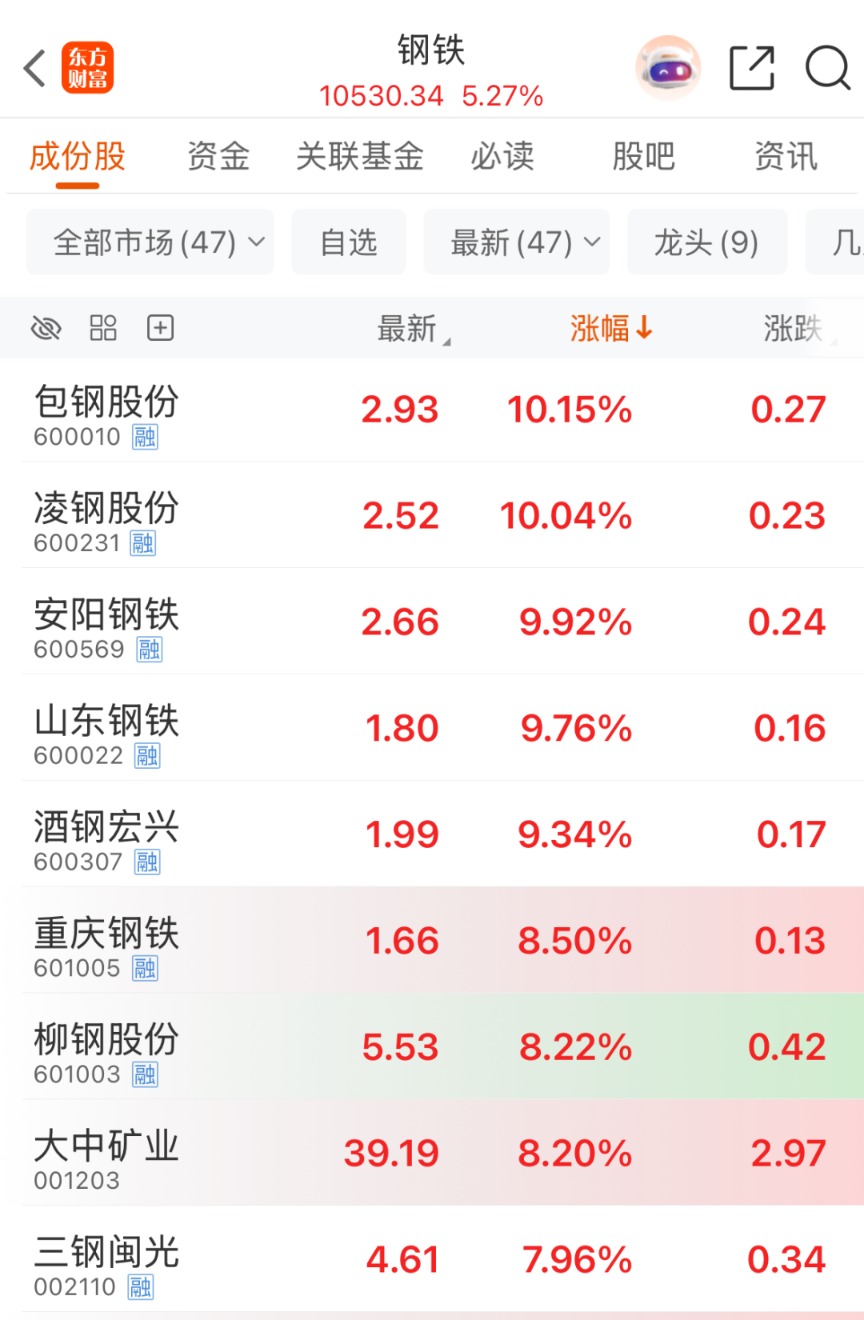
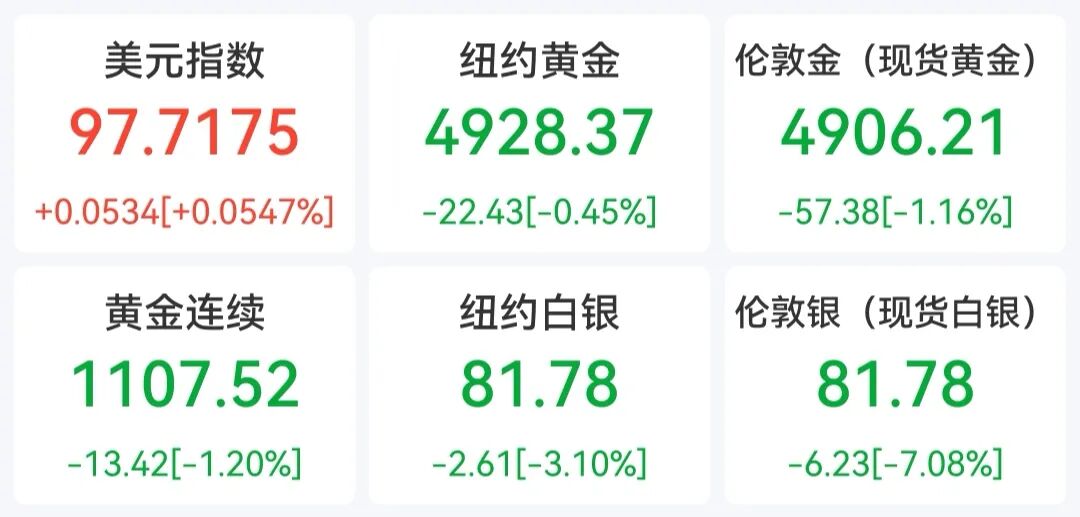
Group 1: Steel Industry - The steel sector has shown significant growth, with major stocks like Baosteel and Lingang Steel experiencing increases of over 10% [1][2] - The overall market for steel is reported at 10,530.34, reflecting a 5.27% increase [1] - Notable performers include Angang Steel with a 9.92% rise and Shandong Steel with a 9.76% increase [1] Group 2: Rare Earth and Permanent Magnet Sector - The rare earth permanent magnet concept has gained strength, with stocks like Baogang and Zhongse reaching their daily limit [2] - Significant increases were noted in stocks such as San Chuan Wisdom, which rose by over 10%, and Northern Rare Earth, which increased by over 7% [2] - The overall market for rare earths is reported at 4,007.45, with a 3.35% increase [2] Group 3: Nonferrous Metals Sector - The nonferrous metals sector has seen a substantial rise, with companies like Huaxi Nonferrous and Yunnan Zhenye hitting their daily limits [3] - The market for nonferrous metals is reported at 31,769.06, reflecting a 3.02% increase [3] - Key stocks include Huaxi Nonferrous and Yunnan Nonferrous, both showing a 10.01% increase [3] Group 4: Precious Metals - Precious metals have shown positive movement, with gold priced at 5,189.29, reflecting a 0.88% increase, and silver at 89.11, with a 2.21% rise [4]


有色ETF鹏华(159880)涨超3.5%,重稀土价格显著上涨
Xin Lang Cai Jing· 2026-02-25 02:53
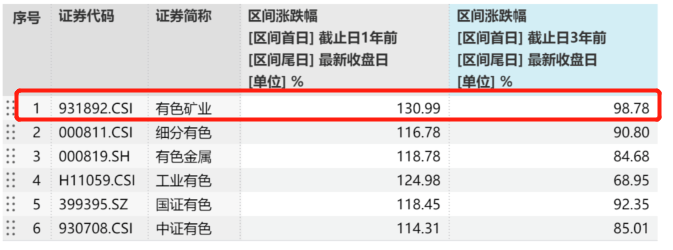
上个马年沪指涨近60%!新年新福利来了,炒股排面要拉满,新号启幸运>> 有色ETF鹏华紧密跟踪国证有色金属行业指数,国证有色金属行业指数参照国证行业分类标准,选取归 属于有色金属行业的规模和流动性突出的50只证券作为样本,反映了沪深北交易所有色金属行业上市公 司的整体收益表现,向市场提供细分行业的指数化投资标的。 数据显示,截至2026年1月30日,国证有色金属行业指数(399395)前十大权重股分别为紫金矿业、洛阳 钼业、北方稀土、中国铝业、华友钴业、中金黄金、山东黄金、兴业银锡、赣锋锂业、云铝股份,前十 大权重股合计占比49.87%。 有色ETF鹏华(159880),场外联接(A:021296;C:021297;I:022886)。 稀土永磁概念走高,消息面上,重稀土价格显著上涨。钇欧价翻至850美元/公斤,镝达1100美元/公 斤,供应忧虑持续,创2015年以来最高水平。此外,贵金属、工业金属价格普遍上涨。 申万宏源研究指出,长期看,货币信用格局重塑、美财政赤字率抬升及我国黄金储备偏低等多重因素共 振,将驱动金价中枢持续上行,央行购金亦为长期趋势。与此同时,金银比处于偏高水平,边际需求修 复预期下有望收 ...
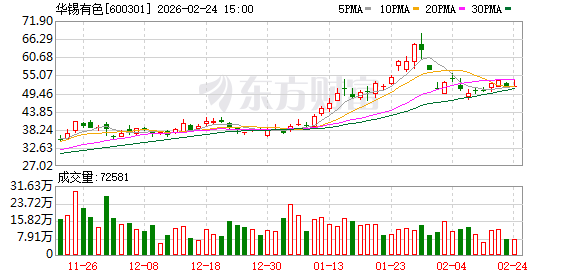
华锡有色:截至2025年6月末,公司保有锡等金属资源量合计449.25万吨
Zheng Quan Ri Bao· 2026-02-24 11:12
证券日报网讯 2月24日,华锡有色在互动平台回答投资者提问时表示,截至2025年6月末,公司保有 锡、锑、铟、锌、铅、银、铜等金属资源量合计449.25万吨。2025年度相关经营数据请以公司后续披露 的定期报告为准。 (文章来源:证券日报) ...
有色金属行业周报:小金属双周报:继续看多稀土、钨板块,锡价或迎拐点
SINOLINK SECURITIES· 2026-02-23 10:45
Investment Rating - The report indicates a positive outlook for the small metals sector, with the Shenyin Wanguo Small Metals Index rising by 3.25% during the period, outperforming both the Shenwan Nonferrous Index and the CSI 300 Index by 10.21 percentage points and 4.23 percentage points, respectively [2][13]. Core Insights - The report highlights that the prices of rare earth elements have reached new highs, driven by supply-side reforms and increasing overseas inventory demand. The prices for praseodymium and neodymium oxide rose by 13.51%, dysprosium oxide by 9.02%, and terbium oxide by 5.90% [3][18][19]. - Tin prices have shown volatility, with a decrease of 10.74% in the current period. The potential ban on tin raw material exports from Indonesia may create significant replenishment demand for tin processing companies, positively impacting tin prices in the long term [4][28]. - Tungsten prices have increased significantly, with tungsten concentrate rising by 15.99% and ammonium paratungstate by 15.11%. The report suggests that the strategic reserve initiatives in the U.S. may elevate tungsten's priority in global markets [4][40]. - Antimony prices have shown a slight increase, with antimony ingot prices up by 0.62% and antimony concentrate by 2.13%. The report anticipates a recovery in exports, which could lead to a price rebound [5][47]. - Molybdenum prices have stabilized, with molybdenum concentrate prices increasing by 2.97% and ferromolybdenum by 3.33%. The report notes that low inventory levels and increased defense spending may support further price increases [6][51]. Summary by Sections 1. Stock Market and Commodity Price Performance - The Shenyin Wanguo Small Metals Index closed at 39,286.62 points, reflecting a 3.25% increase [2][13]. - Commodity prices for rare earths, tungsten, and molybdenum have shown upward trends, while tin prices have decreased [16]. 2. Main Product Fundamentals and Insights 2.1 Rare Earths - The report emphasizes the ongoing supply-side reforms and the rising prices of rare earths, with significant export demand expected to continue [3][18][19]. 2.2 Tin - The potential export ban from Indonesia could lead to increased demand for tin processing, positively affecting prices in the long run [4][28]. 2.3 Tungsten - The report highlights the strategic importance of tungsten in global markets, with prices rising significantly due to supply constraints and increased military spending [4][40]. 2.4 Antimony - Antimony prices are expected to recover as export conditions improve, with a focus on high-growth resource companies [5][47]. 2.5 Molybdenum - Molybdenum prices are projected to rise due to low inventory levels and increased demand from the defense sector [6][51].

【干货】锑产业链全景梳理及区域热力地图
Qian Zhan Wang· 2026-02-10 03:09
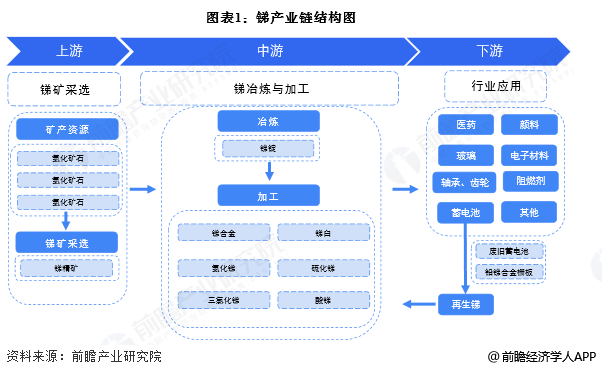
Core Insights - The antimony industry is characterized by its high industrial value and strategic importance, with antimony being used as an additive in various industrial applications [1] - The antimony supply chain includes upstream mining and selection, midstream smelting and processing, and downstream applications such as flame retardants and batteries [1][3] Group 1: Industry Overview - Antimony is a scarce resource with significant industrial applications, classified as a strategic mineral resource by the government [1] - The antimony supply chain consists of three main segments: upstream (mining and selection), midstream (smelting and processing), and downstream (applications) [1][3] - Key applications of antimony include flame retardants, glass, electronic materials, bearings, gears, and batteries, with the latter allowing for the recycling of antimony [1] Group 2: Key Companies and Production Data - Major upstream companies in the antimony mining sector include Hunan Gold, Huaxi Nonferrous, and Huayu Mining [3] - In 2024, Hunan Gold is projected to produce 29,209 tons of antimony, a decrease of 6.15% year-on-year, while Huaxi Nonferrous expects a production increase of 9.17% to 15,417.7 tons [10] - Midstream companies such as Hengbang Co. and Zhuhai Group are involved in smelting and processing, with Hengbang Co. reporting revenue of 957 million yuan from related operations in 2024 [10] Group 3: Regional Distribution - The antimony industry is predominantly concentrated in Hunan province, followed by Guangxi, Guangdong, and Jiangxi, with a significant disparity in the number of companies compared to other regions [5][7] - The majority of upstream, midstream, and recycling companies are located in Hunan, with other provinces like Tibet and Guangxi having fewer enterprises [7] Group 4: Investment Trends - Investment activities in the antimony sector from 2022 to 2025 highlight ongoing developments and strategic initiatives by key players [11] - Companies are focusing on enhancing production capabilities and exploring new product developments, particularly in high-precision alloys and recycling processes [10]


黄金白银,闪崩
Xin Lang Cai Jing· 2026-02-05 12:18
Group 1: Market Overview - Precious metals sector experiences significant adjustments, with Hunan Silver hitting the daily limit down and Xiaocheng Technology dropping over 10% [3][8] - Major declines observed in several gold and silver companies, including Sichuan Gold, Hunan Gold, and Zhaojin Mining [3][4] Group 2: Price Fluctuations - International gold and silver prices continue to fluctuate, with April gold futures trading between $4,800 and $5,000 per ounce, and March silver futures between $70 and $90 per ounce [4][6] - Following substantial sell-offs, precious metal prices remain volatile near key psychological levels, with analysts warning of ongoing selling pressure [5][10] Group 3: Analyst Insights - Analysts from various financial institutions express concerns about the short-term outlook for gold and silver prices, indicating that the market may not have reached a bottom yet [5][10] - The recent sell-off in precious metals is viewed as a market adjustment rather than a trend reversal, suggesting a more stable and non-linear price increase in the future [5][10]


“围剿”中国工厂
3 6 Ke· 2026-02-05 05:27
Core Viewpoint - The surge in metal prices, particularly copper, is significantly impacting downstream manufacturing industries in China, leading to squeezed profit margins for manufacturers while upstream companies benefit from rising raw material prices [3][5][9]. Group 1: Price Surge in Raw Materials - In 2025, copper prices increased by 34.34%, and the upward trend continued into 2026 [2]. - The price of lithium carbonate, essential for electric vehicle batteries, skyrocketed from 75,700 yuan per ton in January 2025 to 175,250 yuan per ton by January 23, 2026, marking a 131.4% increase [7]. - Tungsten concentrate prices surged to 520,000 yuan per ton, while tungsten carbide prices rose from approximately 300,000 yuan per ton to 1,200,000 yuan per ton [7]. Group 2: Impact on Manufacturing Industries - The home appliance industry is heavily affected by rising copper prices, with copper accounting for over 20% of the total cost of air conditioners. The copper price reached 105,020 yuan per ton in February 2026, up 42.25% from early 2025, leading to an 8.45% increase in air conditioner costs [10]. - The electric vehicle industry faces significant cost inflation, with UBS reporting that the cost increase for pure electric vehicles (BEVs) due to metal prices alone is approximately 5,600 yuan per vehicle, primarily driven by lithium price increases [12]. - The automotive industry's single vehicle gross profit was only 13,000 yuan in 2025, making it challenging for manufacturers to pass on rising costs to consumers amid fierce competition [13]. Group 3: Upstream vs. Downstream Dynamics - Upstream mining companies are experiencing explosive profit growth due to rising raw material prices, with Zijin Mining forecasting a net profit of 51 to 52 billion yuan for 2025, a year-on-year increase of 59% to 62% [8]. - In contrast, manufacturing companies are facing unprecedented cost pressures, leading to a decline in profit margins. The manufacturing sector's profit margin was only 4.7% in 2025, compared to 15.9% for the mining sector [21][19]. - The overall revenue of China's industrial enterprises has been increasing, but profit margins have been declining, indicating a challenging environment for manufacturers [19][21]. Group 4: Strategies for Survival and Growth - Many Chinese manufacturing companies are exploring ways to extend their business scope internationally, moving beyond low-end products to high-value items like electric vehicles and industrial robots [24]. - Some companies are actively integrating vertically by acquiring upstream resources, such as copper mines, to mitigate the impact of rising raw material prices [24]. - Technological advancements are also being pursued, with companies investing in alternatives to reduce dependency on expensive raw materials, such as the development of sodium-ion batteries [26].