Guotai Haitong Securities(601211)

Search documents
国泰海通:油运风险收益比吸引 维持“增持”评级
智通财经网· 2025-09-08 06:28
Core Viewpoint - The oil shipping industry is expected to experience a recovery in 2025, with Q3 profits anticipated to reach a two-year high, driven by improved supply-demand dynamics and a favorable oil price environment [1][2]. Group 1: Market Outlook - The oil shipping market is projected to rebound in the first half of 2025, with VLCC TCE rates exceeding $40,000 per day during the Q2 off-season on the Middle East-China route [1]. - Q3 profits for oil shipping companies are expected to achieve the highest levels seen in the past two years, supported by a recovery in oil prices and increased refinery operations [1][2]. - The oil shipping supply-demand balance is expected to improve, with a favorable risk-reward ratio for investments in the sector [1]. Group 2: Supply and Demand Dynamics - The oil shipping capacity utilization rate has likely returned to threshold levels, indicating a recovery in demand following the disruptions caused by the Russia-Ukraine conflict [2]. - The aging fleet of oil tankers and limited new orders are expected to maintain a relatively rigid supply in the coming years, which could lead to a wave of older ships being scrapped if the gray market contracts significantly [2]. - OPEC+ is set to increase production starting April 2025, transitioning the global oil supply from a reduction phase to an expansion phase, which is expected to drive demand for oil shipping [2]. Group 3: Short-Term Factors - Q4 is traditionally a peak season for oil shipping, and recent sanctions against Russia are expected to benefit compliant VLCCs, enhancing market optimism [3]. - The recent surge in VLCC TCE rates to over $60,000 has drawn market attention, indicating a potential shift in the market dynamics [3]. - The tightening of sanctions against Russia and the subsequent reduction in Indian imports from Russia have led to increased imports from the Middle East and the U.S., positively impacting the supply-demand balance for compliant VLCCs [3].
国泰海通:钢铁行业基本面有望逐步修复 维持“增持”评级
智通财经网· 2025-09-08 02:57
Core Viewpoint - The steel industry is expected to gradually recover as seasonal demand shifts, with inventory likely entering a reduction phase. The supply side is beginning to clear due to prolonged industry losses, indicating a potential improvement in the steel industry's fundamentals. Long-term trends suggest increased industry concentration and high-quality development, benefiting companies with product structure and cost advantages [1][3]. Demand and Supply Analysis - Steel demand has decreased, with apparent consumption of five major steel products at 8.2783 million tons, down 299,400 tons week-on-week. Inventory rose to 15.007 million tons, an increase of 328,200 tons. The operating rate of blast furnaces among 247 steel mills was 80.4%, down 2.8 percentage points [1]. - The average gross profit for rebar was 179.4 CNY/ton, down 52 CNY/ton, while hot-rolled coil gross profit was 135.4 CNY/ton, down 36 CNY/ton. The profitability rate for 247 steel companies was 61.04%, a decrease of 2.6% [2]. - The real estate sector's ongoing decline is expected to reduce its negative impact on steel demand, while demand from infrastructure and manufacturing is anticipated to grow steadily. Steel exports maintained year-on-year growth from January to July [3]. Supply Expectations - The steel industry has been experiencing losses since Q3 2022, with nearly 40% of steel companies still in the red. The recent policy framework aims to reduce production while supporting advanced enterprises and phasing out inefficient capacities [3]. - The expectation for supply contraction remains, with the steel industry's fundamentals likely to improve gradually [3]. Long-term Outlook and Recommendations - The long-term trend indicates that industry concentration will increase, promoting high-quality development. Companies with superior product structures and cost advantages are expected to benefit significantly. Leading companies will have enhanced competitive advantages and profitability due to stricter environmental regulations and carbon neutrality initiatives [4]. - Recommended companies include Baosteel, Hualing Steel, Shougang, and low-cost firms like Fangda Special Steel and New Steel. Additionally, companies with competitive advantages and high dividends such as CITIC Special Steel and Yongjin Co., as well as high-barrier material companies, are highlighted [4].
国泰海通:确定的降息,不确定的节奏
Ge Long Hui· 2025-09-08 02:31
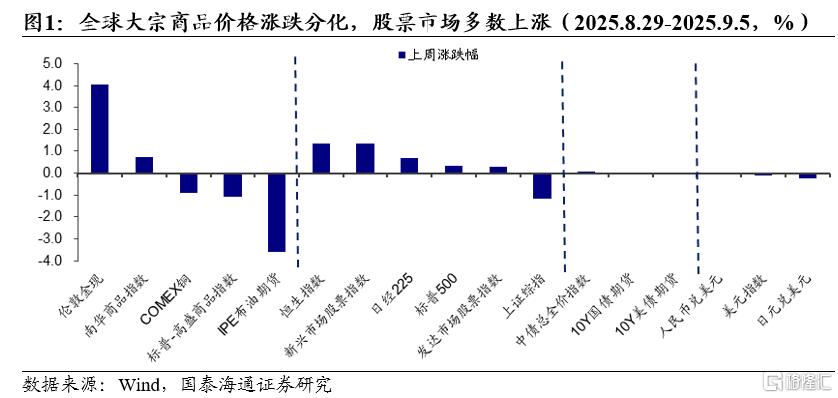
Group 1: Economic Overview - The U.S. economy is experiencing a marginal slowdown, with July durable goods orders showing a significant year-on-year decline and a negative month-on-month change [3][7][19] - The Markit Manufacturing PMI for August increased to 53.0, while the Philadelphia Fed Manufacturing Index declined to -0.30, indicating mixed economic signals [7][14] - The unemployment rate rose to 4.3% in August, with initial jobless claims increasing to 237,000, reflecting a weak labor market [11][19] Group 2: Global Asset Performance - Global asset prices showed mixed performance, with commodities experiencing varied price changes and most stock markets rising, including a 1.36% increase in the Hang Seng Index [2][5] - The 10-year U.S. Treasury yield decreased by 13 basis points to 4.10%, while the domestic 10Y government bond futures remained stable [2][5] Group 3: Policy Implications - The weak non-farm payroll data reinforces expectations for a rate cut by the Federal Reserve, with potential challenges to its independence due to political pressures [3][19][28] - The European Central Bank is likely to pause rate cuts in the short term, with the euro potentially appreciating despite political uncertainties [28] - The Bank of Japan maintains a stance for further rate hikes but warns of significant uncertainties due to U.S. tariff policies [29]

国泰海通:主题结构切换,聚焦“反内卷”政策加码
Xin Lang Cai Jing· 2025-09-07 23:56
Core Insights - The report from Guotai Junan Securities indicates that the theme trading remains at a high level, with technology themes experiencing a pullback while new energy themes are gaining traction [1] - Since mid-August, AI-related themes have benefited from industrial progress, liquidity expectations, and a resonance of risk appetite, accelerating market trends [1] - As market volatility increases, funds are seeking low-position theme investment opportunities, focusing on the "anti-involution" direction that benefits from positive policy changes and improved supply-demand dynamics [1] - The mid-term focus is on main opportunities in AI, robotics, and innovative pharmaceuticals [1]
国泰海通:美联储降息延长中期趋势 金价或高位震荡
Zhi Tong Cai Jing· 2025-09-07 22:53
Core Viewpoint - The unexpected decline in U.S. employment data has increased market expectations for a Federal Reserve rate cut in September, leading to a potential marginal easing of liquidity. Additionally, uncertainties surrounding U.S. tariff policies and inflation may result in gold prices experiencing high-level fluctuations [1][2]. Group 1: Economic Indicators - U.S. non-farm payrolls unexpectedly fell to 22,000 in August (previously 73,000, forecasted 75,000), with the unemployment rate rising to 4.3%, indicating increased risks in the labor market [3]. - The manufacturing PMI in China rose by 0.1 percentage points to 49.4% in August, suggesting a slight improvement in manufacturing sentiment [4]. Group 2: Precious Metals - The uncertainty in U.S. tariff policies, including recent adjustments signed by Trump, and the marginal easing of liquidity are expected to support gold prices, which may experience fluctuations [3]. - Upcoming U.S. inflation data will be crucial in determining the interest rate path, influencing precious metal prices in the short term [3]. Group 3: Industrial Metals - Industrial metal prices are anticipated to gain upward momentum due to the gradual recovery of demand as the traditional peak season approaches, alongside macroeconomic policy support [2][4]. - The supply-demand dynamics are improving, with downstream processing rates increasing and supply disruptions due to maintenance and seasonal factors providing additional support for prices [4].

中国证券行业-全面向好,手续费收入重回正轨;第三季度交易收入喜忧参半Securities Broker_Dealer - China (H_A) 1H25 wrap-up_ Fee income back in the game; mixed trading income in 3Q
2025-09-07 16:19
Summary of Key Points from the Conference Call Industry Overview - **Industry**: Securities Broker/Dealer in China - **Period Covered**: 1H25 Core Insights and Arguments 1. **Revenue and Earnings Growth**: Brokers reported better-than-expected revenue and earnings growth in 1H25, with net profit increasing by 40% YoY (excluding one-offs) and total operating income rising by 24% YoY [1][9][10] 2. **Fee Income Recovery**: Fee income returned to double-digit growth for the first time since 2022, with an 18% YoY increase in fee income and a 48% YoY surge in trading income on average [1][33] 3. **Market Sentiment**: The growth was supported by a rebound in market sentiment, strong market turnover, and a recovery in equity fund AUM [1][33] 4. **Brokerage Fee Growth**: Brokerage fees grew by 35% YoY on average, accounting for 24% of revenue, driven by market share gains and improved client mix [34] 5. **Offshore Revenue Contribution**: Offshore revenue contribution increased to 12% in 1H25 from 9% in 2024, with CICC leading at 31% revenue contribution from offshore [3][27] 6. **Trading Income Dynamics**: Trading income surged by 48% YoY, contributing to 48% of operating income, with CITICS and CICC leading in trading yield [50][52] 7. **Investment Banking Opportunities**: Investment banking fees contributed to 6% of revenue, with significant growth driven by HK IPOs, particularly for CICC and CITICS [45][49] 8. **Cost-to-Income Ratio Improvement**: All brokers saw improvements in their cost-to-income ratios due to strong revenue growth [16][60] Additional Important Insights 1. **A-Share Market Performance**: The A-share market recorded the strongest half-year average daily turnover (ADT) in history at RMB1.98 trillion, which is expected to drive brokerage commissions and product sales fees in 3Q25E [2][35] 2. **Asset Management Growth**: Asset management fees grew by 3-29% YoY, with stock and hybrid mutual fund AUM reaching a new high of RMB8.8 trillion [39][41] 3. **New Stock Accounts**: There was a sequential improvement in new stock accounts opened, with 1.96 million in July and 2.65 million in August [36] 4. **Mixed Trading Outlook**: While trading income is expected to remain strong, there are concerns about bond market performance affecting trading income in 3Q25E [4][51] 5. **Regulatory Environment**: The regulatory focus may shift towards loosening IPO requirements for the STAR Market, which could impact future A-share IPO fundraising [45] This summary encapsulates the key points discussed in the conference call, highlighting the positive trends in revenue, fee income, and market dynamics while also noting potential challenges and regulatory considerations.





【十大券商一周策略】短期调整接近尾声,上行逻辑仍未改变,资金聚焦高低切
Zheng Quan Shi Bao Wang· 2025-09-07 14:57
Group 1: Market Liquidity Characteristics - Recent market liquidity characteristics indicate a clear divergence in ETF fund flows, with broad-based funds decreasing while industry/theme funds are increasing, and A-shares decreasing while Hong Kong stocks are increasing, reflecting a high-cut low characteristic of institutional allocation funds [1] - The market may be entering the last round of intensive subscription and redemption phase for actively managed public funds since 2021, as core assets held by institutions rise, which may help alleviate redemption pressure and shift focus towards the next industrial trend and economic recovery [1] - The coexistence of high debt funding rates and passive interest rate cuts from central banks abroad is easing competitive pressure on Chinese manufacturing, suggesting a long-term recovery in profit margins as the industry shifts from market share advantages to pricing power [1] Group 2: Investment Strategies - It is recommended to adjust portfolio structures by focusing on structural opportunities in sectors such as consumer electronics, resources, innovative pharmaceuticals, chemicals, and gaming [2] - The current high risk appetite in the market supports equity asset performance, with a suggestion to overweight AH shares and US stocks while maintaining a standard allocation to bonds and gold [3] - The A-share market is expected to experience a low-slope upward trend after recent adjustments, with a focus on sectors like AI computing power, solid-state batteries, humanoid robots, and commercial aerospace [5] Group 3: Sector Focus and Trends - The A-share market is currently in a phase of resonance inflow from both institutions and individuals, with a focus on TMT sectors as a long-term main line, while short-term strategies may involve low-crowding sectors [4] - The market is likely to continue a trend of oscillation and upward movement, with attention on sectors such as machinery and electrical equipment that have potential for rebound [7] - The focus on sectors benefiting from domestic high-tech industry development and the "anti-involution" concept is emphasized, particularly in low-valuation assets in the service consumption field [7] Group 4: Market Sentiment and Volatility - The A-share market is experiencing increased volatility, with a cautious sentiment prevailing compared to previous phases, but is expected to maintain a trend of oscillation and upward movement [9] - The market is likely to enter a phase of consolidation, with a focus on sectors that have lagged behind but still have strong economic logic [6] - The current high volatility in the market suggests that a new trend of significant upward movement will require new catalysts, with attention on sectors like electrical equipment and non-ferrous metals [8]
券商“五篇大文章”考核定调:科技金融占比最高,多项指标涉及债券领域
Xin Lang Cai Jing· 2025-09-07 14:20
Core Viewpoint - The China Securities Association has introduced a new evaluation system focused on the financial "Five Major Articles" to enhance the responsibilities of securities firms and align their services with national strategies [1][2]. Group 1: Evaluation Framework - The evaluation method consists of 25 articles divided into four chapters: general principles, evaluation indicators and scoring methods, implementation and results application, and appendices [1]. - The evaluation aims to guide securities firms to invest resources in key national strategic areas, enhancing risk control and promoting high-quality industry development [1][2]. Group 2: Evaluation Indicators - The evaluation includes quantitative indicators for the five areas: technology finance (50 points), green finance (10 points), inclusive finance (10 points), pension finance (10 points), and digital finance (10 points) [2][3]. - Specific indicators for technology finance include amounts and numbers of technology innovation bond underwriting, equity financing for technology companies, and direct investments in non-listed technology firms [1][3]. Group 3: Industry Impact - The introduction of the evaluation system is expected to shift the focus of securities firms from scale expansion to deeper functional development, promoting a more differentiated competitive landscape [2][5]. - The evaluation encourages firms to enhance their service capabilities in technology, green, and inclusive finance, moving away from short-term profit-seeking behaviors [2][8]. Group 4: Performance Rankings - The top firms in technology finance include CITIC Securities with 128.19 billion yuan in technology innovation bond underwriting, followed by CITIC Jiantou and Guotai Junan [5][6]. - In the inclusive finance sector, the leading underwriters for private enterprise bonds are招商证券 and 广发证券, both exceeding 30 billion yuan [7]. - The rankings reflect a competitive landscape where leading firms dominate core areas while smaller firms carve out niches in specific segments [5][8].



券商资管规模增长,收入却下降了
Zhong Guo Ji Jin Bao· 2025-09-07 13:48
Core Viewpoint - The growth of asset management scale among securities firms is accompanied by a decline in income, indicating a structural challenge in the industry as it transitions towards public offerings [1][2][4]. Group 1: Asset Management Scale and Income - As of the end of Q2 2025, the scale of private asset management products by securities firms reached 6.14 trillion yuan, an increase of 0.21 trillion yuan from the end of Q1 2025 [4]. - The net income from asset management for listed securities firms totaled 21.2 billion yuan in the first half of 2025, reflecting a year-on-year decline of 3% [4]. - The divergence in income performance is notable, with Citic Securities leading with a net income of 5.444 billion yuan, up 10.77%, while Huatai Securities saw a significant drop of 59.8% to 893 million yuan [5]. Group 2: Challenges in Public Offering Transformation - The transformation towards public offerings is a key direction for securities firms' asset management, but many face challenges due to licensing issues, which hinder product development [7]. - As of September 5, 2025, there were 108 public offering products undergoing transformation, including 50 bond funds, 28 mixed funds, and 27 money market funds [7]. Group 3: Future Strategies and Competitive Landscape - The competition in the asset management industry is shifting from scale expansion to a focus on research capabilities, technological empowerment, and product ecosystems [10]. - Firms are encouraged to enhance their investment research capabilities, innovate products tailored to client preferences, and leverage technology to improve operational efficiency [10]. - The market is expected to see a differentiation where leading firms will cover a broader client base while smaller firms may focus on niche markets like REITs and carbon-neutral bonds [10].
非银金融行业周报:公募三阶段降费落地,1H25保险行业增配二级权益超6000亿元-20250907
Shenwan Hongyuan Securities· 2025-09-07 11:43
Investment Rating - The report maintains a "Positive" outlook on the non-bank financial industry, indicating an expectation for the industry to outperform the overall market [1]. Core Insights - The public offering's third phase of fee reduction is expected to benefit investors significantly, with an estimated annual reduction of approximately 300 million yuan [2]. - The insurance sector is seeing a strategic shift towards long-term investments, with a notable increase in the proportion of participating insurance products, which is expected to drive long-term capital inflows into the market [2]. - In the first half of 2025, the insurance industry allocated over 600 billion yuan to secondary market equities, reflecting a growing trend of insurance capital entering the stock market [2]. Summary by Sections Market Review - The Shanghai Composite Index closed at 4,460.32, with a slight decline of 0.81% over the week. The non-bank index fell by 4.96%, with specific declines in brokerage, insurance, and diversified financial sectors of 5.31%, 4.03%, and 5.55% respectively [5][6]. Non-Bank Industry Data - As of September 5, 2025, the 10-year government bond yield was 1.83%, with a slight increase of 0.03 basis points. The credit spreads for corporate bonds also showed minor fluctuations [12]. - The average daily trading volume in the stock market was 26,035.62 billion yuan, reflecting a decrease of 12.75% week-on-week but a year-to-date increase of 48.25% [15]. Investment Analysis - The report recommends three main investment lines in the brokerage sector, focusing on leading institutions benefiting from improved competitive dynamics, firms with significant earnings elasticity, and those with strong international business capabilities [2]. - In the insurance sector, continued recommendations include major players such as China Life, New China Life, and Ping An, indicating confidence in their market positions and growth potential [2].