GWMOTOR(601633)

Search documents
汽车销售进入“混搭”时代
汽车商业评论· 2025-11-16 23:07
Core Insights - The article highlights the challenges faced by traditional car dealers in China, with a significant increase in losses and a decline in the number of dealerships, indicating a tough market environment for them [4][5][6] - It discusses the shift towards new sales models, including direct sales and online platforms, as traditional manufacturers and new players explore innovative ways to connect with consumers [5][6][34] - The article emphasizes the importance of user-centric strategies and the need for traditional car manufacturers to adapt their sales channels to meet changing consumer preferences [28][34][56] Group 1: Traditional Dealers' Challenges - In the first half of 2025, 52.6% of car dealers reported losses, with only 29.9% achieving profitability, highlighting a dire situation for traditional dealerships [4] - A staggering 74.4% of dealers experienced price discrepancies, with 43.6% facing price drops exceeding 15% [4] - The number of 4S dealerships in China decreased by 1.9% in the first half of 2025, totaling 4,419 closures in 2024 [4] Group 2: Shift in Sales Models - The launch of the "Auto Home Mall" by Auto Home, featuring 15 brands, signifies a move towards online sales platforms [5] - The introduction of the Aion UT super by JD.com, in collaboration with GAC Group and CATL, reflects a new model for car sales and after-sales services [5] - Traditional manufacturers are increasingly open to new sales channels, indicating a shift away from the historically strong ties with dealers [5][6] Group 3: Direct Sales and User Engagement - Great Wall Motors' transition to a direct sales model for its WEY brand marks a significant change in its sales strategy, focusing on user engagement [6][8] - The "Long Wall Smart Choice" initiative aims to enhance user experience by establishing a direct connection between manufacturers and consumers [12][14] - The need for a user-centric approach is emphasized, with manufacturers urged to adapt their organizational structures and decision-making processes to better serve consumers [34][35] Group 4: New Players and Hybrid Models - New energy vehicle brands like NIO and Firefly are exploring hybrid sales models, combining direct sales with authorized dealerships to enhance market reach [42][48] - Xiaopeng Motors has initiated a "Jupiter Plan" to expand its dealer network, indicating a shift towards a more flexible sales strategy [50] - Leap Motor has established a channel strategy that balances direct sales and dealership networks, achieving significant sales growth [53]



10月新能源渗透率57%!东风明年量产固态电池?智己LS9上市!多款新车登录工信部!丨一周大事件
电动车公社· 2025-11-16 16:06
New Car Launches - Aion UT Super launched at a price of 89,900 yuan, featuring a 100kW motor and a 54.04kWh lithium iron phosphate battery with a CLTC range of 500km [1][3][9] - Changan Qiyuan A06 launched with prices ranging from 109,900 to 149,900 yuan, offering both pure electric and range-extended versions [1][17] - Wuling Hongguang family launched with prices between 54,800 and 77,800 yuan, available in fuel, pure electric, and range-extended versions [1][19] - Zhiji LS9 launched with a price range of 322,800 to 352,800 yuan, featuring advanced interior and exterior designs [1][26][31] - Wuling Xingguang 730 launched with prices from 73,000 to 109,800 yuan, available in fuel, plug-in hybrid, and pure electric versions [1][34] - Aion i60 launched at a price range of 109,800 to 135,800 yuan, offering both pure electric and range-extended versions [1][6] - Ora 5 opened for pre-sale with a price range of 109,800 to 142,800 yuan, targeting the young market with its design [1][52] - Nissan N6 opened for pre-sale with a price range of 109,900 to 121,900 yuan, featuring a hybrid powertrain [1][58] - Xingtou ET5 opened for pre-sale with a price range of 159,900 to 174,900 yuan, equipped with advanced driving assistance systems [1][66] - Hongqi HS6 PHEV opened for pre-sale with a price range of 178,800 to 228,800 yuan, featuring a luxurious design and advanced technology [1][72] Company Dynamics - FAW-Volkswagen has produced its 30 millionth vehicle, becoming the first passenger car company in China to reach this milestone [1][79] - Faraday Future reported a third-quarter loss of $206.8 million, with ongoing financial challenges despite receiving over 11,000 paid orders for its new FX Super One model [1][84][87] - Dongfeng Motor plans to mass-produce solid-state batteries next year, with a projected energy density of 350Wh/kg [1][88][91] - Leap Motor announced it has surpassed 500,000 cumulative sales this year, achieving its 2025 sales target ahead of schedule [1][92][94] Industry News - In October, the retail penetration rate of new energy vehicles reached 57%, with 1.282 million new energy vehicles sold out of a total of 2.242 million vehicles [1][112][113]






汽车行业周报(20251110-20251116):Q4翘尾预计低于预期,看好明年汽车板块预期修复-20251116
Huachuang Securities· 2025-11-16 10:42
Investment Rating - The report maintains a positive investment recommendation for the automotive sector, anticipating a recovery in the market next year [1]. Core Insights - The automotive market is currently experiencing a downturn, with Q4 expectations falling short due to the impact of trade-in quotas. However, there is optimism for an upward revision in Q1 2026, suggesting that the sector may hit bottom sooner than expected. Despite the current sluggish trading environment, selective investment opportunities for next year are encouraged [1]. Data Tracking - In early November, the discount rate for vehicles increased to 10.0%, up by 0.4 percentage points month-on-month and 1.5 percentage points year-on-year. The average discount amount rose by 23,103 yuan, with significant fluctuations noted among major brands [3]. - In October, new energy vehicle deliveries saw significant growth, with BYD delivering 442,000 units (down 12.1% year-on-year but up 11.5% month-on-month), while other brands like Leap Motor and Xpeng reported substantial year-on-year increases [3][21]. - Traditional automakers also showed strong sales, with Geely's sales increasing by 35.0% year-on-year to 307,000 units in October [3][24]. Recommendations - For complete vehicles, the report recommends investing in Geely and BYD, highlighting Geely's upcoming product cycle and potential for significant profit increases in the next 6-9 months. The report also suggests considering Jianghuai Automobile due to its strong product cycle and recent stock price corrections [5]. - In the automotive parts sector, the report identifies AI and intelligent driving as key areas for growth, recommending companies like Horizon Robotics and Sensetime Technology. It also highlights opportunities in liquid cooling and robotics, suggesting investments in companies like Minth Group and Top Group [5]. - The heavy truck segment is noted for its strong performance in recent months, with recommendations for companies like China National Heavy Duty Truck Group and Weichai Power [5]. Industry News - In October, new energy vehicles accounted for over 50% of total new car sales for the first time, with production and sales figures for the year showing over 10% growth [8][31]. - The report mentions the launch of new models, including the IM LS9, which features advanced technology and significant performance metrics [31]. - The Ministry of Industry and Information Technology has set new requirements for new energy vehicle credit ratios for 2026 and 2027, indicating a regulatory push towards electric vehicles [31].



长城汽车取得后背门开关架构总成及车辆专利,后备箱具有足够的开放性
Jin Rong Jie· 2025-11-15 11:55
Group 1 - The core viewpoint of the news is that Great Wall Motors has obtained a patent for a new rear door switch assembly and vehicle design, which enhances the functionality and usability of the rear door [1] Group 2 - The patent, authorized under CN 223546135 U, was applied for on December 2024 and focuses on a rear door technology that includes components such as the rear door body, first guide rail, front lifting rod device, second guide rail, and rear lifting rod device [1] - The design allows the rear door to slide forward above the roof when opened, ensuring that it does not obstruct the trunk area, thus providing sufficient openness [1] - The assembly features improved control mechanisms through the integration of sliding and lifting drive devices, enhancing the flexibility and reliability of the rear door operation [1] - The design incorporates a travel switch to increase the intelligence of the opening action, ensuring accuracy and smoothness during operation [1] - Great Wall Motors, established in 2001, is primarily engaged in the automotive manufacturing industry and has a registered capital of approximately 855.89 million RMB [2] - The company has made investments in 75 enterprises and participated in 2,749 bidding projects, with a significant portfolio of 5,000 trademark and patent information entries [2]
长城汽车取得显示控制方法相关专利
Jin Rong Jie· 2025-11-15 06:06
Group 1 - The core point of the article is that Great Wall Motors Co., Ltd. has obtained a patent for a technology related to display control methods and devices, indicating its focus on innovation in the automotive sector [1] Group 2 - Great Wall Motors Co., Ltd. was established in 2001 and is located in Baoding City, primarily engaged in the automotive manufacturing industry [1] - The company has a registered capital of approximately 85.59 billion RMB [1] - Great Wall Motors has invested in 75 enterprises and participated in 2,749 bidding projects, showcasing its active engagement in the market [1] - The company holds 5,000 trademark records and 5,000 patent records, along with 640 administrative licenses, reflecting its extensive intellectual property portfolio [1]
长城汽车取得车辆上的碳罐电磁阀的控制方法及终端设备专利
Jin Rong Jie· 2025-11-15 02:29
Group 1 - The core point of the article is that Great Wall Motors Co., Ltd. has obtained a patent for a method and terminal device for controlling the carbon canister electromagnetic valve in vehicles, with the patent granted on CN 115126922 B and the application date being June 2022 [1] Group 2 - Great Wall Motors Co., Ltd. was established in 2001 and is located in Baoding City, primarily engaged in the automotive manufacturing industry [1] - The company has a registered capital of 85,589.45933 million RMB [1] - According to data analysis, Great Wall Motors has invested in 75 companies, participated in 2,747 bidding projects, and has 5,000 trademark and patent information entries, along with 640 administrative licenses [1]
四部门重拳出击!“零公里二手车”出口被叫停,曾遭长城汽车董事长“痛批”
Feng Huang Wang· 2025-11-14 23:00
Core Viewpoint - The recent regulatory measures by Chinese authorities aim to address the chaotic "zero-kilometer used car" phenomenon, ensuring that used car exports return to their original purpose and enhancing the oversight of export enterprises [1][2][3] Group 1: Regulatory Changes - The Ministry of Commerce, Ministry of Industry and Information Technology, Ministry of Public Security, and General Administration of Customs issued a notification to strengthen the management of used car exports, effective January 1, 2026 [1] - Vehicles registered for less than 180 days will require additional documentation, including a service confirmation letter from the manufacturer, to obtain export permits [1] - The notification provides a buffer period of approximately one and a half months for companies to comply with the new regulations [1] Group 2: Industry Context - The "zero-kilometer used car" issue has been criticized for allowing new cars to be exported under the guise of used cars, circumventing import/export controls and taxes, and potentially harming brand reputation [1][2] - The used car export volume in China has seen explosive growth, with projections of 500,000 to 600,000 units for the year, a significant increase from less than 3,000 units in 2019 [2][3] - The growth of used car exports has raised concerns about the integrity of some enterprises, leading to a trust crisis in the overall image of Chinese used car exports [2][3] Group 3: Industry Growth and Future Outlook - Since the pilot program began in 2019, China's used car exports have grown from 4,300 units in 2020 to over 436,000 units in 2024, covering more than 160 countries and regions [3] - The regulatory framework aims not only to impose restrictions but also to guide the industry towards healthy development by clarifying rules and encouraging self-regulation among enterprises [3] - The focus is shifting from mere scale growth to value growth in the used car export sector, supported by systematic measures to enhance compliance and quality [3]
对标埃尔法的家庭头等舱!竟然只卖不到30万?
电动车公社· 2025-11-14 16:23
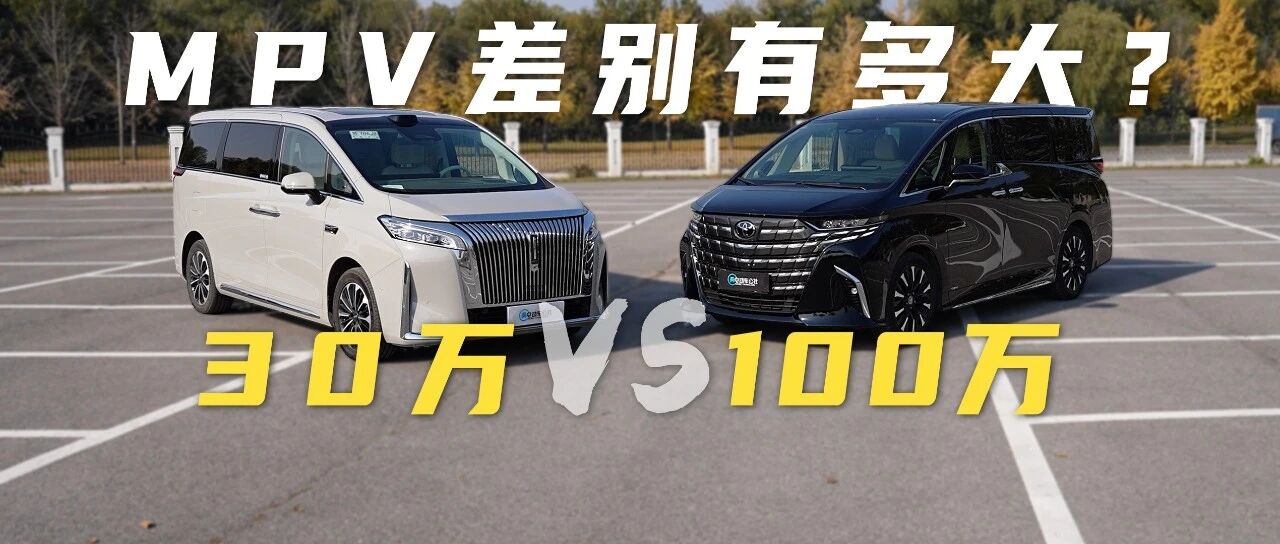
Core Viewpoint - The article compares the Toyota Alphard and the Great Wall Motors' Wei Pai Gao Shan 7, highlighting the significant price difference and evaluating whether a vehicle priced at 285,800 yuan can provide a comparable experience to a luxury vehicle priced at over 1 million yuan [1][3][89]. Design and Aesthetics - The Toyota Alphard features a large grille and a design that emphasizes luxury and privacy for rear passengers, with a traditional executive style [7][8][12]. - The Wei Pai Gao Shan 7 adopts a new Chinese luxury design inspired by nature, with a bold front and elegant elements that reflect modern and traditional aesthetics [10][17]. Interior and Comfort - The Alphard's interior is characterized by high-quality materials, including leather and wood accents, and offers features like individual sunshades and climate control for rear seats [12][14][16]. - The Gao Shan 7 also emphasizes spaciousness and luxury, with soft-touch materials and practical features like charging ports and a well-designed glove compartment [18][21][30]. Seating and Amenities - The Alphard provides luxurious seating with features like ventilation, heating, and massage functions, along with a small TV for entertainment [23][25][28]. - The Gao Shan 7 includes a refrigerator with a significant capacity and a dual-opening design for easy access, catering to family use [29][32]. Space and Practicality - The Alphard sacrifices third-row space for second-row comfort, making it less practical for larger families [44][52]. - The Gao Shan 7 offers better third-row accommodations and flexible seating arrangements, enhancing its family-friendly appeal [47][48]. Technology and Safety - The Gao Shan 7 excels in smart technology, featuring a user-friendly interface and advanced driver assistance systems, while the Alphard has basic features suitable for chauffeur-driven use [55][63]. - In terms of safety, the Gao Shan 7 boasts a high-strength steel structure and advanced active safety features, while the Alphard's safety ratings are less impressive [80][83]. Market Position and Sales - The Alphard is seen as a status symbol in China, with a price significantly higher than its domestic market value, leading to a perception of emotional value rather than just product quality [87]. - The Gao Shan 7, as a representative of domestic MPVs, is gaining market recognition, with sales exceeding 10,000 units in October, indicating a shift in consumer perception of value and luxury [89][91].
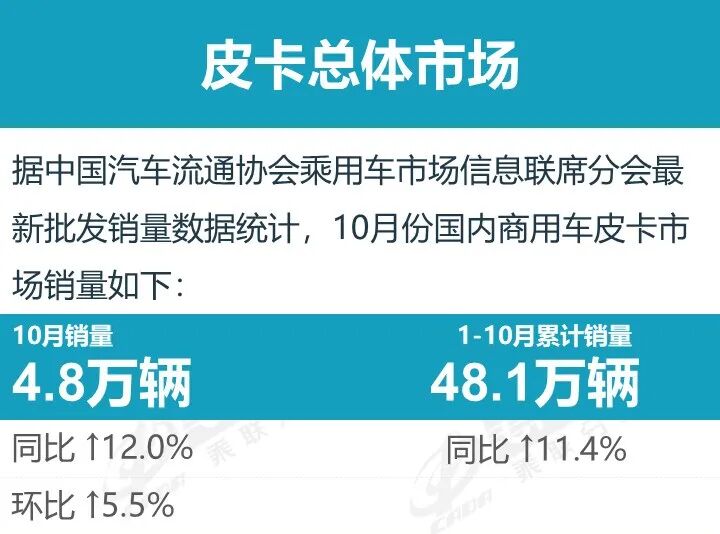
乘联分会:10月份皮卡市场销售为4.8万辆 国内继续保持一超三强格局
Zhi Tong Cai Jing· 2025-11-14 09:01
Group 1 - The core viewpoint of the articles highlights the growth and stability of the pickup truck market in China, with significant year-on-year and month-on-month increases in sales and production figures for 2025 [1][2]. - In October 2025, the pickup truck market sales reached 48,000 units, marking a 12% year-on-year increase and a 5.5% month-on-month increase, while production also saw a 12.3% year-on-year increase [1]. - For the first ten months of 2025, total pickup truck sales amounted to 481,000 units, reflecting an 11.4% year-on-year growth, and production reached 475,000 units, up 15.3% compared to the same period in 2024 [1]. Group 2 - Great Wall Motors continues to lead the pickup truck market, with stable performance both domestically and internationally, supported by strong export growth [1]. - Other notable players in the domestic pickup truck retail market include Jiangling Motors, Zhengzhou Nissan, and Changan Automobile, maintaining a competitive landscape characterized by "one strong player and three strong challengers" [1]. - The main demand for pickup trucks is concentrated in the southwestern and northwestern regions of China, indicating a robust market in these areas [1]. Group 3 - In terms of exports, October 2025 saw 26,800 units of pickups exported, a 27% year-on-year increase and a 22% month-on-month increase, with the export share reaching 56% of total sales [2]. - For the first ten months of 2025, total pickup truck exports reached 236,000 units, up 19% year-on-year, with the export share constituting 51% of total sales [2]. - The growth of new energy pickups is notable, with October 2025 sales reaching 5,700 units, a 138% year-on-year increase, and a cumulative total of 59,000 units for the first ten months, reflecting a 382% growth [2]. Group 4 - The sales rankings for October 2025 show Great Wall Motors leading with 14,088 units sold, followed by Changan Automobile with 6,008 units and Zhengzhou Nissan with 5,018 units [5]. - For the first ten months of 2025, Great Wall Motors also topped the sales chart with 150,311 units, while BYD showed remarkable growth with a 452.3% increase, selling 34,672 units [6]. - The overall competitive landscape indicates a mix of growth and decline among various manufacturers, with some experiencing significant increases while others face reductions in sales compared to the previous year [6].
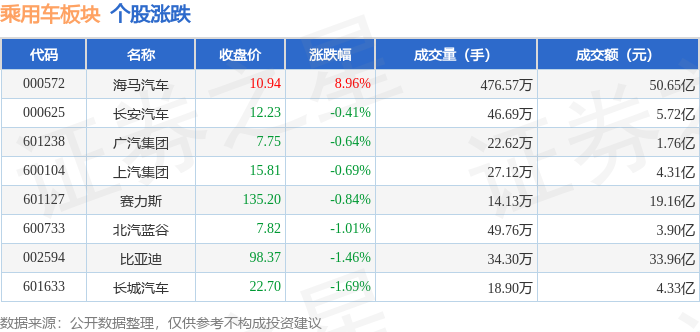
乘用车板块11月14日跌0.93%,长城汽车领跌,主力资金净流出12.26亿元
Zheng Xing Xing Ye Ri Bao· 2025-11-14 08:49
从资金流向上来看,当日乘用车板块主力资金净流出12.26亿元,游资资金净流入4.11亿元,散户资金净 流入8.15亿元。乘用车板块个股资金流向见下表: 证券之星消息,11月14日乘用车板块较上一交易日下跌0.93%,长城汽车领跌。当日上证指数报收于 3990.49,下跌0.97%。深证成指报收于13216.03,下跌1.93%。乘用车板块个股涨跌见下表: | 代码 | 名称 | 收盘价 | 涨跌幅 | 成交量(手) | 成交额(元) | | --- | --- | --- | --- | --- | --- | | 000572 | 世界中奥 | 10.94 | 8.96% | 476.57万 | 50.65 Z | | 000625 | 长安汽车 | 12.23 | -0.41% | 46.69万 | 5.72亿 | | 601238 | 广汽集团 | 7.75 | -0.64% | 22.62万 | 1.76亿 | | 600104 | 上汽集团 √ | 15.81 | -0.69% | 27.12万 | 4.31亿 | | 601127 | 赛力斯 | 135.20 | -0.84% | 14.13万 ...